DD
MM
YYYY

PAGES

DD
MM
YYYY

spot_img

PAGES

Home Blog Page 1347

Enugu Plans 135km Rail Line to Link South-East Cities With Onne Port as Part of Logistics Hub Vision

0

The Enugu State Government has announced an ambitious plan to develop a 135.5-kilometer state-owned standard gauge rail line designed to connect Enugu with key South-East cities and link them directly to the Onne Port in Rivers State.

The project, if realized, could significantly reposition the state as a logistics hub, offering an alternative export corridor to Lagos.

The State Commissioner for Transportation, Dr. Obi Ozor, who disclosed the plan on Afia TV’s Enugu Kwenu program on Friday, said the rail network would be a strategic move toward regional integration, economic acceleration, and export-led growth.

Dr. Ozor confirmed that a full feasibility study for the Enugu rail network and the South-East corridor has already been completed. The state is currently engaging with Chinese companies and the Nigerian Railway Corporation on the technical aspects while holding financing talks with potential investors.

Details of the Route

The 135.5km standard gauge line will start from Enugu and move through Ugwuoba into Anambra State, connecting cities such as Awka and Onitsha. From there, it will run through the Amechi Idodo axis of Ebonyi State, link Umuahia in Abia and Owerri in Imo State via Nkanu West and Isiagu, before terminating at the Onne Port in Rivers State.

“As part of turning Enugu State into a hub, rail is a critical part of that to enable the movement of agro commodities from wherever their sources are to the port for export and earning of foreign exchange. We have a lot of wealth locked underneath our soil, such as coal. We need to exploit them to be able to generate a lot of revenue, and rail is critical to it,” Dr. Ozor said.

The commissioner stressed that the rail line will support both cargo and passenger services, not only decongesting traffic from Nigeria’s overwhelmed Lagos ports but also boosting trade across the South-East and South-South.

Part of a Bigger Transport Agenda

The rail plan is one piece of a larger transport framework that includes the development of an inland container terminal and a new market station within the Holy Ghost Transport Terminal in Enugu. According to Dr. Ozor, the market station will be located between Terminals 1 and 2 and will serve as a key node for cargo handling.

“We’re developing a major inland container port that will process agro-commodities for the South-East and even the North-East. It’s about giving our economy the infrastructure it needs to compete,” he said.

He noted that the Federal Government is also extending its narrow gauge rail from Aba to Enugu, a separate 24-month plan, but emphasized that Enugu’s project is a standalone, state-owned initiative tailored to fit the region’s development priorities.

Regional Integration Urged Amid Eastern Port Push

The announcement comes at a time when stakeholders and infrastructure experts are calling on the leadership of the South-East and South-South to begin integrating their economies through an interconnected rail network—particularly as momentum grows around the push to decongest Lagos by expanding the eastern ports, including Onne, Calabar, and Port Harcourt.

There is growing consensus that rail development is essential to the success of that eastern maritime strategy. However, experts warn that the current state of regional disconnection will make it difficult for any single state to achieve such ambitions alone.

Yet so far, only Enugu State has publicly announced a concrete plan. While other states in the region—Anambra, Abia, Imo, Ebonyi, Rivers—have expressed broad support for infrastructure development, there have been no specific announcements on rail projects tied to a regional corridor or to the Onne Port.

This lack of coordinated effort, experts argue, could undercut the effectiveness of any single-state investment, especially given that rail requires contiguous territory to function optimally across state lines.

China’s Broader Role

Enugu’s rail plan is also emerging at a time when China is looking to deepen its infrastructure footprint across Africa. Amid a growing trade fallout with the United States, most recently marked by Washington’s imposition of tariffs up to 145% on Chinese electric vehicles, Beijing has intensified efforts to forge new commercial relationships across Asia and Africa.

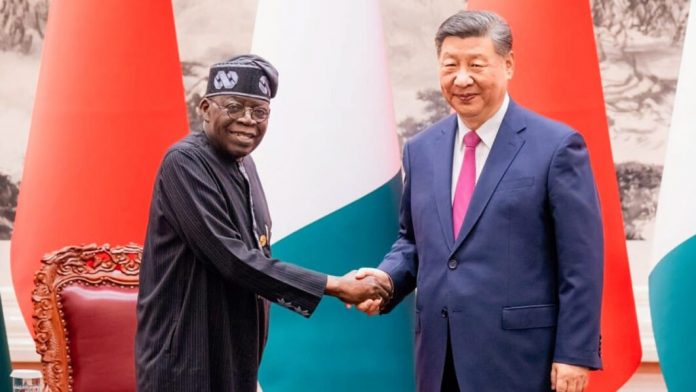
Chinese President Xi Jinping has embarked on a renewed diplomatic and trade tour of several Asian countries in recent weeks, aiming to lock in new agreements that align with China’s Belt and Road ambitions. The focus has shifted toward deepening engagement with African subnational governments as a way of bypassing central government bottlenecks.

In this context, Enugu’s direct negotiation with Chinese companies and openness to foreign infrastructure capital fits into the broader geopolitical realignment. China, already heavily involved in Nigeria’s national railway infrastructure, may see Enugu’s state-level initiative as a model for replicable subnational partnerships.

If successful, the project could serve as a model for other subnational governments to drive their own rail infrastructure, particularly in the face of delays and funding constraints at the federal level.

Dr. Ozor reiterated the state’s commitment to seeing the project through. “This is a defining moment. It’s not just about rail. It’s about changing how we move goods, how we trade, and how we think about our future as a region,” he said.

However, many believe that whether that vision can be fully realized depends not only on Enugu’s resolve but on whether other states in the Southeast and South-South are willing to join in a coordinated rail development plan before the window of opportunity closes.


With the Crypto Market Nearing Utility Season, Now Could be a Good Time to Swap Dogecoin for This Coin for 18903% Gains

0

Rexas Finance (RXS) emerges as a leading utility coin in the current transformative season of the crypto market. RXS represents an attractive investment opportunity because it focuses on real-world assets (RWA) while solving trillion-dollar market liquidity problems and can deliver an exceptional 18,903% return. RXS has gained substantial market interest before its presale ends because it has accumulated more than 50,000 holders and plans to launch at $0.25 on June 19, 2025.

RXS Disrupts Crypto & Finance—91.65% Sold as Investors Bet on Real-World Asset Tokenization!

The crowded cryptocurrency market features Rexas Finance (RXS) as a distinctive project because it focuses on tokenizing real-world assets. RXS stands apart from Dogecoin meme coins because of its practical value in connecting blockchain technology to traditional financial markets. RXS transforms the crypto landscape through its RWAs-based approach because it resolves long-standing liquidity problems in massive financial sectors like real estate and commodities. RXS presale tokens have gained massive success through their 91.65% sales completion rate from the 500 million total supply. The sale of 458,240,181 tokens from the 500 million total supply has generated $47,648,494 from the $56 million target. The increasing market demand for RXS demonstrates its ability to transform conventional financial structures. The growing demand creates strong predictions that RXS token prices will achieve exceptional highs.

RXS Poised for 18,903% Surge—The Utility Token Set to Outshine Dogecoin!

The crypto community and celebrity promoters propelled Dogecoin to fame before it lost its position as a leading meme coin. Dogecoin faces significant challenges because the market now prioritizes utility projects while Dogecoin lacks essential use value. RXS provides a solid use case because it specializes in tokenizing RWAs. Investors who want to grow their wealth over the long term should consider RXS as an alternative because it provides sustainable value rather than short-term speculation.

RXS demonstrates strong investment potential through its anticipated 18,903% value increase. The utility token RXS enters the market at $0.25 and benefits from the support of more than 50,000 holders, who position it to benefit from increasing utility token demand. The CertiK audit provides the RXS token with additional credibility by showing investors that it meets high security and reliability standards.

https://twitter.com/rexasfinance/status/1857692542290059502

Final Chance to Buy RXS at $0.20—Presale Nears Completion Before June 19 Listing!

RXS is entering its last presale stage at Stage 12, which represents the ultimate period for investors to purchase tokens before the official listing. The current stage offers investors access to RXS tokens at $0.200 to benefit from the expected price increase following the official listing. The presale achieved success because investors believe in RXS’s mission and practical applications. Early investors who buy RXS tokens before its June 19, 2025, listing on significant platforms CoinMarketCap and CoinGecko can expect substantial returns as the tokens will be priced at $0.25. The near completion of the presale demonstrates that potential investors must hurry to acquire their stake in this pioneering project.

RXS Leads the Utility Coin Revolution—Bringing Real-World Adoption to Crypto!

Utility coins represent a transformative period in the development of cryptocurrencies. RXS is one of many tokens driving the industry shift toward practical use cases beyond trading speculation. The evolution of blockchain technology will establish utility coins as essential elements for driving widespread industry adoption and innovation. RXS demonstrates the market trend by delivering solutions that standard financial systems have been unable to resolve. The utility coin market recognizes RXS as a leader because it provides asset tokenization alongside improved liquidity. RXS serves as a dual investment vehicle and adoption platform, promoting blockchain technology adoption at large.

Conclusion

The crypto market transitions toward utility-based growth, and RXS emerges as its leading representative of this shift. RXS offers unprecedented growth because it combines real-world asset tokenization with solutions for trillion-dollar market liquidity problems. Dogecoin holders who want to trade up to a valuable token with lasting potential should consider this opportunity due to its projected 18,903% increase.


Website: https://rexas.com

Whitepaper: https://rexas.com/rexas-whitepaper.pdf

Twitter/X: https://x.com/rexasfinance

Telegram: https://t.me/rexasfinance

“Crisis With Opportunities:” China Turns to Nigeria, Other Emerging Markets as Trade War with U.S. Deepens

0

As the tariff war between China and the United States intensifies, Beijing is making swift moves to recalibrate its global trade strategy, and Nigeria appears to be one of the key players in this realignment.

Speaking during a press conference in Abuja on Friday, the Chinese Ambassador to Nigeria, Yu Dunhai, described the latest U.S.-China tariff confrontation not simply as a setback, but as an opening to reinforce economic and trade ties with African nations, particularly Nigeria.

Yu, echoing Beijing’s broader diplomatic tone, described the tariffs as a “crisis with opportunities,” underscoring China’s intention to deepen cooperation with Nigeria in ways that could reshape the contours of its international trade alliances.

Yu’s remarks come as China officially responded to President Donald Trump’s sweeping 145% tariff hikes on Chinese goods by slapping its own countermeasures—raising tariffs on American imports from 84% to a staggering 125%, effective April 12, 2025. The move not only marks a significant escalation in the trade standoff but also signals Beijing’s growing urgency to look elsewhere for stable trade partners.

He pointed to China’s zero-tariff pledges for African least-developed countries as one of the concrete steps taken to back its rhetoric with action. These measures, announced during the most recent Forum on China-Africa Cooperation (FOCAC), are already opening doors for African exports and could serve as a critical economic boost for countries like Nigeria battling inflation, weakened currency, and an overburdened import bill.

“African nations are committed to development and revitalization, which requires a free, open multilateral trading system and a stable, predictable global environment,” Yu stated, directly linking Africa’s growth ambitions to China’s global outreach.

Beijing Shifts to Africa, Asia, and Beyond

But while China’s outreach to Nigeria may appear like a diplomatic gesture, it is in fact part of a broader and more calculated effort to rewire its global supply chains and reduce dependence on Western markets.

Beyond Africa, Chinese President Xi Jinping has also embarked on a strategic diplomatic tour across Asia in recent weeks, meeting with leaders in countries such as Indonesia, Malaysia, and Thailand to strengthen regional cooperation and trade ties. These visits are part of China’s accelerated push to secure new trade routes, negotiate alternative tariff arrangements, and advance its Belt and Road Initiative amid growing friction with Washington.

According to state media, Xi’s tour focused heavily on economic agreements covering agriculture, digital infrastructure, renewable energy, and transport—sectors China is also eyeing in Nigeria and other African nations.

Analysts believe these moves represent a calculated attempt by Beijing to diversify its trade portfolio and shore up economic resilience, especially as Chinese exports to the United States face tightening restrictions and higher costs.

For African countries, including Nigeria, this geopolitical tension is being framed by Beijing as a unique opportunity to plug into alternative supply chains and secure investment deals previously dominated by U.S. or European counterparts.

Yu said that China’s decades-long presence in Africa has earned it the trust of governments and people, noting that infrastructure projects, technical cooperation, and investment deals have continued even during global economic slowdowns.

In Nigeria, China has already funded and executed a number of high-profile infrastructure projects, including railways, airports, and power stations. However, critics say many of these deals have come with questionable terms, including opaque loan agreements and limited knowledge transfer.

Still, Yu insisted that China remains committed to transparency and mutual benefit, calling Nigeria “a natural partner in the journey toward shared prosperity.”

He added that trade relations could be expanded not only through zero-tariff arrangements but also via new investment flows into manufacturing, digital technology, and energy infrastructure.

At the heart of Yu’s message was a rebuke of growing protectionist tendencies, which he said pose a threat to countries that rely on international trade for development. While he did not mention the U.S. by name, his criticism was a clear reference to Trump’s hardline trade policies, which have drawn similar pushback from Europe and other parts of Asia.

“Together, we will uphold the multilateral trading system, resist protectionism, and foster an open, inclusive, and fair international environment,” he said, reaffirming China’s positioning as a defender of globalization in contrast to Washington’s more insular trade agenda.

Yu also used the moment to renew China’s support for creating a more balanced, multipolar world order—where all countries, regardless of size, have an equal say in global governance.

“Our shared goal is to advance an equal and orderly multipolar world and a universally beneficial and inclusive economic globalization, building a community with a shared future for humanity,” he concluded.

Nigeria’s Dilemma—and Opportunity

For Nigeria, the diplomatic overture from China offers both promise and caution. While Beijing’s support could bring needed capital and trade access at a time when Nigeria is struggling with low growth and weak exports, there is rising scrutiny over the terms of Chinese engagement. Nigerian lawmakers and civil society groups have increasingly raised concerns about the opacity of Chinese loans and the risk of mortgaging strategic assets.

However, in the absence of strong Western economic support, and amid declining capital inflows, China’s proposal to deepen ties may appear too timely to ignore.

As rising nationalism, trade protectionism, and shifting alliances reshape the global economy, Nigeria may be forced to make strategic choices about which global powers to align with.

Analysts have noted that the U.S.-China trade war, while disruptive, is also offering Abuja the rare chance to renegotiate its position in the global market if it can navigate the emerging power game with foresight and prudence.

Resurrection Resolves All Frictions, Happy Easter!

0

Happy Easter and let me wish everyone a Happy Resurrection Day via this short video. Resurrection brings a new life, and I am praying that your career, family, etc will experience the power of His resurrection.

As we say in the Scripture Union, His resurrection will resolve any challenge – grace infinite.  And your next praise will be better because  you will discover new songs. The next praise of the business model. The next praise of academics.  The next praise of your life aspirations. All will be better because resurrection resolves all frictions.

Prayer with your Bible Study teacher and ex-Scripture Union secondary school cell lead: “Oh Lord, as you send your angels to bless men and women today, our hands are raised up. Because you have qualified us, through grace, we cannot be strangers before you, for blessings. May we experience the abundance and victory of Easter in our lives today and forever. Thank You Lord”

Happy Easter from my family to yours.

Techstars Boosts Startup Investment to $220,000, Aligns With Y Combinator’s Model

0

Techstars, a leading pre-seed venture capital firm, has announced a major upgrade of its investment terms, starting with its fall 2025 cohort.

The accelerator will now offer $220,00 to startups accepted into its three-month program, an increase of $100,000 from its previous offer.

The company wrote via a post,

“Today, Techstars is introducing an improved accelerator investment offer for companies accepted into our future accelerator programs. This enhanced offer of a $220,000 investment comes with all the benefits of our 3-month mentorship-driven accelerator program, valuable perks from our partners, and access to our world-class network of investors, partners, mentors, and alumni. The $220,000 offer comprises two components, including $200,000 through an uncapped MFN Safe and $20,000 through a Post-Money Convertible Equity Agreement (CEA). The total equity Techstars receives will be 5% of the company in common stock plus the future value of the $200,000 uncapped MFN Safe. For example, if your next round is valued at $20M pre-money, the $200,000 MFN Safe would then convert into 1% additional ownership at that time.

“Our new offer gives founders more capital, better alignment, and a simpler and more easily comparable structure, enabling them to arrive at their next funding round with greater momentum. Demand for our accelerator programs has never been higher. Our applications have tripled since 2021 because the advantages of our accelerators are evident to founders. Through mentorship, capital, and lifetime access to our global network, Techstars enables the next generation of founders to succeed. The founders and startups we back will join Techstars alumni companies that have raised over $30 billion and are valued today at more than $120 billion. Those companies include 21 unicorns and 118 companies currently valued at over $100 million each.”

Techstars new investment brings it closer to that of Y Combinator, a startup accelerator and venture capital firm that provides seed funding for startups. The VC firm which revised its own terms three years ago, invests $500,000 in every company in standard terms. The investment is made on 2 separate safes;

First, the company invests $125,000 in a post-money safe in return for 7% of the startup’s ($125k safe”). Secondly, Y combinator invests $375,000 on an uncapped safe with a Most Favored Nation (“MFN”) provision (the “MFN safe”).

TechStars’ increased investment from $120,000 to $220,000 for startups in its three-month accelerator program, starting with the fall 2025 batch, signifies several key improvements and implications:

  • More Capital for Startups: The $100,000 increase ($20,000 for 5% equity + $200,000 uncapped SAFE note) provides startups with a greater financial runway to develop their products, hire talent, or scale operations during and after the program.
  • Alignment with Industry Leaders: By mirroring Y Combinator’s model (which offers $500,000, including a $375,000 SAFE note), Techstars is positioning itself as a more competitive option in the startup accelerator landscape, appealing to high-potential founders who might otherwise choose YC or other top programs.
  • Flexible Equity Structure: The $200,000 SAFE note with a “most favored nation” clause delays equity dilution until a startup’s next funding round. The equity Techstars receives depends on the startup’s valuation at that time (e.g., 2% for a $10M valuation, totaling 7% with the initial 5%). This structure can benefit startups by reducing immediate equity loss compared to fixed equity deals.
  • Attracting Stronger Startups: The higher investment signals Techstars commitment to supporting ambitious, capital-intensive ventures, potentially attracting more competitive applicants and fostering innovation in its cohorts.

Founded in 2006, Techstars has been on a mission to help entrepreneurs succeed. The pre-seed venture capital firm does this by operating accelerator programs and venture capital funds, by helping build thriving startup communities around the world.

Notably, Techstars has invested in companies from every related vertical including companies like SendGrid, DigitalOcean, PillPack, and more. It is worth noting that 120 accelerator companies have a market cap greater than $100 million. Also, the company’s portfolio market cap is currently at $126.9 billion.

Looking ahead

Techstars improved investment terms will no doubt enhance its value proposition, offering startups more capital and flexibility while aligning with industry standards to remain competitive. This move reflects a strategic effort to empower founders and strengthen TechStars’ role in the startup ecosystem.