DD
MM
YYYY

PAGES

DD
MM
YYYY

spot_img

PAGES

Home Blog Page 135

Musk Moves to Turn Tesla Into a Chip Factory – Ramps Up Hiring, Pushes for Annual AI Chip Releases

0

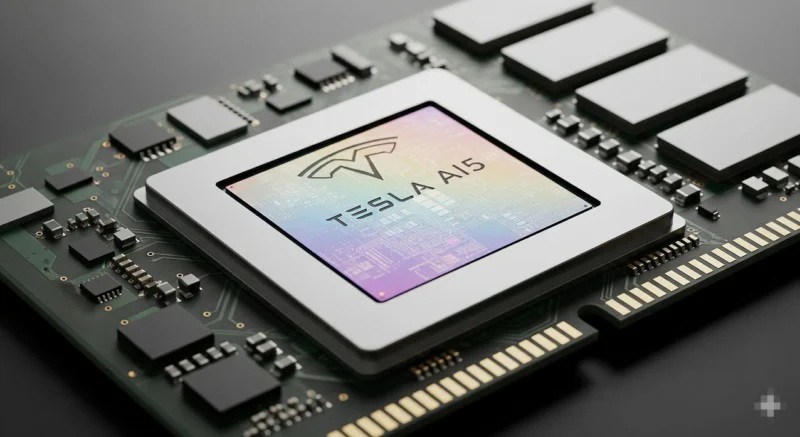
Elon Musk is making his boldest move yet to make Tesla a chipmaking powerhouse. He has placed himself at the center of the company’s next technological leap, turning Tesla into something that looks as much like a semiconductor powerhouse as an automaker.

In a late-night post on X on Saturday, Musk threw the doors open to engineers who want to join the company’s AI chip team, and he made the invitation unusually personal: applicants should email Tesla directly with three short lines demonstrating their “exceptional ability.”

The tone of the message wasn’t corporate. It sounded more like a founder rallying a handpicked group of specialists for a mission running on limited time and endless ambition.

“We are particularly interested in applying cutting-edge AI to chip design,” Musk said, laying out a goal that puts Tesla in contention with the biggest names in the semiconductor world.

He didn’t leave the timeline vague. Tesla, he said, aims to bring “a new AI chip design to volume production every 12 months,” a cadence that would outpace the entire industry.

“We expect to build chips at higher volumes ultimately than all other AI chips combined,” he added — a declaration that underscores how Tesla’s hardware push has swollen far beyond the confines of electric vehicles.

Inside Tesla’s cars today is the AI4 chip. Musk says the company is “close to taping out AI5,” the final stage before manufacturing begins. Work on AI6 has already started. Each generation is designed to push Tesla’s ambitions further into two domains Musk considers central to the company’s future: safer autonomous driving and advanced robotics.

“These chips will profoundly change the world in positive ways, saving millions of lives due to safer driving and providing advanced medical care to all people via Optimus,” Musk said.

Optimus is Tesla’s humanoid robot initiative, a long-running project that Musk believes could eventually become as important to Tesla’s operations as cars.

Over the past year, Tesla has rapidly elevated its hardware strategy. In July, the company signed a $16.5 billion deal with Samsung to manufacture the A16 chip at the tech giant’s new plant in Texas. It’s a partnership big enough to reorder chipmaking capacity in the United States, and, in July, Musk said he would personally oversee work at the plant. The Texas facility, located in the town of Taylor, is scheduled to open in 2026.

“This is a critical point, as I will walk the line personally to accelerate the pace of progress,” he wrote then, noting that the site is “conveniently located not far from my house.”

Tesla’s hiring push reflects the intensity of the project. The company has posted openings for engineering roles in its Palo Alto, California base, including positions for physical design engineers and signal and power integrity engineers who will help design, validate, and refine Tesla’s next-generation AI chips.

The physical design role carries high expectations: candidates need at least a decade of experience in integrated circuit design, the foundational work of chipmaking. The job involves crafting and integrating the building blocks that form Tesla’s AI hardware. It pays about $152,000 to $264,000 a year, plus cash, stock, and benefits.

The signal and power integrity engineer role covers chip testing and validation, and serves both Tesla vehicles and the Optimus robot program. That job pays between $120,000 and $318,000 a year, again including cash and stock options.

One thing Musk made clear is that he isn’t hovering above the engineering teams — he is sitting in the room with them.

“Deeply involved in the chip design,” he said, before noting that he holds design meetings “every Tuesday and Saturday.”

According to him, the Saturday meetings are focused on the intense short-term cycle needed to finish AI5, and they will taper off once that chip is taped out.

The habit is in line with the hands-on approach that has defined Musk’s management style for more than a decade. During Tesla’s Model 3 production crunch in 2018, he slept on the factory floor. When he took over Twitter (now X) in 2023, he ran the company’s reorganization by personally rewriting systems and restructuring internal teams.

What is different now is scale. Tesla is no longer only trying to build cars; it is trying to assemble a semiconductor ecosystem capable of producing proprietary AI chips at industrial volumes. If Musk delivers on the timeline he laid out, the company will be releasing new chips every year — a pace more commonly seen in consumer electronics, not autonomous vehicles or robotics.

His call for applicants hinted at the urgency. Tesla needs more engineers, more chip designers, more specialists capable of matching the world’s top semiconductor talent. And Musk is treating the recruiting drive as a personal project, the same way he is treating the architecture of Tesla’s AI hardware.

A few years ago, Tesla’s foray into chips looked like a supporting act for its self-driving goals. Now it resembles an entirely separate force inside the company — a fast-moving, CEO-led operation that Musk believes will shape Tesla’s future even more than new car models.
Upbit Exchange Pursues Nasdaq Listing After Naver Acquisition

0
NASDAQ

South Korea’s leading cryptocurrency exchange, Upbit operated by Dunamu, is advancing plans for a Nasdaq initial public offering (IPO) following a major acquisition by tech conglomerate Naver.

This positions the merged entity as a potential fintech powerhouse bridging traditional finance and crypto, with a targeted U.S. listing as early as 2026—contingent on market conditions and regulatory approvals.

Naver, South Korea’s dominant internet and tech firm valued at over $30 billion, is acquiring Dunamu through its financial arm, Naver Financial. The deal is structured as a stock-swap merger, where Dunamu shareholders exchange shares for Naver Financial stock at a ratio of approximately 1:3.3–3.4, making Dunamu a wholly owned subsidiary.

The combined entity is initially valued at around $13.8 billion (20 trillion KRW). Post-merger and upon a successful Nasdaq IPO, analysts project a valuation exceeding $34 billion (50 trillion KRW), driven by synergies in payments, blockchain, and stablecoin infrastructure.

Merger announcement and board approvals expected next week around November 27, 2025, with a joint press conference at Naver’s headquarters. Regulatory reviews by South Korea’s Financial Supervisory Service and Fair Trade Commission, focusing on market dominance Upbit holds ~70–80% of domestic crypto trading volume and financial stability.

Nasdaq IPO groundwork laid for 2026, aligning with U.S. regulatory preferences for established corporate structures over standalone crypto firms. The merger integrates Upbit’s crypto trading dominance with Naver Pay’s massive payment ecosystem handling $58 billion annually, creating a hybrid platform for digital assets, stablecoins, and Web3 services.

This “politically safer” structure is seen as more appealing to Nasdaq regulators amid global crypto scrutiny. Upbit’s push for a U.S. listing reflects Korea’s accelerating crypto ambitions, especially as rivals like Bithumb second-largest exchange, ~25% market share prepare their own public market entries.

The move could mark Asia’s first major crypto exchange debut on Nasdaq, following recent U.S. listings by firms like Circle, Bullish, and Gemini. 70–80% of KR crypto volume; standalone exchange. Integrated with Naver’s 80T KRW payments; fintech-crypto hybrid.

Attracts institutional investors; valuation boost to $34B+. Monopoly concerns; recent $24M fine for compliance issues. Regulatory hurdles on dominance and stablecoins. Enhanced governance for U.S. compliance; easier audits

Triple-digit profit growth; blockchain tools. Stablecoin issuance; global expansion. Access to U.S. capital; competition with Binance, Coinbase. This acquisition not only addresses domestic regulatory pressures but also catapults Upbit into global competition, potentially reshaping Korea’s $1.1 billion crypto market by 2026.

While no formal IPO filing has been submitted, market reactions—Dunamu shares hitting a 3-year high and Naver stock surging 20%—signal strong investor confidence. Updates are anticipated from the November 27 press conference.

As South Korea’s dominant cryptocurrency exchange holding 70-80% of domestic trading volume, Upbit—operated by Dunamu—has faced escalating regulatory scrutiny in 2025. This stems from the country’s stringent Virtual Asset User Protection Act, which enforces rigorous Anti-Money Laundering (AML), Know Your Customer (KYC), and Travel Rule compliance.

These measures aim to curb illicit finance but have led to fines, suspensions, and operational disruptions for Upbit. Upbit’s challenges primarily revolve around AML/KYC lapses, market dominance concerns, and transaction reporting failures. Regulators, including the Financial Intelligence Unit (FIU) and Financial Services Commission (FSC), have cited incomplete user verifications, blurry ID documents, and unmonitored high-risk transactions.

Failure to verify user identities properly, process transactions with incomplete docs, and flag suspicious activities. Regulators identified 500,000-700,000+ compliance gaps.
Feb 2025: 34,777 KYC violations flagged, including 5,785 cases of missing/inaccurate addresses.

Neglect in reporting high-risk or unregistered provider transactions under the Travel Rule requiring data sharing for transfers >1M KRW/~$750. Integration delays with providers like BDACS and Custella; temporary KRW deposit/withdrawal halt due to banking inspections. Enhanced scrutiny; potential for broader sanctions if unresolved.

Upbit’s 72% market share raises monopoly concerns, prompting investigations into fair competition and stablecoin issuance. Ongoing FIU/FSC probes since H2 2024; warnings escalated in 2025. Delays in merger approvals; risk of forced divestitures or caps on growth.
Other Compliance Hurdles

FSC warns of KYC shortcomings; FIU inspections reveal initial violations, leading to a court-ordered new user onboarding suspension. FIU imposes 3-month partial business ban; Upbit appeals, securing temporary relief from Seoul Administrative Court by late March.

Trading volumes drop 70% during peak enforcement. KRW services suspended briefly; Upbit integrates Travel Rule tools but faces antitrust probes. $24.35M fine issued; delistings continue amid merger talks. Despite this, Upbit lists compliant tokens like Worldcoin and YGG, signaling adaptation.

Appealed FIU decisions, arguing prior compliance upgrades (e.g., enhanced AML audits) warrant leniency. Won temporary stays, allowing continued operations. Rolled out layered KYC capping unverified withdrawals at ~$850, real-name bank transfers, and partnerships with K Bank for verification.

Public apologies, user communications, and internal audits to rebuild trust. CEO Lee Sirgoo emphasized user safety in March statements. The Naver acquisition integrates Upbit with Naver Pay’s ecosystem, potentially easing compliance via shared resources and a “safer” fintech structure for Nasdaq.

These challenges highlight South Korea’s role as a global crypto regulatory bellwether—strict rules protect users but stifle innovation, pushing exchanges toward institutional-grade compliance.

For Upbit, they’ve dented short-term growth, but long-term resilience shines: 2024 profits surged 85% despite hurdles, and market share held at 69% by Q2 2025.

The Nasdaq IPO targeted 2026 could unlock $34B+ valuation if regulators view the Naver merger as a compliance boon. However, further violations risk penalties up to $34B, underscoring the high-stakes balancing act.

Upbit’s adaptations position it for recovery, but ongoing FIU reviews and EU-aligned rules (e.g., 2027 privacy coin bans) demand vigilance. Investors should monitor the post-merger press conference for updates.

Major Institutions Cut $5.4B From MicroStrategy as Bitcoin Slump Deepens

0

Major financial institutions have significantly reduced their exposure to MicroStrategy, with new regulatory filings revealing that several top investors quietly trimmed more than $5.4 billion from their holdings in the last quarter.

Recent disclosures show that institutional managers collectively sold about 14.8% of their MicroStrategy positions. Between the end of Q2 and Q3 2025, total institutional holdings fell sharply from $36.32 billion to $30.94 billion. Major asset managers—including Capital Group, Vanguard, BlackRock, and Fidelity, each cut positions worth around or more than $1 billion.

Although some of the selling appears linked to profit-taking, the broader motive was risk reduction, even as Bitcoin remained above the $100,000 mark during the period. Now, with Bitcoin in a deep pullback, pressure among investors has intensified.

The crypto asset which is currently trading at $86,285 at the time of report, continues to move below key resistance levels as the market struggles to stabilize following an extended sell-off. Despite remaining inside a broader bullish order-flow zone, Bitcoin’s short-term trend has turned decisively bearish.

Data shows that short-term holders have been capitulating aggressively. SOPR metrics indicate that these investors have spent weeks selling at losses, forming a deep capitulation band.

Concerns surrounding MicroStrategy have grown further amid warnings that the company could be removed from both the Nasdaq 100 and the MSCI USA Index starting January 2026. JPMorgan analysts noted that MicroStrategy’s shrinking premium and increasing balance-sheet risk may lead to its exclusion from major equity benchmarks.

Removal from the MSCI USA Index, a  benchmark tracking roughly 85% of the U.S. stock market could trigger billions in passive-investor outflows, as index-tracking funds would be required to sell the stock.

Recall that MicroStrategy began its aggressive Bitcoin strategy in 2020, converting cash reserves into BTC and issuing debt to acquire more. While this approach significantly boosted the company’s valuation during Bitcoin’s multi-year rally, the momentum has weakened sharply.

MSTR shares have fallen 40% in the past month and now sit 68% below their all-time high. The company currently holds 649,870 BTC at an average purchase price of $74,433. With Bitcoin down from its $126,000 peak to around $81,000, another drop would push the entire Bitcoin portfolio below breakeven.

Despite the pressure, MicroStrategy chairman Michael Saylor has maintained confidence in the company’s ability to withstand extreme market downturns. He recently outlined MicroStrategy’s balance-sheet stress limits, noting that even with $8 billion in debt and equity heavily tied to Bitcoin, the company could survive a 90% BTC drawdown before collateral levels become strained.

Saylor emphasized that, in a severe downturn, the firm would resort to equity dilution rather than selling its Bitcoin holdings, stating plainly that shareholders not the Bitcoin reserves, would absorb the losses. He reiterated the firm’s long-term conviction, insisting: “We’re not going to liquidate.”

Outlook

MicroStrategy enters the coming quarters under heightened scrutiny. With institutional holders cutting exposure, potential index exclusions looming, and Bitcoin still struggling to find support, the company faces a period of elevated volatility.

If BTC resumes its upward trend, MicroStrategy could reclaim lost ground, attracting renewed institutional confidence. However, continued downside in the crypto market would intensify pressure on the firm’s leveraged Bitcoin strategy and put additional strain on its share price.

World Bank Raises Kenya’s Growth Outlook to 4.5% Amid Construction Rebound and Debt Innovation

0

The World Bank has upgraded its economic growth forecast for Kenya, signaling a pivotal shift in momentum for East Africa’s largest economy as it begins to emerge from a period of fiscal tightness that had stalled critical infrastructure development.

In a report released Monday, the development lender raised its 2025 growth projection to 4.9%, a notable increase from the 4.5% forecast issued in May, citing a robust resurgence in the construction sector that is effectively offsetting a slowdown in manufacturing output.

The revised outlook suggests that the worst of the recent downturn, characterized by stalled projects and mounting concerns over government solvency, may be passing. The World Bank noted that signs of recovery are clearly emerging, with the economy expected to maintain this accelerated 4.9% pace over the next two years.

This rebound follows a difficult year where key industries, particularly construction, contracted sharply as the state struggled to manage its finances, leading to a widespread downing of tools by unpaid contractors.

The “Securitization” Strategy and IMF Friction

To engineer this turnaround, the Kenyan government has resorted to financial creativity to inject liquidity back into the infrastructure sector. Officials have turned to securitizing loans against the country’s road maintenance levy—a tax charged on petrol prices—to raise the immediate funds necessary to pay road contractors who had abandoned sites due to accumulating arrears.

However, the heavy burden of public debt remains a central theme of the economic narrative. Public debt stood at 67.8% of GDP as of June 2025 (approximately KSh 11.81 trillion), with high annual repayment obligations continuing to absorb a vast portion of state revenue.

This complex debt landscape is currently the subject of high-stakes negotiations with the International Monetary Fund (IMF). While Kenya is in talks to secure a new financial support program following the expiration of its previous $3.6 billion facility, friction points remain regarding the transparency of the state’s balance sheet. Specifically, there are ongoing disagreements over whether the securitized borrowing used to revive the road sector should be officially classified as government debt—a classification the IMF favors but Nairobi opposes to keep debt ratios looking sustainable.

Broad-Based Recovery Tied to Agriculture, Tourism, and Forex

Beyond construction, the recovery is being underpinned by three other critical pillars:

  • Agricultural Resurgence: The sector recorded 6% growth in the first quarter of 2025, driven by favorable rains that have boosted maize and tea production. This abundance has helped cool inflation to 4.6%, providing relief to households after the cost-of-living crisis that triggered the 2024 protests.
  • Tourism Boom: The sector is projecting earnings of $4.33 billion for the year, with visitor numbers targeting the 3 million mark. The return of international travelers is providing a vital buffer for the country’s current account.
  • Diaspora Remittances: Perhaps the most resilient lifeline, inflows from Kenyans abroad are on track to exceed $5 billion for 2025. These flows have been instrumental in stabilizing the Kenyan Shilling, which has firmed to approximately 129 against the U.S. dollar, aiding the central bank in building foreign exchange reserves to a record high of over $12 billion.

Despite the optimistic growth revision, the World Bank’s report outlines significant downside risks that could dampen the trajectory. The economy faces headwinds from international trade uncertainty, most notably regarding the impending expiry of the African Growth and Opportunity Act (AGOA) with the U.S. in September 2025, which provides duty-free access for Kenyan apparel.

Domestically, ongoing fiscal consolidation efforts aimed at stabilizing the budget deficit—targeted at 4.9% for the 2026/27 fiscal year—could further curb government spending, potentially acting as a drag on aggregate demand.

Beyond the immediate fiscal maneuvers, the World Bank utilized the report to press for deeper structural reforms to unlock long-term competitiveness. The lender identified the state’s heavy footprint in the commercial sector as a major barrier to efficiency, pointing to the presence of more than 200 state-owned firms that enjoy undue advantages and distort market competition.

To sustain the recovery, the report urged Nairobi to make its regulatory framework less restrictive to competition and to lower barriers to foreign investment, arguing that there is significant room to liberalize the market and reduce the dominance of parastatals.

Russia Says AI Will Create Nuclear-like Advantages as Moscow Pushes to Secure Sovereignty in Strategic Technologies

0

Artificial intelligence will hand enormous geopolitical leverage — comparable to nuclear capabilities — to the countries that manage to get ahead now, according to Alexander Vedyakhin, the first deputy CEO of Sberbank.

He said dominance in AI will grant nations strategic superiority throughout the century, drawing a direct line between technological leadership and national power.

Speaking with Reuters at Russia’s annual AI Journey conference, Vedyakhin argued that it was no small feat that Russia sits among what he described as the “seven countries with home-grown AI.” Sberbank, which has rapidly expanded from a major state-backed lender into an AI-driven technology conglomerate, has become one of the key players in this push.

“AI is like a nuclear project. A new ‘nuclear club’ is emerging globally, where either you have your own national large language model (LLM) or you don’t,” he said. Moscow believes it belongs inside that club, but officials openly admit the challenges ahead.

Vedyakhin said Russia must have at least two or three entirely original AI models — not foreign models retrained with domestic data — to power platforms in online public services, healthcare, and education. He warned that using foreign systems in such sensitive areas would be unacceptable.

“It is impossible to upload confidential information into a foreign model. It is simply prohibited. Doing so would lead to very unpleasant consequences,” he said.

The Kremlin has been sharpening that message. President Vladimir Putin said last week that home-grown AI was essential for protecting Russian sovereignty, reinforcing Moscow’s view that AI is no longer just a commercial tool but a national-security asset. Domestic champions such as Sberbank and tech giant Yandex are leading efforts to catch up with U.S. and Chinese developers, though hurdles remain.

The Race Leaders — and a Closing Door

Vedyakhin admitted Russia lags the United States and China in raw computing power, talent pool depth, and access to high-end chips — the last being heavily constrained by Western sanctions. He estimated that the U.S. and China are ahead of all other AI nations, including Russia, by “six to nine months,” a gap that he said is widening.

“In this race, every day matters,” he said. “But those who haven’t started are falling behind the leaders by much more than a day with each passing day. For those who decide to join now, it will be extremely costly, almost impossible.”

He added that the AI club is effectively “closed,” given the capital and expertise now required to build competitive large language models.

Still, Moscow is trying to show momentum. Vedyakhin said Sberbank’s GigaChat 2 MAX LLM is comparable to OpenAI’s ChatGPT 4.0, and the company’s new GigaChat Ultra Preview model is on par with ChatGPT 5.0. To expand its footprint, Sberbank plans to make some newer models open source, including for commercial use.

The push comes as Russia looks for ways to offset its disadvantage in chip supply. Vedyakhin said the country would increasingly rely on domestic programmers and mathematicians to accelerate training and reduce costs.

“What we can’t achieve with sheer numbers, we achieve with skill,” he said.

The Cost of AI Power — and the Energy Question

Vedyakhin noted that the structural demands of AI development are immense. He estimated that Russia’s power sector alone needs 40 trillion roubles ($506 billion) for electricity generation and another 5 trillion roubles for grid upgrades over the next 16 years to meet anticipated AI-related computing needs.

The energy burden is already a global concern. He pointed out that a breakthrough could come from an LLM architecture that isn’t based on classic generative pre-trained transformer (GPT) designs, noting China’s DeepSeek in 2024 as an example of a step-change model structure.

But he warned that current AI infrastructure spending comes with serious economic uncertainty. Energy consumption is so high that returns on investment are “either very distant or not visible at all,” he said — a point that has been raised internationally as companies and governments pour hundreds of billions into data centers, chips, and electricity networks.

“There is overheated hype around infrastructure spending,” Vedyakhin told Reuters. He argued Russia is less exposed to “AI bubble risk” because its investment levels remain comparatively restrained.

However, the overall message was that the global race has already hardened into a contest where very few countries have the capacity to compete at the top. But that created the objective for Russia to build sovereign AI models, try to close the computing gap, and secure a place in what Vedyakhin described as the emerging “nuclear club of AI.”