DD
MM
YYYY

PAGES

DD
MM
YYYY

spot_img

PAGES

Home Blog Page 135

Perplexity Escalates “Agentic” Commerce War with PayPal Partnership

0

In a strategic maneuver designed to capitalize on the upcoming holiday spending surge, artificial intelligence startup Perplexity announced on Wednesday that it will roll out a free “agentic” shopping product for U.S. users next week.

This launch marks a significant escalation in the race to monetize AI search, moving beyond simple information retrieval to direct transaction facilitation. The initiative is anchored by a robust infrastructure partnership with PayPal, which will enable users to purchase items directly from more than 5,000 merchants without ever leaving the Perplexity search engine interface.

The core value proposition of this new offering centers on the concept of “agentic” commerce—a term increasingly used to describe AI that acts on behalf of the user rather than merely advising them. Dmitry Shevelenko, Perplexity’s chief business officer, defined this pivot by noting that while most consumers still desire the autonomy to conduct their own research, they demand a streamlined bridge between discovery and acquisition.

“The agentic part is the seamless purchase right from the answer,” Shevelenko told CNBC in an interview. “Most people want to still do their own research. They want that streamlined and simplified, and so that’s the part that is agentic in this launch.”

The “agentic” component effectively collapses the traditional sales funnel, allowing for a seamless purchase immediately following the answer to a user’s query. To achieve this, the new free product utilizes memory from a user’s previous searches to better detect shopping intent and deliver highly personalized results, an evolution from the company’s initial “Buy With Pro” offering released for paid subscribers late last year.

A critical operational shift in this launch involves the “Merchant of Record” status, a detail with significant legal and logistical implications. Under the previous “Buy With Pro” model, Perplexity acted as the intermediary that completed purchases. However, under the new framework, the merchants themselves will serve as the merchants of record.

This means the retailers will retain control over the transaction lifecycle, including customer service and returns, while utilizing PayPal’s backend architecture to process the payments. Michelle Gill, who leads PayPal’s agentic strategy, emphasized that this infrastructure includes the company’s buyer protection policies, ensuring that users remain reimbursed if problems arise—a necessary layer of trust as consumers begin transacting on novel AI platforms.

The timing and structure of this rollout place Perplexity in direct confrontation with OpenAI, which is aggressively building its own e-commerce ecosystem. OpenAI announced a similar feature called Instant Checkout in September, allowing ChatGPT users to transact directly with initial partners like Etsy, Shopify, and eventually PayPal.

A key point of divergence in their business models appears to be monetization; while OpenAI has explicitly stated it will take a fee from purchases made through its “Instant Checkout,” Perplexity has declined to share whether it will earn revenue from these transactions. This silence suggests Perplexity may be prioritizing user growth and market share over immediate monetization in the early stages of this “next era of commerce.”

What’s in it for Perplexity?

Some analysts believe that this structural change significantly de-risks Perplexity’s business model by shielding the company from three specific liabilities. First, it mitigates financial and fraud liability. In the previous intermediary model, Perplexity was exposed to chargeback risks if a user utilized a stolen credit card; now, PayPal processes the payment directly between the user and the merchant, removing Perplexity from the flow of funds. Second, it alleviates the burden of sales tax compliance. Because the merchant is now the record holder, they retain the responsibility for calculating, collecting, and remitting sales tax, allowing Perplexity to avoid the complex legal status of a “marketplace facilitator” across thousands of jurisdictions.

Finally, the shift transfers operational and product liability back to the retailer. Perplexity explicitly stated that merchants will handle processes like purchases, customer service, and returns directly.

Furthermore, Gill emphasized that PayPal’s buyer protection policies will apply to these transactions. This ensures that users remain reimbursed if problems arise, but the operational overhead of triaging returns and defective products falls on the retailer and PayPal rather than Perplexity. This pivot transforms Perplexity from a logistics-heavy reseller into a scalable technology platform.
Nokia Leans Heavily Into AI With New Strategy, Targets 60% Profit Surge by 2028

0

Nokia has laid out an ambitious reinvention plan centered on artificial intelligence, placing itself squarely in the escalating global race among the world’s biggest technology companies to dominate the next wave of digital infrastructure.

The Finnish telecoms equipment maker said the shift marks a structural reset designed to simplify its business, expand beyond its traditional markets, and ride a sector-wide belief that AI is the next major engine of corporate growth.

Beginning in 2026, Nokia will reorganize its operations into two major units. The first, Network Infrastructure, will focus on AI-powered and data-center-grade technologies such as optical networking, routing, and cloud connectivity. The second, Mobile Infrastructure, will oversee the company’s core telecoms operations, including the radio-access equipment that powers mobile networks.

The new structure will support a financial overhaul. Nokia is now targeting an annual comparable operating profit of 2.7 billion to 3.2 billion euros by 2028, up from 2 billion euros last year. That would amount to as much as a 60% jump in profitability.

The move comes as virtually every major tech company intensifies its AI push. Google, Amazon, Meta, Microsoft, Nvidia, IBM, and startups like OpenAI and Anthropic have poured tens of billions into training compute, data-center expansions, and model development. Executives across Silicon Valley now describe AI as the next major platform shift — a transformation akin to the rise of the smartphone, cloud computing, or the early internet. Nokia’s plan signals its determination not to be left behind as AI becomes the focal point of both innovation and investment.

Nokia’s strategic pivot follows a difficult period for telecom equipment suppliers, who have been hit by a global slowdown in 5G rollouts and weak capital spending from mobile operators. In search of steadier ground, the company has been building deeper ties with the cloud and AI ecosystem. Earlier this year, it acquired U.S. optical networking firm Infinera, whose technology is widely used by hyperscale cloud providers. The purchase has already boosted sales and expanded Nokia’s reach into the fast-growing data-centre connectivity market.

That expansion was reinforced when Nvidia pumped $1 billion into Nokia for a 2.9% stake, an endorsement from the most influential chipmaker in the AI boom. Nvidia’s investment signaled confidence in Nokia’s attempt to realign itself with the needs of AI infrastructure builders rather than relying solely on telecoms operators.

At Nokia’s capital markets day in New York, CEO Justin Hotard pointed out that the balance of power in global connectivity has shifted.

“The largest hyperscalers are now investing more each quarter than the largest telcos invest in a year,” he said.

Hotard noted that nine of the world’s ten biggest cloud providers now rely on Nokia technology, underscoring the company’s growing relevance beyond mobile networks.

Alongside its commercial strategy, Nokia announced plans to launch a new defense incubation unit to develop secure connectivity for Western governments — a reflection of rising geopolitical tensions and growing spending on cyber-secure communication capabilities.

The company also intends to cut operating expenses dramatically. It aims to bring group operating costs down to 150 million euros by 2028 from 350 million euros today, freeing up capital for AI-heavy infrastructure and product development.

Investors, however, were not impressed in the immediate term. Nokia shares fell as much as 6%, making it one of the weakest performers on the Stoxx 600 on Wednesday, though the stock remains up about 25% so far this year. Analysts said the sell-off stemmed from lofty expectations after the recent rally.

“Market expectations were higher after a strong share price increase,” said Atte Riikola of Inderes.

Paolo Pescatore of PP Foresight added that the strategy was not dramatically different from the company’s existing direction and warned that the AI build-out is capital-intensive with uncertain long-term returns.

Nokia’s plan aligns with the wider industry narrative that AI is now seen as the defining force of the digital economy. Every major player wants to secure a role, whether through chipmaking, cloud infrastructure, model development, or the communications backbone that keeps these systems running.

The next several years will determine whether Nokia’s repositioning itself at the heart of the AI surge is enough to transform its fortunes.

A Look At Kraken’s Major Funding Boost of $800M Raised at $20B Valuation

0

Crypto exchange Kraken announced that it has raised $800 million in fresh capital across two funding tranches, catapulting its valuation to $20 billion. This comes just ahead of the company’s planned initial public offering (IPO) targeted for early 2026.

The news has generated significant buzz in both crypto and traditional finance circles, signaling strong institutional confidence in Kraken’s growth trajectory amid a maturing regulatory landscape.

The funding was split into two rounds. The first tranche of $600 million came in at a $15 billion valuation from investors including Jane Street, DRW Venture Capital, HSG (Herald Investment), Oppenheimer Alternative Investment Management, and Tribe Capital. The second tranche added $200 million from Citadel Securities at the elevated $20 billion valuation.

Beyond the cash, Citadel is providing expertise in liquidity provision, risk management, and market structure. This marks a notable shift for the firm, which had historically shied away from direct crypto investments due to regulatory hurdles.

Kraken had only raised about $27 million in venture capital historically. This latest infusion builds on a July 2025 effort to secure $500 million and follows September talks for $200–300 million from a single strategic investor.

The capital is earmarked for aggressive expansion argeting new markets in Latin America, Asia-Pacific, Europe, the Middle East, and Africa, with a focus on regulatory-compliant operations. Enhancing asset offerings, payments solutions, and bringing traditional finance (TradFi) products on-chain.

Recent acquisitions include NinjaTrader for $1.5 billion and Small Exchange for $100 million to bolster U.S. derivatives. Bloomberg reports Kraken is working with Morgan Stanley and Goldman Sachs for the listing, potentially in Q1 2026. This positions it ahead of peers like Bullish and Gemini, which have faced post-IPO challenges.

Kraken’s co-CEO Arjun Sethi emphasized the vision: “Our focus has always been straightforward: to create a platform where anyone can trade any asset, anytime, anywhere.” The exchange reported $472 million in Q1 2025 revenue up 19% YoY and $40.5 billion in October trading volume, underscoring its operational strength.

Citadel’s involvement highlights TradFi’s increasing integration with crypto, especially post-FTX recovery and under a more crypto-friendly U.S. administration. While spot ETF flows were negative on November 18 ~$373M outflow for BTC, $74M for ETH, Kraken’s raise reflects optimism for regulated infrastructure over speculative on-chain activity.

Onchain mectrics noted the contrast with slower growth in daily active users on chains like Solana 2.4M, declining and Ethereum 500K, flat. At $20B, Kraken surpasses many rivals and eyes a “one-stop shop” for crypto and beyond, potentially rivaling Coinbase’s 100M users.

Coinbase Global, Inc. (NASDAQ: COIN) went public via direct listing on April 14, 2021, with shares opening at $381 up 52% from the $250 reference price and closing at $328.28, implying an $85.8 billion valuation at the time.

This debut marked a historic milestone for the crypto industry, showcasing explosive growth amid Bitcoin’s bull run. However, the stock’s journey since has mirrored the sector’s volatility: soaring peaks, gut-wrenching lows, and a 2025 rebound that’s been modest at best.

COIN trades at $261.79, down about 31% from its IPO close but up roughly 2% year-to-date. Coinbase reported Q1 revenue of $1.8B and net profit of $730-800M, underscoring its dominance with 56M users. The stock ended 2021 up ~10% from IPO, but volatility was rampant as it tracked crypto prices.

The “crypto winter” post-FTX implosion crushed COIN, dropping to $31.83 by Dec 2022—a 90%+ wipeout from IPO highs. Trading volumes plummeted, revenue fell 60% YoY, and regulatory scrutiny added pressure. By mid-2023, it traded at ~$62, down 84% from debut.

2024 Recovery: A Bitcoin halving and ETF approvals sparked a rebound. Shares climbed ~150% for the year, hitting $343 by Dec 2024 52-week high then. Q4 revenue jumped on institutional inflows, but lingering SEC battles capped gains.

Q1-Q2 2025: Surge hits $147 low in April amid economic uncertainty and BTC dips, then rallied 196% to $436 in July. May 13 announcement of S&P 500 inclusion, sparking a 22.9% single-day jump to ~$256. June saw 52% monthly gains best since Nov 2024, tied to Circle’s IPO rally and stablecoin buzz—Coinbase benefits as a custodian and revenue sharer.

July ATH reflected crypto recovery, but October-November saw a 24% drop to $262, possibly from broader market corrections, regulatory noise and Bitcoin’s YTD decline. Recent X chatter highlights earnings beats on trading volumes and stablecoins, but stock lags peers like leveraged ETFs.

2025 revenue hit $472M in Q1 up 19% YoY, with $40B+ monthly volumes. Analysts at Bernstein, Oppenheimer raised targets post-Q2, eyeing $300+ by year-end if BTC stabilizes. However, COIN’s fate remains ~80% correlated to crypto prices—risky for non-HODLers.

Forbes projects potential $400+ in 3 years if crypto booms, but recession risks could drag it to $150. With 100M+ users, Coinbase eyes TradFi crossovers, but it’s no “set-it-and-forget-it” stock. Coinbase’s post-IPO saga is a microcosm of crypto: high-reward, high-risk.

From $86B debut hype to today’s steadier but subdued footing, it’s resilient but tethered to BTC’s whims. This latest $800M funding round cements Kraken’s status as a frontrunner in the next wave of crypto IPOs.

New Hampshire Pioneers Bitcoin-Backed Municipal Bonds

0

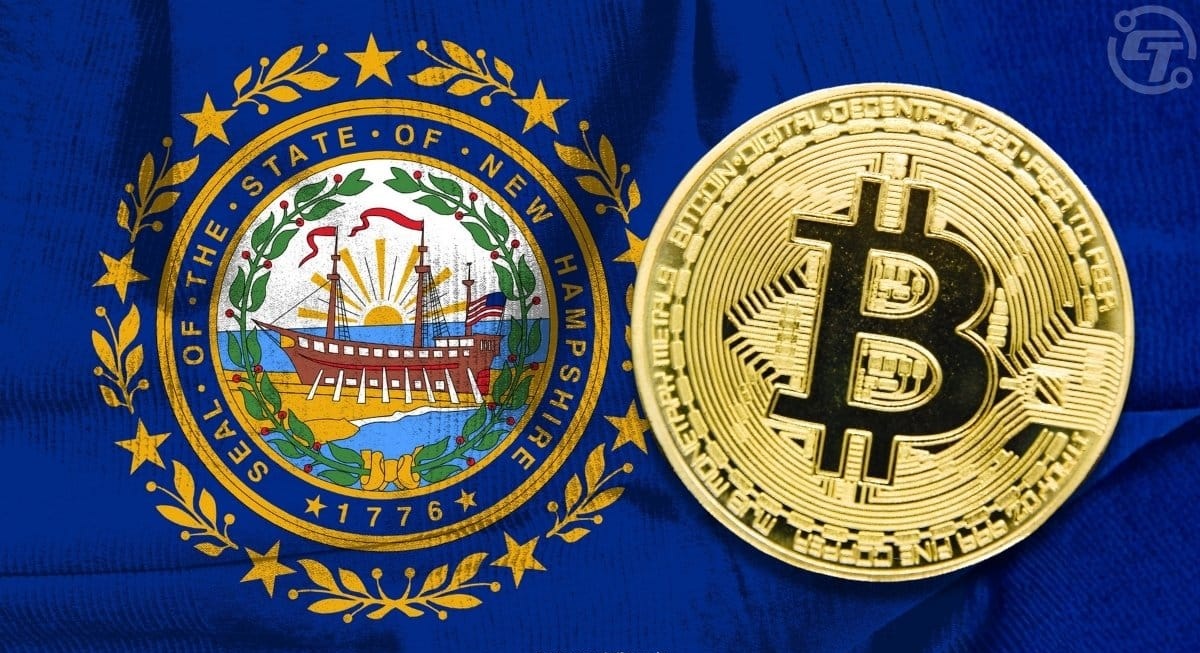
New Hampshire’s Business Finance Authority (BFA) approved the issuance of a groundbreaking $100 million conduit municipal bond backed by Bitcoin, marking the first such structure at the U.S. state level.

This innovative financial instrument allows borrowers to raise capital by posting Bitcoin as collateral under traditional municipal bond regulations, without exposing the state or taxpayers to repayment risk. The BFA acts solely as a conduit issuer, overseeing the transaction while ensuring compliance.

Borrowers must post approximately 160% of the bond’s value in Bitcoin to secure the debt. If Bitcoin’s price falls below roughly 130% of the bond value, an automatic liquidation process triggers to protect investors.

BitGo serves as the custodian for the Bitcoin collateral. The bond was designed by Wave Digital Assets in partnership with Rosemawr Management, a municipal bond specialist, and legal support from Orrick, a leading muni bond law firm.

Transaction fees and any appreciation in the Bitcoin collateral will fund the state’s Bitcoin Economic Development Fund, aimed at fostering innovation, entrepreneurship, and economic growth in New Hampshire.

This setup provides institutional investors with compliant exposure to Bitcoin within the regulated fixed-income market, potentially bridging the gap between crypto and the $140 trillion global debt sector.

Governor Kelly Ayotte, who signed New Hampshire’s Strategic Bitcoin Reserve bill into law in May 2025, celebrated the approval as a testament to the state’s leadership in adopting emerging technologies. The reserve allows the state treasury to allocate up to 5% of public funds to digital assets with a market cap exceeding $500 billion, further positioning New Hampshire as a crypto-friendly hub.

This bond represents a significant step in integrating digital assets into public finance, where crypto-backed lending has long been confined to private markets. If successful, it could serve as a blueprint for other states and municipalities to issue similar products, potentially unlocking new funding avenues for infrastructure and development projects.

Wave Digital Assets co-founder Les Borsai emphasized the goal of creating “fully institutional, fully compliant, and globally scalable” structures to connect traditional finance with Bitcoin.

This development aligns with New Hampshire’s pro-crypto stance, including its status as the first state to enact a strategic Bitcoin reserve, signaling a potential shift toward broader institutional acceptance of cryptocurrency in government-backed debt instruments.

Valued at $100 million and structured as a conduit bond, it allows private borrowers to leverage over-collateralized Bitcoin at ~160% of the bond’s value without state or taxpayer liability, with automatic liquidation triggers if BTC dips below 130% to safeguard investors.

This move builds on the state’s Strategic Bitcoin Reserve law from May 2025, which permits up to 5% of public funds in qualifying digital assets. This bond could unlock trillions in dormant capital by treating Bitcoin as “high-grade collateral” in a regulated framework, bridging crypto’s volatility with the stability of traditional debt markets.

Opens Bitcoin to the $140 trillion global bond market and $58 trillion U.S. segment, where institutions seek compliant BTC exposure without direct crypto custody risks. Could attract pension funds, insurers, and banks, potentially increasing BTC demand and liquidity; early estimates suggest similar structures might mobilize $1-5 billion in initial U.S. muni issuances.

Firms raise capital without selling BTC, avoiding taxable events and IRS scrutiny, while retaining upside potential. Lowers borrowing costs for crypto holders via lower interest rates on bonds; fosters long-term HODLing, aligning with Bitcoin’s “digital gold” narrative.
State Revenue Stream.

Transaction fees and collateral appreciation fund the Bitcoin Economic Development Fund, targeting innovation and entrepreneurship.
Could generate $5-10 million annually in fees/gains initially, spurring tech startups and job growth in New Hampshire—positioning the state as a “crypto hub” rivaling Wyoming or Texas.

Extends private crypto-lending models (e.g., DeFi platforms) to public finance, potentially inspiring BTC-tied infrastructure bonds or diversified digital asset baskets. Accelerates fintech convergence, with projections for a $500 billion “crypto-debt” subsector by 2030 if adoption spreads.

Economists like those at Wave Digital Assets argue this creates “fully institutional, fully compliant” products, turning BTC from a speculative asset into a productive one for real-economy projects like infrastructure or green energy.

As a “sandbox” for Bitcoin in government finance, this bond tests uncharted waters without upending existing rules, but it raises questions about oversight and standardization. Success here could blueprint similar bonds in other states (e.g., Florida or Tennessee), with legal templates from firms like Orrick ensuring SEC compliance and AML/KYC adherence.

Rep. Keith Ammon, who sponsored the reserve bill, called it a “test” for BTC as collateral, potentially influencing federal guidelines. The over-collateralization and BitGo custody model sets benchmarks for volatility protection, but critics worry about systemic risks if BTC crashes—e.g., mass liquidations echoing 2022’s crypto winter.

This might prompt new disclosure rules for muni bonds involving digital assets. By avoiding sales, it sidesteps capital gains taxes, but could invite IRS scrutiny on “constructive sales.” This counters debt-based economies lacking hard assets, advocating for Bitcoin-enhanced treasuries to promote equitable growth.

If replicated, it might accelerate blockchain’s role in transparent public spending, reducing fraud in the $4 trillion U.S. muni market. Beyond finance, this signals Bitcoin’s maturation as a societal tool, but it also amplifies debates on inequality and environmental impact.

As the first sovereign-grade BTC model, it validates crypto for public use, potentially drawing in conservative investors wary of spot ETFs. The development fund could address “multi-dimensional poverty” in underserved areas by funding BTC-linked ventures.

However, benefits may skew toward tech-savvy regions, exacerbating divides unless scaled inclusively. Bitcoin’s energy use draws fire, but stewards like BTCStewardship envision “BitBonds” funding ecosystem restoration—e.g., using proceeds for reforestation. This flips the narrative from “planet-killer” to “regenerative asset.”

Internationally, it could inspire nations like El Salvador with its BTC reserves to issue similar bonds, fostering a “Bitcoin standard” for emerging markets facing dollar dominance. In essence, New Hampshire’s bond isn’t just a $100 million deal—it’s a proof-of-concept that could redefine debt as an engine for innovation, provided volatility is managed.

MegaETH Mainnet Beta Announcement Amid Crypto Greed Index Plunging to Extreme Fear Zone

0

MegaETH, the Ethereum Layer-2 network designed for real-time performance boasting sub-millisecond latency and up to 100,000 TPS, has officially unveiled “Frontier”—its mainnet beta release.

This phase kicks off in early December 2025 and runs for one month, targeting early adopters, experimenters, and Ethereum enthusiasts. The team plans to onboard a curated selection of partner applications progressively during this period.

Incentives won’t be active yet, and users should brace for potential downtime or “rough edges” as it’s still a beta. This comes after MegaETH’s public ICO in late October, which hit its $49.9M hard cap, and follows a testnet phase earlier in the year.

The full mainnet and $MEGA token generation event (TGE) are slated for shortly after, potentially in January 2026. Community buzz on X is high, with users hyping the “real-time” tech as a potential game-changer for DeFi and on-chain apps.

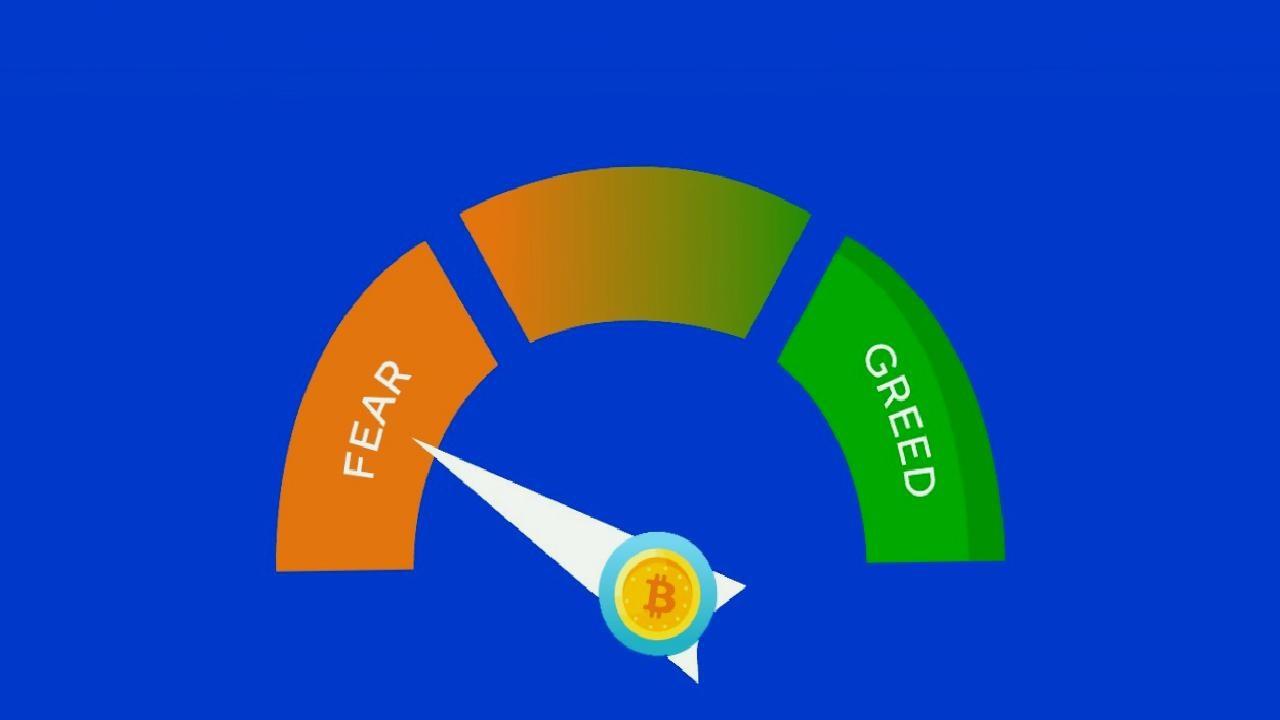
Equity Fear & Greed Index Plunges to Extreme Fear

Meanwhile, broader market sentiment is tanking. CNN’s Equity Fear & Greed Index— a gauge of stock market emotions based on volatility (VIX), put/call ratios, junk bond demand, and more—dropped to 9 on November 18, 2025, signaling “Extreme Fear.”

This is the lowest reading since early April 2025, when similar panic preceded a rebound. S&P 500 down ~4% from Oct highs; VIX up 10%. Early April 2025; Pre-rebound low; markets recovered sharply after.

Historically, single-digit readings like this often mark capitulation points—smart money starts buying when fear peaks, as it did post-April. Crypto’s mirroring the vibe too: Bitcoin’s Fear & Greed Index hit 10-11 also Extreme Fear, with BTC dipping below $90K.

Implications of MegaETH Mainnet Beta Launch

MegaETH’s “Frontier” mainnet beta, set for early December 2025, marks a pivotal step toward realizing its vision of a “real-time Ethereum” L2—delivering sub-millisecond latency, 10ms block times, and up to 100,000 TPS through innovations like node specialization, JIT compilation for smart contracts, and in-memory processing.

Backed by Vitalik Buterin and firms like Dragonfly Capital, this beta follows a successful $49.9M ICO and public testnet, positioning MegaETH to challenge scalability bottlenecks in Ethereum’s ecosystem.

By offloading high-throughput transactions like DeFi trades, gaming interactions to MegaETH while settling on Ethereum mainnet, it could slash gas fees and alleviate L1 bottlenecks—Ethereum’s TVL has dipped amid 2025’s market slowdown, making this timely.

Full EVM compatibility ensures seamless dApp migration, potentially drawing projects from slower L2s like Base or Optimism. Expect curated onboardings for DeFi via DEXs, perps, lending, gaming, NFTs, AI, and social apps, fostering composability across L2s.

The $MEGA token TGE post-beta, ~Jan 2026 will fuel gas payments, staking, governance, and incentives like developer grants—mirroring Solana’s “performance narrative” surge in 2021. Bridges the gap to “enterprise-level” blockchain, enabling real-time apps that rival Web2.

This could reinvigorate Ethereum’s developer base, countering L2 fragmentation and boosting overall chain activity. As a one-month trial with no incentives, users may face downtime or “rough edges,” testing early adoption resilience.

Centralization Trade-offs: Relies on powerful nodes and a single sequencer initially, raising decentralization concerns versus Ethereum’s ethos—though audits and future upgrades aim to mitigate this. Bootstrapping against established L2s requires proving sustained 100k TPS; failure could stall momentum.

Overall, success here could solidify Ethereum as the scalable base layer for 2026, potentially ending “Ethereum killers” by making L2s profit-sharing mechanisms (e.g., cross-chain staking).