DD
MM
YYYY

PAGES

DD
MM
YYYY

spot_img

PAGES

Home Blog Page 135

A Look At Kraken’s Major Funding Boost of $800M Raised at $20B Valuation

0

Crypto exchange Kraken announced that it has raised $800 million in fresh capital across two funding tranches, catapulting its valuation to $20 billion. This comes just ahead of the company’s planned initial public offering (IPO) targeted for early 2026.

The news has generated significant buzz in both crypto and traditional finance circles, signaling strong institutional confidence in Kraken’s growth trajectory amid a maturing regulatory landscape.

The funding was split into two rounds. The first tranche of $600 million came in at a $15 billion valuation from investors including Jane Street, DRW Venture Capital, HSG (Herald Investment), Oppenheimer Alternative Investment Management, and Tribe Capital. The second tranche added $200 million from Citadel Securities at the elevated $20 billion valuation.

Beyond the cash, Citadel is providing expertise in liquidity provision, risk management, and market structure. This marks a notable shift for the firm, which had historically shied away from direct crypto investments due to regulatory hurdles.

Kraken had only raised about $27 million in venture capital historically. This latest infusion builds on a July 2025 effort to secure $500 million and follows September talks for $200–300 million from a single strategic investor.

The capital is earmarked for aggressive expansion argeting new markets in Latin America, Asia-Pacific, Europe, the Middle East, and Africa, with a focus on regulatory-compliant operations. Enhancing asset offerings, payments solutions, and bringing traditional finance (TradFi) products on-chain.

Recent acquisitions include NinjaTrader for $1.5 billion and Small Exchange for $100 million to bolster U.S. derivatives. Bloomberg reports Kraken is working with Morgan Stanley and Goldman Sachs for the listing, potentially in Q1 2026. This positions it ahead of peers like Bullish and Gemini, which have faced post-IPO challenges.

Kraken’s co-CEO Arjun Sethi emphasized the vision: “Our focus has always been straightforward: to create a platform where anyone can trade any asset, anytime, anywhere.” The exchange reported $472 million in Q1 2025 revenue up 19% YoY and $40.5 billion in October trading volume, underscoring its operational strength.

Citadel’s involvement highlights TradFi’s increasing integration with crypto, especially post-FTX recovery and under a more crypto-friendly U.S. administration. While spot ETF flows were negative on November 18 ~$373M outflow for BTC, $74M for ETH, Kraken’s raise reflects optimism for regulated infrastructure over speculative on-chain activity.

Onchain mectrics noted the contrast with slower growth in daily active users on chains like Solana 2.4M, declining and Ethereum 500K, flat. At $20B, Kraken surpasses many rivals and eyes a “one-stop shop” for crypto and beyond, potentially rivaling Coinbase’s 100M users.

Coinbase Global, Inc. (NASDAQ: COIN) went public via direct listing on April 14, 2021, with shares opening at $381 up 52% from the $250 reference price and closing at $328.28, implying an $85.8 billion valuation at the time.

This debut marked a historic milestone for the crypto industry, showcasing explosive growth amid Bitcoin’s bull run. However, the stock’s journey since has mirrored the sector’s volatility: soaring peaks, gut-wrenching lows, and a 2025 rebound that’s been modest at best.

COIN trades at $261.79, down about 31% from its IPO close but up roughly 2% year-to-date. Coinbase reported Q1 revenue of $1.8B and net profit of $730-800M, underscoring its dominance with 56M users. The stock ended 2021 up ~10% from IPO, but volatility was rampant as it tracked crypto prices.

The “crypto winter” post-FTX implosion crushed COIN, dropping to $31.83 by Dec 2022—a 90%+ wipeout from IPO highs. Trading volumes plummeted, revenue fell 60% YoY, and regulatory scrutiny added pressure. By mid-2023, it traded at ~$62, down 84% from debut.

2024 Recovery: A Bitcoin halving and ETF approvals sparked a rebound. Shares climbed ~150% for the year, hitting $343 by Dec 2024 52-week high then. Q4 revenue jumped on institutional inflows, but lingering SEC battles capped gains.

Q1-Q2 2025: Surge hits $147 low in April amid economic uncertainty and BTC dips, then rallied 196% to $436 in July. May 13 announcement of S&P 500 inclusion, sparking a 22.9% single-day jump to ~$256. June saw 52% monthly gains best since Nov 2024, tied to Circle’s IPO rally and stablecoin buzz—Coinbase benefits as a custodian and revenue sharer.

July ATH reflected crypto recovery, but October-November saw a 24% drop to $262, possibly from broader market corrections, regulatory noise and Bitcoin’s YTD decline. Recent X chatter highlights earnings beats on trading volumes and stablecoins, but stock lags peers like leveraged ETFs.

2025 revenue hit $472M in Q1 up 19% YoY, with $40B+ monthly volumes. Analysts at Bernstein, Oppenheimer raised targets post-Q2, eyeing $300+ by year-end if BTC stabilizes. However, COIN’s fate remains ~80% correlated to crypto prices—risky for non-HODLers.

Forbes projects potential $400+ in 3 years if crypto booms, but recession risks could drag it to $150. With 100M+ users, Coinbase eyes TradFi crossovers, but it’s no “set-it-and-forget-it” stock. Coinbase’s post-IPO saga is a microcosm of crypto: high-reward, high-risk.

From $86B debut hype to today’s steadier but subdued footing, it’s resilient but tethered to BTC’s whims. This latest $800M funding round cements Kraken’s status as a frontrunner in the next wave of crypto IPOs.

New Hampshire Pioneers Bitcoin-Backed Municipal Bonds

0

New Hampshire’s Business Finance Authority (BFA) approved the issuance of a groundbreaking $100 million conduit municipal bond backed by Bitcoin, marking the first such structure at the U.S. state level.

This innovative financial instrument allows borrowers to raise capital by posting Bitcoin as collateral under traditional municipal bond regulations, without exposing the state or taxpayers to repayment risk. The BFA acts solely as a conduit issuer, overseeing the transaction while ensuring compliance.

Borrowers must post approximately 160% of the bond’s value in Bitcoin to secure the debt. If Bitcoin’s price falls below roughly 130% of the bond value, an automatic liquidation process triggers to protect investors.

BitGo serves as the custodian for the Bitcoin collateral. The bond was designed by Wave Digital Assets in partnership with Rosemawr Management, a municipal bond specialist, and legal support from Orrick, a leading muni bond law firm.

Transaction fees and any appreciation in the Bitcoin collateral will fund the state’s Bitcoin Economic Development Fund, aimed at fostering innovation, entrepreneurship, and economic growth in New Hampshire.

This setup provides institutional investors with compliant exposure to Bitcoin within the regulated fixed-income market, potentially bridging the gap between crypto and the $140 trillion global debt sector.

Governor Kelly Ayotte, who signed New Hampshire’s Strategic Bitcoin Reserve bill into law in May 2025, celebrated the approval as a testament to the state’s leadership in adopting emerging technologies. The reserve allows the state treasury to allocate up to 5% of public funds to digital assets with a market cap exceeding $500 billion, further positioning New Hampshire as a crypto-friendly hub.

This bond represents a significant step in integrating digital assets into public finance, where crypto-backed lending has long been confined to private markets. If successful, it could serve as a blueprint for other states and municipalities to issue similar products, potentially unlocking new funding avenues for infrastructure and development projects.

Wave Digital Assets co-founder Les Borsai emphasized the goal of creating “fully institutional, fully compliant, and globally scalable” structures to connect traditional finance with Bitcoin.

This development aligns with New Hampshire’s pro-crypto stance, including its status as the first state to enact a strategic Bitcoin reserve, signaling a potential shift toward broader institutional acceptance of cryptocurrency in government-backed debt instruments.

Valued at $100 million and structured as a conduit bond, it allows private borrowers to leverage over-collateralized Bitcoin at ~160% of the bond’s value without state or taxpayer liability, with automatic liquidation triggers if BTC dips below 130% to safeguard investors.

This move builds on the state’s Strategic Bitcoin Reserve law from May 2025, which permits up to 5% of public funds in qualifying digital assets. This bond could unlock trillions in dormant capital by treating Bitcoin as “high-grade collateral” in a regulated framework, bridging crypto’s volatility with the stability of traditional debt markets.

Opens Bitcoin to the $140 trillion global bond market and $58 trillion U.S. segment, where institutions seek compliant BTC exposure without direct crypto custody risks. Could attract pension funds, insurers, and banks, potentially increasing BTC demand and liquidity; early estimates suggest similar structures might mobilize $1-5 billion in initial U.S. muni issuances.

Firms raise capital without selling BTC, avoiding taxable events and IRS scrutiny, while retaining upside potential. Lowers borrowing costs for crypto holders via lower interest rates on bonds; fosters long-term HODLing, aligning with Bitcoin’s “digital gold” narrative.
State Revenue Stream.

Transaction fees and collateral appreciation fund the Bitcoin Economic Development Fund, targeting innovation and entrepreneurship.
Could generate $5-10 million annually in fees/gains initially, spurring tech startups and job growth in New Hampshire—positioning the state as a “crypto hub” rivaling Wyoming or Texas.

Extends private crypto-lending models (e.g., DeFi platforms) to public finance, potentially inspiring BTC-tied infrastructure bonds or diversified digital asset baskets. Accelerates fintech convergence, with projections for a $500 billion “crypto-debt” subsector by 2030 if adoption spreads.

Economists like those at Wave Digital Assets argue this creates “fully institutional, fully compliant” products, turning BTC from a speculative asset into a productive one for real-economy projects like infrastructure or green energy.

As a “sandbox” for Bitcoin in government finance, this bond tests uncharted waters without upending existing rules, but it raises questions about oversight and standardization. Success here could blueprint similar bonds in other states (e.g., Florida or Tennessee), with legal templates from firms like Orrick ensuring SEC compliance and AML/KYC adherence.

Rep. Keith Ammon, who sponsored the reserve bill, called it a “test” for BTC as collateral, potentially influencing federal guidelines. The over-collateralization and BitGo custody model sets benchmarks for volatility protection, but critics worry about systemic risks if BTC crashes—e.g., mass liquidations echoing 2022’s crypto winter.

This might prompt new disclosure rules for muni bonds involving digital assets. By avoiding sales, it sidesteps capital gains taxes, but could invite IRS scrutiny on “constructive sales.” This counters debt-based economies lacking hard assets, advocating for Bitcoin-enhanced treasuries to promote equitable growth.

If replicated, it might accelerate blockchain’s role in transparent public spending, reducing fraud in the $4 trillion U.S. muni market. Beyond finance, this signals Bitcoin’s maturation as a societal tool, but it also amplifies debates on inequality and environmental impact.

As the first sovereign-grade BTC model, it validates crypto for public use, potentially drawing in conservative investors wary of spot ETFs. The development fund could address “multi-dimensional poverty” in underserved areas by funding BTC-linked ventures.

However, benefits may skew toward tech-savvy regions, exacerbating divides unless scaled inclusively. Bitcoin’s energy use draws fire, but stewards like BTCStewardship envision “BitBonds” funding ecosystem restoration—e.g., using proceeds for reforestation. This flips the narrative from “planet-killer” to “regenerative asset.”

Internationally, it could inspire nations like El Salvador with its BTC reserves to issue similar bonds, fostering a “Bitcoin standard” for emerging markets facing dollar dominance. In essence, New Hampshire’s bond isn’t just a $100 million deal—it’s a proof-of-concept that could redefine debt as an engine for innovation, provided volatility is managed.

MegaETH Mainnet Beta Announcement Amid Crypto Greed Index Plunging to Extreme Fear Zone

0

MegaETH, the Ethereum Layer-2 network designed for real-time performance boasting sub-millisecond latency and up to 100,000 TPS, has officially unveiled “Frontier”—its mainnet beta release.

This phase kicks off in early December 2025 and runs for one month, targeting early adopters, experimenters, and Ethereum enthusiasts. The team plans to onboard a curated selection of partner applications progressively during this period.

Incentives won’t be active yet, and users should brace for potential downtime or “rough edges” as it’s still a beta. This comes after MegaETH’s public ICO in late October, which hit its $49.9M hard cap, and follows a testnet phase earlier in the year.

The full mainnet and $MEGA token generation event (TGE) are slated for shortly after, potentially in January 2026. Community buzz on X is high, with users hyping the “real-time” tech as a potential game-changer for DeFi and on-chain apps.

Equity Fear & Greed Index Plunges to Extreme Fear

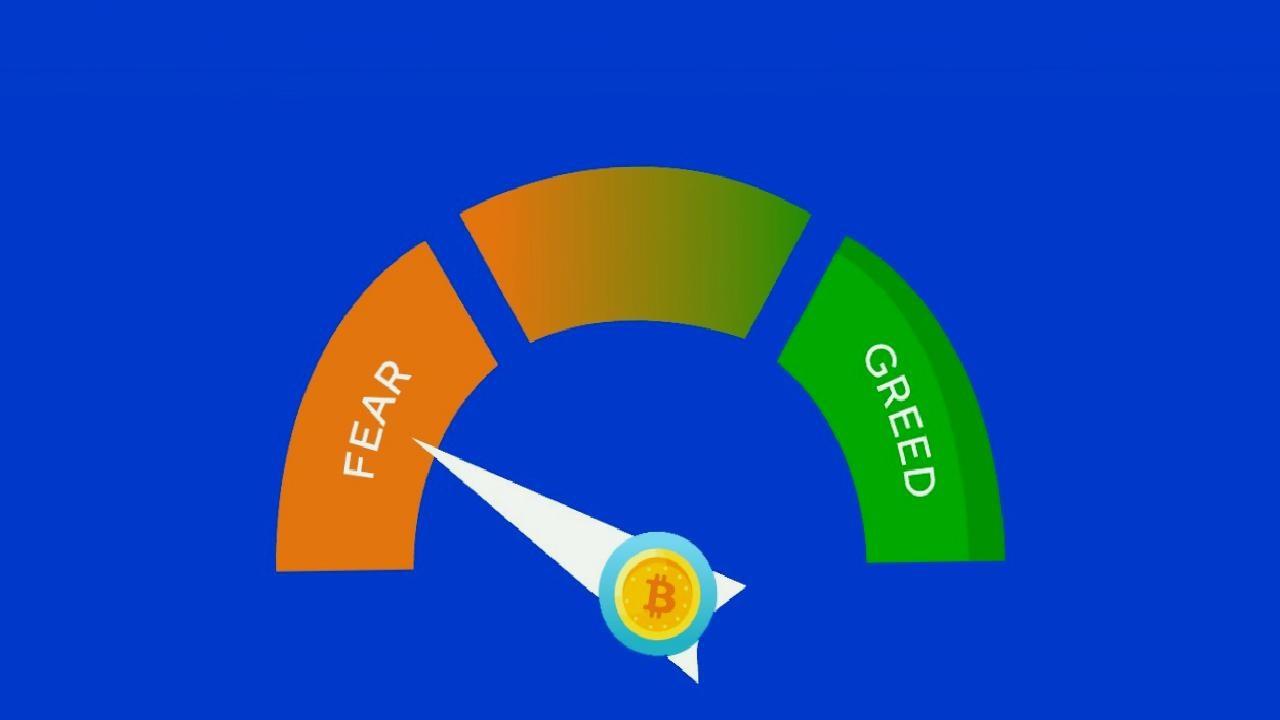
Meanwhile, broader market sentiment is tanking. CNN’s Equity Fear & Greed Index— a gauge of stock market emotions based on volatility (VIX), put/call ratios, junk bond demand, and more—dropped to 9 on November 18, 2025, signaling “Extreme Fear.”

This is the lowest reading since early April 2025, when similar panic preceded a rebound. S&P 500 down ~4% from Oct highs; VIX up 10%. Early April 2025; Pre-rebound low; markets recovered sharply after.

Historically, single-digit readings like this often mark capitulation points—smart money starts buying when fear peaks, as it did post-April. Crypto’s mirroring the vibe too: Bitcoin’s Fear & Greed Index hit 10-11 also Extreme Fear, with BTC dipping below $90K.

Implications of MegaETH Mainnet Beta Launch

MegaETH’s “Frontier” mainnet beta, set for early December 2025, marks a pivotal step toward realizing its vision of a “real-time Ethereum” L2—delivering sub-millisecond latency, 10ms block times, and up to 100,000 TPS through innovations like node specialization, JIT compilation for smart contracts, and in-memory processing.

Backed by Vitalik Buterin and firms like Dragonfly Capital, this beta follows a successful $49.9M ICO and public testnet, positioning MegaETH to challenge scalability bottlenecks in Ethereum’s ecosystem.

By offloading high-throughput transactions like DeFi trades, gaming interactions to MegaETH while settling on Ethereum mainnet, it could slash gas fees and alleviate L1 bottlenecks—Ethereum’s TVL has dipped amid 2025’s market slowdown, making this timely.

Full EVM compatibility ensures seamless dApp migration, potentially drawing projects from slower L2s like Base or Optimism. Expect curated onboardings for DeFi via DEXs, perps, lending, gaming, NFTs, AI, and social apps, fostering composability across L2s.

The $MEGA token TGE post-beta, ~Jan 2026 will fuel gas payments, staking, governance, and incentives like developer grants—mirroring Solana’s “performance narrative” surge in 2021. Bridges the gap to “enterprise-level” blockchain, enabling real-time apps that rival Web2.

This could reinvigorate Ethereum’s developer base, countering L2 fragmentation and boosting overall chain activity. As a one-month trial with no incentives, users may face downtime or “rough edges,” testing early adoption resilience.

Centralization Trade-offs: Relies on powerful nodes and a single sequencer initially, raising decentralization concerns versus Ethereum’s ethos—though audits and future upgrades aim to mitigate this. Bootstrapping against established L2s requires proving sustained 100k TPS; failure could stall momentum.

Overall, success here could solidify Ethereum as the scalable base layer for 2026, potentially ending “Ethereum killers” by making L2s profit-sharing mechanisms (e.g., cross-chain staking).

OpenAI Debuts ChatGPT for Teachers as It Races to Claim New Ground in a Rapidly Expanding AI Market

0

OpenAI has introduced ChatGPT for Teachers, a new version of its chatbot built specifically for K-12 educators and school districts, in one of its clearest attempts yet to tailor AI tools to niche professional communities as competition in the industry heats up.

The company said the platform will let teachers securely manage student information, get personalized instructional support, and collaborate with colleagues inside their districts. It also includes administrative controls that school leaders can use to determine how the tool will function within their communities.

ChatGPT for Teachers is beginning with a pilot group of districts that represent roughly 150,000 educators. OpenAI plans to make it free to all K-12 educators in the United States through June 2027, signaling an aggressive push to embed its platform inside classrooms long before rivals do the same.

“Our objective here is to make sure that teachers have access to AI tools as well as a teacher-focused experience so they can truly guide AI use,” Leah Belsky, OpenAI’s vice president of education, told reporters during a briefing.

The company stressed that data privacy was a foundational part of the product. Anything educators enter into ChatGPT for Teachers will remain inside Intuit’s ecosystem and will not be used to train OpenAI’s models — a key assurance for districts that handle sensitive student information.

The tool arrives amid lingering concerns from teachers and parents who have argued since 2022 that students use generative AI to cheat or bypass critical thinking. OpenAI, in response, said: ChatGPT for Teachers is not intended for student use. Instead, the company said giving teachers hands-on familiarity with AI will help them set rules and best practices that make sense for their classrooms.

“Every student today is growing up with AI, and teachers play a central role in helping them learn how to use these tools responsibly and effectively,” OpenAI wrote in a blog post. “To support that work, educators need space to explore AI for themselves.”

The new product also builds on study mode, released in July, which was created to help college-age students work through assignments step-by-step before producing an answer. At the time, OpenAI framed study mode as an early chapter in a broader effort to support structured learning inside ChatGPT.

What’s becoming clearer with this latest launch is how OpenAI is responding to an intensifying market. As tech giants pump billions into artificial intelligence and carve out new verticals, from legal work to healthcare to finance, OpenAI is moving quickly to release versions of ChatGPT tailored to specific professions and environments. ChatGPT for Teachers fits squarely into that strategy: a specialized, tightly scoped product built to cement OpenAI’s presence in yet another domain before competitors do.

With rivals like Google, Anthropic, Amazon-backed startups, and Elon Musk’s xAI expanding rapidly across their own ecosystems, OpenAI is under pressure to show it can build tools that are not only powerful but also practical and safe for deeply regulated spaces. The release of ChatGPT for Teachers puts the company one step deeper into that niche-building playbook — and one step further in the crowded race to make AI indispensable in everyday work.

Tech Sentiment Rebounds on Nvidia Q3 Result Strength as “Data Fog” Complicates Fed Outlook

0

Stock futures pushed higher Wednesday night as investors digested Nvidia’s latest quarterly beat, a development that appears to be restoring confidence in major technology stocks and providing a significant boost to the broader market.

Leading the pre-market rally, Nasdaq 100 futures jumped 1.4%, while S&P 500 futures rose 0.8%. Futures tied to the Dow Jones Industrial Average also participated in the upswing, adding 110 points, or nearly 0.3%. This bullish activity follows a regular trading session where all three major U.S. stock indexes rose across the board, snapping a four-day slide. Despite these midweek gains, stocks remain in the red for the week due to the depth of the recent pullback in several growth sectors.

The primary catalyst for this turnaround is Nvidia, whose shares jumped nearly 5% in extended trading after the chipmaker released highly anticipated quarterly results that beat Wall Street’s earnings and revenue expectations.

Nvidia reported record revenue for the third quarter ended October 26, 2025, of $57.0 billion, up 22% from the previous quarter and up 62% from a year ago.

For the quarter, GAAP and non-GAAP gross margins were 73.4% and 73.6%, respectively, while GAAP and non-GAAP earnings per diluted share were both $1.30.

Beyond the headline numbers, the market-moving company offered a stronger-than-expected fourth-quarter sales forecast. CEO Jensen Huang explicitly addressed concerns regarding product transitions, stating that demand for the company’s current-generation Blackwell chips is “off the charts.”

Nvidia’s upbeat guidance has likely lifted investor sentiment around the broader AI trade, which had weakened in recent sessions amid growing fears regarding elevated valuations, debt financing, and potential chip depreciation. The robust results boosted a slew of stocks across the AI ecosystem in the after-hours session, lifting chipmakers like Advanced Micro Devices and Broadcom, as well as power infrastructure companies such as Eaton.

However, analysts remain cautious about the future trajectory; David Russell, TradeStation’s global head of market strategy, noted that while Nvidia’s numbers remain extremely strong, there are inevitable questions regarding whether the company has already reached its high-water mark in terms of growth and market share.

Fed Divide and the “Higher for Longer” Threat

While the corporate outlook brightened, the macroeconomic landscape became more complex following the release of the Federal Reserve’s October meeting minutes on Wednesday afternoon. The documents revealed disagreements between Fed officials over whether a slowing labor market or persistent inflation posed the bigger threat to the U.S. economy.

This divide is reflected in their outlook for the upcoming December decision, with many officials calling for no more interest rate cuts this year. Consequently, traders are drastically repricing their expectations; per the CME FedWatch Tool, there is now only a 33% likelihood that the Fed will cut its benchmark overnight borrowing rate by a quarter percentage point in December, a figure significantly lower than bets placed just a month ago.

Why Delayed Payrolls Spark Bond Volatility

Investors will be looking for clarity on the macroeconomic front on Thursday morning when the Bureau of Labor Statistics releases the September nonfarm payrolls data. This release carries significantly higher risk for the bond market than a standard report due to the “data fog” created by the U.S. government shutdown.

The delay has introduced a unique mechanism for volatility known as the “Stale Data” Paradox. Because the September data is being released in late November, traders must decide in real-time whether the numbers reflect the current economy or a past reality that no longer exists. This creates an asymmetric risk profile for bond yields:

  • The “Old News” Discount: If the report shows surprisingly strong job growth, bond bears may argue the data is “stale”—a snapshot of the economy before recent cooling trends took hold. This could lead to a muted reaction where yields do not rise as much as the headline number would typically warrant, confusing algorithmic trading models.
  • The “Confirmation” Trap: Conversely, if the data is weak, the market is likely to treat it as highly relevant confirmation of the “slowing labor market” narrative cited by dovish Fed officials in the minutes. This would validate fears of a recessionary trend, potentially triggering a violent rally in Treasuries (sending yields sharply lower) as traders aggressively price back in a December rate cut.
  • Liquidity Gaps: The uncertainty over how the Fed will weight this “backlogged” data has thinned liquidity in the Treasury market. With fewer market makers willing to commit capital ahead of such an ambiguous print, the bid-ask spreads have widened. This means that when the number hits, even a small surprise could cause exaggerated price swings (gaps) as orders chase a lack of liquidity.

This critical economic print will likely serve as the next major test for a market currently caught between robust tech earnings and a potentially stubborn Federal Reserve.