DD
MM
YYYY

PAGES

DD
MM
YYYY

spot_img

PAGES

Home Blog Page 136

Coinbase Push into Prediction Markets As OCC Eases Backend Infrastructure for Banks

0

Coinbase is accelerating its expansion beyond traditional crypto trading, with recent developments pointing to an imminent launch of a regulated prediction markets platform.

This aligns with the company’s July 2025 announcement to build an “everything exchange” that includes on-chain assets like tokenized stocks, derivatives, and event-based betting. The prediction markets feature, teased for U.S. users in the coming months, will reportedly integrate USDC or USD for trading and cover categories like politics, sports, science, and economics.

Coinbase has become the custodian for Kalshi’s USDC-settled event contracts, held in cold storage for added security. This collaboration leverages Kalshi’s federal CFTC regulation to ensure compliance.

Tech researcher Jane Manchun Wong shared screenshots on November 18, 2025, revealing a branded Coinbase site powered by Kalshi, complete with FAQs, onboarding guides, and a user interface for event contracts. The page briefly went live before being pulled offline.

This positions Coinbase against players like Polymarket global leader with $2B+ weekly volume, Crypto.com partnered with Trump Media, and Gemini seeking CFTC approval for a super app. Prediction markets have surged in 2024-2025, driven by high-stakes events and retail interest.

The rollout starts with U.S. users, followed by international expansion pending approvals. Coinbase’s December 17, 2025, system update event live on X is expected to reveal more, potentially tying into tokenized assets and early-stage token sales.

OCC’s Green Light for Banks Holding Crypto for Gas Fees

In a significant regulatory shift, the U.S. Office of the Comptroller of the Currency (OCC) issued Interpretive Letter 1186 clarifying that national banks can hold limited crypto assets on their balance sheets to cover blockchain “gas fees.”

This addresses a long-standing operational hurdle, allowing banks to facilitate permissible crypto activities without relying solely on third parties. Banks may pay network fees to support custody, execution, or other approved digital asset services.

They can also hold native tokens like BTC, ETH, SOL, or XRP for “reasonably foreseeable” needs, including platform testing. Holdings must be minimal relative to capital, with banks managing volatility, liquidity, cybersecurity, and compliance risks under “safe and sound” standards.

No broad speculative holdings are allowed—only operational necessities. This builds on May 2025’s Letter 1184 custody and outsourcing and reflects the pro-crypto Trump administration’s influence, including Fed withdrawals of anti-crypto guidance. It reduces counterparty risks and enables smoother on-chain settlements.
Relied on agents/third parties; unclear principal ownership. Banks can hold/pay directly for operational needs. Allows principal holdings for internal/third-party tests. Emphasizes material risks (e.g., volatility) over documentation

Bottleneck for blockchain integration. Unlocks custody, tokenization, and DeFi services. This dual news underscores accelerating mainstream crypto integration: Coinbase betting on user-facing innovation, while OCC eases backend infrastructure for banks. Both could drive institutional inflows, with prediction markets alone projected to hit $10B+ in volume by 2026.

This addresses a long-standing operational hurdle, allowing banks to facilitate permissible crypto activities without relying solely on third parties. Banks may pay network fees like ETH on Ethereum to support custody, execution, or other approved digital asset services.

They can also hold native tokens like BTC, ETH, SOL, or XRP for “reasonably foreseeable” needs, including platform testing. Holdings must be minimal relative to capital, with banks managing volatility, liquidity, cybersecurity, and compliance risks under “safe and sound” standards.

No broad speculative holdings are allowed—only operational necessities. This builds on May 2025’s Letter 1184 custody and outsourcing and reflects the pro-crypto Trump administration’s influence, including Fed withdrawals of anti-crypto guidance. It reduces counterparty risks and enables smoother on-chain settlements.
Implications of Saudi Arabia’s $1 Trillion Investment Pledge in the US

0

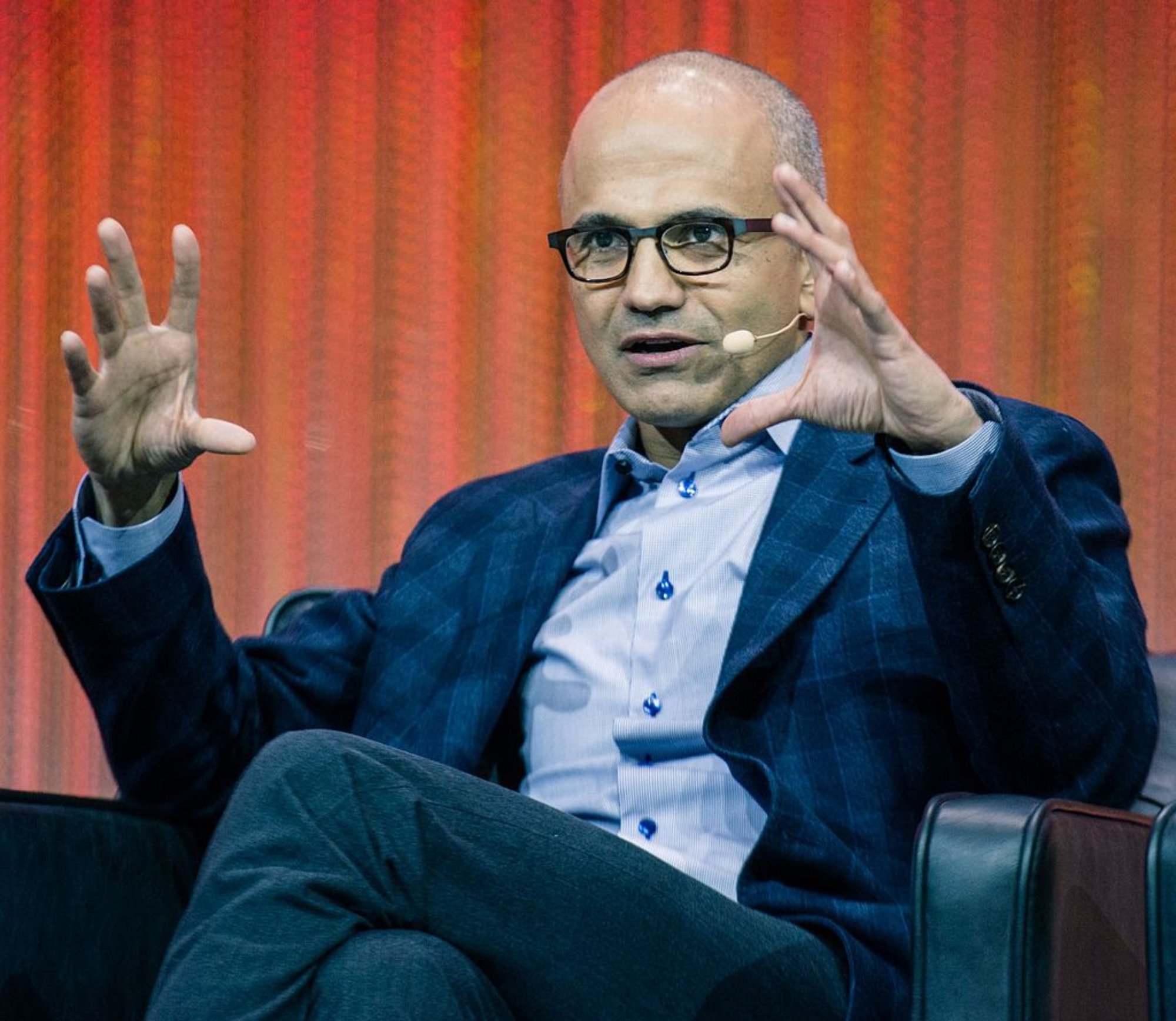
Saudi Crown Prince Mohammed bin Salman (MBS) announced during an Oval Office meeting with US President Donald Trump that Saudi Arabia would increase its committed investments in the United States from $600 billion to nearly $1 trillion.

This pledge builds on prior discussions and aligns with Saudi Arabia’s Vision 2030 economic diversification strategy, emphasizing sectors like technology, artificial intelligence (AI), critical minerals including magnets, energy, aerospace, defense, and sports.

The announcement was framed as “real investment” to create jobs and opportunities, with Trump highlighting its role in bolstering US national security through economic ties. The commitment came during a bilateral meeting at the White House, where Trump welcomed MBS with military honors.

Trump described the deal as a sign of Saudi Arabia being a “great ally” and joked that he might “work on” MBS to push it to a full $1 trillion. MBS responded affirmatively, stating, “Today and tomorrow, we are going to announce that we are going to increase that $600 billion to almost $1 trillion of investment.”

Investments will prioritize high-tech and strategic industries. A White House fact sheet outlined expansions in US exports, reduced trade barriers, and partnerships in AI, nuclear energy, and defense sales including F-35 jets to Saudi Arabia. Additional deals include a memorandum of understanding on AI cooperation and sales of advanced AI chips to the kingdom.

MBS emphasized that the pledge is driven by Saudi Arabia’s “huge demand” for US computing power and innovation, not short-term oil price fluctuations despite recent drops to around $60 per barrel. He tied it to long-term projects like the kingdom’s Humain AI company, backed by the Public Investment Fund (PIF).

Trump noted the investments would “create jobs” and “a lot of power for the United States,” echoing similar $450 billion pledges from his first term though past analyses showed actual US exports to Saudi Arabia totaled only about $92 billion from 2017-2020.

The meeting signals a thaw in ties strained under the Biden administration. Trump praised MBS’s human rights record despite ongoing concerns (e.g., the 2018 Jamal Khashoggi murder, which MBS called a “huge mistake”). Discussions also touched on potential Saudi normalization with Israel via the Abraham Accords and countering Iran/Houthi threats.

The US approved F-35 sales, though Israel expressed opposition over regional air superiority concerns. AI chip exports mark a first for Saudi Arabia, potentially accelerating its tech ambitions but raising questions about technology transfer risks amid Riyadh’s ties to China.

While hailed as a win for US jobs and exports, experts note historical overpromising—e.g., a 2017 $110 billion defense deal resulted in only $23 billion in notified sales by 2020. Oil price volatility could strain funding, though PIF’s $925 billion assets provide a buffer.

X Posts highlighted Trump’s quote on the investment as “national security,” while some speculated on quid pro quo for AI tech access. Saudi Ambassador to the US Princess Reema bint Bandar Al Saud called it a “significant day” for bilateral ties, emphasizing job creation and security.

This deal underscores deepening US-Saudi economic interdependence, with potential to drive US growth but also geopolitical complexities. Follow-up announcements on specific projects are expected soon.

Tekedia Capital Welcomes Frekil, Scale AI for Medical Scans

0

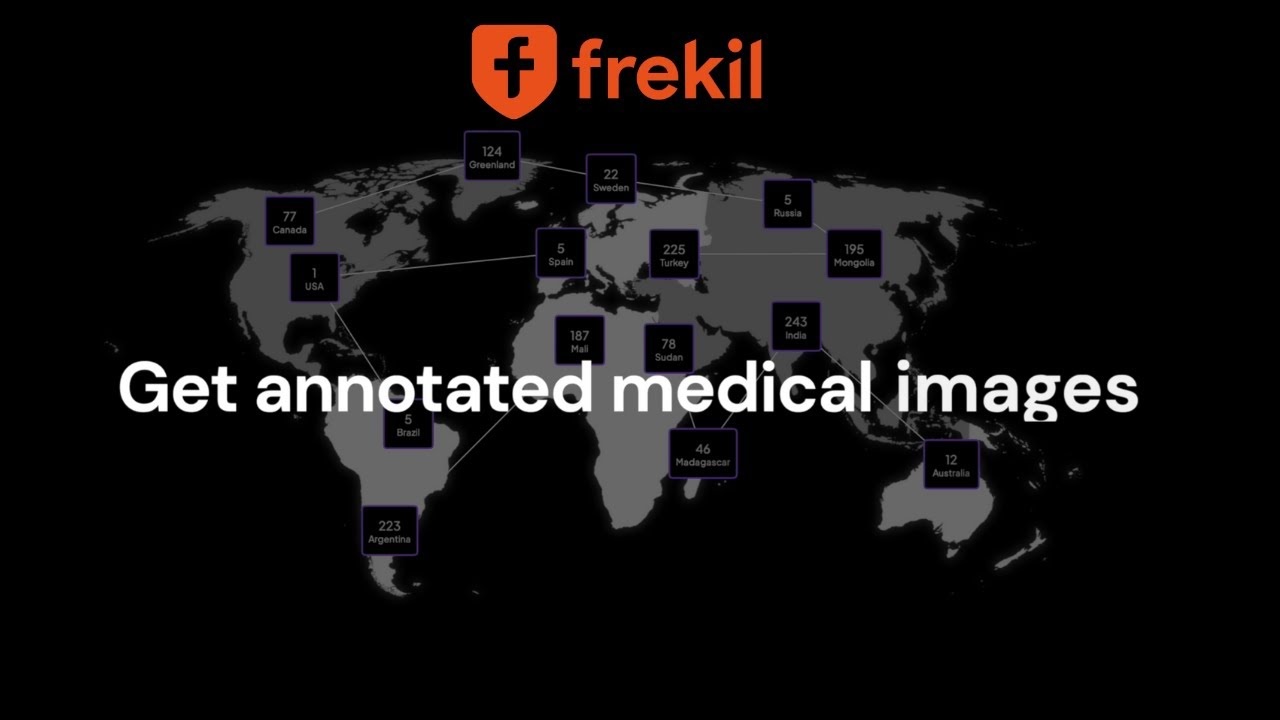
Tekedia Capital invests in India-based Frekil. Frekil accelerates how healthcare AI teams procure and annotate medical scans such as X-rays, CT scans, fundus images, and more making the process up to 10x faster with AI-assisted workflows. The company partners with radiology networks to access large-scale imaging datasets and operates a global marketplace of certified radiologists who deliver rapid, high-quality annotations.

Globally, AI is reshaping healthcare, yet the biggest obstacle remains unchanged: access to clean, well-annotated medical images. Healthcare AI companies and life sciences R&D teams spend months collecting imaging data from hospitals and securing experts to annotate it. The annotation process itself remains manual, slow, expensive, and lacking transparency in quality.

Frekil was created to transform this bottleneck. Working closely with radiology partners, they source large volumes of imaging data and match them with Frekil’s worldwide network of vetted radiologists. On top of this supply chain, they have built powerful, browser-based annotation tools designed specifically for medical AI: collaborative, benchmark-driven, and FDA-ready from day one. With Frekil, teams can move from raw data to fully annotated, production-ready datasets in days instead of months.

This is Scale AI for medical scans and a foundational platform for healthcare innovation. Tekedia Capital welcomes Frekil.


Microsoft Turns to Architect of Its Cloud Revolution as Nadella Prepares a Full Reboot for the AI Era

0

Microsoft is gearing up for what CEO Satya Nadella sees as a once-in-a-generation transformation, and he is bringing back one of the company’s most influential strategists to help drive it.

Nadella has tapped Rolf Harms, the economist and strategist behind Microsoft’s pivotal “Economics of the Cloud” paper in 2010, to serve as his advisor on AI economics, a role that signals how sweeping the company’s shift toward artificial intelligence could be.

In a memo circulated to senior executives earlier this month, Nadella said Microsoft must “rapidly rethink the new economics of AI across the company — just as we once did with the cloud,” describing the moment as a fundamental platform shift. He emphasized that Microsoft is building a modern “AI factory,” with Copilots and autonomous agents sitting on top of massive investments in compute, data centers, and model infrastructure.

Harms’ return to the center of Microsoft’s strategic planning is steeped in history. Fourteen years ago, he coauthored “Economics of the Cloud,” a white paper that forced Microsoft to confront the financial realities of a future dominated by hyperscale computing. At the time, Harms was a director of corporate strategy, and the paper challenged internal assumptions so aggressively that employees complained he had dropped “bombshells” into their organizations. Nadella recalled in the memo that Harms’ response was simple: “They’re already there, I’m just helping you find them.”

That document ultimately became foundational to Microsoft’s cloud computing dominance. It justified early investments in global data centers, offered a quantitative roadmap of how cloud adoption would evolve, and made the case that customers would eventually embrace large-scale cloud services for cost savings and operational efficiency. Its arguments cleared internal resistance and helped set the stage for Azure’s rise.

The parallels with today’s AI moment are hard to miss. Companies across the tech sector have embarked on massive spending sprees to secure advanced chips, build new data centers, and train increasingly powerful models — even as analysts question whether the economics make sense. Microsoft briefly slowed its AI infrastructure spending earlier this year, a move that heightened concerns about demand and profitability. In recent months, however, it has accelerated its commitments again, signing expansive new agreements with OpenAI and Anthropic.

Nadella’s memo to executives made clear that Microsoft cannot treat AI as an add-on or incremental upgrade. He wrote that AI represents a shift that is “much more capital and knowledge intensive” than the cloud transition. Harms’ new role will involve working directly with Nadella and the company’s most senior leaders to reexamine everything from infrastructure scaling and platform economics to how applications should be designed and monetized in an AI-first world.

Harms has remained important inside Microsoft’s hierarchy. He is now a corporate vice president in the Cloud + AI group led by Scott Guthrie, and he will continue reporting to Guthrie while taking on his expanded mandate. Business Insider previously profiled Harms as one of the quiet power players behind Microsoft’s AI strategy, tracing his influence from the cloud era into the company’s next frontier.

Nadella said Harms will help Microsoft understand not only how existing businesses will be transformed by AI, but also which entirely new product categories might emerge. The goal is to avoid repeating early mistakes from the cloud era and ensure the company has a clear, data-driven blueprint for the enormous financial and structural commitments that AI now demands.

If the cloud revolution redefined Microsoft once, the company now appears to be preparing for a second reinvention — with the same strategist helping guide the way.

Adobe to Acquire Semrush for $1.9bn in Strategic Move to Expand AI Marketing and Analytics Tools

0

Adobe announced on Wednesday that it will acquire digital marketing software platform Semrush for $1.9 billion, a deal that reflects the company’s ambition to deepen its presence in AI-powered marketing solutions.

Adobe will pay $12 per share in cash, representing a premium of approximately 77.5% over Semrush’s last closing price, sending Semrush shares soaring 74% to $11.79.

Semrush, a platform renowned for its AI-driven tools supporting search engine optimization, social media management, and digital advertising, provides actionable insights that help companies better understand how their brands are perceived online. Adobe aims to integrate Semrush’s technology into its suite of products to enhance marketers’ capabilities, allowing them to leverage data from websites and generative AI platforms such as ChatGPT and Google’s Gemini. The acquisition is expected to close in the first half of 2026.

“The price is steep as Semrush isn’t a massive revenue engine on its own, so Adobe is likely paying for strategic value. The payoff could be high too if Adobe can quickly turn Semrush’s data into monetizable AI products,” said Grace Harmon, analyst at eMarketer.

Adobe’s portfolio of products, including Photoshop, InDesign, Acrobat, and Illustrator, has long been a staple for creative professionals, enterprises, and students. However, investor pressure has mounted to expand monetization through AI capabilities amid growing competition in the digital design and marketing sector. Adobe’s shares have fallen more than 27% so far this year, reflecting concerns about the company’s ability to capitalize on AI-driven opportunities while maintaining growth in its Creative Cloud business.

William Blair analysts noted, “While we are positive on Adobe restarting its M&A engine given the success that it has seen with this motion over the years… this deal likely does little to answer the questions revolving around the company’s Creative Cloud business.”

This acquisition builds on Adobe’s broader AI strategy. In September, Adobe raised its annual revenue and profit forecasts, driven by strong demand for its design software. A month later, the company announced a collaboration with OpenAI that allows users to control one of its applications directly via ChatGPT. This partnership underlines Adobe’s commitment to embedding AI into its core products to enhance functionality and user experience.

Semrush is expected to strengthen Adobe’s marketing intelligence and analytics offerings, providing data-driven insights that can inform both creative and advertising strategies. The deal is particularly timely as the marketing sector increasingly adopts AI tools to optimize campaigns, analyze consumer behavior, and automate content creation.

Adobe’s move points to a broader trend among major tech companies seeking growth through AI integration. Adobe aims to deliver a more comprehensive AI-powered platform for enterprise clients by combining Semrush’s analytics capabilities with Adobe’s design and creative suite. This aligns with the wider race among tech giants to leverage artificial intelligence across multiple verticals, including marketing, creative design, and data-driven business solutions.

The acquisition underscores Adobe’s strategic shift toward AI as a key growth frontier. Adobe is expected to monetize Semrush’s data and integrate AI-driven insights across its platform, particularly in light of competitive pressures from other technology firms aggressively investing in generative AI capabilities.

This deal puts Adobe in a position to compete more robustly in marketing technology, where it is expected to combine creative tools, AI analytics, and data-driven decision-making into a single ecosystem.