DD
MM
YYYY

PAGES

DD
MM
YYYY

spot_img

PAGES

Home Blog Page 1363

Federal Judge Rules Google’s Adtech Empire an Illegal Monopoly, Pushing Tech Giant Closer to Historic Breakup

0

In a landmark decision, U.S. District Judge Leonie M. Brinkema ruled Thursday that Alphabet Inc.’s Google violated federal antitrust laws by “willfully acquiring and maintaining monopoly power” in the advertising technology (adtech) market, marking the company’s second major antitrust defeat in less than a year.

The ruling, handed down in the U.S. District Court for the Eastern District of Virginia, brings Google closer to a potential breakup than at any point in its 27-year history, with analysts warning that, absent intervention from President Donald Trump, the tech giant could face disintegration. The decision caps a two-year legal battle initiated by the U.S. Department of Justice (DOJ) and eight states, setting the stage for a high-stakes remedies phase that could reshape the $700 billion global digital advertising industry.

The case, United States v. Google LLC (2023), filed on January 24, 2023, accused Google of illegally monopolizing the adtech market through acquisitions like DoubleClick in 2008 and anti-competitive practices that locked in advertisers and publishers. Following a trial from September 9 to September 27, 2024, and closing arguments on November 25, Judge Brinkema found Google guilty of violating Sections 1 and 2 of the Sherman Antitrust Act.

Specifically, the court determined that Google unlawfully tied its ad server, DoubleClick for Publishers (DFP), with its ad exchange, AdX, and abused its monopoly power on the publisher side of the adtech stack, harming competition and inflating prices for advertisers and publishers.

However, the judge rejected the DOJ’s claim that Google monopolized the open-web display advertiser ad networks market, which facilitates ad buying outside closed ecosystems like Google Search or social media platforms.

“The plaintiffs failed to prove that the ‘open-web display advertiser ad networks’ are a relevant market where Google has monopoly power,” Brinkema wrote in her memorandum opinion.

Despite this partial victory for Google, the ruling’s focus on DFP and AdX, core components of its adtech empire, signals a severe blow to its business model.

Unprecedented Threat of Breakup

This ruling places Google closer to a breakup than ever before, surpassing even the scrutiny it faced during the 2018 EU Android case, which resulted in a €4.3 billion fine, or the 2000 Microsoft antitrust case, where a breakup order was overturned on appeal. The adtech verdict follows a separate August 2024 ruling by Judge Amit P. Mehta, who found Google illegally monopolized the general internet search market, with remedies expected by August 2025. Together, these decisions threaten to dismantle Google’s dominance across search and advertising, which generated $305.6 billion in revenue in 2023, primarily from ads.

Analysts see Google heading toward disintegration unless President Trump intervenes.

There has been a proposal for spinning off Google’s adtech unit, formerly DoubleClick, as a public-interest “B Corp” with capped profits to restore competition. Without political intervention, experts predict a fragmented Google, with its adtech and search businesses potentially operating as separate entities.

Potential Remedies

The court will now set a briefing schedule and hearing date to determine remedies, a process expected to unfold over the coming months.

Potential remedies include forcing Google to sell its Google Ad Manager suite, encompassing AdX and DFP, which could open the adtech market to rivals like The Trade Desk. The DOJ has also floated divestitures of Chrome or Android in the search case, raising the specter of a broader breakup. There is also a possibility of imposing restrictions to ensure fair competition, such as prohibiting Google from prioritizing its own exchange in auctions or mandating data sharing with competitors. These could preserve Google’s business while leveling the playing field. In monetary damages, the DOJ previously sought treble damages for federal agencies overcharged for ads, though specifics remain undecided.

The remedies phase is critical, as structural changes could transform the digital advertising industry, potentially boosting competitors and lowering ad prices. However, a publisher tech executive warned that divestitures might raise ad server costs, as Google’s DFP operates as a loss leader subsidized by AdX profits.

Likely Intervention from Trump

In its earlier argument, Google cited national security. The company’s legal team argued that breaking it up could pose a national security risk, with concerns that splitting off its Chrome browser and limiting investments, particularly in artificial intelligence (AI), could weaken America’s technological edge. Many believe that President Trump, who has been pushing a “protectionist” economic agenda, will likely agree with the argument.

Analysts speculate that Trump’s DOJ might soften remedies, prioritizing economic growth over aggressive antitrust enforcement. Without such intervention, the momentum from Biden-era lawsuits suggests Google faces a real risk of disintegration, with divestitures potentially splitting its adtech and search empires.

Google plans to appeal, with spokesperson Kent Walker arguing the ruling ignores competition from Amazon, social media, and streaming TV. Google’s defense highlighted its investments in fighting ad fraud and spam, claiming its tools benefit small businesses.

With this ruling, Google’s troubles extend beyond the U.S. In the UK, a £5 billion class action lawsuit filed in April 2025 alleges similar adtech abuses, while the Competition and Markets Authority (CMA) issued a statement of objections in September 2024, with a final decision expected by late 2025.


Driving Financial Responsibility: How Mobile Money Providers Are Improving Customer Behavior

0

Mobile money providers are significantly transforming financial behaviors by promoting financial responsibility for customers.

These MMPs are actively addressing the challenges of over-indebtedness through technology, responsible practices, and regulatory collaboration. A key focus has been the Integration of AI-driven credit-scoring algorithms that enhance their ability to understand borrower behavior and offer tailored repayment options that help prevent defaults.

A GSMA State of the Industry report on mobile money 2025, revealed that in India, Airtel Payments Bank has implemented an AI-powered system to assess creditworthiness, enabling personalized financial solutions for users. These technological advancements are laying the groundwork for more inclusive financial ecosystems. For instance, AI tools can analyze customer data to better predict repayment capacity.

To further improve responsible lending, some digital financial service providers are experimenting with strategies like “positive frictions”, which is a deliberate delay in loan disbursement to give users time to reflect before accepting credit.

One notable player is Jumo, a South African fintech that facilitates digital financial services such as credit and savings in emerging markets by way of USSD short codes. The fintech is partnering with MMPs across Africa to incorporate additional decision-making steps into their digital credit services, helping borrowers make informed financial decisions.

It is worth noting that efforts to improve responsible lending are not limited to private players. In 2024, the Central Bank of Kenya launched the Chora Plan Campaign, encouraging financial service providers to collaborate with regulators to design better products and prioritize consumer protection.

The launch of the Chora Plan campaign comes in response to the low levels of savings and high financial illiteracy rates in Kenya. According to a 2021 Global Financial Literacy Survey, only 38% of Kenya’s population is financially literate, highlighting an urgent need for enhanced financial education. This initiative is already benefiting mobile money users, especially as licensed banks in Kenya work closely with MMPs to deliver digital credit services.

Notably, across Sub-Saharan Africa, MMPs are becoming more proactive in addressing over-indebtedness. In Kenya, Safaricom has integrated financial literacy training into its outreach. Meanwhile, MTN Uganda and Ericsson partnered in 2024 to promote financial literacy through a nationwide campaign.

Regulators are also stepping up. In Pakistan, the State Bank of Pakistan held countrywide literacy camps during its 2024 Financial Literacy Week. Similarly, in Nigeria, the Central Bank announced plans in October 2024 to introduce financial literacy into school curricula, aiming to instill financial skills like saving, budgeting, and investing early in life.

Together, these initiatives form a comprehensive response to the growing issue of over-indebtedness in emerging markets. By focusing on consumer education, ethical lending, and regulatory cooperation, the mobile money industry is paving the way for sustainable financial inclusion, even in underserved communities.

While the risk of over-indebtedness remains, a data-driven and pragmatic approach to digital credit can ensure that the benefits of financial access outweigh the downsides. That said, a critical regulatory gap still exists: the absence of open data policies. This creates data asymmetry, making it difficult to assess a customer’s creditworthiness across platforms. Even in markets with established credit reference agencies, access to timely, comprehensive credit data is still a challenge.

Ultimately, the solution lies in balancing innovation with consumer protection. As mobile money services continue to evolve, responsible digital credit—backed by smart regulation and cross-sector collaboration—will be key to unlocking greater financial inclusion across emerging economies.

Banks Now Willing to Fund Renewable Energy, But Poor Business Proposals and Policy Missteps Threaten Sector — REA Boss

0

Nigeria’s energy sector appears to be on the brink of transformation, with new signals suggesting that commercial banks are now more willing to finance renewable energy projects than ever before. Yet, poor-quality business proposals and controversial government policies continue to cast a shadow over the prospects of widespread adoption of clean energy.

At the 2025 Lagos Energy Summit, the Managing Director of the Rural Electrification Agency (REA), Abba Aliyu, said financial institutions are increasingly open to backing solar and other renewable energy ventures. However, many potential beneficiaries, particularly in the private sector, continue to present proposals that do not meet the most basic financial standards required for funding.

“I’ve never been a spokesperson for banks, but I can confidently say that they are ready to fund renewable energy,” Aliyu said. “My position allows me to see the transactions firsthand, and I can confirm their commitment.”

According to him, banks are adopting more innovative energy financing models and are looking for credible projects to fund. But these opportunities are often missed due to poorly structured proposals that fail to demonstrate viability or repayment potential.

“Some business plans are not just poorly written—they lack alignment between financial statements and revenue models. If we want banks to act, we must first do the groundwork right,” he said, urging developers to seek expert guidance to align proposals with investor expectations.

Solar Ambitions Undermined by Import Ban Push

Aliyu’s remarks come at a time when the federal government’s policy direction on renewable energy, particularly solar, has sparked heated debate. Earlier this year, the government announced plans to ban the importation of solar panels and inverters, a move aimed at promoting local manufacturing.

The policy, however, has been widely criticized by energy experts, industry players, and stakeholders who argue that it could stifle the growth of Nigeria’s solar sector at a time when millions remain cut off from the national grid.

While the government says the plan is to boost local capacity, experts warn that Nigeria currently lacks the industrial base to produce solar panels at scale. Worse still, the country’s epileptic power supply has made solar energy a critical lifeline for households, businesses, and health facilities.

The proposed import restriction has raised fears that solar expansion could slow, especially in underserved rural areas that rely heavily on donor-funded or private sector-led solar mini-grid projects. For many of these efforts, imported components are still essential.

Stakeholders at the summit stressed that while the intention to boost local production is noble, a ban without first building domestic capacity and supply chains, risks being counterproductive.

The Economic Toll of Energy Poverty

Beyond policy bottlenecks, the summit also highlighted the broader economic implications of Nigeria’s persistent energy crisis.

Dr. Lateef Akanji, a Chartered Petroleum Engineer and Senior Lecturer at the University of Aberdeen, warned that the country’s low electricity access, only 33% of Nigerians have reliable power, has already cost the economy an estimated $26.2 billion annually.

He said energy poverty remains the greatest barrier to Nigeria’s economic growth. We’re sitting on vast energy resources, both fossil and renewable, but we’ve failed to convert them into meaningful, accessible electricity.

He praised Lagos State for its proactive efforts in pushing clean energy initiatives and creating a conducive investment climate. Still, he said the national conversation needs to shift toward building capacity in renewable energy through workforce development, training, and technology transfer.

Akanji also called on the government to explore green bonds and provide upfront capital investment in critical energy infrastructure, particularly in off-grid and hybrid systems.

In a sector notorious for infrastructure decay, attention also turned to how regulatory systems can be strengthened to ensure sustainability.

Engr (Dr) Oluwaseun Fadare, Commissioner for Engineering and Standards at the Lagos State Electricity Regulatory Commission, said maintenance and accountability must become central pillars of energy policy.

He proposed a regulatory framework that includes enforcement of mandatory maintenance standards, penalties for non-compliance, incentives for exemplary performance, and the integration of real-time monitoring technologies.

He also advocated for the creation of an emergency maintenance fund and an independent regulatory oversight body to ensure transparency and fast responses to infrastructure breakdowns.

“Combining mandatory standards, technological advancements, incentives, and penalties, these regulatory measures can effectively enforce adequate maintenance and promote long-term sustainability,” Fadare said.

REA Moves to Protect Billions in Public Solar Assets

Meanwhile, the REA is already taking steps to prevent renewable infrastructure from falling into disrepair. The agency recently received approval to establish a renewable asset management company to oversee its growing portfolio of solar investments across the country.

Aliyu said the new company will be tasked with managing infrastructure worth nearly $500 million—mostly deployed to public universities and federal institutions. The move, he said, is aimed at ensuring longevity and functionality.

“Too many public projects in Nigeria collapse after commissioning. This is about safeguarding investments and ensuring they deliver value over time,” he said.

He also disclosed that President Bola Tinubu has approved N100 billion for the National Public Sector Solarisation Project, a flagship initiative aimed at cutting the cost of governance by transitioning government institutions from diesel generators to solar energy.

“This is one of the most strategic interventions we’ve seen in recent years,” Aliyu noted. “But its success will depend on coordinated execution, competent operators, and an honest reassessment of our policy priorities.”

Nigeria’s energy landscape is marked by urgency. As the country struggles with frequent national grid failures, rising energy costs, and growing public frustration, the transition to renewable energy is no longer just an environmental necessity—it is a developmental imperative.

The emerging willingness of banks to support clean energy signals an opportunity, but it is one that could slip away unless structural gaps are addressed.

Google Opens Applications for 2025 Africa Accelerator Program, Prioritizes AI Startups Solving Local Challenges

0
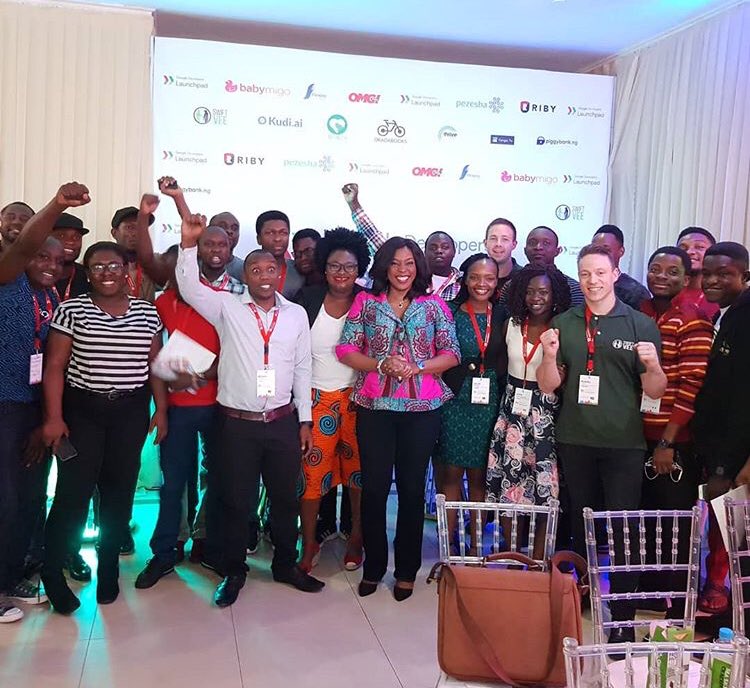
Google Launchpad ACCELERATOR

Google has opened applications for the 2025 edition of its Google for Startups Accelerator Africa, marking another significant push by the global tech firm to back African innovators harnessing artificial intelligence to solve real-world challenges.

Now in its seventh year, the initiative targets early-stage startups on the continent that are deploying AI-first solutions, with a particular focus on products that can scale impact across key sectors including agriculture, healthcare, education, finance, and climate action.

The three-month accelerator is open to Seed to Series A startups operating in Africa, provided they already have a live product, at least one founder of African descent, and a strong commitment to responsible AI development. According to Google, these criteria are designed to ensure that the startups not only have traction but also understand the cultural, economic, and social dynamics of the communities they are aiming to serve.

Selected startups will receive access to world-class technical mentorship from Google’s engineering teams and industry experts. They will also gain entry into an expansive network of global investors, business partners, and collaborators. In addition, Google is offering up to $350,000 in cloud credits to help startups build and scale their infrastructure. Startups will also participate in high-impact workshops that will cover a range of critical areas including technology strategy, people management, product design, and AI implementation.

The program, which has supported 140 startups across 17 African countries since 2018, is already making waves. Google disclosed that alumni of the program have collectively raised over $300 million in external funding and created more than 3,000 jobs. These startups are now actively shaping their sectors, many of them expanding across regions and gaining global recognition.

One notable example is Nigeria’s Crop2Cash, an agritech platform that uses AI to onboard smallholder farmers, build their digital identities, and connect them to traceable payments, productivity tools, and lines of credit. According to Google, Crop2Cash has significantly improved agricultural productivity and financial inclusion for farmers locked out of the formal economy. The company’s trajectory underscores the kind of transformative impact the accelerator seeks to achieve.

Google’s decision to double down on Africa’s AI space is rooted in a firm belief that the technology holds vast potential for the continent’s growth. Citing McKinsey’s forecast that AI could contribute as much as $1.3 trillion to Africa’s economy by 2030, the company emphasized that bold innovation—especially at the grassroots—is critical if that promise is to be realized.

Folarin Aiyegbusi, Head of Startup Ecosystem for Africa at Google, said the accelerator is part of the company’s long-term vision to empower local innovators to lead the charge.

“Startups are Africa’s problem solvers. With the right resources, they can scale their impact far beyond local communities,” he said.

Aiyegbusi added that responsible AI development shaped by local context is key to unlocking solutions that truly work for African societies.

However, Google’s accelerator is seen as not just a lifeline for startups, but also a necessary intervention in a space that remains fraught with infrastructural and regulatory hurdles. Beyond the capital and mentorship, the program offers credibility and access—two key ingredients many startups struggle to secure in their formative years.

The 2024 cohort featured 10 startups from Nigeria, Kenya, Rwanda, and South Africa, all using AI to address major developmental bottlenecks. Their work spanned sectors from fintech and climate resilience to health tech and public services—further proving the versatility of AI when applied to Africa’s unique problems.

Startups interested in joining the 2025 cohort can now apply via the official portal at https://startup.google.com/programs/accelerator/africa. While the application deadline has not been specified, the program’s rising popularity means competition will be fierce.

According to Google, Africa’s next leap forward may not come from legacy institutions but from agile, AI-driven startups able to navigate the continent’s challenges with fresh eyes and bold ideas.

RCO Finance’s Token Presale Sees Unprecedented Momentum, Here’s Why

0

A new decentralized finance (DeFi) platform, RCO Finance (RCOF), is gaining significant momentum from both retail and institutional investors amid a volatile cryptocurrency market.

The RCOF token presale is doing exceptionally well, hitting record highs, in contrast to the first quarter losses suffered by prominent cryptocurrencies such as Bitcoin (BTC) and Ethereum (ETH).

How RCO Finance’s Robo Advisor Guides Investors To Success

Currently, at stage five of the token presale, RCOF costs just $0.10 a token; the platform is close to obtaining $15 million in funding, and already around 14,000 users have tested its unique capabilities.

Through the use of safe, decentralized ecosystems powered by artificial intelligence (AI), RCO Finance seeks to democratize access to both conventional and decentralized forms of finance.

Strong tokenomics traits of this new platform set to debut this year include token exchanging, lending, staking, yield farming, and others meant to boost returns beyond merely trading.

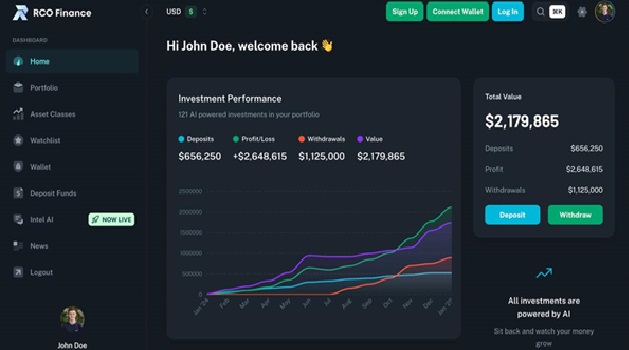
What draws investors to RCOF’s token presale, however, is its particular Robo Advisor driven by artificial intelligence. This tool offers users trade and investment recommendations depending on their requirements and objectives.

The Robo Advisor creates personalized investment strategies, keeps tabs on portfolios in real time, and makes adjustments to asset allocations based on machine learning algorithms.

Users may also adjust to shifting market conditions with the use of machine learning, which allows them to make trades at the best possible times. This level of accuracy is crucial for making the most of the ever-changing bitcoin market.

Investors may manage their portfolios effectively across both traditional and cryptocurrency markets with the help of the Robo Advisor, which eliminates emotional biases and recognizes market trends that human analysts may ignore.

For instance, if a particularly volatile altcoin’s price suddenly skyrockets by 100x, like several memecoins have in the past, investors can cash in and win virtually millions off of minimal initial inputs.

Institutional-Level Markets To Everyday Investors

Following the token presale, users in RCO Finance will also have free access to more than 150,000 asset classes, including traditional financial assets, as the platform grows beyond fundamental DeFi services.

This feature encourages educated decision-making in both traditional and crypto markets by allowing investors to expand their portfolios into areas usually set aside for institutional participants, such as RWAs and exchange-traded funds (ETFs).

The platform’s beta version allows users to explore these offerings through the following link, with thousands already engaging with RCO Finance while providing feedback for continuous improvement.

Designed to fit a varied user base, this version has been popular with a user-friendly design that promises smooth navigation for both experienced and inexperienced traders.

Furthermore, newcomers to the RCO Finance community will enjoy a know-your-customer (KYC)-free environment that ensures security, privacy, and compliance together with SolidProof’s smart contract audits.

RCOF Token Presale Offers A 600% Return Potential

Among the many intriguing aspects arriving in RCOF’s token presale roadmap is a DeFi card allowing users to exchange RCFO tokens and other cryptocurrencies seamlessly.

The platform will also include lending protocols for borrowing and lending assets, create liquidity pools to enhance trading activity, and list RCOF on centralized exchanges (CEXs), all of which will extend trading prospects.

While more smart contract audits will help to maintain the security and currency of the platform’s contracts with evolving criteria, working with influencers and Key Opinion Leaders (KOLs) will help to raise platform visibility and adoption.

The best part is that token presale backers joining today stand to gain a whopping 600% once RCOF hits the market and is listed on major exchanges. Predictions put the token price jumping from $0.10 to $0.60.

Seize this once-in-a-lifetime opportunity to protect generational riches and access markets that were previously unreachable for cryptocurrency investors by joining RCO Finance’s token presale today.


For more information about the RCO Finance (RCOF) Presale:

Visit RCO Finance Presale

Join The RCO Finance Community