DD
MM
YYYY

PAGES

DD
MM
YYYY

spot_img

PAGES

Home Blog Page 1377

U.S.-China Tariff Talks Gain Traction as Trump Pushes for Dialogue and Beijing Signals Readiness with New Negotiator

0

Amid the high-stakes escalation of the U.S.-China tariff war, both nations are inching toward the negotiating table, with President Donald Trump openly admitting his readiness for talks and China appointing a new trade negotiator, signaling its readiness to engage.

The appointment of Li Chenggang, a seasoned diplomat with a legal background, to replace veteran negotiator Wang Shouwen on Wednesday suggests Beijing is gearing up for serious dialogue, though it insists on talks free from pressure. As the world’s two largest economies grapple with tariffs, 145% on Chinese goods from the U.S. and 125% on U.S. goods from China, disrupting over $650 billion in trade, the stakes for a resolution have never been higher.

The tariff war reignited under Trump’s second term, has sent shockwaves through global markets, erasing nearly $6 trillion from the S&P 500 in early April and prompting Goldman Sachs to warn of a significant chance of a U.S. recession. From Boeing’s halted jet deliveries to Chinese airlines to soaring costs for American farmers, the conflict is hitting industries hard. China’s 125% tariffs have doubled the price of U.S. goods, while U.S. levies threaten China’s export-driven economy, which grew 5.4% in Q1 2025 but faces headwinds from prolonged trade barriers.

The dispute extends beyond tariffs, intertwining with issues like fentanyl, Taiwan, and TikTok, complicating the path to a deal. Yet, amid the economic carnage, both sides are showing tentative signs of willingness to talk, setting the stage for what could be a pivotal moment in U.S.-China relations.

President Trump has made no secret of his desire to sit down with Chinese President Xi Jinping to hash out a trade deal. Speaking from the White House on Tuesday, Trump said he’s “optimistic” about a resolution but insisted Beijing must make the first move, claiming China “needs our money” to keep its economy afloat.

“The ball is in China’s court. China needs to make a deal with us. We don’t have to make a deal with them,” said a statement from Trump read out by Press Secretary Karoline Leavitt. The President also accused China of reneging on a “big Boeing deal” that has seen the shares of the airline company tank.

The invitation fits Trump’s broader trade strategy: wielding tariffs as a cudgel to extract concessions. The U.S. has launched a 90-day sprint to negotiate bilateral deals with over 75 countries, granting temporary tariff exemptions to allies like Japan, South Korea, and the EU. China, however, faces the full brunt of 145% levies, a pressure tactic Trump hopes will force Beijing to the table. White House press secretary Karoline Leavitt underscored Trump’s approach, saying he’s prepared to be “gracious” but expects China to act first.

China’s Open to Dialogue, but Not Under Duress

China has struck a delicate balance between defiance and diplomacy. Beijing has vowed to “fight to the end” against what it calls “unilateral” U.S. tariffs, with its commerce ministry on April 8 rejecting negotiations under “pressure, threats, or blackmail.” However, by April Monday, Foreign Ministry spokesperson Lin Jian hinted at flexibility, saying China could roll back its 125% tariffs if the U.S. engages in talks based on “equality, respect, and mutual benefit.”

China’s actions speak louder than its rhetoric. On April 9, Beijing filed a WTO complaint, accusing the U.S. of violating trade rules, a move that underscores its intent to fight on legal grounds. Meanwhile, President Xi Jinping’s Southeast Asia tour, bolstering trade ties with Vietnam, Malaysia, and Cambodia—signals a strategy to diversify partnerships amid U.S. pressures. Accompanied by Commerce Minister Wang Wentao, Xi’s tour highlights China’s determination to maintain economic momentum, even as tariffs threaten its export-driven growth.

Li Chenggang, A New Face at the Table

In a surprise move on Wednesday, China named Li Chenggang, 58, as its new vice minister of commerce and top trade negotiator, replacing Wang Shouwen, a hard-nosed veteran who helped broker the 2020 U.S.-China trade deal. Li, a former WTO ambassador with a law degree from Peking University and a master’s from the University of Hamburg, brings a legal and diplomatic edge to the role. His tenure at the WTO, where he criticized U.S. tariffs as “arbitrary” in February 2025, and his experience in the commerce ministry’s treaties and law divisions make him well-suited to navigate the legal complexities of the current dispute.

The appointment, announced by China’s human resources ministry, has raised eyebrows for its timing—coinciding with Xi’s regional tour and the tariff war’s peak.

“It’s very abrupt and potentially disruptive,” said Alfredo Montufar-Helu, a senior adviser at The Conference Board’s China Center, noting Wang’s deep experience.

Wang’s removal from the commerce ministry’s leadership roster, with no new role disclosed, has fueled speculation. Some see it as a recalibration to signal flexibility, others as a risk to China’s negotiating continuity. Regardless, Li’s appointment suggests Beijing is serious about engaging, likely leveraging WTO frameworks to challenge U.S. tariffs and seek a resolution.

The Tariffs Ripple Effect on Trade and Industry

The U.S.-China tariff war is reshaping global trade. While the U.S. courts deal with allies, China’s isolation, facing the full weight of tariffs, amplifies the pressure for a deal. Industries are feeling the pinch: Boeing’s stock has slumped 12% this year partly because Chinese airlines like China Southern halted jet deliveries and used aircraft sales. American farmers and manufacturers face similar woes, while Chinese exporters grapple with soaring costs in the U.S. market.

The economic fallout is stark, even beyond the U.S. and China. China’s 5.4% Q1 growth, driven by exports, is at risk, and the U.S. faces inflation and recession fears. Beyond economics, the dispute complicates bilateral issues, with Trump linking trade to fentanyl crackdowns and TikTok’s fate. China’s non-tariff measures, like curbing Hollywood imports and slowing rare earth exports, complicate the matter.

The EU, Vietnam, India, and Japan are negotiating U.S. trade deals, capitalizing on their tariff exemptions. EU chief Ursula von der Leyen told German weekly Die Zeit that the European Union was “setting out our position clearly, and the Americans are doing the same.”

China, meanwhile, is doubling down on Southeast Asia, with Xi’s tour a clear bid to shore up regional alliances.

As of Wednesday, U.S.-China tariff talks are gaining traction, with Trump’s invitation and China’s new negotiator creating a window for dialogue. Li Chenggang’s legal acumen and WTO experience suggest Beijing is preparing for robust negotiations, likely challenging U.S. tariffs through international frameworks. However, Trump’s demand for China to initiate contact and Beijing’s rejection of pressure set the stage for a contentious process.
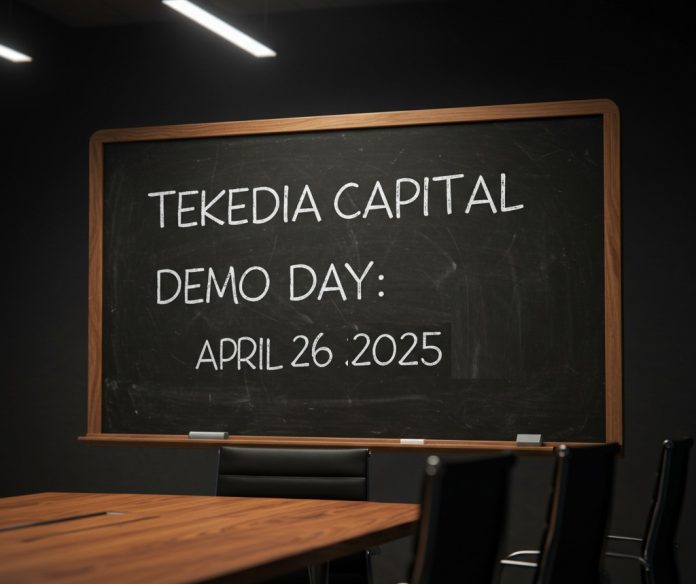
Tekedia Capital Demo Day – April 26, 2025 [You’re Invited]

0

On April 26, 2025, the H1 2025 Tekedia Capital Demo Day will be held, and 18 startups from multiple countries will present their playbooks to our community. You’re invited, and we ask you to request for access here https://capital.tekedia.com/course/fee/ . On that link, we have also video-previewed the companies.

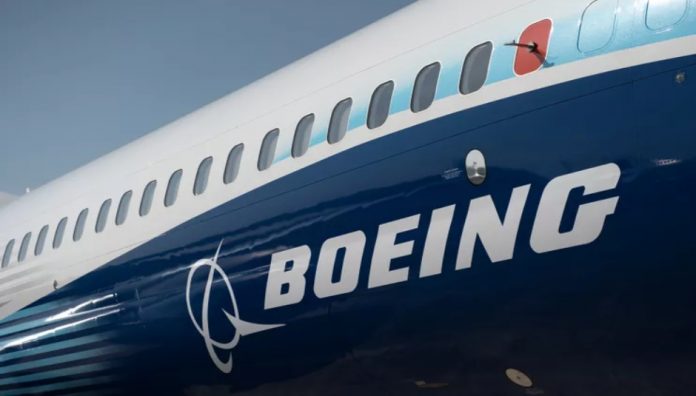
Boeing Caught in U.S.-China Tariff War Crosshairs, But Goldman Sachs Predicts Resilience

0

Boeing, a cornerstone of American aerospace, is facing significant challenges as it finds itself entangled in the escalating U.S.-China tariff war, with China ordering its airlines to halt deliveries of Boeing jets and U.S. aircraft parts in retaliation to President Donald Trump’s 145% tariffs on Chinese goods.

The move has sent Boeing’s stock tumbling and raised concerns about its market share in China, a critical growth region. However, analysts at Goldman Sachs remain optimistic, citing Boeing’s ability to weather similar disruptions during Trump’s first term when China also suspended purchases, suggesting the company’s long-term survival is not at risk.

The U.S.-China trade conflict intensified in April 2025, with Trump imposing tariffs as high as 145% on Chinese imports, prompting China to retaliate with 125% tariffs on U.S. goods, including aircraft. This tit-for-tat escalation led China to direct its airlines, including state-owned giants Air China, China Eastern, and China Southern, to stop accepting Boeing jet deliveries and halt purchases of U.S.-made aircraft parts, according to Bloomberg. The order effectively doubles the cost of Boeing planes for Chinese carriers, rendering new purchases economically unfeasible.

A notable example of the fallout came from China Southern Airlines, which suspended the sale of 10 used Boeing 787-8 Dreamliners on April 11, 2025, citing “matters affecting the property transaction,” as reported by Nikkei. This decision may reflect either China’s directive or the prohibitive costs imposed by the 125% tariffs. Boeing’s stock fell 2.4% on April 15, 2025, contributing to a 12% year-to-date decline, underscoring investor fears about the company’s exposure to the trade war.

China is a vital market for Boeing, expected to account for 20% of global aircraft demand over the next two decades, with Airbus forecasting 9,500 new deliveries to China by 2043. In 2018, nearly 25% of Boeing’s aircraft deliveries went to China, but trade tensions and internal issues, including the 2019 grounding of the 737 Max, have curtailed new orders. Boeing’s 2024 annual report warned of risks from “deterioration in geopolitical or trade relations,” noting that failure to deliver to China or secure future orders could reduce deliveries and market share.

Caught in the Crosshairs

Boeing’s plight is compounded by its existing challenges, including a mass workers’ strike, financial losses, and scrutiny following a 737 Max 9 door plug incident in January 2024. The trade war now threatens to erode its competitive position against Europe’s Airbus and China’s domestic manufacturer, COMAC. China’s top three airlines had planned to take delivery of 179 Boeing planes between 2025 and 2027—45 for Air China, 53 for China Eastern, and 81 for China Southern—deals worth billions now in jeopardy.

The halt on U.S. parts imports could also disrupt COMAC’s C919 and C909 programs, which rely on American components, but Chinese airlines may increasingly turn to Airbus or COMAC for new orders, further squeezing Boeing’s market share. Airbus, with manufacturing facilities in the U.S., is better positioned to absorb tariff-related costs and has already dominated Western airliner exports to China in recent years. Analyst Wouter Dewulf from the University of Antwerp noted that Boeing faces higher production expenses and reduced profit margins, as it struggles to pass on tariff-induced costs.

Global carriers are also reacting cautiously. Ryanair’s CEO, Michael O’Leary, told the Financial Times that the airline might delay Boeing deliveries if tariffs raise costs.

“We might delay them and hope that common sense will prevail,” he said.

Delta has similarly indicated potential delays, reflecting broader industry concerns about tariff-driven price hikes.

Goldman Sachs’ Optimism

Despite these challenges, Goldman Sachs analysts, led by Noah Poponak, argue that Boeing’s survival is not at stake, drawing parallels to China’s suspension of Boeing purchases during Trump’s first term (2017-2021). In a note to clients on April 15, 2025, Poponak wrote, “We think the impact to Boeing is very small because China had already stopped taking Boeing deliveries and stopped ordering Boeing aircraft during the last Trump administration, such that there is no real reduction to implement.”

During Trump’s first term, China imposed tariffs of 25% on U.S. goods, and Boeing deliveries to Chinese carriers were minimal, with the country grounding the 737 Max in 2019 after two fatal crashes. Since January 1, 2018, Chinese customers have ordered only 28 Boeing aircraft, representing just 2% of Boeing’s order backlog, which is sold out through 2030 with other customers. Approximately 25 737-8 MAX aircraft, produced before 2023, remain undelivered to China, but Goldman Sachs notes that Boeing can redirect these jets to other airlines, mitigating short-term financial impacts.

Goldman Sachs’ confidence stems from Boeing’s substantial order backlog, valued at $350 billion, and its ability to reallocate deliveries globally. The firm also points out that Airbus lacks the capacity to fully replace Boeing in China, limiting immediate competitive losses. While acknowledging long-term risks, such as reduced market share if China shifts to Airbus or COMAC, Goldman Sachs believes Boeing’s global demand and production flexibility provide a buffer against the current trade war’s effects.

Trump’s Stance and Potential Economic Impact

The U.S.-China tariff war, with trade valued at over $650 billion, risks a broader economic standstill, with Goldman Sachs estimating a 45% probability of a U.S. recession. Trump has framed his tariffs as a tool to curb drug trafficking and support domestic manufacturing, but his policies have sparked global market volatility, with the S&P 500 losing nearly $6 trillion in value over four days in early April 2025. On April 15, Trump wrote on Truth Social, stating that China “just reneged on the big Boeing deal, saying that they will ‘not take possession’ of fully committed to aircraft,” though the specifics of the deal remain unclear.

China’s Foreign Ministry, through spokesman Lin Jian, emphasized a commitment to “handshakes rather than fist fights,” but its 125% tariffs and non-tariff measures, such as limiting Hollywood imports and slowing rare earth exports, signal a robust retaliatory stance. Some analysts, like international aviation consultant Neil Hansford, argue that China may suffer more, given its post-COVID aircraft shortage, but the immediate impact on Boeing is undeniable.

Boeing’s 36 suppliers in China, which produce components for all its current models, face disruptions from the parts import ban, potentially increasing production costs. While Goldman Sachs remains sanguine about Boeing’s short-term resilience, the long-term outlook depends on the duration and severity of the tariff war. A prolonged exclusion from China, which Boeing called a “significant market” in its 2024 report, could erode its competitive edge, especially as COMAC’s C919 gains traction.

Binance Burned 1.57M BNB Tokens Worth $916 Million

0

Binance completed its 31st quarterly BNB token burn on April 16, 2025, destroying 1.57 million BNB tokens valued at approximately $916 million. This event, executed on the BNB Smart Chain (BSC), reduced the total BNB supply to 139.3 million tokens. The burn included 1.46 million BNB via the Auto-Burn mechanism, calculated based on BNB’s price and BSC block production, plus 110,000 BNB through the Pioneer Burn Program, which compensates users for lost tokens.

Binance aims to halve the initial 200 million BNB supply to 100 million, enhancing scarcity and potentially supporting long-term value. Despite the significant burn, BNB’s price remained stable, reflecting a focus on gradual supply reduction rather than immediate market impact. The Binance Auto-Burn mechanism and the $916 million BNB token burn on April 16, 2025, have broader implications for cryptocurrency markets, blockchain ecosystems, and related stakeholders beyond the immediate BNB ecosystem.

Binance’s high-profile burns reinforce the popularity of deflationary tokenomics, where supply reduction is used to enhance scarcity and potential value. Other blockchain projects may adopt similar burn mechanisms to attract investors, leading to a proliferation of deflationary tokens. This could shift market preferences away from inflationary models (e.g., Bitcoin’s fixed supply or Ethereum’s pre-merge inflation), influencing project designs and investor expectations across the crypto space.

The $916 million burn, one of the largest in crypto history, generates significant media and community buzz, spotlighting Binance and BNB. Positive sentiment can drive broader market optimism, particularly for altcoins, as investors view burns as a sign of ecosystem health. This may spur speculative trading in BNB and other tokens, contributing to short-term market volatility. Conversely, if burns fail to boost BNB’s price, it could temper enthusiasm for burn-driven tokens.

BNB Smart Chain (BSC) competes with Ethereum, Solana, and other layer-1 blockchains. The Auto-Burn, tied to BSC’s block production, signals robust network activity and a commitment to ecosystem growth. BSC’s deflationary model and low transaction fees may attract developers and users from rival chains, intensifying competition. This could pressure other blockchains to innovate their tokenomics or marketing strategies to retain market share, potentially accelerating industry-wide advancements.

The transparency and scale of Binance’s Auto-Burn demonstrate a structured approach to value creation, appealing to long-term investors. Investors may increasingly prioritize tokens with clear, deflationary mechanisms, influencing capital allocation across the market. This could divert funds from projects with less defined tokenomics, reshaping portfolio strategies and favoring ecosystems like BSC.

Large-scale burns by a major player like Binance could draw regulatory scrutiny, particularly in jurisdictions concerned about market manipulation or investor protection. Increased regulatory focus on token burns could lead to new guidelines for crypto projects, affecting how burns are structured or disclosed. This might create compliance costs or barriers for smaller projects, consolidating market dominance among established players like Binance.

Conversely, the Auto-Burn’s on-chain transparency may set a standard for regulatory compliance, encouraging broader adoption of decentralized mechanisms. While the Auto-Burn is tied to BSC’s decentralized activity, Binance’s centralized exchange benefits from BNB’s prominence and ecosystem growth. The success of BNB’s tokenomics could strengthen Binance’s position relative to decentralized exchanges (DEXs) like Uniswap or centralized competitors like Coinbase. This might prompt rival exchanges to develop or promote their own tokens with similar mechanisms, intensifying competition in the exchange sector.

BNB is a top cryptocurrency by market cap, and its burns signal confidence in the asset’s long-term value, potentially stabilizing its ranking. As BNB maintains or grows its market cap, it contributes to overall crypto market capitalization, reinforcing the sector’s legitimacy to traditional investors. However, if burns fail to drive significant price gains, it could fuel skepticism about the efficacy of token burns, impacting valuations of other burn-driven tokens.

BNB’s role in BSC’s DeFi ecosystem (e.g., staking, yield farming, NFTs) is strengthened by burns, which enhance its scarcity and utility. A stronger BSC ecosystem could attract more DeFi projects and liquidity, increasing interoperability with other chains via bridges or cross-chain protocols. This may accelerate the growth of multi-chain DeFi, but it could also heighten systemic risks if BSC’s dominance leads to over-reliance on a single ecosystem.

The burn’s timing and scale occur within broader market conditions, including macroeconomic factors like interest rates, inflation, or crypto adoption trends. In a bullish market, the burn could amplify upward trends by signaling strength, drawing institutional interest. In a bearish market, its impact may be muted, as seen with BNB’s stable price post-burn. This interplay underscores crypto’s growing correlation with traditional markets, potentially influencing cross-asset investment strategies.

Binance’s ability to execute a $916 million burn without disrupting BNB’s price stability showcases sophisticated token management. Other projects may emulate Binance’s approach, leading to more disciplined, data-driven tokenomics across the industry. This could raise the bar for project credibility, reducing the prevalence of speculative or poorly managed tokens and fostering a more mature crypto market.

Excessive focus on burns could lead to unrealistic investor expectations, causing volatility if results underperform. Despite the Auto-Burn’s decentralization, Binance’s influence over BNB and BSC may raise concerns about market concentration, deterring some investors or regulators. As BNB’s supply approaches the 100 million target, the marginal impact of burns may decrease, requiring Binance to innovate new strategies to maintain market relevance.

The Binance Auto-Burn and the $916 million BNB burn have far-reaching implications for the broader crypto market, from shaping tokenomics trends and investor behavior to intensifying blockchain competition and attracting regulatory attention. By reinforcing deflationary models and BSC’s ecosystem, the burn strengthens Binance’s market position while setting a precedent for transparent, scalable token management. However, its impact depends on broader market conditions, regulatory developments, and the evolving competitive landscape.

Nigeria’s Inflation Surges to 24.23% in March, Stretching Household Budgets Further

0

The cost of living crisis in Nigeria deepened in March 2025, with headline inflation jumping to 24.23%, according to the latest report by the National Bureau of Statistics (NBS).

The new figures mark a sharp rise from 23.18% recorded in February, underlining persistent pressure on consumer prices amid a weakened naira, worsening insecurity in food-producing belts, and increasing fuel costs.

Although economic managers have continued to downplay fears of hyperinflation, the latest data tells a different story—one that reflects the difficult choices millions of Nigerians are now forced to make daily as they navigate shrinking incomes, stagnant wages, and surging prices of food, transport, and basic goods.

“On a month-on-month basis, the headline inflation rate in March 2025 was 3.90%, which is 1.85 percentage points higher than the rate recorded in February (2.04%),” the NBS stated, signaling that not only are prices high, they’re also rising faster.

Even when volatile food and energy prices are stripped out, inflationary pressures remain unrelenting. Core inflation considered a more stable measure, rose to 24.43% year-on-year, up from 20.06% in March 2024. On a monthly basis, it increased by 3.73%, compared to 2.52% in February.

This trend reveals the structural nature of Nigeria’s inflation problem, even after the rebasing by the NBS to “reflect actual economic growth.” The price increases are no longer just seasonal or driven by one-off shocks—they are entrenched across both the food and non-food segments of the economy.

Urban vs. Rural Divide Widens

The inflation burden is not felt equally. Urban areas, which depend more on imported goods and transportation, saw a year-on-year inflation rate of 26.12% in March, significantly higher than the 20.89% recorded in rural areas. Month-on-month, urban inflation rose by 3.96%, compared to 3.73% in rural regions.

What this means is that residents in cities like Lagos, Abuja, and Port Harcourt are seeing sharper price increases, particularly in transportation, fuel, rent, and processed food.

The Unending Food Inflation

Food inflation remains the dominant driver of Nigeria’s cost-of-living crisis. Though the NBS pegs it at 21.79% year-on-year in March, the real experience for most Nigerians tells a more troubling story. The average cost of everyday staples such as fresh ginger, garri, Ofada rice, honey, crabs, potatoes, plantain flour, pepper, and periwinkle continued to climb, with little respite in sight.

Month-on-month, food inflation rose to 2.18%, up from 1.67% in February. The steady rise comes at a precarious time: the start of the planting season, when food supply typically tightens. But this year, insecurity in the Middle Belt and other agricultural hubs, coupled with high logistics costs, threatens to worsen the crisis.

Why Prices Keep Rising

According to analysts, inflation in March was shaped by a mix of opposing forces. Samuel Oyekanmi, Head of Research at Norrenberger, pointed to a tug-of-war between easing and inflationary trends.

“The continued effect of rebasing and favourable base effects are expected to exert a moderating influence,” Oyekanmi told NairaMetrics. “However, depreciation of the naira in the second half of March and the increase in petrol prices could raise costs across transport and goods.”

However, the naira’s brief rally in February gave some hope for a cooldown in imported inflation. But that optimism faded towards the end of March when the currency began to slide again against the dollar. With Nigeria relying heavily on imports, from food to industrial raw materials, even a slight weakening of the naira quickly reflects on shelf prices.

Meanwhile, petrol prices stayed largely flat for most of March but ticked upward in the final week of the month, triggering fresh concerns over transport and haulage costs. With diesel and petrol accounting for a large portion of food distribution expenses, any increase reverberates nationwide.

The NBS’s ongoing rebasing of inflation weights and methodology has added to the concern of capturing economic data accurately. While the revised metrics are aimed at better reflecting actual household consumption, some economists argue that the changes may momentarily suppress the full picture of Nigeria’s inflation reality.

But even with that technical adjustment, inflationary momentum has not slowed. The month-on-month increase of 3.90% in headline inflation, the highest in months, shows that whatever marginal easing occurred earlier in the year is being wiped away.

CBN’s Policy Dilemma

The data now puts the Central Bank of Nigeria (CBN) in a tight corner. With inflation racing ahead of interest rates and savings yields, pressure is mounting for further monetary tightening. But raising the benchmark interest rate too aggressively risks stalling an already fragile recovery and worsening access to credit for businesses.

Economists say that while the CBN has little choice but to continue hiking rates to control inflation, monetary tools alone may not be enough.

With the planting season starting under the shadow of insecurity, and exchange rate volatility threatening to worsen import bills, the outlook remains grim. The possibility of inflation breaching 25% in the coming months cannot be ruled out—especially if fuel prices are adjusted upward again or food shortages worsen due to disruptions in key farming regions.

Ordinary Nigerians, already burdened with transport fare hikes, shrinking food baskets, and stagnant salaries, continue to ask when relief will come.