DD
MM
YYYY

PAGES

DD
MM
YYYY

spot_img

PAGES

Home Blog Page 1399

Exploring the HR 1228 Prioritizing Veterans Survivors Act Passed by U.S. House

0

H.R. 1228, the “Prioritizing Veterans’ Survivors Act,” was passed unanimously by the House with a 424-0 vote, showcasing rare bipartisan unity. The bill aims to restore the Office of Survivors Assistance (OSA) to its original role directly under the Secretary of Veterans Affairs, ensuring it has the authority and focus to support survivors of veterans effectively.

This move addresses concerns that the OSA had been downgraded or sidelined, reducing its ability to advocate for survivors navigating benefits and services. By placing it back under the Secretary’s direct oversight, the bill intends to streamline assistance, improve accountability, and prioritize survivors’ needs—think widows, widowers, and dependents seeking benefits like pensions or healthcare.

The unanimous passage of H.R. 1228, the “Prioritizing Veterans’ Survivors Act,” by a 424-0 vote in the House carries several important implications for veterans’ survivors, the Department of Veterans Affairs (VA), and the broader landscape of veterans’ policy. Restoring the Office of Survivors Assistance (OSA) to its original role under the Secretary of Veterans Affairs ensures that survivors—widows, widowers, children, and other dependents—have a dedicated, high-level advocate within the VA. This could lead to faster processing of claims for benefits like Dependency and Indemnity Compensation (DIC), pensions, or healthcare.

The OSA’s elevated status means it can better coordinate across VA departments, reducing bureaucratic hurdles that survivors often face when navigating complex systems. This is especially critical for those grieving or unfamiliar with VA processes. The bill signals a renewed commitment to addressing survivors’ unique challenges, such as financial instability or emotional hardship after a veteran’s passing, ensuring their needs aren’t overshadowed by broader VA priorities.

Placing the OSA under the Secretary’s direct authority enhances accountability. The office will likely have more visibility and influence, making it harder for survivor-related issues to be ignored or deprioritized. The unanimous vote sends a strong message to VA leadership about Congress’s expectation that survivors’ issues be treated as a top priority, potentially prompting internal reforms or resource reallocation to support the OSA’s mission.

A 424-0 vote is exceptionally rare and underscores that support for veterans and their families remains a unifying issue in a polarized Congress. This could pave the way for further bipartisan legislation aimed at improving VA services or expanding benefits. The overwhelming support may bolster public confidence in Congress’s commitment to veterans’ families, potentially pressuring lawmakers to maintain momentum on related reforms.

While the bill restores the OSA’s role, its success depends on adequate funding, staffing, and resources. If the VA faces budget constraints, the OSA’s ability to deliver could be limited unless Congress ensures follow-through. Although the House vote was unanimous, the bill still needs Senate approval (as of my last data, its status there isn’t confirmed). Any delays or amendments in the Senate could affect the timeline for implementation.

Elevating the OSA’s role might require reorganizing parts of the VA’s structure, which could face resistance or logistical hurdles, especially if other offices perceive it as a shift in priorities. Successfully restoring the OSA could set a model for other specialized VA offices, encouraging Congress to strengthen advocacy for groups like disabled veterans or minority veterans. The bill aligns with growing recognition of survivors as a distinct group deserving tailored support, potentially inspiring future policies to address gaps in education benefits, mental health services, or housing for survivors.

This legislation responds to criticisms that the OSA had been diminished in influence, leaving survivors underserved. By restoring its prominence, the bill aims to honor the sacrifices of veterans’ families with tangible support. However, its full impact hinges on execution—how the VA implements the change and whether survivors experience real improvements in service delivery.
Solana Breaks $100 Support, Polkadot Awaits Breakout, BlockDAG Hits $213.5M Milestone

0

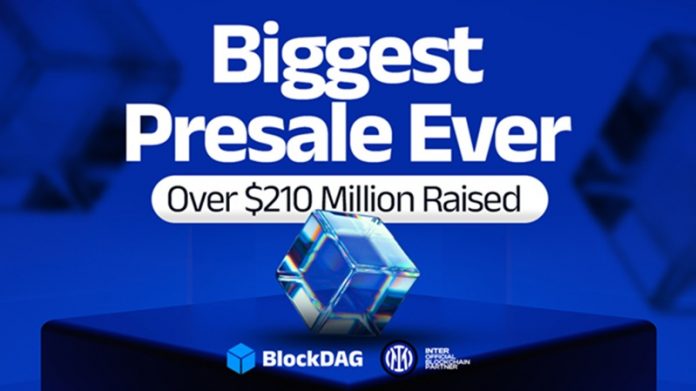
Solana has stumbled below the $100 level following a sharp sell-off tied to a $200 million token unlock, sending a ripple through investor sentiment. Polkadot still trades below its highs but holds promise with its JAM upgrade and expanding developer base. Meanwhile, BlockDAG is making waves by hitting a major milestone—$213.5 million raised—with traction that reflects more than just potential.

With a working testnet, 170,000+ wallets, and hands-on tools already in user hands, BlockDAG isn’t waiting for adoption—it’s moving toward it. As larger platforms like Ethereum and Bitcoin maintain their lead, some investors are now looking for the top crypto to buy right now based on early results rather than future promises. 

Can Polkadot Be the Surprise Winner in the Next Rally?

Polkadot (DOT) is trading around $3.72, far below its all-time high, yet the project remains on the radar for those watching long-term developments. Its network enables different blockchains to interact, aiming to power the future of decentralized applications.

The upcoming JAM upgrade could be a game-changer, potentially turning the Polkadot network into an on-chain platform capable of running high-level applications natively. Backed by the Web3 Foundation, and gaining interest from developers, DOT may gain traction quickly if a widely used app is built on its tech.

Polkadot’s real value lies in its design to connect separate blockchains. While others optimize for speed or smart contract execution, Polkadot focuses on flexibility and long-term structure. If the Web3 movement takes off, DOT could be well-positioned for the upside.

Solana Drops Below $100 After Token Unlock—Can It Bounce?

Solana (SOL) recently saw increased pressure following the release of staked tokens worth $200 million, many held since 2021. The sudden supply jump weighed heavily on price, breaking key support at $100 and raising concerns among short-term traders.

While there’s still a chance for a recovery if $110 holds, analysts note that buyer strength appears limited. If selling continues, prices may slide further, potentially testing the $90–$95 range. Despite strong developer activity and community interest, price action suggests a market still searching for stability.

Ethereum has regained control of the DEX volume share, and Solana’s recent gains have slowed. Current chart patterns point to possible distribution, with shallow recoveries and resistance building up. However, if bulls retake control near $100, a move back to $130 or higher isn’t out of the question.

BlockDAG Raises $213.5M and Crosses 170K Wallets—All Before Mainnet

BlockDAG (BDAG) continues to impress with real results in hand. The project has already brought in $213.5 million through its presale, selling over 19.1 billion BDAG tokens across 27 batches. Now priced at $0.0248, the coin is seeing growing interest, especially with a $1 price goal projected for 2025.

One major reason for the traction is its unique setup. Instead of relying on outdated single-chain models, BlockDAG uses a DAG+PoW hybrid system. This structure supports faster, parallel processing of transactions, helping the network avoid delays and high fees.

The testnet is already live and active, with more than 170,000 wallets connected. What’s more, BlockDAG has launched mobile-based mining and plug-and-play hardware tools, making it accessible to everyone—from beginners to advanced users.

For developers, BlockDAG offers full compatibility with Ethereum’s environment, meaning they can deploy smart contracts without learning a new system. Over 10,000 mining devices are in production, and weekly rewards add to the appeal.

With working infrastructure already in place, and actual user participation on the rise, BlockDAG is showing why it may be the top crypto to buy right now. It’s offering more than a concept—it’s delivering a network people can use.

Final Thoughts

Each of these three projects sits at a different stage in its journey. Solana must now fight to recover from its recent token unlock, while Polkadot builds for a future that could arrive with Web3’s expansion. But BlockDAG is already ticking off major milestones.

Its hybrid structure supports faster performance, its tools are live, and its presale success is hard to ignore. With over $213.5 million raised, 170,000+ wallets, and 10,000 miners set for shipment, BlockDAG has achieved more in presale than many networks post-launch.

As Solana deals with dilution and Polkadot waits on real use cases to surface, BlockDAG is already delivering both utility and scale. That’s why BDAG is rising as one of the most watched projects heading into 2025—and possibly the most promising entry before the next surge.


Presale: https://purchase.blockdag.network

Website: https://blockdag.network

Telegram: https://t.me/blockDAGnetwork

Discord: https://discord.gg/Q7BxghMVyu

The Impact of Google AI Overview on Small Businesses and Their Customer Acquisition Strategies

1

It does not really look good for small businesses. Yes, Google AI Overview – “a feature in Google Search that uses generative AI to provide concise, informative summaries at the top of search results, offering users a quick overview of a topic and links to further explore “ – is distorting the natural equilibrium of search positioning.

My blog – tekedia.com – is doing just fine on traffic as most of our readers type the URL on the browser to visit. But the search results which used to come from some of our core business frameworks like One Oasis Strategy, Double Play Strategy,  Product Minimum Viable Quality (PMVQ), etc are now summarized by AI Overview, making a site visit marginal. On the specific posts, we have noticed the impacts.

As a small business owner, you need to upgrade your customer acquisition strategy.  When I was designing our model, I elevated blog to the top of the domain, and put the products Tekedia Mini-MBA home (school.tekedia.com),  Tekedia Capital (capital.tekedia.com), etc as sub-domains, based on my theory that in the age of web-anchored abundance, supply is unbounded, and influencing demand is where value could be captured. So, I elevated the blog above the products, working to convert users for those products.

So far, the model has worked for us, as the blog solidified the brand positioning, and upon that, we have the products.  But with AI Overview, we need to now focus on NOT relying on search, by making sure we have things so good that people will type Tekedia.com on their browser to visit.

If you run a digital shop, before you become an entry in the museum, revisit your customer acquisition playbook in the age of AI. Remember: AI will expire many business models across sectors and industries!

Fitch lifts Nigeria’s outlook to ‘Stable,’ but reform gains face external tests

0

Fitch Ratings has revised Nigeria’s credit outlook to Stable from Negative, in a signal that confidence in the Tinubu administration’s economic reform drive is gradually firming.

Though the long-term foreign currency issuer default rating (IDR) remains unchanged at ‘B’—a speculative grade reflecting high credit risk, analysts say the shift reflects growing optimism about Nigeria’s macroeconomic trajectory.

The outlook change, published on April 9, comes against a backdrop of intensifying global risks, including new U.S. trade barriers and tumbling oil prices that threaten to destabilize the country’s external balance.

But for now, the reforms introduced since mid-2023—chiefly exchange rate liberalization, monetary tightening, fuel subsidy removal, and the halting of central bank deficit financing—are beginning to reflect in key indicators.

“We are seeing clear signs of increased commitment to market-based reforms under President Tinubu’s administration,” Fitch wrote. “While challenges remain, Nigeria’s trajectory has shifted toward stability and greater investor confidence.”

The comment stands in contrast to Fitch’s 2022 and 2023 warnings, when growing fiscal indiscipline, monetized deficits, and weak governance prompted a negative rating bias.

FX Reform Shows Early Wins—but Fragility Persists

Central to Nigeria’s recent progress is its foreign exchange reform, which gathered pace last year when the Central Bank of Nigeria (CBN) collapsed the multiple exchange rate windows into a unified market. The introduction of an FX matching platform and code of conduct for participants in 2024 was viewed as a major step toward restoring market confidence.

The naira depreciated by over 40% during the unification, but this paved the way for greater liquidity and transparency. FX inflows surged by 89% in Q4 2024, Fitch said, compared to a modest 8% rise a year earlier.

Still, these gains remain precarious. In recent weeks, Brent crude slipped below $60, a level close to Nigeria’s estimated fiscal breakeven. At the same time, Washington slapped a 14% tariff on Nigerian exports, a move seen as politically motivated amid Donald Trump’s re-emergence on the global stage.

These developments, compounded by investor jitters flagged by J.P. Morgan earlier this week, have rekindled concerns about Nigeria’s ability to sustain FX stability in the face of external shocks.

The Nigerian Association of Chambers of Commerce, Industry, Mines, and Agriculture (NACCIMA) warned the new tariffs could “erode non-oil FX earnings just as the country was beginning to rebuild confidence.” J.P. Morgan also forecasted that dollar scarcity could return if oil prices stay low and capital outflows escalate.

Inflation Eases, But Far From Comfortable

Inflation, a longstanding concern, slowed slightly to 23.2% in February 2025, according to the rebased Consumer Price Index (CPI). This marks progress, but inflation still dwarfs the 4.3% median for ‘B’-rated peers. The CBN’s Monetary Policy Committee has responded with nine consecutive rate hikes since early 2024, pushing the policy rate to 27.5%—its highest level on record.

Fitch expects inflation to average 22% in 2025 and decline slightly to 20% in 2026. While it noted the monetary response as appropriate, it warned against loosening prematurely, especially as supply-side bottlenecks and food insecurity remain rampant.

Buffers Improve, But External Position Still Vulnerable

Gross external reserves rose to $41 billion by December 2024, buoyed by improved FX flows and reduced import bills. But they have since declined to $38 billion following a $1.1 billion Eurobond repayment, highlighting the volatility in Nigeria’s buffers.

The country’s net external reserves stand at around $23 billion, a level the CBN says is “comfortable” but still vulnerable to shocks. Fitch acknowledged the regulator’s efforts to reduce reliance on FX swaps, with such liabilities now representing only 14% of reserves, down from 25% late last year.

A key cushion may come from the Dangote Refinery, which Fitch projects will scale up to 650,000 barrels per day (bpd) by mid-2025 from the current 550,000 bpd. The facility is expected to significantly reduce Nigeria’s fuel imports, which currently account for nearly a third of total goods imports.

Oil production, excluding condensates, is expected to tick up to 1.43 million bpd this year—still well below the 1.8 million bpd seen before 2019, due to persistent pipeline sabotage, underinvestment, and regulatory hurdles.

Fiscal Pressures, Fragile Banks Still Weigh on Outlook

Even as FX inflows improve and inflation shows early signs of cooling, fiscal vulnerabilities continue to dog the economy. Fitch forecasts that the general government deficit will remain wide, averaging 4.2% of GDP in 2025 and 2026.

The reasons are familiar: ballooning wage bills, debt servicing, and pre-election spending that has yet to be unwound. Interest-to-revenue ratios, an indicator of fiscal stress, remain elevated at about 30% across all government levels, and close to 50% at the federal tier.

Fitch also flagged growing risks in the banking sector. Non-performing loans stood at 4.9% in November 2024 and are expected to rise as inflation and interest rates squeeze household and corporate balance sheets. Smaller lenders, in particular, may struggle to meet the new capital thresholds announced by the CBN, raising the likelihood of mergers and acquisitions in the sector.

“While the banking system is not in immediate danger, asset quality is deteriorating, and system-wide vulnerabilities could be exacerbated by external shocks,” the agency said.

Governance Still a Weak Spot

Despite the reforms, Nigeria’s institutional indicators remain among the lowest in the world. The country is ranked in the 19th percentile in the World Bank’s Governance Indicators, reflecting widespread concerns about corruption, judicial weakness, and poor regulatory enforcement.

Fitch cautioned that without significant improvement in governance, investor confidence could stall, limiting the long-term benefits of current reforms.

The improved outlook from Fitch marks a rare dose of good news for Nigeria in a year already fraught with global headwinds. It offers some vindication for President Tinubu’s policy agenda, which had come under fire from labor unions and opposition politicians for causing short-term pain.

But as oil prices slide and global trade barriers resurface, Nigeria’s recovery path remains exposed. The balance of risk still leans heavily on volatile external factors, underscoring the importance of deepening domestic revenue sources and entrenching reforms.

With J.P. Morgan already sounding alarms over investor flight, and the naira again under pressure, analysts believe the government will need more than policy tweaks—it must deliver trust.

Solana (SOL) Price Set to Reach $620 in 2025, While This Coin Could Shatter Records with a 19,290% Rally

0

The cryptocurrency market is undergoing developmental changes, and Solana (SOL) is foreseen to spearhead Layer-1 blockchains. But another project gaining traction—Rexas Finance (RXS)—could outperform SOL’s staggering growth estimations of 19,290%. While Solana benefits from its high-speed transactions and strong developer ecosystem, Rexas Finance stands out by revolutionizing asset tokenization through blockchain. With its final presale stage nearing completion, 91.60% of RXS tokens sold, and a Certik audit boosting investor confidence, the coin is set for an explosive rally. As RXS gears up for its June 19, 2025, exchange listing, its potential to redefine blockchain-based investments could make it one of the biggest winners of the year.

Solana’s Path to $620 in 2025

With unmatched transaction speeds and low costs, Solana is one of the most promising blockchain technologies available today. As of writing, its worth stands at $131, but analysts expect that value to reach $620 by 2025, owing to its application in DeFi, NFTs, and even TradFi. The network’s position in the market has greatly improved due to the increased developer activity and the launch of new projects, making it competitively positioned against Ethereum. Alongside this, Solana’s scalability issues and periodic outages continue to be a concern. Despite these challenges, institutional interest and growing utility are pushing SOL toward new highs. While Solana aims for a 4x increase, another project—Rexas Finance—could deliver a much larger return as blockchain adoption shifts toward real-world asset tokenization.

Rexas Finance (RXS): A Blockchain Revolution in Asset Ownership

Contrary to ordinary cryptocurrencies, Rexas Finance integrates real-world value through asset tokenization. Users of the platform can now buy, trade and own shares of real estate, pieces of art, commodities, and intellectual property on the blockchain. This enhances investment opportunities, opens new markets, improves liquidity and makes investments more accessible to a larger number of people.  Rexas Finance is the leader in this sector as tokenization gains more investors through institutions and individuals with high net worth. The platform boasts a DeFi ecosystem where users can trade assets and stake them for passive income. RXS is expected to become a multibillion-dollar project due to the increasing need to integrate tangible assets into the crypto landscape, predicting a 19,290% rally in the next few years.

Final Presale Stage: Growing Investor Confidence in RXS

The Rexas Finance presale is in its final stage, with 91.60% of tokens already sold and over $47.6 million raised. This overwhelming investor participation signals strong market confidence in the project. Unlike speculative meme coins, RXS is backed by institutional-grade auditing, having passed a Certik security audit, ensuring smart contract integrity and safety for investors.  Set for listing on June 19, 2025, RXS is poised for a major price breakout, following a trajectory similar to early blockchain finance projects. While the market shifts towards utility-driven tokens, RXS is transformative, capturing market share and utility, poised to outperform top-tier cryptos like SOL in percentage growth.

The $1 Million Giveaway and Tokenomics Strengthening RXS

Rexas Finance is incentivizing early adopters through its $1 million giveaway, where 20 winners will receive $50,000 worth of RXS tokens. This campaign has fueled demand for RXS, pushing it toward full presale completion. Moreover, the RXS tokenomic model guarantees long-term sustainability and incentives for investors, allocating 42.5% to presale, 22.5% for staking, and 15% for liquidity.  This strategy bolsters the price support after listing, minimizing the potential for significant sell pressures. RXS utilizes multi-chain capabilities to trade assets across various networks. This allows RXS to avoid the scalability issues Solana is still trying to solve. Given the ongoing growth in adoption and the expansion of its ecosystem, RXS is likely to emerge as one of the top-performing cryptos in 2025.

Conclusion: Why RXS Could Outshine SOL

While Solana is expected to hit $620, its growth potential remains limited compared to emerging projects like Rexas Finance. RXS offers real-world asset tokenization, a DeFi ecosystem, and a Certik-audited foundation, making it one of the most secure and innovative crypto projects today.  With 91.60% of its presale tokens sold, a strong tokenomics model, and a major giveaway fueling demand, RXS is on track for a record-breaking rally. As the blockchain industry moves beyond speculation and into tangible financial solutions, Rexas Finance is poised to be one of the biggest winners of 2025.


For more information about Rexas Finance (RXS) visit the links below:

Website: https://rexas.com

Win $1 Million Giveaway: https://bit.ly/Rexas1M

Whitepaper: https://rexas.com/rexas-whitepaper.pdf

Twitter/X: https://x.com/rexasfinance

Telegram: https://t.me/rexasfinance