DD
MM
YYYY

PAGES

DD
MM
YYYY

spot_img

PAGES

Home Blog Page 14

Iran Explicitly Planning a Toll on Oil Traffic through the Strait of Hormuz, as Germany Wants Transit Toll-Free

0

The US is not jointly charging a toll on oil traffic through the Strait of Hormuz with Iran, nor has the US agreed to or endorsed any such fee—especially not one paid in Bitcoin. This appears to be a misrepresentation or sensationalized take on recent reports about Iran’s unilateral plans during a fragile two-week ceasefire.

Iran is planning to impose a toll of roughly $1 per barrel of oil on tankers passing through the Strait of Hormuz. This is during the short US-Iran ceasefire announced by President Trump, which requires the strait to be “COMPLETELY, IMMEDIATELY, and SAFELY” reopened. Payments would be demanded in cryptocurrency explicitly including Bitcoin, stablecoins like USDT, or others or sometimes Chinese yuan.

Ships are reportedly told to email Iranian authorities with cargo details, receive a quote, and then have a very short window to pay in BTC or similar—framed as a way to evade tracing, seizure, or sanctions issues. Some reports mention figures like ~$2 million per ship depending on size/cargo or variations in the $0.50–$1.50/barrel range.

Iran’s Islamic Revolutionary Guard Corps (IRGC) has been exerting control, escorting approved ships and threatening others. This is Iran’s move, not a joint US-Iran policy. The US position, per Trump and the White House, emphasizes unrestricted, safe, toll-free opening of the strait. Oil industry groups are pushing back hard, warning of higher costs passed to consumers, legal risks under sanctions, and dangerous precedents for other waterways.

The UK has also called for toll-free passage. The strait was effectively disrupted/blocked during recent US-Iran/Israel tensions. Reopening it was a key US demand. Iran has long claimed influence over the waterway and sees tolls as a way to generate revenue for rebuilding after conflict, while bypassing dollar-based systems and sanctions.

Crypto, Bitcoin in particular is attractive to Iran here because it’s hard for the US to freeze or trace in the same way as traditional banking—though on-chain analysis can still reveal a lot, and wallets can face sanctions. Reports triggered a short-term surge in Bitcoin and some other cryptos, as the story highlights real-world nation-state adoption of crypto for sanctions evasion and payments. Oil prices have also been volatile.

This is not a US and Iran toll agreement. It’s Iran testing leverage during a temporary truce, using crypto as a workaround. The US and allies are unlikely to accept it long-term without pushback—potentially through diplomacy, naval presence, or other pressure. Whether it sticks, escalates, or gets walked back will depend on how the ceasefire holds and negotiations proceed.

The idea of Bitcoin as a neutral, seizure-resistant payment rail in geopolitics is interesting and bullish for adoption arguments, but the underlying situation remains tense and fluid. If you’re trading or following this, watch official US statements and shipping insurance updates closely—rumors and toll booth practices have been circulating for weeks.

Germany States that Transit through the Strait of Hormuz Must Remain Toll-Free

Germany has publicly stated that transit through the Strait of Hormuz must remain toll-free, emphasizing this as a requirement under international maritime law, particularly UN maritime treaties like the UN Convention on the Law of the Sea (UNCLOS).

This position came from a German Foreign Office spokesman reported via DPA, shortly after Iran agreed to temporarily reopen the strait as part of a two-week ceasefire with the United States. The spokesman stressed that the strait is subject to international rules—not solely Iranian waters—and that safe, free, and toll-free maritime traffic must be guaranteed when operations resume.

The Strait of Hormuz is a critical chokepoint: roughly 20% of the world’s oil and significant liquefied natural gas pass through it daily. Disruptions during the 2026 Iran-related conflict involving the US and Israel sharply reduced traffic, spiking global energy and fertilizer prices.

Iran had reportedly begun charging vessels for safe passage, sometimes described as a toll booth operated by the IRGC, with fees up to ~$2 million per ship or per-barrel rates, often in yuan or crypto, and preferential treatment for friendly nations. As part of Iran’s 10-point proposal in ceasefire talks, Tehran and reportedly Oman sought formal rights to impose transit fees to help rebuild infrastructure damaged in the conflict.

Critics argue this would violate long-standing principles of freedom of navigation and innocent and transit passage under UNCLOS, which generally prohibits coastal states from charging fees solely for passage through international straits, except for specific services rendered. Article 26 of UNCLOS, for instance, bars charges on foreign ships for mere passage.

Germany’s stance aligns with broader European and Western concerns. The UK’s Foreign Secretary Yvette Cooper similarly insisted on toll-free, unrestricted reopening, calling freedom of navigation non-negotiable. Reports also mention China echoing support for freedom of navigation without single-state control. Shipping companies have sought clarity, with some risk assessments ongoing amid uncertainty.

Tolls could raise shipping costs significantly potentially adding millions per cargo, further inflating energy prices and affecting global trade. Allowing tolls here could encourage similar claims elsewhere e.g., other straits or canals, undermining the post-WWII international maritime order. Iran views control/fees as leverage for security and reconstruction; opponents see it as an attempt to monetize a global commons.

The US has floated ideas around security arrangements with some reports of Trump discussing toll-related concepts, while Europe has leaned toward diplomacy over direct military involvement in reopening efforts. The ceasefire is described as fragile and temporary, so the situation remains fluid. Germany and other EU partners have supported diplomatic solutions and efforts to restore open shipping, but have ruled out or limited military roles in some contexts.

In short, Berlin is reinforcing a core principle of open seas: the Strait of Hormuz should function as an international waterway for peaceful transit without unilateral fees, consistent with established maritime law. This reflects Germany’s heavy reliance on imported energy and its preference for rules-based navigation amid ongoing Middle East volatility. Developments will likely hinge on ceasefire negotiations and how major powers; US, Iran, Gulf states, Europe balance security, economics, and legal norms.

Altcoin Deposit Activity Spikes to around 34,000 on Binance with Comparable Surge on Other Exchanges

0

Altcoin deposit transactions into Binance spiked to around 34,000—the highest in roughly 2.5–3 months. This surge stood out because it was heavily concentrated on Binance, with no comparable spikes on other major exchanges like Bybit, OKX, or Coinbase.

In typical broad altcoin interest, flows tend to distribute across platforms. Here, the timing pointed to a specific catalyst rather than renewed crypto enthusiasm. The day before (April 1), Binance launched new USD?-margined perpetual futures for WTI crude oil, Brent crude oil, and natural gas.

These joined existing commodity-linked products, including gold and silver perpetuals introduced in January 2026. Traders likely deposited altcoins or converted them to USDT/stablecoins to fund positions in these new instruments. CryptoQuant analyst Maartunn highlighted this as an anomaly: the inflows reflected venue rotation for access to TradFi-linked derivatives, not fresh demand for altcoins themselves.

In short: same traders, different assets. Crypto-native capital is increasingly moving into oil, gas, gold, and silver futures on the same platform. This fits a pattern where traders on Binance and other venues chase oil and gold exposure via crypto rails: Gold (XAU) and silver (XAG) perpetuals quickly climbed into Binance Futures’ top volumes, often generating billions in daily trading and dominating non-crypto perp activity.

Oil contracts saw strong initial volumes, with similar trends on DeFi platforms like Hyperliquid. Macro factors play a role: geopolitical tensions, energy volatility, inflation hedging, and shifting correlations between crypto, oil, and gold have drawn attention to commodities in 2026. Bitcoin and major cryptos have shown mixed performance relative to these assets year-to-date, with some periods of crypto underperformance or decoupling amid oil spikes and risk-off sentiment.

Platforms like Binance are evolving into multi-asset hubs, blurring lines between crypto and traditional finance (TradFi) derivatives: The isolated Binance spike doesn’t indicate broad altseason momentum. Altcoin activity has been more subdued or concentrated in specific rotations elsewhere.

Capital efficiency and liquidity shifts: Traders can now hedge, speculate on, or gain exposure to oil and gold volatility without leaving their crypto accounts—potentially thinning order books for smaller altcoins during volatile periods. It shows crypto infrastructure (perps, stablecoin settlements) absorbing TradFi demand. This could boost overall adoption and liquidity but also introduce new correlations.

Overall, the headline inflow looks exciting at first glance but reflects platform-specific product launches and traders diversifying into commodities more than a pure altcoin revival. Watch Binance’s commodity perp volumes, open interest in oil, gas and gold contracts, and whether altcoin flows normalize or stay isolated in the coming weeks.

This highlights how crypto exchanges are becoming one-stop shops for both digital and real-world asset trading. The inflows were isolated to Binance with no similar spikes on Bybit, OKX, Coinbase, or other major venues. This points to a platform-specific event driven by the April 1 launch of WTI crude oil (CLUSDT), Brent crude (BZUSDT), and natural gas (NATGASUSDT) perpetual futures; up to 100x leverage, USDT-margined, 24/7 trading  rather than broad altcoin enthusiasm.

Analysts from CryptoQuant interpret this as traders converting or depositing altcoins and stablecoins to fund positions in these new TradFi-linked instruments, not fresh capital chasing altseason. The same user base previously active in altcoins appears to be rotating toward commodities for volatility and hedging opportunities.

No strong evidence of renewed momentum. Altcoin activity remains mixed or subdued in broader metrics, with capital potentially diverted from mid and small-cap tokens. This can lead to thinner order books and higher volatility in altcoins during risk-off periods.

MicroStrategy Uses STRC as a Digital Credit Tool to Raise Capital Efficiently for Bitcoin Purchases 

0

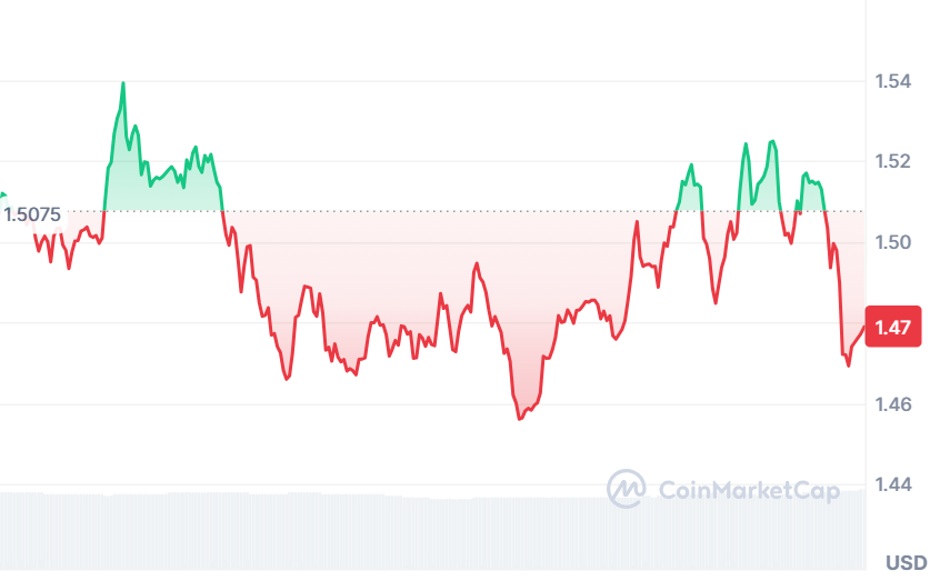
Strategy formerly MicroStrategy, ticker MSTR uses its Stretch perpetual preferred stock (STRC) as a digital credit tool to raise capital efficiently for Bitcoin purchases. When STRC trades at or above its $100 par value, the company can issue new shares via its at-the-market (ATM) program.

Proceeds go primarily toward buying more BTC, while STRC offers income-focused investors a relatively stable ~11.5% annualized dividend; paid monthly in cash, with the rate adjusted to help keep the price near par and limit volatility compared to MSTR common shares. STRC has traded above or at par for multiple consecutive days in recent sessions including stretches of four or more days, enabling ongoing ATM issuances.

Estimates from trackers have shown STRC-related proceeds funding thousands of BTC in short periods—sometimes exceeding daily mined supply during high-volume weeks. For context, one recent week saw STRC activity tied to estimates around 3,600+ BTC worth of buying power or more in peak single-day or multi-day hauls, with figures like ~4,000–4,500 BTC cited in some high-volume sessions.

Strategy issues new shares near par, raising capital without heavy dilution pressure on common stock. This has powered consistent BTC accumulation. Dividend rate can increase to attract buyers and pull it back, it has risen multiple times since launch in mid-2025, reaching 11.5%. It’s positioned as a lower-volatility income product (hist. 30D volatility ~2%) versus MSTR’s equity swings, drawing yield-seeking capital that indirectly funds BTC buys.

Recent examples include: A week where STRC helped fund 4,871 BTC total purchases ~$330M at ~$67,700 avg price, with STRC contributing a large portion. High-volume days with millions of shares traded, where a significant percentage above the threshold translated to hundreds or thousands of BTC in estimated proceeds e.g., single sessions estimated at 900–4,000+ BTC equivalents in peak cases.

STRC has generated billions in proceeds since launch; recently noted as surpassing $5B in ~7 months, with much deployed into Strategy’s growing treasury now over 766,000 BTC held. This mechanism has been called a flywheel by observers because sustained demand for the yield when STRC stays near par allows ongoing issuance ? BTC buys ? reinforced corporate treasury strength.

Strategy’s latest reported holdings reached ~766,970 BTC after a 4,871 BTC addition, and it has filed for expanded ATM capacity including more STRC. Daily/weekly BTC figures from volume above par are model-based factoring shares issued, capture rates ~40%, BTC price, net proceeds. Official confirmations come later via SEC filings.

Trading can dip below par, pausing efficient issuance, as seen after ex-div dates, dividends are variable and not risk-free, and STRC is perpetual preferred stock—not collateralized directly by BTC, it has a preferred claim on residual assets. This has coincided with Strategy’s aggressive treasury strategy under Michael Saylor and CEO Phong Le, where STRC is highlighted as a fast-scaling product.

BTC price, overall volume, and investor appetite for the yield all influence how long stretches above par last. In short, yes—periods of STRC trading above par including recent multi-day runs have directly supported substantial BTC revenue and accumulation estimates in the thousands per week during strong sessions, turning yield demand into corporate Bitcoin buying power.

US Spot Bitcoin ETFs Surpass $2.4 Billion in Trading Volume 

0

U.S. spot Bitcoin ETF trading volume has surpassed $2.4 billion. BlackRock’s iShares Bitcoin Trust (IBIT) dominated the session with roughly $1.93 billion in volume, followed by Fidelity’s FBTC at about $212 million. Other notable contributors included Grayscale, Bitwise, and ARK Invest, with smaller amounts from issuers like VanEck, Invesco, and others.

Volume refers to total buying and selling activity, not net new money. High volume like this signals strong liquidity and investor interest, even on days with modest or mixed net flows. Recent net flows have been positive but lower: For example, ~$471 million in net inflows on April 6; the strongest single-day intake since February, driven largely by BlackRock and Fidelity.

April overall has seen inflows resuming after earlier 2026 outflows. This level of daily trading activity is solid for the spot Bitcoin ETFs and shows continued institutional engagement, though it’s not an all-time record—similar highs occurred shortly after launch in 2024. IBIT consistently captures the lion’s share of both volume and assets under management (AUM), reflecting its scale and investor preference.

Bitcoin has been consolidating in the $66K–$72K range recently. Elevated ETF volume can support price stability or upside if accompanied by inflows, as it indicates real capital rotating through regulated vehicles rather than just spot or futures trading. Spot Bitcoin ETFs have cumulatively seen tens of billions in net inflows since inception, with total AUM now in the $80B–$90B+ range across issuers.

If this volume pairs with sustained inflows, it’s generally viewed as bullish for BTC’s price discovery, as it funnels traditional capital into Bitcoin exposure without requiring direct custody. High spot Bitcoin ETF trading volume generally supports greater price stability for BTC over time, though the effect is nuanced and depends more on net flows than raw turnover.

Heavy ETF trading activity funnels institutional capital through regulated, transparent vehicles. This increases overall liquidity in Bitcoin exposure, making it easier for large orders to execute without causing sharp price swings. In traditional finance, higher volume in ETFs often correlates with tighter bid-ask spreads and smoother price discovery.

Studies and market observations show that sustained ETF participation helps absorb shocks. For instance, when volume spikes alongside positive sentiment, it can prevent cascading liquidations or panic selling by providing a steady pool of buyers and sellers. Bitcoin’s recent consolidation in the $68,000–$72,000 range reflects this kind of stabilization amid broader market noise.

ETFs attract longer-horizon capital less prone to retail-style FOMO or capitulation. This shifts Bitcoin from a purely speculative asset toward one with more predictable demand, potentially lowering realized volatility over months. Volume alone is neutral-to-positive for stability — It signals interest and liquidity but doesn’t directly move the price.

A $2.4B volume day shows active trading, which can keep prices range-bound rather than trending wildly. Net inflows drive upside pressure and stability — Recent data shows strong single-day inflows, contributing to March’s $1.32B monthly net inflows—the first positive month of 2026 after earlier outflows. Persistent net buying creates a bid underneath the market, supporting floors and reducing downside volatility.

In contrast, periods of net outflows seen in Q1 2026 have coincided with choppier action or temporary pressure, as redeemed shares lead to actual BTC sales. However, even then, non-ETF demand has often absorbed the supply. High volume can coincide with muted price action if inflows are offset by other selling.

Bitcoin’s stability in recent weeks has sometimes been described as a mirage, with options markets pricing in potential downside risks despite sideways trading. Elevated volume helps here by enabling efficient hedging and reducing slippage. ETFs have fundamentally altered Bitcoin’s market structure.

They create a virtuous cycle: more inflows ? better liquidity ? tighter spot tracking ? more institutional adoption. This has historically reduced extreme volatility compared to pre-ETF eras, as seen in how BTC has held key supports amid geopolitical or macro noise in 2026. Research indicates ETF inflows have a persistent positive though modest effect on prices, peaking a few days later, while also showing momentum in flows themselves.

Bitcoin is trading with relatively low realized volatility in a consolidation phase, supported by resuming inflows and robust ETF liquidity. The $2.4B volume day reinforces institutional engagement without triggering a breakout or breakdown—classic stability behavior. Broader factors like options expiries, implied volatility around 48–58%, and macro elements still play roles, but ETF activity increasingly acts as a stabilizing force by channeling traditional capital predictably.

This level of ETF volume is mildly bullish for stability, providing a liquidity buffer and signaling sustained interest. True dampening of volatility strengthens when paired with consistent net inflows, which appear to be rebounding. It doesn’t eliminate swings—Bitcoin remains a high-beta asset—but it makes extreme dislocations less likely than in the pre-ETF world.

ZachXBT Shares Leaked Data Exposing a North Korean-linked IT Worker Network 

0

ZachXBT recently shared leaked data exposing a North Korean-linked IT worker network that generates roughly $1 million per month around $3.5 million since late November 2025 through fake identities while working remote developer jobs, often in crypto projects.

The on-chain investigator posted about documents obtained after an unnamed hacker compromised one of the group’s devices. The leaks reportedly include internal payment records showing a team of about 140 members, with one individual (“Jerry”) tied to the operation. Funds are paid in crypto and converted to fiat, often routed through services like Payoneer, using forged documents and stolen or fake identities to secure remote IT/development roles.

This fits a broader, well-documented pattern of North Korean (DPRK) actors—sometimes linked to state-sponsored groups like Lazarus—sending IT workers overseas or having them operate remotely under false pretenses. They earn legitimate salaries from tech and crypto companies while potentially gathering intelligence, inserting backdoors, or committing direct thefts.

Previous ZachXBT investigations have highlighted similar clusters infiltrating dozens of projects, with one earlier example noting $300K–$500K monthly flows to a single entity via fake identities. DPRK IT workers have reportedly embedded in DeFi and crypto firms for years, sometimes for extended periods; the recent $270–285M Drift Protocol exploit involved a 6+ month social engineering operation with in-person meetings and a large deposit as a Trojan horse.

North Korea-linked actors have been attributed with a significant portion of major crypto heists in recent years, including high-profile incidents totaling billions. However, not every hack is automatically Lazarus—ZachXBT has pushed back against over-attribution in some cases. Crypto enables salary payments and fund movement that bypasses traditional sanctions, with flows often going through mixers, exchanges, or intermediaries before conversion.

ZachXBT’s thread and the underlying leaked data provides an insider view into their internal payment server, which is rare and valuable for understanding operations. He noted the research performed well initially but was somewhat overshadowed by other posts. This highlights ongoing risks in remote hiring for crypto and DeFi teams: weak KYC and verification, especially for contractors.

Projects should use robust identity checks, code audits, and monitoring for suspicious commits or access patterns. These operations continue to evolve, blending legitimate remote work with espionage and theft to fund the regime while evading sanctions.

The exposure by ZachXBT of this North Korean IT worker network; processing ~$1M monthly and ~$3.5M since late 2025 has several layered impacts across security, regulatory, economic, and industry levels. While the leak itself is recent, it builds on years of documented DPRK infiltration tactics.

The leak provides rare internal visibility: payment records, chat logs via IPMsg, fake identity documents, remittance hubs and conversion flows through crypto exchanges, Payoneer, and Chinese banks. This gives investigators, companies, and law enforcement concrete data to identify patterns, freeze addresses and trace funds. Teams that discover they’ve hired linked individuals may terminate contracts quickly.

It may force the network to adapt tactics, such as better VPNs or new identities, but the breach of their internal payment server exposes operational weaknesses like poor security hygiene. ZachXBT noted the research gained less traction than expected compared to other posts, but it still circulates in crypto security circles. DPRK-linked workers have reportedly embedded in 40+ DeFi protocols since DeFi summer, sometimes contributing actual code to well-known projects.

Not all were purely fraudulent—some delivered work—but this creates persistent risks of backdoors, malicious commits, data exfiltration, or future exploits. ZachXBT has previously tied similar networks to 25+ incidents involving code insertion leading to treasury drains or team extortion. The recent high-profile $270–285M Drift Protocol exploit involved 6+ months of social engineering, in-person meetings at conferences, and a Trojan horse deposit—showing how trust-building escalates to massive losses.

Estimates suggest hundreds of such operatives may hold crypto-related jobs, generating hundreds of millions annually for the regime. This funds WMD and missile programs, violating sanctions. The U.S. Treasury has sanctioned individuals and entities facilitating these schemes, targeting fake identity networks that convert salaries to fiat/crypto for the DPRK. The exposure adds fresh evidence for further designations and enforcement. Companies unknowingly paying sanctioned actors risk penalties.

Increased scrutiny on remote hiring, especially in crypto: Projects face pressure to implement stronger KYC, background checks, video interviews, code contribution audits, and sanctions screening. Fintech platforms and exchanges involved in conversions may tighten compliance. Funds support North Korea’s regime, linking cybercrime directly to national security threats. This amplifies calls for better public-private cooperation in tracking these flows.

Peer code reviews and sandboxing for contractors. Monitoring for unusual access or commit patterns. Avoiding over-reliance on remote freelancers without robust vetting. Some projects are highlighted for stronger skepticism toward contributors, serving as models. Others, like Solana-related teams, have faced public calls to address past hires.

Legitimate developers from certain regions may face extra hurdles, creating hiring friction in an already competitive space. The $1M/month figure here is one slice of a larger ecosystem. Repeated stories of infiltration erode trust in decentralized hiring and remote work models popular in Web3. It underscores why trust-minimized systems still require human vigilance. No single massive drain tied directly to this leak yet, but cumulative losses from DPRK-linked activity contribute to overall sector volatility and insurance costs.

ZachXBT’s work acts as a deterrent and intelligence booster, pushing the industry toward harder defenses while complicating DPRK operations. However, these networks are resilient and evolve—expect continued adaptations like deeper social engineering. Crypto teams should treat hiring as a high-risk vector alongside smart contract audits.