DD
MM
YYYY

PAGES

DD
MM
YYYY

spot_img

PAGES

Home Blog Page 14

Don’t Blink! BlockDAG Mainnet Is Live & The Final $0.00016 Window Is Closing Fast!

0

BlockDAG has officially flipped the switch. The Genesis Era is no longer a dream, it’s a reality. The Mainnet is live, blocks are being produced, and the chain is fully operational. This isn’t a drill or a testnet simulation; it is a functioning powerhouse. With the Token Generation Event (TGE) complete and major global exchange listings, including COLD WALLET, scheduled for next week, BlockDAG has officially shifted from “what if” to “what is.”

But here is the part that should keep you up at night: one final, vanishing window remains. Right now, BDAG is still available at $0.00016, a fixed price that will be erased the moment the first exchange order is filled. Once the market takes over next week, price and access will be ruled by the cold laws of liquidity, demand, and speed. At $0.00016, BlockDAG isn’t just an entry; it is arguably the best crypto to buy now for anyone hunting for life-changing 300x returns in 2026.

The Mainnet Is Live: Why This Changes Everything

The activation of the Mainnet is the ultimate proof of work. BlockDAG didn’t just talk a big game; it delivered a network that handles 5,000 transactions per second, crushing Ethereum’s speed by 500x. The Genesis block is pulsing, and every transaction is now verifiable on-chain through the official BlockDAG Explorer.

In the brutal world of crypto, this moment separates the “vaporware” from the “titans.” You aren’t speculating on whether BlockDAG can build a network anymore; the code is already running. This reality is what makes the remaining $0.00016 allocation so provocative. You are getting pre-market prices for a network that is already outperforming the world’s most famous blockchains.

TGE, Claims, and Listings: The Clock Is Ticking

With the TGE complete, the next phase is official: the BDAG airdrop claim is open NOW through the dashboard. This is the moment where your participation turns into on-chain ownership. Simply connect your wallet to the BlockDAG Mainnet to view your allocation and execute your claim.

Between now and next week, the network is finalizing its distribution and prepping the liquidity pools for a massive debut. On February 16, exchange listings go live globally. From that second forward, you will be competing with millions of retail and institutional traders. The fixed $0.00016 entry will be a memory. The only way to secure this rate is to act while Genesis access is still available.

$0.00016 Today, But Where Does the Rocket Stop?

The expected listing target is already set at $0.05, which represents an immediate 300x leap from the final allocation price. But that is just the starting line. When you consider the massive $452 million raised and a network speed that legacy chains can’t touch, the long-term math becomes staggering.

  • At $1, a $1,000 entry today would turn into a fortune.
  • At $3 or $5, you are looking at gains that redefine “asymmetric upside.”

Are these numbers ambitious? Absolutely. But for a project that has already activated its Mainnet before even hitting its first exchange, they are grounded in real-world performance. In the search for the best crypto to buy now, BlockDAG stands alone because its “floor” is currently set at a fraction of a cent, while its “ceiling” remains uncharted.

Why BlockDAG Is Outpacing Every Other Launch

BlockDAG’s edge isn’t just its price; it’s its relentless delivery. In less than a year, it has moved from a vision to a complete blockchain deployment with millions of mobile miners already onboarded. Its hybrid DAG-based consensus is built for the next era of the web, fixing the congestion issues that make other networks expensive and slow.

Most projects wait until after their listing to launch their tech. BlockDAG did the opposite. By launching the network first and the market second, it has created a structural anomaly. You are being invited to buy into a live, high-speed ecosystem at a “pre-launch” discount. That is a rare invitation that markets usually only extend once.

There Is No Second Shot

This is the end of the road for fixed pricing. Each previous batch sold out, and what remains is a sliver of the final allocation at $0.00016 with zero vesting. You get 100% of your tokens delivered directly to your wallet on launch day.

Once the exchanges open next week, the “Genesis era” ends. There will be no post-launch discounts or do-overs. If you’ve been waiting for the best crypto to buy now, this isn’t just a good entry point, it is the last one before the world catches on and makes it expensive.

Private Sale: https://purchase.blockdag.network

Website: https://blockdag.network

Telegram: https://t.me/blockDAGnetworkOfficial

Discord: https://discord.gg/Q7BxghMVyu

 

Chinese AI Labs Unleash Coordinated Wave of Embodied and Agentic Models to Seize the “Physical AI” Frontier

0

Alibaba, ByteDance, and Kuaishou have launched advanced AI models in robotics and video generation, signaling China’s intensifying bid to compete head-to-head with U.S. leaders across multiple layers of the AI stack.


A wave of model releases from China’s largest technology firms this week highlights how the country’s AI sector is expanding beyond chatbots into robotics, cinematic video generation, and autonomous “agentic” systems.

Alibaba, ByteDance, and Kuaishou each unveiled new AI platforms aimed at competing directly with U.S. firms such as OpenAI, Nvidia, and Google.

The momentum follows comments by Demis Hassabis, head of Google DeepMind, who told CNBC that Chinese AI models are only “months” behind Western competitors — an assessment that underscores how quickly performance gaps are narrowing.

The latest launches also show that China’s AI race is not confined to language models but extends into multimodal systems that integrate text, vision, sound, and physical interaction.

Robotics and the Push for “Embodied” AI

Alibaba’s DAMO Academy introduced RynnBrain, a model designed to give robots deeper awareness of their surroundings.

In demonstrations, robots equipped with grippers were shown identifying, counting, and picking up objects such as oranges, as well as retrieving items from a refrigerator. Tasks that appear simple to humans require substantial perception and reasoning capabilities for machines: object recognition, spatial mapping, trajectory planning, and sequential memory.

Adina Yakefu, a researcher at Hugging Face, said a central innovation in RynnBrain is built-in time and space awareness.

“Instead of simply reacting to immediate inputs, the robot can remember when and where events occurred, track task progress, and continue across multiple steps,” she said. That continuity is essential for real-world deployment in warehouses, factories, and service environments.

The strategic importance lies in “embodied AI” — systems that move beyond digital text responses to operate in physical space. Nvidia and Google are investing heavily in this domain, seeing robotics as a long-term driver of productivity in logistics, manufacturing, and healthcare. By building foundational robotics models, Alibaba signals ambitions to control a critical layer of industrial automation infrastructure.

If scaled, such systems could help address labor shortages in sectors like warehousing and elder care, while also raising new regulatory and safety considerations.

Video Generation Becomes a Commercial Battleground

In parallel, ByteDance launched Seedance 2.0, a text-to-video model capable of generating cinematic sequences from text prompts, images, or source video.

Users and researchers say the system shows significant gains in visual realism, camera motion, texture detail, and audio integration. Billy Boman, who runs a creative agency producing AI-generated content, described the recent progress as transformative. “Back in 2023 … it was difficult to get someone to run or to walk,” he said. “Now I can do anything.”

Seedance competes with OpenAI’s Sora and similar U.S. models, placing Chinese firms squarely in the global contest for dominance in generative media. Improvements in controllability and production efficiency make such tools increasingly viable for advertising, entertainment, and social media content creation.

However, rapid progress has also raised governance concerns. Chinese media reported that Seedance suspended a feature that enabled voice generation from an uploaded image after questions were raised about consent. The episode highlights the tension between technological capability and ethical guardrails — a theme that extends across global AI development.

Kuaishou’s Kling 3.0, released last week, adds another competitive entry. The model supports up to 15 seconds of video, improved consistency, and multilingual audio generation. Kling is currently offered to paying subscribers, suggesting a monetization strategy integrated into Kuaishou’s short-video ecosystem.

Kuaishou’s stock has risen more than 50% over the past year, reflecting investor optimism that AI-enhanced content tools can deepen engagement and create new revenue streams.

The Rise of Open-Source and Agentic Systems

Beyond robotics and video, Chinese firms are also accelerating in large language models and AI agents.

Zhipu AI released GLM-5, an open-source model with enhanced coding capabilities and long-running task management. The company said GLM-5 approaches Anthropic’s Claude Opus 4.5 on coding benchmarks and outperforms Google’s Gemini 3 Pro in some tests — claims that have not been independently verified by CNBC.

MiniMax unveiled M2.5, an updated open-source model with expanded agentic features. Agentic AI refers to systems capable of autonomously carrying out multi-step workflows, such as scheduling, research, or software deployment, with limited human intervention.

Open-source distribution is a notable feature of China’s AI push. By making models accessible to developers, companies can accelerate ecosystem adoption, gather feedback, and stimulate downstream innovation. This contrasts with more closed commercial strategies adopted by some Western AI leaders.

The breadth of releases suggests a coordinated push across multiple layers of the AI value chain — from foundational models to consumer-facing applications.

China’s AI firms benefit from vast domestic user bases, particularly in short-video platforms, providing real-time data and testing environments for generative systems. Integration into super-app ecosystems enables rapid commercialization.

At the same time, U.S. export controls on advanced semiconductors have added complexity to China’s AI ambitions. Companies are investing in optimizing models for locally available hardware and in developing domestic chip capabilities to reduce reliance on U.S. suppliers.

The competitive dynamic is no longer limited to benchmark performance. It now encompasses deployment speed, integration with hardware, regulatory alignment, and commercial scale.

Demis Hassabis’ assessment that Chinese models are “months” behind Western counterparts suggests a narrowing technological gap. The latest launches indicate that in areas such as video realism and embodied robotics, competition is increasingly defined by iteration cycles and ecosystem depth rather than by clear technological dominance from one side.

It also underlines Beijing’s intention to compete across all three fronts simultaneously, reinforcing a multipolar AI landscape where leadership may vary by domain rather than by geography alone.

Spotify Says Top Engineers No Longer Writing Code as AI Transforms Workflow

0
London, UK - August 01, 2018: The buttons of Spotify, Podcasts, Netflix, WhatsApp and Music on the screen of an iPhone.

Spotify executives said senior engineers are no longer writing code but supervising AI-generated output — a shift intensifying the debate over how artificial intelligence will reshape coding jobs.

At Spotify, some of the company’s most experienced developers have stopped writing code altogether.

Gustav Söderström, the company’s co-president and chief product and technology officer, told investors during Spotify’s fourth-quarter earnings call that its top engineers “haven’t written a single line of code since December.”

“They actually only generate code and supervise it,” Söderström said, describing what he framed as a productivity breakthrough enabled by generative AI tools.

The comments add fresh momentum to a growing industry-wide discussion about how artificial intelligence is transforming the nature of software development — and what that means for engineering jobs.

The workflow Söderström outlined represents a structural change in how software is produced. Instead of manually writing functions and debugging line by line, engineers prompt AI systems to generate code and then evaluate, refine, and approve the output.

In this model, developers act more as system architects and quality gatekeepers than as direct authors of software. The emphasis shifts toward defining specifications, validating performance, ensuring security compliance, and integrating outputs into larger systems.

Söderström acknowledged that the transition will be disruptive.

“There is going to have to be a lot of change in these tech companies if you want to stay competitive, and we are absolutely hell-bent on leading that change,” he said. “It will be painful for many companies, because engineering practices, product practices, and design practices will change.”

He also cautioned that rapid AI-driven iteration introduces volatility. “The tricky thing is that we’re in the middle of the change, so you also have to be very agile. The things you build now may be useless in a month.”

For Spotify, which operates in a consumer-facing market where product velocity is critical, the promise is accelerated output. Söderström suggested companies may soon be able to produce far more software than before, with the main constraint becoming how much change users can absorb.

AI Fatigue and Workflow Strain

While executives emphasize efficiency gains, engineers have begun voicing concerns about what the shift means in practice.

A widely shared essay by software engineer Siddhant Khare described a sense of “AI fatigue,” where developers spend their days reviewing large volumes of machine-generated pull requests rather than building systems directly. He likened the process to being “a judge at an assembly line.”

The issue is not resistance to AI itself. Instead, it reflects the cognitive burden of continuously auditing automated output. Machine-generated code can introduce subtle logic flaws, security vulnerabilities, or architectural inconsistencies that require careful scrutiny.

In high-stakes production environments, the cost of errors can be high. That makes the oversight function critical — and potentially exhausting if output scales dramatically.

Broader Impact on Coding Jobs

Spotify’s disclosure has sharpened the broader debate over how AI will affect software engineering employment.

One argument holds that generative coding tools will displace programmers by automating core tasks, particularly for junior developers whose work often involves boilerplate implementation. If AI can reliably generate foundational code, entry-level roles could shrink, raising questions about how new engineers gain experience.

Another perspective suggests the opposite outcome: AI expands capacity and lowers barriers to creation, increasing demand for engineers who can design systems, manage complexity, and oversee automation. In this view, roles evolve rather than disappear.

The distinction may hinge on skill level and specialization. Senior engineers may move further into architectural oversight, systems integration, and AI orchestration. Meanwhile, the skills most valued could shift toward prompt design, critical evaluation, debugging AI outputs, and understanding model limitations.

Economic incentives are also at play. If AI allows companies to ship more features with fewer developers, cost structures change. However, if accelerated development unlocks new products and revenue streams, headcount reductions may not be inevitable.

Strategic Calculus for Tech Firms

For technology companies, the competitive pressure to adopt AI-driven coding is intensifying. Firms that integrate AI effectively could reduce time-to-market, experiment more frequently, and allocate resources toward innovation rather than maintenance.

Söderström framed the shift as unavoidable. “Companies such as us are simply going to produce massively more software, up until our limiting factor is actually the amount of change that consumers are comfortable with,” he said.

Yet the long-term implications remain uncertain. Quality control, security, intellectual property ownership, and regulatory compliance will all become more complex in environments dominated by AI-generated code.

Spotify’s experience, once again, ignites discussion about AI’s impact on jobs. As coding transitions from manual craft to supervised automation, the industry is confronting not only new productivity frontiers but also fundamental questions about the future of programming careers.

Marco Rubio Reassures Europe as Trans-Atlantic Alliance Faces Strain

0

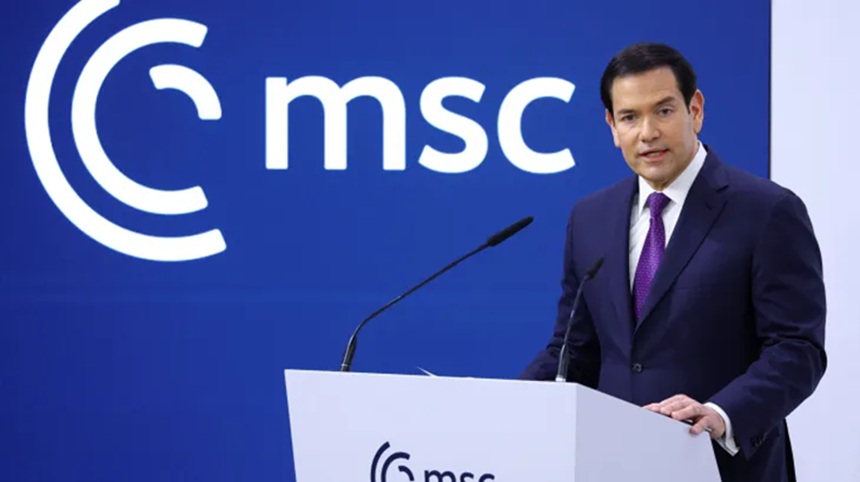
U.S. Secretary of State Marco Rubio used his address at the Munich Security Conference to reaffirm Washington’s commitment to Europe, declaring that the United States has no intention of abandoning its deep alliance with the region.

“We care deeply about your future and ours,” Rubio said. “We want Europe to be strong. We believe that Europe must survive, because the two great wars of the last century serve, for us, as history’s great reminder, that ultimately, our destiny is, and will always be, intertwined with yours.”

The reassurance comes at a sensitive moment. Policies pursued by President Donald Trump — including sharp criticism of NATO burden-sharing, calls for allies to significantly raise defense spending, and renewed trade assertiveness — have unsettled traditional partners. Trump’s public interest in U.S. ownership of Greenland, a Danish territory, further intensified unease in European capitals.

Against that backdrop, Rubio’s speech appeared calibrated to steady relations at a time when some European policymakers have begun reassessing long-term strategic dependencies and exploring alternative partnerships, including deeper economic engagement with China.

In recent years, Europe has faced mounting pressure to balance its trans-Atlantic commitments with economic realities. China remains one of the European Union’s largest trading partners, and some European governments have pursued pragmatic economic engagement even as geopolitical tensions persist.

Trump’s transactional approach to alliances — emphasizing cost-sharing, industrial reshoring, and trade reciprocity — has prompted debate within Europe about strategic autonomy. Calls for greater defense self-reliance, energy diversification, and independent supply chains have accelerated. European Commission President Ursula von der Leyen told the conference that Europe faces “the very distinct threat of outside forces trying to weaken our union from within,” and must become more independent “in every dimension that affects our security and prosperity.”

While she stressed that autonomy strengthens rather than weakens the alliance, the push reflects a broader reassessment underway across the continent. Some analysts note that uncertainty in U.S. foreign policy continuity has led parts of Europe to hedge strategically, keeping channels open with Beijing in trade, climate policy, and industrial cooperation.

Rubio sought to counter any perception of drift. “We do not need to abandon the system of international cooperation we authored,” he said, adding that global institutions “must be reformed” rather than dismantled.

His message signaled that Washington wants reform within the Western-led order, not its replacement.

Ukraine, Gaza, and the Debate Over Leadership

Rubio argued that American leadership remains indispensable in resolving major crises, contrasting U.S. diplomatic initiatives with what he described as limited effectiveness from multilateral institutions such as the United Nations.

“The United Nations still has tremendous potential to be a tool for good in the world,” Rubio said. “But we cannot ignore that today, on the most pressing matters before us, it has no answers and has played virtually no role.”

On Ukraine, President Volodymyr Zelenskyy thanked the United States for its support. “I am grateful to every American heart that was helping us, no matter what. Thank you,” he said, while also criticizing the previous U.S. administration for delays in scaling up military assistance.

NATO Secretary General Mark Rutte urged allies to intensify support under the alliance’s Prioritized Ukraine Requirements List. EU foreign policy chief Kaja Kallas warned that concessions to Russia would only embolden further aggression.

The discussions underscored that while Washington and European capitals remain aligned on core security threats, the methods and pace of response continue to generate debate.

Rubio also framed the alliance in economic terms, criticizing past policies that encouraged supply chain outsourcing and contributed to “deindustrialization.” He argued that the loss of supply chain sovereignty was “foolish” and called for coordinated reindustrialization across the Atlantic.

He outlined areas for deeper cooperation, including artificial intelligence, commercial space, industrial automation, and securing critical mineral supply chains not vulnerable to geopolitical leverage.

These themes align with Trump’s broader economic nationalism agenda, which emphasizes domestic manufacturing revival and strategic decoupling from adversarial supply chains. For Europe, however, industrial competitiveness often intersects with complex trade ties to China, making alignment more nuanced.

Alliance at a Crossroads

Rubio’s speech reflects recognition within Washington that reassurance is necessary. European leaders have increasingly spoken about reducing strategic dependency — not only on Russia for energy but also on the United States for security guarantees.

At the same time, Europe faces its own constraints: fragmented defense capabilities, uneven fiscal space, and internal political divisions. While engagement with China offers economic opportunities, it also carries security and political risks.

The reaffirmation in Munich signals that, despite friction over defense spending, trade policy, and geopolitical posture, the United States continues to view Europe as a foundational partner. But the challenge for European leaders lies in balancing strategic autonomy with alliance cohesion.

China Expands Zero-Tariff Access to 53 African Nations in Sweeping Trade Shift

0

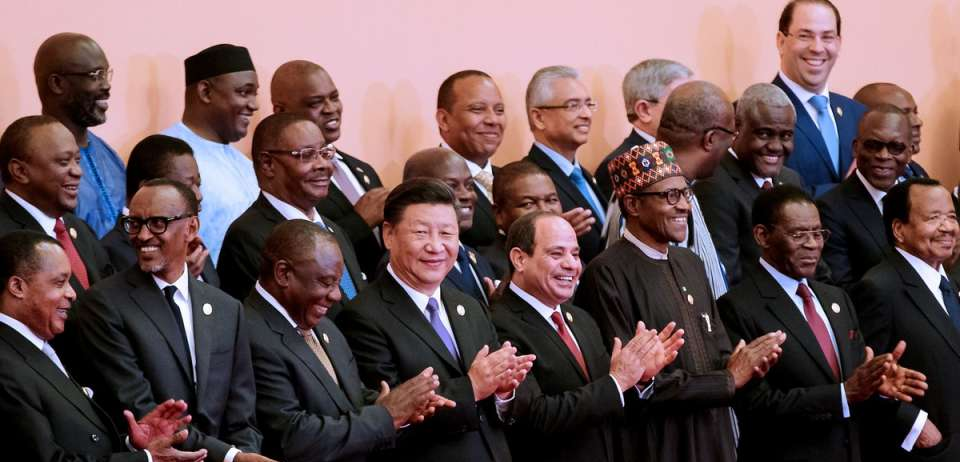
China will implement zero-tariff treatment for imports from 53 African countries with which it maintains diplomatic relations beginning May 1, 2026, significantly broadening its preferential trade regime across the continent.

Business Insider, citing state media, reports that the measure extends duty-free access to nearly all African states, excluding only Eswatini, which maintains diplomatic ties with Taiwan.

The policy shift comes at a time of uncertainty around the future of the African Growth and Opportunity Act (AGOA) in the United States and ongoing tensions between African governments and the European Union over Economic Partnership Agreements (EPAs).

Until recently, Beijing granted zero-tariff treatment on 97%–98% of tariff lines to 33 African least developed countries (LDCs), later expanding that coverage in 2024 to include all products originating from those LDCs. The new framework now covers both least developed and middle-income African economies, marking one of the most comprehensive trade concessions China has offered to the continent.

Trade Imbalance: The Central Challenge

China–Africa trade has grown rapidly but remains structurally uneven. Bilateral trade reached $222.05 billion between January and August 2025, up 15.4% year-on-year, according to China’s customs authorities. Chinese exports to Africa rose 24.7% to $140.79 billion, while imports from Africa increased only 2.3% to $81.25 billion.

Africa’s trade deficit with China widened to $59.55 billion in the first eight months of 2025, nearly matching the full-year 2024 deficit of $61.93 billion.

The imbalance reflects entrenched commodity patterns. Africa exports crude oil, copper, cobalt, iron ore, and other raw materials. In contrast, China exports higher-value manufactured goods, including machinery, telecommunications equipment, vehicles, consumer electronics, and renewable energy systems. Mineral resources alone accounted for roughly 40% of China’s imports from African LDCs in 2023.

The renewable energy trade illustrates the asymmetry. Africa imported 15,032 megawatts of Chinese solar panels between July 2024 and June 2025, a 60% increase year-on-year, underscoring China’s role in powering Africa’s energy transition while retaining higher value-added manufacturing at home.

Zero tariffs could lower entry costs for African exporters, but tariff elimination does not automatically translate into export diversification. The core constraint remains production capacity and value addition.

Diplomatic Calculus and Strategic Positioning

The expansion follows sustained diplomatic lobbying by African leaders seeking improved market access. Cyril Ramaphosa recently visited Beijing to deepen trade cooperation. A non-binding framework agreement was signed by South Africa’s Minister of Trade, Industry, and Competition Parks Tau and China’s Commerce Minister Wang Wentao, paving the way for an Early Harvest Agreement expected by March 2026.

Yoweri Museveni has also repeatedly called for structural correction of the trade imbalance, arguing that African economies must move beyond raw commodity exports.

The decision represents more than tariff policy for China. Economists estimate Beijing will forgo roughly $1.4 billion in tariff revenue under the expanded scheme. The revenue trade-off strengthens China’s economic diplomacy at a time of heightened geopolitical competition.

By offering continent-wide duty-free access, Beijing differentiates itself from Western frameworks. The European Union’s “Everything But Arms” initiative applies only to LDCs, while non-LDC countries must negotiate EPAs that often involve reciprocal market access commitments. AGOA in the United States provides selective access but is subject to periodic renewal and eligibility conditions, creating uncertainty for exporters.

China’s approach offers broader coverage and fewer political conditionalities, reinforcing its image as a long-term commercial partner.

Structural Barriers and Industrial Capacity

Despite tariff removal, analysts caution that non-tariff barriers remain significant. These include sanitary and phytosanitary standards, customs procedures, certification requirements, and logistics bottlenecks. Export financing gaps and limited access to trade insurance also constrain African producers.

Infrastructure deficits compound the challenge. Many African economies lack sufficient port capacity, cold-chain systems, and processing facilities to scale exports of agricultural or perishable goods. Without domestic industrialization, duty-free access may primarily benefit commodity exporters rather than emerging manufacturers.

The policy could, however, incentivize investment in value-added sectors such as agro-processing, textiles, light manufacturing, and mineral beneficiation. If African firms can leverage zero tariffs to enter Chinese supply chains, the measure may accelerate diversification efforts aligned with the African Continental Free Trade Area (AfCFTA).

China has pledged additional trade facilitation measures, including financial instruments and funds to support enterprises operating in Africa. The effectiveness of these mechanisms will determine whether zero tariffs translate into meaningful export growth.

Implications for Global Trade Dynamics

Global trade patterns are fragmenting amid geopolitical tensions, supply chain realignment, and strategic competition for critical minerals used in electric vehicles and renewable technologies. Africa holds substantial reserves of cobalt, lithium, manganese, and rare earth elements, making the continent central to global energy transition supply chains.

By widening tariff-free access, China strengthens its position in securing long-term access to these resources while deepening its economic footprint.

For African governments, the move offers an opportunity to renegotiate trade relationships from a position of improved market access. However, reducing the deficit will depend less on tariff rates and more on industrial policy, export competitiveness, and infrastructure development.

Some analysts believe the zero-tariff expansion represents a decisive deepening of China–Africa economic integration. It addresses long-standing calls for broader access but does not resolve structural imbalances on its own.

If accompanied by domestic reforms, industrial upgrading, and effective trade facilitation, African economies could leverage the scheme to expand processed exports and narrow trade deficits. If structural constraints persist, trade volumes may grow while the imbalance remains.

The policy signals Beijing’s long-term strategic commitment to Africa at a time of shifting global alliances. The Trump administration’s trade policies have stirred a shift in business ties, with nearly every country seeking an alternative to the existing global trade order. However, business leaders believe the ultimate impact will hinge on whether African exporters can translate open access into diversified, value-added trade flows.