DD
MM
YYYY

PAGES

DD
MM
YYYY

spot_img

PAGES

Home Blog Page 14

SpaceX Earnings Surprise, Nvidia Partnership, AMD Selloff, and Cloudflare’s Stablecoin Wallet Signal a Shifting Tech Landscape

0

The technology and financial markets witnessed another eventful trading session as SpaceX reported stronger-than-expected earnings while unveiling a strategic partnership with Nvidia aimed at accelerating artificial intelligence infrastructure.

Despite the positive financial results and high-profile collaboration, SpaceX shares fell 11% in post-market trading, highlighting investors’ increasingly demanding expectations for the world’s largest technology companies.

At the same time, AMD declined 8% after the market closed, suggesting broader concerns across the semiconductor and AI sector.

SpaceX’s earnings demonstrated continued strength across its commercial launch business, Starlink satellite internet operations, and expanding enterprise services.

Revenue growth reflected sustained demand for global connectivity and space-based communications, while management emphasized future investments in next-generation launch systems and AI-powered satellite networks.

The newly announced partnership with Nvidia is expected to deepen the integration of advanced AI computing into SpaceX’s infrastructure, potentially improving autonomous operations, satellite data processing, and cloud-based AI services for enterprise customers.

Financial markets often react not only to strong results but also to expectations for future growth. Following months of significant gains, SpaceX entered earnings season with elevated valuations.

Investors appeared to focus on forward guidance, capital expenditure requirements, and the pace of monetizing new AI initiatives rather than the company’s headline earnings beat.

The 11% post-market decline illustrates how even exceptional quarterly performance can disappoint markets when expectations have already been priced in. The weakness extended beyond SpaceX. AMD shares dropped 8% in after-hours trading, adding pressure across semiconductor stocks.

Although AMD remains one of the leading competitors in AI accelerators and high-performance computing, investors continue to scrutinize spending trends among cloud providers and enterprise customers.

The decline reflects ongoing uncertainty surrounding AI infrastructure investments, where markets have become increasingly sensitive to execution risks and competitive positioning.

While equity markets processed earnings volatility, another important development emerged from the fintech and blockchain ecosystem. Cloudflare announced a new wallet designed to allow AI agents to make payments using stablecoins.

The announcement represents a notable step toward enabling autonomous software agents to transact economically without relying on traditional banking rails.

As AI systems become increasingly capable of performing independent tasks, payment infrastructure has emerged as one of the missing components required for broader automation.

Cloudflare’s stablecoin-enabled wallet could allow AI agents to purchase computing resources, pay for APIs, settle digital services, or execute machine-to-machine transactions with minimal human intervention. Stablecoins, which maintain relatively stable values by being pegged to fiat currencies, offer near-instant settlement and lower transaction costs compared to conventional payment networks.

The convergence of artificial intelligence and blockchain technology is becoming increasingly apparent. Companies are no longer treating AI and digital assets as separate innovation tracks but are exploring how programmable money can support autonomous digital economies.

Infrastructure providers see stablecoins as an efficient settlement layer capable of supporting millions of automated transactions between AI-powered applications. These developments illustrate the rapidly evolving landscape of technology markets.

SpaceX’s earnings and Nvidia partnership reinforce the growing importance of AI infrastructure, even as investors become more selective in rewarding high-growth companies.

AMD’s decline highlights continued competitive pressures within the semiconductor industry, while Cloudflare’s stablecoin wallet demonstrates how blockchain-based payments are beginning to serve practical AI use cases.

As artificial intelligence, cloud computing, and digital finance continue to converge, the companies successfully integrating these technologies may define the next phase of global innovation.
OpenAI Agrees to $3.2m U.S. Hiring Bias Settlement as Anthropic Appoints Former Judge as Global Policy Head

0

Justice Department says OpenAI and Statsig discriminated against U.S. workers in hiring, while Anthropic appoints veteran policymaker Mariano-Florentino Cuéllar to navigate mounting regulatory and geopolitical challenges.

OpenAI has agreed to pay $3.2 million to settle allegations by the U.S. Department of Justice that it discriminated against American job applicants by favoring foreign workers holding temporary employment visas, marking one of the most prominent immigration-related enforcement actions against a major artificial intelligence company.

Separately, Anthropic announced a significant expansion of its policy leadership, appointing former California Supreme Court Justice Mariano-Florentino Cuéllar as its first chief global affairs officer as the AI developer confronts mounting regulatory scrutiny and geopolitical tensions surrounding advanced artificial intelligence.

The twin developments underscore the efforts the world’s leading AI companies are making in navigating legal, political and regulatory challenges alongside intense competition to develop next-generation AI models.

The Justice Department said OpenAI and product development software company Statsig, a subsidiary, agreed to resolve allegations that they violated the Immigration and Nationality Act by discriminating against U.S. workers during recruitment for certain technology positions.

According to the department, the companies favored foreign workers with temporary employment visas by designing recruitment practices that discouraged qualified American applicants from applying.

Federal investigators alleged that U.S. workers seeking some positions were required to submit paper applications through the mail instead of using electronic applications, while some vacancies were advertised only through late-night radio broadcasts and were not posted on publicly accessible employment websites.

The Justice Department said those practices reduced the likelihood that qualified U.S. candidates would learn about or successfully apply for the positions. Assistant Attorney General Harmeet Dhillon said the settlement was intended to ensure equal employment opportunities for American workers.

“This substantial settlement ensures that OpenAI redresses harm and changes its recruitment practices so that U.S. workers receive a fair opportunity for highly sought-after technology positions,” Dhillon said.

The department alleged that fewer than 10 positions were directly affected but said the settlement amount reflected the broader harm caused by the companies’ hiring practices.

Under the agreement, OpenAI and Statsig will pay $1.2 million in civil penalties and establish a $2 million compensation fund for individuals allegedly harmed by the discriminatory practices. The companies also agreed to revise their hiring policies, provide employee training and submit to ongoing monitoring by the Justice Department to ensure future compliance with federal employment laws.

OpenAI denied wrongdoing in the settlement agreement.

The case represents one of at least a dozen settlements announced by the Justice Department since last year involving allegations that technology companies discriminated against U.S. workers in favor of foreign employees. However, it is by far the highest-profile case involving a leading artificial intelligence developer.

The enforcement action also aligns with President Donald Trump’s broader immigration agenda, which has sought to reduce what the administration describes as abuse of temporary employment visa programs. Trump has argued that some technology companies rely excessively on H-1B visas for highly skilled foreign workers instead of recruiting qualified Americans.

Earlier this year, his administration introduced a $100,000 fee on new H-1B visas, although implementation of the measure has been suspended pending legal challenges.

The settlement comes as AI companies continue to compete aggressively for scarce engineering and research talent, with demand for machine learning specialists remaining exceptionally strong across the technology industry.

Anthropic Appoints Former Judge as Global Policy Head

Meanwhile, Anthropic is strengthening its leadership team to address a rapidly evolving global policy landscape. The Claude developer announced on Tuesday that Mariano-Florentino Cuéllar will become its first chief global affairs officer, a newly created role overseeing government relations and international policy as the company expands worldwide.

Cuéllar will report to Anthropic President Daniela Amodei and will be based at the company’s San Francisco headquarters, where he will lead engagement with U.S. policymakers and governments in markets where Anthropic operates.

The appointment reflects Anthropic’s growing emphasis on public policy as governments around the world accelerate efforts to regulate advanced AI systems.

Before joining Anthropic, Cuéllar led the Carnegie Endowment for International Peace until July and previously served as a special assistant in former President Barack Obama’s White House. He also served as a justice on the California Supreme Court.

Since January, Cuéllar has been a member of Anthropic’s Long-Term Benefit Trust, an independent oversight body established to ensure the company adheres to its public benefit mission. He will step down from that position upon assuming his executive role, and Anthropic said the trust will appoint a replacement.

His background combines legal, national security and AI policy expertise. While leading Carnegie, Cuéllar co-chaired a task force examining U.S. national security and nuclear proliferation, an area that many AI researchers cite as a model for international governance of advanced artificial intelligence.

He also co-led a 2025 study that informed California’s SB 53 legislation, which established protections for AI whistleblowers, imposed incident reporting requirements on major AI developers and authorized penalties of up to $1 million per violation. Anthropic publicly supported the legislation.

In a statement, Cuéllar said governments have reached a pivotal moment in shaping the future of artificial intelligence.

“The choices we make today will determine whether humanity can harness extraordinary possibilities to advance science and improve lives across the world or face enormous risk and growing inequality,” he said.

Oren Cass, founder of the conservative think tank American Compass, described Cuéllar as someone capable of working constructively across political divides.

“His approach will be one that provokes good deliberative policymaking with the administration,” Cass told Reuters, adding that Cuéllar would be willing to engage with the Trump administration’s policy priorities while seeking areas of common ground.

Cuéllar assumes the role as Anthropic faces growing pressure from U.S. policymakers over national security and AI governance.

The company has recently been at the center of several high-profile disputes with the federal government. Earlier this year, the Pentagon blacklisted Anthropic’s technology following disagreements over military deployment restrictions, a decision the company is challenging in court.

More recently, the Trump administration imposed export controls temporarily preventing Anthropic from selling its most advanced Mythos 5 and Fable 5 AI models to foreign customers, citing national security concerns.

Yen Steadies After Historic U.S.-Japan Intervention As Treasury Backing, Easing Iran Tensions Weigh On Dollar

0

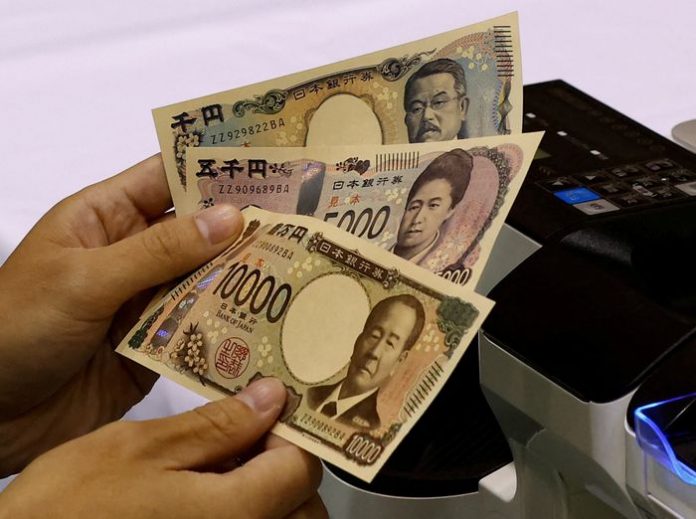
The Japanese yen steadied on Wednesday after one of its most volatile trading periods in months, following unprecedented joint intervention by Japan and the United States, while the dollar hovered near six-week lows against major currencies as easing tensions over the Iran conflict and lower oil prices eroded demand for traditional safe-haven assets.

The yen traded at 157.72 per dollar after slipping 0.4% on Tuesday. The currency had strengthened sharply earlier this week after touching a 40-year low of around 164 per dollar only days earlier, underscoring the scale of recent market intervention. On Monday, the yen briefly strengthened to 155.2 per dollar following coordinated purchases by Tokyo and Washington, marking the first U.S.-backed yen-buying intervention since 1998.

The intervention was reinforced by comments from U.S. Treasury Secretary Scott Bessent, who pledged that Washington would do “whatever it takes” to support Japan’s efforts to stabilize its currency. His remarks echoed former European Central Bank President Mario Draghi’s landmark 2012 commitment to preserve the euro during the sovereign debt crisis, signaling strong U.S. backing for Japan’s foreign exchange stabilization efforts.

The coordinated intervention underlines mounting concern among policymakers over the yen’s prolonged weakness, which has fueled imported inflation by increasing the cost of energy and raw material imports for Japan, a country heavily dependent on overseas supplies. Authorities are also seeking to prevent excessive currency volatility from undermining business confidence and financial market stability.

However, analysts cautioned that intervention alone is unlikely to produce a lasting turnaround without broader macroeconomic support.

“The phrase ‘sticking plaster’ does feel relatively appropriate in many instances. The reality is, I think it is nothing more than a containment exercise, unless you get one of three criteria,” said Jeremy Stretch, head of G10 FX strategy at CIBC Capital Markets.

Stretch said a sustained recovery in the yen would require a more aggressive tightening cycle by the Bank of Japan, reduced expectations for further U.S. Federal Reserve interest-rate increases, and lower global oil prices that would ease pressure on Japan’s trade balance.

Bessent’s endorsement has also strengthened market expectations that the Bank of Japan could raise interest rates at its September 17-18 policy meeting. Investors increasingly view tighter monetary policy as a more durable solution for supporting the currency than direct intervention alone.

Research from BNY showed investors continue to hold net bullish positions on the yen, although those positions remain significantly smaller than earlier this year.

“U.S. support provides an opening for re-accumulation (of bullish positions), but we believe the market will agree with Bessent that any structural shift in holdings will depend on credible domestic policy changes,” said Geoff Yu, BNY’s senior EMEA macro strategist.

Beyond the yen, the U.S. dollar weakened broadly as geopolitical risk premiums faded. The dollar index, which measures the U.S. currency against six major peers, held near 99.85 after falling to a six-week low earlier in the week.

Investor appetite for the dollar as a defensive asset eased after President Donald Trump said his administration had held “very good discussions” with Iran, raising hopes of reduced tensions following months of conflict. Crude oil prices also retreated to around $80 per barrel, further diminishing demand for the greenback as a safe haven.

Lower oil prices also boosted expectations that the Federal Reserve may face less pressure to tighten monetary policy further. Market pricing for a September rate increase slipped to just below 60%, down from nearly 70% at the start of the week, adding to downward pressure on the dollar.

Kansas City Federal Reserve President Jeff Schmid nevertheless reiterated that further monetary tightening remains necessary to return inflation to the central bank’s 2% target.

The euro traded little changed at $1.1536, while sterling held steady at $1.346 as investors awaited fresh economic catalysts.

Attention now turns to Friday’s U.S. nonfarm payrolls report, which is expected to play a pivotal role in shaping expectations for the Federal Reserve’s next policy decision and could determine whether the dollar’s recent weakness extends further or begins to reverse.

The yen has come under sustained pressure this year due to the wide interest-rate gap between Japan and the United States, prompting investors to favor higher-yielding dollar assets. Although the Bank of Japan has gradually shifted away from ultra-loose monetary policy, its pace of tightening has lagged well behind the Federal Reserve’s, keeping downward pressure on the Japanese currency.

The latest intervention marks one of the strongest coordinated currency support efforts in decades and underscores growing cooperation between Tokyo and Washington as policymakers seek to contain excessive foreign exchange volatility while preserving financial stability. Market participants now see future gains for the yen as increasingly dependent on monetary policy adjustments and global energy prices rather than intervention alone.

S&P 500 Reaches New Record High as Markets Add $1.2 Trillion While Oil Prices Slide on Iran Deal Hopes

0

Wall Street delivered another historic session as the S&P 500 closed at a fresh all-time high, adding an estimated $1.2 trillion in market capitalization in a single trading day.

The rally reflected growing investor confidence in the U.S. economy, resilient corporate earnings, and renewed optimism that geopolitical tensions in the Middle East may begin to ease.

Crude oil futures fell to around $76 per barrel after comments from U.S. Treasury Secretary Scott Bessent suggested that a diplomatic agreement with Iran could be reached as soon as today.

The combination of surging equity markets and declining energy prices created a favorable backdrop for investors, reinforcing expectations that inflationary pressures could continue to moderate while economic growth remains intact.

Technology stocks once again played a leading role in driving the broader market higher, with artificial intelligence-related companies and other mega-cap firms attracting strong buying interest. Investors have increasingly viewed these companies as long-term beneficiaries of expanding AI investment and resilient consumer demand.

The record-setting performance of the S&P 500 also signals confidence that corporate America can continue delivering solid earnings despite ongoing global uncertainties.

Recent quarterly reports from several major companies have exceeded analyst expectations, helping fuel optimism that businesses remain well-positioned to navigate higher interest rates and evolving market conditions.

One of the biggest drivers behind the day’s positive sentiment came from developments in the energy market. Oil prices declined after Treasury Secretary Scott Bessent indicated that negotiations with Iran were progressing and that a deal could materialize in the near future.

Markets interpreted the comments as a sign that geopolitical risks surrounding global oil supplies may begin to diminish. Lower oil prices are generally welcomed by investors because they can ease inflationary pressures across the economy.

Energy costs influence transportation, manufacturing, logistics, and consumer prices, meaning sustained declines in crude prices often translate into lower costs for businesses and households alike.

This development also strengthens expectations that central banks, including the U.S. Federal Reserve, may have greater flexibility in future monetary policy decisions if inflation continues to cool.

The decline in oil prices provided support for sectors outside the energy industry. Airlines, transportation companies, manufacturers, and consumer-focused businesses often benefit from lower fuel costs, improving profitability and encouraging additional investment.

Investors shifted capital toward growth-oriented sectors that tend to perform well in environments characterized by stable inflation and improving economic outlooks. Financial markets have spent much of the year balancing strong economic data against persistent geopolitical uncertainty.

While conflicts in the Middle East have periodically pushed energy prices higher and unsettled investors, renewed hopes for diplomacy have helped restore confidence. If negotiations with Iran ultimately result in a meaningful agreement.

Markets may anticipate greater stability in global energy supplies, reducing one of the major risks facing the global economy. Analysts caution that markets remain sensitive to incoming economic data and geopolitical developments.

Inflation reports, labor market figures, and central bank communications will continue shaping investor expectations over the coming months. Any unexpected deterioration in global conditions could quickly alter market sentiment.

The S&P 500’s new record high, combined with a $1.2 trillion increase in market value and falling oil prices, highlights a market environment increasingly driven by optimism over economic resilience, corporate profitability, and the possibility of easing geopolitical tensions.

Should progress on an Iran agreement continue while inflation remains under control, global financial markets could enter the second half of the year with renewed momentum and stronger confidence in sustained economic growth.

NiDEC 2026: Unlocking Nigeria’s Future Through the Diaspora and the Capital Market

0

I am honored to be participating in the Nigeria Diaspora Economic Conference (NiDEC) 2026, taking place from 11–15 August 2026 in Toronto, Mississauga, and Brampton, Ontario, Canada. Under the theme “Invest Nigeria; Thrive Abroad,” the conference brings together members of the Nigerian diaspora, policymakers, investors, entrepreneurs, and business leaders to explore practical pathways for accelerating investment and economic development in Nigeria. I look forward to engaging with participants on how modern capital markets can become powerful engines for national transformation.

On Day One, I will deliver the keynote address, “Unlocking Diaspora Wealth Through Nigeria’s Capital Markets: Building a Globally Competitive Investment Gateway.”

On Day Two, I will participate in a plenary session on “Investing Home: How Nigeria’s Capital Market is Creating Wealth for the Diaspora.” These discussions will examine how Nigeria’s evolving capital market ecosystem, including the opportunities created under the Investment and Securities Act (ISA) 2025, can connect global Nigerian capital with innovative businesses, infrastructure projects, and long-term wealth creation opportunities.

Good People, the future of Nigeria’s economy will increasingly be shaped by investment, innovation, and collaboration between Nigerians at home and abroad. I invite members of the diaspora, institutional investors, entrepreneurs, professionals, and everyone passionate about Nigeria’s economic future to join us at NiDEC 2026. Together, we can build stronger capital markets, mobilize global Nigerian talent and capital, and create a more prosperous future for our nation. I look forward to seeing you in Canada.

Prof Ndubuisi Ekekwe

Founder, Contisx Securities Exchange Plc