

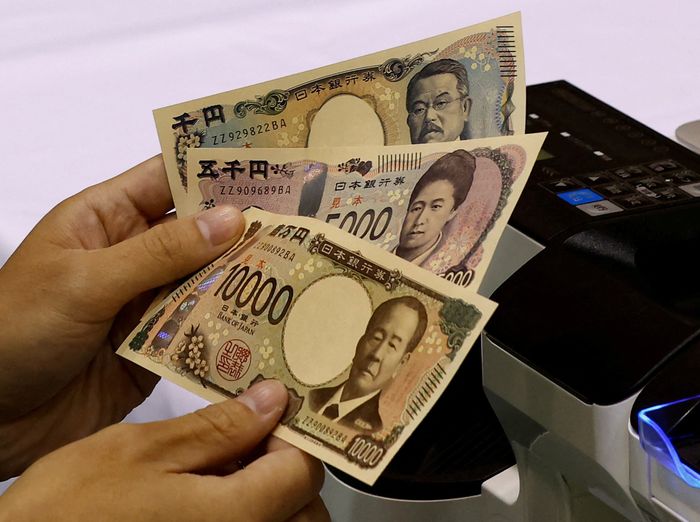
The Japanese yen steadied on Wednesday after one of its most volatile trading periods in months, following unprecedented joint intervention by Japan and the United States, while the dollar hovered near six-week lows against major currencies as easing tensions over the Iran conflict and lower oil prices eroded demand for traditional safe-haven assets.
The yen traded at 157.72 per dollar after slipping 0.4% on Tuesday. The currency had strengthened sharply earlier this week after touching a 40-year low of around 164 per dollar only days earlier, underscoring the scale of recent market intervention. On Monday, the yen briefly strengthened to 155.2 per dollar following coordinated purchases by Tokyo and Washington, marking the first U.S.-backed yen-buying intervention since 1998.
The intervention was reinforced by comments from U.S. Treasury Secretary Scott Bessent, who pledged that Washington would do “whatever it takes” to support Japan’s efforts to stabilize its currency. His remarks echoed former European Central Bank President Mario Draghi’s landmark 2012 commitment to preserve the euro during the sovereign debt crisis, signaling strong U.S. backing for Japan’s foreign exchange stabilization efforts.
Register for the next Tekedia Mini-MBA.
Register for Tekedia AI in Business Masterclass.
Join Tekedia Capital Syndicate and co-invest in great global startups.
The coordinated intervention underlines mounting concern among policymakers over the yen’s prolonged weakness, which has fueled imported inflation by increasing the cost of energy and raw material imports for Japan, a country heavily dependent on overseas supplies. Authorities are also seeking to prevent excessive currency volatility from undermining business confidence and financial market stability.
However, analysts cautioned that intervention alone is unlikely to produce a lasting turnaround without broader macroeconomic support.
“The phrase ‘sticking plaster’ does feel relatively appropriate in many instances. The reality is, I think it is nothing more than a containment exercise, unless you get one of three criteria,” said Jeremy Stretch, head of G10 FX strategy at CIBC Capital Markets.

Stretch said a sustained recovery in the yen would require a more aggressive tightening cycle by the Bank of Japan, reduced expectations for further U.S. Federal Reserve interest-rate increases, and lower global oil prices that would ease pressure on Japan’s trade balance.
Bessent’s endorsement has also strengthened market expectations that the Bank of Japan could raise interest rates at its September 17-18 policy meeting. Investors increasingly view tighter monetary policy as a more durable solution for supporting the currency than direct intervention alone.
Research from BNY showed investors continue to hold net bullish positions on the yen, although those positions remain significantly smaller than earlier this year.

“U.S. support provides an opening for re-accumulation (of bullish positions), but we believe the market will agree with Bessent that any structural shift in holdings will depend on credible domestic policy changes,” said Geoff Yu, BNY’s senior EMEA macro strategist.
Beyond the yen, the U.S. dollar weakened broadly as geopolitical risk premiums faded. The dollar index, which measures the U.S. currency against six major peers, held near 99.85 after falling to a six-week low earlier in the week.
Investor appetite for the dollar as a defensive asset eased after President Donald Trump said his administration had held “very good discussions” with Iran, raising hopes of reduced tensions following months of conflict. Crude oil prices also retreated to around $80 per barrel, further diminishing demand for the greenback as a safe haven.
Lower oil prices also boosted expectations that the Federal Reserve may face less pressure to tighten monetary policy further. Market pricing for a September rate increase slipped to just below 60%, down from nearly 70% at the start of the week, adding to downward pressure on the dollar.
Kansas City Federal Reserve President Jeff Schmid nevertheless reiterated that further monetary tightening remains necessary to return inflation to the central bank’s 2% target.
The euro traded little changed at $1.1536, while sterling held steady at $1.346 as investors awaited fresh economic catalysts.
Attention now turns to Friday’s U.S. nonfarm payrolls report, which is expected to play a pivotal role in shaping expectations for the Federal Reserve’s next policy decision and could determine whether the dollar’s recent weakness extends further or begins to reverse.
The yen has come under sustained pressure this year due to the wide interest-rate gap between Japan and the United States, prompting investors to favor higher-yielding dollar assets. Although the Bank of Japan has gradually shifted away from ultra-loose monetary policy, its pace of tightening has lagged well behind the Federal Reserve’s, keeping downward pressure on the Japanese currency.
The latest intervention marks one of the strongest coordinated currency support efforts in decades and underscores growing cooperation between Tokyo and Washington as policymakers seek to contain excessive foreign exchange volatility while preserving financial stability. Market participants now see future gains for the yen as increasingly dependent on monetary policy adjustments and global energy prices rather than intervention alone.