DD
MM
YYYY

PAGES

DD
MM
YYYY

spot_img

PAGES

Home Blog Page 14

New U.S. SEC Crypto FAQs Bring Clarity to Staking, Token Buybacks and Blockchain Networks

0

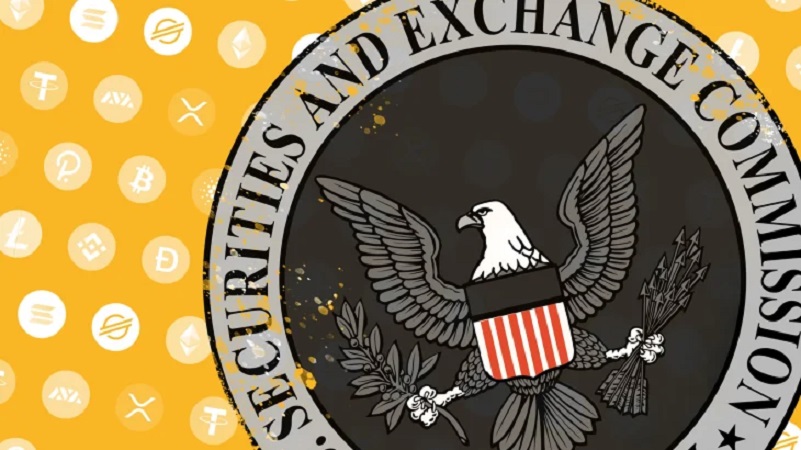
The U.S. Securities and Exchange Commission is offering the crypto industry a more detailed map of where certain digital-asset activities may sit outside federal securities laws.

SEC staff in the Division of Corporation Finance published a new set of frequently asked questions addressing crypto assets, functional blockchain networks, staking receipt tokens, token buybacks, network development and secondary-market activity.

The guidance is significant because the central question for crypto businesses is often not simply whether a token itself is a security, but whether the way it is offered, marketed or used creates an investment contract.

The SEC’s framework continues to draw on the Howey test, which considers factors including an investment of money, a common enterprise, an expectation of profits and profits derived from the essential managerial efforts of others.

One of the clearest areas addressed by the new FAQs is functionality. SEC staff says that once a crypto system is functional, activities designed to secure, maintain, improve or enhance the network.

Including funding development projects and facilitating network effects, would generally not constitute the essential managerial efforts relevant to the Howey analysis.

That distinction matters because blockchain networks frequently continue evolving after launch. Developers may release upgrades, improve security, fund ecosystem projects or encourage broader adoption.

Treating every continuing development effort as evidence of managerial dependence could potentially keep a functioning network within an investment-contract analysis indefinitely. The staff’s explanation provides a clearer distinction between building a network toward functionality and maintaining an already functional system.

The FAQs also address token buybacks, an increasingly common mechanism for crypto projects managing treasury assets, reducing supply or supporting token economics.

According to the SEC staff, an issuer’s announcement of a buyback for a non-security crypto asset on a functional network would not, by itself, represent a promise of essential managerial efforts.

However, the analysis can change when the network is not functional and the issuer presents the buyback as a means of generating yield or returns for token holders.

Staking-related assets are another important part of the clarification. The SEC’s explanation distinguishes staking receipt tokens that merely evidence ownership of an underlying digital commodity and associated rewards from arrangements that provide additional rights or obligations.

The staff’s interpretation therefore focuses on the economic characteristics of the particular token rather than applying a blanket classification to every staking-related product. The guidance also addresses secondary markets.

A trading platform offering a secondary market for a crypto asset would not automatically become a promoter simply because it facilitates trading. The staff says the platform would need to satisfy the applicable definition of promoter under Securities Act Rule 405.

For the broader crypto market, the significance of the FAQs lies in the attempt to separate technological activity from investment-contract activity. Developers, exchanges, staking providers and token issuers can use the framework to evaluate specific structures, marketing language and network conditions.

But the document does not represent a new SEC rule. The agency explicitly states that the FAQs reflect the views of Corporation Finance staff, have no legal force or effect, do not amend existing law and have not been approved or disapproved by the Commission itself.

That limitation is important. The FAQs provide interpretive clarity, but they do not eliminate the need for legal analysis. The boundary between a functional crypto network and an investment contract can still depend on facts, representations and economic substance.

The September guidance represents another step in the SEC’s broader 2026 effort to establish clearer categories for digital assets. For an industry that has long operated amid uncertainty over securities classification.

The practical impact may come less from declaring crypto universally outside securities regulation and more from defining the circumstances in which particular activities can operate beyond that regulatory perimeter.

Nigeria’s Economy Grows 4.43% in Q2 2026 as Oil and Non-Oil Sectors Drive Expansion

0

Nigeria’s economy expanded by 4.43% year-on-year in the second quarter of 2026, marking a stronger performance than the 3.89% recorded in the first quarter. The latest figures from the National Bureau of Statistics point to an economy gaining momentum, supported by improvements in both the oil and non-oil sectors.

The Q2 performance is significant because it comes at a time when Nigerian households and businesses continue to contend with high living costs, elevated financing expenses and the broader effects of economic reforms.

The acceleration therefore provides evidence that economic activity has remained resilient despite these pressures. One of the clearest drivers of the improvement was the oil industry.

Nigeria’s oil production increased to about 1.72 million barrels per day in the second quarter, compared with approximately 1.55 million barrels per day in the preceding quarter. Higher production provided additional support to government revenues, exports and foreign-exchange earnings.

However, the Nigerian economy cannot rely on crude oil alone. The non-oil economy remains particularly important because it encompasses the businesses and services that employ a large proportion of the population.

Manufacturing, telecommunications, financial services, trade, construction and other activities therefore remain critical to determining whether headline GDP growth can translate into broader economic opportunities.

The latest growth figure also needs to be interpreted alongside inflation. A larger economy does not automatically mean that households are experiencing an equivalent improvement in purchasing power.

Nigeria’s inflation rate remains elevated, meaning that consumers can continue to face significant pressure even as real GDP expands. The NBS currently reports headline inflation at 15.39%, with food inflation at 19.57%.

This creates an important distinction between economic growth and economic welfare. GDP measures the production of goods and services, while household welfare also depends on wages, employment, food prices, access to credit and the purchasing power of income.

For Nigeria, sustaining growth while bringing inflation lower will therefore remain an important part of the economic story. The 4.43% expansion also places renewed attention on investment.

Faster growth can create stronger incentives for domestic and foreign investors when accompanied by improvements in infrastructure, energy supply, policy certainty and access to finance.

Capital directed toward manufacturing, agriculture, technology, logistics and energy could help broaden the foundations of growth beyond commodities. Nigeria’s recent GDP trajectory suggests that the economy has continued to recover gradually.

Reuters reported that real GDP grew by 3.87% in 2025, compared with 3.38% in 2024, before accelerating further in Q2 2026. The progression indicates improving momentum, although maintaining that momentum will require productivity gains rather than relying primarily on higher oil production.

For policymakers, the challenge is now to convert quarterly growth into a more durable expansion. That means encouraging productive investment, improving electricity and transport infrastructure, supporting businesses, strengthening agricultural productivity and creating conditions in which private-sector employment can grow.

The 4.43% Q2 growth rate is therefore an important economic signal, but not the entire story. Nigeria is expanding faster, yet the quality and distribution of that expansion will matter just as much as the headline percentage.

The next test will be whether stronger GDP growth can coexist with falling inflation, rising investment, expanding employment and improved household purchasing power.

The Franco-German Divide Over Europe’s Industrial Future

0

Europe is attempting to answer a difficult economic question: how can it rebuild industrial strength while remaining open enough to preserve trade, competition and resilient supply chains?

The disagreement between France and Germany over the proposed “Made in Europe” rules reveals how differently Paris and Berlin approach that challenge.

The European Commission’s proposed Industrial Accelerator Act is designed to channel public procurement and financial support toward strategic industries, including automobiles, steel, batteries, clean technologies and other sectors considered important to Europe’s economic security.

The broader objective is to strengthen European manufacturing and reduce dependence on external suppliers, particularly as Chinese industrial competition becomes increasingly powerful. France is pushing for a relatively strict interpretation.

French Industry Minister Sébastien Martin argued in Brussels that European public money should support European workers and factories. Paris therefore wants stronger European preferences when governments distribute subsidies or award major public contracts.

France has argued that sectors such as automobiles possess sufficiently integrated European supply chains to justify a strong domestic preference.  Germany is concerned that an overly restrictive system could undermine Europe’s competitiveness and relationships with important trading partners.

Berlin is promoting the concept of “Made with Europe” rather than simply “Made in Europe.” Under Germany’s proposal, countries outside the European Union could participate where they provide reciprocal access to their own public procurement markets.

Potential partners include Norway, Switzerland and Canada, alongside other countries connected to the EU through trade agreements or international procurement arrangements. The difference is more than a dispute over terminology.

It reflects two competing approaches to economic security. France emphasizes industrial sovereignty. From this perspective, European taxpayers should not finance industrial capacity that ultimately depends heavily on foreign production.

Public money becomes an instrument for strengthening European factories, employment and technological capabilities. The approach is particularly relevant as Europe faces intense competition from Chinese manufacturers across electric vehicles, clean technology and industrial equipment.

Germany places greater emphasis on open supply chains and international partnerships. Its industrial economy is deeply connected to global trade, meaning that excluding trusted partners could increase costs or restrict access to essential components.

Berlin argues that reciprocal access could actually strengthen European resilience by diversifying supply chains rather than concentrating production entirely within the EU. There is also a practical problem.

Europe cannot currently manufacture every strategically important component at sufficient scale. A rigid definition of European production could therefore create shortages or increase procurement costs. Germany has warned that broader participation could help Europe obtain critical inputs while maintaining relationships with strategic partners.

Yet openness creates another risk. Foreign companies could potentially establish production in partner countries mainly to exploit favourable origin rules and bypass European restrictions. Germany itself has acknowledged this possibility and has proposed stronger monitoring, compliance checks and mechanisms for excluding countries or companies that undermine the intended rules.

Spain has attempted to bridge the positions by proposing different categories of countries, ranging from the EU’s 27 members to trusted partners and countries with appropriate trade or procurement agreements.

Ireland, which holds the rotating EU Council presidency, hopes to facilitate a compromise among member states by December. The debate is about how Europe defines economic sovereignty in a globalised economy.

The choice between “Made in Europe” and “Made with Europe” will influence where public money flows, how companies structure supply chains and how the EU balances industrial protection with international cooperation.

As Europe confronts Chinese competition and geopolitical uncertainty, the outcome could become an important test of whether its industrial strategy can combine domestic capacity with global economic partnerships.

Germany Cuts Fuel Tax as Consumer Confidence Plunges to 2008 Financial Crisis Levels

Meanwhile, the German economy is facing a difficult combination of higher energy costs, weakening consumer confidence and renewed pressure on household purchasing power.

On September 25, the German parliament approved a temporary fuel-tax reduction designed to cushion motorists from soaring petrol and diesel prices linked to the war involving Iran and disruptions affecting energy markets. The measure is scheduled to run from October 1 through December 31, 2026.

Under the new measure, Germany’s energy tax on petrol and diesel will fall by 14.04 euro cents per litre. Including the associated reduction in value-added tax, motorists could receive gross relief of roughly 17 cents per litre.

The Bundestag approved the measure by 434 votes to 128, with no abstentions. The intervention comes as energy prices have become an increasingly important economic problem. Fuel costs do not affect motorists alone.

Higher transportation expenses can feed into logistics, agriculture, manufacturing and retail, eventually raising the prices consumers pay for goods and services. For households that depend heavily on cars for commuting or daily activities, the effect can be particularly immediate.

Yet the fuel rebate arrives against a deeper problem: Germans are becoming increasingly reluctant to spend. The latest NIM Consumer Climate survey, powered by GfK, showed that the consumer climate indicator fell 3.8 points in September to -30.6, compared with a revised -26.8 in August.

The deterioration was driven particularly by falling income expectations and greater willingness to save. The savings indicator climbed six points to 21.5, reaching a level comparable to the financial and economic crisis of 2008.

NIM said rising energy prices are contributing to uncertainty and encouraging households to preserve cash rather than increase consumption. The survey was conducted between September 3 and 14 among around 2,000 consumers.

That shift matters because consumer spending remains an important component of Germany’s economic activity. When households become defensive, they postpone purchases, reduce discretionary spending and accumulate savings.

Businesses can then face weaker demand, creating another obstacle for an economy already dealing with sluggish growth and elevated energy costs. The latest figures also reveal how quickly sentiment can change.

In August, consumer confidence had improved, with the consumer climate rising 2.8 points to -26.6. Income expectations had strengthened and willingness to save had eased slightly. By September, however, the renewed energy shock had reversed much of that improvement.

The fuel-tax cut therefore represents a short-term attempt to protect household purchasing power. But it cannot eliminate the underlying exposure of Germany’s economy to international energy markets. The relief is temporary, while geopolitical disruptions, transportation costs and inflationary pressures can persist beyond December.

Germany’s challenge is consequently larger than the price displayed at petrol stations. The government must contend with an economy in which households are increasingly prioritizing financial security over consumption.

The combination of expensive energy and cautious consumers creates a difficult environment for businesses and policymakers. The fuel rebate may provide immediate breathing room for motorists, but the September consumer-confidence figures underline a broader concern.

Germany’s households are not simply paying more at the pump. They are changing how they think about spending, saving and economic security.

Regional and International Partnerships and Iraq’s Long-Term Stability

0

Iraq’s long-term stability will depend not only on its domestic political and economic choices but also on the quality of its relationships with regional and international partners.

After decades of conflict, displacement and institutional disruption, Iraq has entered a different phase in which security must increasingly be connected to economic development, effective governance and social resilience.

The role of external partners should therefore evolve from crisis management toward sustained cooperation that strengthens Iraq’s own institutions and capacity.

Security remains an important component of this partnership. Iraq has made significant progress since the territorial defeat of ISIS, but regional conflicts, terrorism, border insecurity and political tensions can still threaten its stability.

Regional partners should support Iraq’s sovereignty and territorial integrity while encouraging dialogue rather than allowing the country to become an arena for competing regional interests.

The United Nations has previously emphasized regional cooperation involving border security, trade, energy, water and displacement. Economic diversification should be another central priority.

Iraq remains heavily dependent on oil revenues, leaving public finances and economic growth exposed to fluctuations in global energy markets.

The World Bank notes that this oil-dependent model creates economic volatility and that climate change, water scarcity and the global energy transition create additional risks.

International partners can help Iraq develop sectors such as agriculture, manufacturing, logistics, tourism, digital services and renewable energy. Investment should be accompanied by technology transfer, workforce development and support for Iraqi businesses rather than simply financing individual infrastructure projects.

Infrastructure is equally important. Reliable electricity, water systems, transportation networks, healthcare facilities and telecommunications are foundations for economic opportunity and public confidence.

International financial institutions can provide long-term financing and technical expertise, while regional countries can contribute through cross-border infrastructure, energy connections and trade corridors.

The World Bank currently supports Iraq across areas including transport, energy, water, social protection and institutional reform. Governance should remain at the heart of external assistance.

Financial support has limited long-term value if institutions cannot manage resources transparently or deliver services effectively. International partners can assist with public-sector capacity, judicial institutions, anti-corruption mechanisms, regulatory reform and data systems while respecting Iraqi ownership of these reforms.

The United Nations’ 2025–2029 cooperation framework places good governance and the rule of law alongside inclusive social development, sustainable economic growth and climate resilience.  Human development also deserves sustained attention.

Young Iraqis need access to education, vocational training, healthcare and productive employment. Women, displaced communities and other vulnerable groups should be included in development programmes. International partners can provide expertise and financing.

But programmes should increasingly be designed and implemented through Iraqi institutions and communities. The UN’s current framework explicitly prioritizes these groups and emphasizes strengthening national systems.

Climate and water cooperation will become increasingly strategic. Iraq faces rising temperatures, water scarcity and environmental pressures that can affect agriculture, migration and social stability.

Regional cooperation over shared water resources, alongside international financing for climate adaptation, could therefore become an important pillar of national security and economic planning.

External partners should help Iraq build the capacity to solve its own problems. The transition from the UN’s former political mission, UNAMI, to a development-focused partnership illustrates this changing relationship. The current UN framework is explicitly designed around Iraq’s national development priorities and Vision 2030.

The most durable international partnership is therefore one that combines security cooperation, investment, institutional development, human capital and regional diplomacy while preserving Iraqi ownership.

Stability cannot be imported indefinitely. It becomes sustainable when Iraq’s institutions, economy and communities possess the capacity to maintain it themselves.

Exploring How Baghdad Can Navigate Rising Regional Tensions, Balance Relations with Iran, the United States, Turkey and Gulf States

Baghdad is confronting one of the most complicated foreign-policy challenges in its modern history. Iraq’s geographic position places it between Iran, Turkey, the Gulf states and the wider strategic interests of the United States.

As regional tensions intensify, Baghdad must protect its sovereignty without severing relationships that are important to its security, economy and diplomatic influence. The challenge has become particularly acute amid heightened U.S.-Iran tensions.

Iraq has historically maintained deep economic, political and social connections with Iran while simultaneously developing extensive security and economic cooperation with Washington.

Analysts have described this relationship as a persistent balancing act, complicated by Iran-linked armed groups operating inside Iraq and by American pressure for greater state control over armed forces.

For Baghdad, the central principle should be sovereignty. Maintaining productive relations with Tehran does not require permitting Iraqi territory to become a platform for attacks against neighboring states or foreign forces.

Similarly, cooperation with Washington should not mean allowing Iraq to become an extension of American regional military strategy. Establishing clear rules governing foreign military activity and armed groups would strengthen Baghdad’s diplomatic credibility.

The relationship with Iran will remain particularly sensitive. Iran is an important trading partner and has longstanding connections across Iraqi society and politics.

At the same time, Iran-aligned armed factions have created complications for Baghdad’s relations with Washington and Gulf countries. Recent tensions involving attacks launched from Iraqi territory have placed additional pressure on Baghdad’s efforts to strengthen ties with Arab neighbors.

Iraq therefore needs a state-centered security framework in which all armed formations ultimately operate under national command. Such a process would be politically difficult, particularly because some Iran-aligned groups possess significant political and social influence.

Stronger institutional control over security policy would give Baghdad greater freedom to conduct independent diplomacy. Turkey represents another important dimension of this strategy.

Ankara and Baghdad have expanding interests in trade, energy, water management and regional connectivity, including the proposed Development Road. Security disputes involving Kurdish armed groups and Turkish military operations in northern Iraq remain sensitive sovereignty issues.

Baghdad can therefore pursue economic cooperation with Turkey while maintaining clear diplomatic mechanisms for addressing security disagreements. Economic interdependence could provide incentives for continued dialogue rather than confrontation.

Relations with Gulf states are equally important. Iraq’s Arab neighbors can provide investment, infrastructure partnerships and broader economic integration. Baghdad has already sought to repair Gulf relations following tensions associated with the regional conflict.

Strengthening these ties would diversify Iraq’s external partnerships without necessarily requiring Baghdad to abandon its relationship with Tehran. The United States should remain part of Iraq’s international strategy, particularly through economic investment, energy cooperation, counterterrorism and institutional support.

Washington’s relationship with Baghdad will remain complicated by disagreements over Iran-aligned militias and the future role of U.S. forces in Iraq. Baghdad’s strongest strategy is not choosing one external power over another.

It is building enough domestic institutional strength to engage all of them from a position of greater autonomy. A balanced foreign policy, supported by stronger security institutions, diversified economic partnerships and sustained regional diplomacy, could help Iraq reduce the risks created by geopolitical competition.

Iraq cannot change its geography, nor can it eliminate the rivalries surrounding it. But Baghdad can determine how those rivalries interact with Iraqi interests. By placing sovereignty, economic resilience and national institutions at the center of its diplomacy.

Iraq can pursue relationships with Iran, the United States, Turkey and the Gulf states without allowing any single relationship to define its future.

Wazz Traces $18.43M Extraction Across 53 Robinhood Chain Tokens

0

The rapid growth of memecoin activity on Robinhood Chain is facing an uncomfortable test after pseudonymous on-chain analyst Wazz alleged that 53 token launches were connected to a coordinated rug-pull operation that extracted at least $18.43 million between July 10 and September 21, 2026.

The investigation highlights how sophisticated wallet coordination can make seemingly independent token launches part of a single financial operation. According to Wazz, the connection was established primarily through the movement of funds.

Forty-five of the 53 launches were allegedly linked because proceeds from one project were subsequently used to finance wallets involved in another. Four additional launches shared the same private key for funding batches.

While another four were connected through a common collector wallet. These relationships formed what Wazz described as a repeated cycle in which profits from one launch financed the next. The mechanics of the launches are particularly significant.

Wazz said most projects used Pons V2 and that groups of roughly 70 to 200 wallets frequently acquired more than 70% of a token’s supply shortly after launch. The Block independently reviewed 10 launches from the list and confirmed the sniping mechanics.

Finding that selected wallets could accumulate between 82% and 86% of supply in the opening transactions. However, The Block did not independently reproduce Wazz’s full $18.43 million estimate. The alleged strategy exploited the structure of early token trading.

Pons V2 uses an anti-sniping tax designed to discourage automated purchases immediately after launch, but creators can exempt designated addresses. According to the on-chain review, several launches used these exemptions for groups of wallets that subsequently purchased tokens in coordinated transactions.

That created an appearance of broad participation while allowing a concentrated group to control a substantial portion of supply almost immediately. The financial scale varied considerably between projects.

Wazz identified CRUMBS as the largest alleged extraction at approximately $3.12 million, followed by LEGS at $2.9 million and PINK at $1.44 million. These figures demonstrate how a repeated launch-and-extraction model can generate significant proceeds even when individual tokens have short trading lives.

Another element of the investigation involves alleged fake pre-launch contracts. Wazz said some projects appeared to generate hype around a token before directing buyers toward the official contract address, potentially creating additional opportunities to capture liquidity from traders acting on incomplete or misleading information.

This allegation remains part of Wazz’s broader investigation rather than an independently established finding. The episode also illustrates an important characteristic of blockchain investigations: transparency does not automatically prevent fraud.

But it can provide investigators with a detailed financial trail. Wallet relationships, transaction timing, funding sources, private-key signatures and token distributions can reveal patterns that would be difficult to identify through conventional financial records.

The $18.43 million figure should be treated as an investigative estimate rather than an audited loss total. The Block verified parts of the alleged mechanics and one funding trail but did not independently confirm the complete amount.

No individuals behind the wallets have been publicly identified or charged based on the reporting reviewed. The investigation underscores the challenge facing rapidly expanding token ecosystems.

Open issuance and fast liquidity can encourage innovation, but they can create opportunities for coordinated extraction. The episode reinforces the importance of examining token distribution, deployer funding, wallet concentration and transaction history before treating a new launch as genuine market participation.