DD
MM
YYYY

PAGES

DD
MM
YYYY

spot_img

PAGES

Home Blog Page 140

Revamping Legacy Factories: Smart PLC Upgrades on a Budget

0

Executive summary: Aging PLC-based control systems increase downtime risk and hide operational data, yet complete replacements are often unaffordable. A phased, risk-prioritized modernization—targeting CPUs, communication modules and selected I/O—combined with careful sourcing of refurbished or surplus parts can extend asset life, enable IIoT connectivity, and deliver measurable ROI without a large capital outlay.

  1. Introduction: the “Legacy” dilemma

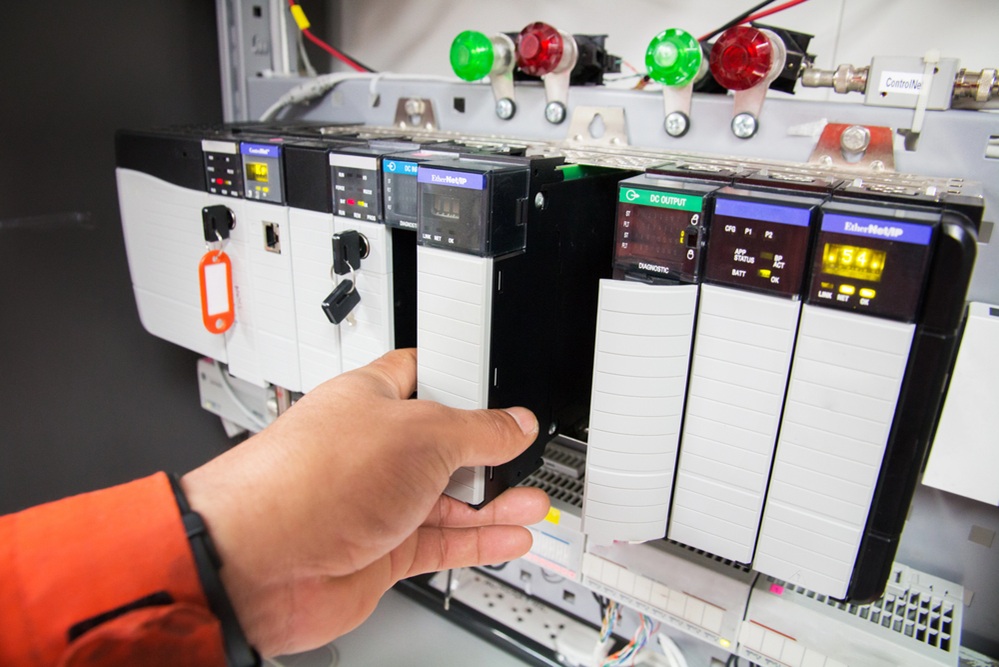
Imagine a mid-sized production line running on a reliable but obsolete PLC family—Siemens S5 or early Allen-Bradley SLC controllers, for example. They keep the lights on until a unique module fails and replacement parts are unavailable. The result: emergency downtime, rushed engineering changes, and lost production. Beyond the immediate disruption, legacy environments carry hidden costs: scarce spare parts, minimal telemetry for process optimization, and the retirement of engineers who understand legacy ladder logic and bespoke architectures.

Modernization need not mean a tear-down. A strategic retrofit—phased, targeted, and data-driven—typically provides the best balance between cost, risk and business value.

  1. Assessing your automation assets: audit before you act

Begin with a disciplined asset audit. A reliable inventory should list controller models, firmware versions, I/O counts and network interfaces; tie each component to the process it serves (safety loop, critical quality control, or non-critical auxiliary function).

  • Manufacturer support: Is the PLC still supported for firmware and critical patches?
  • Software compatibility: Can engineering tools be run on modern OS platforms, or do they require legacy virtual machines?
  • Spare parts availability: Are key modules available new, refurbished or via reputable surplus vendors?

Not all assets require immediate replacement. Use a simple risk-stratification approach:

  • High risk: Obsolete controllers that serve safety or high-availability functions, or modules with zero spare availability.
  • Medium risk: Process control loops where slow failure would cause quality degradation but not immediate shutdown.
  • Low risk: Stable, non-critical loops or equipment planned for scheduled replacement.

Actionable tip: Build a facility “Risk Heatmap” to visually prioritise investment—this clarifies where budget delivers the most risk reduction.

  1. Phased migration: the cost-effective strategy

Contrast two approaches: the disruptive “rip-and-replace” method versus a phased migration. Rip-and-replace replaces entire controllers and I/O, often requiring full rewiring, extended commissioning and a high probability of integration bugs. Phased migration reduces both capital and operational risk by sequencing changes.

A typical phased sequence:

  1. HMI modernization: Replace ageing operator panels with modern HMIs to gain diagnostics and alarms without changing control logic.
  2. Communications uplift: Add Ethernet/IP, OPC UA or protocol gateways to legacy PLCs to enable data acquisition for analytics.
  3. CPU upgrades: When CPUs fail or when increased processing is needed, migrate to modern processors while retaining field I/O via gateway/adapters.
  4. Targeted I/O replacement: Replace only the I/O modules that require higher precision or faster responses (smart I/O), leaving stable digital points untouched.

Hybrid architectures are often the pragmatic choice: new processors or IIoT gateways communicate with legacy I/O through protocol converters or chassis adapters, avoiding the time and cost of rewiring thousands of points. For planning detail and a staged technical roadmap, see this comprehensive modernization guide which breaks down the technical stages of migration.

  1. Sourcing hardware: balancing quality and budget

Supply chains for industrial components are volatile: OEM lead times can be long and prices elevated. For legacy support, the aftermarket has matured—”new surplus” and factory-refurbished modules offer cost-effective, engineering-viable alternatives. When procuring non-factory-new parts, insist on documented testing, refurbishment logs, and limited warranties where available.

Cross-border e-commerce platforms and specialist distributors make it easier to locate rare Siemens, Mitsubishi or Allen-Bradley modules that local channels no longer stock. Platforms specializing in industrial automation, such as ChipsGate, can bridge this gap by providing access to a large inventory of legacy and active PLC components.

Procurement checklist: verify seller reputation, request visual and functional test reports, require serial number traceability, and prefer sellers offering return/testing warranties.

  1. Key technologies to prioritise in a budget upgrade

Gateways & protocol converters: These translators connect Modbus, ProfiBus or legacy serial devices to MQTT or OPC UA endpoints, enabling cloud dashboards and analytics without altering control logic.

Smart I/O modules: Replace only I/O channels that need faster sampling, higher ADC resolution or integrated diagnostics—this is a precise way to boost performance by exception.

HMI modernization: Modern touchscreen HMIs greatly improve operator diagnostics and can be implemented with minimal wiring changes, often delivering the fastest user-perceived improvement for the least cost.

  1. FAQ: common questions about factory retrofitting

Q: Is it risky to mix old and new PLC brands?

A: While single-vendor environments simplify support, modern open protocols (OPC UA, MQTT, Ethernet/IP) and disciplined network segmentation make multi-vendor systems stable when managed with clear architecture and change control.

Q: How much downtime should I expect during a phased upgrade?

A: Phased upgrades are designed to minimise production impact; many tasks (HMI swaps, gateway installation) can be scheduled during weekend or planned maintenance windows. Full replacements typically require longer planned outages and higher re-commissioning effort.

Q: Can I upgrade the CPU and keep old I/O?

A: Yes. In many architectures you can retain legacy I/O (for example, Allen-Bradley 1771 I/O) and modernise the controller via a chassis adapter or protocol gateway—this saves rewiring costs while enabling improved processing and communications.

  1. Conclusion: future-proofing on your terms

Budget constraints should not freeze progress. A disciplined audit, risk-driven prioritisation, and a phased migration strategy enable factories to modernise incrementally while preserving cash flow. The real objective is not only fault-free equipment but also the acquisition of actionable data—insights that steadily improve throughput, quality and decision-making.

Next step: run a basic asset inventory and heatmap this week; identify one near-term HMI or communications upgrade that will unlock diagnostics or telemetry. Modernization is a series of manageable steps—taken thoughtfully, they compound into substantial operational improvement.


Optimizing Production: Choosing the Right Control Systems

0

Key takeaways

  • Selecting a control system is a strategic decision that will influence production for a decade or more.
  • Evaluate applications by scale, speed and environment; prioritise connectivity (OPC UA, MQTT) for IIoT readiness; factor in software licensing and local talent availability; and treat parts availability and secondary-market access as core selection criteria.
  • The best choice balances performance, ecosystem support and supply-chain resilience.

Introduction: the brain of your operation

Amid Industry 4.0 conversations about cloud analytics and digital twins, hardware decisions are sometimes treated as second-order concerns. Yet the programmable logic controller (PLC) or programmable automation controller (PAC) remains the deterministic core that executes your production logic. A misaligned control-system choice can create integration bottlenecks, inflate maintenance costs and expose operations to extended downtime. This article provides a pragmatic, system-level approach to selecting control architectures that meet technical needs while minimizing long-term risk.

Step 1: defining your application requirements

Begin with a clear mapping of what the control system must deliver:

  • Scale & complexity: Micro-PLCs are appropriate for single machines or isolated conveyors; modular PLCs or PACs are better for distributed control across production lines or multi-domain tasks (motion + process).
  • Speed & precision: Motion control and high-speed packaging require deterministic fieldbus performance and high-frequency I/O sampling. Process applications (batch, temperature control) favour stability and analog precision over raw cycle speed.
  • Environmental conditions: Factor in temperature ranges, ingress protection (IP ratings), vibration, and the need for conformal coating in corrosive or humid environments. Ruggedised controllers prevent early hardware failures and reduce unplanned downtime.

Document functional and non-functional requirements (cycle time, jitter tolerance, I/O density, mean time between failures) before shortlisting vendors—this prevents specification creep during procurement.

Step 2: connectivity and IIoT readiness

Connectivity is a core requirement, not an afterthought. Ensure the system “speaks the same language” as your broader architecture:

  • Industrial protocols: Consider Profinet, EtherNet/IP and EtherCAT for deterministic networks. Each is common in specific ecosystems (Profinet in Siemens-heavy plants; EtherNet/IP in Rockwell/Allen-Bradley environments).
  • Open standards for data: Prefer controllers with native OPC UA, MQTT or REST capabilities. These protocols simplify secure, reliable integration to historians, MES and cloud platforms.
  • Avoid vendor lock-in: Proprietary protocols can deliver short-term convenience but increase long-term integration cost. If you choose a vendor “walled garden,” ensure compensating governance and clear SLAs.

Data accessibility matters: control systems should expose diagnostics, alarms and process variables without invasive changes to control code. Native telemetry support accelerates analytics and predictive maintenance initiatives.

Step 3: the ecosystem and lifecycle costs

Beyond technical fit, evaluate total cost of ownership across the product lifecycle:

  • Software licensing: Some vendors require recurring subscriptions for engineering tools or runtime; others use perpetual licenses. Model these costs over a 10–15 year horizon.
  • Engineering talent: Factor local availability of skilled engineers and integrators. Labor scarcity can make a cheap controller expensive to operate.
  • Vendor ecosystem: Consider availability of third-party tools, libraries, training resources and local support centers.

Regardless of the brand you choose, ensure you have a reliable source for industrial automation parts—from CPUs to I/O modules—to guarantee long-term maintainability and fast recovery from failures.

Step 4: supply-chain resilience (the new critical factor)

Post-pandemic supply disruptions have elevated parts availability to a strategic factor. Lead times for controllers, communication modules and specialized I/O can stretch months, which is unacceptable for critical production lines.

Practical strategies include:

  • New + surplus mix: Combine OEM purchases for critical spares with vetted surplus/refurbished stock to reduce exposure to long lead times.
  • Standardisation where it matters: Selecting control systems with an active secondary market (e.g., Siemens S7, Allen-Bradley ControlLogix historically) gives you a practical insurance policy.
  • Global sourcing partners: Work with reputable cross-border specialists who can locate rare modules and arrange rapid logistics. Supply-chain partners such as Iainventory provide access to global stock when OEM lead times are excessive, helping sustain uptime without compromising quality.

Include procurement scenarios and reorder points in your spare-parts plan. For safety-critical components, maintain a buffer stock based on supplier reliability and mean-time-to-fail statistics.

FAQ: common questions on control system selection

Q: What is the difference between a PLC and a PAC?

A: PACs typically support multi-domain control (motion, discrete, process) and richer data handling with closer PC integration; PLCs are optimised for deterministic, ladder-based discrete control. Choose based on complexity and the need for multi-domain orchestration.

Q: Should I standardize on one brand for my whole factory?

A: Standardisation reduces spare-parts complexity and training overhead but may limit access to best-of-breed components. Weigh the operational simplicity of a single ecosystem against the flexibility of mixed-vendor selection.

Q: Is it safe to buy discontinued control systems?

A: Discontinued systems can run reliably for years if spares are available and risk is managed. Use verified suppliers who provide test reports and traceability; for safety-related loops, prefer supported or modern alternatives.

Conclusion: building for now, planning for later

Choosing a control system is a long-horizon decision that should balance technical performance, ecosystem maturity and supply-chain resilience. Define your application needs first, demand open and modern connectivity, and ensure you can source parts and skills over the system’s operational life. In short: buy into an ecosystem you can support for the next 10–15 years—not just a controller that meets today’s spec sheet.

Google Unveils Nano Banana Pro, Its Most Advanced Image Generation And Editing Model Yet

0

Google has announced the release of Nano Banana Pro, an advanced AI image generation and editing model powered by Gemini 3 Pro Image.

This launch marks a significant leap forward in the company’s creative AI capabilities. Just months earlier, Google rolled out Nano Banana, its Gemini 2.5 Flash Image model, which quickly became popular for tasks ranging from restoring old photos to generating mini figurines. The success of Nano Banana showcased how everyday creators could express their ideas more vividly through AI-assisted image editing.

Announcing the launch, Google wrote via a blog post,

“Today, we’re introducing Nano Banana Pro (Gemini 3 Pro Image), our new state-of-the-art image generation and editing model. Built on Gemini 3 Pro, Nano Banana Pro uses Gemini’s state-of-the-art reasoning and real-world knowledge to visualize information better than ever before.”

With the arrival of Nano Banana Pro, Google builds upon that foundation with a model designed to deliver deeper reasoning, richer context, and enhanced visual accuracy. Nano Banana Pro allows users to generate detailed visuals from product prototypes to infographics and diagrams based on handwritten notes, real-world data, or any creative idea they want to explore.

The new model introduces several key enhancements:

Enhanced Reasoning for Context-Rich Visuals

Nano Banana Pro uses Gemini 3 Pro’s advanced reasoning capabilities to produce visuals grounded in accurate, real-time information. This includes educational diagrams, context-rich infographics, and quick visual summaries based on provided content or information retrieved through Google Search. From recipes to weather snapshots, the model can generate helpful and dynamic visuals with ease.

One of the standout advancements is its improved ability to render clear, legible text directly inside images. Whether generating taglines, full paragraphs, posters, or mockups, Nano Banana Pro supports detailed typography across various textures, fonts, and calligraphy styles. Its enhanced multilingual reasoning also enables image-based text generation in multiple languages, making localization and global content scaling seamless.

High-Fidelity Visuals with Advanced Creative Control

Nano Banana Pro extends creative flexibility with features designed for precision and consistency. Creators can now blend up to 14 images while maintaining the likeness and consistency of up to five people, making it possible to transform sketches into polished prototypes or convert blueprints into high-quality 3D visual renderings.

Branding tasks become more streamlined as users can apply specific visual styles across mockups and product designs, ensuring cohesive branding across platforms.

The model also introduces studio-grade creative tools, allowing users to refine and transform any part of an image. With improved localized editing, they can change camera angles, adjust focus, apply color grading, or modify lighting—such as converting a daytime scene into nighttime or adding bokeh effects. Flexible aspect ratios and support for 2K and 4K resolution ensure visuals are ready for both social media and print.

A New Era of Visual Creativity

With the launch of Nano Banana Pro, Google places professional-level creative power directly into the hands of both casual and expert creators. Combining advanced reasoning, real-world context, and enhanced editing controls, the model represents Google’s most comprehensive and intelligent image-generation tool to date.

Nano Banana Pro continues the evolution of AI-driven creativity, bridging the gap between imagination and reality with unprecedented accuracy and depth.

With the Yen Under Pressure, Japan Unveils a ¥21.3tn Stimulus as the BOJ Edges Toward a December Rate Hike

0

Japan rolled out a sweeping ¥21.3 trillion ($135.5 billion) stimulus package on Friday, an economic jolt that lands at a moment when households are groaning under cost pressures and policymakers are wrestling with a currency that has tumbled to a ten-month low.

The package, reported by public broadcaster NHK, lays out a menu of measures that the cabinet has divided into three ambitions: easing rising prices, pushing for a sturdier economy, and strengthening both defense and diplomatic capacities.

For ordinary households, the most tangible relief will come through expanded local government grants and new subsidies for electricity and gas bills. Those subsidies kick in next January and run for three months, worth roughly ¥7,000 for a standard household. Taxes on gasoline will also disappear under the plan—another nod to consumers buckling under energy costs.

But the economic blueprint goes beyond household relief. Tokyo is also preparing a 10-year fund to boost shipbuilding capability, a sector seen as strategically relevant given Japan’s maritime security priorities. And in line with commitments already signaled, the government says it remains on course to raise defense spending to 2% of GDP by fiscal 2027, a landmark shift for a country that has long maintained more modest defense outlays.

Yet the bigger story humming beneath the fiscal numbers is the Bank of Japan’s increasingly delicate position.

Kazuo Ueda, the BOJ governor, signaled more openly than before that a rate hike in December is on the table, saying he wants “just a bit more data” on next year’s wage-growth outlook. He warned parliament that the yen’s slump risks feeding into underlying inflation through higher import costs and broader price increases. And while he stopped short of announcing a shift, he made it clear the central bank will discuss the “feasibility and timing” of a hike in upcoming meetings—language that marks a departure from earlier, more neutral statements that the BOJ had no preset timeline for policy changes.

The yen’s prolonged slide has turned into a political headache for Prime Minister Sanae Takaichi, whose dovish reputation has already fueled market bets that future BOJ tightening could be delayed. As the currency touched a fresh 10-month low, the pressure intensified. Her finance minister, Satsuki Katayama, on Friday openly signaled the potential for currency intervention to rein in further yen weakness—a reminder of how politically charged the exchange rate has become.

Ueda’s tone underscored that shift. His point was simple: the yen’s weakness no longer looks like a temporary price distortion.

“Compared with the past, the impact of currency moves on inflation may have become bigger because companies have become more active in raising prices and wages,” he told lawmakers. If that behavior becomes entrenched, he added, it could alter inflation expectations and push underlying inflation higher.

It was a notable turn for a central bank that, until recently, treated yen-driven price bumps as a fleeting annoyance rather than a structural concern. The remarks also followed comments from BOJ board member Junko Koeda, who said the central bank must keep raising real interest rates given the “relatively strong” price increases still coursing through the economy.

That growing chorus is why analysts like Takeshi Minami of the Norinchukin Research Institute now expect the BOJ to lift rates in December. As he put it, “The government doesn’t want a weak yen and would tolerate a rate hike to combat declines in the currency.”

The BOJ’s next policy meeting is scheduled for December 18–19, and many in the market now see that gathering as a decisive moment—either for a rate move or a clearer roadmap toward one. Some expect the central bank to wait until January, but the direction of travel appears to be settling.

For now, Japan remains in a transitional zone. The central bank ended its decade-long ultra-stimulus regime last year and has raised rates twice—one of them in January—but has held steady at 0.5% since then, even as inflation has stayed above the bank’s 2% target for over three years.

Ueda insists the stance hasn’t fundamentally shifted: if economic conditions evolve as forecast, the BOJ will continue gradually hiking rates. He still expects underlying inflation to reach the 2% mark from the latter half of fiscal 2026 through fiscal 2027. But the caveat is clear. Before pulling the trigger, he wants clarity on whether Japanese companies will push ahead with wage increases in next year’s labor negotiations—a key ingredient in Japan’s slow-burn bid to anchor inflation sustainably.

“We want to take just a bit more time,” Ueda told parliament, explaining why policy remained unchanged last month. BOJ branches nationwide are still gathering data and surveying businesses, he said.

Now Tokyo has stepped in with one of its biggest stimulus moves in years, designed to soften the blow of rising prices and stabilize the economic mood. But with the currency under strain and the BOJ turning incrementally more hawkish, Japan’s macroeconomic story is no longer just about support—it’s increasingly about timing, political pressure, and the fine line between stabilizing inflation and choking off the fragile recovery.

Cisco Moves to Expose Generative AI Cyberattacks, Aging Network Infrastructure That Has Become a Silent National Risk

0

Cisco is rolling out a sweeping initiative—called “Resilient Infrastructure”—after years of watching organizations gamble with old routers, network switches, and network-attached storage that still sit at the heart of critical systems.

The logic has always been familiar: replacing equipment costs money; keeping outdated technology is easy. In reality, these aging devices often run on insecure configurations and, worse, are no longer supported with software patches. That makes them perfect targets at a time when attackers can use generative AI to rapidly hunt down weaknesses.

Cisco says the goal now is to force this conversation out of the IT basement and into the boardroom, according to Wired. The programme includes research, direct outreach, and a significant shift in how Cisco handles legacy equipment. The company has begun introducing explicit warnings on devices nearing end-of-life. Customers who update an old device or try to enable known insecure configurations will be met with clear alerts. Over time, Cisco plans to strip out historic settings entirely, removing compatibility options that are no longer safe.

“Infrastructure globally is aging, and that creates a ton of risk,” said Anthony Grieco, Cisco’s chief security and trust officer. “This aging infrastructure wasn’t designed for today’s threat environments. And by not updating it, it’s fostering opportunities for adversaries.”

The initiative leans heavily on fresh research commissioned by Cisco from UK-based advisory firm WPI Strategy, which examined the risk posed by outdated equipment across the “critical national infrastructure” of the United States, United Kingdom, Germany, France, and Japan. The findings were striking: the UK faces the highest relative risk, closely followed by the US. Japan sits at the opposite end of the spectrum, benefiting from consistent upgrades, a decentralized infrastructure, and what the report describes as “a stronger, more consistent national focus on digital resilience.”

Across all five countries, the study reinforced the same uncomfortable truth—many cyber incidents aren’t the product of sophisticated zero-days. Instead, attackers regularly rely on known vulnerabilities that remain unpatched simply because systems are old. In other words, the failures are avoidable.

Eric Wenger, Cisco’s senior director for technology policy, says organizations often mistake inaction for cost-savings.

“The status quo is not free—there is actually a cost, it’s just not being accounted for,” he says.

He believes the industry must treat aging digital infrastructure as a high-level business risk, not a technical footnote.

“If we can help elevate this risk to something that is treated as a board-level concern, then hopefully that will underscore the importance of making an investment here.” As he puts it, “we’re not making it hard enough for the attackers.”

Cisco understands the perception problem. Founded in 1984, the company’s hardware underpins networks around the world, which means pushing for upgrades can look suspiciously like pushing for sales. Wenger argues the reality is simpler: whether a customer buys new Cisco hardware or picks a rival vendor isn’t the point.

“Look, we don’t make money on the stuff that we sold two decades ago,” he says. “What we’re selling now is innovative and cost effective, but we’re not going to win everyone over. We need to start the conversation either way.”

Grieco, who has been making the same case for nearly a decade, points out that the message hasn’t changed. Back in August 2016, he wrote in a Cisco blog post: “Systems that were designed, built and deployed in decades past didn’t anticipate the hostile security environment of today. Until now, very few have thought about securing infrastructure because they didn’t think adversaries would target these systems and devices, or they had ‘higher priorities’ to fix. This must change.”

The urgency is rising because generative AI is reshaping the cyber threat landscape. AI can’t yet stitch together multilayered attacks on its own, but it’s already making certain jobs easier. Social engineering scripts can be generated instantly. Vulnerabilities can be analyzed at machine speed. Malware can be refined with minimal effort. This gives unskilled attackers new capabilities and allows sophisticated hackers to automate work that once took days.

That’s why Cisco’s campaign carries a sharper tone than before. The company wants executives to stop treating legacy equipment as harmless leftovers from a slower era.

“It’s time to give people a jolt about the silent risk of aging infrastructure,” Grieco says. “We’re going to make it loud.”