DD
MM
YYYY

PAGES

DD
MM
YYYY

spot_img

PAGES

Home Blog Page 1403

Implications of Chinese Companies Raising Prices or Exiting Amazon’s U.S. Marketplace

0

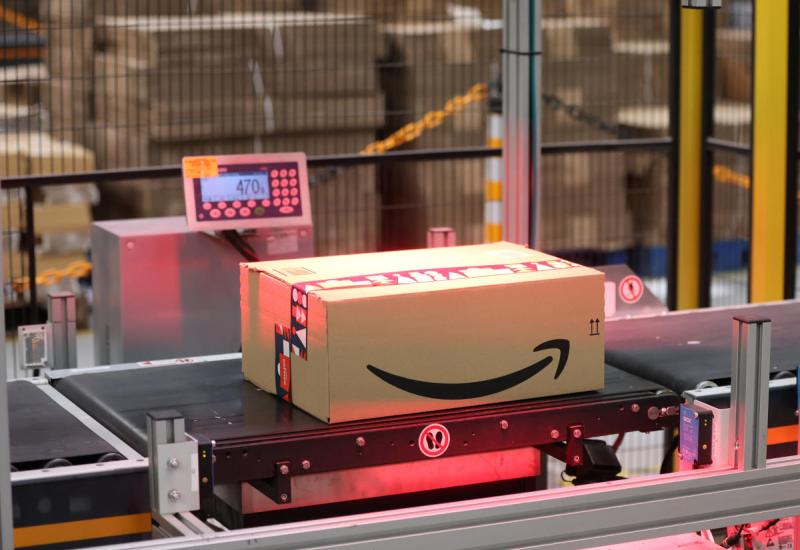
The situation with Chinese companies on Amazon facing U.S. tariffs is a messy one. Tariffs, which act like a tax on imports, jack up the cost of goods coming from China. For these sellers, it’s a gut punch—either they raise prices to cover the extra costs, or they eat the loss and risk going under. Some are already talking about pulling out of the U.S. market entirely because the math just doesn’t add up anymore.

On one hand, hiking prices could push away customers who are used to cheap deals on Amazon. U.S. consumers might grumble, but they’ll likely still pay for stuff they need. On the other hand, exiting the market means losing access to a massive chunk of revenue—China’s sellers make up a huge portion of Amazon’s marketplace, with billions in sales. Moving production to places like Vietnam or Mexico is an option, but it’s not a quick fix; setting up new supply chains takes time and money.

The tariffs are also a double-edged sword. They’re meant to protect U.S. businesses by making foreign goods pricier, but they could backfire. Higher prices might fuel inflation, and small American sellers who rely on Chinese manufacturing are getting squeezed too. Plus, Amazon itself isn’t immune—its whole low-price model gets wobbly if sellers pass on costs or bail.

Both sides have their logic. Tariffs could force companies to rethink reliance on China, maybe even bring some manufacturing back to the U.S. But in the short term, it’s chaos—higher prices, supply chain headaches, and probably some empty virtual shelves. Long term, it depends on how stubborn everyone gets. If tariffs stick, Chinese sellers might pivot to other markets like Europe or Southeast Asia, and Amazon could see a shakeup in who’s selling what. If they fold under pressure, things might stabilize, but don’t hold your breath for that anytime soon.

If Chinese sellers pass on tariff costs, expect pricier goods on Amazon—everything from electronics to clothes. Shoppers might grumble, but many will still buy essentials, squeezing budgets. Inflation could tick up if this spreads across enough products, especially since Chinese sellers dominate categories like home goods and tech accessories.

If sellers quit the U.S. market, Amazon could face inventory shortages. Fewer options mean less competition, which often leads to even higher prices. Smaller U.S. sellers who rely on Chinese manufacturers might also struggle, either raising their own prices or getting stuck with delayed shipments. Amazon’s business thrives on low prices and variety. Price hikes could push customers to competitors like Walmart or eBay, while a mass exodus of sellers might thin out product listings, denting the platform’s appeal.

Amazon’s stock ($AMZN) could take a hit if investors see its marketplace losing steam, though its logistics and cloud arms might cushion the blow. Tariffs aim to level the playing field for American businesses, but it’s not all rosy. Small U.S. sellers sourcing from China face the same cost spikes, and scaling up domestic production isn’t quick or cheap. Some might gain market share if Chinese competitors bail, but only those already positioned to pivot fast.

Chinese companies might redirect focus to markets like Europe, Southeast Asia, or Latin America, where tariffs don’t bite as hard. Some could relocate production to countries like Vietnam or India, but that takes years and big bucks. This could reshape global supply chains, with ripple effects on shipping costs and trade balances. Higher consumer prices could stoke inflation, a headache for policymakers already juggling growth and interest rates. Tariffs might create some U.S. jobs long term but risk short-term pain—lost sales for Amazon-dependent businesses, higher costs for startups.

Politically, it’s a gamble; voters love “tough on China” talk but hate paying more at checkout. Tariffs could force a reckoning on over-reliance on Chinese goods, potentially strengthening U.S. manufacturing. But the immediate hit—price spikes, shortages, and small-business pain—could sour consumers and rattle markets. If tariffs stick, expect a rocky transition; if they soften, things might stabilize, but global trade’s already shifting fast.
Maximizing Chromebook PDF Editing Capabilities

0

Maximizing the capabilities of your Chromebook PDF editor can significantly enhance your productivity, whether you’re using it for business or personal purposes. You can choose from several PDF editors for Chromebook. They all have unique features geared toward a specific purpose, such as collaboration, or are specifically for Google Workspace users. In this blog post, we’ll explore how you can optimize your Chromebook PDF editor and Google Chrome viewer. We’ll select the right PDF editor for your Chromebook, leverage online PDF editing platforms, and benefit from using these services, such as annotating PDFs in Chrome. Let’s dive in!

Optimizing Chromebook settings for document handling

Before you choose a Chromebook PDF editor, you need to understand its capabilities, which are different for every Chromebook PDF editor. You can start by checking for software updates from the developer, as these updates often include improvements to the PDF editor Chrome extensions if you’re using one instead of a dedicated, multi-feature Chromebook PDF editor.

Naturally, your next step to optimize the settings of your Chromebook PDF editor is to familiarize yourself with the Chrome PDF Viewer, which is the default PDF viewer on Chromebooks. This viewer offers basic viewing and editing features like zooming, scrolling, and printing. You can also use third-party PDF editing extensions from the Chrome Web Store to enhance your editing capabilities further.

But if you need more features than a simple PDF editor Chrome extension can offer, or if the scope of your project requires a large team that needs an easier way to communicate, collaborate, and interact, you can always consider third-party PDF editors for Chromebook. This type of software comes with free and premium features, making it easier for team members to share and edit PDFs.

Selecting the right PDF editing tools for your needs

When considering which PDF editing tools you need, remember that you are in control. Your priority should be your specific needs and requirements. If you can complete your project or meet your goals with a standard Chrome PDF viewer or Chrome PDF editor, use it. But if your needs are more significant, you should look for tools that offer a range of editing features, such as text editing, annotation, and form filling. Additionally, consider whether you need offline access to your PDF files, as some tools require an internet connection.

Some popular PDF editing tools for Chromebooks include Lumin, Smallpdf, and PDFescape. These tools offer a variety of editing features and are compatible with Chromebooks. However, these tools have different features, pricing, and capabilities, so you’ll need to investigate further to determine which one is best for you. We’ll give you a detailed description of each at the end so you have the basic facts and features.

Leveraging online PDF editing platforms

Online PDF editing platforms offer a cost-effective and accessible solution for PDF editing, particularly beneficial for individuals, small businesses, and non-profit groups. These platforms, which don’t require software installation on your Chromebook, provide important PDF editing features that are on par with their more expensive counterparts. In fact, they often offer more features than a PDF editor Chrome extension.

For example, with some online PDF editors, you can upload your PDF files directly to the website and edit them using a web-based interface. However, the best part of online platforms is that many of their tools and features are free. They offer premium versions so you can access more advanced features, but you can perform any number of vital PDF editing tasks, such as annotating PDFs in Chrome for free. Some premium features include collaborative editing, allowing multiple users to simultaneously work on the same document.

The benefits of using Chromebook PDF editors

There are several benefits to using both Chromebook PDF editors and online PDF editors. First, both Chromebook PDF editors and online PDF editors offer a range of editing features for how to edit a PDF in Chrome. These features rival traditional desktop PDF editing software, which is often expensive. They have so many features that it’s hard to figure out all of them. However, they also provide a high level of accessibility, allowing you to edit PDF files from any device with or without an internet connection.

Another advantage of using online PDF editors is the ability to collaborate with others simultaneously. This can be particularly useful for everyone, from students to project managers, who need to work on PDF files with colleagues or clients remotely. Many online PDF editors also offer cloud storage integration, allowing you to save your edited PDF files directly to services such as Google Drive or Dropbox.

Detailed review of leading online PDF editing services

Lumin

Lumin is a Google-integrated PDF editing tool that offers a range of editing features, including text editing, annotation, and form filling. The service is easy to use and provides a clean, intuitive interface while boasting offline capability. You can download the program to your device and work from anywhere offline. Additionally, since Lumin was designed with Google users in mind (although it is also iOS compatible), you can easily sync your Google Drive with Lumin, making it a convenient choice for Chromebook users.

SmallPDF

SmallPDF is another leading online PDF editing service that offers a variety of editing features, including PDF conversion, compression, and merging. The service is known for its user-friendly interface, fast processing speeds, and online security measures that erase all uploaded documents from the company’s servers. SmallPDF also offers a range of pricing plans, including a free plan for basic editing needs, although it does not have a downloadable version and has no offline capability.

PDFEscape

PDFescape is a comprehensive online PDF editing service that offers a wide range of editing features, including text editing, annotation, and form filling. This program is available in both online and desktop versions, with the latter costing more than the online version, although it does enable you to work offline. The service is easy to use and offers a range of pricing plans to suit different needs.

Conclusion

Mastering Chromebook PDF editing capabilities is not just about enhancing your productivity, it’s about taking control of your document management. By optimizing your Chromebook settings, selecting the right PDF editing tools, and leveraging online platforms, you can streamline your workflow and achieve more in less time. Additionally, with a wide range of third-party Chromebook PDF editors available, you have the flexibility to choose the tool that best suits your needs. By following these tips and utilizing the features available, you can unlock the full potential of your Chromebook for PDF editing and take your productivity to new heights.

Recent Drop in U.S. Inflation’s to 2.4% is a Noble Shift

0

The recent drop in U.S. inflation to 2.4% is a notable shift, coming in below forecasts that hovered around 2.5% or higher. This marks the lowest rate since early 2021, driven largely by a sharp decline in energy prices, with gasoline falling over 6% from February to March. Grocery prices, however, ticked up 0.5%, and eggs surged 6% due to supply constraints from avian flu. Core inflation, which strips out volatile food and energy, eased to 2.8%, the lowest in four years, suggesting broader price pressures are cooling.

This slowdown could signal a cautious win for the Federal Reserve, which has been aiming for a 2% target. But it’s not all rosy—shelter costs, a major CPI component, rose 0.2% and are still up 4% year-over-year, keeping some stickiness in the numbers. Plus, consumer confidence is shaky; people are pulling back spending not out of comfort but uncertainty, which could dampen growth.

The Fed’s likely to hold rates steady for now, especially with trade policy uncertainty looming. Tariffs could push prices up later this year, undoing some of this progress. For consumers, cheaper gas and airfares are a relief, but rising food costs and stubborn rents keep squeezing budgets. It’s a mixed bag—progress, but no victory lap yet.

The drop in U.S. inflation to 2.4% has ripple effects across the economy, consumers, businesses, and policymakers. Falling energy prices, especially gasoline (down 6% month-over-month), lower commuting and travel costs, freeing up some disposable income. Grocery prices rising 0.5% and eggs spiking 6% hit household budgets hard, especially for lower-income families. Shelter costs (up 4% year-over-year) continue to strain renters and homeowners.

With consumer confidence wobbly, many are cutting back on non-essentials, driven more by uncertainty than financial ease. This could slow retail and service sectors. Lower energy costs reduce operating expenses for transport-heavy industries like logistics and manufacturing. However, rising food input costs pressure restaurants and grocers, potentially squeezing margins or pushing prices higher.

Cooling core inflation (2.8%) reduces urgency for steep wage hikes, but labor markets remain tight, so businesses aren’t fully off the hook. Potential tariff hikes signal future cost increases, forcing firms to rethink supply chains or pricing strategies now. With inflation nearing the Fed’s 2% target, pressure to cut rates diminishes, but sticky shelter costs and trade policy risks suggest no immediate hikes either. A steady 5.25-5.5% federal funds rate seems probable for the next meeting.

The Fed must weigh cooling inflation against slowing growth. Over-tightening risks recession; loosening too soon could rekindle price pressures. Reduced consumer spending and cautious business investment could soften GDP growth in Q2 2025. Retail and hospitality may see weaker demand. Proposed tariffs (e.g., 10-20% on imports) could reverse inflation’s decline by mid-2025, raising costs for goods and disrupting global trade flows.

Bond yields might stabilize as inflation fears ease, but equity markets could stay volatile if growth worries dominate or tariff rhetoric intensifies. A stronger dollar, fueled by high U.S. rates and trade policy fears, could hurt emerging markets by raising their debt costs and dampening U.S. exports. Continued low oil prices (if sustained) benefit net importers like the U.S. but strain oil-dependent economies, potentially affecting global demand.

Shelter and service costs remain elevated, and any supply shocks (e.g., avian flu, geopolitical tensions) could halt progress. If inflation stays low but wages don’t keep pace, real purchasing power stagnates, potentially deepening economic divides. The 2.4% rate is a breather, but it’s fragile. Consumers feel some relief, businesses navigate mixed signals, and the Fed’s on a tightrope. Tariffs and global uncertainties could easily stir the pot by year-end.

Tell Your Papa and Social Media Disintermediation of NBC Act

0

Eedris Abdulkareem is a popular Nigerian musician who uses socio-political situations as critical elements in his lyrics and songs. He is one of the Nigerian musicians who speak to political leaders using music as a medium. His latest song, titled “Tell Your Papa,” which addresses the socio-economic conditions of many Nigerians, is directed at President Bola Ahmed Tinubu, using Seyi Tinubu, the President’s son, as an indirect object to reach the presidency.

However, on April 9, 2025, through a memo, the National Broadcasting Commission banned the song from being broadcast on radio and television across the country, declaring it Not To Be Broadcast (NTBB), citing Section 3.1.8 of the Nigeria Broadcasting Code. The regulatory agency noted that while the song had gained momentum across social media platforms, its lyrical content failed to meet the standards of responsible broadcasting.

Our analyst notes that while the NBC is deploying its regulatory tools, the emergence of social media has disintermediated the power of the Act and the referenced section. This is evident from social media users’ continued consumption of the song mentioned by the Commission itself. So, what is the relevance of the Act when millions of Nigerians are consuming the song through Facebook, Twitter, LinkedIn, and various streaming platforms? Moreover, our checks reveal that Nigerians are also searching for the musician’s Nigeria Jaga Jaga song, which was released more than a decade ago.

The public interest in consuming the song and searching for it using various search engines such as Google and Yahoo is linked to media attention, particularly in the reporting of diverse views on the ban. For example, between April 9 and April 11, 2025 (as of 4 p.m.), our analyst found that both national and international non-governmental organizations had expressed their dissatisfaction with the ban. Professional associations also voiced their concerns.

From Amnesty International to the Performing Musicians Association of Nigeria and the Media Rights Agenda, the action of the regulatory agency is tantamount to restricting freedom of expression. They are of the view that the song reflects existing realities in the country.

Headlines, reflecting news sources’ views

  1. Amnesty International slams NBC over ban of Eedris Abdulkareem’s song “Tell Your Papa”
  2. I’ll sponsor video shoot of Eedris Abdulkareem’s song banned by NBC – VeryDarkMan
  3. Amid ban, Nigerians amplify Eedris Abdulkareem’s ‘Tell Your Papa’ song on social media
  4. PMAN Slams NBC Over Ban On Eedris Abdulkareem’s ‘Tell Your Papa’ Protest Song
  5. NBC’s Ban on Eedris Abdulkareem’s Song ‘Tell Your Papa’ is Unlawful, Repressive – MRA
  6. ‘Constructive criticism is a crime in Nigeria,’ Eedris Abdulkareem slams NBC over new protest song ‘Tell Your Papa’ ban
  7. SERAP gives FG, NBC 48 hours to reverse Eedris Abdulkareem’s song ban

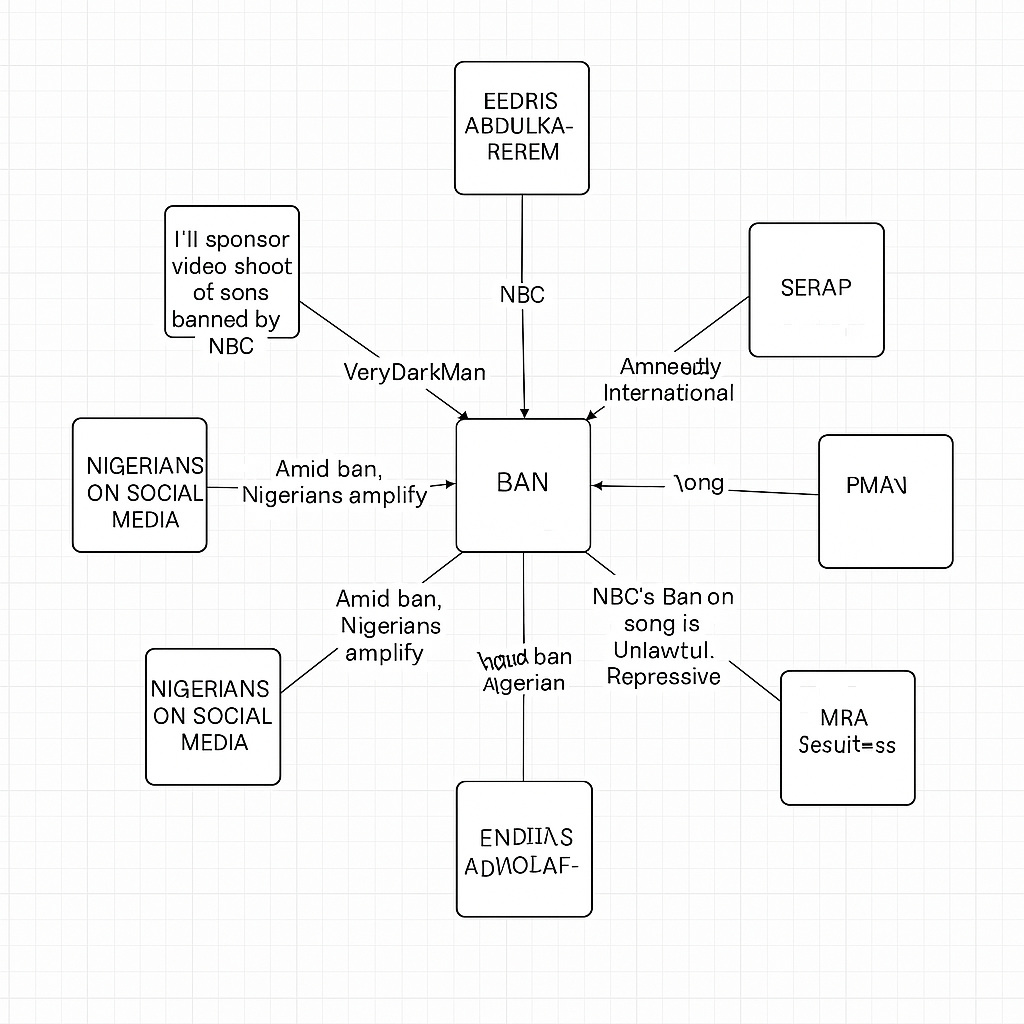
Further analysis of the headlines using a social network approach (see Exhibit 1) reveals that Tell Your Papa” Is no longer just a song, it is a node in a resistance network. Alongside laws, institutions, hashtags, and human voices, it redefines protest in the digital era.

Exhibit 1: Social network of selected news headlines

Source: Nigerian Newspapers, 2025; Infoprations Analysis, 2025

Therefore, the disintermediation of the NBC Act stresses the urgent need to rethink media regulation in Nigeria. As content creation moves beyond terrestrial boundaries, the regulatory framework must evolve from control to collaboration, focusing not just on licensing but also on digital literacy, ethical standards, and platform responsibility.

Boosting local initiatives with tailored ad strategies for community empowerment

0

Community-based enterprises can significantly benefit from adopting advertising strategies that are culturally relevant and tailored to their specific needs. These strategies are essential for smaller organizations aiming to effectively reach niche audiences and maximize engagement.

By aligning advertising efforts with community values and expectations, local initiatives can create a strong presence within their target demographic. This approach enhances brand recognition and fosters a deeper connection with the audience, driving social impact and supporting sustainable growth within communities. Utilizing customized ad server solutions can further enhance these efforts by ensuring precise targeting and efficient use of resources.

Understanding community needs

Recognizing the unique characteristics and cultural nuances of a community is crucial for effective advertising. Culturally relevant advertising respects and reflects local traditions, languages, and values, allowing community-based enterprises to connect authentically with their audience. This personalized approach builds trust and loyalty, essential components for the success of any initiative.

When you prioritize understanding your community’s needs, you create campaigns that resonate on a personal level. This relevance enhances engagement rates and encourages word-of-mouth promotion, amplifying your message organically. Such strategies are particularly important in diverse regions where one-size-fits-all advertising fails to capture the audience’s attention.

Additionally, engaging with local influencers and opinion leaders can further boost your campaign’s credibility and reach. These individuals often hold significant sway within their communities and can effectively champion your cause when your messaging aligns with their values.

Customized ad solutions

Customized ad server solutions play a pivotal role in reaching niche audiences efficiently. By tailoring these solutions to meet specific community needs, smaller organizations can maximize their advertising budget while ensuring their message reaches the intended audience. This precision targeting reduces wasteful spending on irrelevant demographics.

Effective ad servers offer detailed analytics that provide insights into audience behaviors and preferences, allowing for continuous optimization of campaigns. By harnessing this data, community-based enterprises can refine their strategies, ensuring that every dollar spent contributes to achieving their objectives.

Moreover, customized solutions empower organizations to test various ad formats and messages quickly. This flexibility enables rapid adaptation to changing trends or community dynamics, ensuring sustained engagement and relevance.

Broadening social impact

Tailored ad strategies help in reaching specific audiences and broadening the social impact of initiatives. By creating campaigns that speak directly to community interests and concerns, organizations can inspire collective action and drive positive change.

These strategies enable smaller enterprises to scale their operations without losing the essence of their mission. As awareness grows, so does the potential for collaboration with other like-minded entities, further extending their reach and influence.

Tailored ad approaches can transform how community initiatives perceive success. They move beyond mere visibility metrics to focus on tangible outcomes such as increased participation or enhanced service delivery. The ultimate goal is not just engagement but empowerment through meaningful connections.