DD
MM
YYYY

PAGES

DD
MM
YYYY

spot_img

PAGES

Home Blog Page 1408

CHEST5X Is Live: BlockDAG’s Secret Boost Beats Solana Price Rebound and ADA’s $0.59 Struggle

0

Is crypto finally getting its own cheat code?

The Solana Price just bounced back above $110 after dipping to a 14-month low, boosted by PayPal adding SOL to its crypto lineup. Meanwhile, ADA technical analysis shows Cardano flirting with a “death cross” setup as prices hold just under $0.60. These moves are turning heads, but the real surprise this week isn’t coming from the big names—it’s from BlockDAG. While most people are watching charts, BlockDAG quietly dropped a feature that feels like a secret unlock in a game.

BlockDAG’s CHEST5X: The Crypto Cheat Code No One Saw Coming. Gamers have cheat codes, now crypto does too. BlockDAG’s CHEST5X boost gives first-time buyers a 5X head start—no strings attached, no code needed. It’s the ultimate edge before the listings drop. For anyone hunting a high ROI crypto, this might be the easiest win of the year.

CHEST5X Unlocks: BlockDAG’s No-Effort Crypto Advantage

Gamers have cheat codes, now crypto does too. BlockDAG’s CHEST5X boost gives first-time buyers a 5X head start—no strings attached, no code needed. It’s automatic. As soon as you make your first purchase, the system rewards you with five times the value. No buttons to press, no form to fill. It just happens. And in a presale where every batch sells out fast, that edge matters.

Right now, BlockDAG is in Batch 27 of its presale, with the coin priced at $0.0248. That’s a 2,380% jump from its starting price of $0.001. Over 19.1 billion BDAG coins have been sold, and more than $212.5 million has been raised. The CHEST5X boost stacks right on top of this momentum, helping buyers maximize value before listings even begin.

BlockDAG’s presale isn’t just about hype—it’s backed by real progress. The beta testnet is live, processing over 1.2 million transactions across 100+ global nodes. There’s a new explorer, a token/NFT builder, and a $60K reward pool for the top testnet users. With plans to launch on 10 CEXs and support for DeFi, staking, and bridges, BlockDAG is building a complete ecosystem.
For anyone looking for a high ROI crypto, this is one of the most no-brainer opportunities out there. Add in the CHEST5X boost and it’s even harder to ignore. It’s a hidden cheat code for early buyers—and it’s still active.

Solana Price Bounces Back After PayPal Boost

The Solana price has rebounded to around $110 after dipping to a 14-month low, helped by PayPal’s recent move to support SOL on both its main app and Venmo. That boost came right when market sentiment was shaky, especially with a $200 million token unlock approaching. While some traders are still cautious, the PayPal news gave SOL some much-needed support.

On the ecosystem side, Solana’s DeFi activity is showing strength again. Its total value locked (TVL) has hit $56 million, the highest in almost three years. This adds another layer of confidence, especially as more users jump into its DeFi platforms. If this trend holds, the Solana price could break higher, though analysts say it depends on how the unlock plays out and how long the market holds this bullish momentum.

ADA Technical Analysis Flags Warning Signs for Cardano

The ADA technical analysis shows some caution ahead. Cardano is trading just under $0.60 and is close to forming a “death cross,” where the 50-day moving average drops below the 200-day. That pattern often signals bearish momentum, especially when combined with weak market support. Some traders see a potential dip if buyers don’t step in soon.

Still, there’s confidence coming from inside the Cardano community. Developer Sebastien Guillemot just took a $400,000 loan to buy over 686,000 ADA tokens, adding $60,000 in interest—all to support the Cardano treasury. That move has sparked attention across the space. While ADA technical analysis points to caution, the long-term outlook depends on whether the network can continue to build support and if buyers react to insider moves like this one.
Key Insights

Solana price is climbing again with help from PayPal, while ADA technical analysis points to some risk as Cardano nears a bearish cross. Both networks are showing mixed signals, with strong ecosystems but uncertain short-term momentum. For those tracking the charts, it’s a waiting game.

BlockDAG, on the other hand, is skipping the noise and handing out real value. The CHEST5X boost gives first-time buyers a 5X multiplier automatically—no codes, no steps, just instant rewards. It’s being called the cheat code of crypto for a reason. With over $212.5 million raised, 19.1 billion coins sold, and listings coming soon, BlockDAG is putting itself on the radar for anyone chasing a high ROI crypto. For buyers who want more than just speculation, BlockDAG’s early rewards and expanding ecosystem make it the high ROI crypto play to watch right now.


Presale: https://purchase.blockdag.network

Website: https://blockdag.network

Telegram: https://t.me/blockDAGnetworkOfficial

Discord: https://discord.gg/Q7BxghMVyu
Shibarium Hits 1 Billion Transactions, MANTRA Builds Institutional Momentum, BlockDAG Heads Toward $600M Presale Goal

0

Crypto holders in 2025 are presented with plenty of options—but narrowing in on the right project means looking beyond short-term buzz. Shiba Inu’s Shibarium just hit 1 billion transactions, proving the network is being used actively. Despite that, SHIB’s price hasn’t followed, remaining 86% below its all-time high. Meanwhile, MANTRA (OM) is gaining traction through institutional interest and now targets $12.85, though an upcoming token unlock could add temporary price pressure.

Then comes BlockDAG (BDAG)—a project showing strong progress through real usage and adoption. With over $212.5 million raised and 19.1 billion coins sold, its push toward a $600 million target in the Crypto Presale 2025 is backed by working products, active users, and growing demand. As others work to scale, BlockDAG already has the foundation in place and a projected 800x return many are starting to notice.

Shibarium Transactions Cross 1 Billion—But SHIB Price Remains Quiet

Shibarium, the Layer-2 blockchain for the Shiba Inu ecosystem, recently crossed a major milestone with over 1 billion transactions processed in just 18 months. These took place across more than 10 million blocks, and the network has shown no major performance issues—suggesting it’s both stable and scalable.

The transaction volume shows growing activity on the network, and that could support long-term value for SHIB by contributing to its token-burning process. However, there hasn’t been any major movement in the token’s price. At around $0.000012, SHIB trades 50% below its January 2025 high and remains far from its historical peak.

While the volume increase is notable, price performance still depends heavily on broader adoption and user demand beyond the meme reputation. Still, Shibarium could become more relevant as it prepares to support advanced Layer-3 features and more app development.

MANTRA ($OM) Tracks Toward $12.85—But Watch the April Token Unlock

MANTRA (OM) continues to gain attention for its role in Real World Asset Tokenization. The token currently sits near $6.38, and some analysts see it climbing to $12.85, provided current support levels hold. But there’s a possible pullback in sight: a large MANTRA Token Unlock scheduled for April 18 could introduce selling pressure in the short term.

Even with that in mind, long-term growth looks promising. Thanks to its integration with Elliptic, over 500 financial firms now have access to OM, helping it build credibility within regulated finance. On top of that, the SEC’s upcoming discussion in May on tokenized assets could shape the regulatory environment further.

For anyone watching the shift toward tokenized finance, OM offers exposure to a space growing in both adoption and attention. That said, near-term volatility linked to the unlock event remains something to watch.

BlockDAG Raises $212.5M and Sets Eyes on $600M Presale Finish

BlockDAG (BDAG) is gathering speed, and the numbers reflect it. With $212.5 million raised so far and over 19.1 billion coins sold, BDAG’s presale is already seeing heavy demand. It’s not just token sales driving attention—over 16,600 ASIC miners have also been sold and distributed, helping build out the network’s decentralized foundation.

User participation is growing too. The X1 app miner garnered over 1 million users. The app connect users to the ecosystem even before the full network is live. The recently launched Beta Testnet V1 has handled more than 1.2 million transactions through 100+ active community nodes, showing that the network is already running at scale.

BlockDAG’s Keynote 3 also highlighted upcoming listings on 10+ exchanges, and the platform already features tools for DeFi, NFTs, and token creation. With current pricing at $0.0248 in batch 27, the projected BlockDAG Price of $20 by 2027 has sparked interest among early backers. That would represent an 800x gain from the current stage.

As the project nears its $600 million Crypto Presale 2025 target, presale stages are filling up fast. With working infrastructure, strong community support, and early real-world use, BlockDAG is shaping up as a leading crypto project with long-term staying power.

Final Take

Each of these projects is gaining attention for different reasons. Shibarium transactions show a network growing in usage, though SHIB’s market value hasn’t caught up. MANTRA is moving into regulated markets through tokenized finance, with short-term price movements likely affected by April’s token release.

BlockDAG, by contrast, has already moved from planning to performance. Its mix of live user tools, strong funding, and working tech shows clear progress. With plans to power 1,000 dApps by 2026, expand into AI and decentralized identity, and drive ease-of-use through account abstraction, BDAG is positioning itself for broader crypto adoption.

Unlike others still laying groundwork, BlockDAG is already operating. That’s why many see it as one of the smartest choices heading into 2025.


Presale: https://purchase.blockdag.network

Website: https://blockdag.network

Telegram: https://t.me/blockDAGnetwork

Discord: https://discord.gg/Q7BxghMVyu
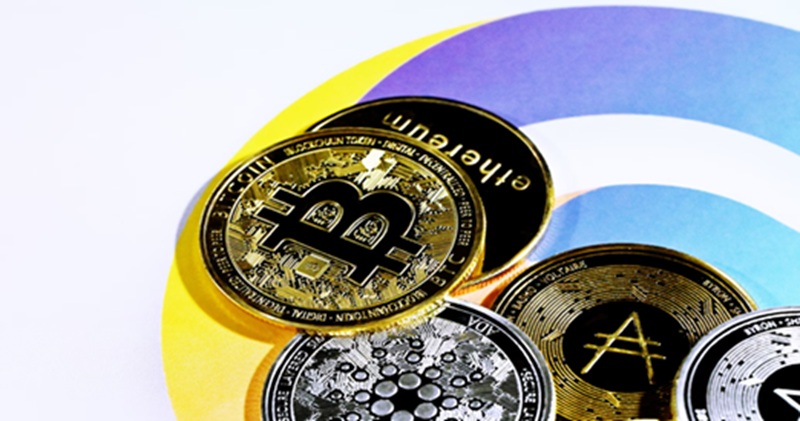
Top Altcoin to Hold While Dogecoin Bleeds, Analyst Unveils Insights

0

As the crypto market navigates volatility, with Dogecoin experiencing significant declines, a prominent analyst has unveiled compelling insights into the top altcoin to hold in 2025. With its highly successful presale, RCO Finance (RCOF) is positioning itself as a standout contender, attracting savvy investors seeking sustainable long-term returns.

Curious about what sets RCO Finance apart? Let’s explore why investors are favoring this AI altcoin as the top altcoin to hold in 2025.

RCO Finance: Build Your Wealth Smarter with AI and Expert Data

While Dogecoin continues to bleed, the prominent expert believes RCO Finance offers a more grounded and sustainable approach to wealth building. By harnessing the power of technology and innovation, RCO Finance creates lasting financial opportunities for its users, making it the top altcoin to hold right now.

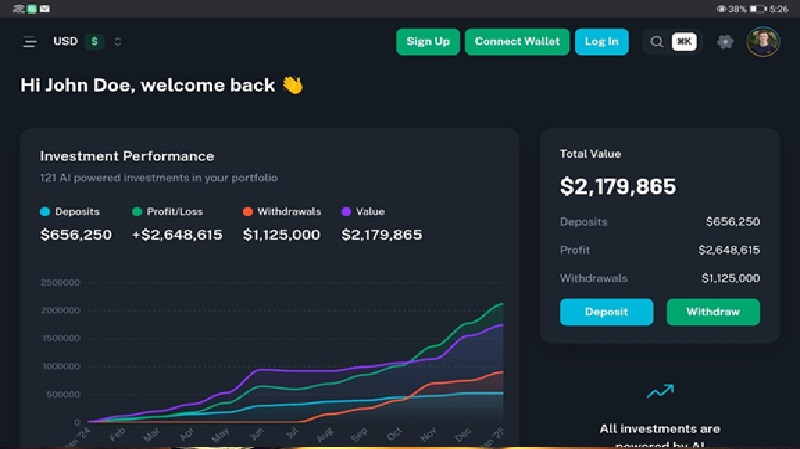
One of RCO Finance’s most compelling features is its AI-powered Robo-Advisor, designed to give investors a competitive edge in the market. This intelligent system continuously analyzes trends and historical data, providing users with personalized investment strategies that adapt to changing market conditions.

Imagine an expert who analyzes the information regarding the market daily and updates your portfolio’s content accordingly – all without you having to help out. For instance, XRP, which has skyrocketed by over 300% in just a few weeks, would have been easily found before its rally if investors had the Robo advisor with them.

RCO Finance stands out in the DeFi landscape by prioritizing user privacy with a KYC-free model, simplifying access for newcomers. This allows anyone to start trading easily, supported by an impressive inventory of over 120,000 tradable assets, including stocks, bonds, cryptocurrencies, and tokenized real-world assets.

And the best part? You can test these features on RCO Finance’s recently launched beta platform, packed with advanced AI trading tools and automated analytics. The platform is set to evolve even further, solidifying its spot as the top altcoin to hold right now.

RCO Finance further strengthens its credibility and security through a solid partnership with reputable firms to audit its smart contracts. This proactive approach guarantees that the AI trading platform operates with a high level of integrity and transparency, making it the top altcoin to hold in 2025.

Dogecoin’s Volume Remains Low As Price Tanks

Dogecoin (DOGE) has recently experienced a notable decline, with its price decreasing by approximately 20% over the past week and 35% over the past month. The current market capitalization stands at approximately $17.8 billion, with a 24-hour trading volume of around $977 million.

Technical analysis indicates that Dogecoin is approaching a key support level at $0.12. Analysts suggest that maintaining this support could pave the way for a potential rebound. If Dogecoin holds above the $0.12 support and buying interest resurfaces, the price could target resistance levels at $0.15 and $0.18 in the near term.

The Top Altcoin To Hold? RCOF Presale Presale Sparks Excitement – Don’t Miss Out!

The shifting dynamics in the crypto market have sparked growing interest in RCO Finance, especially as it positions itself as the top altcoin to hold in 2025. Despite recent market volatility, RCOF’s presale has surged past $14 million, signaling strong investor confidence in its innovative AI-driven ecosystem.

Currently in its fifth presale stage, RCOF presale tokens are available at an affordable price of $0.10 each, with an imminent price increase to $0.13. Analysts anticipate that RCOF’s official listing could propel its value to $0.60, solidifying its position as the top altcoin to hold at the moment.

Early investors in RCO Finance also gain access to exclusive benefits, including reduced trading fees, quarterly dividends, governance voting rights, and even a chance to win cash prizes totaling $100,000.

With a limited-time 40% discount available using the promo code RCOF40, now is the perfect opportunity to invest in RCOF!


For more information about the RCO Finance (RCOF) Presale:

Visit RCO Finance Presale

Join The RCO Finance Community

Amazon CEO Andy Jassy Admits The Cost Burden of Trump’s Tariffs Will Be Passed to Consumers

0
Andy Jassy, boss of AWS

Amazon is bracing for the wide-reaching effects of President Donald Trump’s sweeping new tariff regime, with CEO Andy Jassy warning that the e-commerce giant’s third-party sellers are likely to shift the cost burden to consumers.

This, he noted, could have ripple effects throughout the U.S. economy, especially in categories already vulnerable to supply chain volatility.

“I understand why—depending on which country you’re in, you don’t have 50% extra margin that you can play with,” Jassy said in an interview with CNBC’s Andrew Ross Sorkin on Thursday. “I think they’ll try and pass the cost on.”

The concern that businesses will pass costs down the line is one that has been echoed by critics of Trump’s tariff policy. While the president initially announced country-specific reciprocal tariffs, he later revised the plan, imposing a flat 10% tariff on all U.S. trading partners—except for China, where tariffs were hiked sharply to 125%. While the modification may appear like a retreat, it does little to minimize the impact. A significant portion of consumer goods purchased in the U.S.—from electronics and clothing to household items—still originate from China. The burden of these elevated costs will likely be felt in everyday prices.

Jassy’s comments come on the heels of his annual shareholder letter, where he outlined Amazon’s efforts to absorb the shocks of the new trade policy. The company has taken preemptive measures such as “strategic forward inventory buys” and renegotiating purchase orders to manage rising procurement costs. However, such strategies offer only temporary relief.

Already, signs of strain are emerging. Amazon has begun canceling direct import orders for some products sourced from China, according to supply chain consultants who spoke to CNBC. Some vendors, particularly in the home goods and kitchenware categories, had their shipments ready at Chinese ports, only to be informed via Amazon’s internal Vendor Central system that their orders had been canceled without warning.

The cancellations mark a pivotal shift in how Amazon handles inventory from its vast third-party ecosystem, many of which rely heavily on Chinese manufacturing. The company, often seen as a bellwether for broader retail trends, is now navigating growing uncertainty as its sellers struggle to adapt to the new cost environment.

There are already signs of changes in consumer behavior. Jassy noted that Amazon has seen “some evidence” of customers stocking up on products in anticipation of price increases, although he cautioned that it’s still too early to determine whether that trend is lasting or just a short-term response.

“People have not stopped buying and in certain categories, we do see people buying ahead,” he said. “But it’s hard to know if it’s just an anomaly in the data because it’s just a few days, or how long it’s going to last.”

Beyond the retail division, the implications of the tariffs stretch into Amazon’s most lucrative business unit: cloud computing. Amazon Web Services (AWS), which plays a central role in the ongoing artificial intelligence arms race, could face increased costs in building the infrastructure—especially data centers—that underpin AI workloads. Hardware components, semiconductors, cooling systems, and server equipment, much of which is sourced from Asia, are now caught in a web of uncertain pricing.

Still, Jassy projected optimism on that front, highlighting Amazon’s early moves to diversify its supply chain.

“We started that process roughly five years ago,” he said, noting that AWS has broadened its supplier base beyond a single country. “We’re going to keep building.”

Amazon has pledged to invest up to $100 billion this year alone into AI infrastructure and technologies. That level of spending underscores the company’s long-term bet on AI—even amid rising trade costs and geopolitical headwinds.

Nevertheless, the broader economic impact of Trump’s tariff push remains a concern. While the White House has defended the policy as a necessary move to level the playing field and protect U.S. manufacturing, economists and trade experts warn that American consumers are likely to feel the effects more directly than foreign producers. The National Retail Federation, for example, has long argued that tariffs function as a hidden tax on consumers, disproportionately hurting low- and middle-income families who spend a greater share of their income on goods.

And although the blanket 10% tariff offers some predictability, the exception carved out for China—with a steep 125% levy—means that many of the goods Americans rely on will still see sharp cost increases.

That reality is beginning to set in among retailers and manufacturers, who are now grappling with higher procurement costs and logistical hurdles.

For Amazon, the challenge is to remain price-competitive while navigating a dramatically altered trade landscape. Jassy’s comments suggest the company is committed to shielding consumers from the brunt of the impact where possible, but ultimately, the arithmetic may prove difficult to avoid.

21Shares Filed For a Dogecoin Exchange-Traded Funds

0

21Shares, a prominent crypto asset manager, filed a Form S-1 registration statement with the U.S. Securities and Exchange Commission (SEC) to launch a spot Dogecoin exchange-traded fund (ETF). This proposed 21Shares Dogecoin ETF aims to track the price of Dogecoin (DOGE), a popular memecoin, using the CF Dogecoin-Dollar Settlement Price as its benchmark. The fund is designed to provide investors with exposure to Dogecoin without the need to directly own the cryptocurrency, and it will be physically backed by actual DOGE holdings, with Coinbase Custody designated as the custodian.

This filing follows similar moves by competitors like Bitwise and Grayscale, signaling a growing interest in bringing Dogecoin into regulated financial markets. The Dogecoin Foundation’s corporate arm, House of Doge, is partnering with 21Shares to support the ETF’s marketing efforts, leveraging the coin’s strong community appeal. While details such as the ticker symbol, management fees, and listing exchange remain undisclosed, the initiative reflects 21Shares’ broader strategy to expand its spot crypto ETF offerings beyond its existing Bitcoin and Ether funds.

The launch of the ETF hinges on the SEC’s approval, which requires both the S-1 registration to become effective and a separate Form 19b-4 filing to be submitted and approved. Market sentiment, as reflected in analyst predictions, suggests optimism, with some estimating a 75% chance of SEC approval in 2025, though betting platforms like Polymarket peg the odds slightly lower at 64%. The filing coincided with a nearly 12% price surge for Dogecoin on April 9, highlighting the market’s anticipation of this potential milestone for the memecoin.

A Dogecoin ETF, if approved, would signal a growing acceptance of memecoins in traditional finance. Originally created as a joke in 2013, Dogecoin’s inclusion in a regulated investment product could shift perceptions, positioning it as a more serious asset class despite its volatile and speculative nature. An ETF would make Dogecoin accessible to retail and institutional investors through conventional brokerage accounts, potentially broadening its user base beyond crypto enthusiasts.

This could drive further adoption of Dogecoin for both speculative trading and, to a lesser extent, its original use case as a tipping currency. Success with a Dogecoin ETF could pave the way for similar products tied to other memecoins like Shiba Inu or newer tokens, further blurring the line between “serious” cryptocurrencies (e.g., Bitcoin, Ethereum) and community-driven tokens. The filing alone triggered a nearly 12% price surge for Dogecoin on April 9, 2025, reflecting market optimism.

If approved, the ETF could attract significant capital inflows, increasing demand and potentially driving DOGE prices higher, especially given its relatively low market cap compared to Bitcoin or Ethereum. Dogecoin’s price is historically sensitive to news, hype, and endorsements (e.g., from figures like Elon Musk). An ETF could amplify this volatility, as institutional buying or selling could lead to sharper price swings, especially during periods of market uncertainty.

By facilitating easier access to Dogecoin exposure, the ETF could enhance DOGE’s liquidity in both traditional and crypto markets, potentially stabilizing its trading environment over time. An ETF eliminates the need for investors to manage crypto wallets, navigate exchanges, or handle private keys, making Dogecoin investment as simple as buying a stock. This could attract risk-tolerant retail investors and even some institutions looking to diversify portfolios with high-risk, high-reward assets.

Dogecoin’s low price per coin and memecoin status make it a magnet for speculative trading. An ETF could amplify this behavior, drawing in investors chasing short-term gains rather than long-term fundamentals, potentially leading to bubbles or sharp corrections. For some investors, a Dogecoin ETF might serve as a small, speculative allocation within a broader portfolio, offering exposure to crypto market trends without the operational risks of direct ownership.

The SEC’s decision on the Dogecoin ETF will be closely watched. Approval could indicate a more permissive stance toward altcoin ETFs beyond Bitcoin and Ethereum, while rejection might signal regulatory caution around assets with limited utility or high volatility. The SEC may focus on Dogecoin’s market manipulation risks, given its history of pump-and-dump schemes. The involvement of Coinbase Custody as the ETF’s custodian underscores the growing maturity of crypto infrastructure.

Regulatory approval would further validate these systems, encouraging other asset managers to pursue similar products. Approval in the U.S. could prompt other jurisdictions to consider Dogecoin or memecoin ETFs, especially in crypto-friendly markets like Canada or Europe, where 21Shares already operates spot crypto ETFs. 21Shares’ filing follows similar efforts by Bitwise and Grayscale, intensifying competition in the crypto ETF space.

The first mover to secure SEC approval for a Dogecoin ETF could capture significant market share, especially if investor appetite for memecoins remains strong. As more crypto ETFs emerge, asset managers may compete on management fees to attract investors. While 21Shares hasn’t disclosed its fee structure for the Dogecoin ETF, low-cost offerings could become a differentiator, mirroring trends in Bitcoin and Ethereum ETFs.