DD
MM
YYYY

PAGES

DD
MM
YYYY

spot_img

PAGES

Home Blog Page 1411

Visa And Mastercard Roll-Out AI-powered Shopping Tool, Unveils A New Era of Commerce

2

Payments giant Visa and Mastercard have unveiled AI-powered shopping, to make shopping experiences for users  more personal, more secure and more convenient.

Visa is bringing the power of its network and decades-long expertise to bring trust and security to AI-driven commerce. Introduced on Wednesday, Visa is rolling out “Visa Intelligent Commerce” which enables AI to find and buy. It is a groundbreaking new initiative that opens Visa’s payment network to the developers and engineers building the foundational AI agents transforming commerce.

In a statement, Visa chief product and strategy officer Jack Forestell said,

Soon people will have AI agents browse, select, purchase and manage on their behalf. These agents will need to be trusted with payments, not only by users, but by banks and sellers as well. Just like the shift from physical shopping to online, and from online to mobile, Visa is setting a new standard for a new era of commerce. Now, with Visa Intelligent Commerce, AI agents can find, shop and buy for consumers based on their pre-selected preferences. Each consumer sets the limits, and Visa helps manage the rest.”

Visa Intelligent Commerce offers:

• AI-Ready Cards: Replaces card details with tokenized digital credentials, enhancing security for consumers and simplifying payment processes for developers. They confirm that a consumer’s chosen agent is allowed to act on a consumer’s behalf and bring identity verification to AI commerce. Only the consumer can instruct the agent on what to do and when to activate a payment credential.

• AI-Powered Personalization: The consumer is in control. Consumers share basic Visa spend and purchase insights with their consent to improve agent performance and personalize shopping recommendations.

• Simple and Secure AI Payments: Allows consumers to easily set spending limits and conditions, providing clear guidelines for agent transactions. Commerce signals are shared in real-time with Visa, enabling Visa to effect transaction controls and help to manage disputes.

Visa says that it is collaborating with a mix of tech giants and startups to develop AI-powered shopping experiences that are “more personal, more secure, and more convenient.” Those companies include Anthropic, IBM, Microsoft, Mistral AI, OpenAI, Perplexity, Samsung, and Stripe, among others.

The move follows Mastercard launch of its Agentic Payments Program, Mastercard Agent Pay. The groundbreaking solution integrates with agentic AI to revolutionize commerce. It would give AI agents the ability to shop online for consumers. Mastercard said its new Agent Pay offering “will enhance generative AI conversations for people and businesses alike” by integrating payments into tailored recommendations and insights already provided on conversational platforms.

In a statement, Jorn Lambert, chief product officer at Mastercard said,

Mastercard is transforming the way the world pays for the better by anticipating consumer needs on the horizon. The launch of Mastercard Agent Pay marks our initial steps in redefining commerce in the AI era, including new merchant interfaces to distinguish trusted agents from bad actors using agentic technology. Recognizing the seismic implications of this evolution, we are keen to collaborate with industry players to advance the standards for agentic payments, such as applying the Model Context Protocol to Secure Remote Commerce. This lays the foundation for scale and builds trust in agentic commerce.”

Mastercard said it will work with Microsoft on new use cases to scale “agentic commerce,” as well as with IBM, Braintree, and Checkout.com on other aspects of AI-powered shopping.

Visa and Mastercard aren’t the only ones allowing for AI-powered shopping. On Tuesday, PayPal announced its own agentic commerce offering.

Also, earlier this month, Amazon announced the start of testing a new AI shopping agent, a feature it calls “Buy for Me,” with a subset of users. OpenAI, Google, and Perplexity have also showcased similar agents that can visit websites and help users make purchases.

Looking Ahead

The rise of AI-powered personal shopping services signifies a move towards more personalized, efficient, and customer-centric retail experiences. As these technologies continue to evolve, they promise to reshape the shopping landscape in ways we can only begin to imagine.

C-One Ventures Acquires Nigerian Fintech Firm Bankly to Bolster Fintech Expansion in Nigeria

0

C-One Ventures, an investment firm focused on technology and fintech primarily in Nigeria, has reportedly acquired Bankly, a Nigerian fintech and licensed microfinance bank, to expand its fintech portfolio.

The acquisition includes Bankly’s licenses, platform, and team, which will be integrated into C-One’s ecosystem to scale technology-driven financial services.

According to a statement from Bankly CEO Tomilola Majekodunmi, noted that a restructuring process is already underway to ensure seamless integration, and Bankly will support the transition in an advisory role.

Speaking on the acquisition, she said:

“I am immensely proud of what we have achieved at Bankly over the last six years.   Bankly was founded with a mission to drive financial inclusion to the last mile, and we have certainly made significant progress on that front. Like any business, we’ve faced our share of challenges, but I’m confident that this acquisition will keep the Bankly vision alive and further advance our mission of empowering more Nigerians through inclusive financial solutions.”

Bankly is a lifestyle bank that redefines the way people manage their money. Founded in 2019 by Tomilola Majekodunmi and Fredrick Adams, Bankly first started operations as a tech-driven solution to combat fraud and financial losses in informal savings groups.

The fintech quickly evolved into a beacon of transparency and accessibility for small business owners across Nigeria. Through digitization, it revolutionized the savings process, empowering individuals to securely save and access their money with ease.

Bankly expanded its services in 2020 to include agency banking and has since facilitated financial access for over 12 million individuals through its network of over 50,000 agents nationwide. But the journey didn’t end there. In 2021, Bankly announced that it had closed a $2 million seed round. The funding round was led by Vault. Other investors who took part in the round included Plug and Play Ventures, Rising Tide Africa, and Chrysalis Capital.

Bankly has been significantly helping the Nigerian unbanked population, by digitizing the entire money collection process and allowing users to save their money using online and offline methods. The business has a distribution and agents network that makes it easy for customers to deposit and withdraw cash with its agent, anytime.

Recognizing the ongoing financial needs of everyday people, Bankly metamorphosed into a Microfinance Bank in 2023. This lifestyle bank pioneered innovative features like Group Savings (Ajo), enhancing transparency and convenience in collective contributions, and made bill payments less expensive by offering exclusive discounts. Through the implementation of digital currency, personal identity, and comprehensive financial services, the bank has paved the way for unbanked Nigerians to partake in the formal economy, providing them with a secure and reliable platform to nurture their financial aspirations.

Bankly has been on a mission to make banking effortless for everyone, guiding customers toward financial success and giving them more bang for their buck. It also moved to transform the way local businesses access financial services, by providing the tools and support necessary to attain entrepreneurial freedom.

C-One Ventures, which describes itself as an investor focused on technology-enabled finance in Nigeria, said the integration of Bankly will support its broader strategy of offering connected financial products to individuals and businesses.

The acquisition of Bankly, a Nigerian fintech has several implications for both companies, their customers, and the broader financial ecosystem in Nigeria. By acquiring Bankly, C-One adds a microfinance bank with a strong focus on financial inclusion to its portfolio, which already includes platforms like Fulcrum (supply chain financing), GetPayed (payments and banking app), and Money (digital banking). This strengthens C-One’s ability to offer comprehensive, technology-driven financial services.

Also, Bankly’s extensive network of over 50,000 agents and a customer base of more than 2 million individuals and businesses across Nigeria gives C-One deeper penetration into the informal economy, particularly in low-income and rural communities. This aligns with C-One’s goal of scaling grassroots financial services.

Ethereum Foundation Makes Available Updates About Its Leadership Structure and Updates For 2025

0

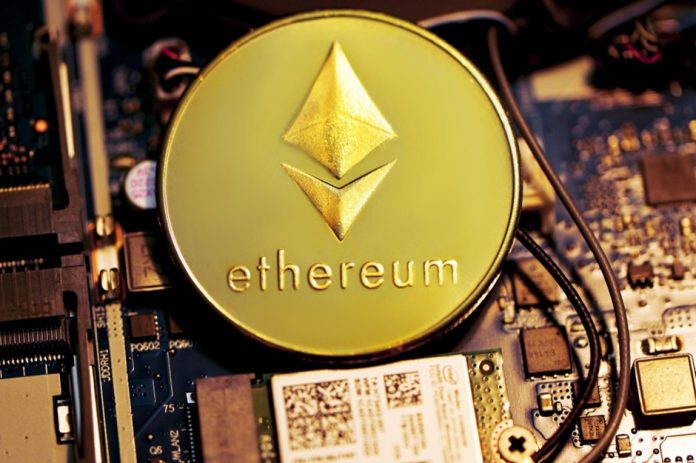
The Ethereum Foundation (EF) has recently shared significant updates on its leadership structure and 2025 roadmap, reflecting a strategic pivot to address community concerns, enhance scalability, and maintain Ethereum’s core values. As of March 17, 2025, Hsiao-Wei Wang, a seven-year EF researcher instrumental in the Beacon Chain and sharding, and Tomasz Sta?czak, founder of Nethermind (a key Ethereum execution client), have been appointed as co-executive directors. This dual-leadership model replaces the traditional single executive director role, aiming for collaborative decision-making and technical focus.

Aya Miyaguchi, executive director since 2018, has moved to the role of president, focusing on strategic initiatives and ecosystem growth. The EF Board, including Vitalik Buterin, Miyaguchi, Wang, and Patrick Storchenegger, sets the long-term vision, emphasizing decentralization, open-source innovation, and censorship resistance. Former EF researcher Danny Ryan has joined Etherealize, a new initiative to bridge Ethereum with institutional investors, co-founded with Vivek Raman.

These changes follow community criticism in 2024 over governance, transparency, and conflicts of interest (e.g., EF researchers’ advisory roles at EigenLayer). Vitalik Buterin initiated the restructuring to enhance technical expertise, community engagement, and ecosystem support while rejecting calls for political lobbying or centralized control.

2025 Roadmap Updates

The EF outlined its 2025 goals, focusing on scalability, user experience, and ecosystem decentralization, as detailed in a recent blog and tweets. Prioritizing mainnet improvements to reduce transaction costs and congestion, including increasing transaction throughput via “blob” transactions (EIP-4844). Enhancing data availability through blobs to support Layer 2 (L2) solutions, addressing concerns about L2s cannibalizing base-layer revenue.

Streamlining interactions for developers and users, potentially accelerating projects like Verkle Trees and history expiry. Ongoing work includes 3-Slot-Finality, delayed execution (EIP-7886), and quantum-safe SNARKs to simplify the protocol and mitigate centralization risks (e.g., MEV and liquid staking).

Vitalik Buterin has suggested modernizing the Ethereum Virtual Machine (EVM) by transitioning to RISC-V for better performance and overhauling the execution layer to reduce L2 scaling costs. Refining governance models, public goods funding, and token models to ensure long-term sustainability without fostering dependency.

The EF is also exploring staking its ETH reserves for sustainable revenue and deploying funds (e.g., 50,000 ETH into DeFi protocols) to align with ecosystem participation rather than selling ETH. These updates come amid competitive pressures from blockchains like Solana, declining ETH prices, and community debates over L2 revenue impacts post-Dencun upgrade. The EF aims to balance short-term deliverables with long-term research, leveraging its new leadership to restore momentum and trust.

The Ethereum Foundation’s (EF) leadership changes and 2025 roadmap updates carry significant implications for Ethereum’s ecosystem, market position, and long-term viability. Prioritizing Layer 1 (L1) scaling (e.g., blob transactions, EIP-4844) and user experience improvements (e.g., Verkle Trees, EVM modernization) could reduce transaction costs and congestion, making Ethereum more competitive with high-throughput chains like Solana. However, execution risks remain, as complex upgrades like 3-Slot-Finality or quantum-safe SNARKs require robust testing to avoid network disruptions.

Improved data availability and lower L2 scaling costs could strengthen Ethereum’s rollup-centric roadmap, boosting adoption of L2s like Arbitrum and Optimism. Yet, this risks further diverting revenue from L1, potentially weakening validator incentives unless addressed (e.g., via Vitalik’s execution layer overhaul). Proposals like transitioning to RISC-V and delayed execution aim to streamline Ethereum’s architecture, reducing technical debt and centralization risks (e.g., MEV, liquid staking). Success could enhance developer accessibility and network resilience, but failure to deliver could erode confidence in EF’s technical leadership.

Lower L1 revenue post-Dencun has strained validator profitability. Roadmap efforts to balance L1 and L2 economics (e.g., blob fee adjustments) are critical to maintaining network security. Failure to address this could increase centralization risks via liquid staking dominance (e.g., Lido). Refining funding models for ecosystem projects could sustain Ethereum’s open-source ethos, but over-reliance on EF grants risks creating dependency. A sustainable token model or decentralized funding mechanism could enhance long-term economic resilience.

Appointing Hsiao-Wei Wang and Tomasz Sta?czak as co-executive directors, with their deep technical expertise, signals a commitment to community-driven, transparent governance. This could rebuild trust after 2024’s controversies (e.g., EigenLayer conflicts). However, the dual-leadership model is untested and may face challenges in aligning priorities. Rejecting political lobbying and centralized control aligns with Ethereum’s ethos but limits its ability to counter regulatory pressures compared to competitors with lobbying arms (e.g., Solana Foundation). The EF’s focus on technical governance (e.g., open-source innovation) may strengthen community loyalty but risks slower ecosystem coordination.

Increased transparency (e.g., detailed roadmaps, blog updates) and Buterin’s proactive restructuring address past criticisms. Sustained engagement will be crucial to avoid perceptions of elitism or disconnect, especially as Ethereum scales. Ethereum faces pressure from high-performance L1s (e.g., Solana, Aptos) and modular chains (e.g., Celestia). Successful roadmap execution could solidify Ethereum’s dominance in DeFi and NFTs by improving UX and affordability. Delays, however, could cede ground to rivals capitalizing on Ethereum’s high fees and complexity.

Simplifying the EVM and developer tools could attract more builders, reinforcing Ethereum’s lead in dApp development (e.g., ~60% DeFi TVL). Competitors offering faster onboarding or cheaper deployment may still challenge this edge if Ethereum’s upgrades lag. Danny Ryan’s move to Etherealize signals Ethereum’s growing appeal to institutional investors. However, without clearer regulatory engagement, Ethereum may struggle to match competitors’ institutional traction (e.g., Solana’s ETF progress).

Risks and Opportunities

Successful roadmap delivery could drive a virtuous cycle of lower costs, higher adoption, and stronger network effects, positioning Ethereum as the go-to smart contract platform. Leadership changes and governance reforms could enhance community trust, attracting talent and capital. Technical delays, governance missteps, or failure to balance L1-L2 economics could erode Ethereum’s market share and developer base. External factors like regulatory crackdowns or macroeconomic shifts (e.g., rising interest rates) could amplify these challenges.

The EF’s updates position Ethereum to address critical pain points—scalability, UX, and governance—while reinforcing its decentralized ethos. Success hinges on executing complex technical upgrades and maintaining community trust amid competitive and economic pressures. Short-term price volatility may persist, but long-term, Ethereum’s ecosystem strength and developer loyalty provide a solid foundation for growth.

Kiln-Ledger Live Integration Democratizes DeFi Yields While Prioritizing Security

0

Ledger Live now enables users to earn stablecoin yields directly from self-custody through a new integration with Kiln, announced on April 28, 2025. This feature allows users to generate passive income on stablecoins like USDC, USDT, USDS, and DAI with yields ranging from 5% to 9.9% APY, depending on the protocol used (e.g., Aave, Compound, Morpho, Sky, Spark). The key advantage is that users maintain full control of their private keys, ensuring self-custody without transferring assets to centralized platforms.

This is facilitated through Ledger Live’s interface, where Kiln provides backend access to DeFi lending protocols, simplifying the process while prioritizing security. Only 4% of stablecoin holders currently earn yield, so this integration aims to make DeFi more accessible and secure for Ledger users.

The Kiln integration with Ledger Live, announced on April 28, 2025, enables users to earn stablecoin yields directly from self-custodied wallets within the Ledger Live app. Kiln, a DeFi infrastructure provider, facilitates access to decentralized finance (DeFi) lending protocols, allowing Ledger Live users to generate passive income on stablecoins like USDC, USDT, USDS, and DAI with yields of 5% to 9.9% APY.

Unlike centralized platforms, this integration ensures users retain full control of their private keys. Assets remain in the user’s Ledger wallet, enhancing security by avoiding third-party custody risks. Kiln acts as a backend bridge to vetted DeFi protocols such as Aave, Compound, Morpho, Sky, and Spark. These protocols lend stablecoins to generate yield, and Kiln simplifies the interaction for users.

Within Ledger Live, users can select their stablecoins, choose a lending protocol via Kiln’s interface, and start earning yield. The process is streamlined to be user-friendly, requiring no deep DeFi knowledge. Ledger’s hardware wallet security, combined with Kiln’s audited smart contracts, minimizes risks. Transactions are signed locally on the Ledger device, ensuring no private key exposure.

This integration makes DeFi more accessible, as only 4% of stablecoin holders currently earn yield. It targets Ledger’s user base, offering a secure, non-custodial way to participate in DeFi without relying on centralized exchanges. Kiln’s integration provides the technical infrastructure to connect Ledger Live users to DeFi lending markets, maintaining simplicity, security, and self-custody while unlocking stablecoin yield opportunities.

By simplifying access to DeFi lending protocols like Aave and Compound within the familiar Ledger Live interface, this integration lowers barriers for non-technical users. With only 4% of stablecoin holders currently earning yield, this could drive broader participation in DeFi, especially among Ledger’s security-conscious user base.

Maintaining self-custody while earning 5%–9.9% APY on stablecoins like USDC and USDT gives users greater control and security compared to centralized platforms. This aligns with the ethos of decentralization, reducing reliance on third-party custodians and mitigating risks like hacks or mismanagement seen in centralized finance (CeFi) failures.

Centralized platforms offering stablecoin yields (e.g., exchanges or lending services) may face increased competition. Ledger Live’s self-custodial solution, backed by Kiln’s DeFi infrastructure, provides a compelling alternative, potentially pushing CeFi providers to improve transparency, security, or rates.

The integration leverages Ledger’s hardware wallet security and Kiln’s audited smart contracts, setting a high bar for secure DeFi integrations. This could encourage other wallet providers or DeFi platforms to prioritize self-custody and robust security in their offerings. Higher yield accessibility could increase demand for stablecoins supported by the integration (USDC, USDT, USDS, DAI). This may boost their circulation and liquidity in DeFi protocols, potentially stabilizing or increasing their market dominance.

As self-custodial DeFi yield products gain traction, regulators may pay closer attention. While self-custody reduces some regulatory risks tied to centralized entities, the integration could prompt discussions about DeFi oversight, especially if yields attract significant retail investment.

The success of this integration could inspire similar partnerships between hardware wallet providers and DeFi infrastructure platforms. It may also push DeFi protocols to optimize for user-friendly integrations, fostering further innovation in secure, accessible yield products.

The Kiln-Ledger Live integration democratizes DeFi yields while prioritizing security and self-custody, potentially reshaping user behavior, market dynamics, and competitive landscapes in both DeFi and CeFi. It also underscores the growing maturity of DeFi infrastructure, though it may invite regulatory attention as adoption scales.

Understanding PeniWallet By SMC DAO

3

PeniWallet, developed by Penilabs under the SMC DAO ecosystem, is a non-custodial cryptocurrency wallet designed to simplify token transactions, particularly for social giveaways and airdrops. Founded by Sir Mapy, a pseudonymous crypto figure, SMC DAO (SirMapy & Co Decentralized Autonomous Organization) aims to educate and empower its community, known as “Believers,” in the digital economy. PeniWallet is one of its flagship projects, alongside Wiki Cat Coin and Defi Tiger.

Key Features of PeniWallet

Multi-Address Transactions (Spray Feature): PeniWallet allows users to send tokens to multiple wallet addresses in a single transaction, streamlining airdrops and giveaways. This addresses inefficiencies in traditional wallets, reducing transaction fees, time, and errors. Users can create a “Spray Party,” set distribution details, and share an invite code for seamless token distribution.

Operating on the BNB Chain, PeniWallet eliminates the need for users to hold BNB for gas fees. Fees are deducted directly from the tokens being sent, enhancing user-friendliness, especially for newcomers. Users retain full control over their private keys and seed phrases, which are encrypted on their devices. This ensures ownership of funds without reliance on third parties.

PeniWallet offers in-app token swapping via PancakeSwap, reducing security risks associated with external platforms. With biometric authentication and intuitive token management, PeniWallet caters to both novice and experienced users. Tokens can be searched by name, and beneficiaries added directly, simplifying transactions.

Plans include support for Bitcoin integration, EVM-compatible chains (Ethereum, Polygon, Avalanche, Fantom) and non-EVM chains (Solana, TON), enabling cross-blockchain asset management. SMC DAO, founded by Sir Mapy, is a community-driven organization focused on capturing value in the digital economy. With over 26,000 registered members, 64,000+ onchain transactions and 50,000+ social media followers, it emphasizes education through tutorials and research. Its projects, like Wiki Cat Coin (launched March 2022), aim to onboard users to crypto via meme-based engagement. PeniWallet aligns with this mission by simplifying crypto interactions, particularly in Africa, where WikiCat has a strong community presence.

PeniWallet’s development has been iterative, with Sir Mapy sharing updates on X. In October 2024, Apple tested the wallet after resolving issues related to its in-app swap feature being mistaken for an exchange. The wallet is set to launch alongside the SMC DAO app, both built from scratch, reflecting significant investment. A logo design contest was held in July 2023, and beta testing involved 500 testers, with plans for a larger “Spray Party” launch event.

A Spray Party is a unique feature of PeniWallet, developed by Penilabs under SMC DAO, designed to simplify and gamify the distribution of cryptocurrency tokens to multiple recipients in a single transaction. It leverages PeniWallet’s “Spray” functionality, which allows users to send tokens to numerous wallet addresses simultaneously, making it ideal for social giveaways, airdrops, or community-driven token-sharing events.

How a Spray Party Works

A user (the “host”) creates a Spray Party within PeniWallet. They specify the token to distribute, the number of recipients, and the amount each will receive. For example, the host might allocate 100 tokens to be split equally among 10 participants. The wallet generates a unique invite code for the Spray Party. The host shares this code with participants via social media, messaging apps, or platforms like X, inviting them to join the event.

Recipients use the invite code in PeniWallet to register for the Spray Party. They provide their wallet address (either a PeniWallet address or another compatible wallet on the BNB Chain). Once the Spray Party is complete (e.g., all slots are filled or a set time expires), the host triggers the transaction. PeniWallet’s Spray feature executes a single transaction, distributing the tokens to all registered addresses automatically.

Participants don’t need BNB for gas fees, as fees are deducted from the tokens being sent, simplifying the process for new users. Unlike traditional airdrops requiring multiple transactions, a Spray Party consolidates distributions into one, reducing gas fees and time. The invite code system makes it easy for anyone with a compatible wallet to participate, fostering community engagement.

The “party” branding adds a fun, social element, encouraging participation in token giveaways. Hosts can set up Spray Parties for small groups (e.g., 10 people) or large-scale airdrops (e.g., thousands), depending on their goals. Projects like SMC DAO’s Wiki Cat Coin use Spray Parties to distribute tokens to followers, boosting engagement. Influencers or crypto communities can host Spray Parties to reward fans or attract new members.

Tokens can be distributed to multiple beneficiaries efficiently, such as for donations or micro-grants. New projects can use Spray Parties to create buzz by distributing tokens to early adopters. Imagine SMC DAO hosting a Spray Party to celebrate a Wiki Cat Coin milestone. Sir Mapy announces on X that 1,000 WKC tokens will be shared among 100 participants. He shares an invite code, and users join via PeniWallet. Once 100 people sign up, Sir Mapy triggers the Spray, and each participant receives 10 WKC tokens in one transaction, with fees covered by the token pool.

PeniWallet is in pre-launch, with Spray Party functionality tested during beta phases (e.g., 500 testers in 2024). SMC DAO plans a large-scale Spray Party for the wallet’s official launch, though exact details are pending. The feature’s real-world performance is untested until PeniWallet launches fully. Technical glitches or fee miscalculations could affect user experience.

Success relies on community uptake and the popularity of tokens like WikiCat Coin. While PeniWallet is non-custodial, users must ensure they join legitimate Spray Parties to avoid scams mimicking official events. The Spray Party is an innovative, user-friendly way to distribute tokens, aligning with SMC DAO’s mission to make crypto accessible. It combines efficiency, community engagement, and a playful approach to airdrops.

PeniWallet targets users seeking efficient token distribution, competing with traditional wallets by addressing pain points like high fees and manual processes. Its integration with the BNB Chain and focus on social giveaways position it as a niche tool for community-driven projects. Reviews highlight its potential to boost awareness and value for SMC DAO’s Wiki Cat Coin. While innovative, PeniWallet’s success depends on execution and adoption. The wallet’s pre-launch status means real-world performance is untested, and promised features (e.g., multi-chain support) are speculative until implemented.

PeniWallet represents SMC DAO’s ambitious push to democratize crypto access through innovative features like gasless, multi-address transactions. While its user-centric design and community focus are promising, potential users should critically evaluate its claims, monitor post-launch performance, and exercise caution in the volatile crypto space.