DD
MM
YYYY

PAGES

DD
MM
YYYY

spot_img

PAGES

Home Blog Page 1422

Biggest Victory in Professional Life is Victory Over Your Time

0

The biggest victory in professional life is victory over your time. If you master your time, you will win your future. Greatness has been achieved not because of special talent but rather via total dedication, perseverance and commitment through mastering of time. A man who cannot manage his seconds will wander through the boundless of time.

Have a process and see how that process aligns with your goals in life. Students, look carefully, the bests in your classes are not necessarily the smartest but those smart enough to manage their clocks. Because the world is bounded by time, defined within 24 hours a day, companies and schools look for those “bests” as they have overcome by managing time. The best companies, the best universities, and the best leaders want them because if they continue on those paths, they will add values.

But managing time does not mean spending less time on something; it’s simply knowing what to spend time on, to advance that mission. Do not be like the lifeless feather which when tossed into the stream wanders wherever the stream current moves it. Be like the dragonfly which even though enjoying the mild current defines its path.

All paths of careers are defined by the ability to manage time. A man who is overwhelmed by the limitation of unbounded time quits. Yes, “I have decided to settle for C because I cannot cover all that would help me compete for A”. Do not show any pity: he wasted his time and the rationalization for poor grades cannot change the state of his records, for life! Do that many times, the person will turn a failure in everything.

Boss your time or it will box you! Why? The biggest professional failure is NOT fixing things that lead to failures of which TIME is a key component.

RockawayX’s $125M Bet on Solana’s Startups is Far Reaching

0

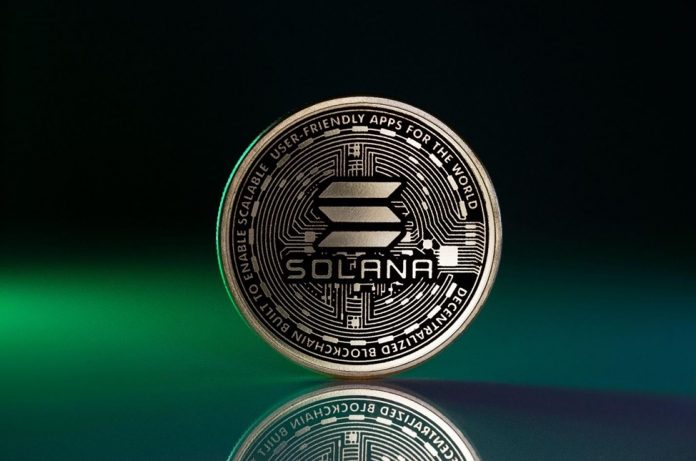
RockawayX, a crypto-focused venture capital firm based in Dubai, London, and Prague, has raised $125 million for its second early-stage fund, with 50-75% (approximately $62-94 million) allocated to startups building on the Solana blockchain.

The firm, which manages $2 billion in assets, has been a Solana supporter since 2018, backing over 15 projects including Kamino, Squads, Exponent, and DoubleZero. The fund, closed in Q1 2025, will also invest in decentralized finance (DeFi), infrastructure protocols, and decentralized networks, with about two-thirds for seed rounds and the rest for liquid assets.

RockawayX’s strategy emphasizes hands-on support, providing engineering, liquidity, and infrastructure resources. It runs validators, develops protocol-ready hardware, and is launching Solana City, a Dubai-based accelerator hub with the Solana Foundation and Helius Labs. The fund’s limited partners include Rockaway Capital, family offices, private equity firms, high-net-worth individuals, and Solana co-founders Anatoly Yakovenko and Raj Gokal. The raise follows a strong track record, with RockawayX’s 2021 fund achieving a 2.1x DPI and 5.4x MOIC, driven by investments in Solana, Wintermute, and Morpho Labs.

This move comes despite a 30% drop in Solana’s total value locked ($9.16 billion) and a 41% decline in its token price ($148.26) over the past three months, reflecting confidence in Solana’s long-term potential. The $125M fund raised by RockawayX for Solana ecosystem startups has several implications. Allocating 50-75% ($62-94M) to Solana-based startups signals strong confidence in Solana’s scalability and developer adoption, despite recent declines in its total value locked (30%) and token price (41%).

This could drive innovation in DeFi, infrastructure, and decentralized networks, strengthening Solana’s competitive position against rivals like Ethereum. The fund’s focus on seed-stage investments and hands-on support (engineering, liquidity, infrastructure) via initiatives like Solana City in Dubai could lower barriers for early-stage Solana startups, fostering a robust pipeline of projects and enhancing ecosystem resilience.

The participation of high-profile LPs, including Solana co-founders and family offices, alongside RockawayX’s strong 2021 fund performance (2.1x DPI, 5.4x MOIC), may attract more institutional interest to Solana, potentially stabilizing its market perception amid volatility. The Solana City accelerator in Dubai, backed by RockawayX, Solana Foundation, and Helius Labs, positions the UAE as a hub for blockchain innovation, potentially drawing global talent and investment to the region.

The heavy Solana focus carries risks, given its recent market downturn. A bearish crypto market or failure to deliver scalable solutions could limit returns. Additionally, the fund’s success hinges on identifying high-potential startups in a competitive landscape. The fund could catalyze Solana’s growth and solidify its ecosystem, but its impact depends on market conditions and the quality of supported projects.

Solana’s scalability challenges stem from its high-throughput design, which prioritizes speed and low costs but introduces trade-offs. Solana’s architecture, processing up to 65,000 transactions per second (TPS) via Proof of History (PoH) and Proof of Stake (PoS), has faced congestion during peak usage, notably in DeFi and NFT surges. Historical outages (e.g., 17-hour downtime in September 2021, multiple in 2022) exposed vulnerabilities in transaction prioritization and spam handling, eroding user trust and developer confidence.

Solana’s validators require powerful hardware (e.g., 12-core CPUs, 128GB RAM) to handle its high TPS, increasing operational costs. This raises barriers for decentralization, as only well-funded entities can run validators, potentially concentrating network control compared to lighter chains like Ethereum.  Solana’s low transaction fees (~$0.00025) encourage spam attacks, where bots flood the network with low-value transactions, clogging queues. Unlike Ethereum’s dynamic fee market, Solana’s static fees struggle to prioritize legitimate transactions, leading to delays or failed transactions during spikes.

Solana’s high transaction volume generates massive state data, inflating storage needs for nodes (currently ~1TB for full history). This could deter smaller validators, further centralizing the network and increasing costs for infrastructure providers. Solana’s unique architecture (e.g., PoH, parallel transaction processing) requires developers to master complex tools like Rust and its account model, steeper than Ethereum’s Solidity. This learning curve can slow dApp development, limiting ecosystem growth.

Implications for RockawayX’s Investment

Startups building on Solana may face delays or user attrition if network instability persists, impacting RockawayX’s returns. Solana’s ongoing upgrades (e.g., QUIC protocol, fee market reforms, Firedancer client by Jump Crypto) aim to address congestion and reliability. RockawayX’s hands-on support (engineering, validators) could help portfolio companies navigate these challenges.

Continued scalability issues could dampen Solana’s appeal, reducing the fund’s ability to attract top-tier projects or exit investments at high valuations. If Solana resolves these issues, its high TPS and low costs could outpace competitors, boosting RockawayX’s portfolio, especially in DeFi and infrastructure.

Solana’s scalability challenges are significant but not insurmountable. RockawayX’s $125M bet hinges on the network’s ability to deliver promised upgrades while maintaining developer and user momentum.

This XRP Rival is Rising Faster than Dogecoin in 2021, Here’s Why

0

In the dynamic realm of cryptocurrencies, XRP has carved out a reputation as a leader in facilitating swift cross-border transactions. However, a new competitor, RCO Finance (RCOF), is swiftly gaining ground, reminiscent of Dogecoin’s explosive growth in 2021.

But while Dogecoin (DOGE) rode a wave of viral enthusiasm to remarkable heights, RCO Finance is harnessing cutting-edge technology and robust VC investment backing to fuel its ascent.

The Historic 2021 Dogecoin Rally

The year 2021 marked a phenomenal chapter for most cryptocurrencies including Dogecoin, which soared by over 23,000% to an all-time high of $0.7316 on May 8.

Driven by a whirlwind of social media buzz, high-profile endorsements, and a passionate community, the meme coin transformed from a lighthearted experiment into a market sensation.

However, its momentum couldn’t be sustained, and the price has since retreated sharply. As of April 25, 2025, Dogecoin traded at $0.1814, a staggering 75.1% drop from its peak.

Despite this decline, it has displayed resilience, posting a 19.8% gain over the past year and a 17.2% uptick in the last week.

Looking ahead, some analysts predict a modest recovery, potentially reaching $0.9 by the end of 2025, buoyed by lingering community support and broader market dynamics.

RCO Finance (RCOF), The XRP Rival, Is Rising Faster Than DOGE in 2021

While Dogecoin (DOGE) staged a once in a lifetime hike in 2021, RCO Finance (RCOF) a formidable rival to established players like XRP, is rising faster having risen by over 919% in only six presale stages.

Currently in the sixth presale stage, priced at $0.13, the token has been steadily climbing through its presale and by the final presale phase, the price is expected to hit $0.2142, and upon listing on major exchanges, projections suggest it could trade between $0.4 and $0.6, offering early investors up to 4,605% in returns.

Even more striking is the speculation that post-listing, the token’s value could soar above $1 within days, offering a further 66% rise, driven by its innovative approach and growing adoption.

To make things even more exciting, the RCO Finance team has already rolled out its Beta platform, which has attracted over 285,000 users, signaling strong early adoption. Building on this momentum, the team is now putting the finishing touches on the Alpha platform, slated for an imminent launch.

Adding to its credibility, RCO Finance recently secured a $7.5 million investment from a top-tier venture capital firm, adding to the $17.38 million funds raised through the presale stages, testament to its potential.

This influx of funding is expected to draw new institutional players into the fold, further accelerating its growth and solidifying its position as a serious contender in the crypto space.

The Innovative Features That Bolster The Future Prospects of RCO Finance

Besides the RCOF token value proposition, RCO Finance is set apart by its array of innovative features, starting with its AI-powered Robo Advisor. The Robo Advisor is designed to analyze market data in real time and deliver tailored investment strategies, empowering users to navigate the complex crypto landscape with confidence.

The platform also champions user privacy with a KYC-free approach, eliminating cumbersome verification processes while maintaining a secure environment. In addition, its smart contract, rigorously audited by SolidProof, underscores its commitment to transparency and reliability, fostering trust among its growing user base.

The Beta platform already offers access to an impressive range of tradable assets—over 120,000 options spanning 12,500 asset classes—setting it apart from many competitors.

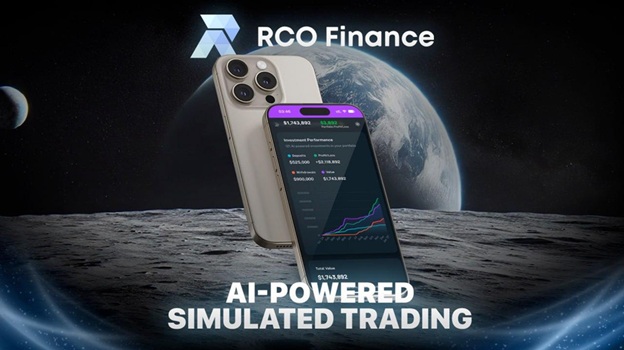
As the Alpha platform nears completion, it promises to elevate the experience further with enhancements like AI-driven simulated trading, detailed performance analytics, and a demo trading leaderboard. Beyond cryptocurrencies, the Alpha launch will expand into traditional markets, including stocks, bonds, forex, and commodities, creating a versatile, all-in-one investment hub.

The anticipated launch of the Alpha platform is poised to trigger a dramatic price surge for the RCOF token. Experts predict it could climb to $5 within weeks, propelled by the token’s integral role within the RCO Finance ecosystem. This would mark 46,958% gains for early investors, almost double the 2021 Dogecoin gains.

In addition to the gains, RCOF holders can use their tokens to access premium AI tools on the platform, staking opportunities for passive income, discounted trading fees, and governance privileges. And as the platform scales rapidly post-alpha launch, this multifaceted utility is expected to drive exponential demand, positioning RCOF as a compelling XRP rival.

For more information about the RCO Finance Presale:

Visit RCO Finance Presale

Join The RCO Finance Community

Google to End Support for Early Nest Thermostats, Exits European Market

0

Google has announced it will discontinue software support for its first- and second-generation Nest Learning Thermostats later this year, marking a major shift in its smart home device strategy.

Effective October 25, 2025, the early Nest thermostats will lose access to app controls, voice assistant features, and all cloud-connected services. The devices, first launched in 2011 and 2012, will revert to functioning as basic manual thermostats.

“To fully invest in [future] advancements and bring you the most cutting-edge features on our latest generation of Nest thermostats, we will be transitioning away from supporting three of our oldest devices, each over a decade old,” Google said.

After the cutoff date, owners will no longer be able to control their thermostats remotely through the Google Nest or Google Home apps. Voice commands via Google Assistant and integrations with third-party smart home systems will also be disabled. Popular features like Home/Away Assist, which automatically adjusts temperature settings when users leave home, will cease functioning. Any existing integrations with devices like the Nest Protect smoke alarm, which could trigger emergency shutoffs, will also be severed.

Despite the withdrawal of smart features, the thermostats will not become completely inoperable. Users will still be able to manually adjust temperatures, heating and cooling modes, and rely on any pre-programmed schedules stored locally on the device. However, Google cautioned that without ongoing software and security updates, the hardware could suffer unpredictable performance declines over time.

Google’s move affects three specific models: the first-generation Nest Learning Thermostat released in 2011, the second-generation U.S. version from 2012, and the second-generation European model introduced in 2014. To ease the transition, Google plans to offer discount codes to affected customers, encouraging them to upgrade to newer models.

In the United States, eligible users will receive a $130 discount toward the purchase of the fourth-generation Nest Learning Thermostat, lowering the price to approximately $150. Canadian customers will receive a similar discount, while European customers — where Google has decided to withdraw the sale of new Nest thermostats — will be offered a 50% discount on a Tado Smart Thermostat X Starter Kit, an alternative compatible with the Google Home ecosystem.

The Nest Learning Thermostat was a revolutionary product when it debuted, popularizing the concept of smart climate control in homes. Designed by former Apple engineers Tony Fadell and Matt Rogers, Nest was founded in 2010 and quickly made a name for itself with a sleek, user-friendly design that could learn occupants’ behavior and optimize heating and cooling settings accordingly. Google acquired Nest Labs in 2014 for $3.2 billion, eventually folding the brand into its hardware division in 2018 under the “Google Nest” umbrella.

During its heyday, Nest sold millions of devices, with thermostats leading the charge. By 2018, more than 11 million Nest products had been sold worldwide. The early Nest thermostats set a new standard for smart home devices, helping to spark an industry-wide trend toward more connected living spaces.

However, Google’s smart home strategy has evolved in recent years, with the company discontinuing several Nest products, including the Nest Secure alarm system and Nest x Yale smart lock. The decision to end support for the early Nest thermostats fits into this broader pattern of phasing out aging hardware in favor of newer offerings more deeply integrated with Google’s evolving software platforms.

The looming shutdown will impact a significant number of users who have relied on their Nest thermostats for over a decade. While Google’s original commitment promised at least five years of support, the thermostats have far outlived that pledge. Some customers, however, are likely to be frustrated by the sudden loss of remote access and smart features, especially given that the devices continue to function reliably for basic needs.

Without app or voice controls, users will have to adjust settings manually at the thermostat itself. Smart features like automatic energy-saving adjustments, remote temperature alerts, and voice-activated changes through Google Assistant will vanish. While the basic heating and cooling schedules programmed into the thermostats will continue to operate, any adjustments to those schedules must be made manually.

Google has emphasized that while the devices will no longer be connected to its apps or servers, they will still perform essential temperature regulation tasks within the home. Yet without ongoing security updates, questions remain about the long-term viability of keeping the devices in service.

This announcement also underscores Google’s broader retreat from certain international markets. By opting not to continue selling Nest thermostats in Europe, Google is signaling a shift in focus, possibly to markets where it sees stronger growth opportunities or to devices that align more closely with its smart home strategy under the Google Home brand.

For now, customers with aging Nest devices are advised to check their eligibility for upgrade offers. Google has pledged to send direct emails to those impacted, providing instructions and discount codes.

Meanwhile, the company’s decision highlights the increasingly ephemeral nature of smart home technology, where even once-groundbreaking devices are ultimately dependent on the companies that control their digital lifelines.

Chinese Manufacturers Halt Production and Seek New Markets as U.S. Tariff Impact Bites

0

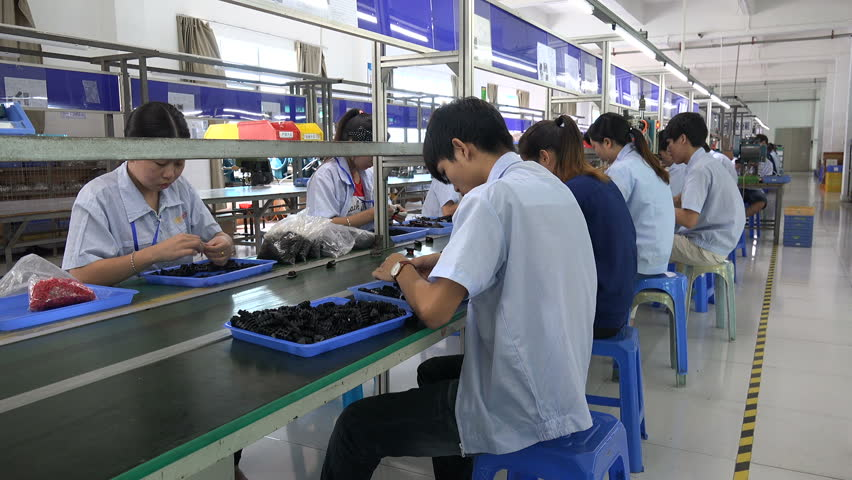
Chinese manufacturers are pausing production and turning to new markets as the impact of U.S. tariffs sets in, CNBC reports, citing companies and analysts.

The lost orders are also hitting jobs.

“I know several factories that have told half of their employees to go home for a few weeks and stopped most of their production,” said Cameron Johnson, Shanghai-based senior partner at consulting firm Tidalwave Solutions. He said factories making toys, sporting goods, and low-cost Dollar Store-type goods are the most affected right now.

“While not large-scale yet, it is happening in the key [export] hubs of Yiwu and Dongguan and there is concern that it will grow,” Johnson said. “There is a hope that tariffs will be lowered so orders can resume, but in the meantime companies are furloughing employees and idling some production.”

Around 10 million to 20 million workers in China are involved with U.S.-bound export businesses, according to Goldman Sachs estimates. The official number of workers in China’s cities last year was 473.45 million.

Over a series of swift announcements this month, the U.S. added more than 100% in tariffs on Chinese goods, to which China retaliated with reciprocal duties. While U.S. President Donald Trump on Thursday asserted trade talks with Beijing were underway, the Chinese side has denied any negotiations are ongoing.

The impact of the recent doubling in tariffs is “way bigger” than that of the Covid-19 pandemic, said Ash Monga, founder and CEO of Guangzhou-based Imex Sourcing Services, a supply chain management company. He noted that for small businesses with only several million dollars in resources, the sudden increase in tariffs might be unbearable and could put them out of business.

He said there’s so much demand from clients and other importers of Chinese products that he’s launching a new “Tariff Help” website on Friday to help small businesses find suppliers based outside China.

The Challenge of Consumer Spending Power

One of the deeper challenges for China as it seeks new markets is the issue of consumer spending power. The United States has long been China’s most lucrative export destination because American consumers possess a rare combination of high disposable income, a vast middle class, and a deep-rooted culture of mass consumption. No other country offers a comparable population with the financial ability to absorb such volumes of goods, particularly non-essentials like toys, apparel, electronics, and household items.

Although China is attempting to pivot toward Europe, Latin America, and its domestic market, none of these regions can match America’s scale of consumer demand. Europe’s markets are more cautious, and focused on sustainability and quality over quantity, while Latin American economies are limited by smaller middle classes and currency volatility. At home, China’s consumer economy remains constrained by widening income inequality and slowing growth, restricting its ability to fully replace the lost American demand.

This means China’s shift cannot simply be about finding alternative buyers. It will require a complete decoupling from the economic model it has relied on for decades — one built on mass-producing cheap goods for a wealthy, consumption-driven U.S. market. Manufacturers now face the daunting task of redesigning products to fit new consumer preferences, coping with lower average spending per customer, investing in unfamiliar supply chains, and ramping up marketing efforts in territories where brand loyalty to Chinese products is minimal.

In short, without a market matching the United States in both size and financial power, China’s transition is likely to be slow and painful, involving fundamental restructuring across its export economy.

Livestreaming and Domestic Efforts

In the meantime, business disruption is forcing Chinese exporters to try new sales strategies.

Woodswool, an athleticwear manufacturer based in Ningbo, near Shanghai, quickly turned to selling online in China via livestreaming. After launching about a week ago, the company said it received more than 30 orders with a gross merchandise value of over 5,000 yuan ($690).

“All our U.S. orders have been canceled,” said Li Yan, factory manager and brand director of Woodswool. More than half of Woodswool’s production was once headed for the U.S. Now, some capacity will remain idle for two to three months as the company rebuilds new markets.

The push into livestreaming comes as major Chinese tech companies, encouraged by Beijing, seek to help exporters sell goods domestically. Woodswool now sells through Baidu’s e-commerce platform using a virtual human livestreaming option that allows quick setup without major investments.

Baidu said it has supported hundreds of Chinese businesses in launching domestic e-commerce channels, offering subsidies and artificial intelligence tools such as “Huiboxing” — digital avatars that simulate real sales pitches.

Domestic Market Challenges

Other tech giants are stepping in. JD.com pledged 200 billion yuan ($27.22 billion) to buy Chinese goods originally intended for export, while food delivery giant Meituan has also promised to help distribute these products internally. But even large pledges pale in comparison to the size of the U.S. market: $27.22 billion represents just about 5% of the $524.66 billion in Chinese goods exported to the U.S. last year.

Michael Hart, president of the American Chamber of Commerce in China, said some businesses have concluded their models are no longer viable under the new 125% tariffs. He also noted rising competition among Chinese firms struggling for domestic survival.

Products designed for American suburban consumers often do not fit the lifestyles of Chinese apartment dwellers. Manufacturers have turned to local platforms like Red Note and Douyin (the Chinese version of TikTok) to appeal directly to domestic buyers, but consumer fatigue is already evident, analysts warn.

Looking Beyond the U.S. Few Chinese companies now view rerouting exports to the U.S. through third countries as viable, given the heightened scrutiny of transshipments. Instead, many are shifting production to Southeast Asia or India, while some are focusing efforts on Europe and Latin America.

Some exporters are finding success. Liu Xu’s e-commerce company, Beijing Mingyuchu, sells bathroom products to Brazil. Although his business faces exchange rate volatility and high shipping costs, Liu is confident trade with Brazil will remain robust despite U.S.-China tensions.

Similarly, Ghana-based Cotrie Logistics, founded during the COVID-19 pandemic, has helped Chinese businesses manage sourcing and logistics in West Africa. CEO Bright Tordzroh said U.S.-China tensions have led more firms to consider building supply chains that bypass the U.S. altogether, creating opportunities in emerging markets like Ghana.

Still, these shifts underscore the immense challenge China faces. Building alternative markets is not just about rerouting goods; it demands a fundamental overhaul of its entire export-driven growth model — a task that will take years, not months.