
DD
MM
YYYY

PAGES

DD
MM
YYYY

spot_img

PAGES

Home Blog Page 144

Another €150 Million for US Arms Purchases for Kiev

0

The US State Department approved a new arms sales package to Ukraine valued at approximately $329 million, including a €150 million about $165 million allocation specifically for Starlink satellite communications services and related equipment.

Germany is to contribute at least €150 million ~$175 million to purchasing US military equipment for Ukraine, Defence Minister Boris Pistorius said on Friday as he hosted European counterparts for talks in Berlin.

This will enhance Ukraine’s battlefield connectivity, command-and-control systems, and drone operations amid ongoing Russian assaults. The approval comes under the Foreign Military Sales (FMS) program and is expected to be expedited for delivery.

$179.1 million for spare parts, training, and maintenance to sustain Ukraine’s existing Patriot air defense systems. Starlink Services: €150 million for satellite terminals, user equipment, and ongoing service subscriptions, critical for real-time intelligence sharing and artillery coordination.

This deal builds on a broader US strategy under President Trump to shift some aid burdens to European allies while maintaining direct support. For instance, in July 2025, another $322 million package was cleared, with $150 million for Bradley Fighting Vehicle sustainment and $172 million for Hawk surface-to-air missile upgrades.

Earlier in August, NATO members like the Netherlands committed €500 million $540 million for US-made munitions and howitzers to be transferred to Kyiv. Since Russia’s full-scale invasion in 2022, the US has provided over $31 billion in direct military drawdowns from its stockpiles, plus billions more through FMS sales.

With US policy emphasizing a negotiated end to the conflict, these purchases—often funded or facilitated by European partners—aim to bolster Ukraine’s defenses without solely relying on American taxpayer funds.

President Zelenskyy has signaled readiness for even larger deals, potentially up to $90 billion in US weaponry, including drones and fighter jets, with technical talks ongoing. Critics in Ukraine have raised concerns about procurement transparency, with recent audits uncovering alleged corruption in domestic arms deals worth millions.

However, these US-facilitated sales are seen as a more accountable channel, helping Kyiv achieve near 60% self-sufficiency in armaments through boosted production. Starlink, SpaceX’s satellite internet constellation, has been a cornerstone of Ukraine’s communication infrastructure since Russia’s full-scale invasion in February 2022.

Deployed just days after the invasion began, it filled critical gaps left by destroyed terrestrial networks, enabling real-time battlefield coordination, drone operations, and civilian connectivity. By April 2025, Ukraine operated over 50,000 terminals, making it one of the largest users globally.

Its low-Earth orbit (LEO) satellites provide high-speed, low-latency internet resilient to jamming and physical damage, revolutionizing modern warfare tactics for Ukraine.

On February 26, 2022, Ukraine’s Vice Prime Minister Mykhailo Fedorov publicly requested Starlink support via Twitter. SpaceX responded within 48 hours, shipping thousands of terminals. Initial funding came from SpaceX itself, with Elon Musk personally overseeing logistics.

Starlink enabled Ukrainian defenders in Mariupol to maintain command-and-control amid encirclement, streaming video feeds and coordinating evacuations. It also supported drone strikes by allowing operators to attach terminals to unmanned aerial vehicles (UAVs) for beyond-line-of-sight control.

By mid-2023, the U.S. Department of Defense (DoD) assumed funding via a contract with SpaceX, covering expenses that had strained the company. As of December 2023, Poland had donated 19,500 terminals—the largest single contributor—bringing the total to around 47,000.

Starlink has transformed Ukraine’s operational capabilities, often described as a “force multiplier” in asymmetric warfare:Battlefield Connectivity: Ukrainian troops use it for encrypted apps showing real-time enemy positions from drones, artillery fire coordination, and secure video calls with headquarters.

Drone and UAV Integration: Essential for controlling long-range strike drones, including adaptations where terminals are strapped directly to aircraft. This has enabled precision strikes deep into Russian-held territory.

Civilian and Infrastructure Support: Powers hospitals, emergency services, and remote villages, restoring digital access after blackouts. In 2025, it sustained connectivity during intensified Russian assaults on energy grids.

Russia has targeted Starlink signals since 2022 with electronic warfare, but frequent software updates and satellite maneuvers have maintained 90-95% uptime. However, outages remain a vulnerability.

Since 2023, the DoD funds Starlink via the Proliferated Low Earth Orbit (PLEO) program. A $537 million contract (2024-2027) supports military services, including a December 2024 upgrade to Starshield—a militarized, encrypted version—for 3,000 terminals. In August 2025, the State Department approved a $150 million extension for terminals and services under the Foreign Military Sales program.

Poland’s $47 million commitment in 2025 covers half of Ukraine’s terminals. On November 15, 2025, Estonia pledged €3.5 million for acquisition and maintenance, emphasizing drone ops. Other donors include the UK and Germany.

Over $1 billion in combined funding by 2025, with SpaceX projecting $3 billion in U.S. government revenue from military contracts, including Ukraine. In September 2022, Musk ordered a temporary shutdown of coverage near Crimea during Ukraine’s counteroffensive, citing escalation risks and U.S. sanctions—disrupting drone ops and eroding trust. He later reversed it amid backlash.

Under the Trump administration in 2025, fears mounted of service cuts as leverage in peace talks. Ukrainian officials worried about frontline collapse without it, prompting diversification. Reports in February 2025 confirmed Russian forces using smuggled terminals for their own ops, like in Vuhledar.

SpaceX has restricted offensive military use since 2023, focusing on defensive and humanitarian roles, though enforcement is inconsistent. In December 2024, Kyivstar partnered with Starlink for satellite-direct-to-phone services, launching SMS in Q4 2025 and expanding to voice/data in 2026.

This aims to bypass damaged cell towers, making Ukraine the first conflict zone with the tech. Ukraine signed a deal in April 2025 with Sweden’s Requtech for local production of OneWeb/Intelsat terminals, reducing Starlink reliance. Europe explores alternatives like Eutelsat, but replacing 40,000+ terminals could take months.

Starlink sustains Ukraine’s edge, but geopolitical pressures and jamming threats underscore the need for backups. Kyiv’s new Space Policy Directorate is building a domestic satellite constellation, signaling a shift from dependency to self-reliance.

Microsoft and Nvidia Forge Multi-Billion Dollar Partnership with Anthropic to Expand AI Capabilities

0

Microsoft and Nvidia have announced a landmark strategic partnership with AI startup Anthropic, signaling a major step in reducing Microsoft’s reliance on OpenAI while accelerating the development of advanced AI models.

The collaboration, disclosed on Tuesday, comes with substantial financial commitments: Microsoft will invest up to $5 billion in Anthropic, while Nvidia will contribute up to $10 billion.

The investments have propelled Anthropic’s valuation to an estimated $350 billion, nearly doubling its $183 billion valuation in September. The exact terms of the next funding round are still being finalized, according to the companies.

Under the agreement, Anthropic has committed to purchasing $30 billion of compute capacity from Microsoft’s Azure cloud platform, with additional contracts for up to one gigawatt of compute capacity. Nvidia will supply Anthropic with up to one gigawatt of compute capacity using its Grace Blackwell and Vera Rubin systems. Nvidia CEO Jensen Huang described the partnership as “a dream come true” and noted that the companies will collaborate on optimizing Anthropic’s AI models for performance and efficiency while fine-tuning Nvidia’s architectures for Anthropic’s specific workloads.

Anthropic, founded in 2021 by former OpenAI executives, including CEO Dario Amodei, is best known for its Claude family of large language models. The company was initially backed by Amazon, with AWS serving as its primary cloud provider in 2023 and as its primary training partner in 2024. Microsoft and Nvidia’s new involvement adds a significant layer of strategic support, particularly in compute infrastructure and model optimization.

Microsoft’s move comes alongside its longstanding investment in OpenAI, which it has backed since 2019. OpenAI, originally a nonprofit research lab, has transformed into a commercial powerhouse with ChatGPT and other AI products. Microsoft holds an approximate 27% stake in OpenAI’s for-profit arm, valued at $135 billion.

Microsoft CEO Satya Nadella framed the partnership as a collaborative effort beyond competition. “As an industry, we really need to move beyond any type of zero sum narrative or winner take all hype,” Nadella said. “What’s required now is the hard work of building broad, durable capabilities together so that this technology can deliver real, tangible local success for every country, every sector and every customer. The opportunity is simply too big to approach any other way.”

The partnership highlights a growing trend of major tech firms diversifying their AI investments, balancing partnerships across multiple AI startups while expanding in-house capabilities. Analysts note that Anthropic’s large-scale compute requirements, backed by Microsoft and Nvidia, place the startup in line to compete directly with OpenAI and other leading AI developers in the enterprise and cloud AI markets.

Nvidia is set to report its third-quarter earnings on Wednesday, which may offer additional insight into how the company is capitalizing on AI infrastructure demand. Meanwhile, the Microsoft-Anthropic partnership underscores the intensifying arms race in AI, with hyperscalers investing heavily in both talent and computing resources to maintain a competitive edge.

This multi-billion-dollar collaboration signals that AI is increasingly viewed not just as a software innovation, but as a compute-intensive infrastructure challenge, which requires strategic partnerships and massive capital expenditure for scaling of its next-generation AI models.

Understanding EMCD’s Crypto Battle— A Clash of Strategies

0

EMCD, a leading crypto fintech platform founded in 2017 and specializing in mining pools, wallets, and savings tools, hosted its “Crypto Battle” in collaboration with BeInCrypto.

This live online event pitted two experts against each other: Michael Wrubel, a YouTuber and analyst advocating high-risk, aggressive altcoin plays, and Jan Warmus, EMCD’s Sales Director, championing conservative, long-term stability through mining and risk minimization.

The debate analyzed real viewer-submitted portfolios, tackled market volatility, and highlighted practical tactics for growth—making it especially insightful for beginners navigating crypto’s ups and downs.

The event underscored a core tension: Should you chase high-reward opportunities or prioritize preservation? Wrubel pushed for calculated risks in altcoins and staking for yields, while Warmus stressed diversification, compliance, and tools like dollar-cost averaging (DCA) to avoid emotional pitfalls.

Viewers voted live, shared “crypto nightmares” for analysis, and competed for Tangem hardware wallets. As EMCD noted in a teaser post, “Two experts, two opposite views” on surviving and thriving in crypto.

Balance is key—aggression without discipline leads to losses, but caution without action misses gains.This event arrives at a pivotal time for beginners: With Bitcoin surpassing $90,000 in 2025 and U.S. crypto ownership hitting 17%,

Entry barriers are lower, but volatility remains high. Drawing from the battle and broader 2025 trends, here are the best investment strategies tailored for newcomers. These emphasize low-risk starts, education, and patience over get-rich-quick schemes.

Focus on proven, low-effort approaches that minimize exposure to scams and FOMO-driven decisions. Start small—aim for 1-5% of your total savings—and use reputable platforms like EMCD’s wallet supporting 20+ coins or spot ETFs for indirect exposure.Strategy

Dollar-Cost Averaging (DCA): Invest a fixed amount (e.g., $50/week) into crypto regardless of price, spreading purchases over time. Reduces timing risk; builds habits without overthinking; averages out volatility.

Slower gains in bull runs; requires discipline. Warmus called it “the most reliable entry” for retail investors, ideal for Bitcoin-heavy starters. Buy $100 BTC/ETH monthly via EMCD or Coinbase—turns a $1,000 early-2015 investment into ~$350K today.

HODLing (Hold On for Dear Life): Buy quality assets like BTC or ETH and hold for years, ignoring short-term noise. Simple; leverages long-term growth BTC’s historical 200%+ annual returns; low fees. Opportunity cost during dips; emotional strain.

Both experts agreed: Stick to “well-known assets” you understand to avoid losses. Hold 70-80% in BTC; a $1K BTC buy in 2015 is now worth $300K+. Spread investments across 3-5 assets (e.g., 70% BTC, 20% ETH, 10% stablecoins).

Lowers risk from single-coin crashes; captures broad market upside. Over-diversification dilutes gains; research needed. Warmus recommended 70-80% BTC with mining exposure; Wrubel suggested 80/20 BTC-ETH for simplicity.

Lock coins in networks (e.g., ETH staking) to earn rewards (4-10% APY). Passive income like “crypto bank deposits”; compounds holdings. Lock-up periods; slashing risks on poor platforms. Wrubel highlighted it as a yield alternative; Warmus warned of no “government guarantees.”

Stake ETH on EMCD for 5-7% yields—safer than altcoin gambles. Buy Bitcoin/ETH ETFs on stock exchanges instead of direct crypto. Regulated; easy via brokerage apps; no wallet hassles. Fees (0.2-0.5%); tracks price but no on-chain utility. N/A directly, but aligns with conservative custody focus.

Invest $100 in IBIT (BlackRock BTC ETF)—avoids “sticker shock” of direct buys. Read beginner books like “The Bitcoin Standard” or “Cryptoassets” for fundamentals. Avoid hype—Wrubel roasted FOMO trades, while Warmus pushed “do the math” on risks.

Never invest more than you can lose. Use hardware wallets like event prizes and enable 2FA. EMCD’s app for mining/savings; track via CoinMarketCap. Set rules upfront: e.g., sell 20% on 2x gains. With ETF inflows and halvings boosting BTC, long-term holds shine. But watch AI-blockchain hybrids for 10% diversified plays.

Crypto isn’t a sprint—it’s a marathon. The battle proved that blending caution (DCA, HODL) with smart risks via staking yields the best path for beginners. DYOR, stay patient, and consult a financial advisor for personalized advice.

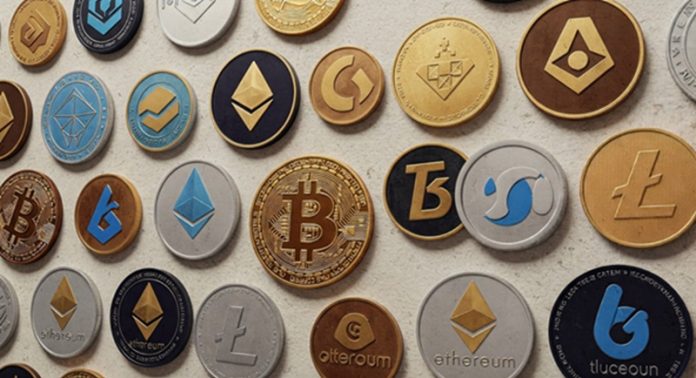
3 Tokens to Watch as Ethereum (ETH) Dips to $3,300

0

Ethereum (ETH) just can’t seem to catch a break lately. After another tumble below the $3,300 mark, it’s clear that the crypto market is feeling the weight of uncertainty again. However, as ETH takes a breather, investors have turned to these 3 tokens as the top cryptos to watch.

Little Pepe (LILPEPE): A Meme Coin With Big-League Ambition

If there’s one token stealing the spotlight as Ethereum dips to $3,300, it’s Little Pepe (LILPEPE). This project has become the talk of crypto circles for all the right reasons. With meme coins back on everyone’s radar, Little Pepe has carved out its own space as a mix of humor, hype, and heart. It’s not just another quick pump-and-dump meme token; it’s building something that could outlast the trend. Currently, LILPEPE is priced at $0.0022 during its presale stage 13, offering early investors a golden opportunity to buy in before the launch. The buzz is real—over $27.46 million has already been raised, demonstrating the significant faith investors have in this growing community. With the presale closing in on its final phase, momentum is building rapidly. It’s fully audited by CertiK, one of the most trusted names in blockchain security, earning a security score of 95.49%.

But it doesn’t stop there. LILPEPE has already been listed on CoinMarketCap and is preparing for launch listings on two major centralized exchanges (CEXs) from the outset. Even more exciting, the team has hinted at plans to secure a listing on one of the world’s largest exchanges, which could instantly propel trading volume to new heights. As Ethereum continues to drift below $3,300, more traders are rotating out of large-cap assets into promising low-cap tokens. That’s exactly where Little Pepe (LILPEPE) shines. It’s a meme coin with a community-first mindset and the potential to explode 100x, turning early believers into big winners. The timing couldn’t be better for those searching for the next big mover in a market hungry for momentum.

XRP Rides the Wave With a Sharp Comeback

While Ethereum dips to $3,300, XRP has started to show serious strength. It’s been on a tear, jumping over 12% in just 24 hours to hit $2.58 before cooling off near $2.40. The charts tell a convincing story.  The recent ETF approvals from Grayscale and other major players have added extra fuel to the rally. Many traders view this as a fresh start for XRP, following months of sideways action, which has transformed its chart from bearish to what appears to be a classic accumulation setup. If momentum holds, XRP could continue to lead the charge, while Ethereum steadies below $3,300.

SEI’s Oversold Signal Hints at a Major Reversal

Another name worth keeping an eye on as Ethereum slips is SEI, currently trading around $0.19 after a rough 31% monthly decline. Its indicators are flashing potential.  On-chain activity is also picking up. SEI recorded $947 in daily network fees and saw a 20x increase in stablecoin volume compared to XRP, showing growing traction in DeFi applications. The TD Sequential buy signal at $0.19 adds another layer of optimism. With all these signals aligning, SEI could become one of the top gainers if Ethereum continues to slide below $3,300.

Conclusion

As Ethereum battles to regain ground near $3,300, a new wave of altcoins is starting to steal the show. Little Pepe (LILPEPE), XRP, and SEI are demonstrating that even during market pullbacks, opportunities are abundant for those who pay attention. However, Little Pepe clearly leads the pack. It’s funny, it’s fearless, and it’s fast becoming a community favorite. With a rock-solid audit, upcoming exchange listings, and an explosive presale performance, LILPEPE stands as a strong candidate to define the next era of meme coins. For investors who missed the early Dogecoin or Pepe rallies, this could be that second chance everyone talks about.


For more information about Little Pepe (LILPEPE) visit the links below:

Website: https://littlepepe.com

Whitepaper: https://littlepepe.com/whitepaper.pdf

Telegram: https://t.me/littlepepetoken

Twitter/X: https://x.com/littlepepetoken

$777k Giveaway: https://littlepepe.com/777k-giveaway/

Why has bingo grown so popular online?

0

The UK’s relationship with bingo has always been affectionate, to the extent that many bingo terms have made it into our everyday language. Even someone who has never set foot in a bingo hall knows to pay attention if they hear ‘eyes down’ and, if you say the number twenty-two, someone will probably comment ‘two little ducks’.

The British love affair with bingo began in the 1960s, when a new law was passed that legalised playing games for prizes. Bingo as a game had been around for more than four hundred years, but it was reintroduced to the UK by a visionary businessman, Eric Morley, who owned an extensive network of dance halls.

He decided to host games of bingo in his dancehalls, providing a familiar and safe environment for players, usually women, to socialise, have fun, and potentially win a prize. Apparently, the nation was crying out for such an entertainment option, and bingo became the game of choice for millions of people all over the country.

The rise of online bingo 

For a simple game, bingo has become a huge part of many people’s lives, and so it was an obvious choice to digitise when video gaming was becoming more popular. The combination of random number generation and relatively simple gameplay made electronic bingo an almost instant hit.

Bingo was still a popular choice when online gaming was becoming the ‘next big thing’, and so it followed that bingo became a popular online game as well. Today, bingo is still a popular choice among online players, with more and more people learning how to play bingo online and finding the fun in number spotting.

There are a number of reasons that online bingo has become so popular, including:

Flexibility

Traditional bingo halls are no longer quite as widespread as they were, but you can play online bingo anywhere with an internet connection. Traditionally, bingo was popular among women who enjoyed socializing with friends at bingo halls.

Community

As a meeting place, bingo halls offered so much more than just a way to play, and that is still true of online bingo. Bingo sites and apps often have thriving message boards and social media spaces where players can chat, share tips, and celebrate wins together.

Bingo fans can connect with friends online, enjoying the social aspects of the game responsibly. Players can even join live bingo games and beam the bingo hall atmosphere directly into their device, wherever they are.

Variety

Traditional bingo tended to follow a pretty set formula, with the main variety being in the number of balls played or the patterns needed to win the big prizes. Online bingo has all that with the added advantage that the games aren’t limited to matching numbers, so there can be a lot more creativity in the games.

Players can enjoy a variety of themed games that offer different matching challenges. There are plenty of different types of games offering bonuses, special prizes, and a wide selection of different themes, so it’s easy to keep the game fresh and exciting.

Safety and security

Alongside all the other technological advancements that have changed the way bingo is played, the technological advancements in security have been extraordinary. Bingo sites and other online gaming platforms use cutting-edge security measures to ensure that they are providing a safe and secure gaming space for their players, making online bingo safer than ever before.

Of course, it’s important for players to do their due diligence by reading reviews of new sites and checking their credentials for themselves. Licensed bingo operators have strict standards to adhere to, and they are constantly evolving new ways to keep their players and their data safe.

Who is playing online bingo?

Traditionally, bingo was popular among women who enjoyed socializing with friends at bingo halls. Online bingo was also a huge hit with women all over the UK and the world, providing an easier and more convenient way to enjoy the excitement of a bingo game.

However, the stats have been showing a recent rise in the number of men playing bingo online – a simple game that is breaking down the barriers between the sexes in the online environment. Despite its history, bingo is no longer seen as a game for women, but instead it’s one of the many games that players can enjoy at home, on the go, and with friends.

The move from in-person to online bingo has been such a success that a whole new generation of players is coming to appreciate the fun to be had with a dabber, real or virtual, in hand.