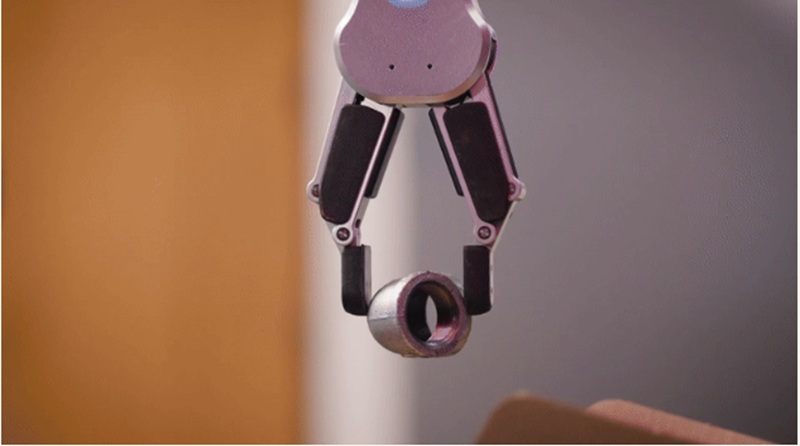
Tekedia Capital is excited to announce our investment in Mbodi AI, a company pioneering embodied artificial intelligence for industrial robotics and enabling robots to learn the way humans do. Globally, nearly 70% of factories are grappling with severe labor shortages, and yet hundreds of billions of manufacturing tasks remain unautomated, not due to hardware limitations, but because traditional robots are rigid, slow to adapt, and difficult to retrain. The future of manufacturing belongs to systems that can learn fast, adapt fast, and work safely alongside humans.
Mbodi is redefining that future. With Mbodi’s platform, anyone can teach a robot a new skill simply by talking to it; no code, no engineering teams, no week-long reprogramming cycles. New tasks can be deployed on the factory floor in minutes. Their cloud-to-edge architecture converts high-level human instructions into precise, safe, adaptive robotic actions in under half a second.
Because of the transformative potential of this technology, Mbodi is already collaborating with ABB Robotics, one of the world’s foremost robotics manufacturers, on joint commercialization initiatives and first-of-its-kind deployments in live industrial environments.
We proudly welcome Mbodi AI to the Tekedia Capital family.
Tekedia Capital is excited to announce our investment in Mbodi AI, a company pioneering embodied artificial intelligence for industrial robotics and enabling robots to learn the way humans do. Globally, nearly 70% of factories are grappling with severe labor shortages, and yet… pic.twitter.com/Vctj9KhUVu
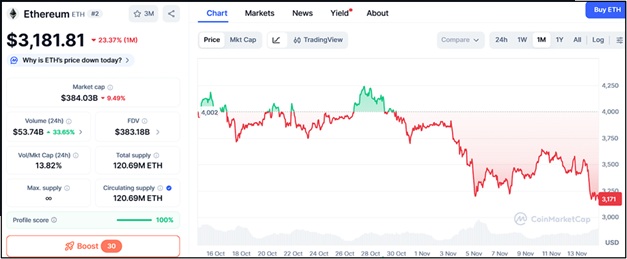
Crypto markets are gaining momentum again as Ethereum pushes toward higher levels, trading near $3,181 with strong technical support from both retail and institutional buyers. Analysts remain confident that ETH still has a path toward the long-predicted $10,000 milestone, supported by network upgrades, surging layer-2 activity, and expanding adoption across DeFi and tokenized assets.
Yet even as Ethereum gears up for another major breakout, the token gaining far more attention among early-stage investors is Ozak AI (OZ)—an OZ presale project whose low entry price and AI-driven utility make its $1 prediction feel significantly closer and more attainable than Ethereum’s multi-year journey to $10K. Ethereum remains the anchor of the smart-contract world, but Ozak AI is emerging as the rocket with the steeper trajectory.
Ethereum Maintains Strong Market Structure
Ethereum’s technical outlook reflects a healthy, upward-building market. Support sits at $3,040, $2,918, and $2,780, while resistance levels form at $3,260, $3,415, and $3,590. These ranges highlight a balanced bullish trend powered by rising liquidity, growing on-chain activity, and layer-2 ecosystems like Base, Arbitrum, and Optimism bringing millions of users into the Ethereum network.
DeFi volumes are climbing again, staking participation remains extremely high, and institutional adoption continues to expand as ETH solidifies itself as the backbone of decentralized finance. Its long-term path toward $10,000 is supported by genuine fundamentals — not just speculative hype.
However, Ethereum’s size also creates natural limitations. From $3,181 to $10,000 is only a little over a 3x move, which is strong but nowhere near the type of exponential ROI most early-stage investors seek in a bull market. That search for higher multipliers is driving traders toward projects still in their infancy—especially Ozak AI.
Ozak AI’s $1 Target Feels Closer
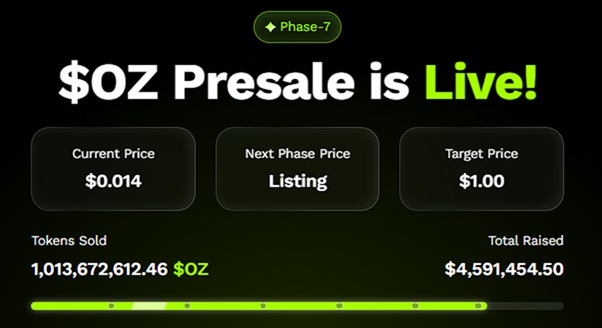
Ozak AI is rising fast as one of 2025’s biggest presale success stories. Priced at just $0.012, the project brings real AI-driven utility to blockchain ecosystems through its AI prediction agents—autonomous intelligent systems designed to analyze data, forecast trends, detect anomalies, and execute on-chain actions without requiring human input.
This positions Ozak AI at the heart of the fastest-growing narrative of this decade: the fusion of AI and decentralized systems.
Investor traction proves how quickly the project is gaining momentum:
Over $4.5 million raised
More than 1 billion OZ tokens sold
Audited by CertiK and Sherlock
Listed on CoinMarketCap and CoinGecko
Strategic partnerships with Perceptron Network, HIVE, and SINT
These partnerships provide Ozak AI with powerful compute access, ultra-fast 30 ms trading signal engines, and multi-chain agent automation—infrastructure unmatched by most early-stage tokens.
A presale price of $0.012 makes the path to $1 feel extremely attainable, especially with real utility and growing industry support behind it. That’s an 83x jump, which is why early investors see Ozak AI as the more explosive play compared to ETH.
Ethereum Builds Stability—Ozak AI Delivers Acceleration
Ethereum’s journey to $10,000 remains one of the most compelling long-term narratives in crypto. Its ecosystem dominance, developer base, and institutional appeal make it a must-hold for nearly every serious portfolio.
Ozak AI, however, represents the opposite end of the spectrum—early, ambitious, fast-moving, and carrying the type of 100x potential that defines bull-cycle breakthroughs. With cutting-edge AI utility, major partnerships, and rapidly growing demand, its $1 target feels much closer than Ethereum’s $10K milestone.
About Ozak AI
Ozak AI is a blockchain-based crypto venture that offers a technology platform that focuses on predictive AI and advanced records analytics for monetary markets. Through machine learning algorithms and decentralized network technologies, Ozak AI permits real-time, correct, and actionable insights to help crypto fanatics and companies make the precise choices.
A new race is accelerating, and the next great battle is AI. The signals are unmistakable: Jeff Bezos is edging back into the CEO arena, the Google founders are showing up at Mountain View more frequently to help steer the ship, and Elon Musk is expanding his AI frontier with a fresh $15 billion raise. From Meta to Oracle, America’s technology titans, and the founders who built them, are doing everything necessary to secure their companies’ future. And in this era, survival means one thing: building the most capable AI company.
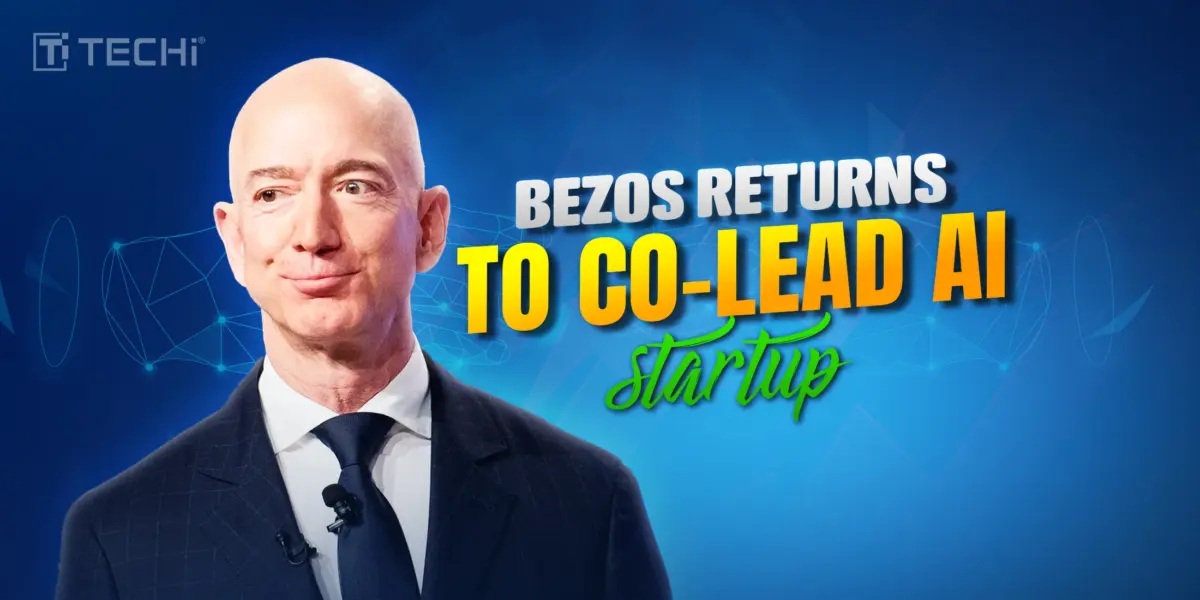
For Bezos, the writing must have become clear: Amazon needs reinforcement, and he is returning to the ring. As reported: “Jeff Bezos is stepping back into the spotlight as a chief executive for the first time since leaving Amazon four years ago, taking the helm of a new artificial intelligence venture called Project Prometheus.
“The startup, still largely under wraps, already commands $6.2 billion in funding and has hired about 100 employees, many drawn from OpenAI, DeepMind, and Meta. Bezos will lead it as co-CEO with Vik Bajaj, a physicist and chemist with deep roots in Google X and Verily.”
Google People, take note. If Project Prometheus succeeds, Amazon now has a strategic AI backup plan in case its partnerships with Anthropic or others fall short. The battlefield is shifting, and the founders are returning because the stakes in AI are simply too high to stay on the sidelines.
A major redesign is unfolding in the market: technology companies are evolving into AI Utilities, the same way households depend on electricity, water, and fixed-line telephony. Just as you move into a neighborhood and have limited options for these essential utilities, the world is arriving at a point where a few entities will power the backbone of AI across industries.
Yes, from traditional utilities that deliver electricity, water, and phone services, we are now witnessing the rise of utilities that will power intelligence itself. Among the global contenders, Google’s Alphabet stands prominently.
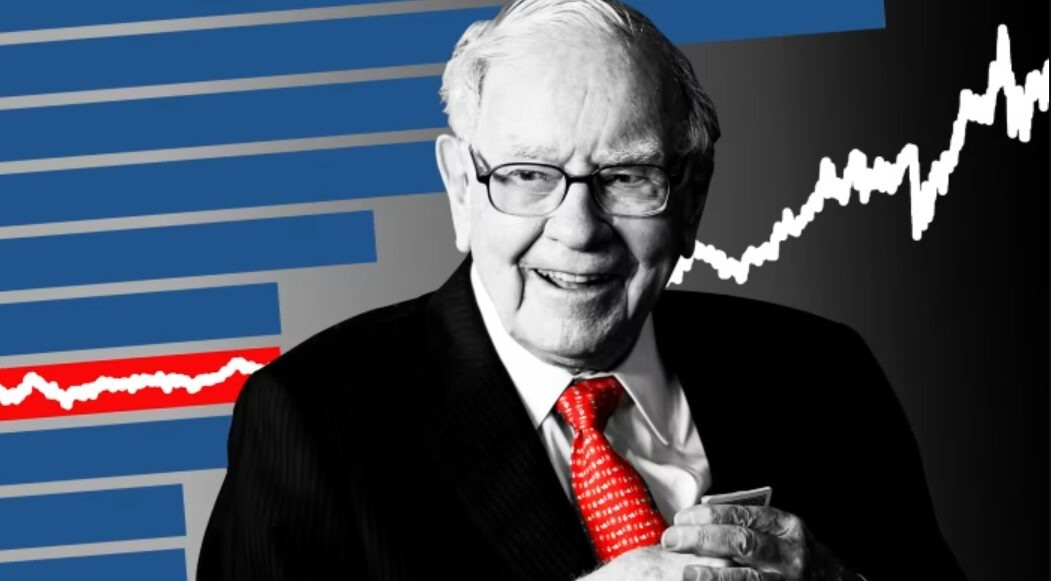
Warren Buffett has just validated this shift with his signature: his chequebook. As Reuters noted, filings released on Friday show that Berkshire Hathaway acquired 17.85 million Alphabet shares, valued at $4.93 billion based on the previous session’s close. This marks one of the final major portfolio entries under Buffett before Greg Abel takes over in 2026. More striking is that it breaks from Berkshire’s long-standing hesitancy toward high-growth tech companies. Before now, Apple was the only major exception, and Buffett embraced it largely because he saw Apple as a consumer company, not a technology bet.
The market’s reaction was swift. Alphabet was on track to gain roughly $180 billion in market value if the rally held through close, underscoring how powerful Berkshire’s endorsement remains. Alphabet also became one of the top-three trending names on Stocktwits as retail traders piled in.
The backing arrives at a moment when enthusiasm around artificial intelligence has started to cool. Business leaders and analysts have raised concerns about lofty valuations across tech, arguing that share prices have run ahead of earnings and that the timeline for returns on enormous data-center spending is still uncertain. The Roundhill Magnificent 7 ETF, which tracks giants such as Nvidia, Microsoft, and Alphabet, has been mostly flat since September after outperforming the broader market for much of the year.
But Alphabet is different. Companies like Alphabet possess a fortress moat, built not only on technology but also on deep, interlocking partnership nodes. It is difficult, nearly impossible, to replicate the breadth, depth, and integration of Alphabet’s ecosystem in short-term by any competitor.
And that is why even if the broader AI sector enters a bubble, Alphabet will endure. Its tentacles run too wide, too deep, and too strategically across the modern digital economy. Mr. Buffett understands that and has joined the party and Alphabet stock position is hitting new highs because when the Oracle of Omaha anoints, everyone pays attention.
Google has rolled out Gemini 3, its newest artificial intelligence model, in a move that signals how aggressively the company is pushing to keep pace with OpenAI’s rapid advances in generative AI.
Sundar Pichai, CEO of Alphabet, said the upgraded model delivers stronger answers to complex queries and reduces the amount of prompting users need before getting accurate results. The rollout begins with select subscribers and will expand widely in the coming weeks. Gemini 3 is being baked directly into the Gemini app, Google’s AI search features such as AI Mode and AI Overviews, and a range of enterprise-facing tools.
This launch arrives only eight months after Gemini 2.5 and less than a year after Gemini 2.0—an unusually fast development cycle that underlines how quickly the major AI companies are iterating in response to one another. OpenAI introduced GPT-5 in August and updated the model again last week, adding a version the company said feels “warmer” and “more intelligent,” as well as another designed to work faster on simple tasks and stay focused on complex ones.
Pichai wrote that AI has evolved in two years from reading text and images to now understanding complex intent, tone, and context.
“Starting today, we’re shipping Gemini at the scale of Google,” he said, adding that the new model has been engineered to understand nuance at a deeper level and anticipate the meaning behind users’ requests.
Google said its ecosystem continues to expand at a rapid clip. The Gemini app now records 650 million monthly active users, while AI Overviews sees 2 billion monthly users. OpenAI reported in August that ChatGPT has 700 million weekly users, keeping the two companies neck-and-neck in overall reach.
Demis Hassabis, CEO of Google DeepMind, said Gemini 3 will aim for more direct and substantial answers. He added that the system is designed to avoid empty or flattering responses, instead prioritizing insight and clarity—an answer to long-running complaints that many chatbots tend to be overly agreeable.
The tech giants building these systems have been pouring unprecedented sums into the hardware and data-center capacity required to sustain them. Alphabet, Meta, Microsoft, and Amazon each raised their capital expenditure forecasts during their latest earnings calls and together expect to spend more than $380 billion this year.
Google is pairing the new model with an expanded developer ecosystem. It introduced “Google Antigravity,” a platform that lets developers code at a higher task-driven level. The company described Gemini 3 as its strongest model yet for vibe coding, a term referring to tools that let developers generate software through conversational prompts.
The company also showcased “generative interfaces,” a new experience where the model can produce answers that resemble a digital magazine, mixing images, stylized text, and structured layouts. In one demonstration, the model was asked to explain the Van Gogh Gallery with added life context, and the response produced a visually rich, mixed-media overview of each piece.
Paid subscribers will be the first to try these enhanced capabilities within AI Mode. Gemini 3 can analyze a user’s question and build tailored outputs such as interactive tables, grids, or custom tools. Google said the model can assemble a loan calculator on the fly or build simulations that help explain complicated physics problems.
Developers will gain access through the Gemini API, while companies can integrate the system through Vertex AI, Google’s cloud platform for deploying AI models. For corporate users, the company said Gemini 3 can be deployed for employee onboarding, procurement tasks, and industrial operations, including analyzing videos and images from factory floors with higher accuracy.
The unveiling positions Google for another round of head-to-head competition with OpenAI, with both companies racing to dominate consumer apps, enterprise tools, and developer ecosystems. The intensity has been rising throughout the year, and Gemini 3 gives Google another major step as the rivalry widens across search, productivity software, creative tools, and coding environments.
This latest launch signals that the speed of innovation in generative AI is unlikely to slow down soon. Each release from Google or OpenAI is now prompting near-immediate responses from the other, setting up a rivalry that continues to deepen across products, platforms, and user bases.