DD
MM
YYYY

PAGES

DD
MM
YYYY

spot_img

PAGES

Home Blog Page 1450

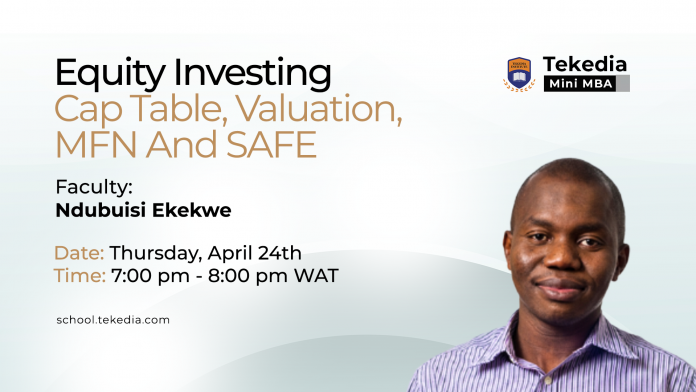
Equity Investing: Cap Table, Valuation, MFN And SAFE – Ndubuisi Ekekwe

0

In equity investing, a cap table (capitalization table) tracks the ownership percentages of a company’s equity, while valuation determines the company’s worth. SAFEs (Simple Agreements for Future Equity) are convertible securities used in early-stage funding, often with a valuation cap and/or discount. A Most Favored Nation (MFN) clause in a SAFE ensures early investors receive the same favorable terms as later investors.

Join me today as I teach these elements at Tekedia Mini-MBA.

Thur, Apr 24 | 7pm-8pm WAT | Equity Investing: Cap Table, Valuation, MFN And SAFE – Ndubuisi Ekekwe, Tekedia Capital | Zoom link https://school.tekedia.com/course/mmba17/

My goal is not to make you a startup investor but rather to educate you on how it is done, and what happens therein. Remember: do not use money for baby diapers or indomie noodles to invest in startups; those things are super risky.

At Tekedia Mini-MBA, we offer the most comprehensive business education in Africa at the most optimized cost. I welcome you to join our June edition.

Nigeria Inches Closer to Re-entry Into JP Morgan Bond Index, Marks Crucial Test of FX Reforms, Market Confidence

0
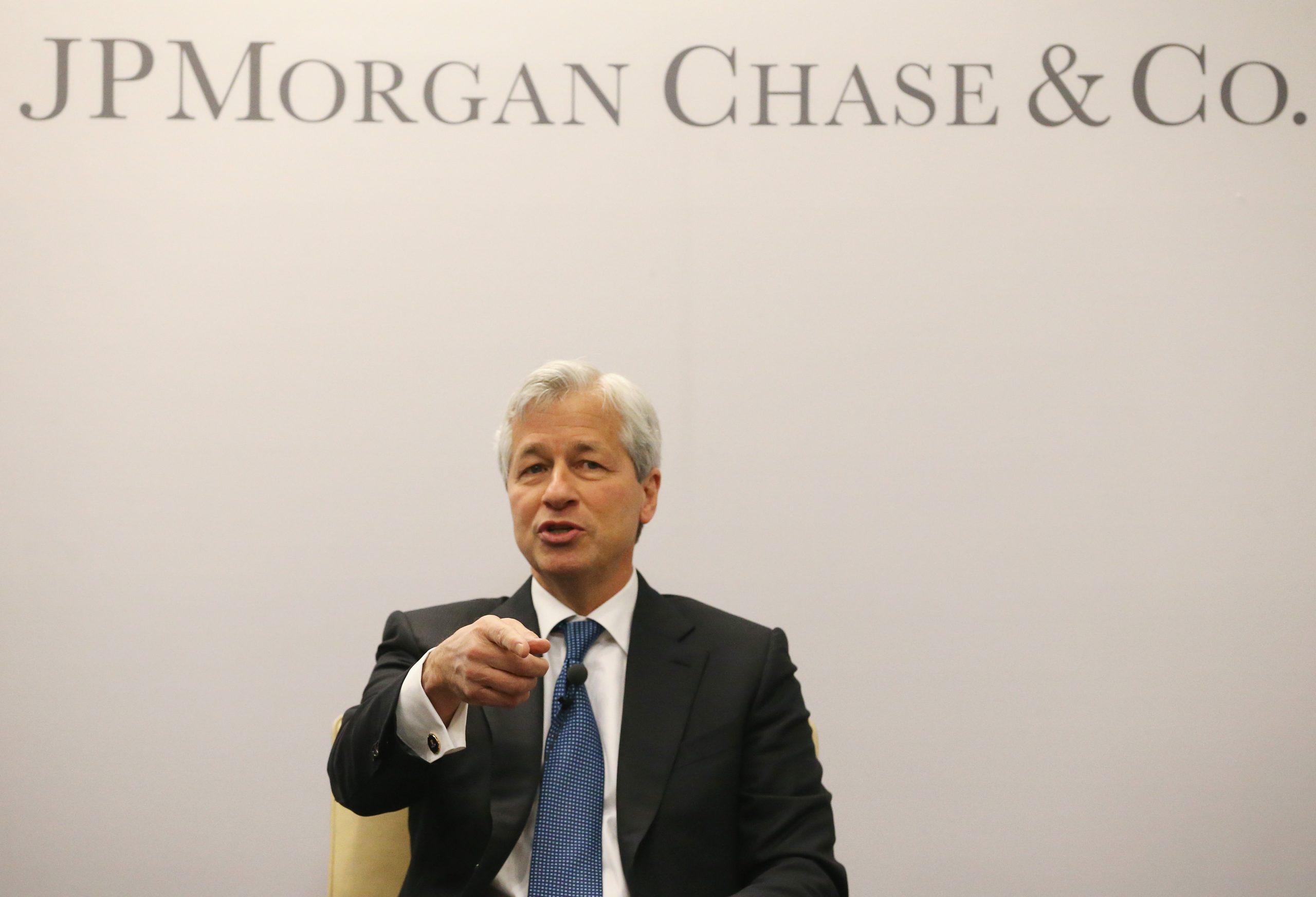
JP Morgan Chase puts contents through its CEO account, it goes viral. But the same content via JPMC account, no one cares (WSJ)

Nigeria is inching closer to rejoining JP Morgan’s Government Bond Index, nearly a decade after it was dropped over concerns that rattled global investors and forced billions in capital flight.

The renewed push, now buoyed by sweeping currency reforms under the Central Bank of Nigeria (CBN), is being framed by authorities as a vital step in restoring the country’s global financial credibility.

Patience Oniha, Director-General of the Debt Management Office (DMO), confirmed the development during a high-level investor engagement on the sidelines of the IMF/World Bank Spring Meetings in Washington, D.C., where Nigeria’s Ministry of Finance and the CBN jointly briefed portfolio managers and institutional investors on macroeconomic developments.

Oniha revealed that discussions with JP Morgan were “advanced” and hinged on reforms to Nigeria’s foreign exchange (FX) market.

“We think we are eligible now,” she said, pointing to the liberalization of the FX regime, which had previously triggered Nigeria’s expulsion from the index in 2015. “The reforms have addressed key challenges such as illiquidity and the difficulty investors faced in exiting the market. These were the sticking points.”

Nigeria’s potential re-entry into the JP Morgan GBI-EM Index would mark a major inflection point in its relationship with global investors. The index is widely tracked by institutional fund managers with trillions in assets under management. Membership not only signifies investor confidence but also guarantees access to a stream of passive capital inflows from funds that track emerging markets.

According to analysts, inclusion could channel as much as $2 billion in immediate foreign portfolio investment into Nigeria’s local debt market, providing much-needed support to the naira and reducing pressure on external reserves. A senior investment strategist familiar with the talks said such a move would act as a global vote of confidence in the Central Bank’s efforts to restore FX stability and rebuild credibility.

Nigeria was first included in the JP Morgan Government Bond Index in 2012, following the development of a more liquid domestic bond market and the introduction of reforms that allowed for two-way FX pricing and better investor access. But three years later, the relationship soured. In January 2015, JP Morgan placed Nigeria on its Index Watch List, citing growing concern over foreign exchange illiquidity, opacity in exchange rate management, and a deteriorating macroeconomic framework. That culminated in Nigeria’s removal from the index in September 2015 after it failed to resolve those issues—chief among them the inability of investors to repatriate funds due to FX rationing and capital controls.

That exit coincided with an oil price slump and marked the beginning of a long stretch of FX instability, double-digit inflation, and a loss of investor confidence that Nigeria is only now beginning to reverse.

At the heart of Nigeria’s fresh bid is the FX reform drive launched by the CBN since mid-2023. Under the current administration, the central bank has collapsed multiple exchange rates into a single, more market-reflective rate, ended arbitrage-prone special windows, and taken steps to curb artificial price fixing in the official market. These moves have narrowed the gap between the official and parallel market rates, improved liquidity through interventions, and attracted cautious optimism from investors who have long complained of a non-transparent FX regime. But the recovery is far from complete.

Sources familiar with the re-engagement process told Nairametrics that JP Morgan remains cautious. One of the sticking points is the depth and functionality of Nigeria’s local bond market, which needs to be more robust to meet index criteria. A source noted that while there’s progress, the market still lacks the depth and liquidity that foreign investors require.

“We’re not yet at the finish line, but if the momentum continues, Nigeria could be back in before the end of the year,” the source said.

While talks are advancing, Nigeria is still haunted by its recent past. In 2022, JP Morgan downgraded its outlook on Nigerian sovereign debt, citing poor fiscal management despite record oil prices. The bank highlighted the depletion of FX reserves, surging debt service costs, and opaque subsidies that continued to strain public finances. Those concerns have yet to fully dissipate. Just earlier this month, JP Morgan advised clients to unwind long positions in Nigeria’s OMO bills amid signs of renewed pressure on the country’s oil-dependent economy. It warned of the risk of declining fiscal buffers, falling oil revenue, and global trade headwinds that could expose Nigeria’s financial system to further vulnerabilities.

Analysts believe that if successful, Nigeria’s re-entry into the JP Morgan index could have significant downstream effects. Among other things, it is expected to lower the country’s cost of borrowing, as index inclusion would draw demand for local bonds and compress yields. The influx of dollar inflows from passive investment funds could ease pressure on the naira, which has faced volatility and depreciation in recent years. Renewed foreign interest could also improve liquidity and pricing efficiency in Nigeria’s bond market, spurring broader capital market development. A successful re-entry may also nudge other rating agencies, funds, and financial institutions to re-engage with Nigeria’s fixed-income market.

However, despite the CBN’s reforms, currency volatility and inflation remain high. Headline inflation rose above 33 percent in March 2025, eroding real returns on fixed-income instruments. Fiscal discipline is also under scrutiny, particularly as the government struggles to rein in spending amid subsidy-related pressures and low tax revenue.

Ultimately, Nigeria’s push to rejoin the JP Morgan index is as much a reputational repair effort as it is a strategic financial move. While a return to the index may signify that the worst is over, experts note that only consistent policy execution will convince the market that a genuine turnaround is underway.

Paul Atkins as New SEC Chairman Signals a Forward-thinking and Regulatory Clarity for Crypto

0

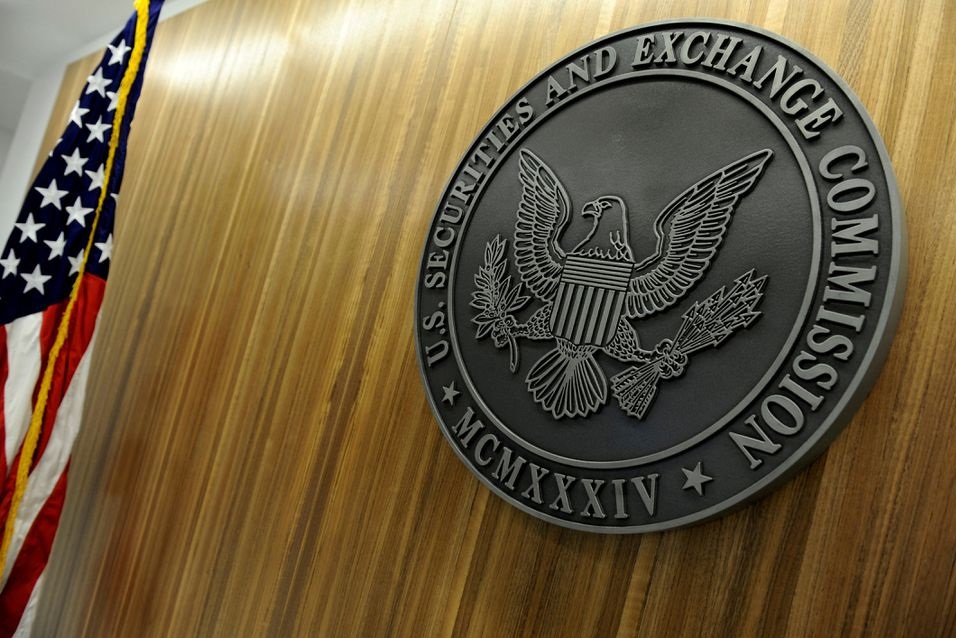
Paul Atkins was sworn in as the 34th Chairman of the U.S. Securities and Exchange Commission (SEC) on April 21, 2025, following his nomination by President Donald Trump and confirmation by the U.S. Senate on April 9, 2025, in a 52-44 vote. Known for his pro-crypto stance, Atkins has a significant background in digital assets, having served as co-chair of the Token Alliance since 2017 and holding between $1 million and $6 million in crypto-related assets, though he has pledged to divest these holdings upon taking office. His appointment marks a shift from the enforcement-heavy approach of his predecessor, Gary Gensler, toward a more industry-friendly regulatory framework.

The SEC is currently reviewing over 70 crypto-related exchange-traded fund (ETF) applications, covering a wide range of assets including XRP, Solana, Dogecoin, Litecoin, and even niche tokens like PEPE, BONK, and MELANIA. These filings also include proposals for in-kind creation and redemption for spot Bitcoin and Ethereum ETFs, as well as staking options for Ethereum ETFs. Atkins has stated that establishing a “rational, coherent, and principled” regulatory framework for digital assets is a top priority, which could expedite ETF approvals compared to the delays seen under Gensler’s tenure. For instance, spot Bitcoin and Ethereum ETFs faced years of delays before approval, partly due to the SEC’s requirement for a well-established regulated futures market, a criterion that may not yet exist for many altcoins.

However, approvals are not guaranteed immediately. Industry experts suggest that while Atkins’ leadership may streamline the process, the SEC is unlikely to act until its leadership is fully settled and a clearer stance on whether these tokens qualify as securities is established. The agency has already delayed decisions on several altcoin ETFs, including XRP, Solana, and Dogecoin, as recently as March 11, 2025. Additionally, the SEC’s Crypto Task Force, initiated under Acting Chair Mark Uyeda in January 2025, has signaled a more collaborative approach, having dropped enforcement actions against firms like Coinbase, Consensys, and OpenSea. This suggests a potential shift toward guidance over litigation, though enforcement of existing securities laws will likely continue.

Sentiment on platforms like reflects optimism in the crypto community, with analysts highlighting Atkins’ anti-regulation and pro-crypto stance as a “turning point” for the industry. Some speculate that the SEC could move from being a “crypto-fighting agency” to one that facilitates innovation, though consumer advocacy groups like Public Citizen have raised concerns about Atkins’ crypto ties, warning of weakened investor protections.

Atkins’ chairmanship is poised to create a more favorable environment for crypto ETFs, but the timeline and scope of approvals remain uncertain, pending further regulatory clarity and the resolution of the SEC’s current backlog. Paul Atkins’ appointment as SEC Chairman on April 21, 2025, is likely to significantly influence blockchain-related regulations, given his pro-crypto stance and the current backlog of 72 crypto ETF applications.

Atkins has emphasized a “rational, coherent, and principled” regulatory framework for digital assets. Unlike the enforcement-driven approach under Gary Gensler, Atkins is expected to prioritize guidance and collaboration. The SEC’s Crypto Task Force, initiated in January 2025 under Acting Chair Mark Uyeda, has already dropped enforcement actions against major players like Coinbase and Consensys, signaling a move away from litigation-heavy policies. This could reduce regulatory uncertainty for blockchain projects, encouraging innovation and development.

The 72 pending crypto ETF applications, covering assets like XRP, Solana, and even meme coins like PEPE, are likely to see expedited reviews under Atkins. His background with the Token Alliance and personal crypto investments (though divested) suggest a favorable view of blockchain-based financial products. Approvals of these ETFs could legitimize blockchain assets in traditional markets, driving adoption and capital inflows. However, the SEC may still require clear classifications (e.g., security vs. commodity) and robust market surveillance, which could delay some altcoin ETFs lacking established futures markets.

A key regulatory hurdle for blockchain projects is whether tokens are classified as securities. Atkins is expected to work toward clearer guidelines, potentially building on the Crypto Task Force’s efforts to define regulatory boundaries. This could streamline compliance for blockchain startups, reducing legal risks and fostering decentralized application (dApp) development. However, consumer advocacy groups warn that Atkins’ crypto ties might weaken investor protections, which could lead to pushback if fraud or scams increase.

Impact on Decentralized Finance (DeFi)

DeFi platforms, often targeted by SEC enforcement for unregistered securities offerings, may benefit from a lighter regulatory touch. Atkins’ deregulatory philosophy could lead to tailored rules that recognize DeFi’s decentralized nature, rather than applying traditional securities frameworks. This might encourage U.S.-based DeFi innovation, though global regulatory alignment (e.g., with the EU’s MiCA framework) will remain a challenge.

A more permissive regulatory environment could accelerate blockchain adoption across industries like finance, supply chain, and gaming. For example, ETF approvals could integrate blockchain assets into mainstream portfolios, while clearer rules might embolden enterprises to deploy blockchain solutions. This reflect optimism, with users calling Atkins’ appointment a “game-changer” for crypto, though some express skepticism about balancing innovation with investor safety.

While Atkins’ approach is pro-crypto, the SEC will likely maintain enforcement of existing securities laws. Blockchain projects ignoring compliance could still face scrutiny. Additionally, the lack of a fully settled SEC leadership team and ongoing delays in ETF decisions (e.g., XRP and Solana as of March 2025) suggest that regulatory clarity may take time. External pressures, such as Congressional oversight or market volatility, could also shape outcomes.

Atkins’ chairmanship is poised to create a more blockchain-friendly regulatory landscape, with faster ETF approvals, clearer token classifications, and reduced enforcement actions. This could spur innovation, attract investment, and mainstream blockchain technologies. However, the pace of change depends on the SEC’s ability to resolve its backlog and establish consistent policies, while balancing investor protections. Blockchain projects should prepare for a transitional period but can expect a more collaborative regulatory environment in the near term.

Building a Crypto Trading Bot: A Guide to Automating Your Strategy

0

Introduction

The rise of cryptocurrency trading has ushered in an era of automation where bots increasingly dominate trading volumes. According to a 2023 study by The Block, over 80% of crypto trading volume on major exchanges is driven by algorithms and bots. This trend highlights the importance of building or utilizing a crypto trading bot to stay competitive in a market that operates 24/7 and reacts rapidly to volatility.

A crypto trading bot is a software program designed to execute trades automatically based on predefined strategies and market conditions. Bots eliminate emotional bias, allow for instant execution, and enable users to capitalize on opportunities—even while they sleep.

This guide walks you through the steps to build a trading bot from scratch, from choosing a strategy to integrating with an exchange, and discusses how advanced platforms like BelonixTrader can streamline this process with automation tools and AI-powered analytics.

What Is a Crypto Trading Bot?

A crypto trading bot is a script or application that interacts with cryptocurrency exchanges via APIs to place, manage, and exit trades automatically. It follows algorithmic logic to execute a strategy without manual input.

Key Functions

  • Market scanning
  • Trade entry and exit
  • Risk management (e.g., stop-loss, take-profit)
  • Portfolio rebalancing
  • Arbitrage between exchanges

Why Build a Crypto Trading Bot?

1. Speed and Efficiency

Bots execute trades instantly based on triggers, minimizing slippage and maximizing profit.

2. 24/7 Market Access

Unlike traditional markets, crypto never sleeps. A bot ensures you’re always ready to react to market movements.

3. Removes Emotion

Emotions like fear and greed often sabotage traders. Bots trade purely on data and logic.

4. Strategy Testing and Optimization

Bots can backtest strategies across historical data to refine performance before risking real capital.

Steps to Build Your Own Crypto Trading Bot

Step 1: Define Your Strategy

Determine your trading logic. Will your bot be trend-following, mean-reverting, or arbitrage-based? Common strategies include:

  • Moving Average Crossovers
  • RSI or MACD signals
  • Scalping or breakout trades

Step 2: Choose a Programming Language

Python is the most popular due to its libraries like Pandas, NumPy, and CCXT (for exchange integration). Other languages include JavaScript, Go, or C++ for high-speed execution.

Step 3: Select an Exchange and Set Up API Access

Choose reliable exchanges like Binance, Coinbase Pro, or Kraken. Generate your API keys securely and enable permissions based on bot needs (read/write access, withdrawals optional).

Step 4: Code the Core Bot Logic

This includes:

  • Fetching real-time price data
  • Calculating indicators
  • Sending trade orders
  • Logging trades and monitoring execution

Step 5: Test Your Bot

Run backtests on historical data and simulate real-time trades using paper trading before going live.

Step 6: Monitor and Maintain

Even after deployment, your bot requires regular monitoring for bugs, performance tuning, and market adaptation.

For non-developers or those seeking enhanced performance, platforms like BelonixTrader offer drag-and-drop bot builders, preset strategies, and automated risk controls—all without coding.

Case Studies: Bots in Action

Case Study 1: Scalping Bot on Binance

A Python-based scalping bot was built using EMA crossovers and volume thresholds. The developer reported a 15% monthly gain over three months with minimal drawdowns—outperforming manual trading.

Case Study 2: Arbitrage Bot Across Exchanges

A trading firm deployed a bot that monitored BTC price differences between Binance and KuCoin. The bot executed arbitrage trades every few minutes, averaging a 0.5% profit per cycle.

Case Study 3: BelonixTrader AI Integration

A retail trader used BelonixTrader’s machine learning module to identify profitable trade conditions and automate entries. Over six months, the bot consistently outperformed manual trades by 22% on average.

Pros and Cons of Building a Trading Bot

Pros

  • Automated execution
  • Data-driven decisions
  • 24/7 market coverage
  • Customization and scalability
  • Ability to test before deploying real capital

Cons

  • Requires programming knowledge (unless using a no-code solution)
  • Poor strategy = automated losses
  • Sensitive to API changes or outages
  • May be outperformed by professional bots in high-frequency markets

FAQs on Building a Crypto Trading Bot

What skills do I need to build a crypto trading bot?

You’ll need programming skills (commonly in Python), understanding of API usage, and a solid grasp of trading strategies.

Can I build a bot without coding?

Yes. Platforms like BelonixTrader offer no-code environments with pre-built strategies and visual editors.

How much does it cost to build a trading bot?

If self-developed, your cost is mostly time. If using platforms or third-party APIs, expect monthly fees or commission structures.

Are trading bots legal?

Yes, but ensure they comply with exchange terms and regulatory laws in your jurisdiction.

What are the risks of using a trading bot?

Misconfigured bots, faulty code, or bad strategies can result in fast losses. Always test and monitor your bot.

Can a bot guarantee profit?

No. Bots are only as good as the strategy behind them. No strategy is foolproof in a volatile market.

How can I test my bot safely?

Use paper trading or backtesting environments to simulate performance before going live.

Can bots access multiple exchanges?

Yes, especially if you use libraries like CCXT or platforms like BelonixTrader that support multi-exchange integration.

Should I host my bot locally or on the cloud?

Cloud hosting is recommended for reliability and uptime, but ensure your server is secure and API keys are encrypted.

What’s the difference between a market-making bot and a trend bot?

Market-making bots aim to profit from bid-ask spreads, while trend bots follow market momentum or reversal patterns.

Conclusion

Building a crypto trading bot can be one of the most rewarding paths for active and systematic traders. Bots bring automation, discipline, and speed—allowing you to capitalize on opportunities you might otherwise miss. However, building one is not plug-and-play. It demands careful planning, risk management, and ongoing optimization.

For those without coding experience or who prefer a smarter, faster path, platforms like BelonixTrader provide ready-made tools, AI-enhanced analytics, and automated trade execution in a user-friendly package.

In the end, whether you build your own or use a platform, trading bots are not magic—they are a means to enforce logic and consistency in an emotional, chaotic market.

Proven Tips to Boost Your Winnings at Online Casinos

0

Online casinos offer excitement and the chance to win big, but success requires more than luck. Smart strategies and disciplined habits significantly increase the odds of walking away with a profit. By focusing on proven methods, players can elevate their game and make every session count. This piece delineates four actionable pointers to amplify your returns, steering players toward sharper calls and improved outcomes within the dynamic realm of online wagering.

Master the Games You Play

Familiarity is the engine of triumph in the digital gaming sphere. Before committing chips, gamblers should deeply comprehend the regulations and workings of their preferred diversions. Be it twenty-one, hold’em, or reel-spinning contraptions; each pastime necessitates specialized methodologies. Take twenty-one, for instance: absorbing fundamental strategy blueprints shrinks the house advantage to minuscule levels. Gamblers who delve into instructional materials, observe seasoned pros, or hone skills in no-cost formats gain a distinct edge. This preparation transforms conjecture into calculated plays, bolstering assurance and prospective rewards.

Practicing hones proficiencies even further. Numerous platforms present test iterations where players assess schemes sans risking capital. These exercises unveil patterns, such as the activation of reel-spinner bounties or advantageous fold opportunities in hold’em. Devoting time to sharpening skills cultivates familiarity, which translates into superior judgment during genuine stakes. Instead of plunging into high-roller games blindly, players who first master their craft position themselves for dependable victories over time.

Manage Your Bankroll Wisely

A well-managed bankroll keeps players engaged and safeguards against catastrophic debacles. Establish a definitive ceiling before commencing, and adhere to it with unyielding discipline. For example, resolve to expend no more than a hundred notes per session and never tap into auxiliary reserves. This modus operandi ensures gaming remains recreational without escalating into pecuniary duress. Apportioning the budget into modest bets, such as a fiver per hand, extends playtime and augments prospects of landing a hot streak.

Monitoring wins and losses preserves command. Employ a simple ledger or application to chronicle each session’s consequences. This custom highlights spending patterns and signals the opportune moment to withdraw. Eschew chasing after losses – doubling down to recoup is rarely efficacious and frequently digs a deeper abyss. Sharp players appreciate that disciplined bankroll management, teamed with platforms like SureWin Casino, crafts a bedrock for enduring accomplishment and sustains the thrill.

Leverage Bonuses and Promotions

Web-based gambling establishments deluge players with perks, and resourceful ones convert these offerings into profits. Welcome gifts, bonus spins, and allegiance schemes contribute surplus funds or opportunities to participate. However, scrutinizing the small print is crucial. Wagering prerequisites frequently dictate the frequency a perk must be wagered before withdrawing winnings. Selecting promotions with sensible conditions, such as a 20x play-through, simplifies cashing out and maximizes value.

Timing supercharges the reverberations of perks. Many venues roll out exclusive incentives during festivities or weekends. Enrolling in newsletters or tracking casino social media outlets keeps players informed. Claiming these deals at the appropriate juncture stretches the bankroll. By thoughtfully accepting perks and aligning them with robust gameplay, players tip the balance in their favor and boost their earning potential.

Stay Focused and Avoid Distractions

Concentration distinguishes victors from occasional dabblers. Internet casinos, with their shimmering illuminations and inexhaustible alternatives, can overwhelm. Establish a distraction-free perimeter before participating – silence notifications, close extraneous tabs, and zero in solely on the diversion. This clarity hones decision-making, particularly in swift-moving games like hold’em, where a single misstep forfeits the kitty. A focused mind discerns opportunities and dodges costly blunders.

Emotional command is intertwined with focus. Winning sprees ignite euphoria, while setbacks breed vexation, yet both can obfuscate judgment. Set temporal limits for engagements, like thirty minutes, to preclude exhaustion or impulsive bets. Pauses rejuvenate perspective, permitting players to return with a lucid mentality. By sustaining self-discipline and presence, players make astute choices, transforming close shaves into triumphs and preserving their capital intact.

Conclusion

Boosting winnings at online casinos blends strategy, discipline, and focus. Mastering games builds a strong foundation, while wise bankroll management ensures longevity. Leveraging bonuses adds extra firepower, and staying focused keeps decisions sharp. Collectively, these suggestions metamorphose casual engagement into a measured quest for revenue. Players who embrace these habits not only relish the excitement but also stack the likelihood in their corner for grander, more predictable wins.