DD
MM
YYYY

PAGES

DD
MM
YYYY

spot_img

PAGES

Home Blog Page 1453

4 Cryptos to Buy Now with the Potential to Outrun Dogecoin (DOGE) and Shiba Inu (SHIB) By At Least 1000%

0

Since Dogecoin and Shiba Inu took center stage as meme-driven assets, investors have been gearing up to find other cryptocurrencies with practical use cases and exceptional development prospects. Rexas Finance (RXS) stands out as one of the most promising opportunities, revolutionizing the tokenization of real-world assets.  Alongside RXS, Stellar, XRP, and Cardano also show significant upside potential, making them top contenders to outperform DOGE and SHIB by at least 1,000% in the coming weeks.

Rexas Finance (RXS): The Future of Real-World Asset Tokenization

By providing a venue for the tokenization of real-world assets (RWAs), Rexas Finance (RXS) is boldly entering the blockchain scene. Investors in this project can buy fractional ownership of valuable assets, including intellectual property, luxury goods, and real estate. For example, a $100 million hotel can be divided into 100 million RXS tokens, opening small investors’ access to markets once held for the privileged. With 458 million tokens sold in the presale, RXS’s presale has been quite successful, raising $47,776,122 thus far. The presale price shows great investor interest, a startling 567% rise from the original $0.03 per token. With a projected listing price of $0.25, Rexas Finance will debut on elite exchanges in June 2025. Forecasts indicate that by the end of July 2025, RXS will have seen a tremendous rise in value, ranging from $2 to $5. Should this prognosis be accurate, RXS might generate a significant comeback, outrunning DOGE and SHIB by at least 1,000%, making it a unique prospect for investors seeking a phenomenal increase.

Stellar (XLM): Facilitating Efficient Cross-Border Transactions

Established in 2014, Stellar is a blockchain technology that allows seamless, low-cost payments worldwide. The native cryptocurrency, XLM, boosts liquidity and mediates transactions with other fiat currencies. On March 29, 2025, XLM’s valuation stood at $0.265. XLM has recently traded within an ascending triangle pattern known for bullish runs. Over the years, XLM has consolidated into an upward breakout formation, so if it breaks resistance around $0.30, it would trigger a tremendous surge of 1000%. With Stellar’s continued relationships with corporations and their constant support in cross-border transactions, there is a potential for XLM gains that can outperform SHIB and DOGE.

XRP (XRP): Gaining Momentum Amid Legal Clarity

On March 29, 2025, XRP was valued at around $2.12. Recent legal wins and partnerships have increased investor sentiment toward XRP. Technical indicators suggest XRP has completed a ‘golden cross’; this means the 50-day moving average has crossed above the 200-day moving average. This crossover is a bullish signal that “strong upside price movement” is likely. In 2025, analysts anticipate XRP to reach $5, which is over double its value today and would make XRP surpass DOGE and SHIB by 1,000%. XRP’s growth puts it in a position to significantly surge ahead of DOGE and SHIB since Ripple is broadening its payment solution services worldwide.

Cardano (ADA): Advancing Through Technological Innovation

Cardano trades at $0.667 at the time of writing. Based on technical analysis, a descending wedge formation is being formed by ADA, which is generally characterized by a bullish reversal. Predictions state that the price for ADA in 2025 would range approximately from $0.81 to $1.93 with a possible high of $2.42, providing a rise of at least 1000%.  With increased adoption and technological advancement, ADA may surpass meme coins like DOGE and SHIB in performance.

Conclusion: Where to Invest for Maximum Returns?

Although Dogecoin and Shiba Inu have built reputable, strong communities, their future growth capabilities are not on par with those of other assets with real-world applications. Of the top four cryptocurrencies singled out, Rexas Finance (RXS) is positioned as the most attractive opportunity. Investing in RXS means tokenizing real-world assets through blockchain technology, an investment thesis that has never been seen before—those who participated in its presale stand to benefit the most. With the scheduled exchange listing at $0.25 and the predicted price increase of $5, the time to act is now. Rexas Finance is undoubtedly the next best option for investors seeking alternatives to DOGE and SHIB. Participating in the presale will be the best choice before the price hikes to unprecedented numbers

.For more information about Rexas Finance (RXS) visit the links below:

Website: https://rexas.com

Win $1 Million Giveaway: https://bit.ly/Rexas1M

Whitepaper: https://rexas.com/rexas-whitepaper.pdf

Twitter/X: https://x.com/rexasfinance

Telegram: https://t.me/rexasfinance

Dogecoin Traders Are Calling This the Next Breakout Altcoin After $7.5M VC Backing

0

For months, analysts have debated whether Dogecoin (DOGE) or RCO Finance (RCOF) deserves the title of best altcoin to buy now. While Dogecoin (DOGE) held its ground thanks to name recognition and early market traction, recent trends are painting a very different picture.

The brutal volatility triggered by Trump’s escalating tariffs and the ongoing trade war with China has cast a long shadow over mature tokens.

For Dogecoin (DOGE), which is already bumping against the ceiling of market maturity, growth potential is now limited (capped at a modest 200% year-on-year by even the most optimistic projections). Meanwhile, the case for RCO Finance (RCOF) has never looked stronger.

Dogecoin (DOGE) Gets Derailed Market Maturity and Meme Coin Fears Loom

The argument was already leaning in RCOF’s favor thanks to its presale status, which shields investors from current market volatility. Unlike Dogecoin (DOGE), RCO Finance isn’t exposed to the erratic price swings seen across major exchanges. But now, a clear winner is emerging.

News just broke that a major VC has injected $7.5 million into RCO Finance, signaling strong institutional confidence in its AI-powered tool and DeFi trading platform.

The funding not only validates RCOF’s long-term viability but also confirms what early analysts were already suggesting—that RCOF offers a dramatically higher upside than older tokens like Dogecoin (DOGE).

At the heart of this excitement is RCOF’s game-changing AI Robo Advisor, a trading solution poised to revolutionize how users interact with decentralized finance. As AI adoption accelerates, RCOF is perfectly positioned to lead the charge.

The VC boost has also sent a surge of interest toward the ongoing RCOF presale, making now the ideal time for early investors to buy in. Once public demand kicks in, the entry price will likely skyrocket, rewarding early believers and leaving latecomers watching from the sidelines.

VC Throws $7.5M at RCO Finance’s AI Trading Tools and DeFi Platform: Here’s Why

RCO Finance (RCOF) isn’t just another new crypto token. The soon-to-launch AI trading platform and tool is becoming the gold standard for AI-powered investing. With $17.3 million raised in the RCOF presale and a massive $7.5 million VC backing, institutions are piling in, and retail investors are racing to get a piece before the next price hike.

Why the hype? RCO Finance (RCOF) delivers a no-code, fully autonomous trading ecosystem that puts institutional-grade tools in the hands of everyday investors (something the market has yet to see).

RCO Finance’s flagship artificial intelligence (the AI Robo Advisor) uses machine learning to analyze over 100,000 assets in real-time, pulling data from sources like Bloomberg, top exchanges, and sentiment feeds to pinpoint the best investment opportunities before 90% of the market notices.

Missed early moves on tokens like WIF or FLOKI? RCO Finance (RCOF) and its AI Robo Advisor have already helped Beta users detect early breakout signals, and even issued alerts as those tokens began to cool off. That’s the power of predictive analytics, real-time monitoring, and AI-powered risk management, all working for you 24/7.

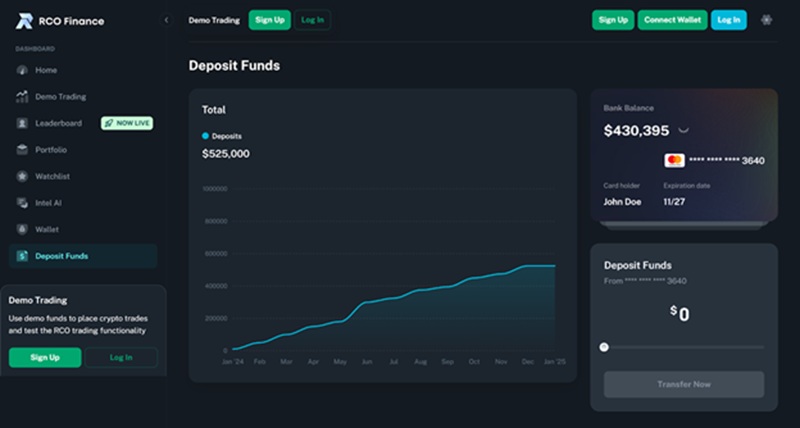
More than 285,000 users have signed up on the Beta platform in just weeks. And with features like demo trading, custom watchlists, AI-driven portfolio generation, and instant deposits, the SolidProof-audited RCO Finance (RCOF) is now one of the most anticipated launches of 2025.

Yet, even more interesting is the sheer profit potential for presale investors. The expected massive adoption of RCO Finance (RCOF), combined with VC’s fresh injection of $7.5 million into the project, has led analysts to predict a 43,500% surge in the RCOF price by Q3.

Join Round 6 of the RCOF presale Now Before the Price Jumps 43,500%

RCO Finance (RCOF) has just shattered expectations again, and the urgency around its presale has reached new heights. With $17.3 million already raised and over 285,000 users now active on the Beta platform, it’s clear that RCOF isn’t just another hyped altcoin.

And now, thanks to a fresh $7.5 million investment from a major VC, the momentum is officially unstoppable. This level of institutional backing is rare for a presale-stage project. And when it happens, retail investors know to act fast.

The Round 6 token price of just $0.13 has already surged over 1,300% since the RCOF presale launched, and according to top crypto analysts, this could be the last chance to get in before the next explosive move.

Projections now forecast a 43,500% price surge by Q3, meaning even a $800 investment today could return over $348,000 if the AI-powered RCO Finance platform reaches adoption targets. Considering the speed of user growth (up from just 10,000 to 285,000 in two months), this projection isn’t just hype; it’s confidence.

But time is running out. With every new investor onboarded and institutional dollar raised, Round 6 inches closer to full allocation. And once it ends, the current low price ($0.13) and the outsized returns it offers (43,500%) will be gone for good.

This is the final call for those who missed early Dogecoin (DOGE), Shiba Inu (SHIB), or PEPE. RCOF is shaping up to become the best crypto to buy in 2025. Don’t miss the presale before the price skyrockets.

For more information about the RCO Finance Presale:

Visit RCO Finance Presale

Join The RCO Finance Community

Bitcoin’s Price Increase Reflects Its Market Dominance of Total Crypto MarketCap

0

Bitcoin’s dominance, reflecting its share of the total crypto market cap, has indeed surged to a 5-year high, reaching around 64.13% as of mid-April 2025. This marks a significant increase from its low of 38% in November 2022, driven by strong institutional interest and capital rotation toward Bitcoin, often seen as a safer asset amid macroeconomic uncertainties like potential trade wars and persistent inflation.

Conversely, the ETH/BTC ratio, which measures Ethereum’s value relative to Bitcoin, has plummeted to a 5-year low of approximately 0.022, a level not seen since December 2020. This represents a 73% decline since September 2022, with Ethereum’s market dominance dropping to 7.3%-8.8%, its lowest since May 2020. Factors include Ethereum’s underperformance post-Bitcoin halving, high gas fees, and competition from other layer-1 blockchains like Solana, despite upcoming upgrades like Pectra.

Market sentiment currently favors Bitcoin, with some analysts suggesting Ethereum’s decline could signal a buying opportunity, while others predict continued Bitcoin dominance. However, these trends are subject to rapid shifts based on market dynamics and external factors. The surge in Bitcoin dominance to a 5-year high and the ETH/BTC ratio hitting a 5-year low have several implications for the crypto market. Bitcoin’s dominance at ~64% signals a flight to safety among investors, favoring Bitcoin as a store of value amid macroeconomic uncertainty (e.g., trade war fears, inflation). This reduces capital flow to altcoins like Ethereum, potentially stifling innovation and growth in the broader ecosystem.

The ETH/BTC ratio at 0.022 reflects Ethereum’s struggles, including high gas fees, slower transaction speeds compared to competitors like Solana, and post-Merge underperformance. This could erode confidence in Ethereum’s ecosystem, impacting DeFi and NFT projects, though upgrades like Pectra may restore competitiveness if successful. High Bitcoin dominance typically compresses altcoin valuations, as investors prioritize Bitcoin. This could delay recoveries for Ethereum and other layer-1 chains, though some analysts see the low ETH/BTC ratio as a contrarian buying opportunity for Ethereum if market cycles shift.

Investors may tilt portfolios toward Bitcoin to capitalize on its momentum, but diversification risks increase if altcoins rebound. A prolonged Bitcoin dominance could also trigger a “crypto winter” for smaller projects, while a reversal might spark an altcoin rally. Bitcoin’s dominance reinforces its “digital gold” narrative, potentially attracting more institutional investment. However, Ethereum’s decline could raise questions about its scalability and utility, impacting perceptions of smart contract platforms unless network improvements regain traction. These dynamics suggest a Bitcoin-centric market in the short term, but Ethereum’s historical resilience and upcoming upgrades could shift sentiment. Monitor macroeconomic trends and on-chain metrics for potential reversals.

Bitcoin’s price has seen significant movement in 2025, driven by various factors, and this has implications in the context of its record-high dominance and the ETH/BTC ratio’s 5-year low. Below is an analysis of Bitcoin’s price increases, their causes, and how they tie into the broader market dynamics you mentioned, along with potential future implications. Bitcoin experienced a 32% drawdown from January 2025 highs but has since rebounded, showing resilience amid global market turbulence. Users highlight Bitcoin outperforming traditional risk assets like U.S. equities and Treasuries, suggesting growing recognition as a macro hedge. The approval of spot Bitcoin ETFs in January 2024 has fueled massive inflows, with BlackRock’s ETF becoming the fastest-growing in history. This has simplified access for institutional and retail investors, boosting demand.

Corporations like MicroStrategy continue to accumulate Bitcoin, with dozens of companies adding it to their balance sheets, reinforcing its role as a store of value. The April 2024 halving reduced miner rewards from 6.25 BTC to 3.125 BTC, creating a supply shock. Historically, halvings precede bull runs due to reduced new coin issuance, and while the immediate surge was muted, it has contributed to 2025’s upward momentum. Historical data shows strong February returns in post-halving years (average 40.74%), suggesting potential for further gains in early 2025.

Donald Trump’s re-election in November 2024 and a crypto-friendly administration have bolstered sentiment. Expectations of favorable regulations, such as a potential Bitcoin strategic reserve, have driven prices, though recent tariff announcements have caused short-term volatility. Anticipated Federal Reserve rate cuts in 2025, potentially in June, could flood markets with liquidity, historically benefiting Bitcoin. China’s bond market rally and maturing U.S. Treasury bills signal an inflationary environment, pushing investors toward Bitcoin as a hedge.

Escalating trade tensions, particularly Trump’s tariffs on Canada, Mexico, and China starting April 2, 2025, have roiled markets. Bitcoin’s resilience during this period underscores its growing appeal as a safe haven, akin to gold. Technical indicators show bullish signals, with Bitcoin trading above its 200-day moving average and a neutral RSI (58.80), indicating room for growth without being overbought.

The Fear & Greed Index at 39 (Fear) suggests cautious optimism, with 57% green days in the last 30 days and low volatility (2.84%). Key support levels at $74,000–$76,000 holding firm, with potential for a move to $87,000–$90,000 if resistance at $85,000 is broken. Bitcoin’s price increases and its dominance hitting a 5-year high (~64.13%) while the ETH/BTC ratio languishes at a 5-year low (0.022) have interconnected implications:

Bitcoin’s price surge, driven by institutional inflows and its “digital gold” narrative, continues to pull capital away from altcoins like Ethereum. This explains the ETH/BTC ratio’s decline, as investors prioritize Bitcoin’s perceived stability and scarcity. Bitcoin’s outperformance, as noted by market chatters, strengthens its dominance, potentially delaying altcoin recoveries. This could lead to a prolonged period of Bitcoin-centric market behavior, especially if macroeconomic pressures persist.

The ETH/BTC low reflects Ethereum’s challenges, including high gas fees and competition from faster layer-1 chains like Solana. Bitcoin’s price increases exacerbate this by drawing liquidity away, potentially keeping Ethereum’s dominance (7.3%–8.8%) suppressed. Smaller altcoins face heightened risk in a high-dominance environment, as Bitcoin’s price surges often correlate with reduced altcoin valuations. This could stifle DeFi and NFT growth unless Ethereum’s Pectra upgrade or other catalysts spark a reversal.

Investors may continue favoring Bitcoin for its momentum and institutional backing, especially with ETF-driven accessibility. However, the ETH/BTC low could signal a contrarian opportunity for Ethereum if upgrades restore confidence. Bitcoin’s volatility, as seen in its recent drop below $82,000, suggests caution. While bullish forecasts predict $150,000–$200,000 by year-end, bearish scenarios (e.g., $52,000–$56,000 by summer) highlight risks from trade wars or market corrections.

Ethereum’s declining relative value may force a reevaluation of its role as a smart contract leader. If Bitcoin’s price continues to dominate, Ethereum may need significant technological or market catalysts to regain ground. Analysts are largely optimistic, with consensus predictions around $150,000–$200,000 for 2025, driven by ETF inflows, halving effects, and regulatory clarity. Some, like Bitwise and Coinpedia, project highs of $168,000–$200,000, with extreme outliers like Chamath Palihapitiya suggesting $500,000 by October.

Potential corrections loom due to Trump’s tariffs, which could trigger a broader market sell-off. Analysts like Tracy Jin predict a drop to $52,000–$56,000 by summer, while Mike McGlone warns of a crash to $10,000, citing overvalued markets. Short-term forecasts suggest Bitcoin could hit $90,000–$95,000 by May 2025 if it breaks resistance at $85,000. Support at $74,000–$76,000 has held, but falling volumes could drag it to $76,000 if momentum stalls.

Bitcoin’s price increases and dominance suggest a heavier weighting in portfolios, but diversification into undervalued altcoins like Ethereum could yield returns if market cycles shift. Monitor ETH/BTC for signs of reversal. Volatility remains high, with tariffs and Federal Reserve policies as key risks. Investors should prepare for sharp corrections, especially if global trade tensions escalate.

Watch on-chain metrics (e.g., exchange outflows, hashrate) and technical levels ($85,000 resistance, $74,000 support) for signals of Bitcoin’s next move. Ethereum’s Pectra upgrade and competitor performance will be critical for altcoin recovery. Bitcoin’s price increases are reinforcing its market dominance, sidelining Ethereum and altcoins for now. While the outlook remains bullish, external risks could disrupt this trajectory, making balanced strategies essential.

Cryptocurrency Lending Explained. Platforms, Benefits, and the Real Risks

0

In the fast-paced world of digital assets, cryptocurrency lending has emerged as a game-changer, especially for traders looking to unlock liquidity without offloading their holdings. Powered by blockchain technology and a growing range of both centralized and decentralized solutions, this sector now plays a vital role in the evolving digital economy. And with institutional crypto lending gaining traction, it’s clear this isn’t just a niche service anymore — it’s here to stay.

Let’s break down how these lending models work, what they offer, and what every trader should be aware of before diving in.

Centralized Crypto Lending Platforms, Pros and Pitfalls

At its core, a centralized crypto lending platform operates much like a traditional bank. These platforms serve as intermediaries between lenders and borrowers, taking custody of users’ crypto assets and managing the loan process on their behalf. Users deposit crypto — often stablecoins or major assets like BTC or ETH — and receive interest in return, while borrowers use their crypto as collateral to secure a loan.

There are clear benefits to this setup. For one, centralized platforms often offer user-friendly interfaces, fiat on-ramps, and customer support — features that are especially helpful for newer users. KYC/AML compliance adds a regulatory layer that many institutions prefer, and some platforms even offer insurance for user deposits.

But it’s not all smooth sailing. The biggest drawback? Custodial risk. Users must trust the platform with their private keys and assets, which goes against the crypto ethos of self-sovereignty. Additionally, in times of market stress, centralized lenders have frozen withdrawals or faced insolvency, leaving users exposed.

Decentralized Finance (DeFi) Lending Platforms — Automation Meets Autonomy

Now let’s talk about the wild west of lending — decentralized crypto lending platforms. These protocols, built on the backbone of decentralized finance (DeFi), are non-custodial, transparent, and governed by code rather than people.

DeFi lending platforms operate on smart contracts — automated code that handles everything from deposit management to loan disbursement and liquidation. Want to lend your crypto? Just deposit it into a liquidity pool and earn yield. Need a loan? Lock your assets as over-collateralization, and borrow instantly — no human approval needed.

This model has some serious upsides:

  • 24/7 access;
  • no sign-ups;
  • total transparency since everything happens on-chain.

You can see how much is locked, borrowed, and repaid in real time. Plus, interest rates adjust dynamically based on market supply and demand — a double-edged sword, but one that traders can capitalize on.

However, DeFi isn’t risk-free. Bugs in smart contracts can — and have — led to massive losses. There’s also the issue of Peer-to-Peer (P2P) lending risks:

  • liquidity crunches;
  • volatile APYs;
  • limited recourse if something breaks.

Add in the lack of regulation, and it’s clear that while DeFi offers freedom, it demands vigilance.

No matter the platform, cryptocurrency lending offers major benefits. It helps traders access capital without selling their bags — great for tax strategies or staying exposed to potential upside. Lenders, on the other hand, can earn solid yields compared to traditional savings.

But let’s talk risks. Market volatility is the elephant in the room. Because of crypto’s wild price swings, most loans require over-collateralization, meaning you might need to lock up $2,000 in ETH to borrow $1,000. If the market dips and your collateral ratio drops, you’re at risk of liquidation.

For traders looking to put idle assets to work or access liquidity without selling, lending can be a solid strategy. But as with any corner of crypto, doing your homework is non-negotiable. Understand the platform. Know your risks. And always, always manage your collateral wisely.

“Too late dude. The damage is done:” Traders Downplay Musk’s Return To Tesla

0

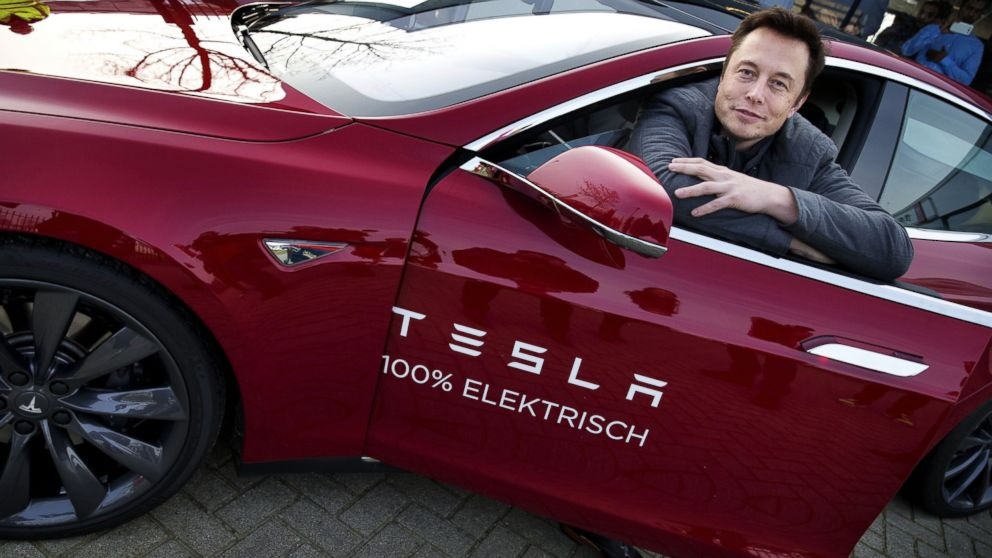
Tesla shares saw a brief rally on Wednesday after Elon Musk promised to step back from his political activities and renew his focus on the electric vehicle maker. But while the pledge temporarily calmed Wall Street nerves, many retail investors and analysts believe the move is coming far too late—and it may not be enough to reverse the damage already done to Tesla’s reputation, fundamentals, and stock value.

The Tesla CEO, during the company’s earnings call, said he would reduce his involvement in the Department of Government Efficiency (DOGE) beginning in May. The department, though unofficial and symbolic, had come to embody the CEO’s flirtation with politics and public policy interests that investors say have distracted him from Tesla’s day-to-day operations.

Musk’s political leanings and unfiltered presence on X, which he acquired in 2022, have become a source of tension with investors and consumers. Tesla’s once-pristine image has grown increasingly polarizing, particularly among environmentally conscious liberals, a key customer base for electric vehicles.

“Right, why do people think Elon and his insanity being at full on display at Tesla is going to help the company sell more cars to liberals?” one user on the retail trading forum r/WallStreetBets wrote.

Markets React, but Sentiment Still Weak

Wednesday’s modest rebound in Tesla’s share price did little to quell the grim reality: the stock is still down more than 35% year-to-date, and nearly 60% below its all-time high. Investors have been increasingly rattled by what they see as Tesla’s fading growth story, with first-quarter earnings underscoring the seriousness of the challenge ahead.

Tesla reported $19.3 billion in revenue for the quarter, missing analysts’ expectations of $21.4 billion. Automotive revenue plunged 20% year-on-year, and margins continued to shrink in the face of price cuts and intensifying global competition. Deliveries, the most closely watched metric by investors, also fell for the second consecutive quarter.

Even Tesla’s newer ventures, like its Optimus humanoid robot project, have been hit by external shocks. Musk revealed earlier this week that the production of Optimus has been affected by China’s restrictions on rare earth exports—an area where China holds near-monopoly control. The restrictions are part of Beijing’s retaliation in its ongoing tariff war with Washington, which analysts say is beginning to take a deeper toll on U.S. tech companies.

According to Musk, Chinese authorities want assurances that rare earth magnets used in Tesla’s robots won’t be diverted for military use. While he insisted that the materials are solely for industrial robotics, export approval is now tied to licensing from China’s Ministry of Commerce—a bureaucratic obstacle that could delay Tesla’s plans to scale Optimus in its EV factories.

Traders Aren’t Convinced

For many traders, Musk’s pledge to refocus on Tesla is seen as little more than damage control. The sentiment on forums like r/WallStreetBets remains deeply skeptical.

“Too late dude. The damage is done,” one user wrote. “If you think Q1 is bad, just wait for Q2.”

Others warned that Tesla’s price-to-earnings (P/E) ratio—still inflated relative to peers—would come under pressure as the company’s earnings growth slows and competitors flood the EV market with cheaper alternatives.

“There’s nothing unique in the pipeline,” another user said, pointing to the lack of new mass-market products from Tesla in recent quarters. Delays to the Cybertruck stalled robotaxi development, and tepid enthusiasm around the Optimus prototype have all contributed to a sense of drift at a company once hailed as the future of transportation.

The glut of used Tesla vehicles hitting the market, particularly in the U.S. and Europe, is also fueling anxiety. As demand softens, resale values have dropped, undercutting confidence in Tesla’s pricing power and the long-term value proposition of its cars.

Analysts Lower Expectations

The disappointment in Tesla’s earnings has reverberated across Wall Street. Goldman Sachs, RBC Capital Markets, and Cantor Fitzgerald were among the firms that trimmed their price targets for the stock, citing declining margins, weakening demand, and Tesla’s decision to rescind its forward guidance for 2025.

Steve Westly, a former Tesla board member, told CNBC’s Closing Bell Overtime that Musk’s re-engagement with Tesla might help steady the company in the near term, but that a broader strategic shift will be needed to reignite growth.

For a company that once defied gravity, both in terms of valuation and public perception, Tesla is now grappling with a new, more sobering reality.

Musk insists that Tesla will recover and expand into robotics and autonomous technology. But as the stock continues to languish and consumer sentiment drifts, investors are increasingly asking a more uncomfortable question: has Tesla peaked?