DD
MM
YYYY

PAGES

DD
MM
YYYY

spot_img

PAGES

Home Blog Page 1464

Sustainability Strategies for SMEs During Economic Challenges | Tekedia Mini-MBA

0

Across Africa, there are many economic perturbations. In Nigeria, recently, we have seen how rising energy costs, forex paralysis, and other vectors, are affecting the abilities of small and medium scale enterprises (SMEs) to pursue their strategic missions in the market.

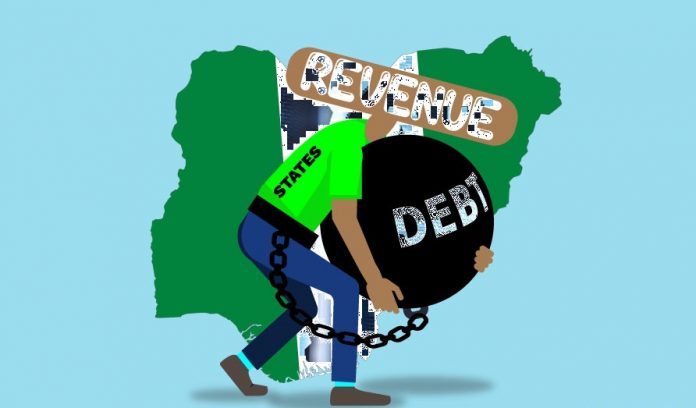
According to the nation’s tax agency, FIRS, more than N1.7 trillion revenue disappeared in 2023, and thousands of companies faded in the broad manufacturing industry.  It goes beyond Nigeria as there are pockets of “turbulence” everywhere, for SMEs, fuelled by wars, insecurity or even technology.

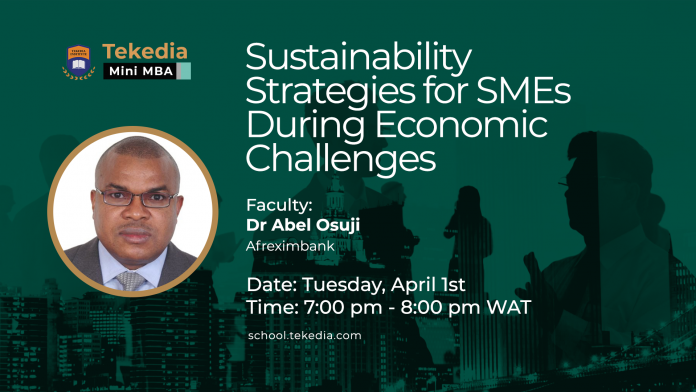
The implications of these economic turbulence are huge, not just to the state’s revenue, but also to the companies. Today, at Tekedia Mini-MBA, our Faculty, Dr Abel Osuji, from Afreximbank, Africa’s bank of this decade, in our opinion, will be teaching on “Sustainability Strategies for SMEs During Economic Challenges”. Zoom in the class board.

Tekedia Mini-MBA >> our product is Knowledge

Nigeria Embraces Crypto Era With Investments And Securities Act 2025

0
SEC Nigeria

In a groundbreaking move, the Nigerian government has ushered in a new era for the nation’s capital market with the investments and securities Act 2025, opening a new chapter for the country’s financial landscape.

This comes as President Bola Ahmed Tinubu officially signed the Investments and Securities Bill, thus providing for a robust regulatory framework in Nigeria’s capital market.

According to a statement by the Securities and Exchange Commission (SEC), the new Investments and Securities Act 2025 repeals the Investments and Securities Act 2007 and introduces key reforms aimed at boosting investor confidence, strengthening market oversight, and aligning Nigeria’s financial markets with global best practices.

Commenting on this development, the Director-General of SEC, Dr. Emomotimi Agama, commended the President’s assent as a transformative step for the capital market.

He said,

“The ISA 2025 reflects our commitment to building a dynamic, inclusive, and resilient capital market. By addressing regulatory gaps and introducing forward-looking provisions, the new Act empowers the SEC to foster innovation, protect investors more efficiently, and reposition Nigeria as a competitive destination for local and foreign investments.

“We commend all stakeholders within and outside the capital market community for their unwavering solidarity towards the achievement of this historic milestone and solicit their continued collaboration in respect of the effective implementation of the ISA 2025 for the benefit of our economy”.

It is worth noting that the investments and securities Act 2025, explicitly recognized virtual assets such as crypto and investment contracts, as securities, a move that signals Nigeria’s readiness to embrace the global cryptocurrency revolution. This progressive step has been met with widespread approval from financial experts and market stakeholders, who see it as a catalyst for revitalizing Nigeria’s capital market.

Lauded as a visionary reform, the ISA 2025 introduces measures to align Nigeria with international financial standards, particularly in the fast-evolving crypto space. One standout feature of the legislation is its firm stance against Ponzi schemes and other illicit investment activities, imposing harsh penalties, including significant jail time, on perpetrators.

Implications of The (ISA) 2025, For The Nigerian Crypto Community

The Investments and securities act (ISA) 2025, recently signed into law, carries profound implications for both the Nigerian crypto community and the broader advancement of the country’s capital market.

For years, Nigeria’s crypto community has operated in a gray area, navigating inconsistent policies and occasional crackdowns by the government, such as the Central Bank of Nigeria’s 2021 ban on banks facilitating crypto transactions.

However, the ISA 2025 has changed this narrative by formally classifying cryptocurrencies as securities under the oversight of the Securities and Exchange Commission (SEC). This provides much-needed legal clarity, legitimizing crypto as a recognized asset class and reducing uncertainty for traders, developers, and businesses in the sector.

With crypto now under Nigeria’s SEC regulatory umbrella, investors both individual and institutions, can engage with digital assets with greater assurance. The law mandates protections against fraud and market manipulation, which could attract hesitant participants who previously viewed crypto as too risky or unregulated. This boost in confidence may drive higher adoption and investment in Nigeria, a country already known as one of Africa’s leading crypto markets.

Notably, by integrating crypto into the capital market framework, the ISA 2025 opens the door for innovative financial products, such as tokenized securities, crypto-based investment funds, and blockchain-driven platforms. Nigerian startups and fintechs, many of which have been at the forefront of Africa’s blockchain revolution, now have a legal foundation to build and scale solutions that leverage digital assets.

Looking ahead

By embedding cryptocurrencies into its legal framework, Nigeria is positioning itself as a leader in Africa’s digital economy, fostering an environment ripe for growth, transparency, and investor confidence in the crypto era.

Nigeria’s External Debt Soars to N66.4tn in Q3 2024 – CBN

0

The Central Bank of Nigeria (CBN) has revealed in its Fourth Quarter 2024 Economic Report, published on Monday, that Nigeria’s external debt has soared to N66.14 trillion—equivalent to $43.03 billion—as of Q3 2024.

Pegged at 23.14% of the country’s GDP, this disclosure has amplified mounting concerns over Nigeria’s spiraling public debt, igniting debates about fiscal responsibility and the tangible benefits of such heavy borrowing.

The latest figure marks a 0.30% uptick from the $42.90 billion recorded in Q2 2024, a subtle yet persistent climb that reflects Nigeria’s growing appetite for foreign loans. On a year-on-year basis, the debt has swelled by 3.40%, up from $41.59 billion in Q3 2023. This steady ascent paints a picture of a nation increasingly tethered to international creditors to bridge fiscal gaps and fuel development dreams—a reliance now under intense scrutiny.

Adding fuel to the fire, the World Bank recently approved a $500 million loan to Nigeria under its Social Protection Support Project, announced in March 2025. Aimed at bolstering vulnerable households through cash transfers and social safety nets, this injection is set to push Nigeria’s external debt even higher, nudging it toward an estimated $43.53 billion by mid-2025.

While the loan promises relief for the nation’s poorest, it also widens an already burdensome debt-servicing load. By September 2024, Nigeria had already forked out $1.34 billion to service its external debt, split between $0.72 billion in principal repayments (53.73%) and $0.62 billion in interest (46.27%). With commercial borrowings devouring $0.44 billion of that interest tab—nearly 71%—the addition of fresh loans like the World Bank’s only deepens the fiscal strain.

A closer look at Nigeria’s debt stock reveals a complex web of creditors. Multilateral loans, led by heavyweights like the World Bank, IMF, and African Development Bank, dominate at $21.77 billion, or 50.60% of the total. Commercial loans, mostly Eurobonds, follow at $15.12 billion (35.14%), while bilateral loans contribute $5.81 billion (13.50%). A smaller slice, $0.33 billion (0.76%), comes from syndicated loans via the African Finance Corporation. This diverse borrowing portfolio underscores Nigeria’s multifaceted approach to financing, but it’s the rising cost of repayment that’s ringing alarm bells.

For many Nigerians, the CBN’s revelation and the World Bank’s latest largesse crystallize a gnawing frustration: despite billions in loans, there’s little to show for it. From debilitated roads to underfunded hospitals, citizens point to a glaring absence of transformative projects tied to this debt.

Posts on X echo the sentiment of users decrying a government accused of borrowing for consumption rather than investment. The borrowed funds are believed to vanish into recurrent spending—salaries, subsidies, and operational costs—rather than infrastructure or industry that could spur growth and repay the debt.

The numbers bear out the challenge. In Q3 2024 alone, debt servicing consumed $1.34 billion, a figure dwarfed only by the $5.47 billion spent between January 2024 and February 2025, according to CBN data. Commercial loans, with their hefty interest rates, are a particular sore point, raising questions about long-term sustainability.

Meanwhile, multilateral loans, though often concessional, still demand repayment—$0.12 billion in interest in Q3 2024—while bilateral deals add to the mix. As the debt pile grows, so does the portion of national revenue siphoned off to creditors, leaving less for infrastructure development.

This is seen as not just a ledger issue—but a national dilemma. Nigeria’s dependence on foreign financing, driven by fiscal constraints and uneven oil revenues, has locked it into a cycle of borrowing to survive. Yet, the World Bank’s $500 million lifeline, while supposedly a balm for the vulnerable, risks becoming another weight on an overburdened economy.

Experts have recommended increased oil output, economic diversification, and improved tax revenue as solutions.

OpenAI Expands Access to New Image Generator to All Users, Plans Release of New AI-Language Model

0

OpenAI, an American Artificial Intelligence research organization, has expanded access to its advanced image generation tool, powered by the GPT-4o model, to all ChatGPT users, including those on the free tier.

Announcing this update, OpenAI CEO Sam Altman disclosed that it was pertinent for the feature to be available to all users.

He wrote,

“We will not do anything silly like saying that you can’t use our open model if your service has more than 700 million monthly active users. We want everyone to use it!”

Previously available to only paying subscribers, this feature which was launched on March 25, 2025, enables users to create detailed and photorealistic images directly with the ChatGPT interface.

Announcing the launch of the feature, OpenAI disclosed that the company has long believed that image generation should be a primary capability of its language models.

GPT-4o image generation excels at accurately rendering text, precisely following prompts, and leveraging 4o’s inherent knowledge base and chat context-including transforming uploaded images or using them as visual inspiration. These capabilities make it easier for users to create exactly the image they envision, helping them communicate more effectively through visuals and advancing image generation into a practical tool with precision and power.

GPT-4o’s image generation follows detailed prompts with attention to detail. While other systems struggle with 5 to 8 objects, GPT-4o can handle up to 10-20 different objects. It can also analyze and learn from user-uploaded images, seamlessly integrating their details into their context to inform image generation.

The introduction of the OpenAI image generation feature has led to a surge in user engagement, with many utilizing the tool to create images in distinctive style. Following the massive use of the feature Altman reacted on X, saying, “Can you all please chill on generating images this is insane our team needs sleep. We just haven’t been able to catch up since launch, so people are still working to keep the service up. Biblical demand, I have never seen anything like it”.

In response to the high usage of the image generation feature, OpenAI has implemented usage limits to manage server load and maintain performance. Free-tier users may experience restrictions, such as a cap on the number of images generated per day.

OpenAI Plans The Release of a New AI-Language Model in The Coming Months

In addition to expanding access to its image generation tool, OpenAI plans to release an open-weight AI model with advanced reasoning capabilities, marking its first such release since 2019.

Announcing this, Altman wrote on X,

“We are planning to release our first open-weigh language model since GPT-2. We’ve been thinking about this for a long time but other priorities took precedence. Now it feels important to do. Before release, we will evaluate this model according to our preparedness framework, like we would for any other model. and we will do extra work given that we know this model will be modified post-release.

“We still have some decisions to make, so we are hosting developer events to gather feedback and later play with early prototypes. We’ll start in SF in a couple of weeks followed by sessions in Europe and APAC. If you are interested in joining, please sign up at the link above. We are excited to see what developers build and how large companies and governments use it where they prefer to run a model themselves.”

This move by OpenAI aims to balance the benefits of open-source collaboration with the need to protect proprietary methodologies, allowing developers to build and customize the model with certain constraints

These developments come as OpenAI recently raised record funding of $40bn led by SoftBank Group. All these underscore OpenAI’s ongoing efforts to democratize access to advanced AI technologies while navigating the challenges associated with rapid innovation and widespread adoption.

Escalations of Trump’s Protectionist Agenda

0
USC experts talk about the importance of U.S.-China trade and how it affects the economy. (Illustration/iStock)

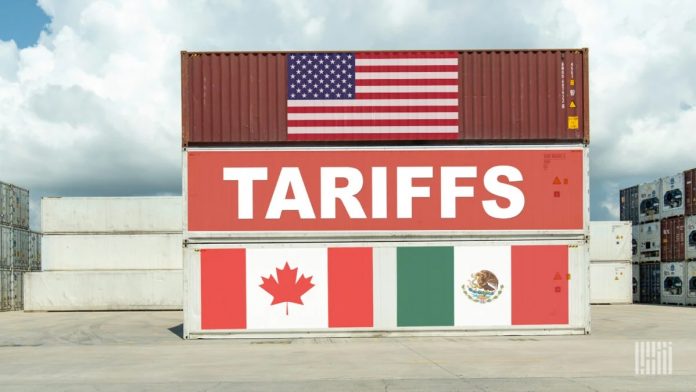
As of late March 2025, the President Donald Trump’s administration has already escalated tariffs significantly. By March 4, tariffs on all Chinese imports hit 20%, while 25% tariffs were imposed on most Canadian and Mexican goods (with USMCA-compliant goods exempted until April 2). On March 12, 25% tariffs were applied to all steel and aluminum imports, and threats of broader “reciprocal tariffs” and “secondary tariffs” (e.g., 25% on countries buying Venezuelan oil, announced March 24) have rattled markets. The Tax Foundation projects tariffs could affect over $1.4 trillion in imports by April 2025, aligning closely with your $1.5 trillion figure.

Expanding this to 25+ countries suggests a further broadening—potentially encompassing the EU, BRICS nations (warned of 100% tariffs if they ditch the dollar), and others like India or Japan, criticized for high tariffs or trade imbalances. $1.5 trillion represents roughly 47% of U.S. goods imports (based on 2023’s $3.2 trillion total). Targeting 25+ countries could hit major traders like China ($560 billion in 2023), Canada ($420 billion), Mexico ($320 billion), and the EU ($570 billion combined), plus smaller players. A 20%+ tariff would raise costs dramatically, reducing import volumes.

Simulations from the Centre for International Trade Policy (CITP) suggest a 20% universal tariff could cut U.S. imports by 37% if retaliated against, aligning with this scale. Retaliation is likely. Canada’s $20.8 billion in counter-tariffs (March 4) and China’s $33.4 billion (by March 10) show a pattern. If 25+ countries respond, U.S. exports ($2 trillion in 2023) could face reciprocal levies, hitting agriculture, tech, and energy sectors hard. Tariffs act as a tax on imports, passed to consumers. The Budget Lab at Yale estimates a 20% universal tariff (with 60% on China) could raise U.S. consumer prices by 1.4%–5.1%, or $1,900–$7,600 per household annually.

For $1.5 trillion at 20%+, Nationwide Mutual’s Kathy Bostjancic pegs it at ~$1,000 per household yearly, though broader coverage could push this higher—say, $2,000–$3,000 if supply chains tighten. Goods like electronics (China), autos (Mexico, Canada), and energy (Canada) would see immediate price hikes, compounding inflation fears already stoked by Trump’s earlier moves. The S&P 500 losing $2.5 trillion over three days implies a ~10% drop from its March 2025 peak. On March 10, it shed 2.7% ($1.4 trillion) in one day amid tariff uncertainty, per Reuters. A three-day $2.5 trillion plunge suggests a market cap fall from ~$48 trillion to $45.5 trillion, entering correction territory (10%+ decline).

The S&P hitting six-month lows by March 31, driven by tariff fears and recession risks. Tech (e.g., Nasdaq’s 4% drop March 10), autos (e.g., Stellantis down 7%), and retail (e.g., Best Buy warning of price hikes) would lead losses, as seen earlier in 2025. Goldman Sachs raised recession odds to 20% and JPMorgan to 40% by mid-March, fueling the sell-off. Expanding tariffs to 25+ countries risks a full-scale trade war. The EU’s two-phase retaliation plan (announced March 12) and China’s WTO complaints signal resistance. Secondary tariffs (e.g., on Russian oil buyers, threatened March 30) could isolate the U.S. further, disrupting $1.5 trillion in trade flows.

Bloomberg Economics estimates Trump’s earlier tariffs could cut U.S. GDP by 0.4%–1.3%. Scaling to $1.5 trillion, with retaliation, GDP might shrink 1.5%–2%, risking recession if consumer spending falters. Canada and Mexico, tied to 70%+ of their GDP via U.S. trade, could tip into recessions, per RBC Capital Markets. Tariffs and uncertainty have already boosted the dollar (e.g., 20-year high vs. Canadian dollar in February). This mitigates some import cost hikes but crushes U.S. exporters, amplifying trade deficits ironically counter to Trump’s goals.

Marathon Digital: Its $2 billion Bitcoin buy could gain if tariffs spark a flight to crypto as a hedge. Bitcoin dropped 5% on March 10 amid risk-off sentiment, but a prolonged trade war might reverse this, boosting Marathon’s 46,376 BTC holdings. Bukele’s visit Scheduled for April, Bukele’s talks with Trump could align El Salvador’s Bitcoin strategy with U.S. reserves, potentially offsetting tariff fallout via crypto innovation. A stronger U.S.-El Salvador axis might also counter regional trade disruptions. The U.S. imposing 20%+ tariffs on $1.5 trillion from 25+ countries, with the S&P 500 shedding $2.5 trillion in three days, paints a picture of escalating trade tensions and market panic. It’s a plausible escalation of Trump’s protectionist agenda, driving inflation, recession fears, and global retaliation.