DD
MM
YYYY

PAGES

DD
MM
YYYY

spot_img

PAGES

Home Blog Page 1468

Google Faces Mounting Antitrust Challenges Over Its Ads Markets Dominance, Amid AI Competition

0

Tech giant Google is currently facing intensifying antitrust probe, as it navigates a future increasingly shaped by Artificial Intelligence (AI).

On Thursday, a federal judge ruled that the search giant illegally maintained a monopoly in its online advertising market, specifically in publishing ad servers and ad exchanges, due to its dominant position between ad buyers and sellers.

This decision, following a September trial in Alexandria, Virginia, marks Google’s second major antitrust setback in less than a year. Judge Brinkema declared that Google unlawfully dominated two key markets: publisher ad servers and ad exchanges, which are critical digital platforms connecting buyers and sellers of online advertising.

“The Court concludes that the United States is entitled to partial summary judgment on its claims that Google monopolized the publisher ad server market and the ad exchange market in violation of Section 2 of the Sherman Act,” Brinkema wrote.

In August, another judge found that Google held an illegal monopoly in internet search, the most significant antitrust ruling in tech since the Microsoft case over two decades ago.

Meanwhile, Google pushed back against the allegations, arguing that the allegations focused on outdated practices.

“Prosecutors also ignored competition from technology companies, including Amazon.com and Comcast, as digital ad spending shifted to apps and streaming video,” said Google’s lawyer. The company claimed it had since improved interoperability with rival platforms and that prosecutors were ignoring substantial competition from tech rivals.

As Google defends its core business in court, it faces growing competition from generative AI, notably OpenAI’s ChatGPT, which offers alternative ways to search for information. The company is also grappling with slowing revenue growth and potential ad spending declines driven by economic concerns over President Donald Trump’s new tariffs.

Alphabet, Google’s parent company, saw its stock dip over 1% on Thursday, with a 20% year-to-date decline, ahead of its first-quarter earnings report next week. U.S. District Judge Leonie Brinkema ruled that Google’s anticompetitive practices “substantially harmed” publishers and web users, violating Section 2 of the Sherman Act. The trial included 39 witnesses, 20 depositions, and numerous exhibits.

While Google was found to unlawfully dominate publisher ad servers and ad exchanges, the court dismissed claims regarding general display advertising tools, noting the government failed to prove acquisitions like DoubleClick and Admeld were anticompetitive.

Google plans to appeal the ruling on its publisher tools, with Lee-Anne Mulholland, Google’s vice president of regulatory affairs, stating, “Publishers choose Google because our ad tech tools are simple, affordable, and effective.” The company argues that prosecutors overlooked competition from firms like Amazon and Comcast, particularly as ad spending shifts to apps and streaming video, and claims it has improved interoperability with rival platforms.

Attorney General Pam Bondi hailed the ruling as a “landmark victory” in curbing Google’s dominance in digital advertising, a multi-billion-dollar industry central to the company’s revenue. The Justice Department is pushing for Google to divest parts of its ad-tech business, which could create opportunities for competitors like Amazon, whose ad business is expanding.

Google also continues to fight allegations of monopolistic practices in its search business, with an appeal planned following the August ruling. These legal battles could drag on for years, even as remedies are determined, leaving Google in a precarious position as it balances courtroom defenses with innovation in an AI-driven market.


The Altcoin Turning Heads in a Bear Market: SpacePay ($SPY) Sets Out to Bring Crypto into Retail

0

You can’t go to your next-door cafe, grocery store, or boutique with just crypto in your wallet. Crypto is not mainstream in retail yet.

Volatile prices, high fees, and complex setups have kept the idea of crypto’currency’ just an idea.

SpacePay: A Practical Revolution in Crypto Payments

SpacePay ($SPY) is a real-world solution built to make crypto payments faster and cheaper. SpacePay’s native token, $SPY, is now in presale, and has raised over $1 million already.

The fintech platform comes with a clear mission: make spending crypto as smooth as swiping a card. Built by a London-based team, SpacePay isn’t just an idea.

It has a functioning product and a growing community of people who have confidence in its journey ahead. In fact, SpacePay’s X account has amassed over 70,000 followers already.

Here’s what makes it stand out:

  1. Instant fiat conversion: Crypto volatility scares many merchants, and it is not unreasonable. After all, it takes just one price swing to wipe out their entire margins.

SpacePay addresses this problem. How? It converts crypto into local currency at the point of sale. That means no guesswork or loss when it comes to accepting crypto payments.

  1. No new hardware. No hassle: SpacePay integrates directly with Android-based point-of-sale (POS) systems. If a business already has this system set up, they can get started instantly.

That means there is no need to buy new machines or go through complicated onboarding. They can just plug in and start accepting crypto and tap into the growing new tech-savvy demographic.

  1. Low Fees That Make Sense: Credit card networks take 1.5% to 3.5% per transaction. SpacePay charges a flat 0.5%.

$SPY: The Power Behind the Platform

$SPY is a utility-first token designed to power SpacePay’s real-world ecosystem.  More than just a coin that users can buy and trade, $SPY actually helps the system work.

In SpacePay’s case, $SPY fuels the SpacePay engine. Already in presale, early investors can grab it before it potentially gains more value as the platform grows.

The token is already live in presale, and here is what it unlocks:

The first is loyalty rewards. Holders can unlock exclusive benefits and promotions within the SpacePay ecosystem. When you hold $SPY, you’re not just an investor. You’re considered a valued member of the ecosystem, and you will be rewarded accordingly. You get access to special perks, discounts, or promotions when using SpacePay.

It works like frequent flyer miles or cashback points. The more you support the ecosystem, the more you potentially earn.

The next is governance rights. Token holders help determine the platform’s direction and future features like how the funds are used or what changes to make to the system.

For investors who love to help steer the direction of the platform, this would be a great opportunity.

Revenue sharing is another feature. Long-term holders earn a cut of SpacePay’s revenue. By choosing to join the platform’s journey early, they can potentially maximize their profits.

A share of the money the project earns through transaction fees or other services is shared with long-term $SPY holders.

If you buy in early and hold your tokens, you could earn passive income just for being part of the ecosystem as it grows.

This aligns your success with the platform’s success.

Why You Should Get in Before the Presale Ends

Most crypto projects launch with nothing more than a white paper and a wishlist. SpacePay stands out with an MVP that works.

The API integration is smooth. The incentives are smart. And now, the presale is live.

The presale gives users a chance to be a part of a solution that solves one of crypto’s biggest problems. Unlike most altcoins that rely on hype and speculation, SpacePay is backed by a real-world application and a growing ecosystem

To get in early before the rest of the market catches on, the ongoing presale is the best gateway.


Visit SpacePay (SPY) presale

For regular updates about the project development and community discussions, check out SpacePay’s Twitter and Telegram channels.

Nigeria Launches BisonFly Project to Tame Air Travel Costs for MDAs

0

The Federal Government of Nigeria has launched the BisonFly Project, a centralized digital platform aimed at cutting down on the ballooning cost of air travel within the federal civil service.

The initiative, announced in Abuja by the Minister of Finance and Coordinating Minister of the Economy, Wale Edun, is being touted as a key reform step in the drive to enforce fiscal discipline across Nigeria’s bloated Ministries, Departments, and Agencies (MDAs).

The move comes amid mounting pressure from governance advocates and economic analysts who have repeatedly called for a drastic reduction in the cost of running government — a longstanding drain on Nigeria’s limited public resources.

According to a statement released on the Ministry’s official X account on Friday, the BisonFly Project was developed by the Ministry’s Efficiency Unit in collaboration with ICT advisers and other key stakeholders. It will serve as a single digital platform for booking all official air travel, enabling the government to leverage its bulk purchasing power to negotiate better fares with airlines, eliminate redundant travel schedules, and ensure real-time tracking of travel-related expenditures.

“In its avowed commitment to ensuring cost savings across all air travels, the Federal Government has launched the BisonFly Project to optimize air travel costs for the Federal Civil Service through a structured, optimized, and technology-driven discount program,” the Ministry stated.

Wale Edun, who inaugurated the BisonFly Project team at his office, said the initiative was a direct response to the need for smarter financial governance. He pointed out that the cost of travel across MDAs had reached unsustainable levels, and that BisonFly was expected to bring transparency and coordination to what has largely been a chaotic and expensive aspect of government spending.

The announcement has also renewed focus on the wider issue of government spending and inefficiency. Nigeria’s MDAs, many of which operate without oversight, continue to gulp a significant portion of the national budget — often with very little output to show. Despite being created to drive service delivery and revenue generation, a number of these agencies fail to remit any revenue to the federation account, while still drawing heavily on public funds for recurrent expenses such as travel, allowances, and office maintenance.

Analysts have consistently flagged the MDAs as a black hole in Nigeria’s fiscal framework. A report by the Office of the Auditor-General has in the past revealed how several government agencies generated billions in revenue annually but retained nearly all of it, in violation of fiscal rules, while still depending on federal allocations to fund their operations.

This fiscal recklessness, critics argue, has not only deepened the country’s fiscal crisis but also eroded public confidence in government reforms. It is within this context that the BisonFly Project is being launched — not just as a digital tool, but as a symbolic gesture to rein in one of the many cost leakages plaguing the system.

Edun said the system would mirror international best practices, citing the World Bank’s use of centralized travel systems to manage costs and ensure accountability.

“By centralizing travel coordination and securing discounted rates, we are introducing a structure that reduces inefficiencies and ensures transparency,” he said.

The project, expected to go live in the coming months, will be monitored by a dedicated implementation team tasked with ensuring its swift rollout and measurable outcomes.

Raymond Omenka Omachi, the Permanent Secretary for Special Duties at the Ministry of Finance, praised Edun’s leadership, describing the BisonFly Project as a “benchmark for fiscal responsibility” that could become a model for other sectors of the public service.

But for many Nigerians, digital platforms and reform promises are not enough. The real demand is for a wholesale reduction in the cost of governance, from trimming redundant agencies to enforcing accountability in revenue-generating ones.

Groups like BudgIT and the Centre for Social Justice have repeatedly urged the federal government to go beyond surface-level reforms and restructure the civil service entirely, including merging overlapping agencies and introducing a performance-based allocation system.

For years, Nigeria has faced a paradox where over 70% of its budget goes to recurrent expenditure — salaries, allowances, foreign trips, and operations — while capital projects, which directly impact the lives of citizens, receive the scraps. That imbalance has only worsened in recent times, as the government grapples with inflation, mounting debt, and dwindling oil revenue.

Although the BisonFly initiative may help trim air travel costs, critics warn that such reforms will mean little if not accompanied by broader changes across the MDA ecosystem. Without mechanisms to enforce compliance and penalize agencies that sidestep the system, past efforts at cost-cutting have collapsed under the weight of entrenched interests and bureaucratic resistance.

Still, the launch of BisonFly marks a shift in tone from the Finance Ministry, signaling some political will to confront Nigeria’s cost-of-governance crisis. Whether this will translate into meaningful savings and long-term reform is a test yet to come.

U.S. Reportedly Planning to Isolate China on Trade Negotiations with 70 Countries

0

The United States is reportedly planning to use trade negotiations with over 70 countries to isolate China economically by pressuring these nations to limit their trade interactions with Beijing. The strategy involves requesting that these countries block Chinese goods from being routed through their territories, prevent Chinese firms from establishing operations within their borders to evade U.S. tariffs, and avoid absorbing cheap Chinese industrial goods into their economies.

This approach aims to weaken China’s global trade influence and force Beijing to negotiate with the U.S. under less favorable terms. The plan, attributed to Treasury Secretary Scott Bessent, is part of a broader escalation of the U.S.-China trade war, with the U.S. imposing 145% tariffs on Chinese imports while offering tariff reductions to other nations in exchange for compliance. Discussions with some countries have reportedly begun, though specific nations involved remain undisclosed.

China is countering by strengthening trade ties elsewhere, with Xi Jinping signing 45 deals with Vietnam and pushing for closer cooperation with the EU, Japan, and South Korea. Beijing has also appointed a new trade negotiator, Li Chenggang, amid stalled talks with Washington, signaling a strategic shift to navigate the escalating tensions.

The effectiveness of the U.S. strategy is uncertain. Some analysts argue that China’s defiance and domestic support for retaliation may limit the impact of these measures, while others note that nations may hesitate to fully align with the U.S. due to their economic reliance on China. The situation risks further decoupling the U.S. and Chinese economies, potentially disrupting global trade and raising costs for consumers.

Restricting trade routes and access to markets could strain China’s export-driven economy, reducing its global market share. Higher U.S. tariffs 145% on Chinese imports may force Chinese firms to seek alternative markets, potentially flooding other economies with cheap goods, which could destabilize local industries. Higher tariffs and trade restrictions may increase domestic consumer prices due to reduced access to low-cost Chinese goods. U.S. industries reliant on Chinese inputs could face supply chain disruptions and higher production costs.

Nations pressured to limit trade with China may face economic dilemmas. Aligning with the U.S. could secure tariff reductions, but cutting ties with China risks losing access to a major trading partner. Smaller economies dependent on both powers may struggle to balance these pressures. This escalation intensifies the U.S.-China trade war, potentially spilling into other domains like technology, military posturing, or influence in international organizations. It may further erode diplomatic relations, making cooperation on global issues (e.g., climate change) more difficult.

The U.S. strategy could reshape alliances, with countries forced to choose sides. Nations like Vietnam, India, or EU members may resist full alignment with the U.S. to maintain strategic autonomy, while others may leverage U.S. incentives to gain economic advantages. China’s push for stronger ties with Vietnam, the EU, Japan, and South Korea signals a counter-strategy to build a coalition resistant to U.S. pressure. This could strengthen China’s influence in Asia and beyond, potentially creating rival trade blocs.

Blocking Chinese goods from third-country routes may force a reorganization of global supply chains, increasing costs and delays. Industries like electronics, automotive, and textiles, heavily reliant on Chinese manufacturing, could face significant disruptions. The strategy risks further decoupling the U.S. and Chinese economies, fragmenting global trade into competing spheres. This could weaken multilateral trade frameworks like the WTO, as countries navigate bilateral or regional agreements instead.

Reduced trade efficiency and higher tariffs may lead to increased prices for goods worldwide, contributing to inflation and reducing purchasing power, particularly in import-dependent economies. Many countries may resist U.S. demands due to economic dependence on China or fear of retaliation from Beijing. Partial compliance could undermine the strategy’s effectiveness.

China’s domestic market and growing trade partnerships (e.g., Belt and Road Initiative) may mitigate the impact of U.S. restrictions, allowing Beijing to withstand economic isolation efforts. Smaller economies caught in the crossfire may face trade losses or political instability if forced to alienate one superpower. Global economic growth could slow if trade tensions escalate further.

While the U.S. aims to weaken China’s trade dominance, the strategy risks escalating global economic and geopolitical tensions, disrupting supply chains, and creating a fragmented trade landscape. The outcome hinges on the willingness of other nations to align with U.S. demands and China’s ability to counter through alternative partnerships.

As Trump Tariffs Reshape Trade, Made-in-America CEOs Eye a Manufacturing Comeback — But Admit It Won’t Happen Overnight

0

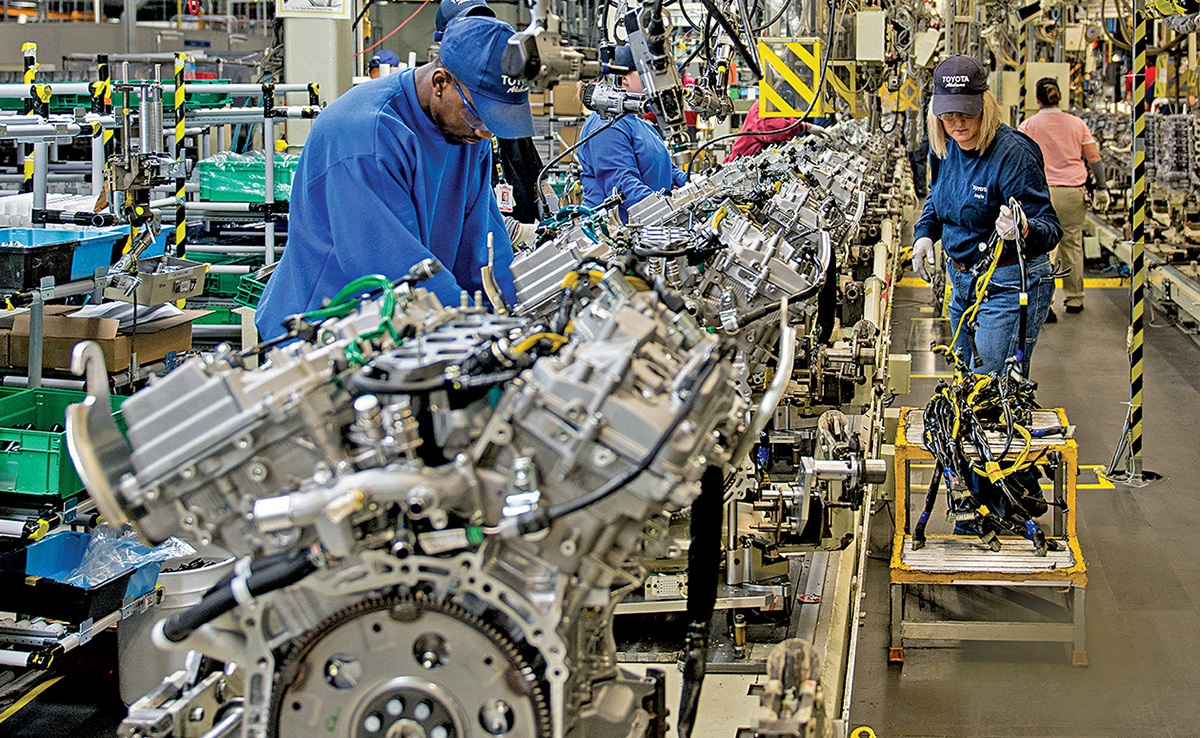
As the United States tightens its trade policy under President Donald Trump, cautious optimism is rippling through the nation’s industrial base. For companies that have long insisted on making their products in America, the renewed focus on domestic manufacturing feels like vindication — albeit tempered by uncertainty.

Ric Cabot, CEO of Vermont-based sock manufacturer Darn Tough, is one such executive. His company, which has earned national attention for its high-performance socks backed by a lifetime guarantee, has spent years doing what many others abandoned: manufacturing entirely in the U.S.

“For the first time, and hopefully not for the last time, domestic manufacturing is in a good spot,” Cabot said in an interview with Business Insider. “But you gotta commit. You gotta commit to making it here. It isn’t easy. Nobody outsources anything for quality.”

That last line is more than a quip. It underscores a fundamental belief among domestic producers: offshoring may cut costs, but quality and control suffer in the process. With the Trump administration’s tariff-heavy trade strategy, companies like Darn Tough may finally have the market conditions to prove that point, even if they remain wary of the pace and unpredictability of the White House’s approach.

Tariffs and Their Double-Edged Sword

Under the Trump administration’s evolving trade agenda, tariffs are being wielded as tools to encourage reshoring — or the return of manufacturing to U.S. soil. Treasury Secretary Scott Bessent said as much in a February interview, calling tariffs “a means to an end” aimed at restoring the country’s industrial might.

But for business leaders, the end may be clear, yet the means remain fraught.

“It’s not like we could just flip a switch, write a check, and turn on all that capability the next day,” said Bill Banta, CEO of Decked, an Idaho-based truck storage system maker that manufactures its products in Ohio and Utah. “Multimillion-dollar capital investments don’t work on short timelines — especially not with tariff threats looming.”

Banta, whose company has gradually built its own injection-molding machines and robotic welding infrastructure, acknowledged that the current moment is favorable for firms like his. Still, he warned that a poorly coordinated tariff policy could backfire, particularly if the cost of imported manufacturing equipment rises.

“It’s really hard to make long-term investments if you don’t know whether you’ll be hit with significant tariffs by the time that equipment lands in a U.S. port,” he said.

Darn Tough faces similar challenges. While its wool is sourced domestically and all production happens in Vermont, the specialized machines it uses to knit socks come from Italy. That means even companies committed to U.S. manufacturing are not immune from the fallout of global trade disruption.

Undoing The Years of Manufacturing Neglect

For many executives, the current push to bring production back to America comes after decades of decline. Bayard Winthrop, CEO of California-based apparel maker American Giant, described the past 40 years as an era in which U.S. manufacturing was not just ignored but actively undermined.

“You can absolutely — particularly in knitwear — make very high-quality, very large volume knitwear in the United States,” Winthrop said. “They’ve just forgotten how to do it.”

American Giant’s model, like Darn Tough’s, relies on deep investment in U.S. supply chains and labor. But unlike multinationals that can shift supply networks around the globe, these companies are locked in, by choice and conviction, to the U.S. economy.

That commitment is starting to pay off. Darn Tough’s socks, which retail for around $25 a pair, may seem expensive next to $3 wool socks on Amazon. But with imported goods facing potentially higher tariffs, that price gap is narrowing. What once seemed like a niche product for quality-focused customers could soon be a mainstream buy for cost-conscious consumers.

A Long Road Back

Still, the CEOs agree: rebuilding America’s manufacturing base won’t happen overnight.

Cabot emphasized that making things domestically requires more than patriotic slogans — it requires time to train workers, develop supply chains, and build the kind of muscle memory that was lost when companies offshored en masse.

“We sort of jettisoned a whole demographic of people that worked in manufacturing,” Cabot said. “I just don’t see the reason why we can’t bring this back, but it’s going to take time.”

That time, and a predictable policy environment, are what leaders like Banta and Winthrop are now pleading for. They welcome the administration’s intent but worry about the execution.

“I don’t like the instability,” Winthrop said. “I certainly don’t think we ought to be treating our friendly allies, like Canada and Vietnam, the same way we’re treating China.”

He’s not alone in that concern. Many in the domestic manufacturing sector believe that while tariffs can be a useful tool, they must be deployed with precision. A blunt-force approach could hurt allies, drive up input costs, and make it harder — not easier — to build out U.S. capabilities.

Companies like Darn Tough, American Giant, and Decked are proving that American-made is viable. But they also serve as reminders that reshoring is a long game. It took decades to hollow out the industrial economy, and it will take more than tariffs and slogans to bring it back.

“The opportunity is real,” said Cabot. “But only if we’re serious about it — and only if we give it enough time to grow roots again.”