DD
MM
YYYY

PAGES

DD
MM
YYYY

spot_img

PAGES

Home Blog Page 1469

Is BlockDAG the Real Solana Killer? EVM, WASM & $208 Million Viral Presale Backs The Layer 1 Claim

0

Solana may have dominated headlines in the last bull cycle, but a new Layer 1 is emerging with the firepower to dethrone it—and this time, the numbers, architecture, and community are all aligning.

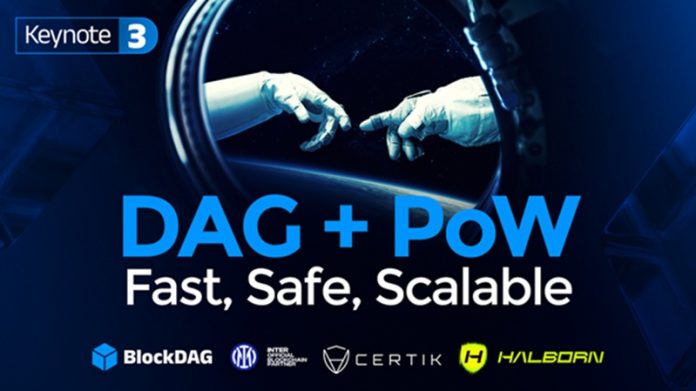
BlockDAG, a hybrid DAG + Proof-of-Work blockchain, is now being widely called a “Solana Killer”, and after its explosive Keynote 3, that label is looking less like hype and more like reality. With a live testnet, DeFi tools launching at mainnet, and powerful EVM + WASM compatibility, BlockDAG is shaping up to be the chain developers—and investors—won’t be able to ignore.

And the momentum backs it up. In just 48 hours post-keynote, BlockDAG raised $5 million, pushing its presale past $208 million. Currently in Batch 27 at $0.0248, the coin has already sold over 19 billion BDAG, and analysts are projecting an aggressive climb toward $1 once it hits major exchanges.

BlockDAG vs. Solana: What’s the Difference?

Solana built its reputation on speed, processing up to 65,000 transactions per second thanks to its Proof-of-History consensus. But that speed comes with major tradeoffs—network outages, centralization risks, and limited tooling support for developers outside its ecosystem.

BlockDAG flips that model by combining Directed Acyclic Graph (DAG) structure with Proof-of-Work security—a parallel-processing approach that allows multiple blocks to be confirmed simultaneously without bottlenecks. The result? Speed without sacrifice.

More importantly, BlockDAG supports both EVM and WASM, giving developers access to the broadest tooling possible. This means seamless compatibility with Ethereum’s smart contract ecosystem, while also embracing the future with WebAssembly—a faster, safer, and more scalable virtual machine.

“Each of these advancements brings us closer to a truly scalable, decentralized, and trustless financial system,” said Antony Turner, BlockDAG CEO, during Keynote 3.

Solana doesn’t offer native EVM or WASM support. BlockDAG does. And that gives it a serious edge in attracting smart contract developers from both Ethereum and Polkadot ecosystems—without needing bridges, wrappers, or compromises.

DeFi-Ready From Day One

While Solana has worked hard to build its DeFi ecosystem, many protocols launched slowly and required third-party integration for key functionalities. BlockDAG, on the other hand, is launching its mainnet with DeFi infrastructure built-in.

Keynote 3 confirmed:

  • Native staking
  • Lending & borrowing tools
  • Token swap functionality
  • Cross-chain bridges
  • Governance modules

This is more than a tech launch—it’s an ecosystem rollout. Users will be able to earn, transact, and govern the network from day one, with token and NFT creation wizards also ready at mainnet. That’s something most chains take years to deliver.

With over 800,000 X1 Miner App users and 400,000 Tap Miner signups, BlockDAG already has an engaged audience that’s earning and interacting with the token before it even lists. That kind of adoption isn’t theoretical—it’s happening now.
Why BDAG Could Overtake Solana in 2025

Solana’s current market cap hovers in the billions. BlockDAG, with $208M raised pre-launch, is still in its early innings. But the upside is exactly what’s drawing in both retail and institutional investors.

Exchange listings across 10+ major CEXs are already confirmed post-mainnet. With over 16,600 miners sold and a global network of 100+ active nodes, the foundation is real, and it’s growing fast.

The hybrid model also addresses a major criticism of Solana—centralization. BlockDAG’s dual-layered mining structure (via mobile app and ASICs) ensures security is distributed, inclusive, and censorship-resistant. That’s the kind of decentralization Web3 was built for.

If BDAG hits even a modest $1 valuation, early buyers at $0.0248 could be looking at 40x returns. And with momentum like this, the price may not stay this low for long.

“We are more than a project; we are pioneers of a new decentralized era,” Turner declared during the keynote—and the market seems to agree.

The Verdict: BlockDAG Is Built for the Long Game

Solana might have had the spotlight, but BlockDAG is building the infrastructure to outlast and outperform. With superior compatibility, real DeFi tools, stronger decentralization, and growing adoption before launch, the title of “Solana Killer” no longer feels premature—it feels earned.

The next 12 months will determine who leads the next wave of Web3. BlockDAG isn’t waiting for the future to arrive—it’s building it in real time.

And for those looking to get in early, Batch 27 may be the last chance before BDAG becomes the headline it’s destined to be.


Website: https://blockdag.network

Presale: https://purchase.blockdag.network

Telegram: https://t.me/blockDAGnetworkOfficial

Discord: https://discord.gg/Q7BxghMVyu

Implications of FTX Repayments to Creditors on the Crypto Markets

0

FTX began repaying its major creditors on May 30, 2025, utilizing $11.4 billion in cash reserves accumulated since its collapse in November 2022. This follows a bankruptcy court-approved plan from October 2024, which allows the defunct cryptocurrency exchange to distribute funds recovered through asset liquidations and settlements. Smaller creditors, those with claims of $50,000 or less, have already started receiving payments, with 98% of them expected to recover approximately 118-119% of their claim values. The repayment process for larger creditors, however, has been complicated by a massive volume of claims—some reports suggest billions of potentially fraudulent or disputed submissions—adding urgency to the process as legitimate creditors accrue 9% annual interest on their claims.

While this marks a significant step toward resolving one of the crypto industry’s most infamous failures, many creditors remain frustrated that repayments are based on cryptocurrency values from November 2022, rather than current higher market prices. The implications of FTX repaying major creditors with $11.4 billion in cash reserves by the end of May 2025 are multifaceted, affecting creditors, the cryptocurrency market, and the broader perception of the industry. Creditors receiving 118-119% of their November 2022 claim values will recover more than their original balances at the time of FTX’s collapse, thanks to the 9% annual interest accrued. However, many are likely to feel shortchanged because repayments are pegged to crypto prices from November 2022 (e.g., Bitcoin was around $16,000 then, compared to significantly higher values in March 2025).

This disconnect could lead to ongoing frustration or legal challenges from those arguing for adjustments to current market values. The 98% of smaller creditors (claims ? $50,000) who’ve already started receiving payments benefit from a relatively swift resolution, potentially restoring some trust in bankruptcy processes for crypto firms.

Larger creditors, however, may face delays due to the complexity of validating claims amidst billions of potentially fraudulent submissions. The infusion of $11.4 billion into the hands of creditors could increase market liquidity, as some recipients may reinvest in cryptocurrencies. This could provide a short-term boost to prices, particularly if sentiment around crypto stabilizes post-FTX fallout. However, the scale of this impact depends on how much of the repaid funds flows back into the market versus being cashed out or held.

FTX’s ability to recover and repay such a significant sum sets a rare positive example in an industry plagued by collapses with little creditor recovery (e.g., Mt. Gox, Celsius). This might bolster confidence among investors and regulators that crypto firms can manage insolvency more responsibly, though it’s an outlier due to FTX’s unique asset recovery efforts. The repayment process could partially rehabilitate the crypto sector’s image, showing that losses aren’t always permanent. Yet, the dissatisfaction over outdated valuation metrics might reinforce calls for clearer rules on how crypto bankruptcies should handle volatile asset prices, potentially fueling regulatory scrutiny.

Governments and financial watchdogs may view FTX’s case as evidence that stronger oversight is needed to prevent fraudulent claims and ensure equitable creditor treatment. This could accelerate efforts to classify cryptocurrencies under traditional financial frameworks, impacting how future insolvencies are managed. FTX’s downfall and subsequent repayment saga highlight the importance of robust risk management and transparency. Other exchanges and platforms may face increased pressure to prove solvency and protect user funds, possibly through audits or insurance mechanisms.

The reported billions of dubious claims could slow down or derail full repayment, potentially leading to legal battles that extend beyond May 2025. This uncertainty might temper optimism about the process. While the repayment doesn’t directly tie to his legal consequences (he’s serving a 25-year sentence as of March 2025), it shifts some focus from his fraud to the estate’s recovery efforts, possibly softening the narrative around FTX’s collapse over time. While the $11.4 billion repayment is a landmark achievement in crypto bankruptcy, it’s a double-edged sword: it offers closure for some and a potential market lift, but it also exposes lingering valuation disputes, fraud challenges, and regulatory gaps that could shape the industry’s future trajectory.

MultiChoice Warns Shareholders of Tougher Times Ahead as Subscriber Numbers, Revenue Plummet

0

MultiChoice, Africa’s leading entertainment platform and parent company of DStv, has warned its shareholders to brace for more difficult times ahead as it continues to struggle with a challenging business environment across its key markets.

The company, which has long dominated Africa’s pay-TV industry, has suffered a sharp decline in its subscriber base, dropping from over 23 million to 19.3 million in less than two years.

The loss has been most pronounced outside its home market of South Africa, with Nigeria emerging as a major pressure point. The country, which once served as one of MultiChoice’s biggest revenue sources, has seen a steep decline in subscribers.

In a statement detailing the challenges it faces, MultiChoice highlighted Nigeria’s economic turmoil as a key factor behind its struggles.

“The loss in the rest of Africa has been primarily due to the significant consumer pressure in Nigeria, where inflation has remained above 30% for the majority of the last 12 months and, more recently, due to extreme power disruptions in Zambia,” the company stated.

MultiChoice is currently preparing to release its financial results for the fiscal year ending March 31, 2025, and has already warned that the tough consumer environment has not only driven away subscribers but has also stifled revenue growth.

MultiChoice’s Tariff Hike and Consumer Pushback in Nigeria

MultiChoice’s decision to repeatedly increase its subscription prices has fueled tensions with Nigerian consumers and regulators. Over the past two years, the company has implemented several tariff hikes, citing the rising costs of operations, currency devaluation, and increasing business expenses in Nigeria’s tough economic climate.

In April 2023, MultiChoice raised its DStv and GOtv subscription rates by an average of 17%, blaming inflation and foreign exchange volatility. Just a year later, in April 2024, the company announced another price hike of up to 20%, sparking outrage among subscribers.

The price hikes have led to mounting consumer backlash, with many Nigerians accusing the company of exploiting the country’s economic crisis for profit. Consumer rights groups and regulatory bodies, including the Federal Competition and Consumer Protection Commission (FCCPC), have also waded into the dispute, demanding that MultiChoice justify its continuous increases in subscription rates.

At various times, the Nigerian National Assembly had intervened, attempting to compel MultiChoice to adopt a pay-as-you-watch model, a demand that has long been echoed by Nigerian subscribers. However, MultiChoice has resisted, arguing that such a model is not feasible for its business operations.

Despite the public outcry, the company has defended its price adjustments, pointing to soaring operational costs, including the expense of acquiring foreign content, maintaining satellite infrastructure, and sustaining local productions.

Subscribers Decline More About Economic Hardship Than Tariff Protest

Although MultiChoice’s tariff hikes have undoubtedly fueled dissatisfaction among Nigerian consumers, industry analysts believe the sharp decline in subscribers has more to do with economic hardship than a protest against price increases.

Nigeria’s inflation has been at record highs, remaining above 30% for much of the past year. Food prices, rent, and transportation costs have skyrocketed, significantly reducing disposable income for millions of Nigerians. Faced with rising living costs, many households have been forced to cut back on non-essential expenses, including pay-TV subscriptions.

Industry experts note that Nigerians are not necessarily boycotting MultiChoice over its price hikes but are simply unable to afford the service anymore. Even consumers who previously subscribed to premium packages have been downgrading to lower-tier plans or abandoning their subscriptions altogether.

A Tough Road Ahead for MultiChoice

MultiChoice’s latest operational update paints a grim picture of the challenges facing the pay-TV industry across Africa. The combination of economic hardship, consumer resistance to price hikes, and increased competition from streaming services like Netflix and Amazon Prime has put the company in a precarious position.

The company is now at a crossroads, as it must find ways to retain subscribers while managing its rising costs. While it has been investing in local content and digital offerings to attract viewers, the decline in subscribers in Nigeria suggests that recovery may be slow.

Japan Making Significant Efforts Tackling Insider Trading

0

Japan’s Financial Services Agency (FSA) have made significant developments regarding insider trading regulations in Japan over the years, and current reports suggest the FSA is planning future changes, particularly related to cryptocurrencies. Historically, insider trading regulations were introduced in Japan in 1988 under the Securities and Exchange Law (SEL), which was later incorporated into the Financial Instruments and Exchange Act (FIEA).

The FIEA, specifically Article 166, prohibits trading based on material non-public information, aiming to ensure fairness and transparency in the securities market. These rules were strengthened over time, with notable amendments in 2004 introducing an administrative surcharge regime and further refinements to enforcement practices.

As of recent developments reported in March, the FSA is planning to amend the FIEA to classify cryptocurrencies as financial products. This proposed change, expected to be submitted to Japan’s parliament as early as 2026, would extend existing insider trading restrictions to crypto assets. Currently, cryptocurrencies are regulated under the Payment Services Act as a “means of settlement,” not as financial products akin to stocks or bonds. The forthcoming amendment aims to address gaps in oversight, particularly to curb insider trading in the rapidly growing crypto market, aligning digital assets with traditional financial instruments under stricter regulatory scrutiny.

While these plans indicate a future expansion of insider trading laws to include cryptocurrencies, no new laws have been formally introduced or enacted as of now. The FSA’s initiative reflects an ongoing effort to adapt regulations to emerging financial technologies, building on decades of evolving insider trading policies in Japan. The implications of Japan’s Financial Services Agency (FSA) planning to amend the Financial Instruments and Exchange Act (FIEA) to classify cryptocurrencies as financial products and extend insider trading laws to them are wide-ranging, affecting markets, investors, businesses, and regulatory frameworks.

Extending insider trading laws to cryptocurrencies would level the playing field by applying the same fairness standards to crypto markets as traditional securities. This could reduce manipulation, such as “pump and dump” schemes or trades based on non-public information (e.g., exchange listings or partnerships), which have been prevalent in the less-regulated crypto space. Clearer regulations might boost trust among retail and institutional investors, encouraging broader participation in Japan’s crypto market, one of the world’s most active.

Crypto exchanges, wallet providers, and token issuers would need to align with FIEA requirements, similar to those for stocks and bonds. This includes implementing systems to detect and prevent insider trading, potentially increasing operational costs. Japan’s move could set a precedent for other nations, pressuring international crypto firms to adapt if they want to operate in or with Japan, a significant market known for its progressive stance on digital assets. Stricter rules might stifle innovation by imposing heavy compliance demands on startups or smaller projects, particularly those issuing new tokens (ICOs or otherwise).

Developers might face hurdles in navigating what constitutes “material non-public information” in a decentralized ecosystem. Larger, well-funded firms with resources to comply could dominate, while smaller players might exit or avoid Japan, reducing market diversity. Unlike traditional markets with clear corporate insiders (e.g., executives), crypto’s decentralized nature complicates identifying who qualifies as an “insider.” For instance, would developers, miners, or large holders.

As OpenAI Attracks $40B Funding, Nigeria Must Improve Its Pillars To Make Capital Comfortable

0

Only in America will a private company give or promise to give another private company $40 billion: ‘OpenAI has closed a record-breaking $40 billion funding round, the “most ever raised by a private technology company,” reports CNBC. Led by SoftBank Group, the round boosts the ChatGPT maker’s valuation to $300 billion.’ Good People, that is the Nigerian annual budget there.

This world is unbalanced, and I am flummoxed (allow me use big grammar), and cannot figure out how Africa will catch up if one company is so confident that it can do this wire!

Yes, to build nations, you need three things as I explain here: “Three things are required to build a nation or a company, and they are People, Processes and Tools. You can have the people but without the processes and tools, you will still fail. Nigeria as a country has the people but the other two are missing at scale. Processes are the rule of law which governs an ecosystem. …”

Nigeria’s best leader is possibly going to be someone who can lead the nation to rebuild its processes and enhance the tools. It goes beyond building new universities to produce the People because this is a triple helix issue which must work symphonically to advance shared prosperity and abundance for all. I share a video here.

Capital falls under Tools and needs a peaceful abode. Yes, Nigeria must do whatever must be done to give global capital the confidence to choose Nigeria, just as America has made this capital from Japan to come to it.

How To Make Nigeria Great by Improving People, Processes and Tools