DD
MM
YYYY

PAGES

DD
MM
YYYY

spot_img

PAGES

Home Blog Page 147

MegaETH Mainnet Beta Announcement Amid Crypto Greed Index Plunging to Extreme Fear Zone

0

MegaETH, the Ethereum Layer-2 network designed for real-time performance boasting sub-millisecond latency and up to 100,000 TPS, has officially unveiled “Frontier”—its mainnet beta release.

This phase kicks off in early December 2025 and runs for one month, targeting early adopters, experimenters, and Ethereum enthusiasts. The team plans to onboard a curated selection of partner applications progressively during this period.

Incentives won’t be active yet, and users should brace for potential downtime or “rough edges” as it’s still a beta. This comes after MegaETH’s public ICO in late October, which hit its $49.9M hard cap, and follows a testnet phase earlier in the year.

The full mainnet and $MEGA token generation event (TGE) are slated for shortly after, potentially in January 2026. Community buzz on X is high, with users hyping the “real-time” tech as a potential game-changer for DeFi and on-chain apps.

Equity Fear & Greed Index Plunges to Extreme Fear

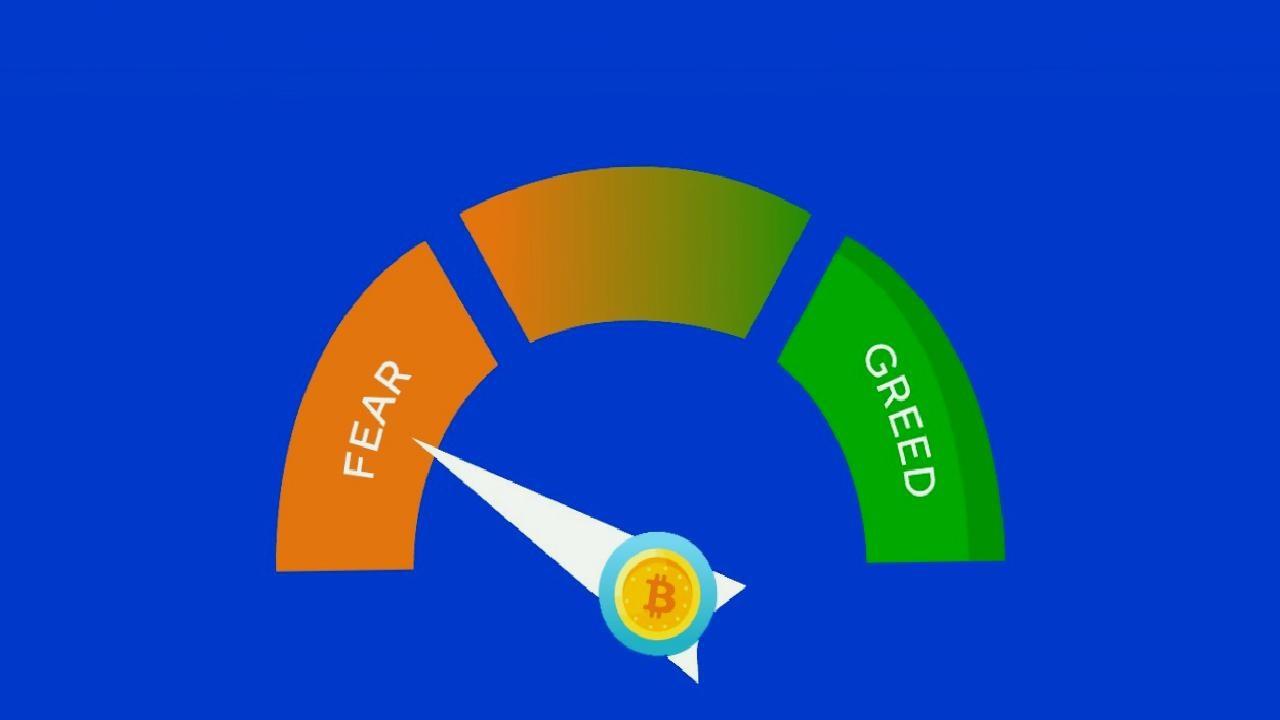
Meanwhile, broader market sentiment is tanking. CNN’s Equity Fear & Greed Index— a gauge of stock market emotions based on volatility (VIX), put/call ratios, junk bond demand, and more—dropped to 9 on November 18, 2025, signaling “Extreme Fear.”

This is the lowest reading since early April 2025, when similar panic preceded a rebound. S&P 500 down ~4% from Oct highs; VIX up 10%. Early April 2025; Pre-rebound low; markets recovered sharply after.

Historically, single-digit readings like this often mark capitulation points—smart money starts buying when fear peaks, as it did post-April. Crypto’s mirroring the vibe too: Bitcoin’s Fear & Greed Index hit 10-11 also Extreme Fear, with BTC dipping below $90K.

Implications of MegaETH Mainnet Beta Launch

MegaETH’s “Frontier” mainnet beta, set for early December 2025, marks a pivotal step toward realizing its vision of a “real-time Ethereum” L2—delivering sub-millisecond latency, 10ms block times, and up to 100,000 TPS through innovations like node specialization, JIT compilation for smart contracts, and in-memory processing.

Backed by Vitalik Buterin and firms like Dragonfly Capital, this beta follows a successful $49.9M ICO and public testnet, positioning MegaETH to challenge scalability bottlenecks in Ethereum’s ecosystem.

By offloading high-throughput transactions like DeFi trades, gaming interactions to MegaETH while settling on Ethereum mainnet, it could slash gas fees and alleviate L1 bottlenecks—Ethereum’s TVL has dipped amid 2025’s market slowdown, making this timely.

Full EVM compatibility ensures seamless dApp migration, potentially drawing projects from slower L2s like Base or Optimism. Expect curated onboardings for DeFi via DEXs, perps, lending, gaming, NFTs, AI, and social apps, fostering composability across L2s.

The $MEGA token TGE post-beta, ~Jan 2026 will fuel gas payments, staking, governance, and incentives like developer grants—mirroring Solana’s “performance narrative” surge in 2021. Bridges the gap to “enterprise-level” blockchain, enabling real-time apps that rival Web2.

This could reinvigorate Ethereum’s developer base, countering L2 fragmentation and boosting overall chain activity. As a one-month trial with no incentives, users may face downtime or “rough edges,” testing early adoption resilience.

Centralization Trade-offs: Relies on powerful nodes and a single sequencer initially, raising decentralization concerns versus Ethereum’s ethos—though audits and future upgrades aim to mitigate this. Bootstrapping against established L2s requires proving sustained 100k TPS; failure could stall momentum.

Overall, success here could solidify Ethereum as the scalable base layer for 2026, potentially ending “Ethereum killers” by making L2s profit-sharing mechanisms (e.g., cross-chain staking).

OpenAI Debuts ChatGPT for Teachers as It Races to Claim New Ground in a Rapidly Expanding AI Market

0

OpenAI has introduced ChatGPT for Teachers, a new version of its chatbot built specifically for K-12 educators and school districts, in one of its clearest attempts yet to tailor AI tools to niche professional communities as competition in the industry heats up.

The company said the platform will let teachers securely manage student information, get personalized instructional support, and collaborate with colleagues inside their districts. It also includes administrative controls that school leaders can use to determine how the tool will function within their communities.

ChatGPT for Teachers is beginning with a pilot group of districts that represent roughly 150,000 educators. OpenAI plans to make it free to all K-12 educators in the United States through June 2027, signaling an aggressive push to embed its platform inside classrooms long before rivals do the same.

“Our objective here is to make sure that teachers have access to AI tools as well as a teacher-focused experience so they can truly guide AI use,” Leah Belsky, OpenAI’s vice president of education, told reporters during a briefing.

The company stressed that data privacy was a foundational part of the product. Anything educators enter into ChatGPT for Teachers will remain inside Intuit’s ecosystem and will not be used to train OpenAI’s models — a key assurance for districts that handle sensitive student information.

The tool arrives amid lingering concerns from teachers and parents who have argued since 2022 that students use generative AI to cheat or bypass critical thinking. OpenAI, in response, said: ChatGPT for Teachers is not intended for student use. Instead, the company said giving teachers hands-on familiarity with AI will help them set rules and best practices that make sense for their classrooms.

“Every student today is growing up with AI, and teachers play a central role in helping them learn how to use these tools responsibly and effectively,” OpenAI wrote in a blog post. “To support that work, educators need space to explore AI for themselves.”

The new product also builds on study mode, released in July, which was created to help college-age students work through assignments step-by-step before producing an answer. At the time, OpenAI framed study mode as an early chapter in a broader effort to support structured learning inside ChatGPT.

What’s becoming clearer with this latest launch is how OpenAI is responding to an intensifying market. As tech giants pump billions into artificial intelligence and carve out new verticals, from legal work to healthcare to finance, OpenAI is moving quickly to release versions of ChatGPT tailored to specific professions and environments. ChatGPT for Teachers fits squarely into that strategy: a specialized, tightly scoped product built to cement OpenAI’s presence in yet another domain before competitors do.

With rivals like Google, Anthropic, Amazon-backed startups, and Elon Musk’s xAI expanding rapidly across their own ecosystems, OpenAI is under pressure to show it can build tools that are not only powerful but also practical and safe for deeply regulated spaces. The release of ChatGPT for Teachers puts the company one step deeper into that niche-building playbook — and one step further in the crowded race to make AI indispensable in everyday work.

Tech Sentiment Rebounds on Nvidia Q3 Result Strength as “Data Fog” Complicates Fed Outlook

0

Stock futures pushed higher Wednesday night as investors digested Nvidia’s latest quarterly beat, a development that appears to be restoring confidence in major technology stocks and providing a significant boost to the broader market.

Leading the pre-market rally, Nasdaq 100 futures jumped 1.4%, while S&P 500 futures rose 0.8%. Futures tied to the Dow Jones Industrial Average also participated in the upswing, adding 110 points, or nearly 0.3%. This bullish activity follows a regular trading session where all three major U.S. stock indexes rose across the board, snapping a four-day slide. Despite these midweek gains, stocks remain in the red for the week due to the depth of the recent pullback in several growth sectors.

The primary catalyst for this turnaround is Nvidia, whose shares jumped nearly 5% in extended trading after the chipmaker released highly anticipated quarterly results that beat Wall Street’s earnings and revenue expectations.

Nvidia reported record revenue for the third quarter ended October 26, 2025, of $57.0 billion, up 22% from the previous quarter and up 62% from a year ago.

For the quarter, GAAP and non-GAAP gross margins were 73.4% and 73.6%, respectively, while GAAP and non-GAAP earnings per diluted share were both $1.30.

Beyond the headline numbers, the market-moving company offered a stronger-than-expected fourth-quarter sales forecast. CEO Jensen Huang explicitly addressed concerns regarding product transitions, stating that demand for the company’s current-generation Blackwell chips is “off the charts.”

Nvidia’s upbeat guidance has likely lifted investor sentiment around the broader AI trade, which had weakened in recent sessions amid growing fears regarding elevated valuations, debt financing, and potential chip depreciation. The robust results boosted a slew of stocks across the AI ecosystem in the after-hours session, lifting chipmakers like Advanced Micro Devices and Broadcom, as well as power infrastructure companies such as Eaton.

However, analysts remain cautious about the future trajectory; David Russell, TradeStation’s global head of market strategy, noted that while Nvidia’s numbers remain extremely strong, there are inevitable questions regarding whether the company has already reached its high-water mark in terms of growth and market share.

Fed Divide and the “Higher for Longer” Threat

While the corporate outlook brightened, the macroeconomic landscape became more complex following the release of the Federal Reserve’s October meeting minutes on Wednesday afternoon. The documents revealed disagreements between Fed officials over whether a slowing labor market or persistent inflation posed the bigger threat to the U.S. economy.

This divide is reflected in their outlook for the upcoming December decision, with many officials calling for no more interest rate cuts this year. Consequently, traders are drastically repricing their expectations; per the CME FedWatch Tool, there is now only a 33% likelihood that the Fed will cut its benchmark overnight borrowing rate by a quarter percentage point in December, a figure significantly lower than bets placed just a month ago.

Why Delayed Payrolls Spark Bond Volatility

Investors will be looking for clarity on the macroeconomic front on Thursday morning when the Bureau of Labor Statistics releases the September nonfarm payrolls data. This release carries significantly higher risk for the bond market than a standard report due to the “data fog” created by the U.S. government shutdown.

The delay has introduced a unique mechanism for volatility known as the “Stale Data” Paradox. Because the September data is being released in late November, traders must decide in real-time whether the numbers reflect the current economy or a past reality that no longer exists. This creates an asymmetric risk profile for bond yields:

  • The “Old News” Discount: If the report shows surprisingly strong job growth, bond bears may argue the data is “stale”—a snapshot of the economy before recent cooling trends took hold. This could lead to a muted reaction where yields do not rise as much as the headline number would typically warrant, confusing algorithmic trading models.
  • The “Confirmation” Trap: Conversely, if the data is weak, the market is likely to treat it as highly relevant confirmation of the “slowing labor market” narrative cited by dovish Fed officials in the minutes. This would validate fears of a recessionary trend, potentially triggering a violent rally in Treasuries (sending yields sharply lower) as traders aggressively price back in a December rate cut.
  • Liquidity Gaps: The uncertainty over how the Fed will weight this “backlogged” data has thinned liquidity in the Treasury market. With fewer market makers willing to commit capital ahead of such an ambiguous print, the bid-ask spreads have widened. This means that when the number hits, even a small surprise could cause exaggerated price swings (gaps) as orders chase a lack of liquidity.

This critical economic print will likely serve as the next major test for a market currently caught between robust tech earnings and a potentially stubborn Federal Reserve.

Coinbase Push into Prediction Markets As OCC Eases Backend Infrastructure for Banks

0

Coinbase is accelerating its expansion beyond traditional crypto trading, with recent developments pointing to an imminent launch of a regulated prediction markets platform.

This aligns with the company’s July 2025 announcement to build an “everything exchange” that includes on-chain assets like tokenized stocks, derivatives, and event-based betting. The prediction markets feature, teased for U.S. users in the coming months, will reportedly integrate USDC or USD for trading and cover categories like politics, sports, science, and economics.

Coinbase has become the custodian for Kalshi’s USDC-settled event contracts, held in cold storage for added security. This collaboration leverages Kalshi’s federal CFTC regulation to ensure compliance.

Tech researcher Jane Manchun Wong shared screenshots on November 18, 2025, revealing a branded Coinbase site powered by Kalshi, complete with FAQs, onboarding guides, and a user interface for event contracts. The page briefly went live before being pulled offline.

This positions Coinbase against players like Polymarket global leader with $2B+ weekly volume, Crypto.com partnered with Trump Media, and Gemini seeking CFTC approval for a super app. Prediction markets have surged in 2024-2025, driven by high-stakes events and retail interest.

The rollout starts with U.S. users, followed by international expansion pending approvals. Coinbase’s December 17, 2025, system update event live on X is expected to reveal more, potentially tying into tokenized assets and early-stage token sales.

OCC’s Green Light for Banks Holding Crypto for Gas Fees

In a significant regulatory shift, the U.S. Office of the Comptroller of the Currency (OCC) issued Interpretive Letter 1186 clarifying that national banks can hold limited crypto assets on their balance sheets to cover blockchain “gas fees.”

This addresses a long-standing operational hurdle, allowing banks to facilitate permissible crypto activities without relying solely on third parties. Banks may pay network fees to support custody, execution, or other approved digital asset services.

They can also hold native tokens like BTC, ETH, SOL, or XRP for “reasonably foreseeable” needs, including platform testing. Holdings must be minimal relative to capital, with banks managing volatility, liquidity, cybersecurity, and compliance risks under “safe and sound” standards.

No broad speculative holdings are allowed—only operational necessities. This builds on May 2025’s Letter 1184 custody and outsourcing and reflects the pro-crypto Trump administration’s influence, including Fed withdrawals of anti-crypto guidance. It reduces counterparty risks and enables smoother on-chain settlements.

Relied on agents/third parties; unclear principal ownership. Banks can hold/pay directly for operational needs. Allows principal holdings for internal/third-party tests. Emphasizes material risks (e.g., volatility) over documentation

Bottleneck for blockchain integration. Unlocks custody, tokenization, and DeFi services. This dual news underscores accelerating mainstream crypto integration: Coinbase betting on user-facing innovation, while OCC eases backend infrastructure for banks. Both could drive institutional inflows, with prediction markets alone projected to hit $10B+ in volume by 2026.

This addresses a long-standing operational hurdle, allowing banks to facilitate permissible crypto activities without relying solely on third parties. Banks may pay network fees like ETH on Ethereum to support custody, execution, or other approved digital asset services.

They can also hold native tokens like BTC, ETH, SOL, or XRP for “reasonably foreseeable” needs, including platform testing. Holdings must be minimal relative to capital, with banks managing volatility, liquidity, cybersecurity, and compliance risks under “safe and sound” standards.

No broad speculative holdings are allowed—only operational necessities. This builds on May 2025’s Letter 1184 custody and outsourcing and reflects the pro-crypto Trump administration’s influence, including Fed withdrawals of anti-crypto guidance. It reduces counterparty risks and enables smoother on-chain settlements.

Implications of Saudi Arabia’s $1 Trillion Investment Pledge in the US

0

Saudi Crown Prince Mohammed bin Salman (MBS) announced during an Oval Office meeting with US President Donald Trump that Saudi Arabia would increase its committed investments in the United States from $600 billion to nearly $1 trillion.

This pledge builds on prior discussions and aligns with Saudi Arabia’s Vision 2030 economic diversification strategy, emphasizing sectors like technology, artificial intelligence (AI), critical minerals including magnets, energy, aerospace, defense, and sports.

The announcement was framed as “real investment” to create jobs and opportunities, with Trump highlighting its role in bolstering US national security through economic ties. The commitment came during a bilateral meeting at the White House, where Trump welcomed MBS with military honors.

Trump described the deal as a sign of Saudi Arabia being a “great ally” and joked that he might “work on” MBS to push it to a full $1 trillion. MBS responded affirmatively, stating, “Today and tomorrow, we are going to announce that we are going to increase that $600 billion to almost $1 trillion of investment.”

Investments will prioritize high-tech and strategic industries. A White House fact sheet outlined expansions in US exports, reduced trade barriers, and partnerships in AI, nuclear energy, and defense sales including F-35 jets to Saudi Arabia. Additional deals include a memorandum of understanding on AI cooperation and sales of advanced AI chips to the kingdom.

MBS emphasized that the pledge is driven by Saudi Arabia’s “huge demand” for US computing power and innovation, not short-term oil price fluctuations despite recent drops to around $60 per barrel. He tied it to long-term projects like the kingdom’s Humain AI company, backed by the Public Investment Fund (PIF).

Trump noted the investments would “create jobs” and “a lot of power for the United States,” echoing similar $450 billion pledges from his first term though past analyses showed actual US exports to Saudi Arabia totaled only about $92 billion from 2017-2020.

The meeting signals a thaw in ties strained under the Biden administration. Trump praised MBS’s human rights record despite ongoing concerns (e.g., the 2018 Jamal Khashoggi murder, which MBS called a “huge mistake”). Discussions also touched on potential Saudi normalization with Israel via the Abraham Accords and countering Iran/Houthi threats.

The US approved F-35 sales, though Israel expressed opposition over regional air superiority concerns. AI chip exports mark a first for Saudi Arabia, potentially accelerating its tech ambitions but raising questions about technology transfer risks amid Riyadh’s ties to China.

While hailed as a win for US jobs and exports, experts note historical overpromising—e.g., a 2017 $110 billion defense deal resulted in only $23 billion in notified sales by 2020. Oil price volatility could strain funding, though PIF’s $925 billion assets provide a buffer.

X Posts highlighted Trump’s quote on the investment as “national security,” while some speculated on quid pro quo for AI tech access. Saudi Ambassador to the US Princess Reema bint Bandar Al Saud called it a “significant day” for bilateral ties, emphasizing job creation and security.

This deal underscores deepening US-Saudi economic interdependence, with potential to drive US growth but also geopolitical complexities. Follow-up announcements on specific projects are expected soon.