DD
MM
YYYY

PAGES

DD
MM
YYYY

spot_img

PAGES

Home Blog Page 147

JPMorgan’s Recent AI Analysis Highlights Stark Reality of the Sector

0

JPMorgan Chase’s recent analysis on AI infrastructure investments highlights a stark reality for the sector: to achieve even a modest 10% return on the trillions in projected spending through 2030, AI products and services would need to generate approximately $650 billion in annual revenue perpetually.

This figure underscores the immense scale required to justify the buildout, amid warnings of a potential “AI bubble” if demand doesn’t keep pace. Global AI-related capital expenditures like data centers, chips, and compute are forecasted to total $5–7 trillion over the next decade, driven by hyperscalers like Microsoft, Google, and Amazon.

In 2025 alone, these firms are on track for ~$350 billion in AI infra spend—a 60%+ year-over-year jump. At 10% ROI: $650 billion/year ~0.58% of global GDP. Lower hurdle 6% ROI, Drops to $360 billion/year.

Higher hurdle 12% ROI; rises to $810 billion/year. JPMorgan illustrates the challenge with everyday equivalents: Equivalent to ~$35/month from each of the world’s 1.5 billion iPhone users. Or ~$180/month from each of Netflix’s 300 million subscribers.

However, the bank stresses that corporations—benefiting from AI-driven productivity gains—would bear most costs, not consumers directly. Early adopters already report $35+/month in time savings per user.

Echoing past tech overbuilds like 2000s telecom fiber, JPMorgan notes a $1.4 trillion funding gap for data centers alone, power constraints limiting new capacity to 122GW through 2030, and the danger of idle infrastructure if AI adoption slows.

Even leaders like OpenAI’s Sam Altman have flagged excess capacity concerns. This projection contrasts with JPMorgan’s own aggressive AI push: The bank is investing $18 billion in tech for 2025 up $1 billion YoY, with over 175 AI use cases live, yielding $1.5 billion in savings from fraud prevention, personalization, and efficiency.

Globally, JPMorgan sees “astronomical” compute demand but cautions that end-user value must accelerate to avoid a bust. The report, shared widely on platforms like X, has sparked debate—some view it as a bubble signal, while others including JPMorgan analysts rebutting skeptics like Michael Burry argue AI’s productivity upside makes the math feasible.

Sam Altman, is one of the most influential voices in AI, blending optimism about its transformative potential with pragmatic concerns about risks, infrastructure, and governance. While stressing the need for responsible scaling, democratic oversight, and alignment to avoid misuse.

Altman often describes AI progress as a “gentle singularity,” a gradual but exponential shift toward superintelligence that empowers humanity rather than overwhelming it. He views AGI (artificial general intelligence) as achievable and imminent, but downplays its drama:

My guess is we will hit AGI sooner than most people think and it will matter much less. Superintelligence, he predicts, could arrive by 2030, enabling breakthroughs beyond human limits. Altman is bullish on 2025–2027 as a pivotal period of rapid advancement, outpacing recent years.

Altman sees AI development as an exponential curve, with 2025 marking the entry of AI agents into the workforce—autonomous systems handling cognitive tasks like coding or analysis, boosting company output.

He outlines ambitious internal goals: an automated AI research intern by September 2026 running on hundreds of thousands of GPUs and a full AI researcher by March 2028. By 2026, AI could generate “novel insights,” accelerating discoveries in fields like medicine and physics.

In a recent X post, he shared OpenAI’s latest report on progress, highlighting recommendations for scaling responsibly. He predicts that by 2035, individuals could access intellectual capacity equivalent to the entire 2025 global population.

AI agents join workforce; small discoveries possible. Transforms knowledge work (e.g., coding, analysis); economic output surges. Automated AI intern; novel insights from AI. Speeds scientific breakthroughs; recursive self-improvement begins. Abundance in intelligence/energy; “anything else” becomes possible.

Universal access to vast intellect. Democratizes genius reshapes society, work, and creativity. Altman is “determinedly optimistic,” arguing AI will elevate humanity through abundance: cheaper intelligence nearing the cost of electricity, turbocharged economies, and solutions to grand challenges like curing diseases.

He envisions a “Cambrian explosion” in creativity via tools like Sora, where AI democratizes art and entertainment. AI agents will act as “virtual coworkers,” enhancing productivity without fully replacing humans. In a July 2024 X post, he stressed AI’s national security value: “AI progress will be immense from here, and AI will be a critical national security issue.

He advocates for U.S.-led coalitions to ensure AI remains “democratic” and benefits all, preventing authoritarian monopolies. While hopeful, Altman acknowledges dangers: a potential “AI bubble” akin to the dot-com era, driven by surging investments (e.g., OpenAI’s $1.4 trillion compute commitments over eight years).

He warns of misuse by rogue actors (e.g., cyberattacks) and societal harms like job displacement or AI addiction. His “doom score” isn’t zero, but he focuses on mitigation: layered safety value/goal alignment, reliability, robustness.

In a November 2025 X thread, he clarified OpenAI’s stance against government bailouts, emphasizing market accountability: “If one company fails, other companies will do good work.” He calls for technical alignment and societal adaptations, like universal compute access as a “human right.”

On user impacts, he worries about over-reliance (e.g., AI as “therapist” reinforcing delusions) and advocates treating “adult users like adults” while measuring long-term well-being. OpenAI plans 30 gigawatts of compute, with ambitions for 1 gigawatt weekly by reducing costs potentially halving capital expenses.

Altman pushes for U.S.-built fabs, energy, and data centers to maintain competitiveness, viewing it as essential for economic edge. Revenue projections: $20B annualized run rate in 2025, scaling to hundreds of billions by 2030, funding via equity, debt, and AI cloud sales.

He critiques uneven distribution, favoring “techno-capitalism”: encourage wealth creation but widely share benefits to raise both floor and ceiling. OpenAI’s 2025 restructure—to a public benefit corporation governed by a nonprofit—aims to attract capital while prioritizing humanity’s benefit, with $25B committed to health and AI resilience.

In his “Gentle Singularity” essay, he envisions a future of “wildly abundant” ideas and energy, with AI enabling personalized lives and resilience through widespread distribution. Reflecting personally, he sees AGI as “the most important technology humanity has yet built,” worth the “painful” effort despite work-life trade-offs.


Tekedia Mini-MBA Introduces A New Course: AI Management

0

The forthcoming edition of Tekedia Mini-MBA (Feb 9 – May 2, 2026) will feature a foundational new course: AI Management. The objective of this course is to provide business students and leaders with the strategic understanding required to deploy, utilize, and govern AI systems for measurable improvements in productivity and the execution of business objectives.

Central to this course is the Tekedia AI Centricity Framework. This model asserts that optimal AI deployment is achieved when systems are strategically aligned with the core stakeholders: customers, workers, IT teams, and partners. Successful execution is directly correlated with this integrated organizational approach.

Furthermore, we will explore the critical economic differences of AI. Due to persistent inference costs, the typical asymptotic relationship between output and marginal cost seen in conventional software where marginal cost decreases with scale does not hold true in the AI domain. This necessitates a distinct management framework for pricing and sustaining AI products. Yes, pricing AI systems must be evolved because AI cost elements do not follow typical software paths!

In preparation, the current Tekedia Mini-MBA included introductory technical course – Building and Managing AI Agents – which was well received by our co-learners. We believe business students must grasp the creation phase of AI agents to become effective AI managers.

The next Tekedia Mini-MBA will offer an expanded and cutting-edge curriculum including AI Management.

Prestmit Review – Cash Out Crypto, Top Up Betting Accounts And More…

0

Prestmit is a Nigeria-based web/mobile platform that allows users to cash out cryptocurrencies, top up betting accounts and carry out a range of other digital transactions.

In this review, we’ll take a deeper look at the services provided by Prestmit, what makes it stand out from competitors and whether you should use this platform.

What services does Prestmit provide?

Prestmit is an all-in-one central marketplace for various digital transactions. It offers a range of services, which primarily include:

  • Crypto cashouts: Using Prestmit, you can sell various popular cryptocurrencies ranging from Bitcoin to USDT, and get paid in cash.
  • Buy crypto: You can also buy popular cryptocurrencies directly through Prestmit. 
  • Gift card cashouts: Got a gift card for a store you’re unlikely to ever shop at? Prestmit will also buy this gift card off you and pay you cash.
  • Buy gift cards: You can also buy gift cards for a range of stores via Prestmit.
  • Top up betting accounts: You can top up betting accounts at various sites from one place using Prestmit.
  • Buy/sell airtime: You can also buy airtime for your mobile phone through Prestmit, or sell airtime credits that you’re not going to use.
  • Buy cheap data: Prestmit also sells discounted data for when you’re running low and need internet access.
  • Other features: The platform also offers a few other niche services like buying eSIMs, paying electricity bills online and paying TV subscriptions. 

Who is Prestmit aimed at?

Prestmit’s crypto cashout service makes it particularly useful for freelancers who get paid in crypto. While there are ways to spend cryptocurrencies online, you typically can’t use crypto for many everyday purchases like groceries – Prestmit allows you to turn your crypto into real money as if you were getting paid in a local currency.

If you’re into online betting, Prestmit is also a great platform for managing multiple accounts from one place. While you should of course use betting platforms responsibly, Prestmit can benefit those who want to take advantage of unique perks like free bets at different platforms.

Prestmit also allows users to make money and save money through its various other digital transaction services. If you’re looking for a new side hustle, buying discounted gift cards and selling them through Prestmit could be an option. Meanwhile, if you’re running low on cash and you’ve got some spare airtime, Prestmit is a great place to make a little extra money by selling your airtime.

The catch? Prestmit is currently only targeted at users in Nigeria and Ghana. When cashing out crypto, you only have the option to convert into Nigerian Naira or Ghanaian Cedis. Similarly, its betting site top up feature is geared towards African betting apps like Bet9ja and Nairabet. This is excellent if you’re a freelancer or sports better based in Nigeria or Ghana, but not if you’re a user from elsewhere in the world.

What makes Prestmit stand out?

There are many cryptocurrency exchanges out there that you can use to trade numerous cryptocurrencies, however many of these are peer-to-peer platforms that can be slow and carry fees.

Prestmit is different in that there are no transaction fees! Rather than having to wait for your crypto transaction to be manually approved, Prestmit also offers a fast automated service in which you receive your cash in minutes.

As a freelancer that gets most of their income paid in crypto, this could be hugely advantageous. It means that you’re not having to factor in fees every time you cash out your crypto, allowing you to enjoy your earnings in full. You also don’t have to wait around to receive your cash – this is hugely convenient for times when you may need to access your cash in a hurry, such as covering a surprise payment.

The breadth of other services offered by Prestmit also means that it’s more than just a crypto exchange. It provides all kinds of handy ways to earn and save money that you can explore from one place with the click of a button. The platform is very clean and easy to use – whether you’re using the site or the app. It’s not like some other digital marketplaces where it’s easy to get overwhelmed by technical terms and excess features.

Are there any drawbacks to using Prestmit?

As already stated, Prestmit only allows you to cash out in limited currencies – Naira and Cedi – so freelancers looking to cash out their crypto in other countries won’t find any use for this platform.

Prestmit is also not like other exchanges in which you have access to hundreds of cryptocurrencies. It focuses on the most popular cryptocurrencies such as Bitcoin, Litecoin and Dogecoin. These are the most likely cryptocurrencies to be paid in as a freelancer and are also great options for buying if you’re just getting into crypto ownership. However, those wanting to cash out more obscure cryptocurrencies or looking to dive deeper into the world of crypto trading may find Prestmit’s crypto services limited.

Should you give Prestmit a go?

If you are based in Nigeria or Ghana and have been looking for a crypto cashout service, Prestmit is highly recommended. Its speed and low cost make it one of the best options and are the reason that the platform currently has so many loyal users. 

Prestmit is also worth trying if you want to cash out gift cards into Naira or Cedi, or if you want to top up betting accounts. Many individuals in Nigeria and Ghana will be able to find different uses for this platform as it’s not all about crypto. 

Signing up to Prestmit is easy and free – you can visit the website to make an account, or download the app. Certain features like accessing e-sims don’t even require you to sign up. Try Prestmit for yourself and take a tour of some of the features. You’ll find detailed instructions on how to do everything from buying crypto to selling gift cards and you can trust that all transactions will be carried out securely. 

Monad’s Public Sale Goes Live on Coinbase As TGE Nears

0

The Monad ($MON) public token sale, marking Coinbase’s first-ever regulated token launch platform, kicked off on November 17, 2025, and remains live as of today.

This event allows verified users in over 80 countries—including the U.S.—to participate in early access to Monad’s native token ahead of its mainnet launch on November 24. The platform stems from Coinbase’s $375 million acquisition of Echo Launchpad in October 2025, aiming to provide compliant fundraising for retail investors post-SEC ICO restrictions.

Over $100 million ~53% subscribed, with $43 million in the first 30 minutes. Minimum $100; Maximum: $100,000 in USDC. If oversubscribed, lower requests filled first to promote broad distribution and limit whale dominance.

100% at TGE (Token Generation Event) on mainnet launch (November 24). Verified Coinbase account with KYC/AML compliance; 2FA enabled; phone verification. Note: Restricted in some regions like India.

Monad, a high-performance EVM-compatible Layer-1 blockchain, has already raised $244 million from VCs like Paradigm and Dragonfly. $MON will power transaction fees, staking, and validator incentives. Pre-market trading shows +64% premium over ICO price, but broader market weakness (e.g., BTC dip) has slowed momentum—fundraising hit $100M+ even as BTC fell under $90K.

Community buzz on X highlights it as a “cheapest entry” before mainnet, with users sharing allocation requests.To participate: Log into Coinbase, prepare USDC, and request allocation via coinbase.com/token-sales/monad.

Tokens distribute post-sale on November 24. Bitcoin (BTC) indeed tumbled below $94,000 over the November 16-17 weekend, erasing most of 2025’s gains and hitting a six-month low around $93,800 before a partial rebound to ~$95,700 by Monday close.

This ~24-25% drop from October’s $123,000 peak has wiped $600 billion from the total crypto market cap, driven by ETF outflows exceeding $1 billion, long-term holder sales 815K BTC offloaded, and spiking “extreme fear” on the Crypto Fear & Greed Index.

Broader factors include a tech stock sell-off, yen carry trade unwind echoes, and uncertainty around U.S. tariffs under President Trump. The “death cross”—where the 50-day moving average crosses below the 200-day MA—confirmed on daily/weekly charts, a bearish pattern last seen in April 2025.

BTC also closed below its 50-week SMA for the first time since 2022. However, history in this cycle tempers the doom: All three prior death ccrossesas as at Sept 2023 at $25K, Aug 2024 at $49K, April 2025 below $75K marked local bottoms, followed by +42% average rebounds within weeks.

$92K (CME gap fill), $88-90K major historical floor, potential deeper to $60-70K if broken. Resistance: $98-102K near-term rebound target, $100K psychological. On-Chain Signals: Whales accumulated $3B+ this week; liquidity pools cluster at $89-94K as buy zones.

Analysts like Benjamin Cowen see it as a contrarian buy if no bounce by Nov 21—post-fear Nov rallies averaged +42% historically. Gold’s +55% YTD contrasts BTC’s flat performance, but Senate crypto bills and liquidity injections could fuel a Q4 snapback to $120K EOY.

Monad is a Layer-1 (L1) blockchain designed to solve the blockchain trilemma—balancing scalability, security, and decentralization—while maintaining full compatibility with the Ethereum Virtual Machine (EVM).

Monad’s optimizations deliver hardware-efficient, high-throughput processing, making it suitable for consumer-grade dApps like high-frequency trading or real-time gaming.Metric

These metrics stem from real-world testing: Monad’s testnet processed over 2.44 billion transactions, peaking at 34 million daily, with 240+ ecosystem projects. Key Architectural InnovationsMonad’s design decouples and optimizes Ethereum’s bottlenecks—execution, consensus, state storage, and I/O—using four pillars.

Unlike Ethereum’s sequential processing one tx at a time, Monad uses an optimistic parallel execution model. Transactions are executed concurrently across multiple threads, assuming no conflicts (e.g., shared state reads). If conflicts arise (e.g., two txs writing to the same account), it reverts and retries only the affected ones.

This “wash, dry, fold, store” analogy illustrates: Multiple tasks run in parallel, then results are serialized in original order for EVM compatibility. 100-1,000x faster execution than Ethereum, enabling 10k TPS without sacrificing determinism.

MonadBFT Consensus

A pipelined Byzantine Fault Tolerance (BFT) variant of HotStuff, optimized for low latency. It uses “fan-out, fan-in” messaging linear communication overhead and tail-forking resistance to prevent honest blocks from being orphaned during delays.

Leaders repropose blocks for ~1s finality. Unlike Ethereum’s probabilistic PoS which needs 2 epochs for finality, Monad decouples consensus from execution: Headers finalize first, then txs execute speculatively in parallel pipelines. This boosts throughput by 2-5x over traditional BFT systems like Tendermint.

Execution is deferred post-consensus, with async I/O for non-blocking reads/writes (e.g., state access). Superscalar pipelining like CPU instruction overlap processes stages in overlapping waves. Combined with parallel execution, this handles Ethereum-scale workloads at Solana-like speeds, but with EVM’s security model.

A columnar, distributed database built in Rust for parallel access and low-latency queries. It replaces Ethereum’s Merkle Patricia Tries slow for high TPS with a key-value store optimized for async reads 99% of tx ops. Supports SSD-only storage, reducing hardware costs by 10x vs.

RAM-heavy alternatives like Solana’s. Enables 1B+ txs/day with sub-ms query times. 100% compatible with Ethereum’s opcode set, addresses, and gas model EIP-1559 with MON token. Port dApps from Ethereum instantly—no rewrites, audits, or new SDKs needed.

Matches Solana’s speed/decentralization but adds EVM compatibility, avoiding Rust rewrites or outages from high hardware demands. Monad’s BFT is more resilient to spam than Solana’s Gulf Stream.

As a new chain, it faces adoption risks and potential early bugs mitigated by rigorous audits. Parallelism adds minor complexity for edge-case txs, but optimistic rollback keeps it rare.

Monad’s advantages lie in its EVM-reimagined stack: Parallelism + custom DB + pipelined BFT = Solana-speed Ethereum without compromises. This positions it for mass-market dApps, with $244M+ in funding signaling strong backing. For devs, it’s a drop-in upgrade; for users, it’s cheaper/faster crypto.

Crypto Fear and Greed continues to sit in “Extreme Fear”

0

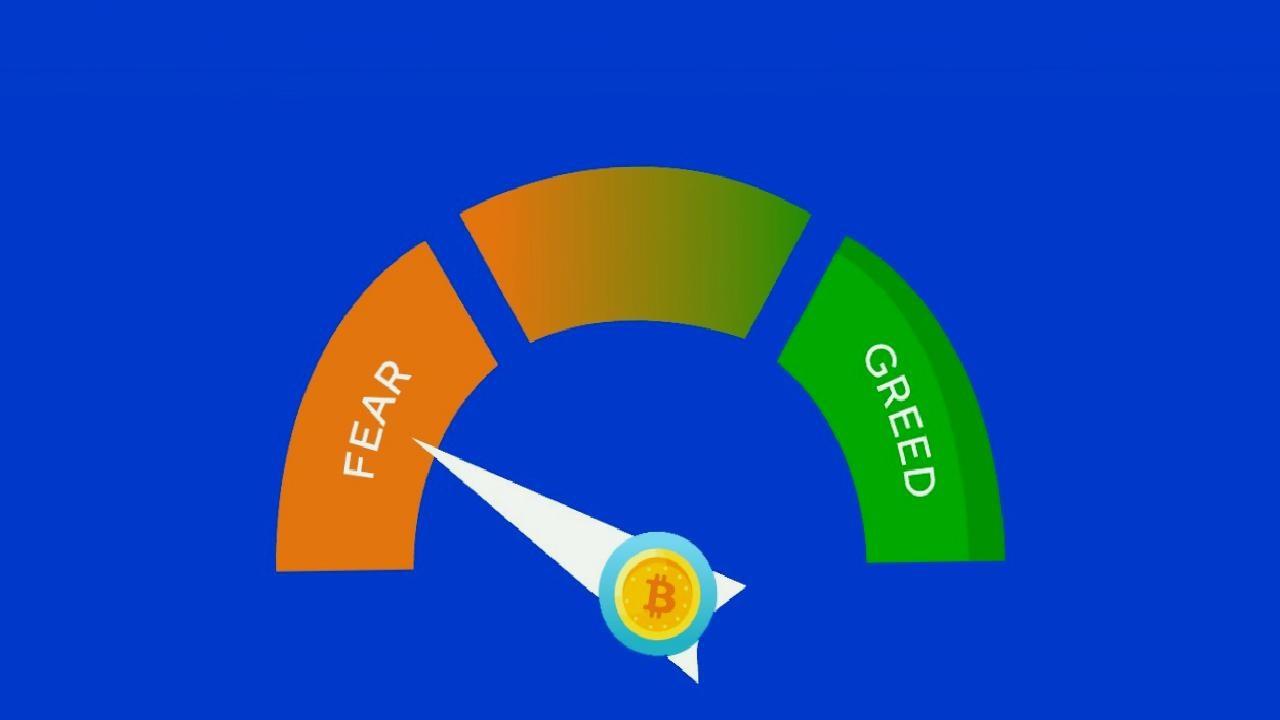
The Crypto Fear & Greed Index is hovering in “Extreme Fear” territory right now, with a score of 11 out of 100 as of the latest daily update.

This is down from 14 yesterday, 26 last week, and 29 last month, signaling a sharp slide in market sentiment over recent weeks. This popular gauge from Alternative.me aggregates factors like volatility, market momentum, social media buzz.

Bitcoin dominance, and Google Trends to score overall investor emotion on a scale from 0 Extreme Fear to 100 Extreme Greed. Panic selling; potential undervaluation and buying opportunities for contrarians.

Caution prevails; prices may stabilize or dip further. Balanced sentiment; sideways trading likely. Optimism building; risk of overbuying. Euphoria; often precedes corrections or bubbles.

At 11, we’re in full-blown panic mode—think of it as the market equivalent of hiding under the covers during a storm. Historically, extreme fear levels like this have preceded some of crypto’s biggest rebounds, as fear tends to overshoot rational pricing.

This marks a continued slide from 14 yesterday, 26 last week, and 29 last month, reflecting heightened panic amid a broader market crash that saw Bitcoin plunge below $93,000—erasing year-to-date gains and triggering massive liquidations.

Key drivers include elevated volatility Bitcoin’s drawdowns spiking, subdued trading volumes signaling weak momentum, rising Bitcoin dominance as investors flock to the “safer” asset, and surging Google Trends for fear-laden searches like “Bitcoin crash.”

Social media sentiment is also tanking, with Twitter interactions dominated by doom-scrolling rather than hype. This isn’t isolated—November 2025 has been brutal for crypto, fueled by the Fed’s refusal to cut rates amid sticky inflation, geopolitical tensions, and a risk-off exodus from high-beta assets like altcoins.

Liquidations have surged, wiping out leveraged longs and amplifying the fear spiral. Extreme Fear readings like this the lowest since the COVID meltdown historically signal capitulation: investors are dumping assets irrationally, often overshooting fair value and creating undervaluation.

Panic selling exhausts weak hands, paving the way for stabilization and rebounds as sentiment normalizes. Post-2022 FTX crash: Index hit 10, Bitcoin rallied 300%+ in the following year.

Undervaluation Opportunities; Assets trade at discounts to fundamentals, attracting value hunters. 2020 COVID dip: Extreme Fear at 5 led to a bull run multiplying prices 10x.

Short-term swings intensify, but long-term trends often reverse upward. 2018 bear market: Lows around 12 preceded the 2021 boom. While retail panics, big players accumulate—e.g., institutions scooped up $24B in Bitcoin dips this month despite the fear gauge.

ETFs like BlackRock’s IBIT added holdings during similar 2023 fear episodes. If macro headwinds worsen (e.g., no rate cuts), fear could deepen, pushing Bitcoin toward $80K. Prolonged 2022 fear led to 70%+ drawdowns before recovery.

In essence, this level quantifies herd behavior gone haywire—contrary to Warren Buffett’s adage: “Be fearful when others are greedy, and greedy when others are fearful.”

It doesn’t predict prices but highlights emotional extremes that can inform rebalancing: extreme fear often precedes growth spurts as markets mean-revert.

The index acts as a sentiment thermometer, nudging decisions toward contrarianism rather than FOMO. It won’t dictate buys/sells but helps calibrate risk. Tailor based on your horizon and tolerance—remember, this isn’t advice; DYOR and consider diversification.

Extreme Fear screams “bargain basement.” History shows 80%+ of such readings lead to 50%+ rallies within 6 months. Institutions are already loading up—join if conviction holds.

Tight Risk Management / Wait for Signals: Prioritize stops and avoid leverage—volatility could spike further. Use the index to time entries (e.g., buy on fear spikes above 20) or short if it stays pinned low.

Avoid knee-jerk sells; DCA into dips to average down without timing the bottom. Rebalance portfolios toward stables if fear persists. View this as a “capitulation signal”—scour for undervalued alts or BTC. Tools like on-chain metrics confirm exhaustion.

In 2025’s choppy waters, this fear could be the setup for 2026’s greed-fueled surge, but only if catalysts like rate cuts or ETF approvals materialize. For context, Bitcoin dipped below $90K recently amid broader economic jitters, but contrarian voices on X are buzzing about this as a “capitulation signal.