DD
MM
YYYY

PAGES

DD
MM
YYYY

spot_img

PAGES

Home Blog Page 147

Bored Ape Yacht Club and Evernorth Highlight Crypto’s Shift From Culture to Finance

0

The crypto world has always lived between two realities: the physical and the digital, the culture of belonging and the machinery of capital. This week, those two worlds move closer together.

On one side stands Bored Ape Yacht Club, preparing to open early access to ApeFest merchandise on August 31. On the other stands Evernorth, an XRP-focused treasury company that has cleared a major U.S. Securities and Exchange Commission hurdle on its path toward a Nasdaq debut under the ticker XRPN.

The developments tell a broader story about how crypto is becoming both culture and institution. For Bored Ape Yacht Club, merchandise is more than fabric, logos and collectibles. It is an extension of a digital identity.

ApeFest has long represented the physical gathering place for a community born largely on-chain, transforming NFT ownership into something that can be worn, displayed and experienced in the real world.

This year’s ApeFest is scheduled for October 17 in Charleston, South Carolina, and its official terms identify merchandise as part of the event’s broader ecosystem.

The early-access merchandise window opens August 31 and runs through September 4, giving the community an opportunity to secure selected ApeFest items before the main event.

The move is symbolic in its simplicity: an internet-native community continues to build physical rituals around digital ownership. The ape that once existed as a JPEG now has a wardrobe, a festival and a gathering place.

But while BAYC is turning blockchain culture into tangible objects, Evernorth is attempting the opposite transformation: turning a crypto-native asset into a structure familiar to traditional investors.

The SEC has declared Evernorth’s Form S-4 registration statement effective, clearing an important procedural barrier for its proposed merger with Armada Acquisition Corp. II. The next major milestone is a shareholder vote scheduled for September 30.

If the transaction receives approval and closes, the combined company is expected to trade on Nasdaq under the ticker XRPN.  That distinction matters. SEC effectiveness is not the same as final approval of the merger or a guarantee that the Nasdaq listing will occur.

It simply allows the transaction to advance toward the shareholder vote and closing process. Evernorth’s ambition is larger than simply placing XRP on a corporate balance sheet. The company describes itself as a digital asset treasury designed to provide public-market investors with exposure to XRP through a regulated corporate structure.

Its backers include Ripple, Pantera Capital, Kraken, SBI Group, Arrington Capital and GSR.  Its strategy also differs from a simple buy-and-hold model. Evernorth intends to deploy capital across the XRP economy and pursue strategies designed to increase XRP backing per share over time.

That creates a new bridge between traditional equity markets and crypto treasury management. Yet the bridge carries risk. Crypto treasury companies can trade at premiums or discounts to the value of their underlying digital assets, potentially complicating capital raising and shareholder expectations.

Still, the symbolism is powerful. BAYC is bringing blockchain culture into the physical world, while Evernorth is carrying XRP deeper into conventional finance. One is selling the feeling of belonging. The other is packaging digital scarcity for public markets.

And somewhere between the ApeFest hoodie and the XRPN ticker, crypto continues its long journey from an internet experiment into an increasingly tangible economic civilization.

FTC Nears Potential Lawsuit Against YouTube Over User Account Suspensions, Bloomberg Reports

0

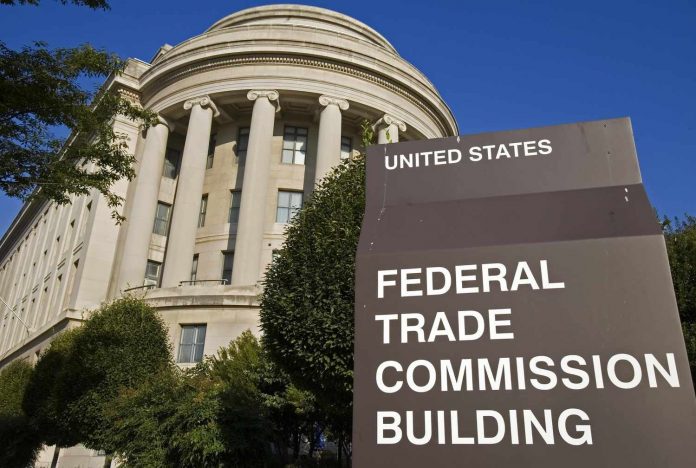
The U.S. Federal Trade Commission is in the final stages of an investigation into whether Alphabet’s YouTube violated consumer protection laws through its handling of user account suspensions and content moderation, potentially setting up another major regulatory challenge for the Google-owned video platform.

The FTC has been examining YouTube since last year and is preparing a potential lawsuit, Bloomberg reported on Thursday, citing people familiar with the matter. The investigation is focused on whether YouTube’s enforcement of its own user policies may have misled consumers or violated federal consumer protection rules.

According to the report, regulators are examining whether YouTube removed or demoted content in ways that were inconsistent with the policies presented to users. The agency is also investigating whether people could have been induced to sign up for the platform believing certain types of content were permitted, only to have their posts removed or their accounts suspended later.

The potential case is expected to go beyond individual moderation decisions. The FTC appears to be examining whether YouTube’s representations about how its platform operates were sufficiently clear and whether the company’s enforcement practices matched those representations.

YouTube has previously faced intense scrutiny over decisions to suspend prominent accounts and remove content. Following the January 6, 2021, attack on the U.S. Capitol, YouTube suspended the account of then-President Donald Trump. The platform reinstated his account in 2023.

The company has also removed content it determined violated its policies on COVID-19 and vaccine misinformation, placing YouTube at the center of the broader political and legal debate over how large technology platforms regulate speech.

If the FTC ultimately files a complaint, Alphabet could seek to resolve the matter through a settlement or contest the allegations in federal court. A lawsuit would also potentially force YouTube to defend the consistency and transparency of its content moderation policies, rather than simply individual enforcement decisions.

FTC spokesman Joe Simonson did not confirm or deny the investigation. Responding to questions about the report, he said that “leaks will never stop or slow a single law-enforcement investigation or litigation at the FTC,” according to Bloomberg, adding that such leaks would be referred to authorities for investigation.

The investigation also comes against the backdrop of a broader shift in the FTC’s approach to major technology platforms under Republican Chair Andrew Ferguson.

Ferguson has previously expressed interest in examining whether social media companies violated their own policies or coordinated in ways that affected political speech. He has argued that major platforms restricted or removed content concerning issues including COVID-19’s origins, mask mandates, vaccine safety, transgender issues and the integrity of the 2020 election.

That position could give the YouTube investigation broader significance if the agency ultimately focuses on how the platform applies its policies to politically sensitive content.

For Alphabet, the potential case adds another layer of regulatory risk to a company already facing scrutiny across several parts of its business. YouTube is one of Google’s most important consumer platforms, with its enormous user base and advertising business making its content moderation policies commercially significant as well as politically contentious.

The core issue for regulators will be whether YouTube has sufficient discretion under its terms of service to remove content and suspend accounts, or whether the way those rules are communicated and enforced could constitute deceptive or unfair conduct under consumer protection law.

A lawsuit would therefore have implications beyond YouTube. If regulators establish that a major platform can face consumer protection liability for allegedly inconsistent enforcement of its stated policies, other social media and online services could face pressure to provide greater clarity around moderation rules, enforcement procedures and account appeals.

Alphabet shares were little changed in after-hours trading on Thursday after ending the regular session 0.4% lower.

The FTC has not publicly announced charges against YouTube, and the reported investigation does not establish that the company violated any law. The agency could still decide against filing a lawsuit, or the matter could be resolved without an admission of wrongdoing.

The Wall Street–Blockchain Bridge Widens as RWA Trading Surges

0

The boundary between Wall Street and blockchain is becoming less a wall and more a bridge, and the latest signals are arriving from two very different corners of the financial world.

Robinhood Chain has reportedly seen real-world asset (RWA) trading surpass $100 million in daily volume, while Charles Schwab is preparing to expand trading access to Solana, Avalanche and Chainlink.

The developments reveal a financial landscape where traditional markets and digital assets are no longer moving in separate rivers. They are beginning to flow toward the same sea.

The $100 million daily milestone on Robinhood Chain is significant because RWA markets represent one of crypto’s most ambitious promises: bringing assets from the physical and traditional financial economy onto programmable blockchains.

Stocks, bonds, funds, credit instruments and other financial products can, in principle, become digital representations capable of trading around the clock, settling faster and interacting with decentralized infrastructure.

Volume is more than a number. It is a footprint. Every transaction suggests another participant becoming comfortable with the idea that an asset does not necessarily need to live inside the walls of a traditional exchange.

Blockchain can become not merely a technology supporting finance, but part of finance itself. Robinhood’s growing role in this transition is particularly notable.

The company has spent years building a bridge between ordinary investors and digital assets, and its blockchain ambitions push that strategy further. If RWA activity continues to deepen, the significance could extend beyond crypto speculation.

Tokenization could eventually transform how ownership, settlement and liquidity are organized across global capital markets.

Then comes Charles Schwab, carrying the weight and reputation of traditional finance. Its move toward trading Solana, Avalanche and Chainlink represents another crack in the old divide.

These networks are not simply speculative symbols; they are pieces of an expanding digital infrastructure. Solana has positioned itself around high-throughput blockchain applications. Avalanche has developed infrastructure aimed at scalable, customizable networks.

Chainlink occupies a different but equally important territory, providing decentralized oracle infrastructure that connects blockchain applications with information from the outside world.

Their arrival within a major brokerage ecosystem therefore carries symbolic weight. The message is not necessarily that traditional finance has surrendered to crypto. Rather, it suggests that traditional finance is learning to speak the language of crypto.

For years, blockchain stood like a young city beyond the financial horizon, promising a new architecture while established institutions watched from behind glass. Now the roads are being paved in both directions. Crypto is becoming more institutional.

While institutions are becoming increasingly curious about crypto-native infrastructure. Yet greater access also brings greater responsibility.

As tokenized assets and digital-asset trading enter deeper waters, questions surrounding custody, regulation, market integrity, investor protection and liquidity will become increasingly important.

Adoption without robust infrastructure can create fragile bridges. Still, the direction is difficult to ignore. A blockchain platform crossing $100 million in daily RWA volume and a financial giant preparing to broaden crypto trading access represent two sides of the same transformation.

The future of finance may not belong entirely to Wall Street or entirely to blockchain. It may belong to the space between them—the place where traditional capital meets programmable ownership, where markets no longer sleep, and where the old architecture of finance begins quietly growing a digital soul.

China’s CXMT Sues Pentagon Over Military Blacklist Amid Escalating Chip Tensions

0

China’s leading memory-chip manufacturer ChangXin Memory Technologies has sued the U.S. Department of Defense to overturn its designation as a Chinese military company, escalating a dispute that could further complicate Beijing’s efforts to expand its semiconductor industry and gain access to global markets.

CXMT filed the lawsuit on Friday in the U.S. District Court for the District of Columbia, arguing that the Pentagon lacked sufficient evidence to place the company on its list of Chinese entities deemed to support Beijing’s military.

“CXMT is not affiliated with the Chinese military,” the company said in its complaint. “CXMT designs, produces, and sells its DRAM chips for civilian and commercial use, not for military use.”

The company said the designation had caused significant commercial and reputational damage since it was first imposed in January 2025 and is seeking an order removing its name from the Pentagon’s list.

“Since its initial designation in January 2025, CXMT has continuously suffered reputational and commercial harm,” the company said in a statement to Reuters, adding that it filed the lawsuit to protect its business interests.

The Pentagon designated CXMT under the Biden administration, and President Donald Trump’s administration retained the company on the list in an update issued in June. The designation can expose companies to restrictions involving U.S. government contracting and make it more difficult to establish commercial relationships with American businesses.

But the stakes extend beyond government contracts for CXMT. The company has ambitions to expand internationally and eventually enter the U.S. market, making its continued presence on the Pentagon list a potential obstacle to customers, suppliers, and investors concerned about regulatory risk.

CXMT argues that the Pentagon’s decision was “arbitrary,” lacked adequate evidentiary support, and violated the company’s due-process rights.

According to the complaint, CXMT spent more than a year providing information to the Defense Department in an effort to have its designation overturned.

The company said the Pentagon published a notice in February indicating that CXMT would be removed from the list, only to withdraw the notice the same day. CXMT alleges that the department later failed to adequately explain why it reversed course and retained the company on the blacklist.

“None of these determinations is supported by the factual record, by applicable law, or by reasoned decision-making,” CXMT said.

The dispute illustrates the uncertainty facing Chinese technology companies operating under Washington’s increasingly expansive national-security restrictions. Companies can face commercial consequences even when a designation does not amount to a direct ban on selling products in the United States.

CXMT’s challenge also comes as Washington continues to treat advanced semiconductors and related manufacturing capabilities as strategic assets. Memory chips are an important component of smartphones, computers, servers and artificial intelligence systems, making leading manufacturers relevant to the broader U.S.-China technology rivalry.

Rapid Growth Raises CXMT’s Profile

CXMT has emerged as China’s most important domestic producer of dynamic random-access memory, or DRAM, chips, a market historically dominated by companies such as Samsung Electronics, SK Hynix and Micron Technology.

Its rise is significant for China’s push to reduce dependence on foreign semiconductor suppliers. Washington has imposed restrictions on China’s access to advanced chip technology, equipment and other semiconductor inputs, while Beijing has encouraged domestic companies to develop alternatives.

CXMT’s revenue surged 874% in the first half, underscoring the rapid expansion of its business as Chinese electronics and technology companies seek locally produced memory chips. The company has also been expanding its product portfolio. Its growth in DRAM has increased its strategic importance to China’s semiconductor ambitions, particularly as demand for memory rises alongside spending on artificial intelligence infrastructure.

That progress, however, has brought greater scrutiny from Washington.

The United States has used export controls, investment restrictions and military-related company designations as tools to limit China’s ability to develop technologies considered important to national security. Beijing, in turn, has accelerated efforts to build domestic semiconductor supply chains.

Another Legal Front in U.S.-China Tech War

CXMT’s lawsuit follows a growing number of legal challenges by Chinese companies seeking to contest U.S. government restrictions. In June, Alibaba sued the U.S. government over its inclusion on the Pentagon’s Chinese military company list. Xiaomi, the Chinese smartphone and electric-vehicle manufacturer, successfully challenged its own designation in U.S. court and was removed from the list in 2021.

Those cases offer CXMT a potential legal precedent, although the outcome will depend on the evidence supporting its designation and the Pentagon’s statutory authority.

CXMT’s complaint names Defense Secretary Pete Hegseth, Deputy Defense Secretary Steve Feinberg, and Assistant Secretary of Defense for Industrial Base Policy Michael Cadenazzi, in addition to the Department of Defense.

The case is expected to become an important test of how far the Pentagon can go in designating Chinese technology companies as military-linked entities and how much evidence it must provide when companies challenge those decisions.

However, analysts have noted that removal from the list would have implications beyond CXMT’s legal standing. It could help reduce the regulatory risk associated with dealing with the company and strengthen its efforts to establish itself as a globally competitive memory-chip supplier.

CXMT’s challenge has come at a time when the semiconductor industry is becoming divided along geopolitical lines. China is investing heavily in domestic chip production, while the United States and its allies are tightening controls on technologies they consider strategically sensitive.

Anthropic, Meme Coins, and the New Politics of Technology

0

Technology was once imagined as a kingdom beyond the reach of politics, a digital frontier where code could move faster than governments and innovation could outrun regulation.

But that illusion is fading. From artificial intelligence laboratories to meme-coin markets, technology is becoming inseparable from the exercise of political power.

Two recent developments capture this changing landscape.

A federal judge’s ruling that the Trump administration illegally retaliated against Anthropic by designating the company a supply-chain risk, and California lawmakers sending a bill to the governor that would prohibit public officials from launching meme coins.

The stories reveal a deeper question: who should control the machines, markets, and digital identities shaping the future? The Anthropic case places artificial intelligence directly inside the constitutional boundaries of government power.

The ruling against the Trump administration suggests that government cannot simply use its authority to punish a private technology company because of disagreements over its policies or positions.

By labeling Anthropic a supply-chain risk and restricting its relationship with government agencies, the administration stepped into a battlefield where national security, corporate autonomy, and political retaliation collided.

The symbolism is powerful. Artificial intelligence has become strategic infrastructure. Governments depend on AI for defense, intelligence, administration, cybersecurity, and economic competitiveness.

Yet the companies building these systems remain private institutions with their own safety principles, commercial interests, and technological philosophies. As AI becomes more powerful, the boundary between public authority and private innovation grows increasingly fragile.

The Anthropic ruling therefore speaks to more than one company. It raises the possibility that America’s AI future cannot be governed through political pressure alone. Government may regulate technology, but regulation must still pass through the gates of law.

Meanwhile, California is confronting another creature of the digital age: the meme coin. The bill sent to the governor would prohibit public officials from launching meme coins.

Addressing concerns about conflicts of interest, financial speculation, and the ability of political figures to transform public visibility into personal economic opportunity. Meme coins thrive on attention.

Their value can rise and collapse on the strength of a post, a personality, or a viral moment. When elected officials enter that arena, the line between public service and private financial gain can become dangerously thin.

The legislation is therefore an attempt to draw a boundary before the marketplace turns political charisma into a tradable asset. Yet meme coins are not merely speculative tokens.

They represent a new language of political culture, where communities gather around personalities, slogans, jokes, and narratives before those ideas become financial instruments. The blockchain gives these movements permanence and liquidity, but it also gives them consequences.

Anthropic represents the growing power of AI; meme coins represent the financialization of attention. One transforms intelligence into infrastructure, while the other transforms influence into markets. Both challenge institutions built for an older world.

The coming years will test whether governments can govern these technologies without becoming captive to them—and whether technology can grow without becoming a substitute for accountability.

The digital age is no longer knocking at the doors of power. It has already entered the room, carrying algorithms in one hand and tokens in the other. And now, the law is learning how to speak its language.

Bitcoin and Ether ETFs: Institutional Capital Finds Its Way Back in August

August has written another chapter in the long and restless story of digital assets. After weeks of uncertainty, hesitation and violent price swings, institutional money appears to be finding its way back into crypto through one of Wall Street’s most familiar doors: exchange-traded funds.

U.S. spot Bitcoin ETFs drew approximately $3.03 billion in August, following a remarkable seven-day streak of net inflows. At the same time, Ether ETFs attracted roughly $1 billion over the same period. The figures tell a story larger than simple fund flows.

They suggest that beneath the noise of price charts and market sentiment, institutional conviction in digital assets may be quietly rebuilding.

Bitcoin has always moved like a tide—sometimes pulling capital toward its shores with irresistible force, and sometimes retreating into uncertainty. ETF inflows offer a glimpse beneath that surface.

The $3.03 billion entering spot Bitcoin ETFs represents more than capital seeking exposure to an asset. It reflects institutions choosing a regulated and familiar financial structure through which to participate in the crypto economy.

The significance of the seven-day inflow streak lies in its consistency. One strong day can be dismissed as positioning, speculation or a reaction to market conditions. Seven consecutive days paint a different picture. They suggest that demand was not merely arriving as a spark, but continuing as a current.

Ether, is writing its own verse. Approximately $1 billion flowed into Ether ETFs during the same period, reinforcing the idea that institutional interest is broadening beyond Bitcoin.

Ethereum occupies a unique position in the digital economy, functioning not simply as a monetary asset but as infrastructure for decentralized finance, tokenization, stablecoins and a growing ecosystem of blockchain applications.

When capital enters both Bitcoin and Ether investment products, the market receives a powerful signal: institutions may increasingly view crypto as a broader asset class rather than a single-asset experiment.

Yet ETF flows should not be mistaken for a guarantee of permanent bullish momentum. Markets remain creatures of changing expectations. Interest rates, liquidity conditions, regulation, geopolitical developments and broader risk appetite can quickly alter the direction of capital. Institutional investors can be patient, but they are rarely sentimental.

Still, the August figures matter because they arrive after a period in which crypto markets have repeatedly tested investor confidence. Every inflow becomes a small vote against fear. Every consecutive day of positive flows becomes another thread woven into the fabric of institutional adoption.

There is something about the mechanism itself. Bitcoin was born as a challenge to traditional finance, yet some of its strongest bridges into mainstream investment now run through traditional financial products.

The asset once traded at the edges of the financial world now sits inside portfolios through instruments familiar to pension managers, wealth advisers and institutional allocators.

August therefore feels less like a sudden revolution and more like the turning of a long wheel. The $3.03 billion flowing into Bitcoin ETFs and roughly $1 billion entering Ether ETFs do not prove that crypto has conquered Wall Street.

But they reveal something perhaps more important: Wall Street continues to return to the conversation. Capital has a language of its own. In August, that language spoke through ETF inflows.

And after the storms of uncertainty, the message was unmistakable: institutional demand has not disappeared—it is beginning to breathe again.