DD
MM
YYYY

PAGES

DD
MM
YYYY

spot_img

PAGES

Home Blog Page 1476

Google Opens Applications for 2025 Africa Accelerator Program, Prioritizes AI Startups Solving Local Challenges

0
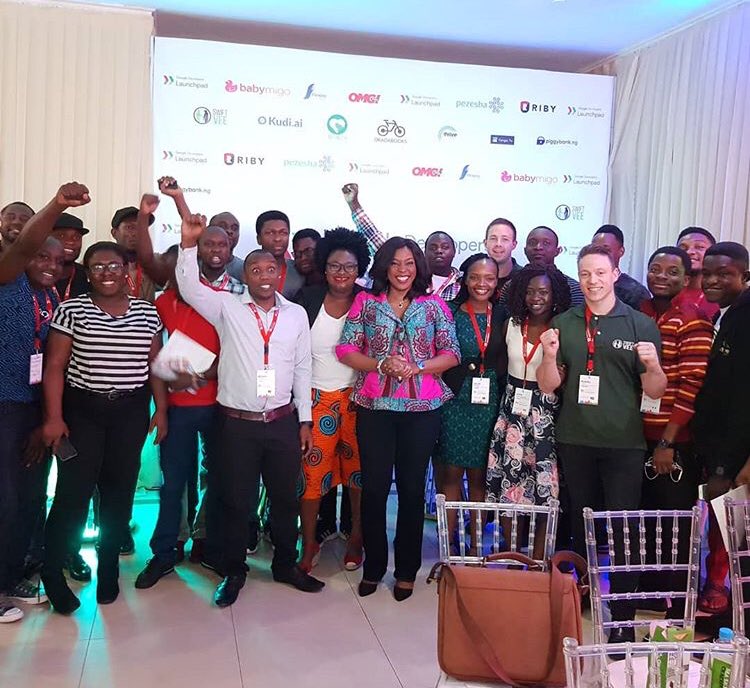
Google Launchpad ACCELERATOR

Google has opened applications for the 2025 edition of its Google for Startups Accelerator Africa, marking another significant push by the global tech firm to back African innovators harnessing artificial intelligence to solve real-world challenges.

Now in its seventh year, the initiative targets early-stage startups on the continent that are deploying AI-first solutions, with a particular focus on products that can scale impact across key sectors including agriculture, healthcare, education, finance, and climate action.

The three-month accelerator is open to Seed to Series A startups operating in Africa, provided they already have a live product, at least one founder of African descent, and a strong commitment to responsible AI development. According to Google, these criteria are designed to ensure that the startups not only have traction but also understand the cultural, economic, and social dynamics of the communities they are aiming to serve.

Selected startups will receive access to world-class technical mentorship from Google’s engineering teams and industry experts. They will also gain entry into an expansive network of global investors, business partners, and collaborators. In addition, Google is offering up to $350,000 in cloud credits to help startups build and scale their infrastructure. Startups will also participate in high-impact workshops that will cover a range of critical areas including technology strategy, people management, product design, and AI implementation.

The program, which has supported 140 startups across 17 African countries since 2018, is already making waves. Google disclosed that alumni of the program have collectively raised over $300 million in external funding and created more than 3,000 jobs. These startups are now actively shaping their sectors, many of them expanding across regions and gaining global recognition.

One notable example is Nigeria’s Crop2Cash, an agritech platform that uses AI to onboard smallholder farmers, build their digital identities, and connect them to traceable payments, productivity tools, and lines of credit. According to Google, Crop2Cash has significantly improved agricultural productivity and financial inclusion for farmers locked out of the formal economy. The company’s trajectory underscores the kind of transformative impact the accelerator seeks to achieve.

Google’s decision to double down on Africa’s AI space is rooted in a firm belief that the technology holds vast potential for the continent’s growth. Citing McKinsey’s forecast that AI could contribute as much as $1.3 trillion to Africa’s economy by 2030, the company emphasized that bold innovation—especially at the grassroots—is critical if that promise is to be realized.

Folarin Aiyegbusi, Head of Startup Ecosystem for Africa at Google, said the accelerator is part of the company’s long-term vision to empower local innovators to lead the charge.

“Startups are Africa’s problem solvers. With the right resources, they can scale their impact far beyond local communities,” he said.

Aiyegbusi added that responsible AI development shaped by local context is key to unlocking solutions that truly work for African societies.

However, Google’s accelerator is seen as not just a lifeline for startups, but also a necessary intervention in a space that remains fraught with infrastructural and regulatory hurdles. Beyond the capital and mentorship, the program offers credibility and access—two key ingredients many startups struggle to secure in their formative years.

The 2024 cohort featured 10 startups from Nigeria, Kenya, Rwanda, and South Africa, all using AI to address major developmental bottlenecks. Their work spanned sectors from fintech and climate resilience to health tech and public services—further proving the versatility of AI when applied to Africa’s unique problems.

Startups interested in joining the 2025 cohort can now apply via the official portal at https://startup.google.com/programs/accelerator/africa. While the application deadline has not been specified, the program’s rising popularity means competition will be fierce.

According to Google, Africa’s next leap forward may not come from legacy institutions but from agile, AI-driven startups able to navigate the continent’s challenges with fresh eyes and bold ideas.

RCO Finance’s Token Presale Sees Unprecedented Momentum, Here’s Why

0

A new decentralized finance (DeFi) platform, RCO Finance (RCOF), is gaining significant momentum from both retail and institutional investors amid a volatile cryptocurrency market.

The RCOF token presale is doing exceptionally well, hitting record highs, in contrast to the first quarter losses suffered by prominent cryptocurrencies such as Bitcoin (BTC) and Ethereum (ETH).

How RCO Finance’s Robo Advisor Guides Investors To Success

Currently, at stage five of the token presale, RCOF costs just $0.10 a token; the platform is close to obtaining $15 million in funding, and already around 14,000 users have tested its unique capabilities.

Through the use of safe, decentralized ecosystems powered by artificial intelligence (AI), RCO Finance seeks to democratize access to both conventional and decentralized forms of finance.

Strong tokenomics traits of this new platform set to debut this year include token exchanging, lending, staking, yield farming, and others meant to boost returns beyond merely trading.

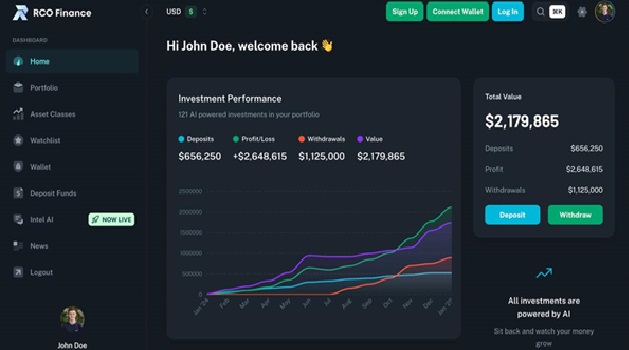
What draws investors to RCOF’s token presale, however, is its particular Robo Advisor driven by artificial intelligence. This tool offers users trade and investment recommendations depending on their requirements and objectives.

The Robo Advisor creates personalized investment strategies, keeps tabs on portfolios in real time, and makes adjustments to asset allocations based on machine learning algorithms.

Users may also adjust to shifting market conditions with the use of machine learning, which allows them to make trades at the best possible times. This level of accuracy is crucial for making the most of the ever-changing bitcoin market.

Investors may manage their portfolios effectively across both traditional and cryptocurrency markets with the help of the Robo Advisor, which eliminates emotional biases and recognizes market trends that human analysts may ignore.

For instance, if a particularly volatile altcoin’s price suddenly skyrockets by 100x, like several memecoins have in the past, investors can cash in and win virtually millions off of minimal initial inputs.

Institutional-Level Markets To Everyday Investors

Following the token presale, users in RCO Finance will also have free access to more than 150,000 asset classes, including traditional financial assets, as the platform grows beyond fundamental DeFi services.

This feature encourages educated decision-making in both traditional and crypto markets by allowing investors to expand their portfolios into areas usually set aside for institutional participants, such as RWAs and exchange-traded funds (ETFs).

The platform’s beta version allows users to explore these offerings through the following link, with thousands already engaging with RCO Finance while providing feedback for continuous improvement.

Designed to fit a varied user base, this version has been popular with a user-friendly design that promises smooth navigation for both experienced and inexperienced traders.

Furthermore, newcomers to the RCO Finance community will enjoy a know-your-customer (KYC)-free environment that ensures security, privacy, and compliance together with SolidProof’s smart contract audits.

RCOF Token Presale Offers A 600% Return Potential

Among the many intriguing aspects arriving in RCOF’s token presale roadmap is a DeFi card allowing users to exchange RCFO tokens and other cryptocurrencies seamlessly.

The platform will also include lending protocols for borrowing and lending assets, create liquidity pools to enhance trading activity, and list RCOF on centralized exchanges (CEXs), all of which will extend trading prospects.

While more smart contract audits will help to maintain the security and currency of the platform’s contracts with evolving criteria, working with influencers and Key Opinion Leaders (KOLs) will help to raise platform visibility and adoption.

The best part is that token presale backers joining today stand to gain a whopping 600% once RCOF hits the market and is listed on major exchanges. Predictions put the token price jumping from $0.10 to $0.60.

Seize this once-in-a-lifetime opportunity to protect generational riches and access markets that were previously unreachable for cryptocurrency investors by joining RCO Finance’s token presale today.


For more information about the RCO Finance (RCOF) Presale:

Visit RCO Finance Presale

Join The RCO Finance Community

A Retrospect into OpenAI’s AI Powered Social Network Initiative

0

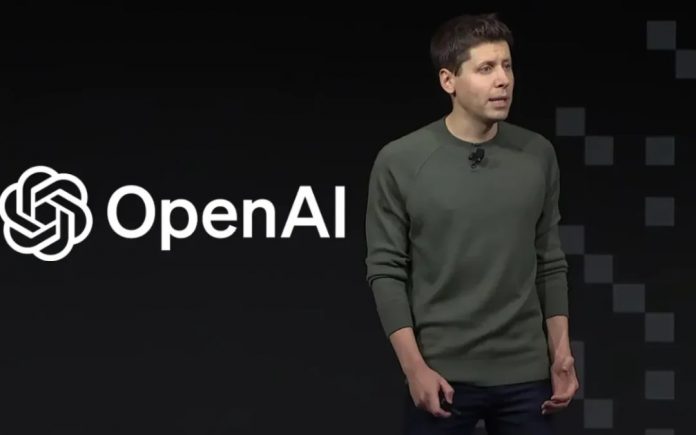
OpenAI is reportedly developing a social network similar to X, featuring a prototype with a social feed centered on ChatGPT’s image generation capabilities. The project is in early stages, and it’s unclear whether it will launch as a standalone app or be integrated into ChatGPT, which was the most downloaded app globally last month. CEO Sam Altman has been seeking external feedback on the initiative.

The move could provide OpenAI with real-time user data for AI training, mirroring how X powers Grok and Meta leverages user data for Llama. This development may intensify competition with Elon Musk’s X and Meta’s platforms, escalating tensions between Altman and Musk, who have a history of rivalry, including a rejected $97.4 billion bid by Musk to acquire OpenAI in February 2025.

The development of an X-like social network by OpenAI carries several implications. It intensifies competition with X and Meta, challenging their dominance in social media. OpenAI’s entry could fragment the market, forcing platforms to innovate faster or risk losing users. A social network would provide OpenAI with a continuous stream of real-time user data, enhancing its AI models like ChatGPT. This mirrors X’s use of posts to train Grok and Meta’s leveraging of user data for Llama, potentially leveling the playing field in AI development.

Integrating social features with ChatGPT’s image generation could create a unique, AI-driven social experience, appealing to users seeking creative or interactive platforms. However, success depends on execution and differentiation from X’s real-time discourse or Meta’s established networks. The project escalates tensions between Sam Altman and Elon Musk, already strained by Musk’s failed $97.4 billion bid to acquire OpenAI and ongoing lawsuits. This could lead to aggressive countermeasures from X, such as new features or pricing strategies.

A social network tied to OpenAI’s AI raises concerns about data privacy, content moderation, and the ethical use of user-generated content for AI training. OpenAI will need robust policies to avoid backlash. As a prototype, the project’s viability is unclear. A standalone app may struggle against entrenched platforms, while integration into ChatGPT risks diluting its core functionality. Market reception and OpenAI’s commitment will determine its impact.

Success could inspire other AI companies to explore social platforms, reshaping how AI and social media intersect. Failure might caution against overextending AI brands into crowded markets. OpenAI’s development of an X-like social network raises significant AI ethics concerns, particularly around data privacy, content moderation, and the use of user-generated content for AI training. Clearly disclose what user data (e.g., posts, interactions, images) is collected, how it’s used (e.g., for AI training or analytics), and whether it’s shared with third parties. Users should receive concise, accessible privacy notices.

Granular Consent: Implement opt-in mechanisms for data usage in AI training, allowing users to control whether their content contributes to model development. For example, users could toggle settings to exclude their posts from training datasets. Collect only the data necessary for platform functionality and AI improvements to reduce privacy risks.

Content Moderation and Safety

OpenAI could deploy AI-driven and human moderation to detect and remove harmful content (e.g., misinformation, hate speech, or illegal material) in real time, adapting to the fast-paced nature of a social feed. Regularly audit moderation algorithms to prevent biased outcomes, such as disproportionate content removal affecting marginalized groups. Publish transparency reports on moderation actions.

OpenAI could provide a clear, accessible process for users to appeal content removals or account suspensions, ensuring fairness and accountability. Ensure user-generated content used for AI training is anonymized to prevent traceability to individuals, reducing risks of re-identification. Avoid using copyrighted or sensitive user content for training without explicit permission, addressing concerns raised in lawsuits like those against OpenAI for scraping data. Monitor how AI-generated content (e.g., images from ChatGPT) influences the platform’s social dynamics, preventing amplification of harmful or misleading material.

OpenAI could allow users to customize their experience with AI features, such as opting out of algorithmic content recommendations or AI-generated replies. Provide resources to help users understand how AI shapes their feeds and how their data contributes to the platform, fostering informed engagement.  Align with regulations like the EU’s AI Act, GDPR, and U.S. privacy laws, ensuring the platform meets stringent requirements for data protection and AI governance. Collaborate with regulators and civil society to anticipate ethical challenges, especially in jurisdictions with evolving AI laws.

A social network’s fast-paced environment amplifies the spread of misinformation or harmful content, requiring OpenAI to adapt its existing ChatGPT moderation strategies for scale and speed. OpenAI’s history of ethical controversies (e.g., data scraping lawsuits) means its social network will face intense scrutiny. Robust policies can mitigate backlash but must be implemented consistently.

OpenAI’s competitive push against X and Meta may pressure it to prioritize features over ethical safeguards. Strong governance is needed to maintain user trust. OpenAI already has some ethical guidelines, such as its Charter emphasizing “safe AGI” and public commitments to transparency. However, these are tailored to AI research and ChatGPT, not a social network. The company would need to expand its policies to address the unique challenges of user-generated content and social dynamics, potentially drawing from X’s transparency reports or Meta’s Oversight Board model.

If China Adopts Bitcoin Reserve Without Lifting its Trading Ban, It Would Create Internal Contradictions

0

Ru Haiyang, co-CEO of HashKey, Hong Kong’s largest licensed crypto exchange, suggested that China could follow the U.S. strategy by retaining forfeited Bitcoin as a strategic reserve, with the central government absorbing consolidating asset disposals. This idea aligns with discussions in China about managing its growing pile of seized cryptocurrencies, estimated to involve 430.7 billion yuan ($59 billion) in crypto-related crimes in 2023.

While China currently bans crypto trading and does not recognize digital tokens as legal assets, local governments have been selling seized coins through private companies to bolster public funds, a practice some experts argue conflicts with the trading ban. Proposals include centralized management, possibly through a crypto sovereign fund in Hong Kong or the central bank, to either sell assets overseas or hold them as a reserve, inspired by U.S. President Donald Trump’s Strategic Bitcoin Reserve initiative. However, no official confirmation of a policy shift has been made, and discussions remain speculative.

China’s current ban on crypto trading and non-recognition of digital assets as legal tender would face pressure for reform. Holding Bitcoin as a reserve could signal a softening of its anti-crypto stance, potentially leading to regulated crypto markets or limited legalization, especially in Hong Kong. A Bitcoin reserve could position China as a retrospective counterweight to the U.S., particularly if the latter pursues its Strategic Bitcoin Reserve.

This could enhance China’s influence in global crypto markets and diversify its reserves away from traditional assets like U.S. Treasury bonds, hedging against dollar dominance. China’s entry as a state-level Bitcoin holder could drive significant price volatility and boost Bitcoin’s legitimacy as a global asset. It might trigger increased institutional adoption worldwide, but also raise concerns about market manipulation if China amasses substantial holdings.

Consolidating seized crypto under central government control (e.g., via the central bank or a Hong Kong-based sovereign fund) could streamline asset management but risks reinforcing state dominance over digital assets. It may also conflict with the decentralized ethos of cryptocurrencies, potentially deterring crypto innovators. Positioning Hong Kong as a crypto hub for managing these assets could solidify its status as a global financial center, attracting crypto businesses and talent. However, it might complicate Hong Kong’s regulatory alignment with mainland China’s stricter policies.

Selling or holding seized crypto could be seen as contradicting China’s trading ban, raising legal questions. Additionally, using forfeited assets for state purposes might spark debates about property rights and the ethics of those profiting from criminal proceeds. China’s move could prompt other nations to consider similar strategies, accelerating the race to integrate cryptocurrencies into national reserves. This might push for clearer international regulations but also heighten tensions over crypto governance.

These implications hinge on speculative policy changes, as no official plans have been confirmed. China’s cautious approach to crypto suggests any move would be carefully calculated to balance economic benefits with political control. The implications of China potentially adopting forfeited Bitcoin as a strategic reserve, as suggested by HashKey’s co-CEO, intersect with current U.S. crypto policies, which have taken a pro-crypto turn under the Trump administration in 2025. On March 6, 2025, President Trump signed an Executive Order establishing a Strategic Bitcoin Reserve, capitalizing it with Bitcoin forfeited through criminal or civil asset seizures.

The U.S. will not sell these assets, treating Bitcoin as a reserve asset to enhance national prosperity. Other agencies are evaluating their authority to transfer seized Bitcoin to this reserve. The order also explores a broader U.S. Digital Asset Stockpile, cryptocurrencies like Bitcoin, Ethereum, XRP, Solana, and Cardano, as announced by Trump on Truth Social. This move aims to position the U.S. as a leader in digital asset strategy. The U.S. policy mirrors China’s potential strategy of holding seized Bitcoin, signaling a global trend among major powers to legitimize cryptocurrencies as strategic assets. This could escalate competition, with both nations vying for influence over crypto markets and potentially driving Bitcoin’s price higher due to state-backed demand.

The U.S.’s proactive regulatory clarity contrasts with China’s crypto trading ban, potentially attracting global crypto businesses to the U.S. If China adopts a Bitcoin reserve without lifting its ban, it may struggle to compete for crypto innovation, reinforcing Hong Kong’s role as a crypto hub under U.S. influence. The SEC paused high-profile enforcement cases against crypto firms and rescinded Staff Accounting Bulletin 121, which had imposed costly accounting requirements on crypto custodians.

However, China’s centralized approach to managing seized assets may align with U.S. enforcement-driven seizures, raising ethical questions about state profiteering from criminal proceeds. Congress is prioritizing crypto legislation, with the Senate Banking Committee and House Financial Services Committee aiming for bills by August 2025. The GENIUS Act, progressed in March 2025, focuses on stablecoin compliance and collateralization, potentially boosting global demand for dollar-pegged stablecoins like USDC and USDT. The FIT21 Act, passed in 2024, laid initial market structure regulations, and debates continue over whether the SEC or CFTC should oversee crypto assets.

U.S. legislative momentum could set global standards, influencing China’s potential crypto reserve strategy. If China establishes a reserve without regulatory reform, it risks creating a disjointed policy that undermines investor confidence compared to the U.S.’s cohesive framework. The Trump administration opposes CBDCs, viewing them as threats to financial stability, privacy, and dollar sovereignty. Instead, it promotes dollar-backed stablecoins to enhance global liquidity and maintain dollar dominance.

China’s development of a digital yuan (CBDC) contrasts sharply with U.S. policy, potentially creating friction in global digital finance. A Chinese Bitcoin reserve could be a strategic hedge against U.S. stablecoin dominance, but it would require navigating its CBDC priorities. Both nations holding Bitcoin reserves could escalate a “crypto arms race,” with the U.S. leveraging its regulatory clarity and China its vast seized crypto holdings (from $59 billion in crypto-related crimes in 2023). This competition may drive Bitcoin’s price and adoption but risks market volatility if either nation manipulates its stockpile.

The U.S.’s pro-crypto policies could attract global talent and capital, pressuring China to loosen its trading ban or risk losing blockchain innovation to Hong Kong or Western markets. State-backed Bitcoin reserves in both countries could legitimize cryptocurrencies as reserve assets, akin to gold, boosting institutional adoption. However, the U.S.’s open blockchain stance contrasts with China’s centralized control, potentially fragmenting global crypto standards.

China’s potential reserve, if managed through Hong Kong, could integrate with U.S.-dominated stablecoin markets (90% of EU stablecoin market cap is USD-based), creating a complex interdependence. The U.S.’s shift to lighter regulation and innovation contrasts with China’s ban and centralized asset management. If China adopts a reserve without broader crypto reforms, it may face internal contradictions, as selling seized crypto violates its trading ban.

The U.S.’s SEC Crypto Task Force and legislative efforts could set a global benchmark, forcing China to clarify its stance to avoid isolation in digital finance. Both nations using seized crypto raises ethical questions about profiting from criminal proceeds. The U.S. estimates premature sales of seized Bitcoin cost taxpayers $17 billion, suggesting a motive to maximize value through reserves. China’s similar approach could face scrutiny for undermining its anti-crypto stance.

A U.S.-China race to amass Bitcoin could exacerbate wealth inequality, as state-driven price surges benefit early adopters while pricing out retail investors. If China channels its reserve through Hong Kong, it could leverage the city’s pro-crypto regulations (aligned with U.S. stablecoin markets) to compete indirectly with the U.S. However, this risks ceding control to a semi-autonomous region, complicating mainland policy.

Countries like Bhutan (11,000 Bitcoin) and the Central African Republic, which hold crypto reserves, may follow U.S. and Chinese leads, normalizing state crypto holdings. Brazil’s fintech Meliuz also proposed expanding Bitcoin reserves, indicating a trend. The U.S.’s push for technology-neutral regulations could clash with the EU’s MiCAR framework, which imposes bank-like rules on crypto. China’s potential reserve without regulatory reform may align more with authoritarian models, fragmenting global standards.

Dual U.S.-China reserves could stabilize Bitcoin’s perception as a store of value but risk manipulation if either nation dumps assets. Analysts predict Bitcoin could hit $500,000 under Trump’s policies, but China’s entry could amplify or disrupt this trajectory. U.S. crypto policies in 2025, with their focus on strategic reserves, regulatory clarity, and stablecoin promotion, position the U.S. as a crypto leader, directly influencing China’s potential Bitcoin reserve strategy. While both nations could drive crypto adoption, their divergent approaches—U.S. innovation versus Chinese control—may deepen geopolitical tensions and fragment global markets.

Operating Like The World’s Largest Startup: Amazon’s Leadership Playbook Under CEO Andy Jassy

0
Andy Jassy, boss of AWS

Tech giant, Amazon, under the leadership of CEO Andy Jassy, continues to operate with the mindset of a startup, albeit the world’s largest one.

This approach is driven by a relentless focus on solving real customers problems and improving customer experiences, rather than building for technology’s sake. Jassy in his 2024 letter to shareholders, disclosed that companies can get off track prioritizing technology because they are excited about it and lose its core focus, which are customers.

He further emphasized that great companies like Amazon, which operates a startup playbook model, aren’t carried away with flashy technological advancements, rather it is on a mission to change what’s possible for customers, ensuring every initiative addresses a genuine need or elevates satisfaction.

One key to Amazon’s continued success is its deep need for builders, those inventive individuals who constantly question the status quo and look for ways to improve even the best-performing systems. These builders are “divinely discontent,” never satisfied with past achievements and always pushing to make things better.

Another pillar of Amazon’s operating model is ownership. Jassy highlights that Amazon has succeeded over the past 30 years because it has consistently hired smart, motivated individuals who take responsibility like owners. These individuals don’t just focus on their assigned tasks they think broadly about the entire business, ask hard questions, and feel personally accountable for the customer experience.

At Amazon, the mission of the company becomes the personal mission of each employee. The company values missionaries over mercenaries, and its culture encourages flatter structures with more individual contributors owning “two-way door” decisions and acting swiftly.

Speed, Jassy emphasizes, is another critical factor. Amazon believes that moving quickly doesn’t have to come at the expense of quality. On the contrary, the company sees speed as a leadership decision, one that must be continuously reinforced, structurally supported, and culturally embraced. In a world of fierce competition, being fast and customer-focused is non-negotiable.

To that end, eliminating bureaucracy is a top priority. While processes are essential at scale, unnecessary red tape frustrates builders and slows down progress. In a recent call for feedback, Jassy received nearly 1,000 examples of bureaucratic hurdles from employees and has already led over 375 changes in response. The company is committed to removing any obstacle that hinders innovation and morale.

Jassy also underscores the importance of scrappiness. He recalls how Amazon Web Services (AWS) pillars like S3 and EC2 were built with small teams of 13 and 11 people, respectively. Contrary to the belief that success requires large teams, Amazon encourages lean operations, where leaders achieve more with fewer resources and take pride in efficiency.

Taking risks is another hallmark of the Amazon way. Jassy acknowledges that risk-taking isn’t always easy, especially for high-performing individuals unaccustomed to failure. However, he argues that breakthrough innovation comes from taking bold bets guided by customer obsession, not from playing it safe or copying others.

The startup playbook described by Amazon CEO Andy Jassy represents a cultural and operational blueprint that has played a central role in the company’s extraordinary growth and resilience over the years.

How This Has Helped Amazon’s Growth

Revenue Growth

From $107 billion in 2015 to $574 billion in 2023, Amazon’s revenue reflects its ability to scale across industries. The company’s operating income in 2024, improved 86% YoY, from $36.9B to $68.6B.

Enabled Game-Changing Innovation

Products like Amazon Prime, AWS, Kindle, and Echo/Alexa came from a startup mentality—testing bold ideas quickly and scaling what works.

Maintained Agility at Scale

Even as one of the world’s largest companies, Amazon has remained nimble, entering and disrupting industries like cloud computing, logistics, entertainment, and healthcare.

Built a Resilient Business Model

During economic slowdowns or market disruptions like the COVID-19 pandemic, Amazon’s startup mindset allowed it to quickly pivot and respond to new demands, such as ramping up logistics and cloud services.

Attracted and Retained Talent

By empowering employees with ownership, autonomy, and purpose, Amazon has built a workforce that drives long-term value and innovation.

Sustained Customer Loyalty and Market Dominance

Constant improvement in customer service, delivery speed, and product selection fueled by this playbook, has kept customers coming back and helped Amazon grow into one of the most trusted global brands.

Ultimately, what matters most at Amazon is delivering tangible, compelling results for customers. Jassy makes it clear that success is not about charisma or managing office politics; it’s about what teams actually get done.

At its core, Amazon’s startup mentality remains the true north for the company, one that enables it to scale globally without losing its entrepreneurial edge.