DD
MM
YYYY

PAGES

DD
MM
YYYY

spot_img

PAGES

Home Blog Page 1478

BUA Foods Reports Record N1.5tn Revenue, Spurred By Strong Domestic Market Demand

0

BUA Foods Plc has delivered unprecedented financial performance for its 2024 fiscal year, crossing the trillion-naira revenue mark for the first time while recording significant profit growth across all product segments.

The company’s audited financial statements for the year ended December 31, 2024, show revenue of N1.527 trillion—more than double the N729.4 billion recorded in 2023, highlighting the growth potential of Nigeria’s food market.

This 109.5% year-on-year surge represents the highest annual revenue since BUA Foods was listed on the Nigerian Exchange (NGX) in 2021. The company’s pre-tax profit also skyrocketed by 162.9% to N284.32 billion, while profit after tax jumped 137.3% to N265.99 billion. However, BUA Foods faced headwinds, including a staggering N178 billion exchange loss due to the depreciation of the naira, which drove up interest obligation costs.

The company attributes its strong performance to sustained demand for its core products—sugar, flour, and pasta—along with strategic pricing, deeper market penetration, and increased production capacity. These factors enabled BUA Foods to boost its margins despite Nigeria’s challenging economic climate.

Flour Segment Leads Revenue Surge

While sugar remains BUA Foods’ highest-selling product, its flour segment emerged as a major revenue driver, growing by an impressive 171% year-on-year. The flour business contributed over N541 billion in 2024, accounting for 35.5% of total sales—up from 27.4% the previous year.

The surge in flour sales is linked to rising demand from Nigeria’s bakery industry and small-scale food enterprises that rely on locally produced flour. In anticipation of this growing demand, BUA Foods expanded its flour production lines in late 2023, a move that has now yielded substantial financial rewards.

Sugar sales, which have traditionally been the backbone of the company’s operations, contributed N734.5 billion, making up 48% of the total revenue. However, its share of total sales declined slightly, signaling a gradual diversification of BUA Foods’ revenue base.

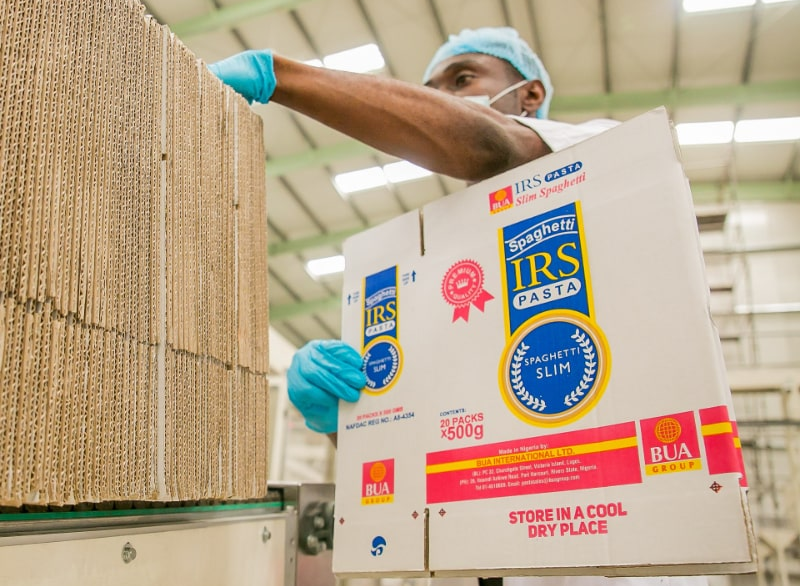
The company’s pasta segment also continued its upward trajectory, bringing in N197 billion—12.9% of total revenue. The demand for BUA’s branded pasta products has remained strong, particularly among price-conscious consumers seeking alternatives to imported brands.

Local Market Dominance and Higher Dividends

BUA Foods’ dominance in Nigeria’s consumer goods market was further solidified in 2024, with domestic sales accounting for 95.5% of total revenue. This underscores the gap created by the country’s food supply gap marked by 40% inflation.

As a reward for its exceptional performance, the company’s Board of Directors has proposed a dividend of N13 per share—more than double the N5.50 paid in 2023. This 136.4% increase highlights BUA Foods’ commitment to delivering shareholder value and reflects confidence in its long-term profitability.

Impact of Rising Costs and Foreign Exchange Losses

Despite its impressive topline and bottom-line figures, BUA Foods was not immune to Nigeria’s macroeconomic challenges. The company reported a substantial increase in finance costs, largely driven by foreign exchange losses amounting to N173 billion. The naira devaluation pushed up the cost of imported raw materials, significantly impacting operations.

Raw materials alone accounted for over 91% of the company’s total cost of sales, but BUA Foods managed to improve its operating profit margin to 31%. This was achieved through tight cost controls and a reduction in impairment losses.

The company’s debt profile also showed positive signs, with total debt dropping to N391.85 billion, down from the previous year. Most of the debt remains short-term borrowings used for import financing. The decline in debt helped lower BUA Foods’ gearing ratio from a steep 210% in 2023 to a more manageable 81% in 2024, improving financial stability.

Expansion to Boost Future Growth

To sustain its growth momentum, BUA Foods is making significant investments in production capacity. In August 2024, the company signed a deal with Turkish flour milling equipment manufacturer IMAS to construct four new wheat flour mills. When completed, this expansion will increase BUA Foods’ total wheat flour milling capacity to 2.5 million metric tonnes per year, positioning the company as one of the largest flour millers in sub-Saharan Africa.

Further strengthening its product portfolio, BUA Foods announced in September that it would significantly expand its pasta production line. The company plans to install nine new long-cut pasta lines, which will nearly double the annual pasta production capacity from 500,000 tons to 900,000 tons. This expansion is expected to drive product innovations and boost volume growth, especially as demand for locally produced pasta rises.

To support this scale-up, BUA Foods has also partnered with Turkish firm Cukurova Silo to increase its grain storage capacity by 100,000 tons. This added capacity is expected to ensure consistent access to raw materials, minimize supply chain disruptions, and enhance operational efficiency—a critical factor given Nigeria’s volatile logistics environment.

With these ambitious expansion projects, BUA Foods is positioning itself for sustained growth amid Nigeria’s economic headwinds. Analysts believe that BUA Foods’ investments in flour and pasta will not only strengthen its market leadership but also reduce its dependence on sugar, which has historically been its primary revenue driver. Additionally, they note that the company’s strategic focus on local manufacturing and cost efficiency will help mitigate forex-related risks.


“I Couldn’t Care Less If They Raise Prices”: Trump Denies Asking Automakers Not To Raise Prices Over Tariffs

0

President Donald Trump was bold and unapologetic in defense of his tariff strategy in a Saturday phone interview with NBC News’ Kristen Welker, casting aside concerns about rising car prices and framing them as a linchpin in his mission to revive American manufacturing.

Far from pressuring automakers to shield consumers from the fallout of his newly imposed 25% tariffs on imported vehicles and parts, Trump embraced the prospect of higher costs with relish—a stance that has ignited fierce debate and cast a shadow of uncertainty over the U.S. economy.

Asked by Welker whether he had urged auto industry CEOs to hold the line on prices after the tariffs take effect, Trump was unequivocal in his denial.

“No, I never said that,” he told her. “I couldn’t care less if they raise prices, because people are going to start buying American cars.” He doubled down moments later, adding, “I couldn’t care less. I hope they raise their prices, because if they do, people are gonna buy American-made cars. We have plenty.”

The remarks sharply contradict a Wall Street Journal report from Thursday, which alleged Trump had held a call with auto CEOs earlier this month, threatening even steeper tariffs if they dared pass the costs of his import taxes onto consumers. On Saturday, he waved off such claims, steering the narrative toward his broader vision.

That vision, Trump explained, hinges on a blunt message to the auto industry: bring production home or face the consequences.

“The message is: ‘Congratulations, if you make your car in the United States, you’re going to make a lot of money. If you don’t, you’re going to have to probably come to the United States, because if you make your car in the United States, there is no tariff,’” he told Welker.

The tariffs, set to hit on Thursday, dismantle decades of free trade harmony in North America, where the U.S., Canada, and Mexico have long operated as a seamless economic bloc. Foreign and domestic automakers assemble many vehicles and parts stateside, but they also rely heavily on factories in Mexico and Canada—a dynamic Trump aims to upend.

Yet the road to that goal is fraught with obstacles. Shifting production to the U.S. demands billions in investment—new plants, retooled supply chains, and a freshly trained workforce—while Trump’s erratic tariff track record leaves CEOs wary of long-term commitments. Seeking to dispel those doubts, Trump insisted his broader reciprocal tariff plan, matching foreign import taxes dollar-for-dollar across a range of goods, is here to stay.

“Absolutely, they’re permanent, sure,” he declared, railing against what he called a 40-year global “rip-off” of the United States. “The world has been ripping off the United States for the last 40 years and more.”

Still, the consummate dealmaker left room for flexibility, adding, “I would negotiate the tariffs down only if people are willing to give us something of great value. Because countries have things of great value. Otherwise, there’s no room for negotiation.”

The economic stakes are staggering. Auto industry analysts predict the tariffs will inflate production costs across the board, tacking on thousands of dollars to every vehicle sold in the U.S.—whether imported or built domestically. The impacts are expected to be immense: automakers may throttle production as they gauge the tariffs’ staying power, while higher prices risk alienating cost-sensitive buyers, shrinking demand. A supply-and-demand imbalance could drive vehicle prices even higher, squeezing American consumers already grappling with inflation. Beyond autos, Trump’s reciprocal tariffs—slated to launch Wednesday—threaten to raise costs on a slew of imported goods, potentially fueling broader price increases and stoking inflationary pressures.

The fallout may not stop at U.S. borders. Canadian Prime Minister Mark Carney fired a salvo on Friday, warning Trump that Canada would retaliate with its own tariffs if the U.S. follows through—a move that could spiral into a bruising trade war across North America. Trump, unfazed, refused to blink.

“They go into effect Wednesday,” he said of his levies, though he teased the possibility of a deal—after the tariffs bite. The standoff underscores the high-wire act Trump is playing: a bet that economic pain now will yield a manufacturing renaissance later.

For the U.S. economy, the tariffs pose a dilemma. Many believe the tariffs could spark a wave of factory openings and job growth, bolstering American workers and reducing reliance on foreign supply chains—a cornerstone of Trump’s “America First” ethos. However, others, including industry analysts, warn of a darker scenario: disrupted trade flows, higher costs for businesses and consumers, and a potential drag on GDP if retaliatory measures escalate.

Automakers, caught in the crosshairs, face an agonizing choice—absorb the tariffs and bleed profits, or raise prices and risk losing market share.

Solana And Ripple See Prices Drop Over 20% In Weeks As Further Downside Expected. What Is The Most Talked About Crypto Currently?

0

Solana Price Prediction says that the top holders now drive double-digit gains in April. Investors noted that the trend now favors an upsurge for SOL.

While that happens, XRP will bounce back as Remittix comes out very strong as a new DeFi project and among the top cryptos to invest in. Current statistics and market analyst views point to developments that would drive these tokens.

Solana Price Prediction: A Summary of the Trends

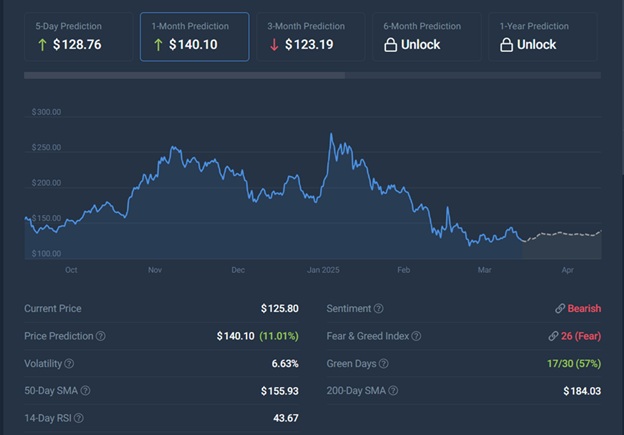
Solana has generated a lot of buzz with its fast and inexpensive transactions. Current news has SOL dropping to around $130.75.

Some technical forecasters foresee SOL to bounce back with the assistance of institutional buyers. The Solana Price Prediction trend is very robust.

Top holders are withdrawing their money and showing strong belief in a flip. Solana Price Prediction news reports that if upgrades continue on the network, SOL can reach new heights in the future.

Investors use these reports to determine whether or not to include SOL in their portfolios. Based on the Solana price prediction, it is predicted to increase by 11.01% and hit $140.10 by April 27.

XRP: A Revival in the Making

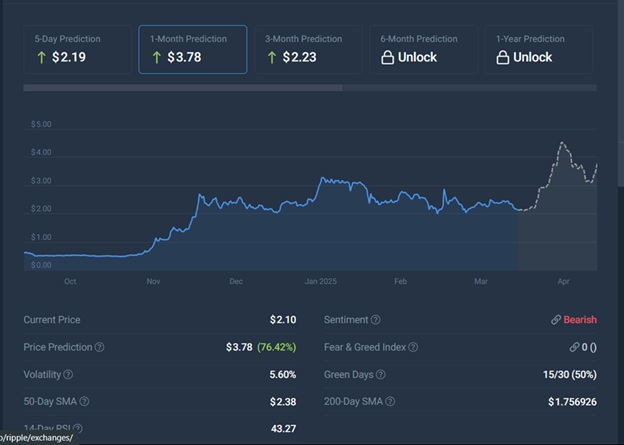
XRP possesses a solid use case for cross-border payments. The latest news is that XRP is trading at a price of approximately $2.22 following a marginal recovery. Analysts believe that with the renewed interest of financial institutions, XRP can recover even more.

The token has enabled banks to conduct quicker international transfers. Investors are closely following XRP since its revival is likely to improve the overall market sentiment.

The steady increase in XRP promises better stable gains in the near term. XRP is currently highlighted by most analysts as a key part of portfolios for long-term stability. XRP is likely to increase by 76.42% and reach $3.78 by April 27.

Remittix: The New DeFi Project That Resolves Payment Problems

Remittix is unique because it is focusing on real issues in global finance. Remittix offers the means to bypass the middlemen in cross-border money transfers. A bank account is out of reach for most.

They may get crypto in a wallet, send it to a money transfer service like Western Union, and cash it out. Remittix offers them more control over their money without encroaching on their privacy.

The project has sold over 524 million tokens throughout its ICO. With this successful launch, the project has attracted the attention of investors. Remittix brings the real essence of cryptography—ownership of your money and anonymity—to modern finance and banking.

Its system allows users to send money quickly and cheaply without other middlemen. With this, even individuals in remote communities can be brought into the digital economy. Remittix decreases delays and high fees that normally plague traditional payment systems. Introducing crypto-to-fiat transactions as a normal part of life, it allows many individuals to buy groceries, bills, and other things.

Investors currently assert Remittix is among the best cryptos to buy since it addresses a huge pain point in cross-border payments. The token value of around $0.0734 in DeFi coins makes the token affordable for many individuals.

Experts estimate that if Remittix is able to continue growing, it may experience 10x or greater returns. Its straightforward use case and real-world usefulness make it a solid contender for widespread adoption. The project has a tangible solution that can improve the lives of millions of people, particularly in areas where traditional banking is inaccessible.

A Shift towards Pragmatic Solutions

Solana Price Prediction is optimistic for SOL to regain double digit increases with the top holders in its wake. XRP also appears to be on a revival trajectory, as its use in fast, affordable payments is finding traction. Meanwhile, Remittix is a token that addresses real global issues. It offers a way to bring crypto into daily transactions and a remedy for the unbanked.

Remittix is possibly one of the best cryptos to invest in for long-term value in the coming near future. Investors looking for stable and operational options in digital finance have every reason to feel hopeful. As these activities continue to develop, the trend towards tokens with concrete real-world impact may build a new generation of cross-border payments.


Discover the future of PayFi with Remittix by checking out their presale here:

Website: https://remittix.io/

Socials: https://linktr.ee/remittix

BlockDAG’s Beta Testnet Dominates Headlines As HYPE Eyes $70 and PEPE Builds Toward 285% Climb

0

Hyperliquid (HYPE) and PEPE coin have garnered attention with their bold price predictions and liquidity movements. Hyperliquid aims for substantial growth through high-speed transactions and user engagement, while PEPE coin is banking on bullish trends fueled by smart money inflows.

However, BlockDAG Beta Testnet takes a different approach by prioritizing seamless multi-platform compatibility and wallet integration, especially with MetaMask. This practical focus on usability and accessibility ensures smoother onboarding and interaction for developers and users alike, making it a strong contender for mainstream adoption.

Hyperliquid (HYPE) Price Forecast

Hyperliquid (HYPE) has garnered attention for its decentralized exchange capabilities, offering high-speed transactions and substantial leverage options. By the end of 2025, analysts anticipate considerable volatility, with potential price surges followed by bearish trends into 2026.

Currently, HYPE maintains a support level around $12; therefore, a resurgence in bullish activity could propel it to $20 or even $30. Looking ahead to 2030, the token’s value could escalate to between $70 and $120, contingent upon broader cryptocurrency adoption and regulatory advancements.

Moreover, factors influencing this trajectory include Hyperliquid’s technological enhancements, increased user engagement, and its ability to compete with established exchanges. While these projections are speculative, they nonetheless underscore the potential growth of HYPE as the digital asset landscape continues to evolve.

PEPE Coin’s Potential 285% Surge: Insights and Smart Money Movements

PEPE coin is currently trading near a critical resistance zone between $0.00000800 and $0.00000823, forming a rising wedge pattern that could signal a significant price movement. Consequently, a decisive break above $0.00000840 may negate bearish trends, potentially propelling the price to $0.00000950. Conversely, a drop below $0.00000740 could lead to a decline toward $0.00000680.

Additionally, liquidity analysis reveals a 13-day uptrend after a sweep at $0.00000589, suggesting a bullish reversal. This trajectory hints at a possible ascent to $0.00002384, aligning with December highs and representing a 285% increase. Furthermore, the MACD indicator shows a weak bullish crossover, indicating emerging positive momentum.

BlockDAG Beta Testnet Ensures Seamless MetaMask Integration

BlockDAG Beta Testnet is making waves with its focus on seamless cross-platform compatibility and wallet integration. One of the most critical elements of this testnet phase is ensuring that users can smoothly connect and interact with wallets like MetaMask, which is vital for decentralized finance (DeFi) applications and broader blockchain adoption. As a result, wallet compatibility testing is a top priority, as BlockDAG aims to eliminate friction points that typically hinder user experience and onboarding.

Furthermore, by conducting rigorous multi-platform testing, the BlockDAG team is committed to verifying that transactions, mining activities, and smart contract interactions perform consistently across various environments. This approach not only boosts confidence among developers and miners but also sets the stage for broader integration within the DeFi ecosystem.

Backing this effort is a solid financial foundation. Specifically, BlockDAG’s presale fundraising has already amassed an impressive $209 million, reflecting strong investor interest. Currently, the token price in Batch 27 is $0.0248, showcasing a remarkable 2,380% ROI since Batch 1, with more than 18.9 billion coins sold. Consequently, these figures underline the project’s growing momentum and the community’s belief in its long-term potential.

To further support adoption, BlockDAG is working diligently to validate smooth integration with popular wallets like MetaMask while testing compatibility with multiple platforms. As a result, users, developers, and miners alike can enjoy a seamless experience without encountering unnecessary barriers. With a keen eye on usability and cross-platform performance, BlockDAG Beta Testnet is laying the groundwork for a more interconnected blockchain future.

BlockDAG’s Practical Approach Stands Out

While Hyperliquid (HYPE) eyes long-term growth through high-speed transactions and PEPE coin rides the wave of bullish speculation, BlockDAG takes a grounded approach by focusing on cross-platform compatibility and wallet integration. By prioritizing practical usability, particularly with MetaMask and other popular wallets, BlockDAG ensures a frictionless experience for both developers and users.

This attention to seamless interaction builds a strong foundation for mainstream adoption and long-term success. As blockchain technology continues to mature, BlockDAG’s commitment to smooth integration and real-world utility positions it as a promising solution in the ever-competitive crypto space.

Presale: https://purchase.blockdag.network

Website: https://blockdag.network

Telegram: https://t.me/blockDAGnetworkOfficial

Discord: https://discord.gg/Q7BxghMVyu

Ethereum Tests $3,630 While Solana Breaks $137—But BlockDAG’s Beta Testnet Airdrop Dominates With 18.9B Coins Sold

0

Momentum in crypto isn’t just about price action—it’s about how projects build trust, scale, and deliver value to their communities. While Ethereum eyes a crucial breakout near $3,630 and Solana rallies on ETF speculation and bullish technicals, BlockDAG is taking a more grounded approach with its Beta Testnet launch.

By rolling out a structured airdrop of 10,000 test tokens to over 110,000 investors through a vesting smart contract, BlockDAG reinforces its community-first strategy. This level of transparency and participation sets a different standard in a space often driven by speculation. The keyword: community engagement couldn’t be more fitting.

Ethereum Eyes Crucial Breakout

Ethereum is testing a key resistance level near $3,630, which aligns with the 61.8% Fibonacci retracement. If successful, sustained movement above this zone could accelerate bullish momentum toward $3,830 and possibly $4,000.

On the other hand, if the price fails to hold above $3,630, a pullback toward $3,460 remains likely. Furthermore, the bullish bias is supported by Ethereum’s position above the EMA50, which continues to provide solid technical backing. Nevertheless, Ethereum must remain above $3,460 to maintain upward potential. Otherwise, a drop below this level would shift sentiment and bring $3,200 back into view.

Therefore, traders are advised to monitor price behavior closely around the current zone, as a confirmed break could act as a trigger for the next leg up. Overall, the forecast for today leans bullish unless Ethereum drops below $3,460, which would cancel the upward scenario. Additionally, the RSI and price action suggest increased buying interest, though confirmation is still needed for a clear breakout.

Solana’s Surge Toward $170: ETF Speculation

Solana’s native token, SOL, has recently experienced a notable uptick, trading just below $140—a 1% increase over the past 24 hours and an 8.5% gain on March 24th. This momentum, in part, is fueled by several key factors:

Fidelity Investments has filed for the “Fidelity Solana Fund,” marking a significant step toward offering regulated investment products centered on Solana. Moreover, Network Strength: Solana boasts the second-highest Total Value Locked (TVL) among blockchains and has seen its network fees surpass Ethereum’s base layer, indicating robust activity and revenue generation.

The daily chart reveals a bullish breakout from an ascending triangle pattern, with SOL surpassing the $137 resistance level. Analysts project a short-term price target of approximately $170, suggesting a potential reversal of the recent downtrend. As a result, traders should monitor SOL’s ability to maintain support above $137 and watch for a confirmed move beyond $180 to validate the continuation of this upward trajectory.

BlockDAG Rolls Out 10,000 Test Token Airdrop

BlockDAG is putting its community at the center of its Beta Testnet rollout by distributing 10,000 test tokens to over 110,000 registered investors. Importantly, these tokens aren’t just dropped arbitrarily—they’re tied to a transparent, time-based vesting contract that reflects the project’s focus on long-term value and accountability. The structure is simple yet effective: 40% of tokens are unlocked immediately, followed by 20% weekly over the next three weeks.

Consequently, this approach not only rewards early supporters but also builds confidence in BlockDAG’s ecosystem integrity. Wallet holders don’t need to take any action—tokens will be automatically sent and can be tracked via a dedicated dApp. In doing so, this gesture reinforces BlockDAG’s commitment to its growing community, which has backed the project with $209 million raised during its presale.

Currently, in Batch 27 at a price of $0.0248 per BDAG, the project has already sold over 18.9 billion coins, generating a 2,380% ROI from the first batch. Ultimately, for investors, this airdrop isn’t just symbolic—it’s a chance to engage with the testnet while being part of a proven, high-performing token economy. BlockDAG’s community-first rollout strategy signals that every wallet counts, and every holder matters.

Community Moves the Chain Forward

As Ethereum tests resistance and Solana rides the ETF narrative, BlockDAG is grounding its growth in tangible user engagement. Rather than relying solely on technical breakouts or institutional buzz, it’s rewarding real participants with test tokens and structuring their release through a transparent vesting contract.

This approach not only builds credibility but also reflects a deeper understanding of what sustains a project long-term. In an environment where hype often overshadows substance, BlockDAG’s focus on measurable user participation and community trust may prove to be the more sustainable strategy. The momentum, in this case, starts with the people. 


Presale: https://purchase.blockdag.network

Website: https://blockdag.network

Telegram: https://t.me/blockDAGnetworkOfficial

Discord: https://discord.gg/Q7BxghMVyu