DD
MM
YYYY

PAGES

DD
MM
YYYY

spot_img

PAGES

Home Blog Page 1493

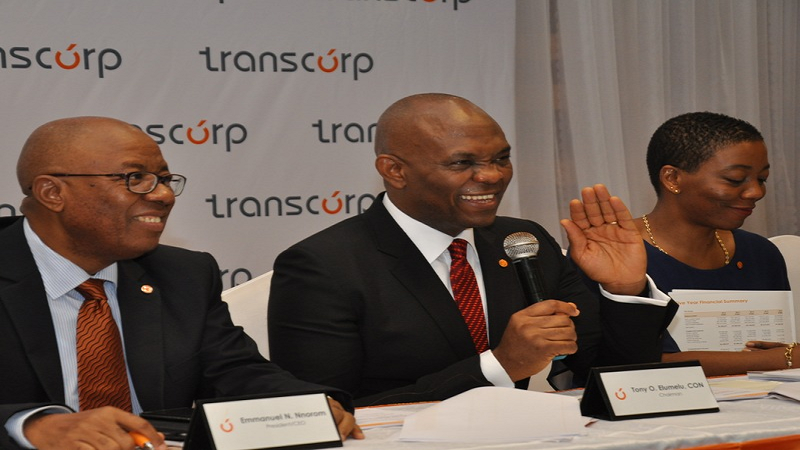
Transcorp Power Posts 62% (N32.637bn) PAT Q1 2025 Growth

0

Transcorp Power Plc (formerly Transcorp Power Limited) delivered a powerful first-quarter performance in 2025, reporting a pre-tax profit of N43.283 billion — a 50.43% rise from N28.772 billion in Q1 2024. Profit after tax soared even higher, climbing 62% to N32.637 billion.

The strong results reflect not just Transcorp Power’s operational efficiency, but also broader tailwinds across Nigeria’s electricity market, following the introduction of the Band A tariff regime last year.

The Band A tariff system came into effect in 2024 to allow power distribution companies (DisCos) and generating companies (GenCos) to charge premium rates for customers enjoying a minimum of 20 hours of electricity supply per day.

Transcorp Power, one of Nigeria’s largest power generators, has clearly been a major beneficiary of these reforms. The company’s Q1 2025 revenue surged to N105.442 billion, up 55.38% from N67.862 billion in the corresponding period last year. This quarterly revenue already represents 34.5% of its full-year 2024 revenue, setting a strong pace for 2025.

Energy delivery remained the backbone of Transcorp’s revenue mix, contributing 73% of turnover. Importantly, international market revenue climbed from 18% to 26.82%, suggesting Transcorp Power is not just riding domestic tariff improvements but also strategically expanding its footprint outside Nigeria.

Margins Stay Strong Despite Rising Costs

Cost of sales grew by 52.38% year-on-year to N50.412 billion, largely driven by higher natural gas and fuel costs — which together make up 91% of production expenses. Nevertheless, this cost increase was outpaced by revenue growth, lifting gross profit to N55.031 billion, a 58.23% increase. The gross margin stood firmly at 52%, highlighting Transcorp’s ability to protect profitability even amid higher input costs.

Administrative expenses rose sharply by 74.14% year-on-year to N7.453 billion, reflecting wage increases, inflationary pressures, and expansion costs. Still, the company maintained a healthy operating profit margin of 42%, despite a slight compression of about 2.5 percentage points.

Meanwhile, net finance costs rose moderately by 15.26% to N1.012 billion, demonstrating effective debt management in a high-interest environment.

Earnings and Balance Sheet Strength

Transcorp Power’s earnings per share (EPS) rose to N4.35 — up 61.71% year-on-year — already surpassing 40% of its full-year 2024 EPS. This trajectory reinforces expectations of record earnings for the full year, buoyed by higher tariffs and stronger collections across the power industry.

The company’s balance sheet expanded by 13% to N447 billion within the first quarter alone. Trade and other receivables still account for about 79.8% of total assets, a lingering structural challenge typical in Nigeria’s power sector where payment bottlenecks persist, despite improving collections.

Market Response and Sector Outlook

On the stock market, Transcorp Power has posted a year-to-date gain of 1.39% in 2025, after closing 2024 with a strong 36.33% full-year gain that lifted its market capitalization to N2.7 trillion.

Analysts suggest that investor sentiment is still cautious, pending broader reforms in the sector, but that Transcorp’s fundamentals are pointing towards sustained profitability. The ongoing implementation of the Band A tariff structure and improving sector liquidity could catalyze a market rerating in the months ahead.

The Band A reform, aimed at improving cost recovery and encouraging investment in the sector, is expected to yield more results for the sector players. Earlier this month, Nigeria’s Minister of Power announced that the electricity sector generated a record N700 billion in revenue in 2024 — a figure that stands as the highest annual collection in the sector’s history. This represents a major improvement from the chronic liquidity crises that have plagued the industry for years.

If the broader policy framework holds, and the Band A tariff regime continues, Transcorp Power could be entering a period of accelerated and sustained growth, much to the delight of its investors.


CME Group to Launch XRP Futures Contract on May 19th

0

CME Group, the world’s leading derivatives marketplace, announced plans to launch XRP futures on May 19, 2025, pending regulatory approval. The futures will be cash-settled, based on the CME CF XRP-Dollar Reference Rate, calculated daily at 4:00 p.m. London time.

Traders can choose between micro-sized contracts (2,500 XRP) and larger contracts (50,000 XRP), catering to both retail and institutional investors. This move expands CME’s crypto derivatives suite, which includes Bitcoin, Ethereum, and Solana futures, driven by growing interest in XRP and its XRP Ledger for fast, low-cost global transactions.

The launch follows a 141% year-over-year increase in CME’s crypto futures trading volume, reaching $11.3 billion in Q1 2025. Robinhood will also offer these contracts, enhancing retail access. The announcement has sparked speculation about a potential XRP spot ETF, as regulated futures are often a prerequisite for SEC approval. XRP is currently trading at around $2.29, with a 6% weekly gain but a slight daily dip.

CME’s regulated futures platform will attract institutional investors, such as hedge funds and asset managers, who require trusted venues for exposure to XRP. This could drive higher trading volumes and liquidity, stabilizing XRP’s price and reducing volatility over time. Futures contracts will enhance price discovery by providing a transparent, regulated benchmark (CME CF XRP-Dollar Reference Rate). This could reduce price manipulation risks and align XRP’s market value more closely with its fundamental utility in cross-border payments via the XRP Ledger.

Regulated futures are often a precursor to SEC approval for spot ETFs, as seen with Bitcoin and Ethereum. The launch fuels speculation about an XRP ETF, which could unlock significant retail and institutional capital, potentially boosting XRP’s price and adoption. Robinhood’s support for XRP futures, alongside CME’s micro-sized contracts (2,500 XRP), lowers the entry barrier for retail traders. This could increase XRP’s mainstream adoption and trading activity, especially among younger investors active on platforms like Robinhood.

CME’s decision signals confidence in XRP’s long-term viability, particularly its role in facilitating fast, low-cost global transactions. This could bolster Ripple’s partnerships with financial institutions and encourage further integration of XRP into payment systems. The announcement has already contributed to bullish sentiment, with XRP trading at $2.19 and analysts predicting potential rises to $3 or higher by mid-2025, driven by futures-driven liquidity and ETF speculation. However, short-term volatility may persist due to regulatory uncertainties or market corrections.

The launch, pending regulatory approval, suggests growing acceptance of XRP in traditional finance, despite past SEC legal challenges. It could pressure regulators to clarify XRP’s status, potentially resolving lingering uncertainties and fostering a more favorable environment for Ripple and XRP. As CME expands its crypto derivatives (Bitcoin, Ethereum, Solana, now XRP), it intensifies competition among blockchain networks. XRP’s inclusion may spur innovation in the XRP Ledger and encourage other projects to seek similar regulated offerings to remain competitive.

Overall, the XRP futures launch positions XRP as a maturing asset in the eyes of traditional finance, likely driving adoption, liquidity, and price growth while paving the way for further integration into global financial systems. However, regulatory developments and market dynamics will remain critical factors to watch.

UBA to Raise N144.8bn to Meet Recapitalization Target, Expand Footprint into France and Saudi Arabia

0

United Bank for Africa Plc (UBA) has announced plans to raise N144.8 billion ($90.2 million) in additional capital this year as part of its strategy to meet the Central Bank of Nigeria’s new recapitalization requirements and drive expansion into new international markets.

This latest capital raise comes on the heels of an N240 billion rights issue concluded earlier this year, which, together with the new funds, is expected to lift UBA’s paid-up capital above the N500 billion minimum now required for banks with international licenses. The bank’s Group Managing Director and CEO, Oliver Alawuba, said in a statement that the new capital would be “duly invested in additional technologies and business growth initiatives across Nigeria, Africa, and the globe.” He added that UBA was preparing to extend its footprint further by opening operations in France and Saudi Arabia, complementing its existing presence in 24 countries.

The push by UBA is part of a wider shake-up across Nigeria’s banking sector following the Central Bank’s announcement of a major recapitalization directive in March 2024. Under the new rules, banks were given two years, until March 31, 2026, to shore up their minimum paid-up share capital. For international banks, like UBA, the bar was set significantly higher at N500 billion, compared to the previous N50 billion.

The CBN said the tougher requirements were necessary to fortify Nigeria’s financial system against persistent economic headwinds, including high inflation, sluggish economic growth, and the naira’s steep devaluation following the 2023 currency reforms. Those reforms, which saw the unification of Nigeria’s multiple exchange rates and a sharp fall in the naira’s value, had exposed banks to significant foreign exchange risks and impacted their capital adequacy ratios. The regulator stressed that stronger capital buffers would enable banks to better absorb future shocks and continue lending to the real economy.

UBA’s drive to raise fresh capital mirrors similar moves by other top-tier Nigerian banks scrambling to comply with the new thresholds. Access Holdings Plc, the country’s largest lender by assets, announced last week that it had successfully raised N351 billion through a rights issue, making it the first of the Tier-1 banks to comfortably surpass the N500 billion benchmark. Access said its recapitalization leaves it well-positioned for further regional and global expansion.

Zenith Bank also confirmed it had concluded its capital-raising program, securing approximately N350.4 billion through a combination of rights and public offerings, boosting its paid-up capital to N614.6 billion — well above the minimum requirement.

Guaranty Trust Holding Company Plc (GTCO) adopted a phased approach, securing N209.4 billion in a first-round public offer earlier this year, with plans to launch a second phase targeting foreign institutional investors to complete its capital-raising drive before the deadline. GTCO’s management emphasized that the two-stage fundraising was aimed at not just meeting the regulatory mandate but also diversifying its investor base for long-term stability.

FBN Holdings, the parent company of First Bank of Nigeria, also rolled out an ambitious recapitalization plan. The group raised N150 billion through a rights issue in late 2023 and is seeking shareholder approval to raise an additional N350 billion. If successful, it would take FBN Holdings’ capital base to over N730 billion, giving it a sizable buffer above the regulatory minimum and additional firepower to finance technology upgrades, lending, and international expansion.

The 2024 recapitalization exercise is the second major sector-wide drive since the historic 2004 banking consolidation under former CBN governor Charles Soludo, which reduced the number of banks from 89 to 25 and created a stronger banking landscape. However, this latest round comes against a far more turbulent backdrop of macroeconomic instability.

Banks are under pressure not just to raise fresh capital but also to navigate a tough operating environment characterized by spiraling inflation, rising borrowing costs, and weakened consumer spending. In addition, the aftershocks of the 2023 currency liberalization — including heavy foreign exchange losses and a backlog of unsettled FX obligations, have further complicated the financial outlook for the sector.

Despite these challenges, industry analysts say well-capitalized banks will be better positioned to withstand economic shocks, finance critical sectors like infrastructure and agriculture, and support Nigeria’s ambition to achieve sustained economic growth.

UBA’s aggressive move to strengthen its balance sheet and expand into new territories reflects the broader shift among Nigerian lenders aiming not just to meet regulatory mandates but to seize new growth opportunities across Africa, the Middle East, and beyond.

Adobe Set to Launch Mobile Version of AI-Powered Image Generation Tool, Intensifies Rivalry With OpenAI

0

American computer software company Adobe is set to release a mobile version of its AI-powered image generation tool “Firefly”, escalating its competition with OpenAI.

The Firefly mobile app aims to be a constant creative companion, enabling users to generate visuals on the go, such as sketching ad campaign ideas during a commute.

Announcing the launch of the AI Image generation tool, Adobe wrote,

“Today at Adobe MAX London, we’re unveiling the latest release of Firefly, which unifies AI-powered tools for image, video, audio, and vector generation into a single, cohesive platform and introduces many new capabilities. The new Firefly features enhanced models, improved ideation capabilities, expanded creative options, and unprecedented control. This update builds on earlier momentum when we introduced the Firefly web app and expanded into video and audio with Generate Video, Translate Video, and Translate Audio features.”

Originally introduced as an image generation tool, Adobe Firefly has transformed into a comprehensive creative AI platform, engineered from the outset to ensure commercial safety. The company noted that prominent brands such as Deloitte, Tapestry, Paramount+, and Pepsi have adopted Firefly to optimize their workflows and expand content production. This has enabled them to accelerate time-to-market, enhance campaign performance, and deliver innovative, personalized experiences.

While no specific launch date was provided, Adobe emphasized the app’s role in effortlessly transforming concepts into stunning assets. Since its debut, Firefly has generated over 22 billion assets globally and evolved from an image generation tool into a comprehensive AI platform for image, video, audio, and vector creation.

Firefly features include the Firefly Image Model 4, Image Model 4 Ultra, and a now-available Firefly Video Model, all designed to produce hyper-realistic, commercially safe content that avoids intellectual property issues. Adobe’s push into AI image generation comes amid growing competition from OpenAI, whose viral image generation feature, has become widely used.

The launch of Adobe Firefly’s mobile app and its expanded AI capabilities have several implications for OpenAI, reflecting both competitive pressures and collaborative opportunities in the creative AI space. Here’s a breakdown of what this means for OpenAI:

Increased Competition:

Adobe’s Firefly mobile app, set to release on iOS and Android, directly challenges OpenAI’s dominance in accessible, user-friendly AI image generation tools. OpenAI’s recent native image generation feature, which gained viral attention for creating Studio Ghibli-style anime and toy doll recreations, has already strained its GPU resources due to high demand. Adobe’s mobile app, with its seamless integration into the Creative Cloud ecosystem and focus on professional-grade, commercially safe content, targets a similar audience of creators seeking on-the-go solutions. This could divert users, particularly professionals, from OpenAI’s offerings, as Adobe leverages its established creative software dominance.

Collaboration as a Strategic Advantage:

Rather than solely competing, Adobe has integrated OpenAI’s image generation models (e.g., GPT-based capabilities) into Firefly, alongside Google’s Imagen 3, Veo 2, and Flux 1.1 Pro. This partnership allows OpenAI to extend its reach into Adobe’s vast user base, particularly creative professionals using Photoshop, Premiere Pro, and other Creative Cloud apps. OpenAI’s chief product officer, Kevin Weil, noted that this collaboration enables more people to create “consistent, context-aware images” within Adobe’s familiar suite, potentially increasing OpenAI’s influence without requiring standalone app development. However, Adobe’s control over the platform and credit-based payment system means OpenAI’s revenue share remains unclear, which could limit financial gains.

Pressure on Differentiation:

Adobe’s emphasis on “commercially safe” AI, trained on licensed or public domain data, addresses intellectual property concerns that OpenAI has faced criticism for, particularly with models like DALL·E trained on broader datasets.

Market Share and Innovation Race

Adobe’s Firefly has generated over 22 billion assets globally, showcasing its scale and adoption. The addition of advanced models like Firefly Image Model 4, Image Model 4 Ultra, and the Firefly Video Model positions Adobe as a leader in multi-modal AI (image, video, audio, vector). OpenAI, while innovative with tools like Sora for video, faces pressure to match Adobe’s comprehensive platform, which unifies ideation, creation, and production. The viral success of OpenAI’s image generation tool indicates strong consumer interest, but Adobe’s mobile expansion and partnerships with other AI providers (e.g., Google, Runway) could dilute OpenAI’s market share if it doesn’t accelerate its own mobile and multi-modal offerings.

Potential for Complementary Growth

Adobe’s collaborative approach view that “competition is great” and partnerships drive innovation, suggests that OpenAI can benefit from Firefly’s ecosystem without direct rivalry. By integrating its models into Firefly, OpenAI gains exposure to Adobe’s professional audience, which could complement its consumer-focused tools.

Looking Ahead

For OpenAI, Adobe’s Firefly mobile app launch intensifies competition by offering a robust, commercially safe alternative for creative AI, particularly for professionals. However, the partnership with Adobe provides OpenAI a foothold in the Creative Cloud ecosystem, expanding its reach.

The collaboration mitigates some competitive risks, but OpenAI’s long-term success depends on maintaining its innovative edge in a crowded market.

Fantasy Pepe (FEPE) Price Prediction: What to Expect in H1 and H2 of 2025, 2026, and 2027

0

Fantasy Pepe ($FEPE) is a meme coin, but not just any meme coin. It’s powered by real utility, driven by football culture, fueled by AI-generated matches, and backed by token mechanics that make sense.

AI tools like ChatGPT and DeepSeek manage clubs and Grok refereeing matches to ensure that the platform creates an ecosystem where various users can feel comfortable and have fair chances.

Users can use $FEPE to predict match outcomes, compete in community-driven leagues, and earn dynamic rewards. The staking pool adjusts rewards based on contribution and timing, which helps FEPE encourage long-term participation, not just hype.

Now, as we approach what many believe will be the next major crypto bull cycle, the question on many peoples’ minds will be: Where could the price of FEPE go in the next few years?

What Makes FEPE a High-Potential Coin?

Beyond the fun and memes, Fantasy Pepe has multiple strong fundamentals:

  • It’s launching during a bull market window
  • It leverages meme energy and offers staking and prediction utility
  • It has real use cases in a growing niche: AI-run, fantasy football prediction markets
  • It offers scarcity-driven presale pricing
  • Every prediction made on the platform requires $FEPE, driving built-in demand
  • Rare NFT player cards will offer added utility and exclusivity

That combination of culture, community, and actual use gives it far more staying power than your typical meme coin.

How Bitcoin and Altcoin Sentiment Will Influence FEPE

No matter how strong a project is, market timing matters. When Bitcoin pumps, altcoins follow. When Bitcoin stalls or dips, many altcoins cool off, unless they’re in a strong narrative or breakout moment.

Many analysts expect the current bull run to heat up a lot in 2025, with major gains likely peaking in late 2025 or early 2026. FEPE’s launch and development roadmap are aligning with this cycle, which could act as a powerful tailwind.

This means FEPE’s price could ride a mix of narrative-driven excitement (memes, AI, football) and broader crypto market momentum. That’s a recipe for rapid growth.

But let’s break this down year by year; first by listing price, then by what may play out across each half of the next three years.

Listing Price

Fantasy Pepe is expected to list at $0.00053 after 30 rounds of public presale.

This listing will follow some months of increasing presale prices (starting at $0.0003), rewarding early buyers with lower entry points.

2025 Prediction: Lift-Off Phase

H2 2025:

This is when Fantasy Pepe ($FEPE) is expected to officially launch, making it the real starting point for price action. And the timing couldn’t be better. Many analysts believe that the bull market will reach full momentum by the end of 2025.

If Bitcoin continues climbing and altcoin sentiment remains strong, new tokens like FEPE could benefit massively from the overall hype.

But FEPE isn’t just any meme coin launching into a bull market—it brings real features to the table. The staking system will go live, AI-generated football matches will begin, and prediction markets will start drawing users into daily gameplay. The meme energy plus actual utility could create a strong debut.

From the listing price of $0.00053, a 20x to 50x move—bringing the price to around $0.01 to $0.0265—is very possible. This kind of spike would likely be driven by trader demand, viral attention, and early staking rewards kicking in as more users get involved in the ecosystem.

https://x.com/fantasy_pepe/status/1902001333525184670

2026 Prediction: Peak or Pause?

H1 2026:

If the bull run spills into early 2026, FEPE could continue climbing. Bitcoin might hit new all-time highs, and the altcoin space could follow. FEPE’s AI-powered meme leagues and real-world football collaborations (if launched by then) could give it an edge.

During this time, FEPE could push toward the $0.053 mark—a 100x from listing. Not guaranteed, but certainly within reach if hype and adoption align.

H2 2026:

Here’s where caution is needed. By the second half of 2026, markets could cool. Profit-taking will kick in, and meme tokens often feel that first. If FEPE doesn’t keep up the momentum with fresh features and new updates, the price could drop or consolidate.

A healthy pullback could see the token retrace to around $0.025 – $0.035, bringing stability before the next wave. This wouldn’t be a failure—it’s a natural part of every cycle.

2027 Prediction: Stabilization and Second Wind

H1 2027:

Assuming a cooldown hit in late 2026, early 2027 may feel like a “reset” period. Many traders will look for stability. FEPE could find support as the platform’s core features like staking, governance, and team voting gain more importance than hype.

Price-wise, the token may hold between $0.020 – $0.030, driven more by daily users than speculation.

H2 2027:

This could be the start of a slow build-up toward a second cycle. With real user engagement in place, a growing NFT community, and maybe new AI match formats, FEPE might start climbing again, even if the broader market is quiet.

By late 2027, it wouldn’t be shocking to see a push back toward $0.04 – $0.045 (75x to 85x and more), driven by core believers and steady adoption.

Summary: What This All Means for FEPE

Here’s a breakdown of the realistic predictions:

Period Predicted Price Range Key Market Drivers
H2 2025 $0.01 to $0.0265 Official launch of FEPE, bull market momentum, staking system launch, AI football matches, prediction markets, early staking rewards, viral meme appeal
H1 2026 Up to $0.053 Continuation of bull run, Bitcoin ATH potential, AI meme leagues, possible real-world football collaborations, strong adoption
H2 2026 $0.025 – $0.035 Market cooling, profit-taking phase, need for new features and updates to sustain momentum
H1 2027 $0.020 – $0.030 Market stabilization, focus on platform utility (staking, governance, team voting), shift from speculation to user activity
H2 2027 $0.04 – $0.045 Steady user adoption, NFT community growth, new AI match formats, early signs of second growth cycle

Why You Might Not Want to Miss the Presale

If these predictions play out, the biggest upside will go to those who entered early, especially in the first few rounds of the presale when the token was just $0.0003. Every few days, the price increases in the next round, which means later buyers pay more for the same token. The presale will last for exactly 90 days and will finish in July, 2025.

With just 20% of the total 125 billion supply allocated to presale, scarcity will start kicking in as it sells out. Add in the fact that staking starts immediately for presale buyers, and you’ve got a chance to earn before the token even hits the open market.

How to Buy $FEPE in the Presale

  1. Get a Crypto Wallet
    Use MetaMask or any Web3-compatible wallet. This is where your FEPE tokens will go.
  2. Fund It
    Add ETH, BNB, or USDT—or use a debit/credit card via the presale site.
  3. Visit the Presale Site
    Connect your wallet on the presale website and choose how much you want to buy. The earlier, the cheaper.
  4. Stake Early (Optional)
    You can stake your FEPE during the presale and start earning rewards instantly. The earlier you stake, the better your APY.
  5. Claim Your Tokens
    After the presale ends, you’ll be able to claim your tokens using the same wallet.


VISIT THE FANTASY PEPE (FEPE) COMMUNITY TODAY 

Website    |     Telegram     |   X (Twitter