DD
MM
YYYY

PAGES

DD
MM
YYYY

spot_img

PAGES

Home Blog Page 1496

Openai Not Expecting Positive Cash-Flow Until 2029 – Bloomberg

0

OpenAI is not expecting to achieve positive cash flow until 2029, according to a Bloomberg News report citing a source familiar with the company’s financial outlook.

While the artificial intelligence powerhouse has projected explosive revenue growth in the coming years, it continues to grapple with overwhelming costs tied to computing infrastructure, AI research, and the talent required to sustain its leadership in the industry.

The six-year timeline to profitability has raised concerns, especially given the massive investments the company has received from backers, most notably Microsoft, which has poured over $13 billion into OpenAI. For investors who have pumped billions into the company, 2029 seems like a long wait for returns, fueling scrutiny over OpenAI’s ability to generate sustainable profits.

Microsoft’s funding has been pivotal in OpenAI’s expansion, granting it access to the tech giant’s Azure cloud infrastructure and GPU resources. The investment has also allowed OpenAI to scale its AI models and integrate its technology into Microsoft products such as Copilot and Azure OpenAI Service.

Apart from Microsoft, OpenAI has attracted interest from venture capitalists and major tech firms eager to capitalize on the AI revolution. In late 2023, OpenAI was reportedly in discussions to sell employee shares at a valuation of $80 to $90 billion, making it one of the most valuable startups in the world.

OpenAI is reportedly close to finalizing a $40 billion funding round led by SoftBank Group Corp. — with investors including Magnetar Capital, Coatue Management, Founders Fund, and Altimeter Capital Management in talks to participate. The new mega round will take the company to a massive $300 billion valuation.

The staggering valuation raised expectations that OpenAI would rapidly transition into a cash-generating powerhouse, but its own projections suggest that financial stability is still years away.

However, OpenAI remains bullish on its long-term growth. The company expects its annual revenue to surpass $125 billion by 2029, a sharp increase from current levels. Bloomberg’s report indicates that OpenAI projects $12.7 billion in revenue for 2025, a dramatic rise from the $3.7 billion estimated for 2024.

While these figures indicate strong demand for OpenAI’s AI-powered tools, they do not immediately offset the enormous costs of running the business. The company continues to burn through capital due to the rising cost of AI training, which requires cutting-edge GPUs, data centers, and an elite workforce of AI researchers and engineers. The cost of high-performance AI chips, particularly those from Nvidia, has skyrocketed as demand has outpaced supply, forcing OpenAI to spend billions on computing infrastructure alone.

The Push to Justify AI Investments

To address investor concerns, OpenAI has ramped up efforts to diversify its revenue streams. Since launching ChatGPT in 2022, the company has introduced several subscription-based services, including ChatGPT Plus for individual users and enterprise AI solutions for businesses. These offerings have gained traction, with OpenAI surpassing 2 million paying business users by February 2024, doubling its subscriber count in less than six months.

Additionally, OpenAI has been monetizing its AI application programming interfaces (APIs), allowing businesses to integrate its models into their platforms. Partnerships with major corporations and cloud services have further bolstered its revenue potential, but questions remain about whether these initiatives can generate enough income to match the company’s valuation and investment levels.

The next few years will be critical for OpenAI as it seeks to prove that its AI-driven business can become a self-sustaining enterprise rather than a costly research project dependent on external funding. The company faces fierce competition from rivals such as Google DeepMind, Anthropic, and Meta, all of which are aggressively developing their own generative AI models.

There is also the looming challenge of AI regulation, as governments worldwide move to introduce laws governing AI deployment and ethical concerns surrounding AI-generated content. Any regulatory hurdles could slow OpenAI’s momentum, further complicating its path to profitability.

Presently, OpenAI seems to be betting that continued AI advancements and increasing adoption will ultimately justify the billions that have been poured into its development. But for investors, especially Microsoft, the question remains: how long are they willing to wait for OpenAI to turn its AI dominance into a profitable enterprise?
Trump Weighs Tariff Reduction for China to Secure TikTok Deal as Deadline Nears

0

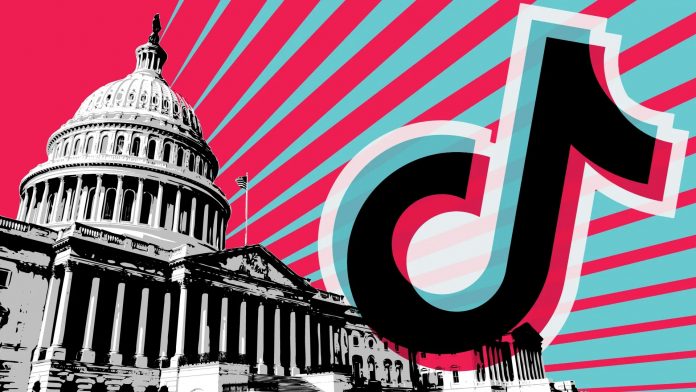
President Donald Trump has suggested that he may reduce tariffs on China in a last-minute effort to secure a deal that would force ByteDance, the Chinese parent company of TikTok, to divest its U.S. operations.

With an April 5 deadline fast approaching, Trump’s administration is scrambling to finalize an agreement that would address national security concerns while allowing TikTok to continue operating in the country.

“Maybe I’ll give them a little reduction in tariffs or something to get it done,Trump said during a press conference on Wednesday.TikTok is big, but every point in tariffs is worth more than TikTok.”

The remark signals that Trump is now looking at trade as a bargaining chip in the TikTok negotiations, seeking to pressure China into allowing ByteDance to sell the app’s U.S. arm. However, it remains unclear whether Beijing will be willing to make any concessions, as Chinese officials have repeatedly opposed the forced divestiture, framing it as an unfair business practice.

A Long Battle Over TikTok

The latest developments come amid a years-long battle between Washington and Beijing over TikTok, which has become a global social media powerhouse with over 150 million users in the U.S. The platform, known for its short-form videos, viral trends, and algorithm-driven content, has been at the center of national security debates since 2020.

Concerns over TikTok began during Trump’s first term when U.S. intelligence agencies and lawmakers raised fears that ByteDance could be forced to share American user data with the Chinese government under Beijing’s cybersecurity laws. Opposers of TikTok argue that its data collection practices—similar to other social media platforms—pose a unique risk because the company is headquartered in China.

In 2020, Trump attempted to ban TikTok outright, issuing an executive order that would have prohibited American companies from conducting transactions with ByteDance. However, the move was blocked by U.S. courts, which ruled that the administration lacked legal authority to enforce such a ban without due process.

Since then, efforts to force a sale of TikTok’s U.S. operations have continued under both Trump and his predecessor, Joe Biden. Last year, lawmakers introduced a bill aimed at banning TikTok or forcing ByteDance to divest. The bill was signed into law by Biden in April. Under the law, TikTok’s China-based parent ByteDance was supposed to find a U.S. buyer within 270 days, (about nine months) or be banned on Jan. 19.

In January, Trump signed an executive order extending the deadline for ByteDance to sell TikTok’s U.S. arm to April 5, 2025. The move provided a temporary grace window for negotiations to continue, but as the deadline nears, there has been little sign of progress. If TikTok is not sold to an approved buyer by April 5, the original law that bans it nationwide will once again go into effect.

Trump’s New Strategy: Using Tariffs as Leverage

Now, with time running out, Trump appears to be shifting his approach, tying the TikTok sale to broader trade issues with China. His suggestion that he may reduce tariffs in exchange for China’s cooperation reflects the high stakes of the situation.

The Trump administration has imposed stiff tariffs on Chinese imports as part of its long-running trade war with Beijing. These tariffs, which cover everything from electronics to industrial machinery, have had a significant impact on global supply chains and added billions in costs for American businesses and consumers.

However, Trump is signaling that he is willing to make economic concessions to secure TikTok’s divestiture by offering a partial reduction in tariffs.

Will China Hold Its Position of Resistance to a Forced Sale?

China has repeatedly opposed the forced sale of TikTok, arguing that it violates principles of free trade and unfairly targets a Chinese company. In 2020, Beijing updated its technology export regulations to include algorithms—widely seen as a move to prevent ByteDance from selling TikTok’s powerful recommendation system to an American company.

Given this history, it is uncertain how China will respond to Trump’s latest offer. If Beijing continues to resist, the administration may face a difficult choice:

  1. Extend the deadline again, pushing the issue further into the future, or
  2. Move forward with a ban or legal action, risking backlash from TikTok users and potential diplomatic tensions with China.

The Political and Economic Stakes

Trump’s handling of the TikTok issue is not just about national security—it is also about economic and political influence. The administration has floated the idea that the U.S. government should maintain a 50% ownership stake in TikTok through a joint venture, ensuring American control over the company’s operations.

Additionally, TikTok remains an important platform for young people, many of whom have pushed back against efforts to ban or regulate the app.

Vice President JD Vance has expressed optimism that a deal will be reached before the April deadline.

“There will almost certainly be a high-level agreement that I think satisfies our national security concerns, allows there to be a distinct American TikTok enterprise,Vance told NBC News earlier this month.

The deadline for the executive order doesn’t appear to be set in stone. As the April 5 deadline looms, If no deal is reached, the administration may be forced to extend the deadline again—something Trump has already suggested is a possibility.

We’re going to have a form of a deal, but if it’s not finished, it’s not a big deal,Trump said on Wednesday.We’ll just extend it.”

Ripple Agreed to Pay a $50M Fine- Down From $125M Imposed

0

Ripple’s Chief Legal Officer, Stuart Alderoty, announced that the company agreed to pay a $50 million fine—down from the originally imposed $125 million—effectively slashing the penalty by 60%. This settlement came after the SEC decided to drop its appeal of a July 2023 ruling by U.S. District Judge Analisa Torres, which found that XRP sold on public exchanges did not constitute a security, though institutional sales did violate securities laws. In return, Ripple also dropped its cross-appeal challenging the institutional sales ruling. The SEC will retain $50 million, while $75 million is returned to Ripple from escrow. Additionally, the SEC has agreed to request the court lift an injunction that previously restricted Ripple’s operations, further easing constraints on the company.

This resolution, still pending final SEC commission approval and court documentation as of the latest updates, closes a case that began in December 2020, when the SEC accused Ripple of raising $1.3 billion through an unregistered securities offering via XRP sales. Ripple’s CEO, Brad Garlinghouse, hailed it as a “resounding victory” for both the company and the broader crypto industry, emphasizing that it affirms XRP’s status as a non-security in retail contexts. Ripple avoids a higher fine and prolonged litigation, while the SEC wraps up a high-profile case amid a shifting regulatory landscape.

With the $50 million fine significantly lower than the original $125 million (and far below the SEC’s initial $2 billion demand), Ripple preserves substantial capital. The lifting of the injunction also removes restrictions on its U.S. operations, enabling it to pursue partnerships with financial institutions more aggressively. The clarity that XRP is not a security when sold on public exchanges (per the 2023 Torres ruling, now unchallenged) could restore investor and institutional confidence. XRP’s price, historically sensitive to SEC developments, may see upward momentum, though it’s already risen over 400% in 2025 amid a broader crypto rally.

Ripple can now focus on expanding its cross-border payment solutions, leveraging XRP’s fast, low-cost transaction capabilities. This strengthens its competitive edge against rivals like SWIFT and emerging stablecoins like Avit, especially as regulatory uncertainty fades.
The Ripple case reinforces the legal distinction between retail and institutional crypto sales, offering a blueprint for other projects facing SEC scrutiny. Companies can argue that public exchange sales don’t inherently constitute securities offerings, a win for the industry’s push against blanket regulation. The SEC’s decision to settle rather than appeal, alongside dropping cases against Coinbase and Kraken, suggests a retreat from its aggressive “regulation-by-enforcement” strategy.

This could signal a more crypto-friendly stance under incoming leadership (e.g., Paul Atkins as SEC chair), especially with pro-crypto sentiment in the Trump administration. Reduced regulatory overhang may encourage U.S.-based crypto firms to innovate domestically rather than relocate offshore, fostering a more competitive blockchain ecosystem. The settlement highlights the limits of applying decades-old securities laws to modern digital assets. It may accelerate calls for Congress to enact clear crypto legislation, such as the FIT21 Act, to replace the SEC’s case-by-case approach with a cohesive framework.

Critics might view the SEC’s climbdown as a loss of face, weakening its authority in future crypto enforcement. However, settling avoids a riskier appeal that could have further entrenched pro-crypto precedents, preserving some regulatory leverage. Other jurisdictions (e.g., EU, Singapore) watching the U.S. may adjust their own crypto policies, either aligning with this hybrid approach or doubling down on stricter oversight to differentiate their markets. Ripple’s settlement coincides with the Custodia-Vantage Avit launch, intensifying competition in digital payments. While Avit targets bank-backed stability, XRP offers a decentralized alternative, potentially splitting the market between institutional and crypto-native users.

Ripple’s renewed focus could disrupt traditional systems like SWIFT, especially in regions like Asia-Pacific, where it has strong footholds. This might pressure banks to adopt blockchain solutions faster. The resolution fuels the ongoing 2025 crypto bull run, driven by Bitcoin ETF approvals and political shifts. A clearer path for XRP could draw institutional capital back to altcoins, diversifying market growth beyond Bitcoin and Ethereum. While retail XRP sales are safe, the ruling on institutional sales as securities leaves some ambiguity for Ripple’s business model, particularly with large clients. Compliance costs may persist. Though unlikely under a new administration, a future SEC could revisit crypto enforcement if political winds shift again, keeping long-term regulatory risk alive.

This settlement marks a pivotal moment for crypto’s maturation in the U.S. For Ripple, it’s a green light to scale operations and reclaim market share. For the industry, it’s a step toward legitimacy, potentially softening regulatory headwinds. However, it’s not a full victory—crypto’s legal status remains a patchwork, and Ripple must capitalize on this reprieve to outpace rivals. Globally, it could inspire a race to blend blockchain with traditional finance, reshaping how value moves in the digital age. The next few years will test whether this resolution sparks a lasting thaw in U.S. crypto policy or merely a temporary truce.

GameStop Corp Board Unanimously Approved Bitcoin Investment Policy

0

GameStop Corp. announced that its board of directors unanimously approved an update to its investment policy, allowing Bitcoin to be included as a treasury reserve asset. This decision marks a significant shift in the company’s financial strategy, aligning it with a growing trend among corporations to diversify their reserves with cryptocurrency. GameStop, a video game retailer known for its role in the 2021 meme stock frenzy, plans to use a portion of its cash reserves—reported at nearly $4.8 billion as of February 1, 2025—or future debt and equity issuances to invest in Bitcoin. The company has not specified a maximum limit on how much Bitcoin it may acquire, indicating flexibility in its approach.

This move follows the example set by Strategy (formerly MicroStrategy), a company that has become the largest corporate holder of Bitcoin after investing billions into the cryptocurrency. GameStop’s decision comes amid a broader context of increasing institutional interest in Bitcoin, highlighted by U.S. President Donald Trump’s executive order earlier in March 2025 to establish a national strategic reserve of cryptocurrencies. The announcement has sparked optimism among investors, with GameStop’s stock surging over 6% in after-hours trading following the news, though it later moderated.

The strategy is part of CEO Ryan Cohen’s efforts to revitalize GameStop, which has faced challenges in its traditional brick-and-mortar business. Alongside the Bitcoin policy update, the company reported a fourth-quarter net income of $131.3 million, more than doubling the $63.1 million from the previous year, driven by cost-cutting and operational improvements. However, GameStop has acknowledged the risks, noting in an SEC filing that Bitcoin’s volatility could impact its financial stability, and that this untested strategy might not succeed. As of now, no specific timeline or amount for Bitcoin purchases has been disclosed.

Corporate adoption of cryptocurrency, particularly Bitcoin, as a treasury reserve asset has gained significant momentum in recent years, reflecting a broader shift in how companies view digital assets. This trend is driven by a combination of factors: inflation concerns, the search for alternative stores of value, and the increasing mainstream acceptance of cryptocurrencies. The trailblazer in this space, Strategy began heavily investing in Bitcoin in 2020, amassing over 252,220 BTC (valued at approximately $18 billion as of late 2024) by October 2024. Under CEO Michael Saylor, the company has positioned itself as a “Bitcoin development company,” using debt and equity offerings to fund its purchases. Its success—stock up over 2,000% in five years—has inspired others to follow suit.

In 2021, Tesla purchased $1.5 billion in Bitcoin, briefly holding it as a treasury asset before selling most of it in 2022. While it no longer holds significant BTC, Tesla’s initial move signaled corporate interest and remains a notable case study. Block led by Jack Dorsey, has integrated Bitcoin into its operations, holding 8,027 BTC (about $575 million) as of mid-2024. Its focus extends beyond treasury allocation to building Bitcoin-related infrastructure.

As of March 25, 2025, GameStop’s board unanimously approved Bitcoin as a treasury reserve asset, leveraging its $4.8 billion cash pile. This move aligns with its turnaround efforts under CEO Ryan Cohen and reflects a growing trend among retail-focused companies. Metaplanet has been acquiring Bitcoin since mid-2024, holding 855 BTC (around $61 million) by October 2024. Its stock surged over 700% in 2024, mirroring Strategy’s playbook. Semler Scientific: This medical tech firm shifted its treasury strategy in 2024, purchasing 828 BTC (about $60 million) by November 2024, citing Bitcoin as a hedge against inflation.

By late 2024, 2,436 companies globally held Bitcoin, with corporate treasuries owning roughly 2.95% of the total BTC supply (about 586,371 BTC). This is up from just a handful of firms in 2020. While tech and finance lead (e.g., Strategy, Block), adoption is spreading to diverse sectors like retail (GameStop), manufacturing (Tesla historically), and even healthcare (Semler Scientific). Companies cite inflation protection, portfolio diversification, and Bitcoin’s fixed supply (21 million cap) as key drivers. The 2024 Bitcoin halving and subsequent price surges—reaching over $108,000 by December 2024—have further fueled interest.

U.S. President Donald Trump’s March 2025 executive order to create a national cryptocurrency reserve has bolstered corporate confidence, signaled regulatory support and reduced perceived risks. Bitcoin’s price swings—e.g., dropping 20% in a week in December 2024 before rebounding—pose risks to financial stability, as GameStop noted in its SEC filing. Evolving global regulations, such as the EU’s MiCA framework and U.S. SEC scrutiny, create uncertainty for corporate holders. In the U.S., Bitcoin is treated as an intangible asset, requiring impairment losses during price dips but not recognizing gains until sold, complicating financial reporting.

The trend shows no signs of slowing. Analysts predict that as Bitcoin ETFs approved in the U.S. in 2024 mature and institutional custody solutions improve, more corporations will allocate 1-5% of their treasuries to crypto. Companies like Strategy and GameStop may set a precedent, but success hinges on Bitcoin’s long-term performance and macroeconomic conditions. For now, this remains a bold, speculative bet—one that’s reshaping corporate finance in real time.

Ethereum Exchange Supply Shrinks and ADA Tests Resistance While BlockDAG’s $1 Forecast Gains Ground Post-AMA

0

Ethereum’s exchange supply has fallen to levels not seen in nearly a decade, but its price hasn’t responded as expected—fueling ongoing debate in the latest Ethereum (ETH) market analysis. Cardano (ADA) is also waiting for its next move, sitting near a breakout point that could define its short-term direction.

Meanwhile, BlockDAG (BDAG) is moving quickly. Its recent AMA laid out concrete details for the upcoming Token Generation Event (TGE) and a push to list BDAG on 10 major exchanges. Based on this momentum, analysts now believe BDAG could climb to $1 in 2025—positioning it as one of the best cryptos to buy right now.

Ethereum (ETH) Market Analysis Shows Low Supply, But Technicals Stay Weak

The latest Ethereum (ETH) market analysis reveals that exchange reserves have dropped to their lowest since 2015, a sign that more holders are choosing to stake or store their ETH long-term. With just 8.97 million ETH left on exchanges, Santiment data reports a 16.4% decline in only seven weeks. Still, ETH’s price has dropped by nearly 47% from its high in December.

While that might sound bullish, Ethereum’s current technical outlook remains soft. The Ethereum market analysis points to trouble breaking resistance, along with reduced DeFi activity and low network fees. Layer-2 solutions are also drawing users away from the mainnet, making ETH’s near-term direction harder to call.

Cardano (ADA) Price Prediction Depends on Breakout Confirmation

The Cardano (ADA) price prediction is uncertain as ADA trades around $0.72, marking a 2% decline in the past 24 hours. Trading volume has also dipped by 25%, suggesting that market participation is cooling off. Analysts highlight a symmetrical triangle pattern, hinting that ADA is gearing up for a decisive move.

According to the latest Cardano price prediction, a breakout above $0.74 could drive the price to $0.83. However, a slip below $0.70 might send ADA down toward $0.65. On-chain metrics also show concentrated liquidation zones near $0.71 and $0.73, reflecting mixed trader expectations and continued market hesitation.

BlockDAG Targets $1 After TGE Plans & Exchange Listings Unveiled

BlockDAG’s latest AMA offered a rare level of clarity in today’s crypto market. The team revealed a well-structured plan for its upcoming Token Generation Event (TGE), including the steps needed for BDAG to go fully tradable.

Part of the roadmap includes confirmed efforts to list BDAG on 10 centralised exchanges—some of which are tier-one, high-volume platforms known for boosting visibility and market depth. This open communication has already boosted community sentiment, leading to a sharp uptick in presale interest.

So far, BlockDAG has raised over $207 million and sold more than 18.9 billion BDAG tokens across 27 presale phases. Each milestone shows rising confidence, as early buyers secure their spots before BDAG hits the broader market. This momentum is why analysts are calling BDAG the best crypto to buy right now.

The excitement is well-founded. BDAG’s price has climbed 2380% from its initial batch at $0.001 to $0.0248 in the current phase. Analysts expect BDAG could reach $1 in 2025, supported by its structured rollout, growing demand, and early traction. With TGE and listings on the horizon, BlockDAG continues to stand out as a top contender in the current cycle.

Key Insights!

Ethereum’s declining supply suggests strong long-term belief, but as the Ethereum market analysis shows, the current price picture remains shaky. Cardano’s short-term direction hangs on key resistance levels, leaving the Cardano price prediction open-ended for now.

BlockDAG, on the other hand, is moving with purpose. A solid TGE plan and upcoming exchange listings have strengthened its outlook. With BDAG still available at $0.0248 during presale and a $1 target in sight, it’s being recognized by many as the best crypto to buy right now—especially before it launches publicly.

Presale: https://purchase.blockdag.network

Website: https://blockdag.network

Telegram: https://t.me/blockDAGnetworkOfficial

Discord: https://discord.gg/Q7BxghMVyu