DD
MM
YYYY

PAGES

DD
MM
YYYY

spot_img

PAGES

Home Blog Page 1497

Ripple Agreed to Pay a $50M Fine- Down From $125M Imposed

0

Ripple’s Chief Legal Officer, Stuart Alderoty, announced that the company agreed to pay a $50 million fine—down from the originally imposed $125 million—effectively slashing the penalty by 60%. This settlement came after the SEC decided to drop its appeal of a July 2023 ruling by U.S. District Judge Analisa Torres, which found that XRP sold on public exchanges did not constitute a security, though institutional sales did violate securities laws. In return, Ripple also dropped its cross-appeal challenging the institutional sales ruling. The SEC will retain $50 million, while $75 million is returned to Ripple from escrow. Additionally, the SEC has agreed to request the court lift an injunction that previously restricted Ripple’s operations, further easing constraints on the company.

This resolution, still pending final SEC commission approval and court documentation as of the latest updates, closes a case that began in December 2020, when the SEC accused Ripple of raising $1.3 billion through an unregistered securities offering via XRP sales. Ripple’s CEO, Brad Garlinghouse, hailed it as a “resounding victory” for both the company and the broader crypto industry, emphasizing that it affirms XRP’s status as a non-security in retail contexts. Ripple avoids a higher fine and prolonged litigation, while the SEC wraps up a high-profile case amid a shifting regulatory landscape.

With the $50 million fine significantly lower than the original $125 million (and far below the SEC’s initial $2 billion demand), Ripple preserves substantial capital. The lifting of the injunction also removes restrictions on its U.S. operations, enabling it to pursue partnerships with financial institutions more aggressively. The clarity that XRP is not a security when sold on public exchanges (per the 2023 Torres ruling, now unchallenged) could restore investor and institutional confidence. XRP’s price, historically sensitive to SEC developments, may see upward momentum, though it’s already risen over 400% in 2025 amid a broader crypto rally.

Ripple can now focus on expanding its cross-border payment solutions, leveraging XRP’s fast, low-cost transaction capabilities. This strengthens its competitive edge against rivals like SWIFT and emerging stablecoins like Avit, especially as regulatory uncertainty fades.
The Ripple case reinforces the legal distinction between retail and institutional crypto sales, offering a blueprint for other projects facing SEC scrutiny. Companies can argue that public exchange sales don’t inherently constitute securities offerings, a win for the industry’s push against blanket regulation. The SEC’s decision to settle rather than appeal, alongside dropping cases against Coinbase and Kraken, suggests a retreat from its aggressive “regulation-by-enforcement” strategy.

This could signal a more crypto-friendly stance under incoming leadership (e.g., Paul Atkins as SEC chair), especially with pro-crypto sentiment in the Trump administration. Reduced regulatory overhang may encourage U.S.-based crypto firms to innovate domestically rather than relocate offshore, fostering a more competitive blockchain ecosystem. The settlement highlights the limits of applying decades-old securities laws to modern digital assets. It may accelerate calls for Congress to enact clear crypto legislation, such as the FIT21 Act, to replace the SEC’s case-by-case approach with a cohesive framework.

Critics might view the SEC’s climbdown as a loss of face, weakening its authority in future crypto enforcement. However, settling avoids a riskier appeal that could have further entrenched pro-crypto precedents, preserving some regulatory leverage. Other jurisdictions (e.g., EU, Singapore) watching the U.S. may adjust their own crypto policies, either aligning with this hybrid approach or doubling down on stricter oversight to differentiate their markets. Ripple’s settlement coincides with the Custodia-Vantage Avit launch, intensifying competition in digital payments. While Avit targets bank-backed stability, XRP offers a decentralized alternative, potentially splitting the market between institutional and crypto-native users.

Ripple’s renewed focus could disrupt traditional systems like SWIFT, especially in regions like Asia-Pacific, where it has strong footholds. This might pressure banks to adopt blockchain solutions faster. The resolution fuels the ongoing 2025 crypto bull run, driven by Bitcoin ETF approvals and political shifts. A clearer path for XRP could draw institutional capital back to altcoins, diversifying market growth beyond Bitcoin and Ethereum. While retail XRP sales are safe, the ruling on institutional sales as securities leaves some ambiguity for Ripple’s business model, particularly with large clients. Compliance costs may persist. Though unlikely under a new administration, a future SEC could revisit crypto enforcement if political winds shift again, keeping long-term regulatory risk alive.

This settlement marks a pivotal moment for crypto’s maturation in the U.S. For Ripple, it’s a green light to scale operations and reclaim market share. For the industry, it’s a step toward legitimacy, potentially softening regulatory headwinds. However, it’s not a full victory—crypto’s legal status remains a patchwork, and Ripple must capitalize on this reprieve to outpace rivals. Globally, it could inspire a race to blend blockchain with traditional finance, reshaping how value moves in the digital age. The next few years will test whether this resolution sparks a lasting thaw in U.S. crypto policy or merely a temporary truce.


GameStop Corp Board Unanimously Approved Bitcoin Investment Policy

0

GameStop Corp. announced that its board of directors unanimously approved an update to its investment policy, allowing Bitcoin to be included as a treasury reserve asset. This decision marks a significant shift in the company’s financial strategy, aligning it with a growing trend among corporations to diversify their reserves with cryptocurrency. GameStop, a video game retailer known for its role in the 2021 meme stock frenzy, plans to use a portion of its cash reserves—reported at nearly $4.8 billion as of February 1, 2025—or future debt and equity issuances to invest in Bitcoin. The company has not specified a maximum limit on how much Bitcoin it may acquire, indicating flexibility in its approach.

This move follows the example set by Strategy (formerly MicroStrategy), a company that has become the largest corporate holder of Bitcoin after investing billions into the cryptocurrency. GameStop’s decision comes amid a broader context of increasing institutional interest in Bitcoin, highlighted by U.S. President Donald Trump’s executive order earlier in March 2025 to establish a national strategic reserve of cryptocurrencies. The announcement has sparked optimism among investors, with GameStop’s stock surging over 6% in after-hours trading following the news, though it later moderated.

The strategy is part of CEO Ryan Cohen’s efforts to revitalize GameStop, which has faced challenges in its traditional brick-and-mortar business. Alongside the Bitcoin policy update, the company reported a fourth-quarter net income of $131.3 million, more than doubling the $63.1 million from the previous year, driven by cost-cutting and operational improvements. However, GameStop has acknowledged the risks, noting in an SEC filing that Bitcoin’s volatility could impact its financial stability, and that this untested strategy might not succeed. As of now, no specific timeline or amount for Bitcoin purchases has been disclosed.

Corporate adoption of cryptocurrency, particularly Bitcoin, as a treasury reserve asset has gained significant momentum in recent years, reflecting a broader shift in how companies view digital assets. This trend is driven by a combination of factors: inflation concerns, the search for alternative stores of value, and the increasing mainstream acceptance of cryptocurrencies. The trailblazer in this space, Strategy began heavily investing in Bitcoin in 2020, amassing over 252,220 BTC (valued at approximately $18 billion as of late 2024) by October 2024. Under CEO Michael Saylor, the company has positioned itself as a “Bitcoin development company,” using debt and equity offerings to fund its purchases. Its success—stock up over 2,000% in five years—has inspired others to follow suit.

In 2021, Tesla purchased $1.5 billion in Bitcoin, briefly holding it as a treasury asset before selling most of it in 2022. While it no longer holds significant BTC, Tesla’s initial move signaled corporate interest and remains a notable case study. Block led by Jack Dorsey, has integrated Bitcoin into its operations, holding 8,027 BTC (about $575 million) as of mid-2024. Its focus extends beyond treasury allocation to building Bitcoin-related infrastructure.

As of March 25, 2025, GameStop’s board unanimously approved Bitcoin as a treasury reserve asset, leveraging its $4.8 billion cash pile. This move aligns with its turnaround efforts under CEO Ryan Cohen and reflects a growing trend among retail-focused companies. Metaplanet has been acquiring Bitcoin since mid-2024, holding 855 BTC (around $61 million) by October 2024. Its stock surged over 700% in 2024, mirroring Strategy’s playbook. Semler Scientific: This medical tech firm shifted its treasury strategy in 2024, purchasing 828 BTC (about $60 million) by November 2024, citing Bitcoin as a hedge against inflation.

By late 2024, 2,436 companies globally held Bitcoin, with corporate treasuries owning roughly 2.95% of the total BTC supply (about 586,371 BTC). This is up from just a handful of firms in 2020. While tech and finance lead (e.g., Strategy, Block), adoption is spreading to diverse sectors like retail (GameStop), manufacturing (Tesla historically), and even healthcare (Semler Scientific). Companies cite inflation protection, portfolio diversification, and Bitcoin’s fixed supply (21 million cap) as key drivers. The 2024 Bitcoin halving and subsequent price surges—reaching over $108,000 by December 2024—have further fueled interest.

U.S. President Donald Trump’s March 2025 executive order to create a national cryptocurrency reserve has bolstered corporate confidence, signaled regulatory support and reduced perceived risks. Bitcoin’s price swings—e.g., dropping 20% in a week in December 2024 before rebounding—pose risks to financial stability, as GameStop noted in its SEC filing. Evolving global regulations, such as the EU’s MiCA framework and U.S. SEC scrutiny, create uncertainty for corporate holders. In the U.S., Bitcoin is treated as an intangible asset, requiring impairment losses during price dips but not recognizing gains until sold, complicating financial reporting.

The trend shows no signs of slowing. Analysts predict that as Bitcoin ETFs approved in the U.S. in 2024 mature and institutional custody solutions improve, more corporations will allocate 1-5% of their treasuries to crypto. Companies like Strategy and GameStop may set a precedent, but success hinges on Bitcoin’s long-term performance and macroeconomic conditions. For now, this remains a bold, speculative bet—one that’s reshaping corporate finance in real time.

Ethereum Exchange Supply Shrinks and ADA Tests Resistance While BlockDAG’s $1 Forecast Gains Ground Post-AMA

0

Ethereum’s exchange supply has fallen to levels not seen in nearly a decade, but its price hasn’t responded as expected—fueling ongoing debate in the latest Ethereum (ETH) market analysis. Cardano (ADA) is also waiting for its next move, sitting near a breakout point that could define its short-term direction.

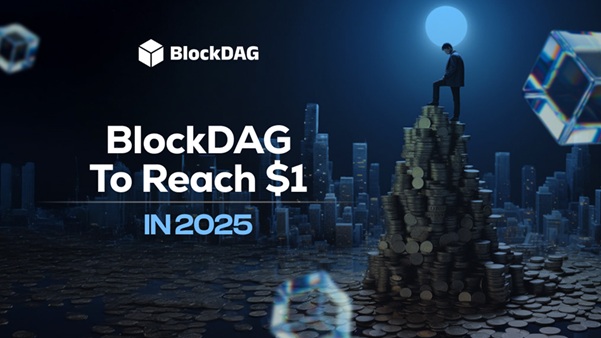
Meanwhile, BlockDAG (BDAG) is moving quickly. Its recent AMA laid out concrete details for the upcoming Token Generation Event (TGE) and a push to list BDAG on 10 major exchanges. Based on this momentum, analysts now believe BDAG could climb to $1 in 2025—positioning it as one of the best cryptos to buy right now.

Ethereum (ETH) Market Analysis Shows Low Supply, But Technicals Stay Weak

The latest Ethereum (ETH) market analysis reveals that exchange reserves have dropped to their lowest since 2015, a sign that more holders are choosing to stake or store their ETH long-term. With just 8.97 million ETH left on exchanges, Santiment data reports a 16.4% decline in only seven weeks. Still, ETH’s price has dropped by nearly 47% from its high in December.

While that might sound bullish, Ethereum’s current technical outlook remains soft. The Ethereum market analysis points to trouble breaking resistance, along with reduced DeFi activity and low network fees. Layer-2 solutions are also drawing users away from the mainnet, making ETH’s near-term direction harder to call.

Cardano (ADA) Price Prediction Depends on Breakout Confirmation

The Cardano (ADA) price prediction is uncertain as ADA trades around $0.72, marking a 2% decline in the past 24 hours. Trading volume has also dipped by 25%, suggesting that market participation is cooling off. Analysts highlight a symmetrical triangle pattern, hinting that ADA is gearing up for a decisive move.

According to the latest Cardano price prediction, a breakout above $0.74 could drive the price to $0.83. However, a slip below $0.70 might send ADA down toward $0.65. On-chain metrics also show concentrated liquidation zones near $0.71 and $0.73, reflecting mixed trader expectations and continued market hesitation.

BlockDAG Targets $1 After TGE Plans & Exchange Listings Unveiled

BlockDAG’s latest AMA offered a rare level of clarity in today’s crypto market. The team revealed a well-structured plan for its upcoming Token Generation Event (TGE), including the steps needed for BDAG to go fully tradable.

Part of the roadmap includes confirmed efforts to list BDAG on 10 centralised exchanges—some of which are tier-one, high-volume platforms known for boosting visibility and market depth. This open communication has already boosted community sentiment, leading to a sharp uptick in presale interest.

So far, BlockDAG has raised over $207 million and sold more than 18.9 billion BDAG tokens across 27 presale phases. Each milestone shows rising confidence, as early buyers secure their spots before BDAG hits the broader market. This momentum is why analysts are calling BDAG the best crypto to buy right now.

The excitement is well-founded. BDAG’s price has climbed 2380% from its initial batch at $0.001 to $0.0248 in the current phase. Analysts expect BDAG could reach $1 in 2025, supported by its structured rollout, growing demand, and early traction. With TGE and listings on the horizon, BlockDAG continues to stand out as a top contender in the current cycle.

Key Insights!

Ethereum’s declining supply suggests strong long-term belief, but as the Ethereum market analysis shows, the current price picture remains shaky. Cardano’s short-term direction hangs on key resistance levels, leaving the Cardano price prediction open-ended for now.

BlockDAG, on the other hand, is moving with purpose. A solid TGE plan and upcoming exchange listings have strengthened its outlook. With BDAG still available at $0.0248 during presale and a $1 target in sight, it’s being recognized by many as the best crypto to buy right now—especially before it launches publicly.

Presale: https://purchase.blockdag.network

Website: https://blockdag.network

Telegram: https://t.me/blockDAGnetworkOfficial

Discord: https://discord.gg/Q7BxghMVyu

3 Hidden Cryptos to Buy in April 2025 for Massive Gains

0

In search of the hidden cryptos to buy in April 2025, investors are turning to undiscovered treasures with enormous development potential. It’s critical to find initiatives with solid foundations, practical uses, and growing adoption as the bitcoin market develops.

The three most promising cryptos to buy that have emerged as strong candidates for significant increases are RCO Finance (RCOF), Dogecoin (DOGE), and Solana (SOL).

RCO Finance: The AI-Powered Altcoin with Explosive Potential

One of the most promising hidden cryptos to buy in 2025 is RCO Finance (RCOF). RCOF provides a potent combination of AI-driven trading, real-world asset integration, and high-yield staking prospects, in contrast to many speculative assets.

Both novice and experienced investors find it to be an appealing investment due to these distinctive qualities.

The sophisticated trading platform driven by AI is one of RCO Finance’s most notable characteristics. The technology optimizes trading tactics, lowers risk, and increases profitability by using real-time data analysis.

RCOF is one of the hidden cryptos to buy for long-term growth because of its AI, which guarantees traders can confidently navigate volatility as market conditions change.

Sonic (previously FTM) has seen significant price movement in the last 24 hours, dropping to a low of $0.5211 before surging to a high of $0.603. It is currently trading at $0.5935, marking a strong 14.49% increase.

This volatility presents traders with opportunities to capitalize on price swings by buying at the lows and selling at the highs.

With RCO Finance’s AI-powered Robo Advisor, investors receive real-time, data-driven insights to navigate the market with precision and confidence, helping them spot profitable trades before they become mainstream.

Dogecoin: The Meme Coin with Surprising Resilience

Once a joke, Dogecoin (DOGE) has grown to become one of the hidden cryptos to buy. It is a compelling investment for 2025 because of its robust community, celebrity endorsements, and growing acceptance for payments.

Dogecoin has remained relevant in contrast to other meme coins because of its growing use cases and regular development upgrades.

Dogecoin (DOGE) is currently trading at $0.1751 with a 24-hour trading volume of $752,727,894. The price of Dogecoin has been rising recently, indicating that investors are still interested.

DOGE is becoming increasingly useful in the real world as more companies, like as Tesla and AMC Theaters, adopt it for transactions.

Dogecoin’s position as one of the top hidden cryptos to buy this year may also be cemented by the expectation of additional blockchain updates, which could increase transaction efficiency.

Solana: The High-Performance Blockchain Gaining Institutional Interest

Another hidden cryptos to buy in April 2025 is Solana (SOL). Solana has established itself as a top blockchain for decentralized applications (dApps) and non-fungible tokens (NFTs) thanks to its lightning-fast transaction rates and inexpensive fees.

Developers, users, and institutional investors are still drawn to its thriving environment.

With a current market valuation of $68.48 billion, Solana’s live price is $133.93 per SOL. Its $1.96 billion 24-hour trading volume indicates robust investor interest and market activity.

Solana’s great scalability, which allows for thousands of transactions per second at low costs, is one of its main features. Because of its effectiveness, DeFi projects and game platforms favor it.

Furthermore, Solana’s acceptance across a range of industries has increased because of improved interoperability brought about by its integration with significant blockchain networks.

The Beta Platform of RCOF: Actual Performance

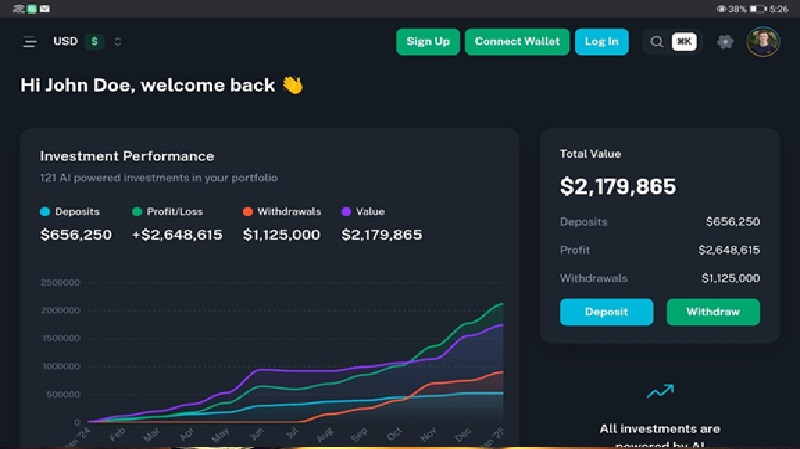
RCOF’s live Beta Platform provides convincing evidence of its capabilities for customers looking for a robust token presale. According to early adopters, the Robo Advisor has a major advantage because it can identify lucrative prospects before they are widely accepted.

To find out more, visit the RCO Finance Beta Platform.

Privacy and Security: RCOF’s Competitive Advantage

RCOF is establishing a new benchmark for privacy in the realm of cryptocurrency. As a hidden crypto to buy, RCOF provides a completely decentralized trading experience in contrast to conventional centralized exchanges that enforce stringent KYC (Know Your Customer) regulations, putting traders at risk of data leaks.

RCOF is unique for investors who want to participate in a prospective token presale while keeping their privacy intact.

RCOF enables traders to function without the weight of onerous rules or the risk of personal data exposure by emphasizing a privacy-first approach. Because there are no KYC requirements, trading is easy and safe, making it the preferred platform for people who respect their financial freedom.

This makes RCOF a top hidden cryptos to buy for investors looking for privacy-focused opportunities.

Strong Security Measures That Inspire Investor Confidence

For presale investors, security is a top priority, and RCOF has taken proactive measures to establish a secure trading environment. SolidProof’s comprehensive audit has confirmed that RCOF’s smart contracts are reliable, lowering risks and boosting confidence.

Investor confidence has increased as a result of this dedication to openness, and presale funding has already reached an astounding $14.41 million.

RCOF, which is now trading at $0.100000 with a planned increase to $0.13000, provides early investors with a window of opportunity to lock in their positions before the next price spike.

Unmatched Market Potential and Growing Demand

With its AI-driven trading insights, non-KYC model, and fully functional Beta Platform, RCOF is ahead of the curve. Investor demand is climbing fast, with over 51.12% of available tokens already sold, making it one of the hottest presale opportunities in the market right now.

For more information about the RCO Finance Presale:

Visit RCO Finance Presale

Join The RCO Finance Community

Custodia Bank and Vantage Bank Launch “Avit” Stablecoin

0

Custodia Bank and Vantage Bank have launched what they claim to be the first bank-issued stablecoin in the United States, named “Avit.” This milestone was announced on March 25, 2025. The stablecoin was issued on the Ethereum blockchain using the ERC-20 token standard, marking a significant integration of traditional banking with blockchain technology. The Avit stablecoin is backed by tokenized U.S. dollar demand deposits—funds that customers can withdraw on demand, such as those in checking accounts—held by the banks. This distinguishes it from many existing stablecoins, which are typically issued by non-bank entities and backed by cash equivalents like government debt.

The process involved a series of test transactions, including minting, transferring, and redeeming Avit tokens for a bank customer, all conducted in compliance with U.S. banking regulations such as Bank Secrecy Act, Anti-Money Laundering, and Office of Foreign Assets Control requirements. Custodia Bank, based in Wyoming, managed the blockchain-related aspects, such as issuance, custody, and transaction monitoring, using its proprietary Avit Management System. Vantage Bank, based in Texas, handled the fiat reserves and traditional banking services like Fedwire and ACH transfers. The collaboration demonstrated efficiencies like low transaction costs, fast settlement, and programmability, all within a regulated banking environment.

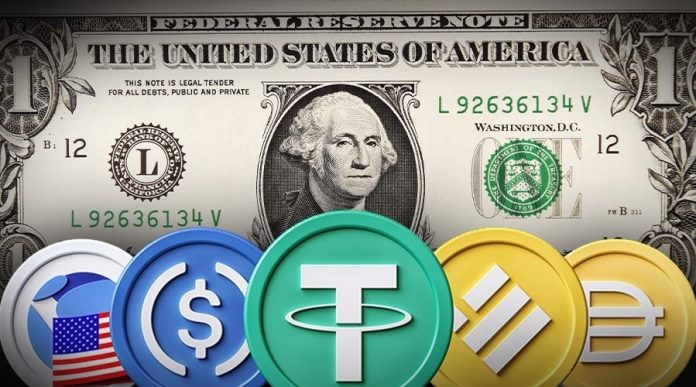
Avit integrates traditional banking with blockchain technology, offering a regulated, bank-backed digital asset. This could accelerate the convergence of traditional finance (TradFi) and decentralized finance (DeFi), making blockchain-based payments more accessible within the mainstream financial system. By leveraging Ethereum’s blockchain, Avit provides a fast, low-cost alternative to existing systems like SWIFT, Fedwire, or ACH. This could streamline domestic and cross-border transactions, reducing friction and costs for businesses and consumers. Unlike dominant stablecoins like USDT (Tether) or USDC (Circle), which are issued by non-bank entities, Avit’s bank backing might appeal to institutions wary of counterparty risk, potentially challenging the market dominance of non-bank issuers.

Custodia’s CEO, Caitlin Long, emphasized that this proves banks can tokenize deposits on a permissionless blockchain compliantly, potentially paving the way for broader adoption. Vantage Bank’s CEO, Jeff Sinnott, highlighted its potential to revolutionize payments and modernize cross-border transactions while maintaining regulatory oversight. The choice of Ethereum over other blockchains, like Bitcoin (which Custodia has historically supported), also sparked discussion in the crypto community, with some noting Ethereum’s robust infrastructure as a key enabler for this project.

The successful issuance of Avit under U.S. banking regulations (BSA, AML, OFAC) demonstrates that banks can tokenize deposits compliantly on permissionless blockchains. This could set a precedent for other U.S. banks, encouraging broader adoption of blockchain technology. The collaboration between Custodia (a Wyoming SPDI) and Vantage (a traditional bank) showcases how different banking charters can navigate the regulatory landscape. This might pressure regulators to refine rules around digital assets, balancing innovation with oversight. Amid ongoing U.S. regulatory scrutiny of crypto (e.g., SEC vs. Coinbase).

The choice of Ethereum highlights its scalability and developer ecosystem as a viable platform for institutional use. This could bolster Ethereum’s dominance in tokenized assets, though it raises questions about why Custodia, a known Bitcoin advocate, opted against Bitcoin-based solutions like the Lightning Network. Avit’s smart contract capabilities enable programmable payments, which could transform use cases like automated settlements, escrow, or micropayments—features traditional banking struggles to replicate efficiently. As adoption grows, this will test Ethereum’s capacity to handle bank-grade transaction volumes, potentially exposing limitations like gas fees or network congestion.

Economic and Market Implications

Avit reinforces the U.S. dollar’s dominance in a digital format, countering narratives around central bank digital currencies (CBDCs) or foreign stablecoins (e.g., China’s digital yuan). It’s a private-sector-led answer to digital currency demand. Traditional banks may feel pressured to innovate or partner with blockchain firms to remain competitive, especially as fintechs and crypto-native companies encroach on payment services. A bank-issued stablecoin tied to demand deposits could attract users skeptical of non-bank stablecoins’ reserve transparency (e.g., Tether’s past controversies), though it hinges on the banks’ reputations and audits.

Despite compliance, federal regulators (e.g., the Fed or OCC) might scrutinize or restrict bank-issued stablecoins if they perceive risks to monetary policy or systemic stability. Convincing customers and merchants to use Avit over established systems or stablecoins will require significant education and infrastructure development. Crypto purists might argue that a bank-issued, permissioned stablecoin undermines the decentralized ethos of blockchain, limiting its appeal to certain users.

This launch could catalyze a wave of bank-led stablecoins, reshaping how money moves in the U.S. economy. It might also influence global financial systems, prompting other countries to explore similar models. However, its success depends on execution—scaling the technology, maintaining regulatory goodwill, and proving real-world utility. If Avit gains traction, it could mark a turning point where banks, not crypto startups, lead the next phase of digital finance.