DD
MM
YYYY

PAGES

DD
MM
YYYY

spot_img

PAGES

Home Blog Page 1504

Trump Imposes 25% Tariff on Foreign-Made Cars, Sparking Market Jitters

0
USC experts talk about the importance of U.S.-China trade and how it affects the economy. (Illustration/iStock)

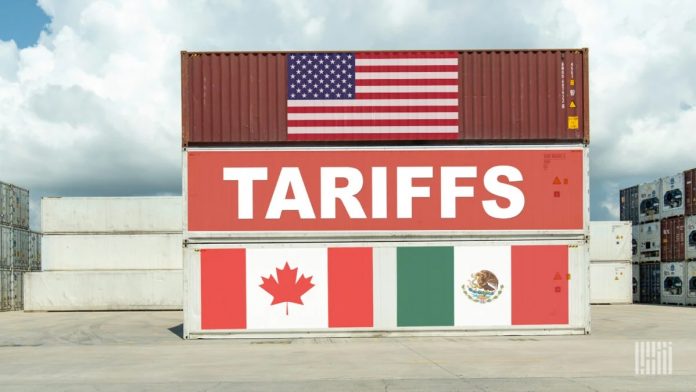
President Donald Trump has announced a sweeping 25% tariff on all foreign-made cars and light trucks, escalating his long-standing trade war against foreign competitors and reinforcing his protectionist “America First” agenda.

The tariffs, formalized in a presidential proclamation signed in the Oval Office on Wednesday, will take effect on April 2, with the government set to begin collecting duties the following day.

Trump declared that there would be “absolutely no tariff” on cars built within the United States, effectively incentivizing domestic and foreign automakers to shift production to American soil if they wish to avoid additional costs.

White House aide Will Scharf emphasized that the new tariffs will apply on top of existing import duties, predicting they will generate over $100 billion in new annual revenue for the U.S. government.

However, the specifics of the measure remain unclear, as modern cars are assembled from thousands of parts sourced from dozens of countries. Trump reassured that there would be “very strong policing” to determine which components are subject to the new tariffs.

Trump’s Defiance in the Global Trade War

Trump’s latest tariff move is part of his broader trade war strategy, which has been marked by relentless defiance against pressure from global trade partners. Over the years, Trump has targeted China, the European Union, Canada, Mexico, and Japan with various tariffs, arguing that unfair trade policies have hurt American workers and industries.

During his first term in office, Trump imposed a 25% tariff on steel and a 10% tariff on aluminum imports, triggering retaliatory measures from the European Union, China, and other nations. He also imposed a massive set of tariffs on Chinese goods, amounting to hundreds of billions of dollars, in a bid to curb Beijing’s influence over global markets.

Trump has largely ignored criticism from economic analysts who warn that tariffs often hurt consumers and businesses by raising prices and disrupting supply chains. Instead, he has framed the tariff war as a battle for economic independence, arguing that American manufacturers have been unfairly disadvantaged by decades of free trade agreements that benefit foreign producers.

Which Countries Will Be Affected?

Trump’s 25% auto tariff will have a massive global impact, affecting some of the world’s largest car-producing nations, including:

  • Japan: Home to Toyota, Honda, Nissan, Subaru, and Mazda, Japan exports millions of vehicles to the U.S. every year. The tariff will significantly increase the cost of Japanese cars sold in the U.S.
  • Germany: A major blow to automakers like BMW, Mercedes-Benz, and Volkswagen, which rely heavily on U.S. sales. Many German luxury models are imported rather than built in American factories.
  • South Korea: Hyundai and Kia, which produce some cars in the U.S. but still import a significant portion, will be hit hard.
  • Mexico and Canada: While Trump has temporarily exempted vehicles built in Mexico and Canada under the United States-Mexico-Canada Agreement (USMCA) for a month, many fear the exemption could be revoked.
  • China: Although China exports relatively few finished cars to the U.S., some Chinese auto parts and electric vehicle components could still be affected.
  • United Kingdom, France, and Italy: Luxury brands like Rolls-Royce, Bentley, Ferrari, Aston Martin, and Peugeot will face higher costs when selling to American consumers.

Immediate Global Backlash

Trump’s announcement was swiftly condemned by world leaders and economic experts. European Commission President Ursula von der Leyen vowed that the European Union would take countermeasures to protect its economy.

“The European Union will continue to seek negotiated solutions, while safeguarding its economic interests,” von der Leyen said. She also pointed out that “tariffs are taxes” that will hurt businesses and consumers alike.

Stock markets reacted negatively to the news, with auto stocks dropping sharply in after-hours trading. Shares of General Motors, Ford, and Stellantis all fell by around 5%, while European and Japanese automakers also saw losses.

Room For Exemptions and Potential Negotiations

While Trump has imposed tough trade measures, his administration has signaled some flexibility. Treasury Secretary Scott Bessent recently stated that countries may be able to pre-negotiate exemptions before the tariffs go into full effect on April 2.

Trump himself hinted that the final tariff plan might be less severe, saying last week that “there will be flexibility” and that some tariffs may be “more lenient than reciprocal”.

However, given Trump’s history of unpredictable trade decisions, business leaders and global automakers remain on edge, uncertain about whether further trade tensions—or even retaliatory tariffs from other nations—will follow.

While Trump has touted his tariff war as a path to economic victory, analysts warn that the high costs of imported cars could be passed down to American consumers, potentially driving up prices on millions of vehicles.

Automakers, both domestic and foreign, will now have to decide whether to absorb the costs, pass them onto consumers, or shift production to the U.S. Meanwhile, U.S. trading partners are expected to push back, setting the stage for another round of global trade conflicts in the coming weeks.

African Leaders Must Learn from Trump 2.0 Presidency

0

He has not stepped out of the United States since the Trump 2.0 presidency but he has raised and attracted tons of investments for the United States. Contrast with those presidents who run around the world looking for investors. Good People, African leaders must learn from Trump. His unalloyed fanatical love of America is a template our import-dependent nations must catch. That love, from his perspective, is demonstrated by pushing companies to make things in America:

“The Trump administration will impose 25% tariffs on all cars not made in the U.S., effective April 2, marking an escalation of the White House’s trade war offensive. The move threatens to disrupt operations for North American automakers, which are reliant on supply chains through the U.S., Mexico and Canada. The tariffs will likely lead to higher prices on foreign-made cars — roughly half of all vehicles sold in the U.S. are imported, analysts say.”

It is your problem if you do not understand that he wants things made in America, and he will not beg you if you do not want to join the party. The illusion of globalization has decimated nations and many countries are left with limited opportunities for young people. Today, companies EXIT Nigeria and put out a statement that they would remain by distributing their products, made outside Nigeria, in Nigeria, and our leaders do nothing. The last time I visited home, I saw Michelin tyres even though the company had closed the factories. What is wrong with our leaders?

African leaders should ask Trump to run a Nation Building in 21st Century Masterclass so that they can wake up. We’re a dumping ground but we do not know because our Customs are celebrating record revenues which happen because everything is imported into the continent. But imagine if one of these leaders can show leadership and put tariffs and watch how new Kano, Aba, Ibadan, Jos, etc will emerge because Nigeria has numbers.

Africa needs its own TRUMP because we need someone to fight for the continent. We’re losing globally because we have leaders who think we have a chance in the current model of globalization. In Japan, the interest rate is 0.5%, after it was raised from 0.25%. In China, you do not need a loan; they will give you FREE cash. If you can get a loan at 15% in Nigeria, tell me your bank? Within that construct, why can’t Nigeria do the right thing and impose HIGH tariffs on finished goods (not machines and machinery)?

Jim Cramer Warns of Further Nvidia Declines as AI Stocks Struggle Amid Rising Chinese Competition

0

CNBC’s Jim Cramer on Wednesday cautioned investors about Nvidia’s ongoing stock struggles, warning that the artificial intelligence (AI) giant could face even more turbulence after suffering a 5.74% drop in a single session.

As concerns over rising competition and new U.S. trade policies grow, the once-dominant semiconductor stock is showing signs of weakness.

“Nvidia’s the linchpin of this group, and the pin is failing,” Cramer said. “I don’t know whether the stock plunges from here, but if you like it enough to keep owning it, I say prepare for the turbulence.”

The warning came as the broader stock market ended a three-day rally, with major indexes closing in the red. The Dow Jones Industrial Average declined 0.31%, the S&P 500 lost 1.12%, and the Nasdaq Composite—which is heavily concentrated in tech stocks—fell 2.04%. Several major tech companies, including Meta, Amazon, Alphabet, and Tesla, saw their stock prices decline alongside Nvidia.

Much of this downward pressure on the market was driven by investor anxieties over President Donald Trump’s upcoming round of tariffs, set to take effect on April 2. The looming trade restrictions have injected fresh uncertainty into the market, particularly for companies like Nvidia that have global supply chains and are heavily dependent on international markets.

Nvidia’s $600 Billion Stock Plunge and Rising Chinese AI Competition

While Nvidia has been one of the biggest beneficiaries of the AI boom, its stock has come under increasing pressure in recent months due to intensifying competition in the AI chip market. The company, which had led the market for most of last year, has struggled to maintain momentum amid concerns that its dominance may be under threat.

The most significant blow came in January 2024, when Nvidia experienced the largest single-day stock loss in U.S. history, erasing nearly $600 billion in market value. The selloff was triggered by the emergence of DeepSeek, a Chinese AI startup that unveiled a groundbreaking AI-driven semiconductor technology aimed at competing directly with Nvidia’s high-end chips.

DeepSeek’s entry into the market sent ripples through Wall Street, as investors scrambled to reassess Nvidia’s long-term prospects. The startup’s cost-effective AI solutions have raised concerns that Nvidia’s premium-priced chips could lose market share, especially in regions where affordability is a key factor.

China’s aggressive push into AI chip manufacturing has further fueled fears that Nvidia may struggle to maintain its dominant position. Several Chinese companies, backed by significant government funding, have been developing alternative AI chips that offer comparable performance at lower costs. This has led to speculation that major AI firms may shift away from Nvidia’s expensive GPUs in favor of cheaper alternatives.

The “Death Cross” and Fears of Continued Stock Turmoil

Adding to investor fears, Nvidia has recently exhibited a bearish “death cross” pattern—a widely watched technical signal that suggests a stock may face further downside. This pattern occurs when a stock’s 50-day moving average falls below its 200-day moving average, often viewed as an indicator of sustained weakness in stock performance.

“The ‘death cross’ is widely seen as a terrifying development,” Cramer explained, warning that Nvidia’s struggles could spill over into the broader AI sector.

With Chinese AI companies recording cost-effective breakthroughs, analysts fear that Nvidia’s stock could remain under pressure for the foreseeable future. If alternative AI chips continue to gain traction, Nvidia may be forced to cut prices or innovate at an even faster pace to maintain its competitive edge.

Cramer Remains Bullish on AI But Warns of Volatility

However, Cramer maintained his long-term faith in Nvidia and the AI industry as a whole. He argued that while Nvidia is currently experiencing turbulence, the company remains a cornerstone of the AI revolution, particularly in the development of advanced semiconductors.

“One day… we’re going to get some certainty on Nvidia,” Cramer said. “And if we can get that certainty, we’ll also know what’s happening with a whole host of other stocks.”

Nigeria Bill to Transfer Control of Natural Resources to States Passes Second Reading in House of Reps., But It’s Likely to Fail

0

A bill seeking to amend the 1999 Constitution to transfer control of natural resources—including oil fields, minerals, and natural gas—from the federal government to individual states has scaled second reading in the House of Representatives.

The proposed amendment aims to decentralize Nigeria’s resource governance structure, granting states greater autonomy over the exploration, management, and revenue generation of natural resources within their jurisdictions. If passed into law, it would significantly alter the existing fiscal framework, where the federal government has exclusive control over key natural resources.

The bill, titled “A Bill for an Act to Alter the Provisions of the Constitution of the Federal Republic of Nigeria, 1999 to Decentralize the Governance of Natural Resources in the Federal Republic of Nigeria to transfer Mines and Minerals, Including Oil Fields, Oil Mining, Geological Surveys and Natural Gas from the Exclusive Legislative List to the Concurrent Legislative List and for Related Matters,” was sponsored by House Speaker Abbas Tajudeen and three other lawmakers.

Under the current structure, natural resources such as oil, gas, and minerals are managed exclusively by the federal government, as stipulated in Item 39, Part 1, Second Schedule of the 1999 Constitution’s Exclusive Legislative List. This provision prevents states from directly legislating, regulating, or benefiting from resource extraction within their territories.

Essentially, only the federal government can issue mining and oil exploration licenses, regulate natural resource extraction, and collect revenue. The proposed amendment seeks to remove this exclusive power from the federal government and place it under the Concurrent Legislative List, allowing both federal and state governments to regulate and legislate over resource management.

If the bill is passed, it would mean that states can issue mining and oil exploration licenses, regulate extractive activities, and collect resource-related revenues independently, without seeking approval from the federal government.

The Economic and Political Realities That May Block the Bill

However, while proponents argue that the amendment would strengthen fiscal federalism and boost local economies, the bill is unlikely to become law due to strong opposition from states with little or no natural resources.

One of the major reasons the bill will struggle to pass is the economic disparity among states in terms of natural resource deposits. Only a handful of states, mainly in the Niger Delta, have significant mineral resources, particularly crude oil and gas, which account for the bulk of Nigeria’s revenue. This means that states that do not have substantial natural resource wealth would lose a major source of funding if the federal government ceases to control and redistribute resource revenue.

Currently, most states in Nigeria depend heavily on monthly allocations from the federal government’s revenue pool, which is largely funded by oil sales. Without this shared revenue, many states, especially those in the North and some parts of the Southwest, could struggle financially. Lawmakers representing these states will likely oppose the bill, knowing that decentralizing resource control would tilt economic power toward oil-producing states like Rivers, Bayelsa, Delta, and Akwa Ibom, while leaving other states with limited means of revenue generation.

This same pattern of opposition played out with the Presidential Tax Reform Bills, which have been widely resisted, especially by northern leaders, who argue that they would impoverish the region. The tax reform initiative, championed by the Presidential Fiscal Policy and Tax Reform Committee, aims to overhaul Nigeria’s complex tax system by introducing the derivation-based VAT model. This approach would allow states that generate more VAT to retain a larger share of the revenue, fostering economic accountability and encouraging self-sufficiency.

While the federal government has presented the reforms as a way to boost tax compliance and increase internally generated revenue (IGR), northern leaders have argued that the reforms would favor wealthier states with strong economic activities, while leaving less-developed states behind.

The same argument is expected to be used against the resource control bill, as northern lawmakers and governors would likely insist that their states would be disproportionately affected by such a policy shift.

A Long-Standing Demand for Resource Control

Despite the likelihood of failure, the bill represents a long-standing demand by oil-producing states and advocates of fiscal federalism, who argue that the current revenue-sharing formula is unjust. Oil-rich states in the Niger Delta have long pushed for greater control over the wealth generated from their land, arguing that the federal government takes too much while giving back too little.

Proponents of the bill believe that allowing states to control their natural resources would encourage local economic development, reduce conflicts in oil-rich areas, and promote competition among states. They argue that decentralization would also lead to more efficient resource management, as states would be directly responsible for ensuring their resources are extracted and used effectively.

However, similar bills have been introduced in the past and failed to progress beyond the second reading. The last major attempt to amend resource control laws in 2016 was met with strong resistance from lawmakers representing non-oil-producing states, who feared their states would become financially unstable if the federal government lost control over resource allocation.

What’s Next for the Bill?

Having passed its second reading, the bill will now move to the House Committee on Constitutional Amendment for review. If the committee approves it, the bill will proceed to a third reading before being sent to the Senate for concurrence.

However, for the amendment to become law, it must secure approval from two-thirds of the House of Representatives, two-thirds of the Senate, and two-thirds of Nigeria’s 36 State Houses of Assembly, as required under Section 9 of the 1999 Constitution for constitutional amendments.

Given the strong regional divide on resource control and fiscal policies, the bill faces an uphill battle. While it highlights growing frustrations with Nigeria’s centralized economic system, it is unlikely to gain the broad support needed to pass, as the majority of states stand to lose more than they would gain.

Encryption in Elections: Pursuing and Balancing Security and Transparency

0

The executive order signed by President Donald Trump on March 25, 2025, titled “Preserving and Protecting the Integrity of American Elections.” This order, enacted during his second term as the 47th president, aims to overhaul U.S. federal election processes. The order mandates documentary proof of citizenship—like a passport or birth certificate—for voter registration in federal elections, a shift from the current system where self-attestation under penalty of perjury suffices. It also demands that all ballots be received by Election Day, rejecting late arrivals regardless of postmark—a tighter rule than many states currently follow.

States are directed to collaborate with federal agencies like the Department of Homeland Security (DHS) and the Social Security Administration to share voter lists and verify citizenship, with the Attorney General tasked to prioritize prosecuting non-citizen voting. Non-compliant states risk losing federal election funds, a stick to enforce cooperation.
Trump pitched this as a fix for what he calls a “sick” system prone to fraud, echoing his long-standing claims—unsubstantiated by large-scale evidence—about rigged elections. The order rescinds Biden’s 2021 directive that boosted voter registration via federal agencies, framing it as partisan overreach.

It also tasks the Election Assistance Commission (EAC) with updating voting system guidelines, pushing against tech like QR-coded ballots to favor paper-based, “chain-of-custody” methods. It’s a power play with teeth—but shaky legs. Constitutionally, states hold broad authority over elections under Article I and the 10th Amendment; the president can’t unilaterally rewrite those rules. Experts like UCLA’s Rick Hasen argue the EAC can’t be forced to amend forms this way—it’s bipartisan and independent for a reason.

Legal challenges are already brewing, with voting rights groups like the Brennan Center calling it “lawless,” citing the 2013 Supreme Court ruling (Arizona v. Inter Tribal Council) that blocked states from adding citizenship proof to federal forms without Congressional approval. The 14th Amendment’s birthright citizenship clause could also clash with any DHS push to exclude certain groups. Practically, it could shrink voter rolls. Millions lack easy access to passports—only 38% of Americans had one in 2023, per State Department data—and birth certificates can be a hassle for the elderly or displaced.

Proponents say it’s about integrity; critics say its suppression dressed as reform. Enforcement hinges on state buy-in, and blue states might just say no, daring the feds to cut funds and face lawsuits. Red states, already strict, might double down—think Texas or Georgia syncing with DHS databases. The digital defiance angle ties in too. Posts on X suggest grassroots support, with some users cheering it as a blow against “illegal voting” (though studies, like one from Brennan in 2014, peg non-citizen voting at under 0.0001% of ballots).

Others call it a power grab, predicting chaos at the polls. It’s a polarizing move, fueled by Trump’s narrative and enabled by tech that lets both sides rally fast—encrypted chats for planning, viral posts for amplification. Will it stick? Doubtful without Congress or courts bending. It’s a bold imprint, but the system’s checks—state autonomy, judicial review—might sand it down.

Encryption scrambles election data—voter registrations, ballot casts, or results—so only authorized parties with the right keys can read it. End-to-end (E2E) encryption, like what Signal uses, ensures even system operators can’t peek. Estonia’s been the poster child since 2005, with over 50% of its 2023 parliamentary votes cast online via an E2E-encrypted i-Voting system. Voters get a cryptographic receipt to verify their ballot, and the code’s open-source—anyone can audit it. Switzerland tried something similar with Scytl’s system, encrypting votes from cast to count, though it hit a wall in 2019 over transparency bugs.

In the U.S., it’s patchier. Voatz, a mobile voting app, used encryption for West Virginia’s 2018 midterms, letting overseas military vote via blockchain-backed security. About 150 ballots went through, biometrically verified and E2E-encrypted. Denver piloted it too, with 2020 audits showing no breaches. Microsoft’s ElectionGuard, rolled out in 2024 trials, encrypts votes and spits out a public ledger—voters can check their tally without exposing choices. It’s not widespread; only a dozen jurisdictions tested it by now. Trump’s order doesn’t name encryption but slams digital gimmicks like QR-coded ballots, pushing a paper-first ethos.

That’s a swipe at systems like Voatz or ElectionGuard, which lean on encrypted digital flows. The order’s citizenship checks, and Election Day deadlines don’t mesh easily with online voting either—encrypted or not, verifying identity remotely gets messy when passports are demanded. It’s a signal: encryption’s welcome only if it fits a tight, analog-heavy frame. Encryption could lock down voter data against hacks—Russia’s 2016 probing of voter rolls, or China’s 2022 state-level breaches show the risk. It also fights fraud claims; cryptographic proofs let voters confirm their ballot without trusting some clerk. Estonia’s had zero verified tampering cases in 18 years.

In Africa, Kenya’s 2022 election used encrypted transmission of results from polling stations, cutting rigging rumors (though courts still tossed it over process flaws). Complexity breeds skepticism. MIT’s 2020 Voatz audit found encryption solid but app flaws exploitable—think jailbroken phones. Public trust lags too; a 2023 Pew survey showed 60% of Americans doubt digital voting, encrypted or not, versus 20% for paper. Digital defiance ties in. Activists could use encrypted platforms to monitor elections—think Telegram chats tracking irregularities in real time, like Myanmar’s 2024 resistance did. But if the U.S. doubles down on paper, encryption’s role shrinks to back-end security, not voter-facing tools.