DD
MM
YYYY

PAGES

DD
MM
YYYY

spot_img

PAGES

Home Blog Page 1510

Integration of USDC into Japan Enhances Credibility of Stablecoins

0

Circle’s USDC has indeed become the first and only stablecoin approved for use in the Japanese markets. This milestone follows regulatory approval granted to SBI VC Trade, a subsidiary of the Japanese financial conglomerate SBI Holdings, under the Japan Financial Services Agency’s (JFSA) stablecoin framework. SBI VC Trade secured this approval on March 4, 2025, making it the first entity in Japan to be authorized as an Electronic Payments Provider capable of listing and distributing USDC. The official launch of USDC in Japan is set for March 26, 2025, starting with SBI VC Trade, with plans to expand to other major exchanges like Binance Japan, bitbank, and bitFlyer soon after.

This development marks a significant step for Circle, aligning with Japan’s updated regulatory environment, which began recognizing stablecoins as an “electronic payment method” under the revised Payment Services Act effective June 1, 2023. The framework requires stablecoins to be pegged to legal tender (like the yen or dollar) and ensures holders can redeem them at face value, with only licensed financial institutions permitted to issue or distribute them. Circle’s partnership with SBI Holdings, solidified through a joint venture and a memorandum of understanding signed in November 2023, has been instrumental in navigating this regulatory landscape and bringing USDC to Japan.

Japan, traditionally a cash-heavy economy, has been pushing toward digitalization. USDC’s entry could accelerate the adoption of digital payments, especially in a market where trust in stable, regulated assets is high. This aligns with the Japanese government’s “cashless society” initiatives, potentially increasing transaction efficiency. With USDC pegged to the U.S. dollar, Japanese businesses and individuals gain a reliable tool for international transactions. This could lower costs and settlement times compared to traditional banking systems, strengthening Japan’s position in global trade, especially with dollar-based economies.

The introduction of USDC via SBI VC Trade and its planned expansion to major exchanges like Binance Japan and bitFlyer could pressure other financial institutions and crypto players to innovate or seek similar approvals, fostering a more competitive digital asset ecosystem. Japan’s approval of USDC under its stringent Payment Services Act sets a global benchmark. It demonstrates a workable model for regulating stablecoins—requiring pegging to fiat, redeemability, and oversight by licensed entities—which other nations might emulate.

By integrating USDC into a highly regulated framework, Japan enhances the credibility of stablecoins, distancing them from the volatility and scandals (e.g., TerraUSD’s collapse) that have plagued the broader crypto market. This could encourage wider institutional adoption. The success of USDC might prompt regulators to greenlight additional stablecoins (e.g., yen-pegged ones), though Circle’s first-mover advantage could solidify its dominance unless competitors quickly align with Japan’s rules. USDC’s integration into Japan’s financial system highlights blockchain’s utility for secure, transparent transactions. This could spur investment in blockchain infrastructure by Japanese firms, particularly through Circle’s partnership with SBI Holdings.

While Japan’s regulations are strict, USDC’s presence might pave the way for decentralized finance (DeFi) applications, provided they comply with local laws. This could bridge traditional finance and Web3 in one of Asia’s largest economies. SBI Holdings, already a major player in Japan’s financial sector, strengthens its position in the crypto space. Its joint venture with Circle could position it as a leader in digital asset services, potentially influencing other regional markets.

Japan’s move comes as stablecoins gain traction globally—e.g., the EU’s MiCA framework and the U.S.’s ongoing regulatory debates. With a market cap of over $40 billion for USDC, its entry into Japan (the world’s third-largest economy) could amplify Circle’s influence, pressuring competitors like Tether (USDT) to seek similar approvals or risk losing ground in regulated markets. However, challenges remain: Japan’s conservative financial culture and strict compliance requirements might limit rapid adoption unless consumer education and infrastructure (e.g., wallet accessibility) keep pace. USDC’s approval could reshape Japan’s financial landscape, reinforce its regulatory leadership in crypto, and signal a broader shift toward stablecoin acceptance worldwide.
Coinbase in Advanced Negotiations to Acquire Deribit

0

Coinbase, the leading U.S.-based cryptocurrency exchange, is reportedly in advanced negotiations to acquire Deribit, a prominent crypto derivatives platform known for its dominance in Bitcoin (BTC) and Ethereum (ETH) options trading. While Deribit does offer perpetual futures (“perps”), it is primarily recognized as the world’s largest centralized trading platform for crypto options by volume, not exclusively a “perps’ platform.” This distinction matters, as perpetual futures are just one part of its offerings alongside options and spot trading.

Reports indicate that Coinbase and Deribit have informed regulators in Dubai—where Deribit holds an operational license—about these discussions. The potential acquisition would transfer this license to Coinbase, facilitating its expansion into the global derivatives market. Deribit’s trading volume reached approximately $1.2 trillion in 2024, nearly doubling from the previous year, underscoring its significance in the crypto derivatives space. Earlier estimates from January 2025 pegged Deribit’s valuation between $4 billion and $5 billion, which, if accurate, would make this one of the largest acquisitions in crypto history.

Implications for Coinbase and the Market

For Coinbase, acquiring Deribit would turbocharge its push into derivatives, a sector where it currently has a limited presence compared to its spot trading dominance. Coinbase has been expanding its derivatives arm, notably through its Bermuda-based Coinbase International Exchange launched in 2023, but Deribit’s established infrastructure and market share—handling 75-80% of centralized crypto options volume—would provide an immediate leap forward. This move aligns with a broader trend among U.S. exchanges, as seen with Kraken’s recent $1.5 billion acquisition of NinjaTrader to bolster its futures offerings.

Derivatives trading volumes are outpacing spot markets 20-to-1, with daily turnovers exceeding $70 billion for BTC alone. Deribit, a key player, saw $1.2 trillion in 2024 volume, highlighting why Coinbase’s potential acquisition is a game-changer. Perpetual futures (“perps”) remain popular due to their flexibility, with open interest at record highs ($35 billion for BTC perps). Hedge funds and proprietary trading firms are piling into options, with Deribit reporting a 40% uptick in institutional clients since Q3 2024. This trend could accelerate if Coinbase integrates Deribit’s infrastructure.

The acquisition could reshape the competitive landscape. Coinbase would gain a foothold in perpetual futures and options, markets that dwarf spot trading in volume (e.g., BTC derivatives hit $70 billion daily versus $3 billion in spot recently). This could diversify its revenue streams, especially critical as its spot trading traffic reportedly dropped 29% earlier this month. However, it’s not a done deal—sources caution that negotiations, while advanced, may not finalize.

This comes amid a shifting regulatory climate. Japan’s approval of Circle’s USDC (as noted earlier) and a more crypto-friendly U.S. stance under the Trump administration—evidenced by the SEC dropping investigations and clearer policies—may be emboldening such consolidations. For Deribit, which recently exited Russia due to EU sanctions, a buyout by a publicly listed firm like Coinbase could stabilize its operations and expand its reach, particularly in the Middle East via Dubai. If successful, this acquisition would position Coinbase as a powerhouse in both spot and derivatives markets, potentially challenging global giants like Binance and Bybit, while signaling a new wave of consolidation in crypto as institutional demand surges.

Trump Tariff War: Deutsche Bank Survey Now Puts U.S. Recession Chances At 43%

0
USC experts talk about the importance of U.S.-China trade and how it affects the economy. (Illustration/iStock)

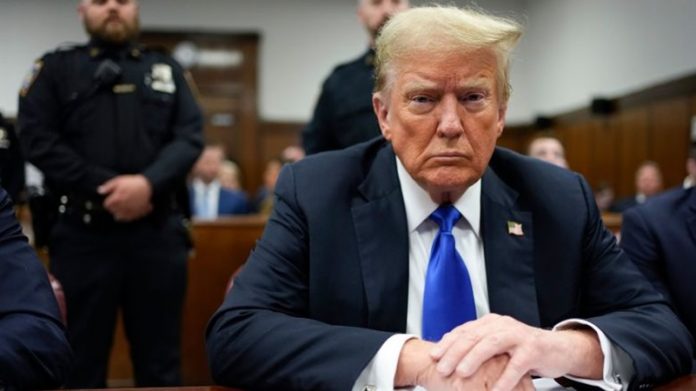
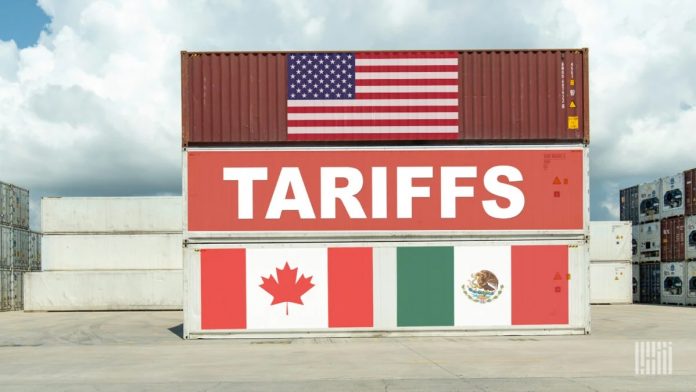
The United States is standing at an economic crossroads, with recession fears rising sharply as President Donald Trump doubles down on his aggressive tariff policies. A Deutsche Bank survey now puts the chances of a U.S. economic downturn at 43% over the next 12 months.

As growing trade tensions continue to rattle markets, businesses, and global supply chains, many experts believe the situation is about to worsen.

Far from showing any signs of backing down, Trump is escalating his trade war even further. He has just threatened to impose a 25% tariff on countries purchasing Venezuelan oil, a move that could have significant economic consequences. This latest threat amplifies concerns that his tariff-driven strategy, intended to pressure Venezuelan President Nicolás Maduro, is pushing the U.S. closer to a self-inflicted recession. As global markets react, economists are warning that Trump’s approach is dangerously destabilizing.

Trump has increasingly weaponized tariffs to achieve his administration’s foreign policy and economic goals. From China to Europe, Mexico to Venezuela, he has used the threat of tariffs to force compliance, punish adversaries, and protect domestic industries.

While his supporters argue that these tactics give the U.S. leverage in trade negotiations, economists warn that they could backfire, driving up costs for American consumers and businesses while slowing global economic growth.

As tariffs increase, the risk of stagflation—a scenario where growth slows while inflation remains high—becomes a real possibility. Many economists have long cautioned that Trump’s trade policies could ultimately push the U.S. into recession. His latest Venezuelan oil tariff threat only strengthens that argument.

Can the Fed Prevent a Crisis?

Federal Reserve Chair Jerome Powell has attempted to calm fears, insisting that the economy remains “strong overall.” However, his own forecasts suggest that growth is slowing. After the Fed’s two-day policy meeting last Wednesday, officials lowered their GDP growth estimate for 2025 to just 1.7%, which, excluding the COVID-19 economic collapse, would be the slowest pace since 2011.

At the same time, core inflation is now expected to hit 2.8%, well above the Fed’s 2% target. The risk is that the Fed may struggle to balance economic growth and inflation control, particularly as tariffs drive up costs across industries. While Powell has dismissed comparisons to the stagflation era of the 1980s, some experts believe that the U.S. is moving dangerously close to a similar economic situation, especially if Trump follows through on his escalating trade threats.

“The recent equity market correction was punctuated by the ‘uncertainty shock’ of ever-evolving tariff policy, with investors concerned it could morph into a slowdown or even recession,” Morgan Stanley said in a note on Monday. “What’s really at the heart of the conundrum, however, is that the U.S. might be at risk for a bout of stagflation, where growth slows and inflation remains sticky.”

Powell, however, pushed back against these concerns. “I wouldn’t say we’re in a situation that’s remotely comparable to that is likely,” he said.

Markets and Economists Sound the Alarm

Financial markets have responded with growing anxiety to Trump’s trade policies. Bond market expert Jeffrey Gundlach of DoubleLine Capital recently told CNBC that he sees the chances of a U.S. recession at “50% to 60%.” Barclays analysts noted that “market-based measures are consistent with only a modest slowing in the economy,” though the firm expects a growth rate this year of just 0.7%, barely above the recession threshold.

The UCLA Anderson School of Management, a highly respected economic forecasting center, has issued its first-ever “recession watch” due to Trump’s tariff war. Economist Clement Bohr, from UCLA Anderson, warned that Trump’s actions could directly lead to a downturn. “The downturn could come in a year or two, though it is entirely avoidable should Trump scale back his tariff threats,” he said.

Bohr also issued a stark warning about the dangers of a deeper crisis. “This Watch also serves as a warning to the current administration: be careful what you wish for, because if all your wishes come true, you could very well be the author of a deep recession,” he wrote. “And it may not simply be a standard recession that is being chaperoned into existence, but a stagflation.”

Trump Shows No Signs of Stopping

Despite these warnings, the Trump administration continues to threaten new tariffs, creating greater economic uncertainty. The 25% tariff on Venezuelan oil buyers, if enacted, could trigger a chain reaction of economic consequences. Oil prices could surge, increasing inflationary pressures. Global trade tensions could escalate, harming U.S. exports. Consumer spending could decline, further slowing economic growth. Markets could remain volatile, with investors reacting to unpredictable policy shifts.

With Trump’s trade war showing no sign of de-escalation, the risk of a U.S. recession is growing sharper by the day. If economic data continues to weaken and the administration proceeds with its latest tariff threats, the U.S. economy could be heading into a downturn much sooner than previously expected.

Binance Suspends Employee for Misconduct Involving Insider Trading

0

Binance suspended an employee for misconduct involving insider trading related to a Token Generation Event (TGE). According to Binance’s statement, the employee, who previously worked at BNB Chain, allegedly used non-public information to purchase tokens before their public announcement and sold them for a profit afterward. The exact token involved, and the profit amount were not specified in the statement, so it’s unclear if this incident directly involves BNB tokens or a six-figure profit. Binance has stated it is cooperating with authorities and pursuing legal action, suggesting the matter is under ongoing scrutiny.

Insider trading refers to the buying or selling of a security (like stocks, tokens, or cryptocurrencies) by someone who has access to non-public, material information about that security. It’s illegal in most regulated markets because it undermines fairness and gives an unfair advantage to those with privileged information. In the U.S., for example, it’s prosecuted under securities laws like the Securities Exchange Act of 1934, often enforced by the SEC or CFTC. In the crypto space, where regulation is still evolving, insider trading is a growing concern due to the lack of consistent oversight.

On March 23, 2025, Binance’s internal audit team received a complaint about an employee allegedly engaging in “front-running”—a form of insider trading where someone trades based on advance knowledge of a market-moving event, like a token listing or Token Generation Event (TGE). The employee, who previously worked at BNB Chain before joining Binance Wallet, reportedly used confidential info from their prior role to buy tokens before a public announcement and sold them for profit afterward. Binance suspended the employee and stated they’d cooperate with authorities, but they didn’t specify the token or the exact profit amount.

This case highlights how insider trading works in crypto: someone with inside knowledge—like upcoming listings or project launches—can exploit it for personal gain. Unlike traditional markets, crypto exchanges often self-regulate, and Binance claims a “zero-tolerance” policy, with termination as the minimum penalty. They’re also offering a $100,000 reward to whistleblowers, split among four who reported this incident, showing an attempt to incentivize transparency. Globally, insider trading laws vary. The U.S. has strict rules, while crypto hubs like the Cayman Islands (where Binance is registered) have lighter oversight, complicating enforcement.

Historically, insider trading investigations have hit crypto before. In 2023, Coinbase faced a scandal where ex-manager Ishan Wahi leaked token-listing details, leading to SEC charges. Binance itself has been under U.S. scrutiny since at least 2021, when the CFTC began probing whether it or its staff profited off customers through insider info—though no formal charges have stuck yet. The SEC also investigated Binance’s BNB token in 2022, questioning if its 2017 ICO was an unregistered security offering, tying into broader concerns about market manipulation.

To “investigate” further, one could dig into blockchain data—crypto’s public ledgers often reveal wallet activity tied to suspicious trades. For instance, in the Binance case, the employee allegedly used multiple wallets to obscure their moves, a common tactic. Analysts could trace those transactions if wallet addresses were exposed, but Binance hasn’t released that info. X posts confirm the suspension and public sentiment—some users see it as a PR move, others as proof crypto’s unregulated nature invites abuse.

Trump Threatens 25% Tariff On Countries Buying Venezuelan Oil, Compounding Global and U.S. Economic Fallout

0

President Donald Trump has launched a new economic offensive, threatening a 25% tariff on countries that purchase oil and gas from Venezuela.

Announcing the policy on his social media platform Truth Social, Trump said the tariffs—set to take effect on April 2—would apply on top of existing trade duties, placing additional pressure on Venezuelan President Nicolás Maduro and his largest buyer, China.

The move underscores the deepening rift between Washington and Caracas, as the Trump administration escalates its long-standing efforts to cripple Venezuela’s oil sector. At the heart of this strategy is a broader goal: curbing China’s growing influence in Latin America.

Venezuela, which exported 660,000 barrels per day (bpd) in 2024, relies heavily on Beijing as its biggest customer, with China purchasing about 270,000 bpd last year. The new tariff measure is widely seen as an attempt to disrupt that flow, forcing countries to reconsider their trade relationships with Venezuela—or face punitive economic consequences from Washington.

“If they buy their oil from Venezuela, they have to pay a 25% tariff to do business with the United States —that’s on top of existing tariffs,” Trump said during a press conference at the White House.

But while Trump portrays the tariffs as a strategic blow to Maduro and China, economists warn that his aggressive trade policies are part of a larger pattern of weaponizing tariffs to achieve political objectives—a tactic that could backfire, destabilizing global markets and dragging the U.S. into recession.

The administration’s reliance on trade restrictions as a tool of foreign policy has already led to economic turmoil in past conflicts, such as the U.S.-China trade war, and experts caution that Trump’s latest escalation could have severe unintended consequences.

Trump’s tariff announcement is designed to tighten the economic noose around Venezuela, which remains heavily dependent on oil exports as its primary source of revenue. The United States itself was the second-largest importer of Venezuelan crude in 2024, bringing in 233,000 bpd, while India and Spain purchased 61,000 bpd and 60,000 bpd, respectively.

Trump is betting that he can further isolate Venezuela and cut off vital funding for its struggling economy by imposing harsh financial penalties on countries that continue trading with Maduro’s regime.

The move is also designed as a direct challenge to China. Beijing has steadily deepened its economic and political ties with Caracas, using Venezuela’s oil as a bargaining chip in its broader geopolitical rivalry with the U.S. Analysts say that Trump’s latest move could increase tensions between the world’s two largest economies, prompting potential retaliatory measures from China that might exacerbate global market instability.

“This announcement by the Trump administration appears to be one more action targeting China,” Matt Smith, an oil analyst at Kpler, told CNBC.

The Deepening U.S.-Venezuela Rift

Trump’s tariff war against Venezuela is just the latest chapter in a deteriorating relationship that has spanned multiple administrations. Since taking office, the president has pursued a hardline approach to Maduro’s government, reinstating crippling oil sanctions that were briefly eased under former President Joe Biden.

Beyond the economic risks, Trump’s tariff war against Venezuela is exacerbating tensions on another front—U.S. immigration policy. The mass deportation of Venezuelan migrants under Trump has drawn intense criticism, with U.S. courts intervening to block some of his most extreme measures.

The tension reached a boiling point on Monday when a federal appeals judge told a Justice Department lawyer that the U.S. treated alleged Nazis better during World War II than the Trump administration treated Venezuelan migrants last week. The judge’s rebuke highlights the widening moral and diplomatic chasm between the two countries, as Trump continues to use both economic and immigration policies as tools to pressure Maduro’s government.

Tariffs as a Weapon—A Strategy That Could Backfire

Economists have warned that Trump’s weaponization of tariffs is a reckless economic strategy that could ultimately backfire on the U.S. Rather than simply punishing Venezuela, the tariffs could trigger a chain reaction of negative economic consequences that include higher oil prices resulting from supply disruptions forcing importers to seek alternative crude sources.

Already, the oil market is reacting. Brent crude futures rose 61 cents (0.85%) to $72.77 per barrel, while U.S. West Texas Intermediate (WTI) crude climbed 59 cents (0.86%) to $68.87 per barrel. If prices continue to surge, the cost of gasoline and household energy could rise sharply, undermining Trump’s claims that his economic policies are benefiting American consumers.

Leo Mariani, an analyst at Roth Capital, said Trump’s tariff war risks triggering an inflationary spiral. If oil prices surge beyond a certain point, it could force the Federal Reserve to keep interest rates high for longer, increasing the chances of a U.S. recession.

“We expect oil prices to go higher in light of this news and may rise further if Trump follows through with this proclamation,” He told clients in a note.

Chevron’s Special Treatment Highlights Policy Contradictions

Despite Trump’s aggressive stance against Venezuelan oil, his administration has quietly made an exception for Chevron, the last major U.S. oil company operating in Venezuela. On Monday, the U.S. Treasury Department extended Chevron’s license to operate in the country until May 27, a move that allows the company to continue extracting and exporting crude despite the broader crackdown.

Chevron CEO Mike Wirth personally lobbied top administration officials for the extension, emphasizing the company’s stake in five major oil projects in Venezuela.

Francisco Monaldi, a Latin America energy expert at Rice University, said the whole point of these tariffs was supposedly to cut off Maduro’s oil revenues. But by letting Chevron continue operations, Trump is sending mixed signals—showing that this is as much about controlling global oil flows as it is about punishing Venezuela.