DD
MM
YYYY

PAGES

DD
MM
YYYY

spot_img

PAGES

Home Blog Page 1513

Electricity is a Linchpin of Modern Civilization

0

Electricity is a cornerstone of modern civilization, powering everything from homes and industries to communication and transportation systems. Other factors like human ingenuity, natural resources, and societal structures also play critical roles. That said, without electricity, our current way of life would grind to a halt pretty fast—imagine no lights, no internet, no refrigeration. It’s the lifeblood of progress, but it’s not the whole body.

Electricity’s importance to civilization is massive. It’s the backbone of nearly every system we rely on—think healthcare (hospitals, ventilators), food supply (refrigeration, production), communication (internet, phones), and transportation (electric vehicles, traffic systems). Without it, economies collapse, safety plummets, and daily life reverts to something pre-industrial, fast. The World Bank estimates over 80% of global GDP depends on reliable electricity access. Even basic stuff like clean water often ties back to electric pumps or treatment plants.

Beyond the practical, it’s a catalyst for innovation—electricity enabled the tech revolution, from computers to AI. No juice, no progress. That said, it’s not everything. People survived without it for millennia, leaning on manual labor, fire, and raw materials. Today, though, losing it would be catastrophic. Renewable energy comes from naturally replenishing sources that don’t run out or can be restored within a human lifetime. Unlike fossil fuels (coal, oil, gas), which take millions of years to form and deplete with use, renewables tap into ongoing processes like sunlight, wind, or water cycles. They’re a big deal because they cut greenhouse gas emissions and reduce reliance on finite resources, though they’ve got their own challenges.

Captures sunlight with panels (photovoltaic cells) to generate electricity or heat water. It’s abundant—Earth gets more solar energy in an hour than the world uses in a year—but it’s weather-dependent and needs space or storage for nighttime. Wind: Uses turbines to convert wind into electricity. Wind’s free and clean, but it’s inconsistent, and turbines can be noisy or mess with wildlife (think birds).

Hydropower: Harnesses flowing water, usually via dams on rivers, to spin turbines. It’s reliable and can store energy (pumped storage), but dams can disrupt ecosystems and displace communities.

Geothermal: Pulls heat from Earth’s core—think hot springs or volcanic areas—for power or heating. It’s steady, but only viable in specific spots. Biomass: Burns organic stuff (wood, crops, waste) or converts it into biofuels. It’s renewable if managed right but can release carbon and compete with food production.

Renewables are sustainable long-term and combat climate change—global renewable capacity hit about 3,700 gigawatts in 2023, per the IEA, covering over 30% of electricity demand. The catch? They often need big upfront costs, infrastructure (like grids or batteries for when the sun’s down), and can’t yet fully replace fossil fuels everywhere due to scale or reliability gaps. It’s a shift from digging up the past to harnessing what’s around us. What aspect of this interests you most?

Electricity is a linchpin of modern civilization, driving nearly every facet of our lives. It’s the force behind industry—powering factories that produce goods, from cars to smartphones. In homes, it keeps lights on, food fresh, and climates bearable. Globally, the International Energy Agency says electricity demand has been growing about 2-3% annually, with over 80% of the world’s population now having access—up from 73% in 2000—showing how essential it’s become.

In healthcare, it’s life-or-death: ventilators, MRI machines, and even basic sterilization depend on it. Communication; the internet, satellites, and phones—all electric. Transportation’s shifting too—electric vehicles are projected to hit 18% of global car sales by 2030, per BloombergNEF. Without electricity, supply chains collapse, cities darken, and economies tank. The World Bank ties reliable power to higher GDP—countries with spotty access lag in development.

Historically, its importance skyrocketed with the Industrial Revolution, turning muscle and steam into automated systems. Today, it’s the foundation for innovation—AI, robotics, space exploration—all need juice. But it’s not absolute. Pre-electric societies leaned on human labor, animals, and natural forces. Now, though? Losing it would unravel us fast.

West Africa Dominates African Startup Funding With $5.8B Raised Since 2019, Nigeria Leads With 80% Share

0

According to a report by Africa: The Big Deal, West Africa has attracted the most funding on the African continent since 2019, and is home to the most active markets in terms of fundraising in the period.

Since 2019, the region has secured an impressive $5.8 billion in startup funding, which accounts for 36% of all funding on the continent, over the past five years, underscoring the region’s strong position in Africa’s tech and innovation ecosystem.

Nigeria has been the undisputed leader, accounting for a significant 80% of that total. The country alone has claimed $4.6 billion, representing 29% of all African startup investments, highlighting its crucial role in the broader ecosystem.

However, the funding landscape has evolved since the end of the funding boom in mid-2022. During the peak investment period from 2020 to mid-2022, West Africa commanded 41% of all startup funding on the continent, nearly doubling East Africa’s 22%. Since then, investment patterns have shifted, with East Africa overtaking West Africa by claiming 30% of funding compared to West Africa’s 25%.

Despite this shift, Nigeria remains the dominant player in West Africa’s startup ecosystem. In both 2023 and 2024, the country accounted for approximately 70% of the region’s startup funding, a lower concentration than in other leading African markets such as Egypt (84%), Kenya (88%), and South Africa (99%).

Historically, the “Big Four” countries, Nigeria, Kenya, South Africa, and Egypt have collectively accounted for a significant portion of Africa’s startup funding. Reports from Disrupt Africa and the African Development Bank indicate that these nations captured around 75-80% of total funding in years like 2021 and 2022, with Nigeria often taking the largest individual share.

For example, in 2022, Nigerian startups raised $976 million out of a continental total of $3.3 billion, equating to about 29%-far below 80%. Even in 2021, when Nigeria raised substantial sums, the Big Four together accounted for 92.1% of the $1.9 billion total, with Nigeria’s portion being significant but not dominant at that level.

At the same time, other West African nations have increased their share of investment. The region now boasts four countries that have each raised over $100 million since 2019, more than any other African region. Ghana ($460 million) and Senegal ($410 million) are nearing the half-billion-dollar mark, while Benin ($133 million) and Côte d’Ivoire ($107 million) complete the regional top five. Meanwhile, the remaining West African nations have collectively attracted only 1% of the region’s funding since 2019.

A closer look at the distribution of this funding reveals that a small group of startups has captured the majority of the investment. More than 700 West African startups have raised at least $100,000 since 2019, yet just 15 companies have secured 55% of all regional funding. Unsurprisingly, 13 of these are based in Nigeria, and 8 operate in the fintech sector.

Seven Nigerian fintech which includes, Opay, Flutterwave, Interswitch, PalmPay, Moniepoint, Kuda, and Yellow Card, have led the charge, solidifying Nigeria’s position as Africa’s fintech hub. Moreover, five Nigerian startups, Interswitch, Flutterwave, Opay, Moniepoint, and Andela have attained unicorn status with valuations exceeding $1 billion.

Beyond Nigeria, two standout companies have significantly impacted their respective markets. Senegal’s Wave Mobile Money has raised nearly $300 million, accounting for 71% of the country’s startup funding, while Benin’s Spiro, an electric mobility startup, has attracted over $100 million, representing 85% of its home country’s total funding.

While Nigeria continues to dominate West Africa’s startup funding landscape, the rise of emerging markets within the region signals a gradual diversification.

As investment flows shift, countries like Ghana, Senegal, Benin, and Côte d’Ivoire are carving out their own spaces in the African startup ecosystem, showcasing the growing depth of innovation and entrepreneurship across the region.

Hyundai Pours Billions into U.S. Amid Trump’s Tariff Threats, Unveils Plans for Louisiana Steel Plant

0

South Korean auto giant Hyundai has announced a sweeping investment plan in the United States, including a massive $5.8 billion steel plant in Louisiana and a $7.59 billion car and battery factory in Georgia.

The move underscores a growing shift among multinational companies recalibrating their operations under the weight of U.S. President Donald Trump’s aggressive tariff policies.

Hyundai Executive Chairman Euisun Chung revealed the investment during a White House event on Monday, standing alongside Trump.

“This new facility will create 1,300 American jobs and serve as the foundation for a more self-reliant and secure automotive supply chain in the U.S.,” Chung said.

The Louisiana plant marks a critical expansion for Hyundai, which already has a strong manufacturing presence in the United States. The company operates an assembly plant in Alabama, while its affiliate Kia runs a production facility in Georgia. The two existing factories can produce 700,000 vehicles annually. Once the new Georgia plant becomes fully operational, it will add another 300,000 cars to the company’s U.S. manufacturing capacity.

Trump’s Tariffs: A Driving Force Behind Hyundai’s Move?

Hyundai’s latest investment makes it the newest major company to announce a multibillion-dollar commitment to the United States since Trump’s return to the presidency in January. The U.S. president has made clear that companies choosing to manufacture abroad could face punishing tariffs, while those investing in American factories will be rewarded with tariff exemptions.

Trump has repeatedly signaled his intention to impose reciprocal tariffs on countries with large trade surpluses with the United States. South Korea, a key U.S. trade partner, has found itself in Trump’s crosshairs, raising speculation that Hyundai’s investment is, at least in part, a strategic move to avoid being swept up in new trade penalties.

“Hyundai will be producing steel in America and making its cars in America, and as a result, they’ll not have to pay any tariffs,” Trump said Monday, touting the investment as evidence that his protectionist trade policies are working.

“Cars are coming to this country at levels never seen before. Money is pouring in. We want to keep it that way,” he added.

The president further hinted that more tariff measures targeting foreign automakers could be announced in the coming days.

Global Business Scrambles as U.S. Trade War Heats Up

Hyundai’s decision comes amid a broader wave of multinational firms redirecting their investments to the United States in response to Trump’s trade war rhetoric. Apple and Oracle are among the companies that have announced hundreds of billions of dollars in planned U.S. investments over the next four years.

Louisiana Governor Jeff Landry had traveled to South Korea in October to meet with Hyundai executives and discuss the steel plant investment. The project is expected to make Louisiana a key hub for Hyundai’s North American supply chain.

“Hyundai’s commitment shows that we are entering a new era of manufacturing in America,” Landry said in a statement. “This investment not only strengthens our auto sector but ensures that American workers are at the heart of global production.”

In addition to its manufacturing expansion, Hyundai has also pledged to purchase $3 billion worth of liquefied natural gas (LNG) from the United States, further aligning itself with the country’s energy sector.

The deal aligns with Trump’s broader push to boost American energy exports and reduce trade deficits. With South Korea being one of the largest importers of U.S. LNG, the agreement solidifies Hyundai’s relationship with American energy producers and serves as a buffer against potential trade restrictions.

Trump’s renewed trade war threats have put companies like Hyundai in a tough spot, forcing them to either move production to the U.S. or risk hefty penalties. While Hyundai’s latest investments may shield it from immediate tariff exposure, the broader uncertainty surrounding Trump’s trade policies means the auto industry remains on edge.

As the April 2 deadline for Trump’s reciprocal tariff announcements approaches, major automakers—including European and Japanese manufacturers—are bracing for the possibility of new levies. Industry analysts say Hyundai’s rapid expansion into the U.S. is a clear signal that companies are taking Trump’s threats seriously.

Paystack Launches Consumer-Focused App Zap, to Revolutionize Bank Transfers

0

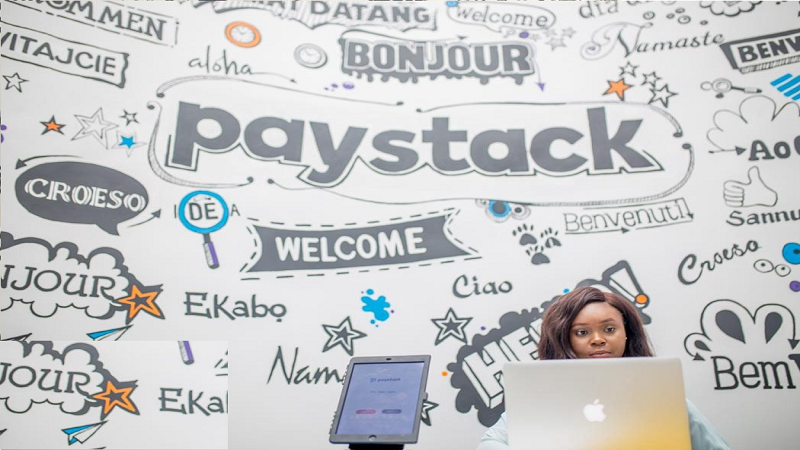
Paystack, a Nigerian financial technology (fintech) company that provides online and offline payment solutions to businesses across Africa, has announced the launch of its consumer-focused app Zap, to revolutionize bank transfers with speed and simplicity.

Unveiled during a live YouTube session, the app is designed for instant, secure, and low-cost bank transfers. Zap aims to set itself apart in Nigeria’s competitive fintech landscape by eliminating reliance on card networks and focusing on direct bank transfers. This strategic move not only lowers transaction costs but also enhances the speed and efficiency of digital payments.

According to Paystack’s Co-founder Shola Akinlade, the company already has a partnership with Titan Trust Bank which has been extended to Zap. He noted that the partnership will ensure that Zap can securely hold deposits and facilitate instant transactions. While International remittances are not the current focus, Zap is ideal for Nigerian visitors who need a seamless way to transfer funds locally.

“Today, we are not targeting the remittance scenario. Our ideal scenario is for people from abroad to come to Nigeria and make transfers using Zap. If you are sending money to Nigeria from abroad, you can wait a couple of minutes. Our priority is immediate delivery”, Shola noted.

Zap is built on Paystack Vault, which currently supports only commercial bank accounts. This means that microfinance banks like Palmpay, Opay, and Moniepoint are not supported currently. Users can also link debit or credit cards from any country to Zap. In a demonstration at the launch, the company’s co-founder Shola carried out a sample by transferring money from his Bank of America card to a Nigerian account which took place instantly.

Getting started with Zap is effortless, thanks to its hassle-free onboarding process. Once set up, users can send money to any Nigerian bank account in seconds, whether it’s paying for a service, splitting bills, or moving funds between accounts.

Users can top up their Zap wallet in two ways:

  • Linking a Nigerian bank account through Paystack’s direct debit infrastructure.
  • Depositing funds directly into a dedicated Paystack-Titan Trust Bank account.

Notably, customers can only send or deposit money on the app after completing know-your-customer (KYC) checks. Tier-1 users, who verify with only their Bank Verification Number (BVN), can send up to N50,000 daily and maintain a maximum balance of N200,000. For Tier-2 users, the limits rise to N200,000 daily and N500,000 maximum balance. Tier-3 users can send up to N5 million daily and hold up to N100 million in their accounts. With a foundation that already processes millions of transactions daily, Zap prioritizes security and user experience, While the app is currently available in Nigeria, Paystack has ambitious expansion plans, aiming to extend its seamless transfer service across Africa.

As digital payments continue to evolve, Zap is positioned to redefine financial transactions by offering a faster, more affordable, and frictionless alternative to traditional banking apps.

Zap by Paystack: Shaking Up Nigeria’s Digital Payments Market

With the launch of Zap, Paystack has entered direct competition with some of Nigeria’s biggest fintech players, including OPay, PalmPay, Moniepoint, and Kuda. These established platforms have built their dominance on digital wallets, mobile banking, and seamless payment solutions.

However, Zap is positioning itself differently by focusing solely on bank transfers, bypassing card networks and digital wallets to reduce costs and improve transaction speed.

How Zap Stands Out Against the Competition

1. Focus on Instant Bank Transfers Instead of Wallets

Unlike OPay, PalmPay, and Moniepoint, which operate digital wallets where users store funds, Zap does not require users to maintain a separate wallet balance. Instead, it links directly to commercial bank accounts, enabling instant peer-to-peer transfers without additional steps like wallet top-ups or withdrawals.

2. Reduced Transaction Fees by Bypassing Card Networks

Many fintech platforms, including Kuda, offer free bank transfers but rely on card networks for funding and payments. Zap differentiates itself by avoiding these intermediaries, reducing costs for both users and Paystack itself.

3. Leveraging Paystack’s Infrastructure for Stability

One of Zap’s strongest advantages is that it operates on Paystack’s proven infrastructure, which already processes millions of transactions daily for businesses and merchants. This reliability gives it a competitive edge over some newer fintech platforms that may struggle with downtime or delays.

4. Targeting a Different Audience from OPay and PalmPay

While OPay and PalmPay cater to a broad audience, including unbanked and underbanked users, Zap is targeting individuals who already have commercial bank accounts. This means that it doesn’t directly compete with fintechs focused on financial inclusion but rather challenges banks’ sluggish mobile apps by offering a faster and more intuitive alternative.

Zap’s entry into Nigeria’s fintech landscape intensifies the already existing competition. While it may not directly replace OPay, PalmPay, or Kuda, it offers an alternative for users who prioritize speed, security, and direct bank transfers over wallet-based transactions.

Professional Career Development in the Age of Disruption | Tekedia Mini-MBA

0

His empire gained market share but the revenue was dropping. He complained that his management was not executing well. How can you tell me that you have gained market share, and yet we are seeing erosion of revenue? Baba was not happy. He was in mid-80 and was troubled because the business he built over decades seemed to be fading.

His men told him the truth: competition was asymmetric and no more within the players you competed with in your time, and new investments were needed. They made it clear that change was necessary. He asked for an “outsider” for a second opinion.

They flew me from the US and I made it to Lagos. In Ikeja, I met Baba. I told him what his men had told him and included a chart of two companies – Facebook and Google – and how they were disintermediating the local advertising industry. Within a quarter, the company signed a partnership deal with a major European digital ad bundler, and revenue returned even though the old traditional ad business continued to fade.

Disruption happened in that industry, and agility brought the company back. Today, at Tekedia Mini-MBA, our Faculty Olutoyin Williams will educate at the PEOPLE’s level, on a course titled “Professional Career Development in the Age of Disruption”. Indeed, how do we build career resilience and thrive despite all the disruptions from technology, tariffs, political chaos, globalization, etc. How do you design and execute a professional career framework?

Tue, March 25 | 7pm-8pm WAT | Professional Career Development in the Age of Disruption – Olutoyin Williams, International Youth Federation UK| Zoom link 

Tekedia Institute Mini-MBA >> the BEST teaches here and our product is Knowledge.