DD
MM
YYYY

PAGES

DD
MM
YYYY

spot_img

PAGES

Home Blog Page 1514

Phil Murphy: The Visionary Leader Shaping New Jersey and Beyond

0

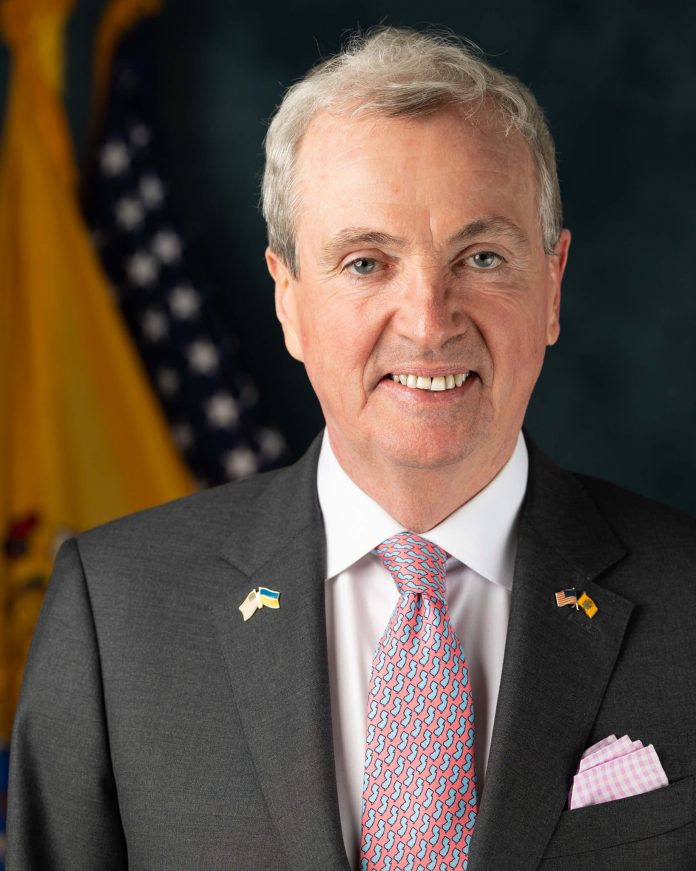
Phil Murphy isn’t just a name in politics—he’s a force of ambition, resilience, and transformation. As the 56th Governor of New Jersey, sworn in on January 16, 2018, Murphy has carved out a reputation as a progressive leader with a knack for turning challenges into opportunities.

Born on August 16, 1957, in Needham, Massachusetts, his story is one of humble beginnings, global success, and a relentless drive to make a difference. From his early days as a working-class kid to his high-flying career at Goldman Sachs, and now as a political influencer, Murphy’s journey resonates with anyone who believes in the power of grit and vision.

What sets Murphy apart? It’s not just his governorship—it’s the way he’s redefined leadership in an era of polarization. Whether it’s legalizing sports betting, championing climate action, or tackling economic inequality, he’s a man who doesn’t shy away from bold moves. His charisma, paired with a pragmatic approach, has made him a standout figure, not just in New Jersey, but on the national stage.

From Blue-Collar Roots to Wall Street Titan

Murphy’s story starts in a modest Irish-American family, where hard work wasn’t just a value—it was a necessity.

Raised in a household that struggled to make ends meet, he learned early on the importance of perseverance. His parents, Dorothy and Walter Murphy, instilled in him a sense of community and a belief that education could unlock doors.

That belief paid off when he earned a degree in economics from Harvard University in 1979, followed by an MBA from the Wharton School at the University of Pennsylvania in 1983.

His career trajectory is nothing short of impressive:

  • Goldman Sachs Rise: Murphy joined the financial giant in 1982, starting as an intern and climbing the ranks over 23 years to become a senior executive. He headed operations in Asia and later oversaw the firm’s German division during a critical post-reunification period.
  • Global Influence: By the time he retired in 2006, he’d managed billions in assets and built a reputation as a sharp, innovative leader.
  • Wealth with Purpose: His success netted him a personal fortune, but he didn’t stop there—he turned his focus to giving back.

This Wall Street chapter wasn’t just about money for Murphy; it was about mastering systems, understanding people, and building the skills that would later define his political career.

His ability to navigate complex financial landscapes foreshadowed his talent for tackling New Jersey’s toughest issues.

A Pivot to Public Service

After leaving Goldman Sachs, Murphy could’ve settled into a quiet life of luxury. Instead, he chose a path less traveled for a multimillionaire: public service. His transition wasn’t overnight—it was deliberate, fueled by a desire to serve.

In 2006, he took a surprising turn when President Barack Obama appointed him U.S. Ambassador to Germany, a role he held from 2009 to 2013. Stationed in Berlin, he honed his diplomatic skills, strengthened U.S.-German relations, and gained a front-row seat to global governance.

Why the shift? Murphy often cites his upbringing—watching his parents struggle gave him a deep empathy for working families. His time in Germany only amplified this:

  • Economic Insight: He saw firsthand how government policies could lift or sink economies.
  • Progressive Spark: Exposure to Europe’s social programs inspired his later push for universal healthcare and education reform in New Jersey.
  • Leadership Test: Dealing with international crises sharpened his ability to stay calm under pressure.

Back in the U.S., he didn’t rest on his laurels. He founded New Start New Jersey, a nonprofit aimed at boosting the state’s economy, signaling his intent to dive into local issues. This wasn’t just a side gig—it was the launchpad for his political ascent.

The Governor Who Bet Big

Murphy’s leap into the governor’s race in 2017 was a gamble, but one he played masterfully. Running as a Democrat in a state weary of political scandals (thanks to predecessor Chris Christie), he promised a fresh start. His campaign was a blend of progressive ideals and practical solutions—raising the minimum wage, legalizing marijuana, and fixing infrastructure.

On November 7, 2017, he won with 56% of the vote, a decisive victory that underscored his appeal as a relatable yet ambitious leader. Sworn in on January 16, 2018, Phil Murphy hit the ground running, determined to make New Jersey a model for progressive governance.

His tenure has been defined by bold bets—some literal, some figurative—that have cemented his status as an influencer with a vision.

One of his biggest wins? Legalizing sports betting. In May 2018, the U.S. Supreme Court struck down PASPA, a federal ban on sports wagering, thanks to a legal battle New Jersey had waged for years.

Murphy didn’t just celebrate—he acted. On June 11, 2018, he signed a bill making sports betting legal, placing the state’s first bet himself at Monmouth Park Racetrack. This wasn’t just about gambling; it was about economic opportunity:

  • Revenue Boom: By 2023, New Jersey’s sports betting industry had generated over $1 billion in revenue, outpacing even Nevada at times.
  • Jobs Galore: The move created thousands of jobs, from tech roles to hospitality, revitalizing local economies.
  • National Trendsetter: Murphy’s swift action made New Jersey the blueprint for other states, earning him accolades as a pioneer.

But sports betting was just the start. Murphy’s agenda has been a whirlwind of progressive policies, from raising the minimum wage to $15 an hour to pushing for clean energy. He’s a governor who doesn’t just talk change—he delivers it, often against steep odds.

A Progressive Powerhouse

Murphy’s influence shines brightest in his commitment to social and economic justice. He’s not afraid to take on big fights, even when they stir controversy.

Take his push to legalize recreational marijuana, signed into law on February 22, 2021, after years of debate. It wasn’t just about personal freedom—it was about equity:

  • Criminal Justice Reform: The law included measures to expunge past marijuana convictions, addressing racial disparities in arrests.
  • Economic Equity: A chunk of tax revenue was earmarked for communities hit hardest by the war on drugs.
  • Cultural Shift: Murphy framed it as a step toward a fairer society, winning over skeptics with his moral clarity.

Then there’s his climate crusade. In 2019, he unveiled a plan to make New Jersey 100% clean-energy-powered by 2050. He’s poured billions into offshore wind projects and electric vehicle infrastructure, positioning the state as a green leader. Critics call it ambitious; supporters call it visionary. Either way, it’s pure Murphy—big ideas, bigger action.

His handling of the COVID-19 pandemic further showcased his leadership. When the virus hit in 2020, New Jersey was an early epicenter.

Murphy imposed strict lockdowns, ramped up testing, and communicated daily with a calm, data-driven style that earned him national praise. By mid-2021, the state’s vaccination rates were among the highest in the U.S., a testament to his ability to rally people around a cause.

The People’s Governor

What makes Murphy a standout isn’t just his policies—it’s his persona. He’s got the polish of a Wall Street exec but the heart of a guy who remembers his roots. He’s approachable, often spotted chatting with constituents at diners or tweeting directly to New Jerseyans.

His wife, Tammy Murphy, a former banker turned advocate, complements his public image as a partner in both life and mission.

His popularity isn’t without bumps, though:

  • Tax Hikes: His budgets, heavy on spending for education and transit, have meant higher taxes, irking some voters.
  • Political Foes: Republicans have painted him as a big-government liberal, a label he shrugs off with a smile.
  • Pandemic Backlash: Early COVID restrictions drew protests, but he held firm, betting on long-term trust over short-term applause.

Yet, even his critics can’t deny his impact. Reelected in 2021 by a narrower margin than his first win, he proved his staying power in a purple state. His approval ratings hover around 50%, a solid mark in today’s divided climate.

A National Influencer in the Making

Murphy’s not just a New Jersey story—he’s a national one. Democrats eyeing 2028 whisper his name as a potential presidential contender.

Why? He’s got the resume: finance guru, diplomat, governor. He’s got the results: a thriving economy, progressive wins, crisis management. And he’s got the vibe—confident but not cocky, serious but not stiff.

His influence extends beyond politics, too. He’s a regular at national conferences, a voice on cable news, and a mentor to up-and-coming leaders. Whether he’s talking climate with activists or jobs with CEOs, Murphy’s knack for connecting dots makes him a player to watch.

At 67, he’s still got fuel in the tank. His second term runs through January 2026, and whatever comes next—another run, a federal role, or a pivot to philanthropy—Phil Murphy’s legacy is already one of bold bets and big wins.

Phil Murphy’s star doesn’t just shine in Trenton—it’s rising across the U.S. As of 2025, with his second term as New Jersey governor in full swing, whispers of a presidential bid in 2028 grow louder.

He’s not your typical politician, and that’s exactly why he’s caught the eye of party insiders and everyday Americans alike. A blend of Wall Street savvy, diplomatic finesse, and progressive grit, Murphy’s built a profile that screams “next big thing.” But what makes him tick, and what’s fueling his ascent?

Phil Murphy’s legacy in legal gambling is a masterclass in balancing opportunity with responsibility, reflecting his broader ethos as a visionary leader.

As New Jersey’s governor, he seized the 2018 Supreme Court ruling overturning PASPA, signing sports betting into law within weeks and transforming the state into a national hub—generating over $1 billion in revenue by 2023 while creating jobs and boosting tourism. Yet, Murphy didn’t stop at legalization; he championed responsible gambling with the same fervor.

He pushed for robust regulations, including self-exclusion programs and funding for addiction support, ensuring the industry thrived without exploiting vulnerable players. His administration allocated tax revenue to education and problem-gambling initiatives, showcasing a model where economic wins coexist with social good.

For Murphy, legal gambling isn’t just a cash cow—it’s a proving ground for leadership that prioritizes both prosperity and protection.

His national influence isn’t accidental—it’s earned. He’s a regular at high-profile events, from climate summits to Democratic fundraisers, where his speeches blend optimism with hard-nosed realism.

On shows like MSNBC or CNN, he’s a go-to voice, breaking down complex issues—be it infrastructure funding or healthcare reform—with a clarity that cuts through the noise. And he’s not just talking; he’s mentoring. Young lawmakers and activists cite him as an inspiration, drawn to his knack for turning ideas into action.

What’s his edge? It’s a mix of experience and authenticity:

  • Proven Record: Governing a diverse, densely populated state like New Jersey—7th in GDP among U.S. states—gives him credibility on economic and social issues.
  • Crisis Leadership: His steady hand during COVID-19, guiding New Jersey through one of the nation’s worst outbreaks, showed he can handle chaos.
  • Relatability: Despite his wealth, he connects with working-class voters, often citing his own family’s struggles as his “why.”

If he runs, he’ll face hurdles—skeptics will question his tax-heavy policies, and rivals will dig into his Goldman Sachs past. But Murphy’s never been one to back down from a fight. His national arc is just beginning, and it’s one worth watching.

The Family Man Behind the Mission

Behind the governor’s polished suits and policy wins is a man grounded by family. Phil Murphy’s partnership with Tammy Snyder Murphy, whom he met in 1987 at Goldman Sachs, is a cornerstone of his life and legacy.

Married in 1994, they’ve raised four children—Josh, Emma, Charlie, and Sam—in a household that balances public service with private warmth.

Tammy’s no sidekick; she’s a force in her own right, co-founding the nonprofit New Start New Jersey with Phil and later launching initiatives like Nurture NJ to tackle maternal and infant mortality.

Family shapes Murphy in ways that spill into his work:

  • Empathy Driver: He’s spoken about how raising kids in a post-9/11 world sharpened his focus on safety and opportunity, from gun control to education funding.
  • Team Effort: Tammy’s advocacy amplifies his platform, making them a power couple with shared goals.
  • Down-to-Earth Moments: Whether it’s cheering at his kids’ soccer games or hosting barbecues, he keeps a human touch that endears him to constituents.

This family dynamic isn’t just PR—it’s real. When Murphy faced a health scare in 2020, undergoing surgery to remove a cancerous tumor from his kidney, it was Tammy and the kids who rallied around him.

His recovery—declared cancer-free later that year—reinforced his resolve, and he leaned into it, using the experience to push for better healthcare access statewide.

Master of the Big Picture

Murphy’s a details guy who never loses sight of the forest for the trees. His ability to juggle micro-level fixes—like repairing New Jersey’s crumbling bridges—with macro-level dreams—like a carbon-neutral future—sets him apart.

Take his economic playbook: he’s poured billions into education, transit, and small businesses, betting that a strong foundation lifts everyone. By 2024, New Jersey’s unemployment rate had dropped below the national average, a stat he touts with pride.

His approach is strategic, not scattershot:

  • Education First: He’s boosted school funding by over $2 billion since 2018, shrinking gaps between rich and poor districts.
  • Transit Revival: After decades of neglect, NJ Transit’s getting a facelift—new trains, better schedules—under his watch.
  • Business Magnet: Tax incentives have lured companies like Amazon and Panasonic to expand in the state, creating jobs.

Critics grumble about the cost—New Jersey’s budget deficit hit $10 billion in 2023—but Murphy argues it’s an investment, not a splurge. His fans say he’s playing chess while others play checkers, and the results are starting to show.

The Climate Crusader

If there’s one issue where Murphy’s influence could outlast his governorship, it’s climate change. He’s turned New Jersey into a green powerhouse, driven by a personal passion he traces back to his time in Germany, where renewable energy was already mainstream.

His Energy Master Plan, rolled out in 2019, aims for 100% clean energy by 2050, and he’s not messing around. Offshore wind farms are sprouting along the Jersey Shore, with a goal of 11,000 megawatts by 2040—enough to power millions of homes.

His green cred is bolstered by action:

  • Wind Wins: By 2025, projects like Ørsted’s Ocean Wind are online, making New Jersey a leader in U.S. offshore wind.
  • EV Push: He’s sunk $100 million into electric vehicle chargers, aiming for 330,000 EVs on the road by year’s end.
  • Resilience Focus: Post-Hurricane Sandy, he’s hardened infrastructure against rising seas and storms.

Environmentalists cheer, but fossil fuel lobbyists and some rural voters push back, calling his plans costly and impractical. Murphy’s unfazed—he sees it as a moral and economic imperative, a legacy he wants etched in stone.

A Legacy in Progress

At 67, Phil Murphy’s not done dreaming big. His second term, ending in January 2026, is a sprint to cement his mark.

He’s eyeing universal pre-K, tougher gun laws, and more affordable housing—issues that could define his tenure and boost his national profile. But he’s also realistic, knowing politics is a marathon, not a dash.

His 2021 reelection, a nail-biter at 51% to 48%, taught him that even popular leaders must keep proving themselves.

His legacy’s taking shape:

  • Economic Turnaround: From a state mocked as a “fiscal basket case” to one with a $6 billion surplus by 2024.
  • Social Justice: Marijuana legalization, paid family leave, and a $15 minimum wage bear his stamp.
  • Trailblazer Status: Sports betting and clean energy have made New Jersey a pacesetter.

What’s next? Some see him in Washington—maybe a Senate run, maybe the White House. Others think he’ll pivot to philanthropy, leveraging his wealth and Rolodex for global impact. Whatever it is, Murphy’s not fading quietly.

The Man Who Inspires

Phil Murphy’s story isn’t just about power—it’s about possibility. He’s the kid from Needham who scaled Wall Street, served in Berlin, and reshaped a state. He’s the governor who bets big, fights hard, and still stops for a coffee with voters.

For a website celebrating influencers, he’s a natural fit—not because he seeks the spotlight, but because he earns it.

His appeal is universal:

  • Underdog Spirit: From a struggling family to a global stage, he’s proof hard work pays off.
  • Bold Vision: He doesn’t tinker—he transforms, whether gambling laws or green energy.
  • Human Touch: In a cynical age, his sincerity stands out.

The Connector Who Bridges Divides

Phil Murphy’s magic isn’t just in his policies but in his ability to unite people. In a state as diverse as New Jersey, where urban Newark contrasts with rural Sussex County, he’s mastered the art of coalition-building.

He’s not a firebrand yelling from a podium; he’s a listener who turns dialogue into results. This knack for connection has made him a standout influencer, not just among politicians but among communities that rarely see eye to eye.

His bridge-building shines in moments like these:

  • Labor Love: He’s won over unions with pro-worker laws—think paid sick leave and apprenticeship programs—while still courting businesses with tax breaks.
  • Suburban-Urban Balance: His transit investments link city dwellers to suburban jobs, easing tensions over resource allocation.
  • Bipartisan Wins: Even with a Democratic legislature, he’s cut deals with GOP lawmakers on veterans’ benefits, showing pragmatism over partisanship.

This isn’t accidental—Murphy’s years at Goldman Sachs and in Germany taught him negotiation isn’t about winning, it’s about aligning interests.

In 2023, when a budget impasse loomed, he sat with lawmakers for marathon sessions, emerging with a deal that funded schools and cut property taxes. It’s this quiet tenacity that keeps him relevant, even when headlines fade.


Why Companies Use Business Advisory in Dubai

0

Dubai is recognized as a vibrant global business hub that attracts companies from all corners of the world. Amidst this dynamic landscape, organizations increasingly rely on business advisory services to navigate the intricacies of local markets, regulations, and competitive pressures. In addition, for those exploring long-term residency options, checking out a https://atton-consulting.com/en/services/resident-permit-dubai-uae/get-retirement-visa-in-dubai-uae.html can provide a pathway to a stable and enriching life in the region. This blog post examines why companies use business advisory in Dubai, breaking down the reasons for seeking advice, the types of companies that benefit, the common problems advisors help solve, and the overarching goals of business advisory.

Reasons for Seeking Advice

One of the primary reasons companies opt for business advisory services in Dubai is to gain expert insights into a complex market. With a rapidly evolving economic environment, businesses need specialized knowledge to stay competitive. Here are some of the key reasons why companies seek advisory support:

  • * Navigating Regulatory Challenges: Dubai’s regulatory framework is unique and continually evolving. Advisors help companies understand local laws, licensing requirements, and compliance issues, reducing the risk of legal complications.
  • * Strategic Growth and Expansion: Business advisors provide strategic insights that help companies identify growth opportunities, whether it’s entering new markets, launching innovative products, or acquiring local partners.
  • * Operational Efficiency: With the help of advisors, businesses can streamline internal processes, reduce costs, and enhance productivity through process optimization and resource management.
  • * Financial Planning and Analysis: Advisors assist companies with financial restructuring, investment analysis, and risk management, ensuring a solid financial foundation in an unpredictable economic climate.
  • * Market Insights and Trends: By leveraging in-depth market research and industry trends, advisors offer companies a competitive edge, helping them to adapt to shifting market dynamics.

These reasons illustrate that business advisory services are not just about solving immediate problems but also about building a resilient strategy for long-term success.

Types of Companies Served

Business advisory in Dubai caters to a diverse spectrum of organizations, ranging from startups to multinational corporations. Each type of company benefits from tailored advisory services that address its unique challenges and opportunities. Some of the companies that typically use these services include:

  • Startups and New Ventures: Emerging businesses often lack the in-house expertise needed to navigate the complexities of market entry and regulatory compliance. Advisors help these companies build a solid foundation for growth.

  • Small and Medium Enterprises (SMEs): SMEs use advisory services to optimize operations, improve cost efficiency, and scale their businesses in a competitive market.

  • Multinational Corporations: Even well-established companies require local market insights and strategic advice to remain agile and innovative in a fast-paced environment.

  • Family-Owned Businesses: These organizations may seek advisory services for succession planning, modernization, and governance improvements.

  • Investment Firms and Venture Capitalists: Advisory firms assist investors in assessing potential risks and rewards, ensuring that investments are well-informed and strategically sound.

  • Public Sector and Non-Profit Organizations: These entities benefit from advisory support in improving operational efficiency, ensuring compliance with regulations, and enhancing service delivery.

By serving such a wide array of clients, business advisory services demonstrate their versatility and capacity to address the multifaceted challenges of the Dubai business ecosystem.

Problems Advisors Help Solve

Business advisors in Dubai are well-equipped to tackle a variety of challenges that companies face in today’s competitive environment. Their expertise helps organizations overcome hurdles and position themselves for sustainable growth. Some of the common problems that advisors help solve include:

  • Regulatory and Compliance Issues: Navigating Dubai’s legal and regulatory landscape can be daunting. Advisors help companies interpret and implement compliance measures to avoid penalties and legal issues.

  • Market Entry and Expansion Challenges: Whether it’s a startup trying to break into the market or an established firm looking to expand its operations, advisors provide the strategic insights needed to successfully enter and thrive in the market.

  • Operational Inefficiencies: Identifying and rectifying inefficiencies in business operations is another critical area where advisors add value. They help streamline processes, reduce costs, and improve overall operational performance.

  • Financial Instability: In times of economic uncertainty, advisors assist companies with restructuring finances, securing investments, and planning for long-term financial stability.

  • Strategic Misalignment: Companies often face challenges in aligning their short-term actions with long-term strategic goals. Advisors facilitate strategic planning sessions that ensure all departments work towards a unified vision.

  • Technology Integration: In an era of rapid digital transformation, advisors help organizations integrate new technologies into their operations, ensuring a smooth transition and minimal disruption.

By addressing these problems, business advisory services play a critical role in helping companies overcome obstacles and achieve their strategic objectives.

Goals of Business Advisory

The ultimate goal of business advisory is to enable companies to operate more efficiently, make informed decisions, and secure a competitive advantage in the market. Advisors work closely with their clients to align business strategies with organizational objectives. Some of the primary goals of business advisory include:

  • Enhanced Decision-Making: By providing detailed analysis and expert insights, advisors empower companies to make well-informed decisions that promote growth and innovation.

  • Increased Efficiency: Streamlining business processes and optimizing operations are key outcomes of advisory services, leading to improved productivity and reduced operational costs.

  • Sustainable Growth: Business advisory aims to identify growth opportunities that are both achievable and sustainable, ensuring that companies can scale without compromising on quality or efficiency.

  • Risk Mitigation: Identifying potential risks and developing robust mitigation strategies helps companies safeguard their investments and ensure long-term stability.

  • Competitive Advantage: With targeted advice and strategic planning, companies can differentiate themselves from competitors and establish a strong market presence.

  • Adaptability and Innovation: In a constantly changing business environment, advisors help companies remain agile, encouraging innovation and continuous improvement.

In achieving these goals, business advisory services serve as a catalyst for positive change, enabling companies to not only meet current challenges but also to thrive in the future.

In summary, companies in Dubai leverage business advisory services to navigate a complex regulatory environment, drive strategic growth, and optimize their operations. With tailored solutions for a diverse range of organizations—from startups and SMEs to large multinationals and family-owned businesses—business advisors help solve pressing challenges and align business strategies with long-term goals. Whether it’s ensuring compliance, enhancing operational efficiency, or integrating innovative technologies, the guidance provided by these experts is essential for sustained success in one of the world’s most dynamic markets.

Open Intents Framework is a Bold Step in Unifying Ethereum’s Fragmented L2

0

The Open Intents Framework (OIF) is an emerging initiative within the Ethereum ecosystem aimed at standardizing and simplifying intent-based transactions to improve interoperability and user experience across Ethereum’s fragmented Layer 2 (L2) landscape. As Ethereum has scaled through rollups and sidechains, the resulting proliferation of chains has introduced challenges like complex bridging, liquidity fragmentation, and poor cross-chain usability. OIF seeks to address these by providing a modular, open-source framework for developers to build intent-based applications efficiently.

What Is the Open Intents Framework?

At its core, OIF is designed to unify Ethereum’s multi-chain ecosystem by enabling “intents”—high-level user goals (e.g., “swap 1 ETH for USDC on the cheapest chain”)—rather than requiring users or developers to specify the exact mechanics of execution (e.g., which bridge or liquidity pool to use). Instead of users navigating the technical complexity of cross-chain interactions, intents allow them to express desired outcomes, which are then fulfilled by specialized entities called “solvers” through various execution pathways.

OIF emerged as a collaborative effort led by contributors from the Ethereum Foundation, Hyperlane, Bootnode, and over 30 other teams across the Ethereum ecosystem, including major L2s like Starknet and Polygon. Launched publicly around February 19, 2025, it’s positioned as a “public good” to reduce fragmentation and enhance developer and user experiences. OIF provides a suite of tools to make intent-based development accessible.

Composable Smart Contracts: The framework includes modular smart contracts, such as the Base7683 contract, which standardizes how intents are defined and executed. It builds on ERC-7683, a proposed Ethereum standard for intent-based transactions, allowing flexibility in settlement mechanisms (e.g., Hyperlane’s Interchain Security Module or Arbitrum’s Broadcast Standard). This modularity means developers can adapt the contracts to support different order types (e.g., limit swaps) or settlement protocols without starting from scratch.

Solvers are off-chain entities that interpret and execute intents, finding the optimal path to fulfill them (e.g., sourcing liquidity or routing transactions). OIF offers a TypeScript-based reference solver that monitors on-chain events, submits transactions, and handles rebalancing. This lowers the entry barrier for teams wanting to deploy solvers, offering protocol-independent features that can be customized. A pre-built, adaptable user interface is included, enabling developers to quickly integrate intent functionality into their frontends without designing from the ground up. This speeds up deployment for dApps or wallets.

Ethereum serves as the foundational blockchain for OIF due to its dominant position in the smart contract and DeFi space. Ethereum’s mainnet and L2s (like Optimism, Arbitrum, and Polygon) form the backbone of decentralized applications. OIF leverages Ethereum’s infrastructure to connect these chains, using its smart contract capabilities to define intents. By building on Ethereum’s ERC standards (e.g., ERC-7683), OIF ensures compatibility across its vast ecosystem, reinforcing Ethereum’s role as the interoperability layer. Ethereum’s mature network, with thousands of nodes and a $300+ billion market cap, provides a trusted base for OIF’s contracts and solvers, balancing scalability with security.

Unlike private blockchains or newer alternatives (e.g., Solana), Ethereum’s established tooling, developer community, and adoption by institutions (like Fidelity’s tokenized fund) make it the logical choice for a framework aiming for broad uptake. Ethereum’s ecosystem struggles to scale seamlessly across L2s. OIF could indirectly benefit companies like Tesla if they explore blockchain for supply chain or payment systems (e.g., tokenized transactions for vehicle purchases), by simplifying cross-chain operations. However, no direct link exists as of now—Musk’s crypto interests lean more toward Dogecoin than Ethereum.

OIF reduces the need to reinvent intent infrastructure, offering pre-built tools that streamline cross-chain dApp development. This could accelerate innovation in DeFi, gaming, or NFT marketplaces. A unified intent system promises a smoother experience—think gasless swaps or one-click cross-chain transfers—without navigating L2 complexities. By standardizing intents, OIF could boost L2 adoption, reduce centralization risks (e.g., solver monopolies), and enhance Ethereum’s competitiveness against rival blockchains.

Amid Nigerians’ Push Back Against More Taxes, Rewane Says Road Concessions & Tolls Will Reduce Inflation, Strengthen Naira

0

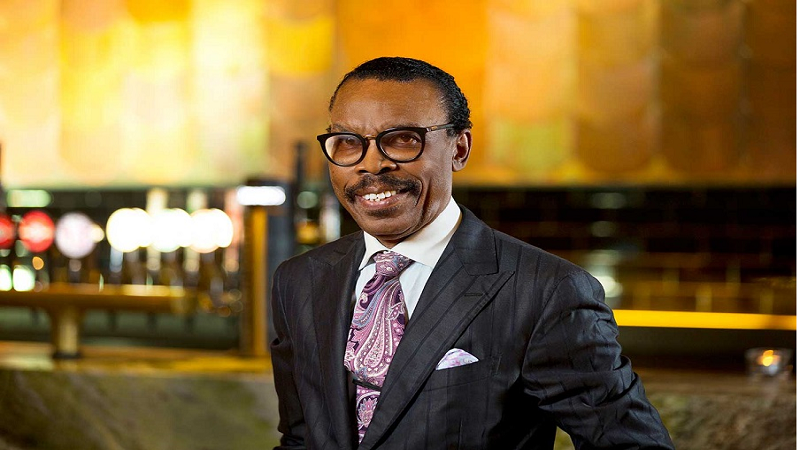
The Managing Director of Financial Derivatives Company Limited, Bismarck Rewane, has projected that Nigeria’s plan to concession major highways in deplorable condition and introduce tolls will significantly lower inflation, boost productivity, and strengthen the naira.

Speaking on Channels Television’s Business Morning show on Monday, Rewane explained that the initiative, which follows a Public-Private Partnership (PPP) model, is designed to ease transportation costs, improve market access for goods, and curb the growing insecurity on highways.

Rewane, a member of the Federal Government’s Highway Development and Management Initiative (HDMI), emphasized that the concession model is the government’s attempt to step aside and allow private sector investment in road development.

“This initiative is the government’s way of getting out of the way so that the private sector can put money into road development,” he said.

Nigeria’s Economic Struggles and Inflation Woes

The proposal comes at a time when Nigerians are grappling with severe economic challenges. Inflation remains at record highs, food prices have skyrocketed, and the cost of living has become unbearable for millions. The removal of fuel subsidies, the sharp depreciation of the naira, and a struggling job market have left citizens with little financial relief.

Rewane linked Nigeria’s persistent inflation to poor road infrastructure, stating that inefficiencies in transportation lead to higher costs for goods, widespread post-harvest losses, and ultimately, price hikes.

“Inflation is defined as the persistent increase in prices due to low productivity and an increase in money supply. While the money supply can be controlled using the Monetary Policy Rate (MPR) and the Central Bank, the real issue is productivity. When goods are produced but cannot reach the market due to bad roads, we experience high transportation costs, food wastage, and price hikes,” he said.

He further explained that rural inflation is currently higher than urban inflation in Nigeria, a situation largely attributed to transportation inefficiencies.

“So, we have these three major factors—bad roads, post-harvest losses, and high petrol prices—all contributing to inflation. But when inflation reduces, the exchange rate begins to strengthen. There is a strong correlation between inflation and currency volatility—the higher your inflation rate, the weaker your currency,” he explained.

The Road Concession Model

Under the concession model, private investors will be granted 25-year agreements to build and maintain specific highways while collecting tolls. A percentage of the toll revenue will be remitted to the Federal Government and, in some cases, state governments.

“When you concession the road to an investor who spends maybe N100 billion or N200 billion, guards it with drone technology, installs central reservations, and secures it with high barriers, the risk of kidnapping will drop significantly,” Rewane said.

He added that well-maintained roads will enhance efficiency, reduce transportation costs, and ultimately lower the price of goods.

“The cost of transportation reduces sharply, and this is coinciding with the reduction in petrol prices. Goods will get to their destinations faster. The records are there, and the evidence is clear—because I can get to my location faster, I would rather pay N1,000 or N500 for tolls if it saves me time,” he said.

Providing an example, he noted that the travel time between Benin and Asaba, which currently takes three to four hours due to poor road conditions, would be reduced to just 45 minutes under the concession model.

Nigerians Push Back Against Additional Burdens

However, his optimism has not been received lightly by Nigerians, many of whom argue that the proposed road tolls and potential additional levies will only worsen their already dire economic situation.

Many have taken to social media and public forums to criticize the plan, arguing that any initiative that requires them to pay more while the government fails to cut its extravagant spending is unacceptable.

For years, Nigerians have called for a reduction in the cost of governance, pointing out the massive salaries and allowances paid to political officeholders, as well as the continued wastefulness in government expenditures. The response to the proposed tolls has reinforced the growing frustration that the government continues to take from the people without making sacrifices of its own.

“The government wants to collect more money from people to reduce inflation. Will it work? I doubt it. This method will impact lower-income households more heavily,” a social commenter said.

Others have noted that introducing tolls on highways could further increase transportation costs rather than reduce them, as private investors will prioritize profit.

Government’s Financial Struggles and the Need for Private Investment

The federal government has long struggled with a funding shortfall for infrastructure projects, with Nigeria’s debt burden and budget deficits limiting its ability to maintain critical road networks. The highway concession plan is seen as a way to shift this financial burden to the private sector.

Rewane argued that the initiative will ultimately benefit the government and the economy.

“The government won’t have to spend billions annually on road repairs. When a road is well-built and well-maintained, you will enjoy greater efficiency and lower costs,” he stated.

However, analysts warn that without proper oversight, the concession model could lead to excessive toll charges, poor road maintenance in the long run, and further disenfranchisement of ordinary Nigerians who already struggle with high costs.

The Larger Debate: Economic Reforms vs. Public Welfare

The backlash against the road concession plan reflects a broader discontent with the government’s approach to economic management. Nigerians have watched as multiple reforms—ranging from subsidy removal to currency devaluation—have placed more financial strain on them, with little relief. Many now believe that any policy that involves taking more from the people without addressing government excesses is unjustifiable.

Popular opinion now holds that while Nigeria needs better infrastructure, the government must first prove its commitment to fiscal responsibility by cutting the high cost of governance before asking citizens to bear additional financial burdens.

Nigerian Insurance Sector Poised for Transformation With N600bn Capital Injection as Reform Bill Nears Passage – Agusto & Co

0

The Nigerian insurance industry is set to undergo a transformative phase, with insurers projected to inject approximately N600 billion in fresh capital to meet evolving regulatory requirements.

This is according to the 2025 Nigerian Insurance Industry Report, released by Agusto & Co., which predicts that the impending Nigeria Insurance Reform Bill will fast-track the sector’s transition to a risk-based capital framework, ultimately strengthening underwriting capacity and financial resilience.

The anticipated capital raise is driven by the planned overhaul of the industry’s regulatory framework, which is expected to introduce higher minimum capital requirements across various business segments. The reform, which has been in the pipeline for over a decade, is now expected to be signed into law before the end of 2025, compelling insurance firms to bolster their financial base in compliance with the new capital thresholds.

The Shift to Risk-Based Capital and Industry Capitalization

The Nigeria Insurance Reform Bill is expected to usher in a more structured approach to capital adequacy, with insurers required to hold capital in line with the specific risks they underwrite. The bill will replace the existing flat capital requirement structure, which has long been criticized for failing to account for differences in insurers’ risk exposures. The framework is expected to reduce systemic vulnerabilities and improve the industry’s ability to absorb shocks, by aligning capital requirements with risk levels.

Agusto & Co. estimates that the transition will necessitate a N600 billion capital injection across the industry, as insurers scramble to meet the new capital benchmarks. While the recapitalization process will be phased over time, a surge in capital-raising activities is expected in 2025, with firms seeking to position themselves for compliance ahead of regulatory deadlines.

In its report, Agusto & Co. stated: “The Nigeria Insurance Reform Bill, which seeks to overhaul the industry’s regulatory framework, is expected to be passed into law before 31 December 2025. We believe the bill would compel the National Insurance Commission (NAICOM) to fast-track the transition to a risk-based capital regime (initiated over a decade ago).

“This legislation would significantly impact the industry’s capitalization, given the planned increase in the minimum capital requirement across business segments. We anticipate a capital injection of circa N600 billion as insurers move to comply with the new thresholds, leading to enhanced underwriting capacity and greater risk retention.”

The report further highlighted that the shift to risk-based capital will reshape underwriting practices, encouraging insurers to adopt more robust risk assessment strategies to optimize profitability. This is expected to drive innovation, particularly in the adoption of technology-driven solutions aimed at improving penetration and efficiency.

Short-Term Challenges Amid Lower FX Gains

While a larger capital base is expected to enhance long-term profitability, the industry is likely to face short-term challenges, particularly as foreign currency revaluation gains—which have significantly boosted earnings in recent years—are projected to decline.

Over the past two years, insurance companies benefited from the depreciation of the naira, which inflated the value of dollar-denominated assets, leading to substantial FX revaluation gains. In FY 2023 and FY 2024, these gains accounted for approximately 50% of total investment income, significantly bolstering insurers’ bottom lines.

However, with the naira expected to stabilize following recent foreign exchange market reforms, these gains will likely diminish. This could lead to a lower return on equity (ROE) for insurers, with Agusto & Co. projecting a decline to 22.8% in 2025, compared to previous years.

The report noted: “We expect the enlarged portfolio, with the potential to support profitability, to stimulate more efficient investment portfolio management. However, the expected stability of the exchange rate would moderate the foreign currency revaluation gains, which have bloated investment income and accounted for circa 50% of earnings in FY 2023 and FY 2024.

“The anticipated decline in asset yield—as the rebased Consumer Price Index (CPI) reflects disinflation—would also moderate investment income. Thus, we foresee a 957-basis-point decline in the return on average investment, as the impact of moderated investment income is amplified by the enlarged portfolio.”

Profitability Outlook and Industry Adjustments

With the decline in FX revaluation gains, the industry’s profitability is expected to weaken in the near term. Agusto & Co. predicts that post-tax return on average equity (ROE) will drop to 22.8% in 2025, marking a retreat from the recent profit windfalls.

However, the report argues that sustainable profit growth—excluding the volatile FX gains—will likely maintain an upward trajectory. This will be supported by:

  1. Stricter enforcement of compulsory insurance policies, which could expand premium income.
  2. More efficient product distribution, leveraging digital channels to improve penetration.
  3. An enlarged capital base, allowing insurers to retain more risk and reduce reliance on reinsurance.

As firms adapt to the new regulatory environment, the insurance sector’s profitability mix is expected to shift, with investment income playing a less dominant role, while underwriting profits become more central to earnings.