DD
MM
YYYY

PAGES

DD
MM
YYYY

spot_img

PAGES

Home Blog Page 1522

SpacePay Is Making It Easy to Pay With Crypto and Bitcoin – Even for Your Morning Coffee

0

Many people are hesitant to collect crypto and Bitcoin as payment due to various concerns surrounding it. Primarily, the majority of crypto users worldwide are digitally savvy individuals.

In contrast, many small shop retailers prefer cash or traditional fiat transfers. Their lack of trust in crypto payments stems from a limited understanding of how they work, leading some to even perceive them as a scam.

But that’s exactly the problem SpacePay is solving.

SpacePay Is Making Crypto Simple for Everyone

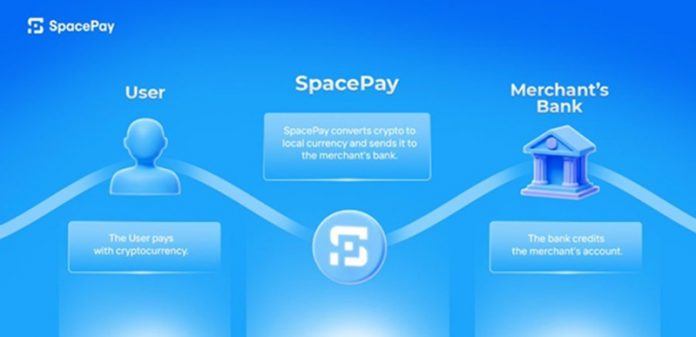
SpacePay is changing the way people view and use cryptocurrency for real-world payments. Its platform is designed to work with what people and businesses already have. That means you don’t need to buy new devices or learn how to manage complex crypto wallets. With SpacePay, anyone can use crypto the way they use traditional money—quickly and easily.

For example, a small bakery with a standard Android point-of-sale machine can start accepting crypto payments just by installing the SpacePay APK. No special training needed. The customer walks in, scans a QR code, and they get to pay with a few taps on their phone.

The system is also fully decentralized. Every user keeps control of their private keys and funds, which removes the need to trust third parties. You’re paying directly from your own wallet, securely and instantly.

What Makes SpacePay Stand Out?

SpacePay is a complete payment infrastructure built for the crypto era. It supports over 325 wallets; including MetaMask, Trust Wallet, Coinbase Wallet, and even Ledger Nano devices.

That means millions of users can use SpacePay without needing to migrate or learn a new app.
Its infrastructure is scalable. This allows it to handle high volumes of transactions without slowing down or becoming unstable. For businesses, this is a huge plus—it’s designed to support global usage, not just a handful of test cases.

Another powerful feature is the low fees. Merchants pay just 0.5% per transaction. There are no hidden costs, and settlements are instant. In contrast, many traditional credit card systems can charge up to 3% in processing fees and take days to settle.

And then there’s volatility protection. A common fear among merchants is that a coin’s value might drop right after a sale. SpacePay eliminates that risk. When a customer pays in crypto, the merchant still receives the exact fiat value they were expecting—no surprises, no losses.

https://x.com/SpacePayLtd/status/1904585699447226631

A Real-World Example

Let’s say Anna runs a small clothing shop in Barcelona. She’s curious about accepting crypto payments, but she’s not into tech and doesn’t want to deal with price swings. That’s where SpacePay comes in. She just downloads the app on her current device—no new hardware or complicated setup.

Now, when a tourist wants to pay with Ethereum, Anna still gets euros, instantly. She doesn’t have to worry about the crypto price going up or down. She keeps running her business the same way, SpacePay handles the rest.

On the other side, there’s Sam, a traveler who likes to spend crypto instead of exchanging it into local money. He uses Trust Wallet and keeps his funds in USDT. When he walks into Anna’s store, he just scans a QR code and pays in seconds. It’s quick, secure, and easy, for both of them.

The SPY Token and Why It Matters

The SPY token is the native currency of the ecosystem. It is the currency that powers the platform and rewards its users.

Holding SPY tokens comes with multiple benefits:

  • Loyalty airdrops: Active users who make regular transactions using SpacePay are rewarded with monthly airdrops.
  • Voting power: Token holders get to vote on important platform decisions and proposals. They have the chance to shape the future of SpacePay.
  • Early access to features: Get in before the rest. SPY holders often gain exclusive access to new tools, features, and updates.
  • Revenue sharing: SpacePay will share a portion of its revenue with SPY holders, turning the token into a potential source of passive income.
  • Social good: SPY holders can direct charitable donations and have their contributions matched by the platform.
  • Quarterly webinars: Stay in the loop with direct insights from the SpacePay team via exclusive token holder webinars.

How to Join the SPY Presale

Getting in early could position you for major benefits in what looks like the future of finance.
The SPY token is currently in its presale phase, and interest is growing fast. Over $1,000,000 has already been raised. The SPY token is also priced at $0.003181. It will continue to rise as the presale progresses.

Here’s how to join the presale: create a decentralized wallet like MetaMask or Trust Wallet. Go to the official SpacePay presale site and connect your wallet using the widget at the top.

You can buy SPY using ETH, BNB, MATIC, AVAX, BASE, USDT, or USDC. Make sure you have some crypto ready in your wallet or use your bank card via the platform.

Choose how much you want to invest, swap your crypto for SPY, and approve the transaction. That’s it—you’re in.


JOIN THE SPACEPAY (SPY) PRESALE NOW

     Website    |    (X) Twitter    |  Telegram

BlockDAG Cuts Entry Price to $0.0025 For Limited Time Ahead of Key Update, as Celestia (TIA) Lags & Fartcoin Surge Takes Over

0

Celestia (TIA) has been drifting in a tight range, weighed down by bearish pressure and waiting on a clear move. While it holds steady, attention has shifted to more active players, like Fartcoin. The recent Fartcoin surge pushed it past Bonk, landing it in the number two spot among Solana meme tokens after a sharp 21% jump.

But the real deal right now is BlockDAG. It’s offering BDAG at just $0.0025, a steep drop from its upcoming $0.05 launch price, and it’s not expected to stay there long. A major announcement is just 7 days away, and while nobody knows exactly what’s coming, talk of a mainnet launch or big exchange listings has the community watching closely.

Bearish Sentiment Keeps Celestia (TIA) in Check

Celestia (TIA) has spent the past month under notable bearish influence, sliding by over 25% and deepening a six-month loss of nearly 58%. Despite a minor 1.36% uptick this past week, the token remains confined within a narrow range of $2.31 to $4.17. Resistance is currently set at $5.28, while support sits at $1.55, framing the boundaries of this sideways movement.

Market signals remain cautious, with a negative oscillator and a relative strength index at 43.82 suggesting a lack of upward momentum. For now, Celestia (TIA) reflects a market in waiting, watching for a clearer directional shift.

Fartcoin Surge Lifts Market Cap to $1.08 Billion

The recent Fartcoin surge has elevated the meme token’s market cap to $1.08 billion, overtaking Bonk and making it the second-largest meme coin on the Solana network. This climb comes after a 21% price jump in just 24 hours, driven partly by high-volume purchases totaling over $5.5 million.

Fartcoin had previously dropped to $217 million during March’s broader market slump but has since recovered by nearly 389%. Technical indicators now suggest that while the Fartcoin surge has been strong, momentum may be cooling, with the RSI nearing overbought territory and analysts watching the $0.74 support level closely.

BDAG Coin Discounted to $0.0025 as BlockDAG Teases Big Reveal in 7 Days

The BlockDAG presale is approaching its end, and right now, it’s offering one of the lowest entry points in its entire run. BDAG is priced at just $0.0025, which is a sharp rollback from its current presale value of $0.0248 in batch 27, and far below the $0.05 launch price already set.

This limited drop isn’t random. It’s part of a final push in a presale that’s already considered the largest and fastest in crypto. Since it began, BDAG has climbed 2,380%, with more than 19.3 billion coins sold and over $216.7 million raised. The pace hasn’t slowed, and with the presale conclusion soon, interest continues to build.

There’s also a clock ticking on something bigger. A major BlockDAG announcement is expected in 7 days, and speculation is running high. Some expect a mainnet launch date, others are betting on centralised exchange listings, while a few point to potential partnerships or global events. While the exact reveal remains unknown, the timing and momentum behind this update suggest it could directly impact BDAG’s market presence and its price.

BlockDAG is shaping up to be the next big crypto, not just because of its presale numbers, but due to the broader ecosystem it’s building. Analysts predict a $1 BDAG price in 2025, and this is not a random speculation; it’s tied to measurable traction and steady infrastructure progress.

At $0.0025, the coin is trading at a fraction of that target. However, as the project continues hitting milestones and the presale enters its final stretch, the opportunity to secure BDAG at this level looks increasingly limited.

Closing Outlook on Celestia, Fartcoin, and BlockDAG

Celestia (TIA) continues to drift within range, and unless it breaks above resistance, traders may stay on the sidelines. Shifting to meme coins, the Fartcoin surge made headlines, but momentum indicators suggest that excitement could be short-lived.

In contrast to both, BlockDAG is approaching a critical moment. Presale numbers are climbing, the clock is ticking, and the $0.0025 offer stands in sharp contrast to its $0.05 launch price.

All eyes are on the upcoming announcement, and speculation is only fueling more demand. With growing traction and bold targets ahead, BlockDAG is making a strong case as the next big crypto, and this presale window will not open again.

Presale: https://purchase.blockdag.network

Website: https://blockdag.network

Telegram: https://t.me/blockDAGnetworkOfficial

Discord: https://discord.gg/Q7BxghMVyu

SUI Surges to 13th Most Traded Token by Market Capitalization

0

The Sui ecosystem has seen significant growth, with its native token SUI climbing to the 13th spot by market capitalization, currently valued at around $9.88 billion. SUI’s price has surged to $2.93, reflecting a 26% increase in a single day, driven by high trading volumes and growing investor interest. The ecosystem’s total market cap exceeds $15.79 billion, with SUI accounting for roughly 90.5% of it. Sui Name Service (NS) up 34.7% in 24 hours, with a market cap of $35.32 million and a price of $0.20.

DEEP (Sui Orderbook) soared 75% daily, reaching a fully diluted valuation (FDV) over $2 billion. WAL (Depin on Sui) gained 12%, with an FDV of $2.45 billion. Other tokens like LOFI, BLUB, AAA, AXOL, SIZU, and UICIDE have also posted strong gains, fueled by meme coin activity and DeFi engagement. Sui’s blockchain has risen to the 5th spot in decentralized exchange (DEX) volume, hitting $2.1 billion over the past week, surpassing Arbitrum. Its total value locked (TVL) stands at $2.33 billion, ranking 9th among blockchains. The ecosystem’s growth is supported by its low-latency, horizontally scalable architecture and the Move programming language, enabling high-throughput applications like gaming and DeFi.

Posts on X highlight bullish sentiment, with comparisons to Solana’s past rallies, though some note the need for stronger trend confirmation to sustain momentum. This performance reflects Sui’s rising prominence, but volatility and market dynamics warrant caution, as meme-driven surges may not guarantee long-term stability. The outperformance of Sui ecosystem tokens and SUI’s rise to the top 13 by market cap carry several implications for investors, developers, and the broader blockchain space

SUI’s 26% daily surge and the ecosystem’s $15.79 billion market cap signal strong investor confidence, potentially attracting more capital. Tokens like DEEP (up 75%) and NS (up 34.7%) highlight speculative opportunities, especially in meme coins and DeFi. Meme-driven rallies and high daily gains suggest short-term volatility. Investors may face sharp corrections if sentiment shifts or if broader market conditions falter, as seen in past crypto cycles.

The ecosystem’s breadth—spanning DeFi, gaming, and infrastructure tokens—offers portfolio diversification, but low liquidity in smaller tokens increases risk. Sui’s $2.1 billion weekly DEX volume and $2.33 billion TVL (9th among blockchains) indicate robust DeFi adoption. This could draw more developers and projects, reinforcing Sui’s position as a scalable layer-1 blockchain.

Sui’s low-latency architecture and Move language are well-suited for high-throughput applications like gaming and NFTs, potentially capturing market share from competitors like Solana. Rising TVL and trading volume could create a virtuous cycle, attracting more users and developers, further boosting token valuations. Surpassing Arbitrum in DEX volume and nearing top-tier blockchains in TVL positions Sui as a credible rival to Solana, Avalanche, and others. Its scalability could erode competitors’ market share if adoption continues.

X posts likening Sui’s rally to Solana’s past performance suggest it could follow a similar trajectory, but Sui must differentiate through unique use cases or superior technology to avoid being overshadowed. A booming ecosystem with rising token prices incentivizes developers to build on Sui, potentially accelerating innovation in DeFi, gaming, and decentralized infrastructure.

Projects must prioritize fundamentals over meme-driven hype to ensure long-term viability. Overreliance on speculative trading could deter serious developers if bubbles burst. The rally reflects broader crypto market optimism, possibly tied to favorable macro conditions or renewed retail interest. However, sustaining momentum requires consistent ecosystem growth and real-world adoption.

Rapid price surges and meme coin activity may signal speculative excess, potentially leading to a pullback if fundamentals don’t keep pace. High-profile growth may attract regulatory attention, especially for DeFi and meme tokens, which could face stricter oversight in jurisdictions like the U.S. or EU. Increased activity heightens the risk of exploits or scams, particularly in newer projects. Sui’s Move language aims to reduce vulnerabilities, but ecosystem-wide diligence is critical.

Sui’s rise offers significant opportunities for investors and developers but comes with risks tied to volatility, speculative hype, and regulatory uncertainty. Its ability to sustain growth depends on deepening adoption, delivering on technical promises, and navigating competitive and macro challenges. Monitoring TVL, DEX volume, and developer activity will be key to assessing long-term potential.

Fantasy Top Announces a New Feature, “Clout”, on X

0

Fantasy Top, a gamified social finance (SocialFi) platform focused on crypto influencers, recently announced updates including the introduction of the “Clout” feature and changes to its seasonal structure. Clout is a new metric designed to reflect a user’s impact in crypto-related conversations on X. It allows active players to earn their way to becoming a “hero” (a high-value card in the game), while also replacing underperforming heroes.

The feature aims to democratize hero status, rewarding engagement and activity rather than limiting it to a select few. However, some users note it still favors the top 0.1% of active X users, suggesting it may not be as inclusive as promoted. Clout rewards points for X activity, similar to systems like KaitoAI. The algorithm has been adjusted to score proportionally based on account size, giving smaller accounts a fairer chance to compete. Exact details on how Clout is calculated remain undisclosed.

Clout introduces predictability to hero selection, automatically rotating top performers into hero status every season (approximately 4 weeks). It also facilitates the removal of inactive heroes, enhancing the platform’s dynamism. Fantasy Top operates on a seasonal model, with each season lasting roughly 4 weeks. The new updates allow for automatic hero rotation based on Clout performance, ensuring fresh content and engagement.

The platform has scrapped its ELO and Stars systems, likely to streamline gameplay and focus on Clout as the primary metric for performance and rewards. Updates include changes to weekly reward distributions, though specific details were not elaborated in the posts. The changes have sparked mixed reactions. Some users are excited about the viral potential and opportunities to “farm” Clout, while others feel the “everyone can be a hero” narrative was overhyped, as the system still rewards already influential accounts.

Fantasy Top is a fantasy sports-style game where users collect and trade cards representing crypto influencers (“heroes”) on the Blast blockchain. It has gained significant traction, with over $30 million in deposits before its full launch in 2024. Posts on X highlight the platform’s viral growth and the excitement around Clout, but also skepticism about its accessibility and fairness. Users are encouraged to join early to claim Clout points and participate in the evolving ecosystem.

The lack of detailed mechanics for Clout raises questions about transparency. The platform’s focus on X activity could favor users with large followings, potentially skewing rewards despite the proportional scoring adjustment.
Without official documentation, the full scope of seasonal changes and their impact on gameplay remains unclear.

The Clout algorithm used by Fantasy Top is a points-based system designed to measure a user’s influence and engagement in crypto-related conversations on X, determining who becomes a “hero” (a high-value card) in the Fantasy Top game. While the exact mechanics of the algorithm are not fully disclosed, the following explanation is based on available information from X posts and related sources, providing a clear and concise overview of how it works.

Clout quantifies a user’s activity and impact in crypto discussions on X. It determines the top 15 users who become heroes each season (approximately 4 weeks) and identifies the bottom 15 heroes for replacement, ensuring dynamic rotatio. Users earn Clout points by participating in crypto-related conversations on X.

Points are awarded based on quality and virality of posts, emphasizing meaningful engagement over mere volume. The algorithm adjusts scores to account for account size, giving smaller accounts a fair chance to compete with larger, more influential ones. This proportionality aims to democratize hero status, though some users argue it still favors highly active or established accounts.

Clout likely evaluates metrics such as, Post frequency and regular activity in crypto discussions. Likes, reposts, replies, and quote posts on crypto-related content. How widely a post spreads, reflecting its impact. Focus on crypto-specific topics to ensure alignment with Fantasy Top’s theme. The system is described as similar to KaitoAI’s Yaps, which scores based on writing posts and engaging with others, suggesting a comparable engagement-driven model.

At the end of each season, the top 15 Clout earners are selected as new heroes, while the bottom 15 existing heroes are replaced. This automated rotation ensures the game remains fresh and rewards consistent performers. Users post crypto-related content, engage with others’ posts, and build their Clout score. For example, insightful posts or viral threads about crypto trends could yield higher points. The algorithm ranks users by Clout score at the season’s end. The top 15 become heroes, featured as tradable cards in Fantasy Top.

By scaling scores relative to account size, a smaller account with high engagement can theoretically outrank a larger but less active one. The exact weighting of metrics (e.g., how much a like vs. a repost contributes) is not public, leading to some user skepticism about fairness. The Clout algorithm resembles KaitoAI’s Yaps, which rewards users for posting and engaging on X, but is tailored specifically to crypto content.

Unlike traditional fantasy sports algorithms (e.g., Fantasy Premier League’s points based on player stats), Clout focuses on social media influence rather than on-field performance. The algorithm’s specifics are not fully disclosed, making it hard for users to optimize their strategies. Despite proportional scoring, some argue that top Clout earners are often already influential, limiting accessibility for average users.

The system may encourage spammy or low-quality posts to boost engagement, though the emphasis on “quality and virality” aims to mitigate this. Information is primarily sourced from X posts, which may include speculative or incomplete details. Without official documentation, the algorithm’s inner workings remain partially opaque, and user perceptions on X may not fully reflect reality. The system’s fairness depends on how effectively the proportional scoring balances account size disparities, which is unverified without data.

The Clout algorithm is a dynamic system that rewards crypto-related engagement on X, aiming to make hero status accessible while maintaining a competitive edge. It evaluates posts and interactions, adjusts for account size, and refreshes the hero roster seasonally. However, its lack of transparency and potential bias toward influential accounts are points of contention. For users, focusing on high-quality, crypto-focused content and consistent engagement is the best way to maximize Clout points.

Digital Credit: Transforming Financial Inclusion in Low And Middle-Income Countries

0

Digital credit has continued to surge in the past years, significantly transforming financial inclusion. Digital credit generally refers to small and short-term loans that can be accessed instantly, automatically, and remotely, offering borrowers access to funds without a formal credit history.

This form of credit has revolutionized financial access in low and middle-income countries (LMICs), such as Côte d’Ivoire, Ghana, Nigeria, and Kenya, amongst others.

In regions like Sub-Saharan Africa, where only 48% of adults have bank accounts, digital credit platforms like Kenya’s M-Pesa, provide loans to individuals excluded from traditional banking. Many previously unbanked individuals have quick access to credit. This has enabled individuals and small businesses to manage daily expenses and cope with emergencies.

M-Pesa’s digital credit products like M-Shwari, and Fuliza have disbursed billions of dollars in loans since 2012, with millions of users accessing credit for daily needs. In India, fintechs like Paytm and PhonePe offer instant microloans, providing credit access for millions.

Borrowers experienced with digital credit have reported greater financial confidence, as many have maintained their savings while dealing with both planned and unexpected expenses. The rapid growth of digital credit shows its potential to significantly boost financial inclusion, when provided responsibly.

However, while the enormous demand for digital credit shows that millions of consumers need sources of easy liquidity, and though financial access is viewed as a crucial component of economic development, easy access to digital credit presents several risks. Consumers are often drawn to apply for multiple, easy-to-access loans from various providers, facing hidden fees and high interest rates that can compound their financial burdens.

Many consumers are not aware of the loan terms and many end up repaying late, thus incurring fees or defaulting which affects their future ability to borrow. High rates of default in some countries, such as Kenya (86%) and Tanzania (70%), as reported in the GSMA 2024 report, have led to a rise in over-indebtedness.

Notably, aggressive marketing tactics used by lenders and a lack of transparency have worsened these risks, leading many borrowers to accumulate debts. Without proper safeguards, digital credit can push vulnerable consumers into financial instability rather than lifting them out.

Across the globe, Mobile Money providers are increasingly aware of the risks of over-indebtedness and are being proactive in mitigating the impacts. Some regulators have adopted a proactive stance on championing financial literacy. Pakistan is reported to have seen remarkable progress, with nationwide financial literacy camps offered by the State Bank of Pakistan during Financial Literacy Week in March 2024.

Also, in October 2024, the Central Bank of Nigeria announced its intention to add financial literacy to school curricula, with a focus on the importance of earning, saving, and investing from an early age. Collectively, these initiatives are important steps towards tackling the growing issue of over-indebtedness in emerging markets. They focus on educating customers about responsible financial behavior and closely involve regulators to ensure proper consumer protection.

By creating a responsible lending environment, mobile money services are contributing to more sustainable financial inclusion even in underserved areas. While concerns about over-indebtedness may persist, a pragmatic, data-driven approach to digital credit is essential. However, the benefits of financial inclusion via responsible digital credit outweigh the risks of over-indebtedness, so smart regulation should be balanced with consumer protection.

However, a major regulatory gap for MMPs is the lack of open data policies. This can lead to data asymmetry, making it impossible to assess the creditworthiness of a customer who does not have a history with a specific MMP. Even in countries with strong credit reference agencies, obtaining information quickly and in full can be challenging.

Conclusion

Digital credit has continued to revolutionize financial access in LMICs by providing rapid, inclusive, and flexible lending solutions to millions previously excluded from formal financial systems. It supports economic empowerment, resilience, and entrepreneurship but requires careful regulation to mitigate risks like over-indebtedness and privacy violations.

With ongoing innovations and stronger consumer protections, digital credit can further bridge the financial inclusion gap, driving sustainable development in LMICs.