DD
MM
YYYY

PAGES

DD
MM
YYYY

spot_img

PAGES

Home Blog Page 1523

Exploring the Impacts of Raydium’s LaunchLab on Memecoins

0

Raydium, a prominent decentralized exchange (DEX) on the Solana blockchain, has announced the launch of LaunchLab, a token launchpad designed to compete with platforms like Pump.fun. LaunchLab is positioned as a Pump.fun-style platform, aiming to facilitate meme coin and token creation on Solana. It introduces features such as customizable bonding curves (linear, exponential, and logarithmic) to give creators more control over pricing and tokenomics, support for multiple quote tokens beyond just SOL, and integration with Raydium’s existing automated market maker (AMM) infrastructure.

This move comes as a strategic response to Pump.fun’s recent developments, particularly its launch of PumpSwap, a native DEX that reduces reliance on Raydium’s liquidity pools by offering fee-free token migrations and a creator revenue-sharing model. With LaunchLab, Raydium seeks to maintain its relevance in the Solana ecosystem and capture a share of the meme coin launch market. A bonding curve is a mathematical formula used in decentralized finance (DeFi) and token economics to determine the price of a token based on its supply. It creates a relationship between a token’s supply and its price, typically designed to incentivize early adopters and regulate token issuance in a predictable way.

Bonding curves are often used in token launchpads, like Raydium’s LaunchLab, to automate pricing during a token sale or creation process. As more tokens are minted or bought, the total supply increases, and the bonding curve dictates that the price per token rises. This rewards early participants who buy in when supply is low and prices are cheaper, while later buyers pay more as the token becomes scarcer or more popular. Bonding curves can take different forms, depending on the project’s goals: The price increases steadily with each token minted (e.g., price = supply × constant). Simple and predictable.

The price rises more sharply as supply grows (e.g., price = supply² × constant), making tokens increasingly expensive and favoring early buyers even more. The price increases more slowly as supply grows, keeping tokens relatively affordable for longer. In many systems, bonding curves also allow selling back tokens to the curve. When tokens are sold, the supply decreases, and the price drops according to the same curve, providing liquidity without needing a traditional market. Imagine a linear bonding curve where the price of a token is $0.01 per unit of supply: If 100 tokens exist, the next token costs $1.00. If 1,000 tokens exist, the next token costs $10.00. With an exponential curve, the price might jump to $100 at 1,000 tokens, depending on the formula.

Why Use Bonding Curves?

No need for manual pricing or order books; the curve sets the price dynamically. Early supporters get lower prices, while latecomers fund the project at higher rates. Tokens can be bought or sold directly through the curve, reducing reliance on external exchanges. Raydium’s LaunchLab, offering customizable bonding curves (linear, exponential, logarithmic) lets token creators tailor the pricing model to their project’s needs—whether they want a gradual rollout or a rapid price spike to build hype. It’s a powerful tool for meme coins and experimental tokens, aligning with the fast-paced, speculative nature of platforms like Pump.fun.

LaunchLab could drive more token launches on Solana, boosting network usage, transaction volume, and fees. This aligns with Solana’s reputation as a high-speed, low-cost blockchain, especially for meme coins and speculative projects. By rivaling Pump.fun, which has dominated Solana’s meme coin launch scene, LaunchLab might split the market. This could either fragment liquidity or push both platforms to innovate, benefiting users with better features and lower costs. Integrating LaunchLab with Raydium’s AMM gives it an edge, potentially reducing outflows to Pump.fun’s PumpSwap and keeping liquidity within Raydium’s ecosystem.

Integrating LaunchLab with Raydium’s AMM gives it an edge, potentially reducing outflows to Pump.fun’s PumpSwap and keeping liquidity within Raydium’s ecosystem. Customizable bonding curves (linear, exponential, logarithmic) and multiple quote tokens (beyond just SOL) give creators more control over pricing, tokenomics, and fundraising strategies. For example, an exponential curve could create rapid hype for a meme coin, while a linear curve might suit a more stable project.

A Pump.fun-style platform simplifies token creation, making it accessible to non-technical creators. This could flood Solana with new tokens, especially meme coins, amplifying the “casino” culture already prevalent in the ecosystem. If LaunchLab includes a revenue-sharing model (like Pump.fun’s), creators could earn from trading fees or token sales, incentivizing more projects to launch.
Peirce’s Push to let NFTs Raise Capital could Inspire a U.S. Framework

0

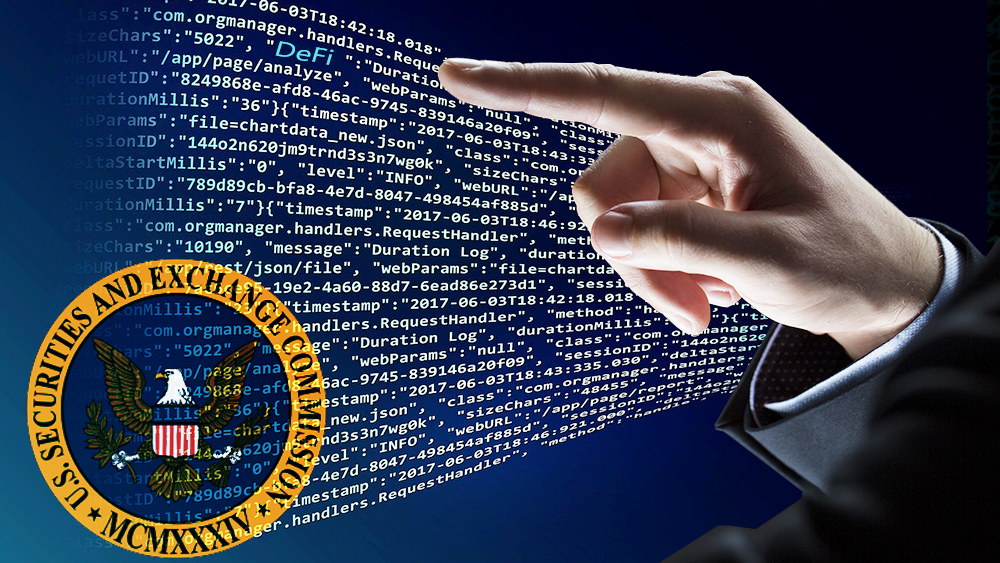
The SEC’s Crypto Task Force, led by Commissioner Hester Peirce, held its inaugural roundtable titled “How We Got Here and How We Get Out – Defining Security Status” at the SEC headquarters in Washington, D.C. During this event, Peirce expressed support for allowing non-fungible tokens (NFTs) to be used as a means of raising capital. This stance marks a significant shift in the SEC’s approach to NFTs, suggesting they could be exempted from traditional securities regulations under certain conditions. Peirce’s comments align with her broader goal of fostering a regulatory framework that provides clarity and encourages innovation in the crypto space, contrasting with the more enforcement-heavy approach of the previous administration.

The roundtable, part of a series aimed at engaging with the public and industry experts, reflects the Task Force’s efforts to redefine the regulatory treatment of digital assets, including exploring how NFTs could serve as a legitimate fundraising tool for crypto startups without being classified as securities. NFT (non-fungible token) regulations are a complex and evolving area, primarily because NFTs sit at the intersection of digital assets, intellectual property, and financial law. There’s no unified global framework for NFT regulation, so the rules depend heavily on jurisdiction, the nature of the NFT, and how it’s used.

In the U.S., the Securities and Exchange Commission (SEC) plays a key role in determining whether NFTs fall under securities laws. Historically, the SEC has applied the Howey Test to assess if an asset is a security: if it involves (1) an investment of money, (2) in a common enterprise, (3) with an expectation of profits, (4) derived from the efforts of others, it’s likely a security requiring registration or an exemption. Many NFTs—especially those tied to art, collectibles, or gaming—don’t meet this definition because they’re unique and not inherently investment vehicles. However, fractionalized NFTs (where ownership is split into tradable shares) or NFTs marketed with promises of future value increases have faced scrutiny as potential securities.

Commissioner Hester Peirce’s statement, during the SEC Crypto Task Force roundtable, signals a shift. She advocated for NFTs to be used to raise capital, suggesting they could be structured in ways that avoid securities classification—perhaps as utility tokens or crowdfunding tools—while still offering regulatory clarity. This isn’t law yet, but it hints at a future where NFTs might get a safe harbor, similar to what Peirce has proposed for other crypto assets. The SEC’s focus seems to be moving toward distinguishing between speculative investment NFTs and those with practical utility, like representing ownership of real-world assets or access to services.

The IRS treats NFTs as property, meaning sales trigger capital gains taxes. Creators may also owe income tax on initial sales or royalties. Platforms trading NFTs may need to comply with the Bank Secrecy Act if they’re deemed money transmitters, especially with high-value transactions. The U.S. Copyright Office has flagged that owning an NFT doesn’t automatically grant copyright to the underlying asset unless explicitly stated, leading to legal disputes over usage rights. The EU’s Markets in Crypto-Assets (MiCA) regulation, fully in effect by late 2024, covers some NFTs but excludes those deemed “unique and not fungible” from its scope.

This means one-off art NFTs are largely unregulated but fractionalized or mass-issued NFTs (like a series with financial perks) might be classified as crypto-assets, requiring issuers to publish whitepapers and comply with AML rules. The EU focuses on consumer protection and market integrity, so NFT platforms must also adhere to GDPR for user data and ensure transparency in transactions. The UK considers NFTs on a case-by-case basis. If they resemble investment products, they fall under the Financial Conduct Authority’s purview. Otherwise, they’re treated as digital collectibles with minimal regulation.

Countries like Japan view NFTs as virtual assets under the Payment Services Act, requiring exchanges to register, while China has banned crypto trading but allows NFTs on state-approved blockchains for cultural purposes, sans financial speculation. Are NFTs securities, commodities, or something else? This determines which agency (SEC, CFTC, etc.) has jurisdiction. Wash trading, rug pulls, and fake NFT projects have prompted calls for stricter oversight globally. NFTs are borderless, but regulations aren’t, creating enforcement gaps.

Looking Ahead

Peirce’s push to let NFTs raise capital could inspire a U.S. framework where NFTs are treated as tools for creators and startups, not just speculative assets. This might involve a tailored exemption from securities laws, coupled with AML and consumer protection requirements. Globally, expect more clarity as regulators catch up to NFT use cases—think real estate tokenization, music royalties, or gaming economies. For now, creators and buyers must navigate a patchwork of rules, often consulting legal experts to stay compliant.

NGX Oil & Gas Index Declines 7.82% YtD Amid Dividend Concerns and Market Sentiment

0

After a stellar performance in 2024 that saw the NGX Oil & Gas Index soar by 170 percent, outperforming all other indices on the Nigerian Exchange Limited (NGX), the sector is now facing a harsh reality. A mix of delayed dividend payouts, unimpressive 2024 unaudited financials, and investor skepticism has seen the index plummet by 7.82 percent year-to-date (YTD) as of March 21, 2025, making it the worst-performing index so far this year.

The downturn in the Oil & Gas sector has outpaced declines seen in other struggling indices. The NGX Insurance Index has also suffered a 4.51 percent YtD decline, while the NGX Industrial Goods Index has slipped by 2.31 percent. However, none have witnessed a collapse as sharp as the Oil & Gas stocks, raising concerns over what lies ahead for the sector.

From Market Darling to Worst Performer

The Oil & Gas sector had emerged as the star performer of 2024, benefitting from government reforms and regulatory adjustments that spurred a rally in stock prices. However, 2025 has been a different story altogether. The same investors who had rushed to grab oil stocks last year are now exiting, discouraged by delayed dividend payouts and lackluster earnings.

This downturn is not entirely new to the sector. Historical data shows that negative returns have been a recurring theme for Oil & Gas stocks in previous years. The index had declined by 8.61 percent in 2018, 14.6 percent in 2019, 13.03 percent in 2020, and 8.73 percent in 2021 before a 98.3 percent surge in 2023 set the stage for its historic 170 percent rally in 2024. But with that rally now in the rearview mirror, the sector is grappling with a harsh correction.

Investors’ Patience Wears Thin as Stock Prices Tumble

An analysis of trading data for 2025 paints a grim picture for Oil & Gas stocks. Of the seven listed companies in the sector, only Eterna Plc has posted gains, while the others have seen significant price drops.

Eterna Plc emerged as the sole bright spot, surging by 56.4 percent YtD, closing at N38 per share from N24.30 per share in 2024. Seplat Energy Plc, despite posting a relatively strong 2024 performance, has traded flat at N5,700 per share since last year. MRS Oil Nigeria Plc has suffered a 25.6 percent YtD decline, tumbling from N217.8 per share to N162.00 per share. Oando Plc has seen its stock price crash by 22.7 percent YtD, plunging from N66.00 per share to N51.00 per share, wiping out an estimated N186.47 billion in market value. Conoil Plc has not been spared, shedding 14.46 percent YtD to settle at N331.20 per share, down from N387.2 per share in 2024. Aradel Holdings Plc has declined by 12.7 percent YtD, trading at N522.00 per share, down from N598.00 per share in 2024. TotalEnergies Marketing Nigeria Plc has also struggled, dropping 8.7 percent YtD from N698.00 per share to N637.00 per share.

What’s Behind the Selloff? Analysts Weigh In

Market experts have pointed to a combination of factors driving the decline in Oil & Gas stocks, particularly the delayed filing of 2024 audited results and uncertainty surrounding dividend payouts.

According to David Adnori, Vice President of Highcap Securities Limited, much of last year’s rally was driven by Oando Plc and Aradel Holdings, which saw their stock prices surge. However, both companies have since taken a serious hit.

“Oando’s stock price appreciated significantly in 2024, and when Aradel Holdings was listed, its high entry price drove the index’s growth,” Adnori explained. “However, since the start of 2025, both companies have seen sharp declines, dragging down the entire NGX Oil & Gas Index.”

TotalEnergies, which had been a key player in last year’s rally, also failed to maintain momentum, largely due to its underwhelming Q4 2024 earnings report.

“The NGX Oil & Gas Index’s poor performance has more to do with the listed companies rather than the industry itself,” Adnori added. “Investors lost confidence in Oando, Aradel Holdings could not sustain its high price after migrating from NASD to NGX, and TotalEnergies underperformed in the last quarter.”

Oando’s Dividend Strategy Sparks Investor Exodus

Beyond earnings, one of the biggest sources of investor frustration has been Oando’s dividend strategy.

According to Aruna Kebira, Managing Director of Globalview Capital Limited, the company’s decision to structure its bonus share issuance over three years instead of the usual 90-day payout period was not well received by shareholders.

“Oando proposed a bonus of one new ordinary share for every 12 existing shares, but the catch was that this would be credited over a 36-month period,” Kebira noted. “Investors saw this as a move to string them along for too long, and many opted to sell their shares instead.”

Kebira also pointed out that investors feared dividends from other listed Oil & Gas companies may not be substantial enough to justify their current market prices.

“Investors believe that the dividend payments from these companies will not be commensurate with their stock prices, so they are exiting ahead of the announcements,” he explained. “It’s better for them to sell now before the dividend declarations confirm their fears and trigger a rush to the exit.”

Global Oil Market and Trump’s Policies Weigh on Sentiment

Beyond domestic factors, global oil prices and political developments have also played a role in dampening enthusiasm for Nigerian oil stocks.

According to Moses Igbrude, National Coordinator of the Independent Shareholders Association of Nigeria (ISAN), investors have been cautious amid fluctuating oil prices and uncertainty over President Donald Trump’s policies on energy and trade.

“Investors are trading Oil & Gas stocks with caution because of uncertainty surrounding global oil prices,” Igbrude said. “Trump’s policies have been unpredictable, and that is sending mixed signals to the market.”

However, he believes the upcoming 2024 audited results will be a key turning point.

“The 2024 audited results will tell investors which stocks will appreciate,” Igbrude added. “Dividend payouts for 2024 will be crucial in determining whether investors hold onto or dump Oil & Gas stocks. Right now, what we are seeing is a market correction after last year’s surge.”

Can the Oil & Gas Sector Rebound?

Despite the current turbulence, analysts remain cautiously optimistic that the sector could see a turnaround later in 2025, depending on a few critical factors. The release of 2024 audited results will determine whether investors regain confidence in the sector. Dividend payouts will play a crucial role in shaping market sentiment—if companies are surprised with strong dividends, a rebound could be on the cards. Global oil price stability and clarity on U.S. energy policies could ease some of the uncertainty weighing on the sector.

The NGX Oil & Gas Index remains in a steep decline for now, with no immediate signs of recovery. Investors are bracing for further turbulence as they await the audited financial results that could either trigger a rebound or deepen the selloff.

As Tesla Struggles, Musk Turns to India – But Can It Work?

0

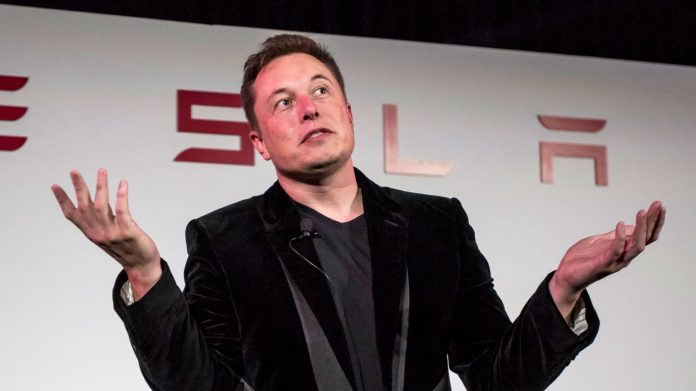
Elon Musk’s Tesla is facing a crisis of confidence. Once the undisputed leader in the electric vehicle (EV) market, the company has seen a sharp decline in sales across key markets, including the United States, Europe, China, and Australia.

The downturn is largely attributed to two factors: Musk’s increasing alignment with far-right politics, which has alienated a significant portion of Tesla’s customer base, and the rise of fierce competition from China’s rapidly growing EV sector. In an apparent bid to counter these challenges, Tesla is making a renewed push into India—one of the last major untapped EV markets.

Tesla’s troubles have been mounting for months. February saw a dramatic drop in sales across its traditional markets, with Germany leading the collapse at 76%, followed by Italy (55%) and other key European markets. Even in the United States, Tesla’s home turf, its market share is slipping as consumers turn to alternatives. Meanwhile, Chinese EV giants like BYD have overtaken Tesla in global sales, solidifying China’s dominance in the EV industry.

The root of Tesla’s problems extends beyond the argument that Musk’s vocal support for far-right political figures in the U.S. and Europe has played a crucial role in turning off large swaths of potential customers. His endorsement of conspiracy theories, controversial remarks on social issues, and antagonistic stance toward mainstream media have led many once-loyal Tesla buyers to reconsider their purchases. This has been particularly damaging in liberal-leaning markets such as California and parts of Western Europe, where Tesla had previously enjoyed strong demand.

Additionally, Musk’s decision to cut Tesla’s marketing budget while pushing cost-cutting measures has raised concerns about the company’s ability to sustain growth. The aggressive price cuts Tesla introduced in 2023 to stay competitive have also backfired, leading to eroding profit margins and investor skepticism about the company’s long-term strategy.

As Tesla’s existing markets become increasingly challenging, India appears to be Musk’s next big bet. But analysts remain skeptical about whether it will be enough to turn the tide.

India’s Untapped Market – But at What Cost?

India, the world’s third-largest automobile market, presents a massive opportunity for any automaker. With the government targeting 30% EV adoption by 2030 and sales of electric cars growing 20% year-on-year, Tesla’s entry seems well-timed. The company has already leased a high-profile showroom in Mumbai, is planning another in Delhi, and is actively hiring for multiple roles across sales, customer support, and product development.

However, despite India’s market size, analysts doubt that Tesla’s expansion into the country will be a game-changer. The biggest challenge lies in the spending power of Indian consumers. Unlike China, where Tesla has built a profitable business by catering to a growing middle class with strong purchasing power, India’s car market remains overwhelmingly price-sensitive.

In 2024, EVs accounted for just 2.5% of the 4.3 million cars sold in India, with most of the demand concentrated in the sub-$10,000 segment dominated by local giants like Tata Motors and MG Motor India. Tesla’s cheapest model, the Model 3, is estimated to cost around $40,000 in India, excluding tariffs—a price far beyond the reach of the average Indian car buyer. Luxury EVs priced above $20,000 made up only 6.6% of India’s total EV sales last year.

Adding to the challenge is India’s economic disparity. According to a study by venture capital firm Blume Ventures, 90% of India’s population has no disposable income for non-essential goods. In contrast, China’s vast middle class has supported a robust demand for premium EVs, allowing Tesla to scale its business there.

Some analysts see India as a large market but warn that large markets don’t always translate to profitability, and Tesla needs high-income consumers to break even, and those numbers are much smaller in India than in China.

Can Tesla Replicate Its China Success in India?

Tesla’s success in China has been largely driven by its ability to localize production. The company built its Shanghai Gigafactory in record time, enabling it to cut costs and benefit from favorable government policies. India, however, presents a different challenge.

While the Indian government has relaxed import duties for premium EV manufacturers willing to invest at least $500 million and set up local production within three years, Tesla’s ability to scale in India remains questionable. Unlike China, where the government actively supports foreign EV makers with subsidies and infrastructure investment, India has lagged in EV charging infrastructure and supply chain development.

Additionally, Tesla faces strong domestic competition. Tata Motors already holds a commanding 60% market share in India’s EV space, with JSW MG Motor India and Mahindra & Mahindra also aggressively expanding their footprint. These companies offer EVs at significantly lower price points, making Tesla’s high-end positioning a potential disadvantage.

Tesla’s cars also face design challenges in India. Most Tesla models have low ground clearance, which is unsuitable for India’s often uneven and pothole-ridden roads. Unless the company customizes its vehicles for the Indian terrain, it could struggle with widespread adoption.

Geopolitics and Musk’s Trump Connection

One factor that could work in Tesla’s favor is India’s strained relationship with China. Unlike other Asian markets where Chinese automakers are establishing dominance, Tesla has a clearer path in India due to government restrictions on Chinese investments. In 2023, India rejected BYD’s proposal for a $1 billion EV plant, underlining a protective stance toward foreign competition.

Musk’s perceived alignment with U.S. President Donald Trump may also help smooth Tesla’s entry into India. The Modi government, keen to strengthen ties with Washington, has been extending certain policy relaxations to Tesla, which some analysts see as a strategic move to appease both Musk and the U.S. administration.

However, Trump’s recent comments criticizing India’s EV tariffs have complicated matters. The former president has threatened reciprocal trade measures if India does not lower its import duties further, potentially putting Tesla in the middle of a geopolitical tug-of-war.

A High-Stakes Gamble

Tesla’s expansion into India comes at a crucial moment. With its valuation down by $800 billion, declining sales in key markets, and growing skepticism about Musk’s leadership, the company is under immense pressure to find new growth avenues.

However, analysts warn that expanding to new markets alone will not solve Tesla’s deeper issues. The company must address the reputational damage caused by Musk’s political entanglements, regain lost customer trust, and fend off intensifying competition from Chinese EV makers.

However, for Musk, India represents both an opportunity and a risk. If Tesla succeeds, it could open the door to a massive new consumer base. But if it fails, it would only reinforce the growing narrative that Tesla’s best days are behind it.

How Technology is Paving the Way for iGaming Legalization and Growth in New Markets

0

The advance of technology in recent years has opened the door to casinos and iGaming sites. The Internet is more widely available, with mobile Internet speeds that rival those of fixed landline connections. Computers and laptops have become more affordable. So, too, have mobile devices, which have also become more capable.

This has led to a rise in iGaming websites with more advanced features which, in turn, has seen the popularity of online casinos and gambling websites increase, encouraging governments to have to consider their regulatory frameworks or be left behind. Similarly, casinos and gambling companies have had to transition their products online.

iGaming Sites

iGaming sites include online poker and bingo, as well as casino websites like tg casino, which are able to offer more games, improved bonuses, and better odds than retail casinos because of lower overheads. Many of these sites have also introduced new features, recently, that include live dealer games, VR gaming, and cryptocurrency payments. Mobile apps have made it easier for players to get online and have seen more people able to partake in online gambling which means government bodies have had to address existing regulatory frameworks.

Big Data

Big data isn’t a new innovation, but it plays a critical part in iGaming and other forms of betting. It can also be used by regulators to determine betting patterns and help identify areas where players might need support and protection.

It can also be used to forecast betting market size. One reason why a lot of countries are considering the introduction of iGaming legislation is to capture tax revenue from bets. Although not impossible, it is more difficult to capture tax levies from offshore casinos offering their services to players.

Michigan, in the US, is one of only 7 states that has regulated iGaming and it generated tax revenue of more than $350 million in 2023. Michigan is the 10th most populous state, suggesting there is an opportunity for other states to raise similar funds.

AI

Big data combines especially well with the use of AI and machine learning. Using these technological tools, online casinos can use algorithms to set more accurate odds. They also use these tools to help create customized offers and bonuses for clients.

Improved Internet

Around two-thirds of the world has regular access to the Internet, with more than half of the global population having mobile Internet access. With the advent of 5G, mobile Internet connections have gotten better, and this has not only led to more people being able to access mobile casinos but it has seen the casinos themselves being able to offer more advanced games and developed features. Live dealer games have become increasingly commonplace. VR casinos have also started to hit the market. Standard games have become more advanced with crash games, which feature live betting, proving popular.

5G’s rollout continues to pick up pace, too, which means these features are only going to continue to increase in the coming years.

For regulators, the further reach of high-speed Internet means more and more people will use online casinos, rather than retail casinos and government bodies will need to react to this by introducing or updating iGaming legislation.

Mobile Convenience

Mobile casinos are incredibly convenient. Players can access games from home or anywhere else they have an Internet connection on their mobile device. This makes it possible to play while commuting, while on vacation, or even while on a break from work.

Responsible gambling regulations are required, and many governments have already introduced these. Some, like the UK government, have taken steps to further finetune their regulations.

Blockchain

Another area where we are seeing advances and development is in the integration of blockchain technology. A blockchain network is a digital ledger that stores transactions and can be used to initiate and complete smart contracts, which are automated agreements between two or more parties. Its best-known use is in cryptocurrency.

Cryptocurrency facilitates faster and less costly transactions, benefiting the player and the casino. It is also pseudonymous, making it more difficult for governments and agencies to track. Asset and financial regulators have been relatively slow out of the blocks, often relying on existing regulations that are closely tied to fiat currencies, rather than modern, digital currencies.

Further crypto regulations are incoming, and we can also expect to see crypto considerations in upcoming iGaming regulations.

Regulatory Changes

Some countries, like the UK, have embraced iGaming and introduced extensive regulatory frameworks. Other countries, like the US and Canada, are slowly catching up. Only seven states in the US and one territory in Canada currently has fully regulated online casinos, but this is expected to grow in the coming months and years.

Conclusion

iGaming has seen a lot of growth in recent years, but it still has huge potential for further expansion. The emergence of blockchain and cryptocurrency, the continued spread of 5G mobile Internet, and the continued improvement of online and digital technology means more and more casinos and casino apps will come online and regulators will need to introduce new legislation to counter this.