DD
MM
YYYY

PAGES

DD
MM
YYYY

spot_img

PAGES

Home Blog Page 1525

ChatGPT Search Gains Traction in Europe, Surges to 41.3 Million Monthly Active Users

0

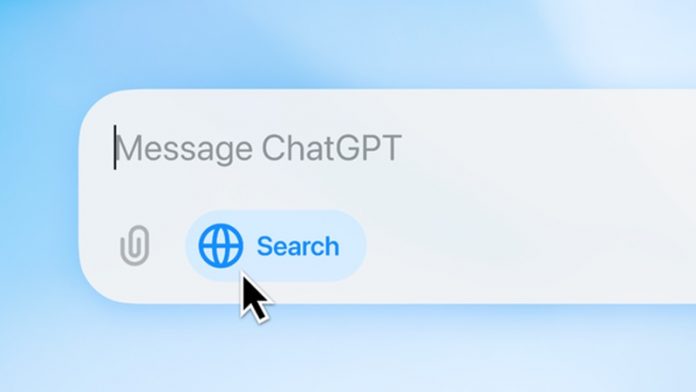
OpenAI’s ChatGPT Search, which integrates real-time web data into its responses, is rapidly expanding in Europe.

According to a report, the feature averaged 41.3 million monthly active users in the EU for the six months ending March 31, 2025, up from 11.2 million in the prior six-month period ending October 31, 2024.

Announcing the milestone, EU Digital Services Act (DSA), wrote via a post,

“In accordance with our obligations under Article 24(2) of the DSA, OpenAI Ireland Limited publishes information on the average ‘monthly active recipients’ of ChatGPT search (i.e. our online search features) in the European Union, calculated over a six-month period.  For the six-month period ending 31 March 2025, ChatGPT search had in combination approximately 41.3 million average monthly active recipients in the European Union.”

Under the EU’s Digital Services Act (DSA), platforms with over 45 million monthly users face stricter rules, including allowing users to opt out of recommendation systems, sharing data with researchers, and undergoing external audits. With its current growth, ChatGPT Search may soon trigger these requirements. Non-compliance could lead to fines of up to 6% of global revenue or even temporary EU suspension.

Launched in October 2024, OpenAI rolled out the search feature on ChatGPT, to enable users to get fast, timely answers with links to relevant web sources. The search model is a fine-tuned version of GPT?4o, post-trained using novel synthetic data generation techniques, including distilling outputs from OpenAI o1 preview. ChatGPT search leverages third-party search providers, as well as content provided directly by its partners, to provide the information users are looking for.

The company also partnered with news and data providers to add up-to-date information and new visual designs for categories like weather, stocks, sports, news, and maps.

ChatGPT Search’s rapid growth to 41.3 million monthly active users in Europe by March 2025 is reshaping the search industry in several ways:

1. Increased Competition:

With its conversational AI-driven approach, ChatGPT Search challenges Google’s dominance by offering concise, synthesized answers rather than traditional link-based results. This could pressure Google, which still holds over 90% of the global search market, to innovate further, particularly in AI integration.

2. Shifting User Expectations:

The surge in adoption highlights a growing preference for natural language processing and direct answers, pushing traditional search engines to enhance their interfaces. Bing and others may accelerate AI investments to compete.

3. Market Share Redistribution:

While Google’s market share remains dominant, ChatGPT Search’s growth capturing a fraction of the 8.5 billion daily global searches could erode smaller players’ shares (e.g., Bing, Yahoo) more quickly, as users gravitate toward AI-driven alternatives.

A September 2024 poll showed that 8% of users prefer ChatGPT Search over Google. However, studies highlight reliability issues, with one noting a 67% error rate in identifying articles and another flagging inaccuracy in news content, including from OpenAI’s licensed partners.

Despite its rise, ChatGPT Search trails Google, the dominant search engine, which processes an estimated 373 times more searches. Meanwhile, ChatGPT search rise, is a wake-up call for Google, pushing it to innovate faster, protect its ad-driven model, and leverage its scale and reliability to fend off this emerging threat. Failure to adapt could lead to gradual market share erosion, though Google’s entrenched position provides a strong buffer for now.
Circle and BitGo Reportedly Planning to Apply for U.S. Banking License

0

Circle, the issuer of the USDC stablecoin, and BitGo, a digital asset custody provider, are reportedly planning to apply for U.S. banking licenses, according to an April 21, 2025, Wall Street Journal report. They aim to secure federal bank charters, enabling them to offer traditional banking services like deposit-taking and lending, and gain direct access to Federal Reserve payment systems. This move would also enhance their regulatory legitimacy, allowing better compliance with Anti-Money Laundering (AML) and Know Your Customer (KYC) rules, and potentially offering FDIC insurance.

Coinbase and Paxos are also exploring similar steps, with Paxos having received conditional approval for a U.S. bank charter in 2021. The push follows a more crypto-friendly regulatory environment under the Trump administration, which has relaxed restrictions on banks engaging with crypto firms. Congress is advancing stablecoin legislation, such as the STABLE Act and GENIUS Act, which would require issuers to obtain licenses, further driving these efforts.

The only crypto-native firm with a federal bank charter, Anchorage Digital, has faced significant compliance costs and is under investigation by the Department of Homeland Security, highlighting the challenges of stricter oversight. Meanwhile, traditional banks like Bank of America and U.S. Bancorp are showing renewed interest in crypto, with the former considering its own stablecoin and the latter relaunching custody services.

Obtaining federal bank charters would enhance the credibility of crypto firms, signaling compliance with stringent U.S. banking regulations like AML and KYC. This could attract institutional and retail customers, boosting adoption of stablecoins like USDC and crypto custody services.

A banking license grants direct access to Federal Reserve payment systems, reducing reliance on third-party banks for settlement and custody. This could lower costs, improve transaction efficiency, and enable firms to offer FDIC-insured deposits, making crypto services more competitive with traditional banks.

Licensed crypto firms could provide traditional banking services such as lending, deposit-taking, and wealth management alongside crypto offerings. This convergence could blur lines between crypto and traditional finance, fostering innovation but also competition with established banks.

Operating as banks would subject these firms to rigorous oversight by federal regulators like the OCC and FDIC. While this ensures compliance, it increases operational costs and complexity, as seen with Anchorage Digital’s compliance challenges and ongoing DHS investigation.

The move by Circle, BitGo, Coinbase, and Paxos reflects a broader trend among crypto-native firms to integrate with traditional finance. This could pressure other crypto firms to seek licenses, while traditional banks (e.g., Bank of America, U.S. Bancorp) may accelerate their crypto offerings, intensifying market competition. Pending legislation like the STABLE Act and GENIUS Act, which mandate banking licenses for stablecoin issuers, aligns with these efforts.

A crypto-friendly Trump administration and bipartisan Congressional support could expedite approvals, shaping a clearer regulatory framework but potentially favoring larger players with resources to navigate compliance. Licensed crypto banks could stabilize the volatile crypto market by offering insured deposits and regulated services. However, their integration into the financial system might introduce systemic risks if crypto market volatility affects their banking operations.

Customers could benefit from safer, more accessible crypto services with FDIC protections and seamless fiat-crypto integration. However, increased compliance costs might lead to higher fees or reduced innovation in some crypto offerings. Overall, this shift could bridge crypto and traditional finance, but it hinges on navigating complex regulatory and operational challenges while balancing innovation with stability.

We Invite You To Tekedia Capital Demo Day on Saturday, April 26

0

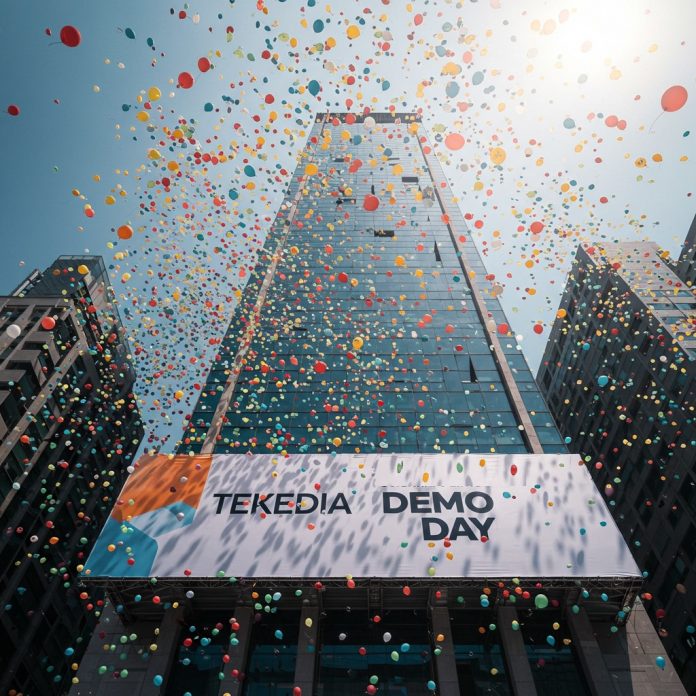
On Saturday, April 26, Tekedia Capital will hold its Demo Day. Eighteen great companies will participate. Nations rise when great entrepreneurs emerge because they build category-king companies. Our aspiration is to become a farm to breed tech unicorns as we support innovators and makers to fix frictions in markets, and advance societies. If you can, join us https://capital.tekedia.com/course/fee/ .

Doublelist vs Traditional Dating Apps: Which One’s Right for You?

0

It has become so commonplace to use online dating. Today, there are more platforms than ever to connect with potential romantic partners from the convenience of your smartphone — from heart-breaker platform Tinder and its popular offspring Bumble to more specific sites for specific kinds of people or with niche interests. But not all dating apps are created equal: different platforms have varying features, different demographics of users, and implicit rules that some will suit better than others.

Doublelist is a relatively new player, and it’s an alternative to the mainstream dating apps. With a focus on facilitating casual connections and adult-oriented encounters, it caters to a specific segment of romantically inclined internet users, particularly those seeking arrangements like a discreet hookup for married individuals or others interested in no-strings-attached experiences. But how exactly does Doublelist compare to more traditional online dating platforms?

Defining the Traditional Dating App

When it comes to the concept of traditional dating apps, platforms like Tinder, Bumble, OkCupid, and Match immediately come to mind for most people. These apps share certain key traits that reflect mainstream expectations of online dating:

Focus is on relationships. The ultimate goal emphasized is finding some form of romantic partnership, whether casual or serious. Hookups may occur, but are typically not the apps’ primary focus.

Features facilitate relationship-building. Functionality like detailed profiles, messaging, search filters, and algorithm-based matches lets users get to know potential partners and find compatible people.

Wide, heterogeneous user base. They cast a wide net, appealing to large masses of demographically diverse users seeking relationships. Some niche segments get excluded, though.

Reliance on photos. Pictures are hugely important in profiling yourself and assessing others’ romantic appeal from a visual standpoint. Less focus is placed on written content or personality compatibility.

Socially acceptable use. Using these mainstream apps has become a socially standard way for single people to meet others; little stigma exists around being an active user.

Key Aspects of Doublelist

Contrastingly, Doublelist deviates from the norm in several notable ways:

  1. Casual encounters are the priority. The platform facilitates casual connections involving sex or other adult-oriented activities rather than formal, committed relationships.
  2. Features enable discreet communication. Tools like private messaging and image exchanges are intended to enable users to establish and arrange casual meetups rather than truly get to know potential partners.
  3. Targets specific demographics. Typically appeals more to older users, those in non-monogamous arrangements, LGBTQ+ individuals, or others not served by mainstream apps. Tends to repel long-term relationship seekers.
  4. Content over images. Profile photos matter, but greater emphasis is placed on written classified ads showcasing what one seeks or offers. Personality compatibility is secondary.
  5. Considered taboo by some. Due to its focus on enabling sexually-oriented meetups, some segments of society frown upon Doublelist as facilitating hookup culture and infidelity.

As evidenced above, the traditional dating app and Doublelist paradigms differ in their unspoken intentions and target audiences. So what does this mean for the average romantically inclined single person?

Appeal for the Mainstream Dater

For people seeking fulfilling long-term relationships, the traditional dating app model typically serves them best. Apps like Tinder or Hinge are designed to enable you to meet, vet, chat with, and date a multitude of potential partners at ease. Efficient matching algorithms can connect you with highly compatible people you may never encounter organically in the real world. And the large user bases on these mainstream apps increase your odds of finding someone you truly click with emotionally.

Traditional dating apps also appeal due to their familiarity and social acceptance. People feel comfortable navigating the standard features and interfaces of platforms like OkCupid. And openly discussing one’s Match profile or recent Bumble date carries no stigma – it’s considered normal behavior these days for singles. Ultimately, conventional dating apps enable relationship-minded folks to maximize their options without having to veer out of their comfort zones.

The Case for Doublelist

Doublelist caters to a narrower segment of the dating app-using population – its core value lies in facilitating casual adult encounters rather than meaningful connections. As such, it appeals primarily to those seeking:

  1. No-strings-attached sex. Single or non-monogamous individuals looking for casual hookups thrive on the directness and transparency Doublelist enables. Profile ads convey one’s sexual interests rather than playing the guessing game.
  2. Discretion. For couples or individuals in committed arrangements seeking something on the side, Doublelist offers more anonymity. Users need not link their profiles to social media or reveal identifying details.
  3. Specific kinks or fetishes. People wanting to explore less mainstream sexual interests that mainstream apps prohibit have greater freedom to express their desires openly on Doublelist without fear of being banned.
  4. LGBTQ+ inclusiveness. Doublelist provides an environment free of harassment where LGBTQ+ users can feel safe being upfront about their sexuality or gender identity. Mainstream app spaces are not always similarly welcoming.

For these segments of the dating app-using population, Doublelist simply serves their goals and interests better than more traditional platforms. The focused nature of its tools and user base saves them the time and energy of having to filter extensively to find like-minded matches. And the anonymity granted enables more discreet exploration of one’s sexuality.

Conclusion

If you’re like most typical mainstream single daters, the search for fulfilling long-term romance, then traditional dating apps will be better suited for you. Use the relationship-focused tools and the widespread use of Tinder or Hinge to quickly find chemistry and compatibility.

There are, however, segments of romantically inclined people whose needs focus more on casual adult contacts than formal relationships. If you are looking for an outlet where you can find people who are willing to explore kink, non monogamous couples, or just anyone open with regards to their sex life and requires anonymity, Doublelist should be on your radar. Now remember: no one platform will ever be present to every user. Choose whichever option serves your dating purposes.

Exploring E-Wallet Payments in Online Casinos

0

Computerized pouches have remade how gamblers connect with internet casinos, presenting a smooth and safe route to handle their cash. These up-to-date payment answers give a different way from old-style bank methods, appealing to tech-smart individuals who prize quickness and ease. This piece dives into the strong points of employing e-wallets for internet casino dealings, lays out the steps to put money into accounts, and shines a light on crucial points for players.

Why Digital Pouches Are Becoming More Liked

Electronic wallets have seen a big jump in demand because they make financial actions simpler in the quick-moving world of online wagering. They let gamblers put in and take out funds with very little trouble, getting around the delays often tied to bank wires or card handling. Safety stays a chief concern, as e-wallets use strong coding to guard private details, giving gamblers a sense of security. Furthermore, these setups often back immediate actions, letting users jump into their favorite games without waiting around.

Better Safety Measures

E-wallets casino online put user safety first by adding strong safety steps. Two-step login and fingerprint or face scans add layers of defense, making sure only allowed users can get to their money.

Quickness and Ease

Unlike old ways, which might take days to finish, e-wallet actions often wrap up within minutes. This fast speed boosts the gambling time, letting players focus on fun instead of the behind-the-scenes stuff.

Open to Everyone

E-wallets serve a wide group, including people who can’t use regular bank services. By linking to phone programs or pre-paid accounts, they provide options for gamblers in different money situations.

Money-Saving Actions

Many e-wallet services ask for very small or no fees for putting in and taking out money, making them a good budget choice for frequent casino visitors. This cost saving appeals to users who watch their spending.

How to Add Money to a Casino Account Using a Digital Wallet

The way to put money into an internet casino account with a digital wallet is simple. Gamblers start by picking a casino that works with their chosen electronic pouch. After signing up for an account, they go to the money area and pick the e-wallet choice. Next, they type in how much they want to add and confirm the action through the e-wallet program, often using a safe code or fingerprint/face scan. Money usually shows up in the casino account almost right away, ready to use in slot machines, card games, or live dealer setups. Taking out money follows a similar path, with gamblers asking for payouts to their e-wallet for fast access to their winnings.

Key Points for Gamblers to Think About

While e-wallets have many good sides, gamblers should remember a few things:

  • Casino Hookup:Not all playing sites work with every e-wallet, so checking if they match is key.
  • Action Limits:Some casinos set lower or upper limits on how much you can put in or take out.
  • Bonus Rules:Some deals might not count e-wallet deposits, so reading the fine print is smart.
  • Area Access:E-wallet services differ by country, which affects if international gamblers can use them.

Conclusion

Picking an internet casino that has e-wallet payments means doing some careful looking around. Gamblers should focus on sites that are licensed and have a good name, along with strong user feedback. Checking for a good mix of games, helpful customer service, and clear rules about money actions makes for a satisfying time. By using the speed, safety, and ease of e-wallets, gamblers can make their online playing adventures better and more confident.