DD
MM
YYYY

PAGES

DD
MM
YYYY

spot_img

PAGES

Home Blog Page 1527

Master Tongits Go on GameZone: Embrace Filipino Card Game Heritage and Win Big

2
Deposit Bonus at GameZone Philippines

Filipino card games have been an essential part of social life across generations. Whether it’s bonding during family reunions, casual games with neighbors, or festive tambayans, these games bring people together. One standout game among local favorites like Pusoy and Lucky 9 is Tongits Go—a fast-paced, strategic card game that continues to win the hearts of Filipinos across all ages.

Now, in the age of smartphones and online platforms, Tongits has evolved with the times. Tongits Go, a mobile version of the traditional game, offers an upgraded yet authentic experience. And when paired with GameZone, an online community for Filipino card game fans, players get a fully immersive, competitive, and rewarding environment that honors the game’s cultural roots while pushing it into the future.

A Brief History of Tongits: From Local Tables to Mobile Screens

Before the digital boom, Tongits was a staple game in many provinces, especially in northern Luzon. It is believed to have started in Pangasinan during the 1980s and bears similarities to Rummy and Gin Rummy. Using a standard 52-card deck, the game is usually played by three participants.

The main objective in Tongits is to form melds—either sequences or sets of cards—while minimizing “deadwood,” or unmatched cards that carry penalty points. Players can win in three ways: by declaring “Tongits” (if all cards are successfully melded), initiating a draw (if no moves remain), or having the lowest points when the round ends.

While chance plays a role, Tongits is ultimately a game of logic, memory, and sharp timing—qualities that make it even more exciting in a digital format.

Why Tongits Go Is a Game-Changer for Filipino Players

Tongits Go successfully transforms this iconic card game into an interactive mobile app without losing its soul. Here’s what makes it a favorite among Filipino players today:

Modern Visuals with Classic Gameplay

Tongits Go maintains the traditional gameplay mechanics while integrating modern graphics, sound effects, and user-friendly controls. It feels like you’re playing at a fiesta but with the convenience of mobile access.

Real-Time Multiplayer Matches

Players can challenge others in real-time games, participate in rankings, and monitor their progress through leaderboards. This competitive environment pushes players to improve their skills continuously.

Social Features Built-In

The app promotes interaction with features like chat, friend invitations, and clubs—recreating the camaraderie of face-to-face Tongits sessions.

Free to Play with Optional Perks

You can download and play Tongits Go without spending anything. While in-app purchases are available for upgrades or bonus items, the core game remains fully accessible.

Regular Events and Special Tournaments

Tongits Go frequently hosts seasonal events, mini-games, and competitive tournaments, giving players more reasons to log in and play.

What Is GameZone and Why It Elevates Your Tongits Go Experience

While Tongits Go offers an engaging solo experience, GameZone takes it to a higher level by creating a larger ecosystem for Filipino card game fans. GameZone is an online platform dedicated to popular local games like Tongits, Pusoy, and Lucky 9. It bridges casual play with serious competition by hosting tournaments, offering real-life prizes, and nurturing a strong community.

By linking your Tongits Go account to GameZone, you unlock exclusive access to events, prizes, and social opportunities designed to make your experience richer and more rewarding.

Top Features of GameZone That Enhance Tongits Go

1. Join Exclusive Tournaments

GameZone frequently holds high-stakes tournaments exclusive to its members. These events often come with unique gameplay formats, diverse challenges, and generous reward pools. Whether you’re a casual player or a seasoned pro, there’s always a competition waiting for you.

2. Win Tangible Prizes

Unlike most gaming platforms that only offer virtual rewards, GameZone provides real-world incentives. You can win:

  • GCash payouts
  • Mobile load credits
  • Electronics and gadgets
  • Tournament-based cash prizes
  • Daily bonuses and referral incentives

These prizes add an exciting layer of motivation that goes beyond simple bragging rights.

3. Connect with a Vibrant Community

GameZone isn’t just a gaming hub—it’s a digital tambayan. Join clubs, share strategies, follow leaderboard champs, and engage in community discussions. This active network makes the gaming experience more immersive and enjoyable.

4. Trustworthy and Transparent Gaming Environment

Fair play is a top priority on GameZone. All tournaments are closely monitored, players are verified, and the rules are enforced strictly to ensure equal chances for everyone. This level of integrity builds trust and keeps the competition clean.

Tongits Tips: How to Improve Your Gameplay and Win More

Whether you’re preparing for your first GameZone tournament or trying to increase your win rate, these tips can sharpen your strategy:

Observe Discard Patterns

Pay attention to what your opponents are discarding. These clues can help you guess their possible melds and prevent you from feeding them needed cards.

Don’t Wait Too Long to Meld

Holding on to cards in hopes of forming perfect sets can backfire. Meld early if you’re at risk of a draw being called.

Learn When to Fold

Sometimes the best strategy is to fold your hand. If you’re holding high-point cards and your chances of winning the round are slim, it might be better to cut your losses.

Keep Deadwood Points Low

Always aim to reduce your unmatched card values. This will help you in case the round ends abruptly due to a draw or Tongits declaration.

Beginners and Pros Are Welcome

Whether you’re learning Tongits for the first time or you’ve been playing since the ’90s, both Tongits Go and GameZone cater to your needs. Beginners can access tutorials, guides, and friendly communities eager to help. Experienced players can enter elite leagues, track rankings, and unlock prestige-level rewards.

GameZone transforms the digital Tongits scene into something more dynamic—it’s not just about cards anymore. It’s about community, strategy, and a celebration of Filipino gaming heritage.

Final Thoughts: Elevate Your Card Game with Tongits Go and GameZone

Time for fun at GameZone Philippines

Tongits Go has become more than just a mobile game—it’s a new way to enjoy an old favorite. By modernizing a classic Filipino pastime, it provides entertainment, challenge, and social interaction at your fingertips.

GameZone, on the other hand, amplifies the experience by connecting you with other players, organizing large-scale tournaments, and offering prizes that matter. Together, they create a digital space where tradition meets innovation, and where casual fun transforms into meaningful gameplay.

If you’re looking for a platform that honors Filipino card game culture while offering modern perks and competitive play, this is your moment. Download Tongits Go, sign up for GameZone, and enter a world where each hand you play could lead to big wins, new friendships, and a deeper appreciation of a national pastime.

Nigerian Govt. Denies Finalizing 80-year Concession Deal for Enugu Airport, Says No Fixed Agreement Approved Yet

0

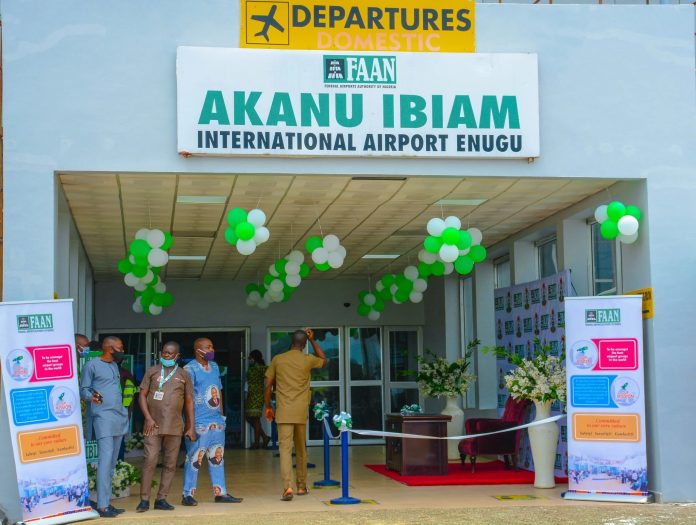
The Federal Government of Nigeria has dismissed reports claiming it has reached a final agreement for a long-term concession of the Akanu Ibiam International Airport, Enugu, describing the speculation—particularly around an alleged 80-year lease—as “baseless and inaccurate.”

In a statement released on Monday, Tunde Moshood, the Special Adviser on Media and Communications to the Minister of Aviation and Aerospace Development, said the Ministry has not signed any agreement on the airport’s concession, even though it is true that the government is reviewing several proposals to privatize the management of five major airports, including Enugu.

“Our attention has been drawn to certain online reports/stories suggesting that a certain lengthy period of concession has been agreed upon regarding the Enugu International Airport. These reports/stories are utterly baseless and untrue,” the statement read.

Moshood explained that while proposals for airport concessions are under review, none have received final approval.

“At this stage, prospective concessionaires have indeed submitted various proposals, including different durations for the concession. It is important to emphasize that the Ministry of Aviation and Aerospace Development has not established any fixed duration,” he stated.

The Federal Ministry of Aviation had earlier listed Lagos, Abuja, Port Harcourt, Kano, and Enugu airports among those proposed for concession under a broader Public-Private Partnership (PPP) framework. The Ministry reaffirmed that this strategy is aimed at improving service quality and reducing the financial burden of maintaining these facilities, many of which are not profitable.

Financial Strain Behind the Push for Concessions

While the public debate has focused largely on the politics of concessions, especially in the South East, the government insists that the initiative is not new, nor politically motivated. According to the Ministry, the plan dates back to previous administrations and is driven by the harsh financial reality that most of Nigeria’s airports operate at a loss and depend heavily on federal subsidies to survive.

This financial strain has forced the government to explore models of private sector participation to modernize and sustain airport operations in line with international standards.

“This is a proactive measure to ensure these vital facilities can meet and maintain international standards, given the increasing financial demands of their operations,” the Ministry’s statement read.

But Monday’s clarification also appears to be a response to growing public suspicion and backlash after reports began circulating that an 80-year concession had already been quietly approved for Enugu airport. The idea of such a long-term agreement without public input raised concerns about transparency, equity, and federal commitment to regional development.

Although the Ministry stressed its commitment to transparency and accountability in all concession arrangements, the episode raises deeper questions about how Nigeria communicates and executes public-private partnerships in critical sectors. Public distrust is often triggered by the government’s poor record of consultation and lack of consistent disclosure around concession agreements.

The case of the Enugu airport shows that even speculation, if not quickly countered, can derail or complicate efforts to attract private investment. It also reveals the sensitivity of infrastructure decisions in regions that feel marginalized by federal projects and allocations.

Minister of Aviation, Festus Keyamo, has previously pledged to restore trust in the process by ensuring that all concession decisions are in line with due process and carried out with “integrity and in a nationally beneficial framework.”

Why This Matters for Nigeria’s Digital and Economic Future

The airport concession saga also points to a larger economic issue, Nigeria’s struggle to modernize its infrastructure without crippling public finances. In many parts of the world, airports serve as gateways not only for people but for commerce, technology, and investment – something Keyamo seems to be trying to replicate in Nigeria with the concessions.

However, the controversy surrounding the duration of the concessions underlines fundamental challenges in the Nigerian political system. They include how to attract private investment into essential infrastructure without triggering fears of exploitation, marginalization, and corruption.

For regions like the South East, whose residents have long demanded more equitable federal infrastructure, any sign of exclusion or secrecy feeds into a historical narrative of neglect.

Market Advantages: The Key To Sustained Success is First-Scaler, Not Just First-Mover

0

First-mover advantage refers to the competitive edge a company gains by being the first to enter a new market or introduce a product or service. This advantage allows the company to establish strong brand recognition, build customer loyalty, and secure key resources before competitors arrive.

First-scaler advantage is a concept related to blitzscaling, which prioritizes rapid growth over efficiency in order to dominate a market. It refers to the competitive edge gained by the company that scales the fastest in a given industry. Unlike first-mover advantage, which focuses on being the first to enter a market, first-scaler advantage emphasizes speed of expansion—ensuring that a company grows so quickly that competitors struggle to catch up.

In other words, the first SCALER advantage is the advantage which comes to a firm for being the first to become extremely popular and ubiquitous by scaling its services in a market category.

Note this: the greatest companies in the world are known for one main thing: great products or services. Interestingly, all great products are known by customers. That typically happens because they are well scaled and used by many. Extrapolate, you’re talking of first-scaler advantage, a leverageable compounding competitive advantage which comes with economies of scale as a result of being the first company to achieve scale in a category and improve marginal cost, offering products at highest value and best optimized cost.

If you have a first-mover advantage and fail to scale, you will lose the competitive positioning to another company which comes and scales first. So, first-mover advantage is temporary because sustainable and durable innovation-anchored monopoly requires enduring scale in product categories. If you cannot deliver that scale, forget your first-mover advantage.

Yet, as we deploy a first-scaler playbook in Africa, be careful because while it can work for the Americans with largely unlimited funding sources, a little trouble, and no follow-up funding, you have challenges. My thesis on growth marketing offers a nuanced pathway to execute scalability without breaking the bank.

Saying “Please” And “Thank You” to ChatGPT Cost OpenAI Millions – Altman

0

The conversation around whether it costs more to be polite to AI may have started as a joke, but it’s stirred up real questions about the human-AI dynamic, and the invisible price tags behind every word we type.

It began with this curious post on X: “I wonder how much money OpenAI has lost in electricity costs from people saying ‘please’ and ‘thank you’ to their models.” The kind of offhand musing that might’ve drifted unnoticed through the social media stream — except it caught the attention of OpenAI CEO Sam Altman.

“Tens of millions of dollars well spent — you never know,” Altman quipped in response.

His reply, dry and ambiguous, didn’t include any hard numbers, and it clearly wasn’t meant to be taken as a serious accounting statement. But it set off a wave of speculation, including a piece from Futurism exploring whether such seemingly insignificant habits might come with outsized energy costs when scaled to the billions of queries AI systems process each year.

The Energy Behind Every Query

Generative AI models like ChatGPT aren’t just pulling words out of thin air. Each response relies on massive server farms—power-hungry systems crunching numbers around the clock. A 2023 study by researchers at the University of Washington estimated that a single ChatGPT response might consume about 0.3 watt-hours of electricity, depending on its length and complexity. Multiply that by the billions of queries the model handles, and the energy bill quickly climbs.

But adding a few extra words like “please” or “thank you”? Not enough to break the bank in isolation. The consensus among experts is that while yes, extra tokens (units of text) do incrementally increase computational workload and energy use, the marginal cost of politeness is minuscule. What’s less insignificant is the cultural weight of those words.

Politeness as Prompt Engineering

Kurt Beavers, a design director for Microsoft’s Copilot, an AI assistant built on a similar architecture to ChatGPT, says the choice of words matters not just to humans, but to the models themselves.

“Using polite language sets a tone for the response,” Beavers told Futurism. When an AI “clocks politeness, it’s more likely to be polite back.”

This idea echoes what’s known in prompt engineering: how you phrase a question or command influences the output. Politeness can signal a certain tone or context that subtly shapes the response, even if the model doesn’t have emotions or understand social cues in the human sense.

It’s less about morality or manners and more about signal and response. A well-worded prompt, polite or not, helps the AI narrow down the tone and intent of its answer. This is especially useful in customer service or professional settings where tone matters just as much as accuracy.

That doesn’t mean swearing or bluntness has no place. In fact, in some contexts, a peppering of profanity can clarify urgency or emotion. Researchers have found that emotionally charged prompts often yield more vivid, emphatic, or creative responses from AI. Of course, most consumer-facing models filter or tone down profanity, depending on context and content policies.

But users testing boundaries or trying to extract more forceful or humorous replies often experiment with different tones, including impolite ones.

Anthropomorphism in the Age of AI

The debate about saying “please” to machines also touches on how we perceive AI. As chatbots get more fluent, humanlike, and responsive, users naturally start treating them like digital companions. This tendency toward anthropomorphism—projecting human traits onto non-human entities—can be harmless or even helpful. For example, it might make interactions feel smoother and more intuitive.

But some experts warn that this blurring of lines might lead to unrealistic expectations, or worse, a misplacement of trust. Saying “thank you” might be second nature now, but what happens when we forget it’s not a sentient being we’re addressing?

So It’s Worth It After All?

Back to the original question: Does saying “please” and “thank you” cost OpenAI millions in electricity?

Technically, yes—if you scale it up and take Altman’s quip at face value. But those extra tokens probably cost fractions of a cent each, and the goodwill or comfort they bring to the user experience is arguably worth far more.

And as Altman said, “tens of millions of dollars well spent — you never know.” Because in a world increasingly shaped by artificial conversations, the choice to be polite, even to machines, might just be a small but meaningful stand for how we interact with each other.

Africa’s Struggle to Bridge the Digital Divide Deepens in 2024, With Only 38% Of Population Online – ITU Report

0

Africa continues to trail the rest of the world in Internet access, with only 38% of its population online in 2024—far below the global average of 68%, according to the latest State of Digital Development in Africa report released by the International Telecommunication Union (ITU).

The findings lay bare a widening digital divide that now threatens the continent’s ability to build a modern economy powered by innovation and digital services.

While the continent has made visible strides in expanding mobile coverage and updating policy frameworks, the ITU warns that the high cost of data, weak digital infrastructure, and a sharp urban-rural divide are collectively stalling Africa’s digital transformation.

Affordability remains the most significant obstacle to digital access, the report notes. Despite incremental improvements, the average cost of a 2GB monthly mobile broadband plan in Africa stood at 4.2% of gross national income (GNI) per capita in 2024—more than double the UN Broadband Commission’s affordability benchmark of 2%.

“That’s still more than double the UN Broadband Commission’s affordability target of two percent, and the highest of any ITU region,” the report said.

Fixed broadband is even less accessible. With a median cost of 15% of GNI per capita, home Internet remains a luxury for all but the wealthiest households. These figures not only place Africa as the least affordable region globally for Internet access, but also point to systemic inequalities that disproportionately affect women, rural dwellers, and low-income earners.

Mobile Dominates, But Access Is Not Uniform

Africa’s digital landscape continues to be shaped by mobile connectivity, which now covers 86% of the population. However, 14%—mostly in hard-to-reach areas, remain completely unserved. In rural regions, the gap widens to 25%, reinforcing a trend where digital infrastructure and investment are concentrated in urban areas.

About 70% of Africans now have access to 4G networks, but many remain stuck on 3G, 16% of the population as of 2024, relying on slower speeds and limited functionality. Meanwhile, 5G remains nascent, reaching just 11% of the population and confined largely to elite neighborhoods in cities like Lagos, Nairobi, and Johannesburg.

Urban-Rural Divide Undermining Inclusiveness

The report underscores a rapidly growing divide between Africa’s urban and rural communities. Internet penetration in cities hit 57% in 2024, while rural usage stood at just 23%. That gap, 34 percentage points, is the widest in any ITU-designated region, reflecting years of lopsided infrastructure investment that continues to prioritize urban centers.

In many rural communities, poor electricity supply, digital illiteracy, and lack of affordable smartphones further compound the problem. This disparity, experts warn, is creating parallel societies: one that’s connected and competitive, and another that’s isolated and economically vulnerable.

“These high costs hit low-income groups the hardest, deepening digital inequality across the continent,” the ITU stated in the report.

Weak Governance Slows Progress

While there have been some improvements in policy reform, the ITU points out that most African countries are still lagging in terms of digital governance. Only 18% of nations on the continent have achieved the highest standard of ICT regulation (G4), far below the global average of 38%.

The report stresses that a coordinated digital strategy is critical—not just for connectivity but also for cybersecurity, data protection, digital identity systems, and online skills training.

The Economic Cost of Digital Exclusion

Beyond infrastructure statistics, the ITU’s findings paint a bleak picture of Africa’s long-term economic development. Analysts say the continent’s failure to provide universal, affordable Internet access is effectively shutting the door to innovation-driven sectors such as e-learning, telemedicine, digital finance, and remote work.

One of the most visible casualties is the edutech sector, which has struggled to gain meaningful traction across much of the continent due to widespread connectivity issues. While several startups have developed digital learning platforms, poor Internet penetration has limited their reach, particularly in regions where access to traditional schools is already limited.

The inability of millions of students to access virtual classrooms during the COVID-19 pandemic exposed the fragility of the continent’s education infrastructure.

Without reliable Internet, experts say Africa’s youth-driven population will be unable to compete in the global knowledge economy. Sectors like digital agriculture, logistics tech, and healthtech—which rely heavily on real-time data and connectivity—are also being held back.

Africa’s most populous country, Nigeria, exemplifies both the potential and pitfalls of the continent’s digital trajectory. The country had 138.7 million mobile Internet subscriptions as of December 2024, according to the Nigerian Communications Commission (NCC). However, broadband penetration stood at just 44.43%, and over 42% of users were still on 2G.

Despite the commercial rollout of 5G by major telecom operators, only 2.4% of Nigerians had access to 5G networks by the end of 2024—highlighting the slow pace of modernization and unequal access to digital resources.

The ITU report concludes with a call for urgent action by governments, development partners, and the private sector. Recommendations include subsidizing broadband services for low-income users, expanding public Wi-Fi programs, investing in rural infrastructure, and fostering partnerships to scale up digital education and skills training.