

DD
MM
YYYY

PAGES

DD
MM
YYYY

spot_img

PAGES

Home Blog Page 1529

Flutterwave Send App: Powering A New Era of Remittances Across Africa

0

The African diaspora sends billions of dollars home each year, making remittance a lifeline for millions of families across the continent.

Reports reveal that in 2024, Africans sent a record $56 billion in remittances back to sub-Saharan Africa, which signified a significant increase compared to previous years. Yet, despite the importance, sending money back home remains a cumbersome and challenging process for many Africans in the diaspora.

One of the most pressing challenges facing remittance flows to Africa is the prohibitively high cost of transactions. Sub-Saharan Africa has consistently ranked as the most expensive region in the world to send money to. On average, it costs 7–9% of the amount sent, far above the global average of 6% and well above the UN Sustainable Development Goal target of 3%. For a family receiving $200, this could mean losing $14 to $18 in fees, money that could have gone toward necessities.

These costs are driven by a combination of factors such as lack of competition, reliance on traditional brick-and-mortar agents, exchange rate markups, and regulatory hurdles. Many international remittance service providers have not innovated in a way that benefits African recipients, keeping fees inflated and options limited.

In addition to high costs, slow transaction speeds are another major obstacle. Many traditional remittance services take multiple days to complete a transfer. For recipients who depend on this income for day-to-day survival, such delays can be devastating.

Delays often occur because of multiple intermediaries, manual verification processes, and settlement delays between banks and financial institutions. In rural areas, recipients may also have to travel long distances to reach an agent or bank branch to access their funds, adding time, cost, and inconvenience to the process.

Another significant challenge is the limited reach of banking services across many African nations. While urban populations might have relatively easy access to financial institutions, rural and underserved communities often do not. According to the African Development Bank, more than 60% of adults in Sub-Saharan Africa remain unbanked.

This financial exclusion means many recipients are forced to rely on informal channels or cash-based systems, which are riskier, less secure, and harder to track. In places where mobile money adoption is low or where cash pickup locations are scarce, access to remitted funds becomes a major challenge.

Send App Addressing The Remittance Challenge in Africa

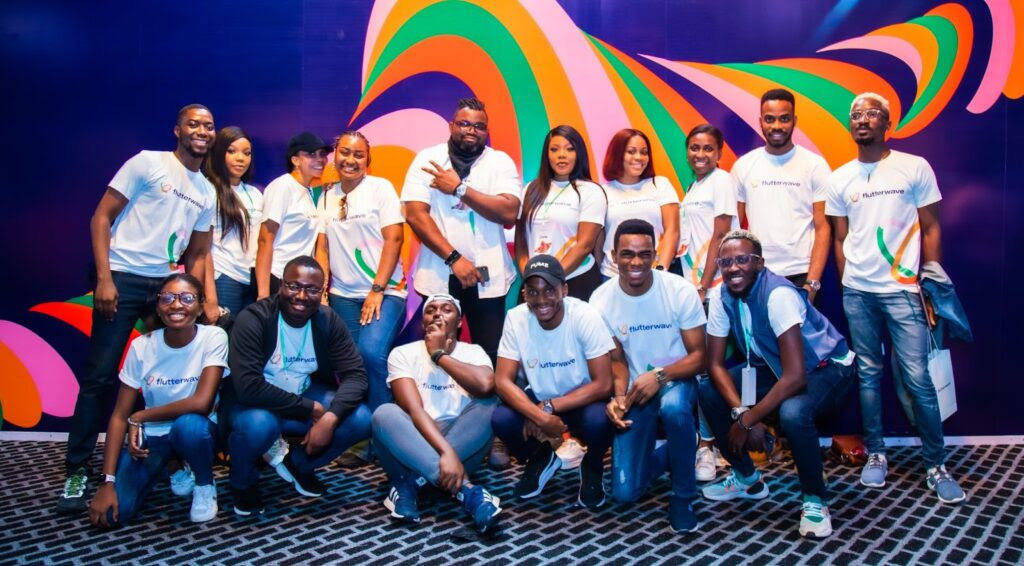
The Send App, launched in 2021 by fintech unicorn Flutterwave, serves Africans in the diaspora, enabling them to seamlessly send money to families, friends, and businesses back home and beyond.

Since its launch, the app has been fulfilling its mission of providing a fast, transparent, and secure way for the Africans Diaspora to bridge the distance, strengthen the bonds and connect with home.

Send App, which was recently launched in Ghana this year, has also expanded to several African countries which include Malawi, Egypt, Senegal, and Zambia, with local licenses ensuring compliance and seamless integration with mobile money platforms.

Key Features of the Send App

Global Reach and Multi-Currency Support

Send App supports transfers to over 30 countries, including African nations like Nigeria, Ghana, Kenya, Ethiopia, Senegal, Malawi, and Egypt, as well as European countries such as Austria, Belgium, France, Germany, and Spain. Users can send money in more than 30 currencies, making it versatile for global transactions.

Speed

In 2024, 98% of transactions on the app, was completed in under five minutes, making it one of the fastest remittance solutions available.

Multiple Transfer Options

Recipients can receive funds via local bank accounts, mobile money wallets, or cash pick-up locations, offering flexibility based on the recipient’s preferences and regional infrastructure.

Payment Methods

Users can fund transfers using debit cards, credit cards, bank transfers, Apple Pay, or Google Pay (Google Pay is web-only). Once payment is confirmed, transactions are processed instantly.

User-Friendly Interface

The app is praised for its intuitive navigation, making it easy to initiate and track transfers. Features like real-time exchange rate updates, an activity section for transaction tracking, and a voucher/referral code section enhance the user experience.

Security and Compliance

Powered by Flutterwave’s ISO 27001 & 22301-certified infrastructure, Send App ensures robust security, exceeding industry standards. It complies with PCI DSS and includes partnerships with institutions like Nigeria’s EFCC to combat fraud. Flutterwave emphasizes that it never requests sensitive information like card details or OTPs via unofficial channels.

Swap Integration

In February 2025, Send App integrated Swap, allowing Nigerian users to exchange Naira for foreign currencies (USD, GBP, EUR) and send money abroad within the same app. This eliminates the need for multiple platforms, streamlining currency exchange and transfers.

Send App Competitive Edge

With a deep understanding of African diaspora needs, Send App stands out in a crowded remittance market that includes big players like World Remit, Wise, and Sendwave, amongst others.

The app supports unique remittance use cases, such as sending funds for “Bride Price,” which saw an 86.37% increase in such transactions, from February to March 2024, reflecting its alignment with African traditions.

By aligning with the communal, emotional, and cultural needs of Africans, Send App outperforms competitors, positioning itself as the go-to platform for Africans sending money back home.

Conclusion

Flutterwave’s Send App is more than a money transfer tool; it’s a bridge connecting Africans worldwide to their roots. With its robust features, expanding reach, and commitment to security, it empowers users to send money quickly and reliably, reinforcing Flutterwave’s mission to unite Africa through payments.

By combining technology, affordability, and convenience, the app is redefining the remittance experience, bringing Africa one step closer to a financially inclusive and interconnected future.
Schedule Your Tekedia Growth Hour

0

We have started scheduling Tekedia Growth Hour (batch 3) for the current edition of Tekedia Mini-MBA. This is for our corporate and group clients who enrolled Learners in bulk. Please check your emails and follow the instructions to schedule.

During Tekedia Mini-MBA, we schedule Tekedia Growth Hour with groups and corporate participants attending our program. We use the opportunity to discuss, at more specific levels, how some of the frameworks and business models we have studied could be applied in the companies. We do batch this throughout the program. I personally coordinate that via Zoom.

Register for the next edition of Tekedia Mini-MBA here 

From the Desert to the City: UAE’s Top Car Rental Marketplace Makes Dubai Car Rental a Breeze

0

Dubai, the cosmopolitan city with fabulous contemporary structures, endless deserts, and luxury lifestyle, is a host to a large number of tourists every year- be it business travelers or the ones on a leisurely vacation. For anyone exploring Dubai, the most crucial element is the possession of a reliable and convenient means of transport. O has emerged as the most leading car rental Dubai marketplace to rent electric car Dubai, offering a seamless and hassle-free experience for both residents and visitors alike.

Whether one is driving across the iconic skyscrapers of Downtown Dubai or navigating the golden sand dunes of the desert, the local suppliers at O ensure that getting a car in Dubai is easy and stress-free.

O is a marketplace that connects users to local car rental providers throughout Dubai. While most traditional car rental services require tedious paperwork, associated hidden fees and complicated booking procedures, O has simplified everything in its very user-friendly platform. Customers can browse an enormous range of rental options- with budget-friendly compact cars to luxury vehicles to suit varied needs and preferences.

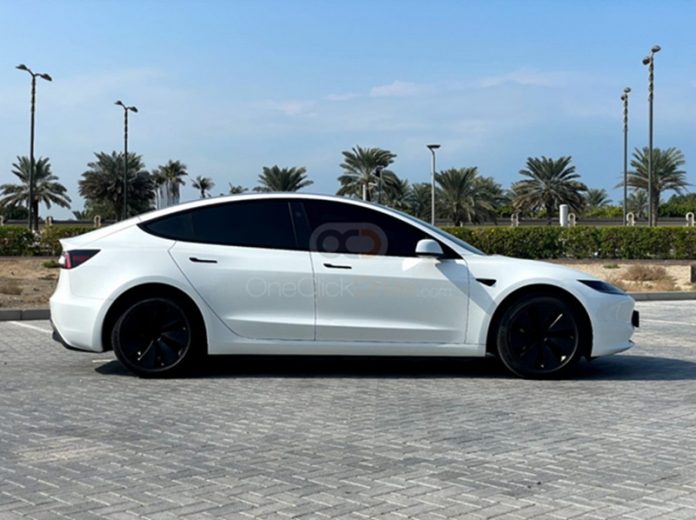
The platform caters to both locals and visitors, offering an even greater flexibility in rental periods ranging from a couple of hours to month-long rentals. For tourists who want their trips to be memorable by cruising the city in high-end luxury cars, sports cars or even Dubai monthly rent a car, through the suppliers at O. In addition, there are compact and sedan cars, such as Toyota, Honda, and Nissan, for those on a tighter budget and still needing a convenient ride.

O understands that people who visit Dubai want to take pleasure in its deserts and nature exploration. There are also available 4×4 SUVs such as the Toyota Land Cruiser and Nissan Patrol on this platform- these vehicles are suitable for off-road adventures.

O has really gone all the way to ensure that the entire car rental process is as simple as possible. The website and mobile app are even equipped with user-friendly interfaces for browsing through available vehicles, comparing price quotes, and booking. Customers can also filter results using vehicle type, duration of rental, or price range.

On top of that, O provides customers with pickup and drop-off locations available throughout Dubai, ranging from the airports, hotels, and big sites- this feature is sure to be appreciated by both tourists and residents. The delivery can be made doorstep convenient, whether delivering the rental car directly to a user’s site for an uninterrupted journey.

Whether new to Dubai or a longtime resident, O through its listings from local suppliers offers a simple, effective, and inexpensive car rental solution.

Aso Villa Goes Solar as Power Bills Soar, Signaling More Challenge in Nigeria’s Electricity Sector

0
Concept of house in paper on blue color background for real estate property industry

In a move that has left many Nigerians seething, the Federal Government has earmarked a staggering N10 billion in the 2025 budget to install a solar-powered mini-grid at the Presidential Villa, suggesting it is walking away from the national electricity grid,  per The Punch.

The plan, tucked inside the N57.1 billion proposed for the State House next year, covers the “solarization” of the Villa, including its main buildings in Abuja, the State House Medical Centre, and the former seat of government at Dodan Barracks in Lagos. According to internal projections, the project is expected to save the Villa up to N5 billion annually in electricity bills.

The decision has stirred a fresh conversation about Nigeria’s electricity challenge. While officials say the project is aimed at promoting clean energy, many believe it lays bare the growing crisis in Nigeria’s power sector — one that the government itself now appears eager to escape.

The Villa’s pivot to solar isn’t happening in a vacuum. In February this year, the Abuja Electricity Distribution Company (AEDC) publicly named the Presidential Villa among its top debtors, claiming the State House owed over N923 million in unpaid electricity bills. The presidency initially disputed the figure, but after a reconciliation process, it acknowledged a debt of N342 million, which President Bola Tinubu ordered paid immediately.

The scale of the Villa’s power consumption has since become a matter of national interest. According to GovSpend, a public finance tracking platform, the presidency spent more than N483 million on electricity in 2024 alone. A large chunk of that came from a lump-sum payment of N316.88 million in October, presumably to settle part of the backlog.

Meanwhile, the State House has continued to burn millions on diesel. In the three months following that payment, records show that over N88 million was spent on diesel alone — a signal that power from the national grid, even when paid for, isn’t always available.

Still, the move to spend N10 billion on solar power is raising serious questions, not just about the presidency’s energy choices, but about the message it sends to a nation whose power sector is already wobbling under the weight of high tariffs, low supply, and dwindling public trust. For ordinary Nigerians who are grappling with record-high electricity costs and epileptic supply, the question now is: if the Villa can’t cope with grid electricity, how are the rest of the country’s consumers supposed to survive?

The concern is more notable among Nigeria’s electricity consumers, who have faced exorbitant tariff increases over the last year. The most punishing of these came in April when the Nigerian Electricity Regulatory Commission (NERC) approved a new Band A tariff of N209.5 per kilowatt-hour, more than triple the previous rate of N68. Band A customers are meant to receive at least 20 hours of electricity daily. However, many of them still struggle with intermittent supply.

The Villa is classified under this premium band, and it’s no surprise the costs are stacking up. Last week,  Lagos State’s Deputy Governor, Obafemi Hamzat, revealed that he was slapped with an N29 million electricity bill for a single month.

For many, the government’s decision to disconnect itself from the grid, even in the name of sustainability, confirms that the national electricity supply system is not only unreliable but unaffordable.

A Sector Focused on Revenue, Not Service

The discontent deepened earlier this month when the Minister of Power, Adebayo Adelabu, announced that the electricity sector had raked in N700 billion in revenue in 2024. While the government has touted the figure as a sign of improvement in the power sector, critics say it reveals a troubling shift in focus — from service delivery to aggressive revenue generation.

The solarization of the Presidential Villa, as extensive and strategic as it may seem, is not part of any clear national solar roadmap. There is no indication that the government plans to extend similar installations to schools, hospitals, or local government secretariats, many of which continue to operate without basic electricity.

The project itself is already running behind schedule. Construction of a 1.2MW solar facility at the State House Medical Centre was launched in October 2024, but by early 2025, no physical work had begun on solar infrastructure for the main Villa complex. Officials blame procurement delays, but critics suspect the project could be bogged down by bureaucratic inertia or even mismanagement.

The Villa’s move for solar energy underlines Nigeria’s current electricity situation, where individuals and businesses are increasingly seeing solar as an alternative to the country’s expensive – yet unstable power supply.

Savings Emerged as The Second Fastest Growing Financial Service Among Mobile Money Providers in 2024

0
Piggybank for saving has enslaved many to online lenders

Mobile money usage worldwide has continued to gain momentum, as millions of people now use their cell phones to manage their finances.

A state of the industry report on mobile money 2025, revealed that last year, savings was the second fastest-growing mobile money adjacent financial service. In 2024, 34% of mobile money providers were reported to be offering savings services, up from 23% in 2023.

As a result, the cumulative number of unique customers who transferred funds to a savings account grew by 80% between September 2023 and June 2024. This includes customers using a dedicated interest-bearing savings account (where regulations permit) or others who use mobile money accounts as a reliable store of value.

Demand-side data supports this latter point. In several African and Asian countries, mobile money is being used by more customers to save money. The number of customers saving money via mobile money over the past 12 months grew by more than 20 percentage points in Ethiopia, India, Indonesia and Nigeria.

Customers who used mobile money to send money to a savings account in the past 12 months in Nigeria, from 2023 and 2024, grew from 40% to 71%. Senegal grew from 5% to 8%, Bangladesh grew from 7% to 14% and Pakistan grew from 3% to 15%. Significant increases were also observed in Pakistan and Uganda.

Notably, a high number of users were already using mobile money to save money in Kenya in 2023, leading to a modest rise in 2024. As of 2023, responses to the 2024 GSMA Global
Adoption Survey suggest that women continue to rely on mobile money to save money. Among MMPs that offer savings accounts, the number that collect gender-disaggregated data remains small but has grown by nearly half year on year. MMPs that collected this data reported a 91% increase in the cumulative number of unique female customers saving money via mobile money.

Growth of savings on mobile money platforms reflects a broader trend in which mobile money services are transitioning from simple payment tools to more comprehensive digital financial ecosystems. This growth is majorly attributed to ease of access in making deposits and withdrawals.

As competition in the mobile money space intensifies, providers are seeking to differentiate themselves by offering value-added services that meet the broader financial needs of their users. Savings products, in particular, serve a dual purpose: they not only help users manage their money more effectively but also deepen engagement with the platform and foster long-term customer loyalty.

The increased availability of savings services can be attributed to several factors. First, there is a growing demand among users especially in underserved or unbanked regions for tools that allow them to securely store and grow their money. Mobile money platforms, which often offer easier access than traditional banks, are well-positioned to meet this need. By offering savings accounts or wallet-based savings features, MMPs can help users cultivate better financial habits, build resilience, and achieve their financial goals.

Second, regulatory environments in many markets have become more supportive of financial inclusion, encouraging mobile money operators to expand their range of services. Partnerships between mobile money providers and financial institutions have also played a critical role, enabling the integration of savings accounts that are backed by banks, thus adding a layer of security and trust for users.

Third, advancements in technology have made it easier and more cost-effective for mobile money platforms to roll out savings products. Digital onboarding, mobile KYC (Know Your Customer) processes, and intuitive user interfaces have lowered the barriers for both providers and users to adopt these services.

Looking ahead

The upward trajectory of savings on mobile money platforms is a positive indicator of the shift toward more holistic financial offerings. If this trend continues, savings could soon rival core mobile money services in terms of both relevance and user adoption marking an important milestone in the journey toward greater financial inclusion and economic empowerment through digital finance.