DD
MM
YYYY

PAGES

DD
MM
YYYY

spot_img

PAGES

Home Blog Page 153

Shiba Inu Forecasts 20x, but Ozak AI Prediction Suggests a True 100x Path

0

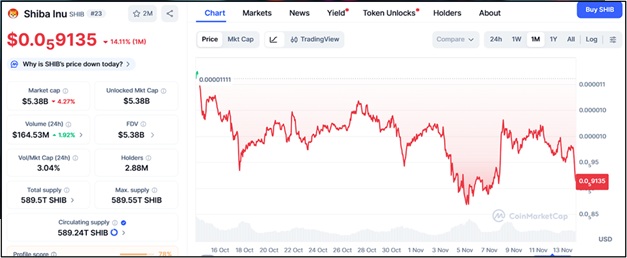
Crypto momentum is constructing speedily in 2025, and Shiba Inu (SHIB) is once again proving why meme cash dominates retail exhilaration. Trading around $0.000009135, SHIB is gearing up for what analysts accept as true, which will be a prime breakout, with forecasts pointing toward a capacity 20x rally if meme sentiment peaks during the bull cycle.

Its chart structure stays healthful, with support maintaining close to $0.00000870, $0.00000811, and $0.00000747, at the same time as resistance stages appear at $0.00000981, $0.00001092, and $0.00001208. With a huge international network and a strong ecosystem constructed round Shibarium, SHIB is poised for stable upside.

But even with such bullish predictions, the conversation among aggressive investors is shifting. While SHIB may offer impressive gains, the project that traders believe could deliver true life-changing returns is not another meme coin—it’s Ozak AI (OZ), a presale-stage AI-driven ecosystem projecting a potential 100x path by 2026.

Shiba Inu’s 20x Outlook Looks Strong

Shiba Inu has matured into certainly one of the biggest meme coins in crypto, backed by an enormous massive network guide and a developing utility layer through Shibarium. The project now has real infrastructure, robust branding, and regular change volume—all signs and symptoms that SHIB is here to stay.

However, its size also limits its explosive upside. For SHIB to rally 50x or 100x like early holders once experienced, its market cap would need to climb to levels unrealistic in the current environment. A 10x–20x run is still very achievable, making SHIB a solid performer, but investors chasing the highest multipliers are already looking ahead.

That’s exactly why Ozak AI is powering into the spotlight: it offers the kind of early-stage pricing and technological advantage that gives it the realistic potential to outperform every major meme coin this cycle.

Ozak AI Offers What SHIB Cannot—Early Valuation Plus Real AI Utility

Ozak AI is one of the most talked-about presales of 2025 because it represents a completely different category of growth. Instead of relying on social hype or meme narratives, its ecosystem is built around AI prediction agents—autonomous, intelligent systems that can analyze blockchain data, forecast market trends, optimize DeFi strategies, and execute on-chain actions without human input.

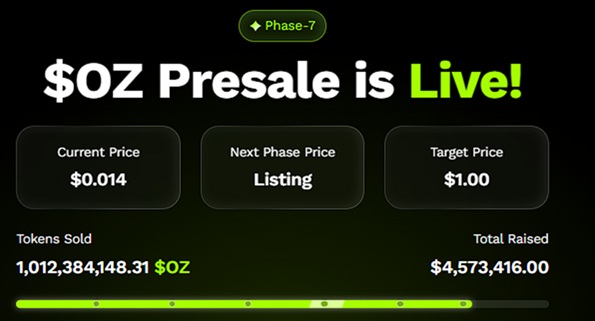
This is the next stage of blockchain evolution: networks that learn, adapt, and operate intelligently. Ozak AI is positioning itself as a foundational part of that transformation. Early traction supports the hype—the project has raised over $4.5 million, sold more than 1 billion OZ tokens, and completed CertiK and Sherlock audits. Listings on CoinMarketCap and CoinGecko, along with partnerships with Perceptron Network, HIVE, and SINT, give Ozak AI rare credibility for a presale project.

At its current OZ presale price of $0.012, traders can still accumulate significant token amounts—and this early valuation is what makes the projected 100x path achievable. If Ozak AI reaches $1 by 2026, early investors could see returns dwarfing even SHIB’s 20x forecast.

SHIB May Multiply Portfolios

Shiba Inu remains one of the strongest meme coins on the market, and a 20x rally would make it one of the top performers of the cycle. Its community, liquidity, and ecosystem ensure SHIB will stay relevant throughout the bull run.

But when the conversation shifts to the biggest multipliers, Ozak AI stands in a league of its own. With cutting-edge AI utility, massive early traction, and ultra-low presale pricing, Ozak AI has emerged as one of the most compelling 100x opportunities available today.

About Ozak AI

Ozak AI is a blockchain-based crypto venture that offers a technology platform that focuses on predictive AI and advanced records analytics for monetary markets. Through machine learning algorithms and decentralized network technologies, Ozak AI permits real-time, correct, and actionable insights to help crypto fanatics and companies make the precise choices.


For more, visit:

Website: https://ozak.ai/

Telegram: https://t.me/OzakAGI

Twitter: https://x.com/ozakagi

Google’s $15bn Andhra Pradesh Bet Signals a New Phase in India’s Race for Digital Infrastructure

0

Alphabet Inc.’s Google is preparing to plant one of its most ambitious energy-linked data-center footprints in Andhra Pradesh, Bloomberg reports.

According to the report, the state’s leader, N. Chandrababu Naidu, is already signaling that the scale of the project may grow far beyond the initial $15 billion planned for the first five years.

During an interview in Visakhapatnam on Saturday, Naidu said Google’s plan to set up a large data center in the coastal city is only the starting point of what he expects to become a long-term expansion. Asked whether the US tech giant might double its investment once the initial period elapses, he said, “It is always an opportunity under their compulsions.” His phrasing hinted that global infrastructure pressure — driven by rising AI workloads — could draw Google into a deeper build-out.

“It is a win-win situation to start with $15 billion within five years,” Naidu said, framing the company’s move as a cornerstone of Andhra Pradesh’s economic revival strategy.

A State Racing to Become India’s Data Capital

Andhra Pradesh has set in motion a sweeping plan to court data-center operators, renewable-energy investors, and global cloud companies. Naidu said the state already has commitments for 5.5 GW of data-center capacity from firms including Reliance Industries Ltd., and that the build-out will be paired with large-scale green-energy expansion.

“This data flow is cost-effective compared to consumption of power,” he said — an argument that blends the economics of hyperscale computing with the state’s long-term energy plan. “That is the game changer. Now everybody is coming to Andhra Pradesh.”

Naidu said the combined effect of these projects positions Andhra Pradesh to become a global hub for data centers, a goal he has pursued since his earlier tenures, long before the current AI-driven global infrastructure boom.

Google announced the Visakhapatnam project last month, linking it to new energy sources and a fiber-optic network that would anchor the region’s role in the company’s Indian operations. Indian tycoon Gautam Adani later confirmed that his joint venture, AdaniConneX, would partner with Google on the project, along with Bharti Airtel, India’s second-largest wireless carrier.

Google has described the project as its largest investment in India to date. It is also designed to serve as a base for accelerating local AI-industry growth, aligning with state and national goals for tech-led economic expansion. Google’s representatives have not commented on Naidu’s latest remarks about possible additional investment.

India’s Data-Center Boom Intensifies

The larger landscape around Google’s project is charged with activity. India has emerged as one of the biggest global beneficiaries of the AI infrastructure wave, drawing interest from nearly every major US technology company.

Amazon has already outlined a plan to invest $12.7 billion in cloud infrastructure in India by 2030. OpenAI, in partnership negotiations with local and global players, is pursuing a 1-gigawatt data-center project in the region — one of the largest single-site capacities ever proposed by a US AI company. The country’s overall data-center investment is expected to cross $100 billion by 2027, according to CBRE Group Inc.

This rush is tied directly to unprecedented global demand for AI computing. Goldman Sachs Research estimates that the world will have about 122 GW of data-center capacity in place by the end of 2030. That level of expansion brings profound consequences for global power systems and could require roughly $720 billion in grid spending through the decade.

In India, the expansion is taking on a distinctive shape. Commercial land costs are lower than many global competitors; telecom infrastructure is widespread; and the country offers one of the largest bases of cloud-ready enterprises and digital consumers. At the same time, the demands of hyperscale AI infrastructure have laid bare the parts of India’s system that still run thin — from inconsistent electricity supply to tight water resources and the long delays that accompany grid expansion.

Modi’s National Tech Push Meets Local Constraints

Prime Minister Narendra Modi has framed technology as a driver of economic transformation, job creation, and poverty reduction. That has translated into open support for data-center investment, subsidies for renewable-energy expansion, and a long queue of state governments competing to attract hyperscale facilities.

But India’s infrastructure gap remains a central tension. Water availability has been a mounting challenge for the industry, because many data centers rely on cooling technologies that require large volumes of water. Several states have begun pressuring operators to adopt air-cooling or hybrid systems, which are more costly.

Electricity reliability also complicates the government’s pitch. The power grid in many regions still struggles with load balancing, and the sudden rise of power-intensive data centers — combined with rapid electrification of transport and manufacturing — risks outpacing grid upgrades. The country’s renewable-energy sector is growing fast, yet still faces bottlenecks in storage capacity, transmission lines, and project approvals.

These limitations do not diminish India’s appeal, but they raise the stakes for states like Andhra Pradesh that want to become dominant players in digital infrastructure. Naidu’s administration is attempting to address this by tying data-center policy directly to renewable-energy expansion and by pitching the state as a region where land, power, and logistics can be delivered in a unified package.

Naidu said he is targeting a 15 percent annual growth rate for Andhra Pradesh and expects to attract $1 trillion in investment over the next decade. The figure is ambitious and hinges heavily on the state’s ability to attract companies that commit large sums over long durations — such as Google.

The chief minister’s strategy depends on portraying the state as stable, predictable, and business-friendly at a moment when global companies are seeking locations that can sustain multi-billion-dollar AI infrastructure. Land availability around Visakhapatnam, the presence of major ports, ongoing renewable-energy projects, and political alignment with the central government all form part of his pitch.

The political angle matters. Naidu’s Telugu Desam Party is a crucial part of the coalition supporting Narendra Modi’s government in New Delhi. On Saturday, Naidu cited the sweeping victory of Modi’s party in the Bihar state election this week as evidence of national stability under the current leadership.

“Winning the election is a message for the global community and also local people,” he said. “Local people will move very fast because of stability.”

That line captures the state government’s effort to signal reliability to global investors. In many emerging markets, political stability is a deciding factor for long-term cloud and AI infrastructure commitments. Hyperscale projects can take years to plan and decades to operate, requiring regulatory continuity and consistently supportive local administrations. Naidu is seeking to assure investors that Andhra Pradesh can deliver that environment.

What Google Stands to Gain

For Google, the Visakhapatnam project fits into a broader push to expand global AI infrastructure and build regional hubs tied directly to renewable-energy sources.

Its India expansion has grown more urgent as AI model training and inference needs soar. The company is competing head-to-head with Amazon, Microsoft, and Meta for global GPU capacity, land, fiber routes, and long-term clean-energy contracts. India offers a combination of scale and cost efficiency that makes it attractive for future AI clusters, especially as the company seeks to diversify beyond its existing US and European centers.

The Visakhapatnam project is particularly significant because it is designed from inception with green-energy integration and dedicated fiber infrastructure — a model that Google has been moving toward in several countries to strengthen long-term resilience and cost predictability.

The project is also expected to strengthen Google’s relationship with India, a market central to the company’s product roadmap. India is one of the world’s largest bases of internet users, mobile-first consumers, and developers — making local AI infrastructure a strategic priority.

Google’s decision to anchor a major investment in Andhra Pradesh is already reshaping expectations for the region. The combined effect of Google, Reliance, AdaniConneX, and Bharti Airtel positions the state as one of the emerging pillars of India’s AI and cloud economy.

However, whether the $15 billion investment grows further will depend on factors well beyond Andhra Pradesh: global GPU availability, cloud demand across Asia, India’s regulatory climate, and Google’s own AI-infrastructure strategy. But Naidu’s confidence, and his eagerness to suggest that the company might scale beyond its initial commitment, is rooted in the speed of India’s data-center boom.

Bitcoin Slides Below $92K as Market Uncertainty Deepens, Erases 2025 Gains

0

Bitcoin fell below $92,000 on Monday as mounting macroeconomic concerns continued to weigh on investor sentiment. The world’s largest cryptocurrency has erased all its 2025 gains and now trades roughly 27% below its all-time high of more than $126,000, reached on October 6.

This downturn has sparked renewed debate about whether the current bull cycle is nearing its end. After hitting a record last month, Bitcoin has since tumbled sharply, wiping out $600 billion in market value since October, according to data compiled by Bloomberg.

Despite the severity of the decline, analysts note that there has been “no clear trigger” for the selloff. Instead, many point to rising macroeconomic uncertainty, particularly regarding the Federal Reserve’s interest-rate path and concerns over the overall health of the U.S. economy.

Zach Pandl, head of research at Grayscale Investments, explained that the market has been repricing early-stage, innovative, frontier-technology assets over the past month and crypto has been significantly affected as part of that revaluation.

While the possibility of a December rate cut remains unclear, some analysts believe the Fed’s expected decision to halt quantitative tightening in December could improve financial conditions and potentially support Bitcoin’s price. Interestingly, the selloff occurred even as tech stocks—which often move in tandem with digital assets—looked poised for a rebound. Nasdaq 100 futures rose 0.6% on Monday, suggesting that equity investors view the recent pullback as a buying opportunity.

Bitcoin and other major cryptocurrencies, however, did not share the same momentum, signaling persistent caution ahead of several key economic reports delayed by the U.S. government shutdown.

Amid the broader downturn, the world’s largest corporate Bitcoin holder went against the tide. Strategy announced on Monday that it purchased 8,178 Bitcoin last week for $836 million, bringing its total holdings to just under 650,000 BTC. This marks Strategy’s largest weekly acquisition since late July.

Gerry O’Shea, head of global market insights at Hashdex, emphasized Bitcoin’s evolution into a macro-driven asset. According to him, uncertainty around Federal Reserve policy tends to negatively impact Bitcoin, while clearer expectations of a December rate cut could help lift prices.

Bitcoin is now down 25% from its October high and has officially formed a death cross on the daily chart, with the 50-day moving average falling below the 200-day. This bearish technical signal follows weeks of weakening momentum through October and November that dragged the price below $100,000. Historically, such a formation often marks a key moment in Bitcoin’s market cycles, indicating either the formation of a base or further downside ahead before stabilization can occur.

As Bitcoin struggles, one of its most vocal critics, Peter Schiff, has intensified his long-running attacks. He criticized CNBC for previously amplifying Bitcoin’s bullish narrative but now offering less commentary during the correction. Schiff argued that analysts remain “at a loss” to explain Bitcoin’s decline after many predicted much higher prices. He reiterated his long-standing position that Bitcoin is a “modern-day tulip,” a criticism he has repeated since the cryptocurrency traded below $1,000.

In contrast to bearish sentiment, an unexpected bullish prediction has come from Kim Young-hoon, a South Korean prodigy recognized as having the world’s highest verified IQ of 276. Kim forecasts that Bitcoin will surge to $220,000 within the next 45 days. Traders are now debating whether he sees a trend others have overlooked, especially as Bitcoin faces rising fear in the market, unstable ETF inflows, and shifting macroeconomic conditions.

For Bitcoin to reach $220,000, the price would need to more than double from current levels—a jump exceeding 126% in a short period. Many experts view this prediction as highly unlikely, though it has added an intriguing twist to the ongoing uncertainty around Bitcoin’s next move.

South Africa Lands First Credit Upgrade in Nearly Two Decades: S&P Lifts Country to “BB” as Reform Push Steadies Economy

0

South Africa has secured its first sovereign credit rating upgrade in almost 20 years after S&P Global lifted the country’s foreign-currency long-term rating to “BB” from “BB-”, marking a milestone in a reform drive aimed at stabilizing public finances and hauling the economy out of years of sluggish growth.

The upgrade, announced on Friday, comes after the ratings agency cited stronger growth prospects, an improving fiscal outlook and reduced contingent liabilities. Those improvements are tied in large part to better performance at Eskom, the state-owned power utility whose operational failures and heavy debt load have long weighed on the country’s ratings.

The National Treasury has spent the past several years pushing to slow the rise in public debt and restore fiscal credibility after a long period of deterioration. The mid-term budget review published recently showed the country’s debt-to-GDP ratio stabilizing at 77.9% this financial year, with the budget deficit expected to narrow to 4.7% of GDP in 2025/26. That is an improvement from the 4.8% deficit projected in the May budget, signaling momentum behind efforts to pull the country onto a more sustainable path.

S&P said it expects South Africa’s GDP growth to rise to 1.1% in 2025 after a weak 0.5% in 2024, and to average about 1.5% between 2026 and 2028 as electricity supply improves and other sectors begin to add support. That view reflects the ratings agency’s assessment that years of power disruptions are easing and that reforms in freight logistics and state-owned enterprises are beginning to show progress.

State firms in both power and freight have been at the center of South Africa’s economic constraints. Eskom’s inability to keep the lights on — a crisis that frequently cuts power to homes, factories, and mines — has repeatedly held back growth. At the same time, bottlenecks at Transnet, the state freight and ports operator, have choked exports in major sectors such as mining. The government has attempted to tackle these issues through structural reforms that allow more private-sector participation and clearer operational targets. S&P said those changes are contributing to the improved outlook.

Fiscal performance is also beginning to align with Treasury’s targets. Revenue collections have exceeded projections early in the 2025 fiscal year, giving the government breathing room as it pursues fiscal consolidation. The ratings agency said it expects successive years of primary surpluses and continued discipline through 2028, underscoring expectations that the consolidation trend will hold.

Even with the upgrade, South Africa remains two notches below investment grade on its foreign-currency rating. The country first fell into junk status in 2017 after the removal of then Finance Minister Pravin Gordhan by President Jacob Zuma triggered political turmoil and policy instability. Successive downgrade cycles from that moment deepened investor concern and drove up borrowing costs.

S&P kept South Africa’s outlook at “positive,” signaling that further improvements could arise if reforms continue to take hold, the fiscal position strengthens further, and growth stabilizes above recent lows.

The upgrade marks a symbolic turning point for Africa’s most industrialized economy, which has spent years struggling to reverse weak growth, unreliable power supply, and widening fiscal strain. But holding the momentum is likely going to depend on the government’s ability to keep reforms on track while navigating slow global demand, stubbornly high domestic unemployment, and pressure to expand social spending.

Apple Intensifies Succession Planning as Tim Cook Prepares to Step Down – FT

0

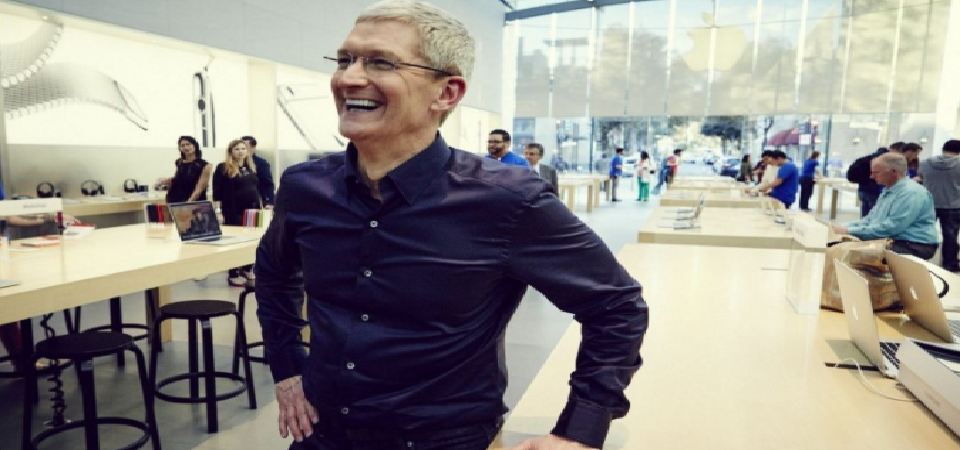
Apple Inc. is stepping up preparations for a major leadership transition as Chief Executive Tim Cook signals his potential departure as soon as next year, a move that points to the tech giant’s efforts to secure continuity at the top as the tech industry evolves.

John Ternus, Apple’s senior vice president of hardware engineering, is widely considered the leading internal candidate to succeed Cook, according to sources familiar with internal discussions reported by the Financial Times.

Cook, who has led Apple for more than 14 years following Steve Jobs’ resignation in 2011, has overseen transformative developments in the company’s product lines and services business. His tenure has included the expansion of Apple’s global footprint, record-setting revenues, and initiatives in new sectors such as healthcare, augmented reality, and financial services. His potential exit is seen as a pivotal moment for Apple, raising questions about how the company will maintain its culture of innovation while navigating global market challenges.

The company’s board and senior executives are reportedly weighing the timing and approach to the succession carefully, with a formal announcement unlikely before Apple’s next earnings report in late January, which will cover the critical holiday sales period. Analysts note that an orderly transition is essential to maintain investor confidence, particularly given the high expectations surrounding Apple’s continued growth in hardware, services, and emerging technologies like artificial intelligence.

Promoting Ternus, a long-serving Apple engineer who has overseen the development of the iPhone, iPad, and Mac product lines, would reflect the company’s broader strategy of internal succession planning. His deep knowledge of Apple’s engineering processes, product strategy, and market positioning positions him to manage both operational continuity and strategic innovation.

Apple’s succession planning also reflects a wider trend across Silicon Valley, where long-tenured leaders are preparing to step down as companies face intensifying competition, regulatory scrutiny, and pressure to sustain growth in emerging sectors. Analysts point to examples such as Microsoft, which has gradually shifted leadership roles in anticipation of Satya Nadella’s eventual succession planning, and Google, where Sundar Pichai oversees a sprawling empire of cloud, AI, and consumer products while being groomed for continuity within Alphabet’s structure.

Investor response to CEO transitions at major tech firms has historically been mixed. While succession can signal stability and foresight, markets may react cautiously if there is uncertainty about the company’s strategic direction or the successor’s capacity to maintain momentum. In Apple’s case, Ternus’ potential appointment is likely to be interpreted as a vote of confidence in internal talent, signaling continuity in product vision and execution.

Cook’s eventual departure comes as Apple faces broader industry pressures, including intensifying pressure to get directly involved in the AI evolution – starting its own model – especially as competition from Microsoft, Google, Amazon, and Chinese tech companies in hardware and cloud heightens. The board’s proactive planning suggests a recognition that maintaining Apple’s market leadership will require a balance of operational stability and innovative edge during and after the leadership transition.

While Apple has not commented on succession plans, the accelerated internal discussions underscore its push to maintain seamless leadership amid growing competition from Chinese phone makers.