DD
MM
YYYY

PAGES

DD
MM
YYYY

spot_img

PAGES

Home Blog Page 1534

TRUMP Price Drops 21% & TAO’s Outlook Shaky — BlockDAG Raises the Bar on Security as Crypto Hacks Shake Confidence!

0

The latest market downturn has traders scrambling to reassess their portfolios. The Official Trump (TRUMP) price has plunged 21% over the past week. Many link this sharp decline to Bitcoin’s slide and the letdown from Donald Trump’s newest executive order.

Meanwhile, the Bittensor (TAO) future remains unclear as the token tumbled below $300. Analysts are eyeing a critical range between $250 and $260 to see if it holds. Bitcoin’s next move could heavily influence both TRUMP and TAO prices going forward.

Yet for those still asking which crypto to buy today, BlockDAG (BDAG) is making waves. The team has tightened security through an external review by Halborn, ongoing CertiK assessments, and in-depth internal audits. Combine this with a stellar presale that’s already pulled in $205 million, and BlockDAG is becoming a bright spot in an otherwise shaky market.

TRUMP Price Drops 21% as Market Sentiment Worsens

The Official Trump (TRUMP) price has slipped to $10.15 following a tough 21% loss this week. Bitcoin’s downturn has dragged most altcoins lower, and TRUMP is no exception. The drop is also being blamed on disappointment over Donald Trump’s recent executive order, which skipped over any direct mention of Bitcoin purchases. Many in the crypto community were hoping for stronger backing, but this cautious move has left them unimpressed, putting even more pressure on TRUMP’s price.

Wider market weakness, including lackluster U.S. job reports, has added to the slide. Some analysts say a recovery for TRUMP could follow if Bitcoin stabilizes. But for now, sentiment needs a serious lift—and perhaps better policy moves—before any quick rebound is possible.

TAO’s Future Faces Questions After Falling Below $300

Bittensor (TAO) is also feeling the heat. After dipping under $300, the TAO future is under serious scrutiny. The token is now down 46% from its February peak, and many are watching to see if it finds support in the $250-$260 zone where trading activity has been concentrated.

Just like TRUMP, TAO’s future depends on what Bitcoin does next. So far, altcoins have been following Bitcoin’s lead, and TAO is no exception. Analysts point out heavy resistance at $320 and $360. But if Bitcoin fails to turn things around, the TAO future could see prices slip as low as $216 before finding its footing. Buyers are keeping a close eye on volume and price action before making any long-term commitments.

BlockDAG Sharpens Security to Win Trust

Recent security breaches have shaken crypto holders. Multi-million-dollar hacks on exchanges and smart contract failures have wiped out funds fast. Big names like Bybit and DAO have been hit hard, leaving a cloud of doubt over the sector. If there’s one clear takeaway, it’s this—security has to come first.

BlockDAG knows what’s at stake. They’ve built a tough, layered security setup designed to lock things down. This includes extensive internal audits, a completed security review by Halborn, and an ongoing assessment from CertiK. After their beta testnet launch, they’re planning a full blockchain audit. Plus, BlockDAG’s Bug Bounty Program rewards ethical hackers for finding issues before bad actors can exploit them.

These efforts are already paying off. BlockDAG’s presale has exploded, with early adopters seeing 2,380% returns. The project has raised $205 million and sold 18.8 billion coins. Batch 27 coins are now going for $0.0248. With a mainnet launch and exchange listings just around the corner, traders are anticipating even more momentum—and many don’t want to miss their chance.

For anyone wondering which crypto to buy today, BlockDAG makes a strong case. The project offers serious security, clear progress, and a roadmap that’s got people excited. As demand keeps rising, there’s a growing sense that now is the time to act—before it’s too late.

What’s Next for TRUMP, TAO, & BDAG?

Crypto traders remain fixated on market trends as the Official Trump (TRUMP) price struggles to recover from a 21% fall, and the Bittensor (TAO) future remains murky. Both assets have suffered heavy losses, with Bitcoin’s performance steering their next moves. Analysts are watching for signs of support on TAO and a possible bounce for TRUMP if market sentiment shifts.

But for those still deciding which crypto to buy today, BlockDAG is looking like the obvious answer. Backed by Halborn and CertiK audits and with $205 million already raised in its presale, BlockDAG has become a lifeline in today’s uncertain market. As its mainnet and exchange debuts get closer, more traders are jumping in—hoping to get ahead before prices climb higher.

Presale: https://purchase.blockdag.network

Website: https://blockdag.network

Telegram: https://t.me/blockDAGnetworkOfficial

Discord: https://discord.gg/Q7BxghMVyu
JPMorgan Chase Renames DEI Program (DOI) Amid Trump Administration Crackdown

0
JP Morgan Chase puts contents through its CEO account, it goes viral. But the same content via JPMC account, no one cares (WSJ)

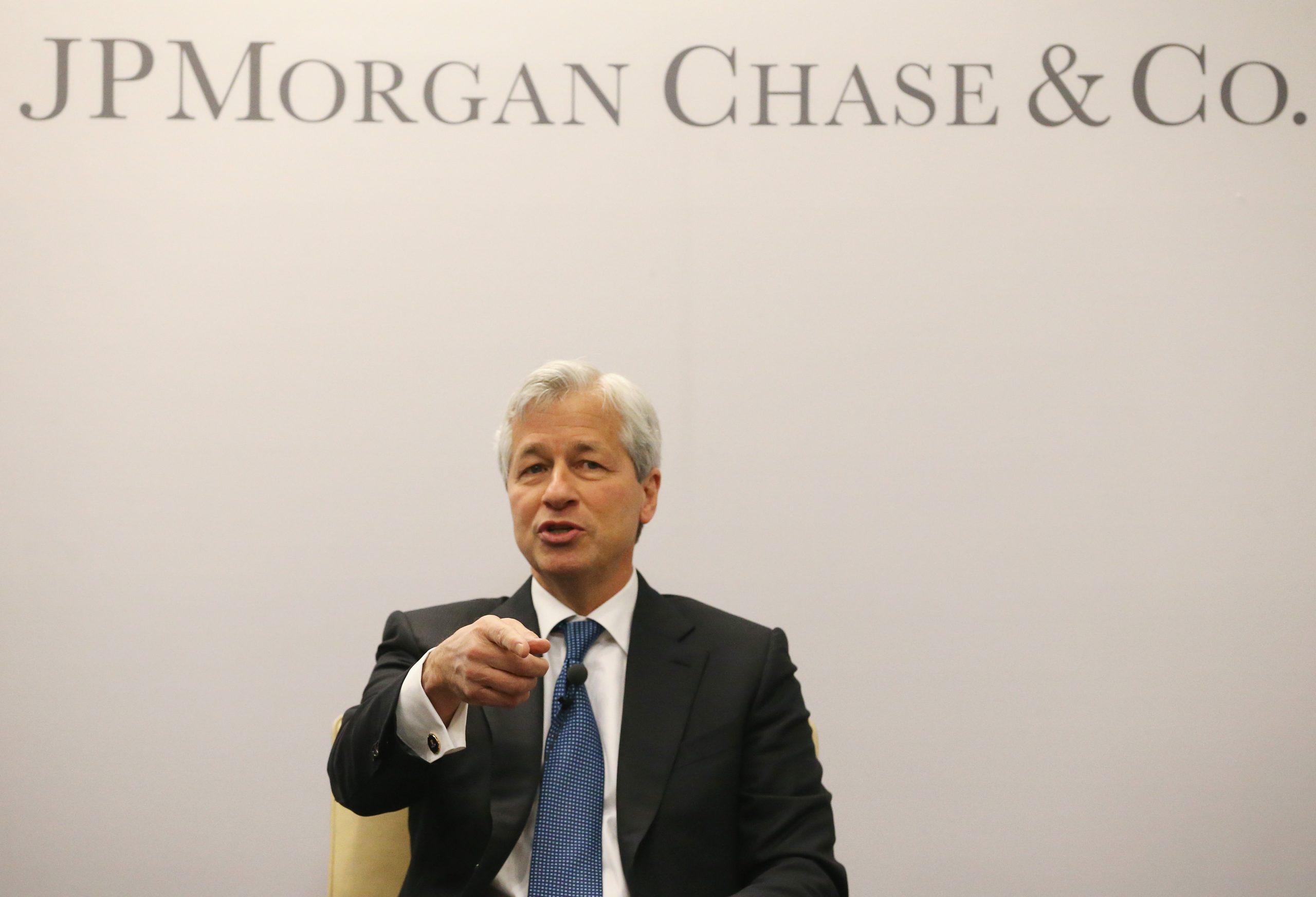
JPMorgan Chase & Co., the largest bank in the United States, has announced a rebranding of its Diversity, Equity, and Inclusion (DEI) program to Diversity, Opportunity, and Inclusion (DOI).

The move comes as the Trump administration intensifies its attack on corporate DEI initiatives, pushing companies to reconsider their approach to diversity efforts.

In a memo to staff, JPMorgan’s Chief Operating Officer, Jenn Piepszak, explained that the bank always understood the “E” in DEI to mean equal opportunity, not equal outcomes. She stated that DOI more accurately reflects the bank’s ongoing approach to growing its business while reaching the most customers and clients.

The decision aligns with a broader shift in corporate America, as many companies have begun reversing, scaling back, or completely eliminating DEI programs in response to increasing political scrutiny.

Trump Administration’s DEI Crackdown

Since taking office in January, President Donald Trump has signed a series of executive orders aimed at dismantling DEI policies across the federal government and corporate sectors. These measures have banned federal agencies and contractors from funding DEI programs, forcing them to erase references to diversity efforts from their websites. They have also restricted corporate hiring and promotion initiatives that incorporate race or gender considerations while threatening legal action against companies that continue to operate DEI policies deemed discriminatory.

As a result, major corporations are adjusting their policies to avoid potential legal and regulatory battles.

JPMorgan’s New Approach to Diversity

While renaming the initiative, JPMorgan insists it remains committed to diversity in hiring, compensation, and promotions—without implementing quotas or race-based pay incentives. In her memo, Piepszak reassured employees that the bank does not have illegal quotas or pay incentives and would never turn someone away because of their political or religious beliefs, or because of who they are.

The bank also announced that it will scale back diversity training programs, maintaining only what it describes as “high-quality offerings.” Employee resource groups, which serve as internal communities for minority and marginalized employees, will remain but will shift their focus to engagement, cultural celebrations, and education rather than direct advocacy.

Other Major Companies Scaling Back DEI

JPMorgan is not alone in making adjustments. Several high-profile companies have also scaled back or eliminated DEI programs in response to political pressure. Goldman Sachs and Citigroup have reduced their diversity hiring targets following scrutiny from conservative groups and political leaders. Walt Disney Co. has quietly removed references to DEI from its corporate strategy, shifting its focus toward traditional merit-based hiring.

Accenture, a global consulting giant, has announced it will no longer use diversity targets in hiring and promotions, citing Trump’s executive orders. Swiss pharmaceutical companies Novartis and Roche have abandoned certain DEI initiatives over concerns about potential legal risks in the U.S. market. Meta, Facebook’s parent company, has disbanded its DEI team, with reports suggesting the company is distancing itself from DEI-related policies.

This wave of corporate rollbacks signals a shift in corporate America’s approach to diversity policies, as businesses attempt to navigate political pressure while maintaining their commitments to inclusion.

The dismantling of DEI initiatives has sparked criticism from civil rights groups, legal scholars, and corporate leaders, who warn that reducing diversity efforts could expose companies to lawsuits for failing to uphold workplace inclusion policies. Many argue that these rollbacks will discourage minority hiring and promotion opportunities, leading to long-term workforce disparities. Others caution that the removal of structured diversity programs could create a hostile work environment for employees who previously benefited from them.

Despite these concerns, Trump’s administration remains firm in its stance against DEI, claiming that such programs promote discrimination rather than prevent it.

Uranium Digital successfully Raised $6.1M to Boost RWA

0

Uranium Digital, a startup focused on revolutionizing uranium trading through tokenization, has successfully raised $6.1 million in a seed funding round. The round was led by Framework Ventures, with participation from other investors, to accelerate the development of a crypto-powered spot trading platform for uranium. This platform aims to bring efficiency and transparency to the uranium market by leveraging blockchain technology, specifically targeting institutional clients while abstracting away the complexities of on-chain trading.

The company, founded by Alex Dolesky, seeks to “financialize” the traditionally opaque and underfunded uranium spot market, capitalizing on the growing global demand for nuclear energy as a clean power source. The funds will be used to enhance the platform’s infrastructure, expand business and engineering teams, and expedite its launch to meet what Dolesky describes as exceptional market demand. This follows a previous pre-seed round of $1.7 million, reflecting strong investor confidence in the startup’s vision to modernize uranium trading.

The $6.1 million seed round raised by Uranium Digital to tokenize uranium sales carries several significant implications across financial, energy, and technological domains. Tokenization on a blockchain platform could streamline the traditionally opaque uranium spot market, reducing intermediaries and transaction costs. By digitizing uranium sales, buyers and sellers—especially institutional players—might benefit from faster settlements and clearer pricing data.

Historically, uranium trading has been illiquid and dominated by long-term contracts. A tokenized spot market could attract more participants, including speculative investors, potentially increasing liquidity and market depth. While aimed at institutions, the platform’s abstraction of blockchain complexities might eventually lower barriers for smaller players, democratizing access to a niche commodity market.

As global demand for clean energy rises, nuclear power is gaining traction. Uranium Digital’s platform could ensure a more reliable and flexible uranium supply chain, supporting the expansion of nuclear energy infrastructure. Increased trading activity and speculation via tokenization might introduce greater price volatility to uranium, which could affect the economics of nuclear power projects—either encouraging investment during price spikes or deterring it during slumps.

This venture exemplifies the growing intersection of cryptocurrency and real-world assets (RWAs). Tokenizing uranium could set a precedent for other commodities (e.g., rare earths, lithium) to adopt similar models, further bridging traditional finance and decentralized systems. The involvement of Framework Ventures and other backers’ signals confidence in crypto-driven financialization. It may draw more venture capital into energy-tech hybrids, especially those leveraging blockchain.

Uranium Digital’s success hinges on building robust infrastructure and convincing conservative energy markets to adopt a crypto-based system. Technical hiccups or security breaches could undermine trust. Uranium is a heavily regulated material due to its use in nuclear energy and weapons. Tokenization introduces questions about compliance with international trade laws, anti-money laundering (AML) rules, and nuclear non-proliferation agreements. Regulatory pushback could slow or derail the platform’s rollout.

The funding reflects optimism about a “nuclear renaissance” driven by climate goals. If successful, Uranium Digital could amplify this narrative, encouraging more investment in nuclear-related technologies. This isn’t just about uranium—it’s a sign of blockchain’s evolution beyond meme coins and DeFi hype into practical, industrial applications. It could bolster the credibility of crypto as a transformative tool.

In summary, Uranium Digital’s seed round and tokenized trading platform could reshape how uranium is bought and sold, aligning with trends in clean energy and financial innovation. However, its implications hinge on execution, market adoption, and navigating a complex regulatory landscape. Success could ripple beyond uranium, while failure might caution against overhyping blockchain’s commodity potential.

BlockDAG – SpaceDev Deal Triggers $205M Presale Rise While SHIB Market Cap Declines & NEAR Struggles

0

Shiba Inu (SHIB) market cap is under pressure as the coin contends with increasing sales, battling to maintain its status among the leading 20 cryptos. NEAR also experiences a decline as the Near Protocol (NEAR) bearish sentiment intensifies, with significant losses raising fears of a further fall to $1.90.

As these coins face challenges, BlockDAG (BDAG) heads in a promising direction. Its new partnership with SpaceDev promises to boost its ecosystem, sparking innovation and attracting developers.

The excitement around BDAG is palpable, propelling its presale beyond $205 million as it heads toward a $600 million goal. With this rapid ascent, BDAG is being touted as the next big crypto to keep an eye on.

Shiba Inu (SHIB) Market Cap Dips

The Shiba Inu (SHIB) market cap is under increasing pressure as the coin fights to keep its place among the top cryptocurrencies. With a current valuation of $2.79 billion, its ranking is jeopardized by continuous price declines. Over the last week, SHIB has faced repeated losses, sparking concerns about declining confidence and market outlook.

While still in the top 20, the contraction in its market cap signals a tough path ahead. Analysts believe that for SHIB to stabilize, a reversal in purchasing trends and an overall market rebound are necessary. Without a resurgence of interest, the Shiba Inu market cap might continue its downward trajectory.

Near Protocol (NEAR) Bearish Sentiment Hints Drops

The Near Protocol (NEAR) bearish sentiment remains a hot topic as the crypto struggles to find its footing. In the past week, NEAR has seen a 24% value decrease, with a further 9.74% fall in the last 24 hours. Analysts are cautioning that the downturn might extend, predicting a potential fall to $1.90—a 26% decline from its current price of $2.56.

Technical analyses, such as moving averages and resistance levels, indicate sustained selling pressure. If the Near Protocol (NEAR) bearish sentiment continues, traders could face additional losses unless there’s a rise in buying to mitigate the downward trend.

BlockDAG and SpaceDev’s Strategic Partnership: A Game Changer in Crypto Innovation

BlockDAG has been enhancing its global profile through significant partnerships, from Inter Milan to HackerEarth, boosting its credibility and influence across various sectors. These strategic alliances have laid the groundwork for monumental developments. BlockDAG’s latest partnership with SpaceDev is a pivotal move, not just increasing brand visibility but also enhancing its technological capabilities and ecosystem.

This collaboration is poised to bring substantial advancements. SpaceDev’s expertise could refine BlockDAG’s blockchain framework, enhancing its efficiency and scalability. Moreover, SpaceDev will be instrumental in boosting community involvement through hackathons, new developer initiatives, and ambassador programs. SpaceDev is also involved in administering BlockDAG’s $30 million grants program, which supports promising blockchain innovations, driving broader adoption.

The trading community has responded positively. Following the SpaceDev announcement, BlockDAG’s presale has rocketed past $205 million, with over 18.8 billion BDAG sold. The coin’s price has surged by 2380% since its initial offering, now priced at $0.0248 in its 27th batch.

With the presale nearing its $600 million goal and analysts forecasting a 30,000x ROI for early participants, the synergy between strong partnerships and explosive presale growth positions BlockDAG as the next big crypto to keep an eye on.

Emerging Crypto Trends: What’s on the Horizon?

The Shiba Inu (SHIB) market cap continues to struggle, and without a surge in buyer interest, its ranking among the top 20 cryptos is in jeopardy. Similarly, the Near Protocol (NEAR) bearish sentiment indicates potential further declines, with projections of a drop to $1.90 unless there’s a shift in market dynamics.

Conversely, BlockDAG is on an upward trajectory. Its partnership with SpaceDev is poised to catalyze significant growth within its ecosystem, while the presale’s impressive surge past $205 million underscores its market enthusiasm. With a 2380% increase in price and a presale target of $600 million, the buzz around BlockDAG suggests it might be the next big crypto to flourish in 2025.

Presale: https://purchase.blockdag.network

Website: https://blockdag.network

Telegram: https://t.me/blockDAGnetworkOfficial

Discord: https://discord.gg/Q7BxghMVyu

Nigerian Govt. Releases Withheld Rivers State Funds to Sole Administrator, Sparks Legal Concerns, Allegations of Embezzlement Plot

0

The Sole Administrator of Rivers State, Ibok-Ete Ibas, has announced the release of withheld local government allocations, assuring that necessary steps will be taken to ensure the prompt payment of workers’ salaries.

Speaking during a meeting with Heads of Local Government Administrators in Port Harcourt, Ibas described the gathering as a pivotal moment in the collective effort to restore stability and progress in the state.

He lamented the economic hardship in the Niger Delta, noting that despite the region’s vast natural resources, its people continue to suffer. “This is unacceptable,” he stated, emphasizing the need for transformation and accountability. Expressing concern over the delay in salary payments across local government areas, the administrator acknowledged the struggles of affected workers.

“I feel the pain of the workers,” he said, assuring them that the withheld allocations had been released and that his administration would ensure that salaries were paid without delay. However, he warned that financial accountability would be strictly enforced.

Ibas, a retired vice admiral and former Chief of Naval Staff, directed all local government areas to submit their wage bills, supported by relevant documentation, through the office of the Head of Service. He emphasized that his administration would not tolerate financial recklessness, vowing to scrutinize the handling of public funds and take action against any mismanagement.

He stressed that good governance is not just a slogan but a commitment to changing the negative narrative within the next six months. He further highlighted the importance of collaboration with traditional rulers and security agencies to enhance security at the grassroots level.

“You must take the lead in ensuring security within your domains,” he urged local government administrators.

In response, the President of the Nigeria Union of Local Government Employees (NULGE) and Administrator of Port Harcourt Local Government Area, Clifford Paul, acknowledged the developmental strides made in the state despite political conflicts. He commended the Federal Government for appointing the Sole Administrator, attributing the decision to his competence and leadership ability.

He pledged to support peace and stability while urging the administrator to prioritize workers’ welfare. He explained that local government workers are currently owed two months’ salaries but are hopeful now that the withheld allocations have been released. He encouraged stakeholders to seize this opportunity to rebuild trust and foster unity in the state.

Legal and Constitutional Questions Over Release of Funds

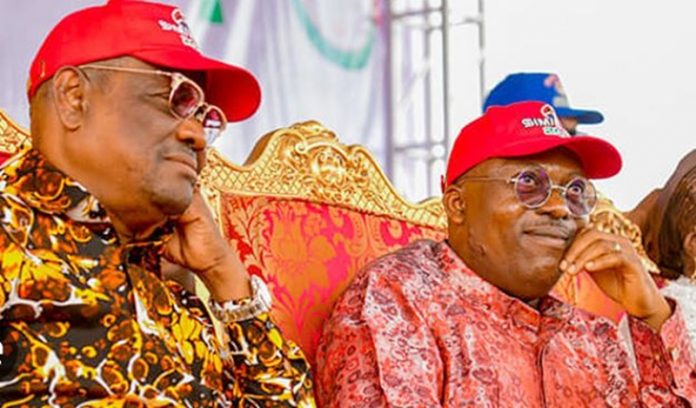
While the announcement may have brought relief to local government workers, it has raised serious legal and constitutional questions. The Supreme Court had ruled that statutory allocations to Rivers State should be withheld because Governor Siminalayi Fubara did not recognize the House of Assembly and did not present the state budget for passage.

President Bola Tinubu has accused Fubara of failing to obey the Supreme Court ruling, despite the governor reportedly writing to the same House to enable him to present the budget. However, rather than allowing the constitutional process to unfold, Tinubu proceeded to suspend both the Governor and the House of Assembly and appointed a Sole Administrator to run the state.

Now, the same withheld allocations are being released to Ibas, a move that legal experts describe as a blatant violation of the court’s order.

Rights lawyer Inibehe Effiong sharply criticized the development, questioning the logic behind withholding allocations due to a lack of House of Assembly recognition, only to release them to a Sole Administrator who has no constitutional basis to appropriate state funds.

“So, the allocations were withheld because there was no House of Assembly or the Governor did not recognize the House and did not present the budget, but you have now suspended both the Governor and the House and proceeded to appoint a Sole Administrator and handed over allocations to the Sole Administrator,” Effiong said.

“How do you reconcile this?” he asked.

“If it was right for the allocations to be withheld because there was no House of Assembly or due to the governor’s refusal to present the budget before the House, on what legal, moral, or logical basis are you releasing the same allocations to a Sole Administrator after suspending the Governor and the House?”

He further pointed out that under Sections 120 and 121 of the Nigerian Constitution, no state funds can be appropriated without a valid Appropriation Law. Since the Sole Administrator has no budget legally passed by a recognized House of Assembly, the release of the withheld allocations raises suspicions of financial mismanagement.

“Is the Sole Administrator a constitutional substitute for the House of Assembly and the Governor?” Effiong queried.

“Which budget will the Sole Administrator now use to appropriate the allocations of Rivers State? State funds and allocations cannot be appropriated without being enabled by an Appropriation Law.”

He concluded that Tinubu’s actions amounted to trampling on Nigeria’s Constitution.

“Tinubu has defecated on the Constitution of Nigeria,” he stated.

Allegations of an Embezzlement Ploy

Beyond the legal and constitutional debates, many Nigerians believe the imposition of a state of emergency and the appointment of a Sole Administrator are calculated moves to enable the embezzlement of Rivers State’s funds. The decision to suspend a sitting governor and an entire legislative assembly, only to place a federal appointee in charge of the state’s finances, has raised red flags.

Rivers State, one of Nigeria’s richest due to its oil revenue, has long been a battleground for political control. With the governor and House of Assembly sidelined, the state’s funds are now in the hands of a federally appointed official with no elected mandate.

The appointment of Ibas, a retired military officer with no prior experience in civilian governance, has further fueled suspicions. Many believe his role is not to provide leadership but to serve as a conduit for the diversion of funds.

Is this shenanigans all about stealing the allocations of Rivers State? Is that what this impunity is all about?” Effiong asked.

Political Implications of The Martial Law

This development has sparked fears that similar takeovers could happen in other states where federal interests are at stake. The move is seen as a dangerous precedent that undermines Nigeria’s federal structure, weakening the power of state governments and centralizing control in Abuja.

“So let me understand it: A minister or ally of the president can wake up any time to engineer chaos and instability in a state and the president’s response will be to illegally remove the state governor to placate his ally,” a social commentator, Olufunmilayo, said. “So someone from the presidency can artificially start chaos in Osun, Oyo, or Kano and next thing their governor is gone. This is the era we are now in, yeah?”