DD
MM
YYYY

PAGES

DD
MM
YYYY

spot_img

PAGES

Home Blog Page 1551

Tinubu Declares State of Emergency in Rivers Amid Political Crisis, Appoints Vice Admiral Ibas (Rtd) As Sole Administrator

0

President Bola Ahmed Tinubu has declared a state of emergency in Rivers State, citing a prolonged political crisis and escalating security threats, including attacks on oil pipelines.

The announcement came during a nationwide broadcast on Tuesday night, marking a dramatic intervention in the governance of Nigeria’s oil-rich region.

The decision follows months of turmoil that have paralyzed governance in the state. The crisis began with a power struggle between Governor Siminalayi Fubara and his political rivals, leading to the demolition of the state House of Assembly in December 2023. Despite multiple interventions, including efforts by the president himself, no resolution was reached.

Timeline of the Crisis

The political conflict in Rivers escalated in late 2023 when Governor Fubara and his allies in the state legislature clashed over control of the state. On December 13, 2023, the governor ordered the demolition of the Rivers State House of Assembly complex, citing structural defects. However, many viewed the move as an attempt to weaken the legislative arm after 27 lawmakers defected from his party to the opposition. The assembly has remained non-functional for 14 months, effectively shutting down legislative governance in the state.

Attempts to mediate the crisis failed, including interventions by well-meaning Nigerians and stakeholders. On February 28, 2025, the Supreme Court ruled that the governor had acted unconstitutionally by rendering the legislature powerless, stating that “a government cannot be said to exist without one of the three arms that make up the government of a state.”

The court upheld that the 27 defected lawmakers were still valid members of the House of Assembly, dismissing any attempt to exclude them. However, the ruling failed to restore order as the political gridlock persisted.

Security Threats and Presidential Action

The crisis took a violent turn when militants, reportedly loyal to the governor, threatened political opponents. In recent days, attacks on oil infrastructure stirred further concern. According to security reports cited by President Tinubu, multiple oil pipelines were vandalized between Monday and Tuesday, prompting an urgent response from the federal government.

“In the latest security reports made available to me, there have been disturbing incidents of vandalization of pipelines by some militants without the governor taking any action to curtail them,” Tinubu said in his address. “I have given a stern order to the security agencies to ensure safety of lives of the good people of Rivers State and the oil pipelines.”

Despite the escalating crisis, neither Governor Fubara nor his deputy reached out to the presidency for intervention. Tinubu justified his decision, arguing that the gravity of the situation left him with no choice.

“With all these and many more, no good and responsible President will standby and allow the grave situation to continue without taking remedial steps prescribed by the Constitution,” he said. “It has become inevitably compelling for me to invoke the provision of section 305 of the Constitution to declare a state of emergency in Rivers State with effect from today, March 18, 2025, and I so do.”

Under the emergency rule, a federal administrator is expected to take over governance in Rivers State, sidelining the elected government. Thus, the president has appointed Vice Admiral Ibok-Ete Ekwe Ibas, a retired Navy vice admiral, who was the 22nd Chief of the Naval Staff (CNS) of the Nigerian Navy from 2015 to 2021, as the new Rivers Sole Administrator.

Backlash Over “Overreach”

Tinubu’s decision has drawn sharp criticism from opposition figures and civil society groups, who see it as an overreach of executive power. Many Nigerians argue that the crisis, though severe, does not warrant suspending democratic governance in one of the country’s most crucial states.

“Tinubu has no legal rights or basis to suspend a democratically elected governor. Even in a state of emergency, section 305 of the Constitution does not give the President power to suspend any Governor or Houses of Assembly from their jobs,” rights activist, Rinu Oduala stated.

Some legal experts have questioned whether the president followed due process, noting that the Nigerian Constitution requires the governor to request an emergency declaration—something Fubara did not do. Tinubu justified his move by arguing that the governor and his deputy had “failed” to make such a request despite the worsening crisis.

Economic Fallout

Beyond the political implications, analysts warn that imposing a state of emergency in Rivers, Nigeria’s “treasure base,” could have dire economic consequences. The state accounts for a significant portion of the country’s oil production, which fuels Nigeria’s revenue and foreign exchange earnings.

Kelvin Emmanuel, an economic analyst, warned that the decision puts over a third of Nigeria’s daily crude oil output at risk.

“34.6% of 1.47m barrels of daily crude oil output at 508k barrels is at risk with this current martial law,” he said.

Financial analyst Kalu Aja raised concerns about Nigeria’s economic stability, stating that the decision could hurt the country’s risk rating and increase borrowing costs.

“Nigeria, your risk rating just fell another notch. Yes, this means your borrowing costs will go up,” he noted.

Aja also questioned whether a federally appointed administrator could effectively manage Rivers’ economy, especially in securing investments.

“No serious investor will sign any agreement with a military man in a democracy,” he said. “Can a sole administrator borrow? Whose mandate? Can a sole administrator issue contracts?”


PancakeSwap Leading DEXes 24 Hour Fees Pulling Over $5.49M

0

PancakeSwap, built on the BNB Chain, is leading decentralized exchanges (DEXes) in 24-hour fees, pulling in $5.49 million. This is close to three times the amount generated by Uniswap, which recorded $1.8 million in the same period. The gap highlights PancakeSwap’s strong performance, likely driven by its lower transaction costs and high trading volumes on the BNB Chain, which continues to attract users seeking efficient DeFi solutions. This aligns with sentiment on where users have noted PancakeSwap’s dominance over competitors like Uniswap and others in the DEX space.

BNB Chain, originally launched as Binance Smart Chain (BSC) and later rebranded, offers several advantages that make it a popular choice for developers, traders, and DeFi users. BNB Chain is known for its significantly lower gas fees compared to networks like Ethereum. While Ethereum fees can spike during congestion, BNB Chain maintains costs often below $0.10 per transaction, making it attractive for high-frequency trading and micro-transactions, such as those on PancakeSwap.

With a block time of around 3 seconds and a capacity to handle thousands of transactions per second (TPS), BNB Chain offers fast confirmation times. This speed is a big draw for decentralized applications (dApps) requiring real-time interactions, like gaming or trading platforms. BNB Chain is fully compatible with the Ethereum Virtual Machine (EVM), meaning developers can easily port Ethereum-based smart contracts and tools over with minimal changes. This interoperability lowers the barrier to entry for projects migrating from or integrating with Ethereum.

It hosts a thriving DeFi ecosystem, with platforms like PancakeSwap, the leading DEX by fees, as well as other heavyweights like Venus (lending) and Alpaca Finance. The native token, BNB, powers this ecosystem, used for fees, staking, and governance, tying it all together. BNB Chain uses a Proof of Staked Authority (PoSA) consensus mechanism, blending elements of centralization (21 validators at a time) with staking. This results in higher throughput and lower costs than fully decentralized Proof of Work systems, though it trades off some decentralization—still, it’s a practical compromise for many users.

Through the BNB Beacon Chain (formerly Binance Chain) and bridges, BNB Chain supports asset transfers across different blockchains. This enhances liquidity and usability, letting users move assets like BNB, BEP-20 tokens, or even wrapped Bitcoin into its ecosystem. Backed by Binance, one of the world’s largest crypto exchanges, BNB Chain benefits from a huge community and deep liquidity pools. This network effect drives adoption, as seen with PancakeSwap’s $5.49 million in 24-hour fees dwarfing Uniswap’s $1.8 million as of March 18, 2025.

Users can stake BNB to secure the network or participate in yield farming on various protocols, often with higher returns than on more saturated chains. This incentivizes holding and using BNB within the ecosystem. In short, BNB Chain’s edge lies in its cost-efficiency, speed, and developer-friendly environment, paired with a strong community and Binance’s influence. It’s no surprise it’s powering the top DEX in fees—PancakeSwap thrives on these advantages, catering to users who prioritize performance over absolute decentralization.

BNB Chain’s low transaction costs—often under $0.10—make it dirt cheap to create, deploy, and trade memecoins. This is a huge deal for memecoin developers who can launch tokens with minimal upfront cost and for traders who can buy, sell, or speculate without getting burned by gas fees (unlike Ethereum, where fees can eat into small trades). It’s why BSC has become a hotbed for tokens like Dogelon Mars or Floki Inu clones. Memecoins thrive on hype and rapid trading cycles. With BNB Chain’s 3-second block times, trades settle almost instantly, letting the community pump volumes during moonshots or viral moments. This speed keeps the momentum going, unlike slower chains where delays can kill the vibe.

Reasons Why Bank of Korea Dismissed Plans for Strategic Bitcoin Reserve

0

The Bank of Korea (BOK) officials have provided clear reasoning behind their decision to dismiss plans for a strategic Bitcoin reserve, emphasizing a cautious approach rooted in financial stability and international standards. Their statements, primarily in response to inquiries from lawmakers, highlight several key concerns.
BOK officials have stressed Bitcoin’s extreme price volatility as a primary deterrent. They’ve noted that the cryptocurrency’s value can experience wild swings—recently trading around $83,500 after dropping 23% from a peak of $108,000 earlier in 2025.

They argue that such fluctuations could lead to significant risks for South Korea’s foreign exchange reserves, which currently stand at approximately $410 billion. Specifically, they’ve pointed out that in times of market instability, transaction costs to convert Bitcoin into cash “could rise drastically,” undermining the liquidity and reliability needed for reserve assets. Another critical point from BOK officials is Bitcoin’s failure to meet the International Monetary Fund’s (IMF) criteria for reserve assets. The IMF requires reserves to be liquid, marketable, and held in convertible currencies with investment-grade credit ratings—standards Bitcoin does not satisfy.

Officials have underscored that foreign exchange reserves must be “immediately usable when needed,” a quality they believe Bitcoin lacks due to its volatility and lack of widespread acceptance as a stable store of value. In a statement responding to a written inquiry from Representative Cha Kyu-geun of the Rebuilding Korea Party on March 16, 2025, the BOK clarified that it “has neither discussed nor reviewed the possible inclusion of Bitcoin in foreign exchange reserves.” This was a direct rebuttal to growing domestic speculation, spurred by the U.S.’s recent move to establish a strategic Bitcoin reserve under President Donald Trump.

The BOK’s position is that a “cautious approach is needed,” reflecting a broader trend among major central banks like the European Central Bank and the Swiss National Bank, which have similarly expressed reservations about Bitcoin. Officials also contrasted South Korea’s stance with countries like the Czech Republic, where leaders have shown openness to Bitcoin reserves, noting that global opinions remain divided. However, the BOK aligns more closely with conservative financial institutions, prioritizing stability over experimentation.

They’ve indicated no formal discussions have taken place, signaling a firm rejection of the idea for now, even as South Korea’s political landscape—amid potential elections and pro-crypto sentiments from parties like the Democratic Party—pushes for more progressive crypto policies. BOK officials’ statements reveal a deliberate focus on risk aversion, grounded in Bitcoin’s volatility, liquidity challenges, and non-compliance with IMF standards, positioning South Korea as a cautious observer rather than a pioneer in the crypto reserve space.

In the United States, the Trump administration has pivoted toward a crypto-friendly framework. An executive order in January 2025 established a working group to draft new regulations and explore a national digital asset stockpile from seized cryptocurrencies. The U.S. has also repealed stringent IRS DeFi broker rules and paused SEC enforcement actions, signaling a lighter regulatory touch. Stablecoin legislation is gaining traction, with bills like the Clarity for Payment Stablecoins Act under consideration, though a retail central bank digital currency (CBDC) has been ruled out.

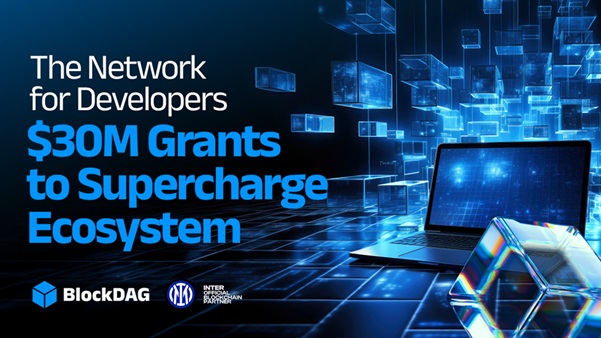
Pi & Dogecoin Face Bearish Trends While BlockDAG’s $30M Grants Initiative to Drive Explosive Growth! 

0

Crypto markets are never boring, but not all coins are winning the race. The Dogecoin (DOGE) bearish momentum continues as it struggles below key resistance levels, making traders cautious. Pi coin (Pi) price prediction remains uncertain, with prices hovering around $1.35 and no major moves in sight.

Unlike Dogecoin’s (DOGE) bearish struggle and Pi’s unpredictable swings, BlockDAG (BDAG) is pushing forward with its $30 million grant program, fueling blockchain growth. With $203.5 million raised and BDAG’s value surging 2380%, it’s proving to be one of the top crypto coins with real potential. While others are stuck, BlockDAG is moving at full speed.

Dogecoin (DOGE) Bearish Outlook: Support & Resistance Levels

Dogecoin’s (DOGE) bearish momentum continues as it struggles below key resistance levels. The price recently dropped to $0.1440 after failing to hold above $0.1850. It faces hurdles at $0.1620 and $0.1680, where a bearish trend line is forming. If Dogecoin (DOGE) bearish pressure increases, it may test support at $0.1500 or fall further to $0.1350.

A drop below $0.1450 could even send it to $0.1250. The MACD shows weak signs of recovery, and the RSI remains below 50, signalling ongoing selling pressure. To break free, DOGE must reclaim $0.1680; otherwise, the Dogecoin (DOGE) bearish outlook may persist. Traders are watching closely for any signs of a reversal.

Pi Coin Price Prediction: Will It Recover or Drop Further?

The Pi coin (Pi) price prediction remains uncertain. The coin once hit $3 but later dropped to $1.2. Now, it trades around $1.35. Many investors are watching closely. Some believe Pi could rise to $5 if listed on major exchanges. Others think its high supply may keep prices low.

Pi coin (Pi) price prediction also depends on events like Pi Day. If developers announce major updates, it may boost confidence. But delays or lack of progress could keep prices weak. Pi coin (Pi) price prediction suggests mixed outcomes. For now, investors should stay cautious, follow the news, and wait for more developments before making any decisions.

BlockDAG’s $30M Grant Initiative: Turning Blockchain Dreams into Reality

BlockDAG has announced a $30 million Grants Program to support developers in building new blockchain projects. This program will help create dApps, DeFi platforms, and other important blockchain tools. Developers can apply for grants from $10,000 to $100,000, paid in stablecoins and BDAG coins. With this support, they can bring their ideas to life without worrying about funding.

As more developers join BlockDAG’s network, demand for BDAG coins is expected to grow. This could increase the coin’s value and attract more investors. The program is designed to strengthen the entire ecosystem, making it easier for developers to enter the blockchain space and create useful applications.

BlockDAG’s presale numbers already show strong interest, with $203.5 million raised, over 18.8 billion BDAG coins sold, and a 2380% increase in value. As the project moves toward its $600 million goal, this program will bring even more growth and adoption for BlockDAG. The project is building a stronger and more active blockchain network by supporting developers and new projects.

Top Crypto Coins: Who’s In & Who’s Out?

BlockDAG plays a different game while Dogecoin and Pi Coin struggle to find direction. Dogecoin’s bearish trend keeps it under resistance levels, making it a risky bet for traders. Pi Coin’s price remains uncertain, with hopes tied to exchange listings and upcoming events. But hope alone doesn’t build momentum.

Meanwhile, BlockDAG is actively fueling blockchain growth, drawing in developers, and expanding its ecosystem with its $30 million grant initiative. Raising over $203.5 million and soaring 2380% in value, BlockDAG is building a solid foundation for long-term success.

Website: https://blockdag.network

Presale: https://purchase.blockdag.network

Telegram: https://t.me/blockDAGnetworkOfficial

Discord: https://discord.gg/Q7BxghMVyu

The CME Group Launches Solana Futures

0

The CME Group launched Solana (SOL) futures. This initiative introduced two contract sizes: a standard contract of 500 SOL and a micro-sized contract of 25 SOL. These futures are cash-settled, based on the CME CF Solana-Dollar Reference Rate, which provides a daily benchmark price for Solana in U.S. dollars. The launch reflects growing institutional interest in Solana and responds to increasing demand for regulated cryptocurrency products to manage price risk. It also marks a significant step in the broader adoption of Solana within traditional financial markets, potentially paving the way for future Solana-based exchange-traded funds (ETFs). Trading began following regulatory approval, with initial transactions executed by firms like FalconX and StoneX.

The launch of Solana futures by the CME Group, could have several notable impacts across financial markets, the cryptocurrency ecosystem, and broader adoption of Solana. Offering Solana futures on a regulated exchange like CME enhances its credibility, making it more appealing to institutional investors such as hedge funds, asset managers, and banks. This could drive higher capital inflows into Solana. Futures allow institutions to hedge against Solana’s price volatility, encouraging participation from players who were previously cautious due to the lack of regulated tools.

Historical trends with Bitcoin and Ethereum suggest that the introduction of futures on major exchanges often correlates with price rallies, as it signals mainstream acceptance. Solana’s price could see upward pressure, especially if demand for the futures contracts is strong. Initially, volatility might increase as speculators enter the market, but over time, futures could stabilize prices by enabling better risk management. Solana’s futures debut could intensify competition with Ethereum, Binance Coin, and other smart contract platforms, as it positions Solana as a serious contender in the eyes of traditional finance.

Success here might encourage CME and other exchanges to introduce futures for additional cryptocurrencies, expanding the range of regulated crypto derivatives. Futures are often a prerequisite for exchange-traded funds (ETFs) in the U.S., as seen with Bitcoin and Ethereum. The Solana futures launch could accelerate discussions and filings for a Solana ETF, further integrating it into mainstream portfolios. Approval of these futures suggests regulators like the CFTC are comfortable with Solana’s market structure, which could ease future approvals for related products.

The availability of standard (500 SOL) and micro (25 SOL) contracts caters to both large and smaller traders, potentially boosting trading volume and liquidity in Solana markets. CME’s international presence could attract traders from regions beyond the U.S., enhancing Solana’s global market depth. Increased financial interest in Solana could spur more development on its blockchain, known for high throughput and low costs, as projects anticipate greater funding and user adoption. A rising Solana price and institutional backing might amplify activity in its decentralized finance (DeFi) and non-fungible token (NFT) sectors.

The launch reinforces a positive narrative around Solana, especially after its recovery from challenges like the FTX collapse in 2022. It could shift sentiment further in favor of SOL as a top-tier asset. Retail and institutional speculators might pile into Solana, amplifying short-term price movements. The introduction of Solana futures by CME is likely to enhance its institutional credibility, boost liquidity, and potentially drive price appreciation while laying groundwork for further financial products. However, the extent of these impacts will depend on trading volume, market reception, and broader crypto market conditions in 2025.