DD
MM
YYYY

PAGES

DD
MM
YYYY

spot_img

PAGES

Home Blog Page 1556

Analyst Reveals When XRP Price Will Reach $706 And WallitIQ (WLTQ) Will Rally From $0.042 To $11

0

A jaw-dropping forecast has crypto circles buzzing. One analyst claims the XRP price is on track to hit $706. But that’s not all. The emerging token WallitIQ (WLTQ) is also expected to rocket from just $0.0420 to a staggering $11, signalling a shift in the market.

Bold XRP Forecast: $706 Price Target Explained

Crypto analyst and online personality CryptoSensei shared a tweet outlining a bold forecast for XRP price movement through 2026. The tweet featured a video showing someone tapping a pen on various XRP price levels and mapping out a possible trading strategy.

The XRP price started at $2.40 and dropped to $2.13 three days later with a buy signal. A week after that, the XRP price jumped to $7.60 with a sell cue. Two weeks in, the XRP price dipped to $ 3.40, triggering another buy. Seven months ahead, the XRP price was marked at $29.50 with a buy recommendation once again.

The final XRP price projection extended to 2026, predicting an astounding $705.50 with rich written beside it. Though the amounts were shown in euros, the XRP price path outlined matched the text caption, emphasizing a strategy based on accumulation and timely exits.

WallitIQ (WLTQ): The Underrated Token With $11 In Sight

WallitIQ (WLTQ) is quickly emerging as a frontrunner in the AI token space, drawing the attention of a leading crypto analyst who sees its price climbing from $0.0420 to $11 even as XRP price projections aim for a $706 milestone by 2026.

What sets WallitIQ (WLTQ) apart is its cutting-edge security framework, which establishes new digital asset protection standards. The analyst Is particularly impressed by its use of biometric authentication. This system uses unique physical identifiers like facial recognition and fingerprints, offering a secure and user-friendly alternative to outdated methods like passwords or PINs.

This next-level security boosts investor trust and makes the token highly appealing for long-term holders. Adding to its credibility, WallitIQ (WLTQ) recently passed a SolidProof smart contract audit, reinforcing its commitment to transparency and system integrity. The analyst believes the token is positioned for exponential growth to $11 with these protections in place.

Moreover, WallitIQ (WLTQ) isn’t just about defense; it’s also useful on the user experience front. Its new Crypto Wallet Management Mobile App smoothens operations through QR-powered payments, real-time market insights via CoinGecko, and interactive trading tools. Users also gain access to perks like airdrops, exclusive NFT drops, and VIP features.

With its beta platform gaining traction and early investors seeing promising returns, the analyst predicts WallitIQ (WLTQ) will surge from $0.0420 to $11 soon. As its presale heats up and nears a rapid sell-out, the token is positioning itself as a standout in the evolving AI-crypto landscape.

WallitIQ (WLTQ) Presale Is Live And The Clock Is Ticking

The crypto world is buzzing after a top analyst projected the XRP price could skyrocket to $706 by 2026. However, the spotlight is shifting toward WallitIQ (WLTQ), a rising AI-driven token set to climb from just $0.0420 to $11. WallitIQ (WLTQ) is capturing attention for its growth potential and user-focused features, especially its highly customizable interface.

Users can fully tailor their wallet experience by selecting widgets like live charts, portfolio trackers, and news updates, arranging them however they like. Whether you prefer a sleek dark mode or a vibrant color palette, the wallet adapts to your style and workflow, making it functional and visually appealing.

Beyond looks, WallitIQ (WLTQ) delivers real utility. It offers smooth, low-fee transactions for token swaps, DeFi tools, and smart contract execution, making crypto interaction smooth and cost-efficient. At a presale price of just $0.0420, the analyst believes the AI token is primed for explosive growth.

With the presale nearing full capacity, early adopters still have a limited window to snag a 20% bonus on all purchases. Investors are urged to participate in WallitIQ’s (WLTQ) presale before the opportunity passes.

Join the WallitIQ (WLTQ) presale and community:


Website: https://wallitiq.io/

Whitepaper: https://wallitiq.gitbook.io/wallitiq

Telegram: https://t.me/wallitiqofficial

Twitter/X: https://x.com/wiqnetwork

Instagram: https://www.instagram.com/wallitiqnetwork
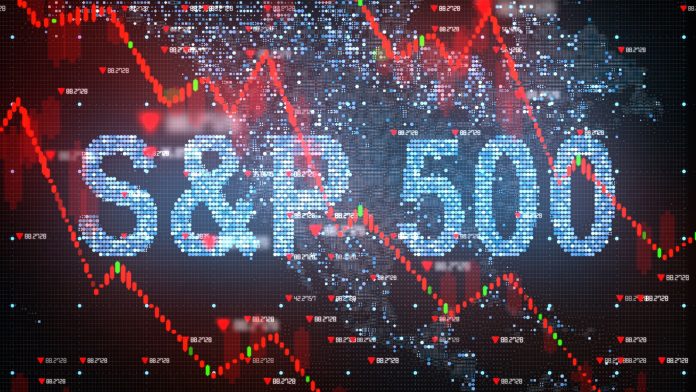
S&P 500 Pre-market’s 4% Slide Suggests Potential 5,500 Close —Down 9% in Two Days

0

The S&P 500 dropped 4.9%, marking its worst single day decline since June 2020, as reported by multiple financial outlets like Investopedia and Reuters. This plunge erased nearly $2.4 trillion in market value from S&P 500 companies, triggered by President Trump’s announcement of sweeping tariffs, including a baseline 10% on all U.S. trading partners and a 54% levy on Chinese goods. The Dow fell 1,700 points (4%), and the Nasdaq slid 6%, reflecting a broad market rout driven by fears of a trade war and recession. Reports from CNBC pegged it as the steepest drop since the early pandemic crash, with the VIX fear gauge spiking to 30—indicating high unease, though not outright panic.

Today, April 4, 2025, pre-market futures suggest more pain, with the S&P 500 down over 4% as of 1:11 PM WAT. This follows China’s retaliatory 34% tariff on U.S. goods and mirrors global market tremors—Japan’s Nikkei fell 2.77%, South Korea’s Kospi 0.76%, and Hong Kong’s Hang Seng 1.52%. Investors are reeling from uncertainty over Trump’s “Liberation Day” tariffs, which exceeded Wall Street’s worst-case scenarios. Defensive sectors like consumer staples (e.g., Lamb Weston up 10%) held firm, but tech giants like Apple (-9%) and Nvidia (-7%) got hammered, shedding over $900 billion combined from the “Magnificent Seven” cohort.

The sell-off ties to tariff-driven inflation fears and growth concerns. Goldman Sachs now sees 60% recession odds, per J.P. Morgan’s updated outlook, while markets price in four Fed rate cuts for 2025—up from two—hoping to cushion the blow. Bitcoin’s reversal from $84,600 to $83,000 aligns with this risk-off mood, though its long-term hedge potential lingers. Pre-market signals suggest the S&P 500 might test lower supports—5,300 is Goldman’s three-month target—unless a stabilizing catalyst emerges. Economic data like tomorrow’s jobs report could sway the trajectory, but for now, the markets in freefall mode.

The S&P 500’s 4.9% drop on April 3, 2025—its worst day since June 2020—followed by a pre-market slide of over 4% today, April 4, carries significant implications across the U.S. economy, global markets, and investor behavior.  The trigger—Trump’s 10% tariff on all trading partners and 54% on China, now met with China’s 34% retaliation—threatens a double whammy: inflation and growth stagnation. Higher import costs could push consumer prices up 2-3%, per Morgan Stanley estimates, hitting sectors like retail and manufacturing hardest. Walmart and Target, reliant on Chinese goods, saw pre-market dips of 3-5%, signaling margin pressure.

Meanwhile, export-heavy firms like Boeing or Caterpillar face demand craters in China, a $150 billion market for U.S. goods. Goldman Sachs’ 60% recession odds reflect fears that this trade war redux could tip the U.S. into contraction, especially with GDP growth already softening at 2.1% in Q1 2025 projections. The Fed’s in a bind. Markets now expect four 25-basis-point rate cuts in 2025—double prior forecasts—to offset tariff shocks, but that risks fueling inflation if supply chains don’t adjust. Jobs data due tomorrow could shift this calculus; a weak report might force an emergency cut, though the Fed’s signaled patience so far.

Consumer confidence, already shaky post-election, could nosedive, crimping spending that drives 70% of GDP. The S&P’s plunge isn’t isolated. Asia’s markets—Nikkei (-2.77%), Hang Seng (-1.52%)—and Europe’s STOXX 600 (down 2% pre-market) show contagion as trade war fears spread. China’s stimulus can’t fully offset U.S. tariff pain, and its retaliation might spark a broader tariff spiral with allies like the EU or Canada, fracturing global trade further. Emerging markets, dependent on U.S. demand, face currency pressure; the dollar’s 1% pre-market dip against the yen hints at safe-haven flows, but a prolonged slide could hit import-reliant nations.

Commodities are mixed: Oil (WTI -3% to $68) reflects growth fears, while gold (+1% to $2,700) gains as a hedge. Bitcoin’s $2,000 drop underscores crypto’s risk-asset status, though a prolonged crisis might flip it to a dollar-weakness play. The VIX at 30 signals volatility ahead—options traders on X see it hitting 40 if losses deepen. This rout crushed tech, with $900 billion wiped from the “Magnificent Seven” (Apple, Nvidia, etc.), ending their 2024 dominance. Investors are rotating to defensives—staples like Procter & Gamble (+2%)—and bonds; 10-year Treasury yields fell to 4.1% as cash flows to safety.

Retirement accounts tied to S&P ETFs took a $500 billion hit, per BlackRock data, rattling Main Street. Companies face a strategic mess: reshoring’s too slow to dodge tariffs, and earnings calls next quarter might slash guidance—Bank of America predicts a 10% EPS cut for S&P firms. If tariffs stick, globalization takes another blow, boosting “America First” supply chains but at a cost—JPMorgan estimates a 1% GDP drag by 2026. The S&P testing 5,300 (a 10% drop from its peak) might force a policy rethink or spark a dead-cat bounce if cooler heads prevail.

Klaus Schwab’s Resignation Signal a Symbolic Turning Point for Globalization

0

According to Reuters, Klaus Schwab, the founder of the World Economic Forum (WEF), has informed the organization’s board of trustees that he will “start the process” of stepping down as chair. A WEF spokesperson confirmed this to Reuters, though no specific timeline for his departure was provided beyond the WEF’s earlier statement to the Financial Times, which suggested the process should be completed by January 2027. Schwab will remain in his role until a successor is appointed.

This follows his earlier transition in May 2024, when he stepped back from executive duties to become Chairman of the Board of Trustees, a shift completed by January 2025 as part of a planned governance evolution. The Reuters report aligns with these developments, marking another step in Schwab’s gradual exit from leadership after over five decades with the organization he founded in 1971.

Klaus Schwab’s resignation as chair of the World Economic Forum (WEF) could have nuanced implications for globalization, though the extent depends on how his departure shifts the organization’s direction and influence. Schwab has been a pivotal figure in shaping the WEF into a key platform for global elites—business leaders, policymakers, and intellectuals—to coordinate on economic and political issues. His vision of “stakeholder capitalism” and initiatives like the “Great Reset” have positioned the WEF as a driver of interconnected markets, cross-border collaboration, and supranational agendas, all hallmarks of modern globalization.

With his exit, several possibilities emerge. First, the WEF’s influence might wane if his successor lacks the same charisma, network, or ideological drive. Schwab’s personal gravitas—built over 50+ years—turned Davos into a global power hub. A less prominent leader could dilute its role as a convener of the world’s decision-makers, potentially slowing momentum on globalist projects like climate agreements or trade liberalization. Alternatively, a new chair might pivot the WEF toward a fresher agenda, either doubling down on globalization (e.g., pushing digital trade or green policies) or responding to its critics by emphasizing local sovereignty and equity, which could reshape how globalization is framed.

The timing matters too. As of April 2025, globalization faces headwinds: rising nationalism, supply chain decoupling (e.g., U.S.-China tensions), and skepticism toward multinational institutions. Schwab’s departure could amplify this fragmentation if the WEF stumbles in addressing these challenges. His “Great Reset” already drew backlash for being elitist; a leadership vacuum might weaken its ability to counter such narratives, letting anti-globalization voices—like populist movements—gain ground.

On the flip side, the WEF’s machinery is bigger than one man. Its staff, funding (over $400 million annually), and entrenched relationships with corporations and governments suggest continuity. Schwab’s succession has been telegraphed since 2024, with his son Olivier and figures like Børge Brende already steering day-to-day operations. If this transition is smooth, the WEF could maintain its role as a globalization cheerleader, adapting Schwab’s ideas to new realities—like AI-driven economies or regional trade blocs—without missing a beat.

Schwab’s departure could offer indirect relief to the U.S. economy, though it’s not a straight line. The WEF, under his leadership, has pushed agendas—think “Great Reset” or ESG (environmental, social, governance) standards—that some U.S. businesses and policymakers see as burdensome. His vision often leaned hard into global coordination, like climate regulations or corporate tax harmonization, which can clash with American economic priorities favoring deregulation and national interest. For instance, the WEF’s advocacy for net-zero policies has pressured U.S. firms, especially in energy and manufacturing, to adopt costly green tech or face global scrutiny.

A 2023 McKinsey report pegged the cost of transitioning U.S. industry to net-zero by 2050 at over $1 trillion annually real money that could strain growth if fully enforced. If his exit weakens the WEF’s influence or shifts its focus away from such mandates, U.S. companies might catch a break. A less aggressive push on ESG could ease compliance costs for firms like Exxon or Ford, letting them prioritize profit over global optics. Small and mid-sized businesses, often hit hardest by regulatory creep, might also breathe easier if the WEF dials back its moralizing tone. Plus, with Schwab gone, the “Davos elite” stigma—fair or not—might lose some steam, reducing political pressure on D.C. to align with WEF-style globalism over domestic needs like jobs or energy independence.

That said, don’t expect a windfall. The U.S. economy—$27 trillion GDP as of late 2024—doesn’t hinge on one man or even the WEF. Schwab’s ideas were influential but not binding; U.S. policy has always cherry-picked what it likes (e.g., trade deals) and ignored what it doesn’t (e.g., tax hikes). His resignation might cool some anti-globalization rhetoric—say, from figures like Trump or Vance, who’ve bashed the WEF as a boogeyman—but the Fed, Congress, and market forces dwarf the WEF’s sway. And if his successor keeps the same script, any relief could be a mirage.

The real wildcard is perception. Markets hate uncertainty, and a messy WEF transition could spook investors if it signals broader instability among global institutions. But if it’s smooth, and the U.S. sees a chance to flex more autonomy—say, in trade or tech policy—it might quietly boost confidence. Think modest tailwinds—lower regulatory noise, a bit more room for “America First”—not a game-changer. Data’s thin since this is fresh, but the U.S. Chamber of Commerce has long griped about global overreach; they’d likely cheer a weaker WEF. Relief? Maybe. Revolution? Not quite.

U.S. Markets Sink as China Hits Back with 34% Tariffs, Intensifying Fears of Global Recession

0

Global financial markets plummeted on Friday after China announced retaliatory tariffs of 34% on all U.S. goods, marking a dramatic escalation in the trade war triggered by President Donald Trump.

The aggressive response from Beijing has intensified fears of a looming U.S. and global recession, with economic analysts warning that sustained tariffs could push the world’s largest economy into a downturn.

The shock announcement from Beijing sent U.S. stock markets into a tailspin, with the Dow Jones Industrial Average falling over 800 points in early trading, reflecting investor anxiety. The Nasdaq Composite slid more than 3%, with semiconductor and tech giants, including Apple, Qualcomm, and NVIDIA, taking major hits due to their dependence on Chinese supply chains. The S&P 500 lost 2.5%, erasing weekly gains as traders pulled back from risky assets.

The U.S. agriculture sector, which has already suffered from previous rounds of tariffs, saw futures for corn, soybeans, and wheat tumble as China imposed an immediate suspension on imports of sorghum, poultry, and bonemeal from American exporters. Asian and European markets also reacted negatively, with the Hang Seng Index in Hong Kong dropping 2.7% and Japan’s Nikkei 225 falling 1.9%.

“This is a severe repricing of risk,” said Kristina Hooper, Chief Global Market Strategist at Invesco. “Markets had been holding out hope for de-escalation, but these latest tariffs make it clear that the trade war is only getting worse.”

The escalating trade war has put the global economy on shaky ground, with economists warning that continued retaliation from affected nations could trigger a full-blown recession. On Friday, Mohamed El-Erian, Chief Economic Advisor at Allianz, cautioned that the extensive raft of tariffs is “putting the U.S. economy at risk” of a downturn. Speaking at the Ambrosetti Forum in Cernobbio, Italy, El-Erian told CNBC that the probability of a U.S. recession has surged to 50% due to the growing impact of trade restrictions.

He added that inflation expectations have risen to 3.5%, compounding the economic risks. While he did not believe a U.S. recession was inevitable, he warned that the risk had become uncomfortably high.

Many analysts have argued that Trump’s aggressive use of tariffs, particularly against China, could backfire on American businesses and consumers by driving up costs and reducing corporate profits. The automotive, consumer electronics and manufacturing sectors are especially vulnerable, as higher import costs will inevitably be passed down to consumers, exacerbating inflation.

Beijing’s countermeasures go beyond tariffs, with China imposing new export controls on rare earth minerals, a critical component in the production of semiconductors, electric vehicles, and military hardware. The Chinese government announced it would restrict exports of medium and heavy rare earths, including samarium, gadolinium, terbium, dysprosium, lutetium, scandium, and yttrium—all essential to U.S. defense and technology industries.

“The purpose of the Chinese government’s implementation of export controls on relevant items in accordance with the law is to better safeguard national security and interests, and to fulfil international obligations such as non-proliferation,” the commerce ministry said in a statement.

The export controls will take effect on April 4, posing a direct threat to American manufacturers and defense contractors that rely on these materials.

In addition, China blacklisted 16 U.S. firms by adding them to its export control list, prohibiting the sale of dual-use (civilian and military) items to these companies. Another 11 American firms, including drone makers Skydio Inc. and BRINC Drones, were added to China’s “unreliable entities” list, restricting their ability to invest or operate in China. China’s Ministry of Commerce justified the moves by accusing the targeted firms of “seriously undermining China’s national sovereignty, security, and development interests.”

American business leaders have raised concerns that the tariff war will have long-term negative consequences for the economy, even if China eventually caves to U.S. demands. The U.S. Chamber of Commerce warned that American manufacturers will suffer the most, as supply chains become more expensive and production costs rise.

Tesla and General Motors, both reliant on Chinese-made batteries and components, have already signaled that further tariffs could force them to raise prices on electric vehicles.

Despite growing concerns from economists and business leaders, Trump remains defiant, insisting that his tariff strategy is necessary to force China into fair trade practices. Speaking at a rally in Scranton, Pennsylvania, Trump dismissed concerns of an economic downturn saying “my policies will never change.” And that “America will not be taken advantage of anymore.”

His administration has signaled that more tariffs could be on the way if China continues to retaliate, raising fears of a prolonged standoff that could further rattle global markets.

With neither side willing to back down, the trade war appears far from over. Analysts warn that if tariffs remain in place for the next six months, businesses will be forced to cut investments, slow hiring, and even lay off workers—increasing the likelihood of a recession.

Amazon’s Satellite Project Kuiper Set for First Major Launch, But Can It Challenge SpaceX’s Starlink?

0

Amazon is preparing to launch the first batch of 27 operational satellites for its Project Kuiper internet service, marking a crucial step in its long-term ambition to compete with SpaceX’s Starlink.

The KA-01 mission — short for Kuiper Atlas 1 — is scheduled for liftoff on Wednesday, April 9, aboard a United Launch Alliance (ULA) Atlas V rocket from Cape Canaveral Space Force Station in Florida.

This launch is just the beginning of Amazon’s massive deployment plan, with 80 confirmed launches over the coming years, designed to build a vast low-earth orbit (LEO) satellite constellation. The company expects to begin offering high-speed, low-latency internet service “later this year.”

Taking on a Dominant Player

While Amazon’s entry into the satellite internet business brings the promise of competition, challenging Starlink’s dominance will be a monumental task. Starlink, operated by Elon Musk’s SpaceX, is already the undisputed leader in the sector, with an operational presence in more than 100 countries.

As of March 28, 2025, Starlink has deployed a staggering 7,135 satellites into orbit, with 7,105 currently operational, according to Astronomer Jonathan McDowell, who tracks satellite constellations. In contrast, Amazon’s first-generation Kuiper constellation will consist of just over 3,200 satellites at full deployment—less than half the size of Starlink’s existing fleet.

To gain market share, Amazon is relying on a combination of pricing, global coverage, and technology innovation. The company has unveiled three different user terminal designs, including a compact seven-inch-square antenna weighing just one pound, capable of delivering speeds up to 100Mbps. This lightweight, cost-effective option serves as Amazon’s answer to Starlink Mini.

Amazon will also offer larger terminals designed for residential and enterprise use, capable of reaching speeds of up to 1Gbps—comparable to Starlink’s high-performance service. The company has committed to manufacturing these terminals for under $400, though it remains unclear whether it will subsidize them to lower prices further.

While Amazon is promising competitive pricing, Starlink already has a well-established base of over 2.6 million subscribers worldwide, giving SpaceX a significant head start. Starlink’s growing presence in rural and underserved areas has made it the go-to provider for satellite broadband, with thousands of customers willing to pay $599 for a standard kit.

Launch and Deployment Challenges

The upcoming KA-01 mission will be a crucial test for Amazon’s satellite deployment strategy. Although the company successfully launched two prototype satellites for testing in 2023, this will be the first time Amazon deploys multiple operational satellites in a single mission.

“We’ve done extensive testing on the ground to prepare for this first mission, but there are some things you can only learn in flight,” said Rajeev Badyal, vice president of Project Kuiper. “This will be the first time we’ve flown our final satellite design and the first time we’ve deployed so many satellites at once.”

The full Kuiper constellation will orbit at an altitude of 392 miles (630km), with satellites traveling at 17,000 mph (27,359 km/h). The goal is to provide seamless global coverage, but Starlink’s existing network already delivers robust service across vast regions, making it difficult for Amazon to gain an early foothold.

Interestingly, while Amazon has partnered with launch providers such as Arianespace, Blue Origin, and United Launch Alliance, it has also signed launch contracts with SpaceX. Despite being a direct competitor, SpaceX’s Falcon 9 remains one of the most reliable and cost-effective launch vehicles available, underscoring SpaceX’s dominance in the space industry.

Addressing Astronomical Concerns

Amazon has attempted to mitigate concerns about the visibility of its satellites, an issue that has plagued Starlink. The company has designed Kuiper satellites with a special dielectric mirror film to scatter reflected sunlight, making them less visible from the ground.

While this move may reduce interference with astronomical observations, the real impact remains to be seen. Starlink, which has faced criticism for bright satellite trails affecting telescopes, has already implemented some measures to reduce reflectivity. However, with thousands more satellites planned for both Starlink and Kuiper, the issue is far from resolved.

However, Amazon’s Project Kuiper is entering a market dominated by a well-established competitor. While the company has deep financial backing and a well-structured deployment plan, overcoming SpaceX’s first-mover advantage will require aggressive expansion and innovation.

“No matter how the mission unfolds, this is just the start of our journey,” Badyal said. “We have all the pieces in place to learn and adapt as we prepare to launch again and again over the coming years.”

With billions of dollars in investment and a massive launch schedule, Project Kuiper has the potential to become a significant player in satellite broadband. However, Starlink’s unmatched scale and global reach ensure that the competition will be anything but easy.