DD
MM
YYYY

PAGES

DD
MM
YYYY

spot_img

PAGES

Home Blog Page 156

David Hay’s High-Value Research, Embraces the Intuition of Stock Performance

0

David Hay of Haymarket Capital/David Hay Research has highlighted this counter-intuitive but well-documented phenomenon. Key points from the data primarily based on research covering ~1990–2022, with similar patterns persisting in many later studies.

Stocks that are deleted from the S&P 500 the “black line” in his chart — typically because they no longer meet size, liquidity, or profitability criteria — have historically outperformed the S&P 500 index itself by roughly +3% to +5% per year on average after deletion.

Over the 32-year period he references 1990–2022, this translated into ~400–500% cumulative outperformance versus just staying in the index. Forced selling distortion: When a stock is removed from the S&P 500, index funds and ETFs hundreds of billions of dollars must sell it immediately, regardless of fundamentals.

This creates temporary downward pressure and often leaves the stock undervalued. Mean reversion / value effect: Many deleted stocks are “fallen angels” — former large-cap growth darlings that have underperformed and become relatively cheap low P/E, high dividend yield, etc.. Value and quality factors tend to rebound over time.

After deletion, the average market cap drops dramatically often from >$10–20 bn to <$5 bn. Smaller stocks have historically outperformed larger ones over long periods. The S&P 500 is constantly pruning its weakest members and adding new winners. So by construction it looks better than it actually is for a buy-and-hold investor in the “average” constituent.

The deleted stocks are the ones that got kicked out, yet ironically many recover. Real-world performance approximate, from various studies: 1-year average excess return after deletion: +6–12%. 3-year average excess return: +3–5% annualized.

Long-term (5–10 years): still positive but narrower. A mechanical strategy of buying every S&P 500 deletion equally or float-weighted and holding for 1–3 years has beaten the S&P 500 by 300–600 bps annualized in most backtests since the 1980s, with higher volatility and drawdowns.

Not every deleted stock recovers some go to zero — think Sears, Toys“R”Us, etc. Transaction costs, liquidity risk, and tax implications reduce real-world returns. The edge has narrowed in recent years as more investors quant funds, factor ETFs have started exploiting it.

But the core observation remains valid and is one of the cleaner examples of index mechanics creating exploitable inefficiencies. David Hay is correct: over the long run, the “reject pile” of the S&P 500 has actually been a better place to fish than the index itself.

The Russell 2000 has shown signs of resurgence, with year-to-date (YTD) gains of approximately 9.85–10.45% (based on ETF trackers like IWM and VRTIX), outpacing its historical average but trailing the S&P 500’s stronger tech-led rally.

Over the past six months, it has gained ~17%, matching the S&P 500 more closely, amid expectations of Federal Reserve rate cuts and a shift toward “animal spirits” in the market.

The Russell 2000’s returns are more volatile than the S&P 500’s, with larger drawdowns but potential for outsized gains during rotations. Since 1979, the two indices have had a high correlation ~0.8 on average, but divergences highlight small-cap cycles.

Small caps have outperformed large caps about two-thirds of the time since 1927, per long-term data, though the edge has been negative since 2019 due to the “Magnificent 7” tech dominance.

Russell 2000 beating S&P 500 by notable margins: 1979–1983: +77–80% relative gain amid double-dip recessions, high inflation, and early 1980s recovery. 1990–1994: +49.6% during the 1990–1991 recession and early expansion.

1999–2006: +99% through the dot-com bust 2000–2002 recession and initial 2003–2007 expansion. July 2024: +10 percentage points best monthly relative gain since Feb. 2000, driven by rate cut bets.

Post-2024 Election Cycles: Historically +6–12% relative in the 6–12 months following U.S. elections, due to pro-domestic policies. 1983–1990: -91.4% relative S&P dominated in 1980s expansion with high real rates.

1994–1999: -94.5% amid late-1990s boom and rising rates. 2019–2024: Consistent lag (e.g., -6.8% over 3 years ending 2024), as S&P benefited from ~30% tech weighting vs. Russell’s ~4%.

The S&P SmallCap 600 a profitability-filtered small-cap index has outperformed the Russell 2000 in 14 of 21 years since 1994, highlighting how the Russell includes more unprofitable “junk” stocks that drag returns. Small-cap rallies like the current one are often short-lived but explosive.

~90% of Russell 2000 revenues are domestic, making it a pure U.S. economy bet. It thrives in expansions or post-recession rebounds when risk appetite rises, as smaller firms are nimbler and benefit from catch-up growth.

Small caps are highly leveraged ~50% of debt is short-term/floating rate, so Fed easing reduces refinancing costs more than for large caps. Historically, the first rate cut in a cycle boosts small caps by 5–10% relative to large caps. With markets pricing ~90% odds of a September 2025 cut, this supports further gains.

Russell 2000 trades at a discount (e.g., P/B in bottom decile since 1990; higher dividend yields). After lagging (e.g., due to 671/2,000 unprofitable firms vs. 25/500 in S&P), rotations into “cheap cyclicals” financials, industrials, healthcare—~48% of index drive rebounds.

Less tech exposure ~15–17% vs. S&P’s 30% means outperformance when cyclicals lead like the post-vaccine yield rises in 2020–2021. Value and equal-weight tilts amplify this. +11% in five days in July 2024) reflect “greed” and broad participation, but overbought signals (RSI >79) often lead to pullbacks.

The Russell 2000 hit 2,500 for the first time in October 2025, up ~17% in six months, but trails the S&P 500 YTD due to AI/tech persistence. Bank of America sees continued outperformance through September 2025 absent tariff shocks, tied to earnings recovery Q2 profits beat expectations, ending a “profits recession.

However, October seasonality is weak for small caps, and speculation risks a correction. Compared to the S&P SmallCap 600 +11% in six months, the Russell’s 9% edge signals elevated “animal spirits” but potential froth. If U.S. growth outpaces global peers and rates fall, small caps could extend gains historical post-election edge + recovery regime.

Uniswap’s Continuous Clearing Auctions (CCA) is A New Era for Token Launches

0

Uniswap, the leading decentralized exchange (DEX), recently introduced Continuous Clearing Auctions (CCA) as a permissionless, on-chain protocol designed to revolutionize how new tokens launch and bootstrap liquidity on Uniswap v4.

Announced on November 13, 2025, CCA aims to replace opaque, off-chain token distributions with a transparent, fair mechanism that promotes gradual price discovery and immediate liquidity seeding. This addresses longstanding DeFi pain points like information asymmetry, sniping by bots, post-launch volatility, and privileged access for insiders.

Traditional token launches often involve private sales, OTC deals, or rushed listings that favor a small group of investors, leading to unfair pricing and thin liquidity. CCA flips this by running everything on-chain: bidding, pricing, settlement, and liquidity provision. It’s the first in a series of tools Uniswap is building to help projects launch more equitably on v4, which emphasizes customization and efficiency.

No gatekeepers or hidden deals—everything is verifiable on the blockchain. Tokens are distributed gradually over time, encouraging early, organic participation rather than last-second frenzy. Limits sniping bot-driven front-running and volatility by clearing auctions block-by-block, helping prices converge to a “fair” market value.

At auction end, proceeds automatically create a Uniswap v4 pool at the final clearing price, enabling active trading from day one. Projects kick off by setting simple parameters: the token amount to auction, a floor starting price, and duration (e.g., spanning multiple Ethereum blocks).

The auction then unfolds continuously: Users submit bids specifying a maximum price and total spend. Bids are non-withdrawable while “in range” but can be adjusted or multiplied during the auction. Each bid auto-splits across remaining blocks for even exposure.

Block-by-Block Clearing: For each Ethereum block, the protocol calculates a single clearing price—the highest price where all tokens allocated to that block can sell. Higher bids fill first. Partial fills occur at the clearing price if demand exceeds supply.

Unfilled bids carry over or adjust based on rules. Prices can stay flat or rise as competition increases but never drop mid-auction, curbing dumps. Filled bids settle instantly. At the end, unsold tokens return to the project, and all proceeds mint a v4 liquidity pool paired with ETH or stablecoins at the final price.

This “seeds” deep liquidity, reducing slippage for early traders. Customizations are possible, like tranche-based releases staggered auctions or integrations with tools such as ZK Passport for privacy-preserving verification (e.g., via Aztec Network).

Aztec Network was the first to use CCA for its $AZTEC token sale, allocating early access to testnet contributors while opening the rest publicly. This marks a revival of ICO-style launches but with DeFi’s decentralized twist—transparent and resistant to manipulation.

The protocol’s smart contract is already live on mainnet, free for any project to deploy. Uniswap Labs founder Hayden Adams highlighted it as a step toward making DeFi the “default financial interface.” Community buzz on X emphasizes its potential to democratize launches, with discussions around reduced whale advantages and better incentives for builders.

CCA is gaining traction in DeFi circles, potentially accelerating v4 adoption. If you’re a project builder, check the docs at cca.uniswap.org to experiment. For investors, watch for upcoming auctions to spot fair-entry opportunities. This could reshape how tokenized assets enter the market—more permissionless, more efficient, and truly on-chain.

A Look At University of Michigan’s Consumer Sentiment

0

This month’s preliminary reading from the University of Michigan’s Surveys of Consumers is a gut punch, clocking in at 50.3, down 6.2% from October’s 53.6 and a whopping 29.9% below last November’s level.

It’s the second-lowest on record since the survey kicked off in 1960, edging just above the all-time low of 50.0 hit in June 2022 amid peak inflation chaos. The “current economic conditions” sub-index cratered to a record low of 52.3 down 10.8% from last month, driven by a 17% plunge in views on personal finances, while the “consumer expectations” index slipped to 49.0, its weakest in six months.

This isn’t just a blip; it’s widespread gloom cutting across ages, incomes, and even political lines—everyone’s feeling the squeeze except the stock-market heavyweights, whose sentiment actually rose 11% thanks to near-record S&P highs.

Year-ahead inflation expectations ticked up to 4.7% from 4.6%, but long-run ones eased slightly to 3.6%, hinting at some guarded optimism on prices stabilizing eventually. A federal government shutdown that’s dragged on for over a month, sparking fears of broader economic fallout—like delayed payments, furloughs, and a hit to growth.

Joanne Hsu, the survey director, nailed it: “Consumers are now expressing worries about potential negative consequences for the economy.” Layer on sticky inflation still biting at essentials, high borrowing costs, and job jitters unemployment ticked to 4.4% in October, and it’s no wonder folks are battening down the hatches.

Consumer spending drives ~70% of U.S. GDP, so this vibe check could throttle holiday retail and Q4 momentum if it lingers. While Main Street’s hunkered down paycheck-to-paycheck households are livid about inequality and “booming” markets that feel rigged.

Wall Street’s partying: S&P 500 near all-time highs, GDP chugging at 3.8% annualized in Q2, and private payrolls adding 42,000 jobs last month better than feared, but still a slowdown. It’s a classic disconnect—asset owners thrive on low cash holdings fund managers at 3.5-3.8%, lowest in 15 years and AI hype.

The average American sees grocery bills up 20% since 2021 and shutdown uncertainty as recession signals. If the “bubble” you’re eyeing is stocks or maybe housing/commercial real estate, this sentiment crater is a flashing yellow light.

Perceptions are already recessionary, worse than 2008 in spots, yet markets shrug it off. History says sentiment leads spending by 3-6 months, so watch December’s final read out Nov 21 and jobs data for cracks.

The Conference Board’s Consumer Confidence Index (CCI) is a key monthly gauge of U.S. consumer attitudes toward the economy, based on surveys of about 3,000 households. It breaks down into two main components.

Present Situation Index (PSI): Measures views on current business/labor conditions and personal finances. Gauges short-term outlooks for income, business, and jobs readings below 80 often signal recession risks.

Unlike the University of Michigan’s sentiment index which hit a near-record low of 50.3 in preliminary November data, as we discussed, the CCI tends to be more volatile and employment-focused. It’s released mid-month preliminary around the 10th-15th.

We’re still awaiting the official November 2025 release—expected on Tuesday, November 25 delayed slightly due to the ongoing federal government shutdown impacting data collection. The cutoff for the survey was likely around November 10-12, so it may capture some early-month shutdown effects.

The most recent data is from October 2025, released on October 29. 94.6 down 1.0 point from September’s upwardly revised 95.6—a six-month low, in the 41st percentile historically. Present Situation Index: 129.3 up 1.8 points—modest improvement, but still below 2025 averages amid sticky inflation.

Expectations Index: 71.5 down 2.9 points—below the recession-warning threshold of 80 for the ninth straight month since February 2025, reflecting pessimism on future jobs and growth. This sideways slide marks the third consecutive monthly decline, with consumers citing inflation especially at the pump and groceries, tariff uncertainties, and the government shutdown as top drags.

Recession fears eased slightly fewer expect one “very likely” in the next year, but more now believe we’re already in one—for the third month running. Holiday spending plans are muted: While some started early to dodge potential tariffs, most intend to shop October-December.

With November peaking—but overall budgets are tighter, especially for lower-income households <$75K and younger folks, where confidence dropped sharply. Both indices show deteriorating vibes, but Michigan’s plunge is steeper—highlighting the “bubble” disconnect you mentioned strong markets vs. Main Street pain.

With the shutdown now in its second month, November’s CCI could dip further if furloughs and delayed payments amplify gloom—potentially crimping holiday retail consumer spending = ~70% of GDP. Yet, like Michigan, it’s a perception gap: Unemployment at 4.4%, Q3 GDP at 2.8% annualized, and S&P highs mask the squeeze for non-asset owners.

Economists like Stephanie Guichard note: “Confidence is stuck in a narrow range since June,” but a shutdown resolution could spark a rebound. If not, expect Q4 growth to cool toward 1.5-2%.Watch for the November drop on the 25th—I’ll keep an eye out.

GPUs Going Dark and Data Centers Turning to Self-Built Power

0

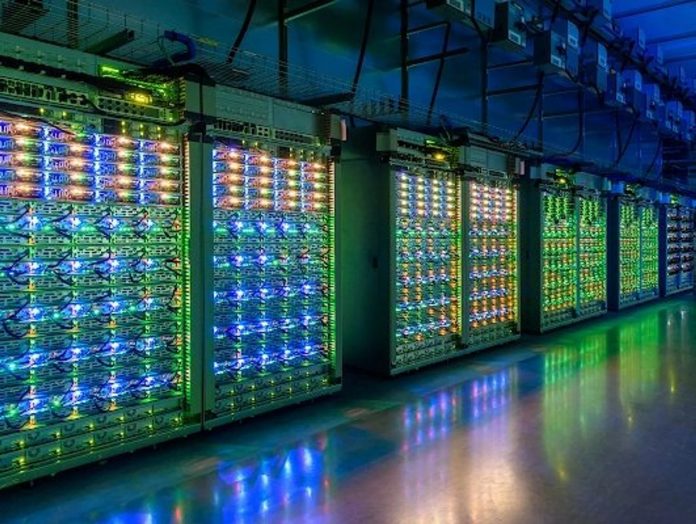
Surging demand for electricity from GPU-heavy data centers is outpacing grid capacity, leaving racks of high-performance chips idle “going dark” and forcing operators to build their own power infrastructure.

This isn’t speculation—it’s already happening, driven by the explosive growth of AI training and inference workloads. As of November 2025, U.S. data centers could face a 36-45 GW shortfall by 2028, equivalent to powering 25-33 million homes, with AI accounting for over 70% of new demand.

AI data centers rely on thousands of GPUs (e.g., Nvidia H100s or Blackwell chips) running in parallel, each consuming 700-1,000 watts—far more than traditional servers. A single large AI training cluster can draw 30-200 MW, comparable to a small city’s needs.

But the U.S. grid, aging and fragmented, can’t keep up. Over 12,000 projects 1,570 GW of generation capacity are queued for grid hookup, with waits stretching to 2030 due to permitting delays, equipment shortages (e.g., transformers with 2-year lead times), and transmission constraints.

In PJM Interconnection serving 13 states, data centers alone will drive 30 GW of new demand by 2030, but the grid lost 5.6 GW of capacity in the last decade from premature plant closures. In Silicon Valley, facilities like Digital Realty’s SJC37 designed for 48 MW and CoreSite’s SV7 up to 60 MW sit partially empty because local utilities can’t deliver power.

Globally, moratoriums in places like Amsterdam and Singapore halt new builds outright due to grid limits. Vacancy rates for data centers have hit a record low of 2.3%, but power shortages inflate costs and delay ROI.

Morgan Stanley warns of a “critical bottleneck,” with AI infrastructure investments such as the $800 billion from Alphabet, Amazon, Meta, Microsoft, and OpenAI in 2025 at risk of stalling without energy fixes. This mismatch means GPUs—costing millions per cluster—remain powered off, wasting capital and slowing AI progress.

As one energy consultant put it, companies are now advised to “grab yourself a couple of turbines” to bypass the grid. From Desperation to strategy faced with 5-10 year waits for grid upgrades, tech giants are adopting “behind-the-meter” off-grid solutions, generating power on-site or co-locating with dedicated plants.

This “Bring Your Own Power” (BYOP) trend is reshaping energy markets, with projections of 35 GW self-generated by data centers by 2030. $500B West Texas supercluster; bypassing grid for rapid deployment. Up to 10 GW matches NYC peak summer demand; construction underway for 2026 online.

Memphis facilities; quick-build to fuel Grok training. Multi-GW scale; operational since mid-2025, avoiding local grid strain. Deployed at 12+ U.S. sites for backup and primary power. 10-50 MW per site; reduces grid reliance by 20-30%.

Partnering with existing/reactivated plants (e.g., Three Mile Island restart). 1-2 GW dedicated; aims for carbon-neutral AI by 2030. Commissioning new builds to power Virginia hubs. 1 GW+; criticized for emissions but prioritized for speed.

On-site generation for hyperscalers; demand up 10x since 2024. Scalable to 100 MW+ per facility; 60% efficiency vs. grid baselines. These moves are pragmatic but controversial: gas and diesel generators raise emissions potentially delaying coal retirements, while nuclear promises cleaner baseload power but faces regulatory hurdles.

China, investing twice as much in grid/power per IEA, avoids this chaos through centralized planning, highlighting U.S. lags in permits and supply chains.Broader Implications and OutlookThis shift could accelerate AI dominance for agile builders but risks a “power bubble”—trillions in data center capex without matching energy investment.

Utilities may hike rates for households up 10-20% by 2030, and regions like Northern Virginia face blackouts. Positives include innovation: small modular reactors (SMRs) could add 190 TWh for data centers, and efficiency gains (e.g., Nvidia’s co-packaged optics) might cut GPU power use 20-30%.In short, your prediction is spot-on and unfolding now.

The grid’s “not ready” for AI’s hunger, so data centers aren’t waiting—they’re becoming mini-utilities. If trends hold, expect more “energy Wild West” plays, from turbine farms to fusion pilots, to keep those GPUs lit.

JPMorgan’s Recent AI Analysis Highlights Stark Reality of the Sector

0

JPMorgan Chase’s recent analysis on AI infrastructure investments highlights a stark reality for the sector: to achieve even a modest 10% return on the trillions in projected spending through 2030, AI products and services would need to generate approximately $650 billion in annual revenue perpetually.

This figure underscores the immense scale required to justify the buildout, amid warnings of a potential “AI bubble” if demand doesn’t keep pace. Global AI-related capital expenditures like data centers, chips, and compute are forecasted to total $5–7 trillion over the next decade, driven by hyperscalers like Microsoft, Google, and Amazon.

In 2025 alone, these firms are on track for ~$350 billion in AI infra spend—a 60%+ year-over-year jump. At 10% ROI: $650 billion/year ~0.58% of global GDP. Lower hurdle 6% ROI, Drops to $360 billion/year.

Higher hurdle 12% ROI; rises to $810 billion/year. JPMorgan illustrates the challenge with everyday equivalents: Equivalent to ~$35/month from each of the world’s 1.5 billion iPhone users. Or ~$180/month from each of Netflix’s 300 million subscribers.

However, the bank stresses that corporations—benefiting from AI-driven productivity gains—would bear most costs, not consumers directly. Early adopters already report $35+/month in time savings per user.

Echoing past tech overbuilds like 2000s telecom fiber, JPMorgan notes a $1.4 trillion funding gap for data centers alone, power constraints limiting new capacity to 122GW through 2030, and the danger of idle infrastructure if AI adoption slows.

Even leaders like OpenAI’s Sam Altman have flagged excess capacity concerns. This projection contrasts with JPMorgan’s own aggressive AI push: The bank is investing $18 billion in tech for 2025 up $1 billion YoY, with over 175 AI use cases live, yielding $1.5 billion in savings from fraud prevention, personalization, and efficiency.

Globally, JPMorgan sees “astronomical” compute demand but cautions that end-user value must accelerate to avoid a bust. The report, shared widely on platforms like X, has sparked debate—some view it as a bubble signal, while others including JPMorgan analysts rebutting skeptics like Michael Burry argue AI’s productivity upside makes the math feasible.

Sam Altman, is one of the most influential voices in AI, blending optimism about its transformative potential with pragmatic concerns about risks, infrastructure, and governance. While stressing the need for responsible scaling, democratic oversight, and alignment to avoid misuse.

Altman often describes AI progress as a “gentle singularity,” a gradual but exponential shift toward superintelligence that empowers humanity rather than overwhelming it. He views AGI (artificial general intelligence) as achievable and imminent, but downplays its drama:

My guess is we will hit AGI sooner than most people think and it will matter much less. Superintelligence, he predicts, could arrive by 2030, enabling breakthroughs beyond human limits. Altman is bullish on 2025–2027 as a pivotal period of rapid advancement, outpacing recent years.

Altman sees AI development as an exponential curve, with 2025 marking the entry of AI agents into the workforce—autonomous systems handling cognitive tasks like coding or analysis, boosting company output.

He outlines ambitious internal goals: an automated AI research intern by September 2026 running on hundreds of thousands of GPUs and a full AI researcher by March 2028. By 2026, AI could generate “novel insights,” accelerating discoveries in fields like medicine and physics.

In a recent X post, he shared OpenAI’s latest report on progress, highlighting recommendations for scaling responsibly. He predicts that by 2035, individuals could access intellectual capacity equivalent to the entire 2025 global population.

AI agents join workforce; small discoveries possible. Transforms knowledge work (e.g., coding, analysis); economic output surges. Automated AI intern; novel insights from AI. Speeds scientific breakthroughs; recursive self-improvement begins. Abundance in intelligence/energy; “anything else” becomes possible.

Universal access to vast intellect. Democratizes genius reshapes society, work, and creativity. Altman is “determinedly optimistic,” arguing AI will elevate humanity through abundance: cheaper intelligence nearing the cost of electricity, turbocharged economies, and solutions to grand challenges like curing diseases.

He envisions a “Cambrian explosion” in creativity via tools like Sora, where AI democratizes art and entertainment. AI agents will act as “virtual coworkers,” enhancing productivity without fully replacing humans. In a July 2024 X post, he stressed AI’s national security value: “AI progress will be immense from here, and AI will be a critical national security issue.

He advocates for U.S.-led coalitions to ensure AI remains “democratic” and benefits all, preventing authoritarian monopolies. While hopeful, Altman acknowledges dangers: a potential “AI bubble” akin to the dot-com era, driven by surging investments (e.g., OpenAI’s $1.4 trillion compute commitments over eight years).

He warns of misuse by rogue actors (e.g., cyberattacks) and societal harms like job displacement or AI addiction. His “doom score” isn’t zero, but he focuses on mitigation: layered safety value/goal alignment, reliability, robustness.

In a November 2025 X thread, he clarified OpenAI’s stance against government bailouts, emphasizing market accountability: “If one company fails, other companies will do good work.” He calls for technical alignment and societal adaptations, like universal compute access as a “human right.”

On user impacts, he worries about over-reliance (e.g., AI as “therapist” reinforcing delusions) and advocates treating “adult users like adults” while measuring long-term well-being. OpenAI plans 30 gigawatts of compute, with ambitions for 1 gigawatt weekly by reducing costs potentially halving capital expenses.

Altman pushes for U.S.-built fabs, energy, and data centers to maintain competitiveness, viewing it as essential for economic edge. Revenue projections: $20B annualized run rate in 2025, scaling to hundreds of billions by 2030, funding via equity, debt, and AI cloud sales.

He critiques uneven distribution, favoring “techno-capitalism”: encourage wealth creation but widely share benefits to raise both floor and ceiling. OpenAI’s 2025 restructure—to a public benefit corporation governed by a nonprofit—aims to attract capital while prioritizing humanity’s benefit, with $25B committed to health and AI resilience.

In his “Gentle Singularity” essay, he envisions a future of “wildly abundant” ideas and energy, with AI enabling personalized lives and resilience through widespread distribution. Reflecting personally, he sees AGI as “the most important technology humanity has yet built,” worth the “painful” effort despite work-life trade-offs.