DD
MM
YYYY

PAGES

DD
MM
YYYY

spot_img

PAGES

Home Blog Page 1566

Risks of Nigeria’s Budget Oil Benchmark Gamble Deepen as Goldman Sachs Projects Oil to Average $63 in 2025

0

The deepening trade rift between the United States and China, which has pushed oil prices further down this week, is more than just a geopolitical scuffle for Nigeria. It’s a direct threat to the heart of its 2025 budget — a fiscal blueprint that leans heavily on a $75 per barrel oil benchmark to fund a fragile economy already staggering under debt and persistent inflation.

Goldman Sachs expects Brent crude to average $63 for the rest of 2025, a full $12 below Nigeria’s projection. That alone, if it holds, will blow an even bigger hole in an already battered federal budget, which currently carries a projected deficit of N14 trillion.

In a country where oil earnings still account for over 70% of foreign exchange and a significant share of government revenues, this kind of mismatch between fiscal expectations and market reality is a red flag. If oil prices stay in Goldman’s predicted range or fall further amid deteriorating demand, Nigeria could find itself scrambling for financing in an increasingly tight global environment, where borrowing is more expensive and donor enthusiasm is dwindling.

Budget Built on Hope, Not Market Signals

President Bola Tinubu’s administration has pinned much of its 2025 spending plan on assumptions that many observers already consider out of step with global trends. The benchmark crude price of $75 per barrel was set against a backdrop of hope that OPEC+ cuts, stable demand from Asia, and improved local production would buoy prices enough to fund government operations.

But none of those pillars are holding firm. China’s demand is stalling. OPEC’s influence is under stress from non-aligned producers. And Nigeria itself is still unable to consistently meet its own production quota, largely due to oil theft, vandalism, and underinvestment.

The situation is so dire that, in real terms, Nigeria may be producing below 1.4 million barrels per day, a figure far short of the 2 million bpd target set by Tinubu for 2025. Add a lower price to lower output, and you have a double-edged blow to revenues.

What’s making matters worse is that the global oil market is shifting in ways that punish countries that rely solely on crude for survival. With the U.S.-China trade war hitting global manufacturing and consumer demand, Goldman projects that oil consumption in Q4 2025 will grow by just 300,000 barrels per day globally — a slowdown not seen in recent years.

This downturn is most acute in the petrochemicals sector, which relies on industrial inputs and is heavily tied to Chinese factories. Nigeria doesn’t just sell crude, it exports a lifeline. But now, that lifeline may be delivering diminishing returns.

This shift is particularly painful for oil economies that don’t have the refining capacity to add value before export, and Nigeria is still in that group, despite the promise of Dangote Refinery. Although the refinery has begun refining crude and is expected to produce more in 2025, pricing uncertainty and lack of transparency in supply agreements raise more questions than answers. There’s still no clear roadmap on whether the facility can meaningfully reduce Nigeria’s import bill or boost state revenues in the short term.

Mounting Deficits, Rising Borrowing, and Limited Options

The N14 trillion deficit in Nigeria’s 2025 budget is expected to be financed largely through borrowing. But with oil underperforming, that financing gap could widen substantially. And Nigeria no longer has the comfort of a robust Eurobond appetite or a buoyant domestic borrowing market. Last week, JPMorgan told investors to exit long positions in Nigerian Open Market Operation (OMO) bills, citing deepening macroeconomic vulnerabilities linked to declining oil prices and an increasingly unstable global economy.

The country’s external reserves are under pressure. The naira remains volatile despite exchange rate reforms. And inflation — driven by fuel costs, forex scarcity, and food insecurity — continues to erode the purchasing power of citizens. That puts more pressure on the government to spend, just as its revenue sources look increasingly uncertain.

The real fear is that Nigeria may be forced to choose between slashing capital projects, piling on more debt, or reverting to subsidy regimes to soften domestic discontent. Any of these options would further delay the economic transformation Tinubu promised when he took office — a transformation that, on paper, hinged on subsidy removal, exchange rate unification, and improved revenue-to-GDP ratios.

Time for Economic Diversification?

What’s becoming clear is that Nigeria’s oil-heavy economic strategy is not sustainable in a world where demand patterns are increasingly unpredictable, prices are swayed by non-market shocks, and energy is being weaponized by major players like the U.S. and China.

While countries like Saudi Arabia are investing in green hydrogen, massive sovereign funds, and tourism infrastructure, Nigeria is still struggling to repair its pipelines and collect taxes effectively. Without a serious pivot — towards gas monetization, renewables, or even functional refining and petrochemical industries, the country risks missing the bus on energy transition and economic resilience.

Nigeria’s Petroleum Industry Act (PIA) was supposed to usher in reform, transparency, and investment. But implementation remains patchy, and regulatory risk still clouds investor confidence.

The oil price drop triggered by U.S.-China tensions reinforces what many analysts and advocates of economic diversification have warned for years: relying on oil to fund the budget is a dangerous game, especially when the rules of the global economy are being rewritten.


Nigeria Signs $1bn Sugar Pact With China’s SINOMACH to Boost Domestic Production

0

Nigeria has secured a $1 billion investment from China’s state-owned industrial giant, SINOMACH, in a new deal that signals a renewed push to scale up domestic sugar production and cut the country’s dependence on imports.

The partnership inked through a Memorandum of Understanding (MoU) with the National Sugar Development Council (NSDC), is designed to kickstart a large-scale sugarcane cultivation and processing project. It’s one of the first tangible deals to emerge from the Nigeria-China Strategic Partnership promoted by President Bola Tinubu as part of his administration’s efforts to revive local industry.

Executive Secretary of the NSDC, Mr. Kamar Bakrin, confirmed the agreement in Abuja, describing it as a major milestone in Nigeria’s long-stalled plan to attain self-sufficiency in sugar production.

“2025 is a pivotal year for Nigeria, and we must make bold moves towards food security and economic self-sufficiency,” Bakrin said, adding that the initiative aims to cut sugar imports, conserve foreign exchange, and drive industrialization in rural Nigeria.

From Import Reliance to Export Dreams

Under the MoU, SINOMACH will construct a sugar processing facility and establish an extensive sugarcane plantation. The project is expected to begin with an annual processing capacity of 100,000 metric tons, with an eventual target of hitting one million tons. That scale could dramatically reshape Nigeria’s sugar industry, which has struggled for decades to gain footing despite successive policy pushes.

“This partnership with SINOMACH is unique,” Bakrin said. “It combines engineering, procurement and construction (EPC) with development financing, an essential model for agro-industrial transformation.”

The NSDC plans to facilitate swift implementation by assisting with land acquisition, regulatory clearances, and all necessary approvals.

The Sugar Council was set up through a decree in 1993 to provide strategic planning and coordination for sugar development after previous government efforts fell apart due to mismanagement and weak institutional support. The goal has always been to meet at least 70 percent of the country’s domestic sugar demand from local production—an ambition that has remained out of reach.

Speaking on behalf of the Chinese conglomerate, SINOMACH Vice President Li Yu praised Nigeria’s commitment to reviving its sugar industry under the Nigeria Sugar Master Plan (NSMP), describing the policy as a “sweet revolution.”

“We believe this partnership will not only boost Nigeria’s sugar self-sufficiency but also promote rural development, create employment, and enhance agricultural modernization,” Li said.

He noted that the company is exploring innovative financing models using China’s Renminbi (RMB) currency, a move intended to cut financing costs and accelerate approvals from Chinese authorities.

SINOMACH, known for its involvement in major infrastructure and industrial projects across Africa, said the investment is part of its broader interest in Nigeria’s agricultural transformation, with the potential to make the host state the “Sugar Bowl of West Africa.”

Beyond Sugar: Rebuilding Industrial Nigeria

The $1 billion deal adds a new layer to President Tinubu’s effort to deepen economic ties with China amid growing concerns over Nigeria’s food insecurity, joblessness, and reliance on imports. With a battered naira, a shrinking foreign reserve base, and an economy struggling to find its footing post-COVID, the administration is leaning on foreign direct investment to fill financing gaps.

While details on the selected host state and project timelines remain under wraps, the NSDC says it is preparing a full implementation roadmap.

Bakrin emphasized that this deal isn’t just about sugar—it’s about rural revitalization and industrial independence. “It’s not just a transaction,” he said. “It’s a strategic intervention in Nigeria’s food and industrial ecosystem.”

The NSDC’s vision extends beyond sugar sufficiency. The council has plans to position Nigeria as a future exporter of refined sugar, a shift that could earn the country foreign exchange and reduce its vulnerability to global commodity price shocks.

However, experts caution that the road to sugar self-sufficiency won’t be easy. Past efforts to reform the industry have been derailed by land disputes, infrastructure deficits, and inconsistent policy support. Even the Nigeria Sugar Master Plan, launched in 2012, has achieved only modest gains.

Still, with backing from a global industrial heavyweight like SINOMACH and a renewed government drive, the latest partnership is expected to offer a fresh chance to rewrite that narrative. However, its success may depend on Nigeria’s ability to match political will with execution on the ground.

The Ethereum/Bitcoin’s Ratio Hits a 5 Years Low

0

The ETH/BTC ratio recently hit a five-year low, dropping to around 0.018 on April 9, 2025, a level last seen in December 2019. This reflects Ethereum’s significant underperformance compared to Bitcoin, with ETH down about 10% in a single day to roughly $1,400, while BTC fell 6% but held above $75,000. Over the past year, Ethereum has lagged Bitcoin on 85% of trading days, erasing nearly seven years of relative gains.

Factors include Bitcoin’s stronger institutional appeal, driven by spot Bitcoin ETF inflows and its fixed supply narrative, contrasted with Ethereum’s rising supply post-Merge and competition from other blockchains like Solana. Some analysts see Ethereum’s oversold RSI as a potential rebound signal, but others warn of further declines if selling persists.

Bitcoin’s dominance (63%) signals stronger investor confidence in BTC as a store of value, especially amid institutional adoption via ETFs. Ethereum’s weaker performance may reflect doubts about its growth narrative post-Merge. Rising ETH supply (123 million coins, up 3 million since 2022) contrasts with Bitcoin’s fixed cap, diluting Ethereum’s scarcity appeal. Competition from faster blockchains like Solana pressures Ethereum’s market share in DeFi and NFTs.

A low ratio could signal a buying opportunity for ETH if oversold indicators like RSI hold, but persistent selling pressure risks further declines. Traders may pivot to BTC or altcoins with stronger momentum. Lower ETH prices could strain Ethereum-based projects, reducing developer incentives and dApp activity. However, cheaper gas fees might spur adoption if network upgrades regain traction.

If Ethereum fails to reclaim key support levels (e.g., $1,200-$1,300), bearish sentiment could deepen. Conversely, upgrades like sharding or renewed DeFi interest could reverse the trend, though Bitcoin’s dominance may persist short-term. The crypto market in Q1 2025 faced significant challenges, with Bitcoin recording its worst first-quarter performance in seven years, marked by high volatility and a downward trend. After hitting an all-time high of $108,786 on January 20, 2025, fueled by optimism over pro-crypto U.S. policies, Bitcoin fell to around $75,000 by early April, down 6% on April 9 alone.

The global crypto market cap hovered around $2.65 trillion, slightly down from $2.7 trillion a week earlier. Ethereum (ETH) performed worse, dropping 46% year-to-date to ~$1,400, with the ETH/BTC ratio at a five-year low of 0.018. Solana (SOL) fell 36%, while XRP showed resilience, up 2.22% year-to-date. Altcoins and meme coins generally saw steeper losses than Bitcoin, resetting momentum to mid-2024 levels.

Key drivers included macroeconomic fears, renewed U.S. tariff concerns impacting global markets, and Ethereum’s struggles with rising supply and competition from faster blockchains like Solana. Despite Bitcoin ETF inflows, institutional enthusiasm has cooled slightly, though stablecoin market caps surged past $200 billion, signaling growing adoption. Crypto Analyst’s expect moderate Bitcoin growth around mid-to-late 2025, potentially reaching $126,000-$185,000, driven by stablecoin and DeFi expansion.

Ethereum’s outlook is less certain unless network upgrades regain traction. The market remains volatile, with sentiment on reflecting caution but some optimism for a rebound if trade tensions ease. Ethereum topping Solana in monthly DEX trading volume for the first time in March since September, 2024 carries several implications for the crypto ecosystem, particularly in the DeFi space. This resurgence underscores Ethereum’s enduring appeal as the foundational blockchain for DeFi.

Despite competition from faster, cheaper alternatives like Solana, Ethereum’s deep liquidity, established infrastructure, and vast developer community continue to give it an edge. The high trading volume suggests users and liquidity providers still trust Ethereum’s ecosystem, even with its higher gas fees and slower transaction speeds compared to Solana. Solana’s earlier dominance was partly driven by speculative memecoin trading and its scalability advantages. Ethereum reclaiming the lead might indicate a cooling of that hype or a return to fundamentals, with users prioritizing battle-tested protocols (e.g., Uniswap, Curve) over newer, riskier platforms.

It could signal a maturing market where reliability trumps short-term cost efficiency. Ethereum’s volume boost may also reflect growing adoption of its Layer 2 (L2) scaling solutions like Arbitrum and Optimism, which reduce costs while leveraging Ethereum’s security. If L2s are driving this uptick, it strengthens the narrative that Ethereum’s multi-layered ecosystem can compete with monolithic high-throughput chains like Solana.

For Solana, this could be a temporary dip rather than a long-term decline. Its lower fees and high speed still make it attractive, especially for retail traders and niche DeFi applications. However, it might need to diversify beyond memecoin-driven activity to maintain consistent volume leadership, especially if Ethereum continues to improve scalability via upgrades like sharding in the future.

This shift could influence investor perceptions and capital flows. Ethereum’s outperformance might bolster confidence in ETH as a store of value and utility token, potentially impacting its price relative to SOL. Developers and projects may also double down on Ethereum compatibility, reinforcing its dominance in smart contract platforms.

XRP Price Forecast After Ripple Acquires Hidden Road For $1.25B, Plus Have Investors Found The Next XRP?

1

The XRP price forecast for 2025 is already looking good especially after Ripple’s acquisition of hidden road for $1.25 billion.

Though Ripple (XRP) has significant long-term potential, Remittix (RTX) is the one to keep an eye on in 2025. Its creative crypto-to-fiat conversion mechanism will fundamentally rethink current cross-border transactions. Read on to learn more.

XRP Price Forecast Dwindles Amid Legal Certainty

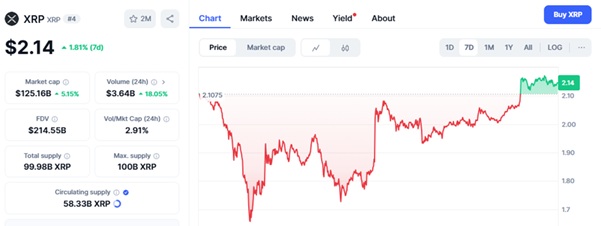
Though its trading volume rose to $7.36 billion, XRP price forecast saw a notable fall to $2.14. The triumph of Ripple versus the SEC brought much-needed clarity, and it helped to see $106.69 billion in market capitalization for it. Still, price activity has been disappointing since the announcement.

While some have projected a rebound to $2.50, others think XRP price forecast could be range-bound in the lack of strong fresh catalysts. Another area where XRP price forecast is evident is timing uncertainty in ETF approval.

This volatility is causing many to migrate to more powerful newer coins with momentum. This trend is driving more attention on payment-oriented tokens like Remittix, a new entrant with actual utility, as part of crypto price forecast 2025.

Remittix Is Poised For A Massive Rally

Providing fast and reasonably priced cross-border solutions, Remittix (RTX) is redefining global payments by aggregating FIAT transactions with blockchain technologies.

Remittix is the better alternative to conventional payment providers like Stripe and Wise. As a link between crypto and FIAT, Remittix guarantees accessibility and inclusivity for companies and people.

Notable also is the platform’s open flat-fee approach, which offers savings and transparency over absurd rates of exchange of conventional banks.

In the payments industry, Remittix is revolutionary since this approach guarantees that the whole amount transferred reaches the recipient, therefore addressing unethical activity all too often.

Why Now Is The Best Time To Buy $RTX

At $0.0757 in the presale stage, the RTX coin offers a good investment potential. Forecasts reveal an interesting rise; demand for innovative cross-border payment solutions is generating a 25x multiplier in the presale phase and over 1,500% increases following launch.


Discover the future of PayFi with Remittix by checking out their presale here:

Website:https://remittix.io/

Socials: https://linktr.ee/remittix

Social Media Ads: The Power of Pictures, Text, and Platforms

0

While it’s no secret that visuals often outperform plain text in online spaces, the tricks behind this trend deserve a closer look. Are social media posts with pictures always more popular? And why do some pictures spark more interest than others?

Our latest research at Infoprations, drawing on 2025 data from 128 national and foreign brands, reveals compelling insights about content formats and how they perform across major platforms. Our focus is to help content creators, brand managers, and communication specialists craft smarter, platform-specific strategies.

The analysis shows that while pure image-based content performs better than plain text in general, text-over-image formats consistently outperform both when it comes to likes, comments, and shares. This points to an essential principle in digital communication: people want to understand, connect, and relate quickly.

In a world overwhelmed with visuals, those that offer some cognitive or emotional value, such as a quick fact, a headline, or a short story, stand out.

Exhibit 1: Average engagement patterns per form of ads

Source: Social media handles of brands, 2025; Infoprations Analysis, 2025

The Visual Advantage – But Not Always

It’s widely acknowledged that image-based ads tend to attract higher engagement than those relying solely on text. Visual content (photos, infographics, videos) has an edge because it instantly captures attention and often conveys emotion or information more quickly than words alone. These types of posts are more likely to be liked, commented on, and shared, contributing to greater organic reach and message recall.

However, not all visual content performs equally. Interestingly, posts that combine text with visuals, such as overlaying short captions or insights on an image, tend to outperform image-only posts. In this regard, our analyst notes that audiences value context, clarity, or storytelling that goes beyond visual appeal. Particularly on platforms like Facebook and LinkedIn, users respond well to content that balances aesthetic appeal with meaningful communication.

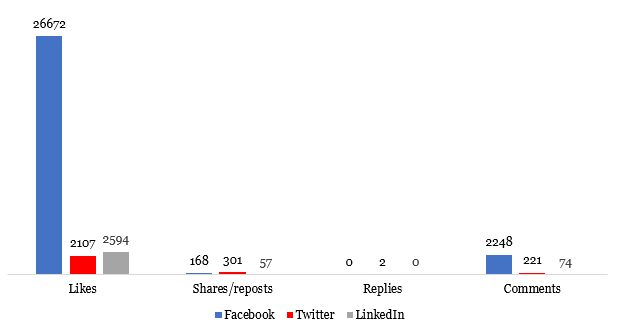
Exhibit 2: Average engagement patterns per platform

Source: Social media handles of brands, 2025; Infoprations Analysis, 2025

In our analysis, we found that Facebook remains the king of broad engagement. It’s ideal for building emotional connections and communal awareness, making it a go-to for campaigns that seek to mobilize public sentiment or tell human-centered stories.

Twitter thrives on virality and topicality. Posts here should be concise, punchy, and often tied to trending discussions. It’s the best place for issue amplification, influencer engagement, and sparking real-time conversation. LinkedIn, on the other hand, leans into professional validation. While it has relatively lower engagement depth in terms of likes and shares, it’s a powerful platform for credibility, networking, and thought leadership, especially for niche or technical content.

Strategic Insights

So, what does this mean for your social media strategy? It means you shouldn’t just follow general rules, you need a platform-specific approach. Don’t rely on standalone visuals or long-form text alone. Instead, aim for a hybrid approach: Use strong imagery with text overlays to deliver concise, compelling messages. Save long-form text posts for insights or storytelling that require context.

Harnessing each platform’s strengths is important. For instance, use Facebook for broad reach and emotional storytelling. It’s the platform for engaging everyday users and mobilizing collective sentiment.

Twitter is good for amplifying issues, tagging influencers, and joining trending conversations. This will ultimately lead to sparkling reactions and shareability. Use LinkedIn to position yourself or your organization as a thought leader. Prioritize professional tone and informative content that demonstrates expertise.

Infoprations’ Understanding Digital Integrated Marketing Communications Team includes Abdulazeez Sikiru Zikirullah, Moshood Sodiq Opeyemi, and Bello Opeyemi Zakariyha