DD
MM
YYYY

PAGES

DD
MM
YYYY

spot_img

PAGES

Home Blog Page 1570

Tekedia Blockchain Weekly Round-Up

0

Recent reports have circulated regarding alleged discussions between representatives of the Trump family and Binance, specifically concerning a potential financial stake in Binance.US, the American arm of the cryptocurrency exchange. These rumors suggested that Binance had approached allies of the Trump family as part of a broader strategy to re-enter the U.S. market following regulatory challenges. It was also speculated that Changpeng Zhao (CZ), Binance’s billionaire founder and former CEO, might have been seeking a presidential pardon in connection with these talks, following his legal troubles in the U.S.

CZ publicly denied any involvement in such discussions, stating on social media that he had not engaged in talks about a Binance.US deal with anyone, including the Trump family. He further criticized the reports as inaccurate and suggested they might be motivated by broader agendas, such as discrediting cryptocurrency or political figures. While the rumors raised concerns about potential conflicts of interest, especially given the Trump family’s growing involvement in the crypto industry, there is no confirmed evidence at this time to substantiate the claims of a deal or CZ’s direct involvement.

On Tuesday, March 11, 2025, Argentine lawyer Gregorio Dalbo?n formally requested an Interpol Red Notice for the arrest and extradition of Hayden Davis, an American citizen and co-creator of the LIBRA cryptocurrency token. This request was submitted to prosecutor Eduardo Taiano and Judge Mari?a Servini, who are investigating the collapse of the memecoin, which resulted in investor losses estimated at $251 million.

Dalbo?n argued that Davis poses a significant flight risk due to his financial resources and foreign residency, potentially enabling him to evade justice. The LIBRA token, which was promoted by Argentine President Javier Milei, rapidly rose to a peak market capitalization of over $4 billion before crashing by more than 90%, prompting allegations of fraud, market manipulation, and a pump-and-dump scheme. If approved, the Interpol Red Notice would alert law enforcement agencies in 195 member countries to locate and provisionally arrest Davis pending extradition

Pudgy Penguins has partnered with Helio and Shopify to enable payments using its native cryptocurrency, $PENGU, marking a significant step in expanding the utility of its ecosystem token. This integration allows $PENGU to be used as a payment method not only on the official Pudgy Penguins store but also across thousands of Shopify stores that utilize Shopify Pay, facilitated by Helio, a Web3 payments platform.

On March 13, 2025, Ripple, a leading blockchain payment provider, secured full regulatory approval from the Dubai Financial Services Authority (DFSA) to offer cryptocurrency payment services in the United Arab Emirates (UAE). This approval marks a significant milestone for Ripple, as it becomes the first blockchain-enabled payments provider licensed to operate within the Dubai International Financial Centre (DIFC), a free economic zone in the UAE with its own regulatory and tax framework.

DeFi Dungeons has released the tokenomics for its $GOLD token in preparation for its upcoming Token Generation Event (TGE), scheduled for Wednesday, March 19, 2025. The $GOLD token is described as the core currency of the in-game economy for DeFi Dungeons, a blockchain-based game that integrates decentralized finance (DeFi) mechanics, allowing players to earn and trade cryptocurrency within the game. The token is intended for in-game activities, such as staking rewards, and is positioned as a collectible rather than an investment product, with disclaimers emphasizing its volatility and lack of investment value.

The future of Solana’s tokenomics is a critical topic for the network’s long-term sustainability, competitiveness, and value proposition within the broader cryptocurrency ecosystem. The rejection of SIMD-0228, which aimed to reduce Solana’s inflation rate, has sparked significant debate and highlighted the need for a balanced approach to token economics that supports network security, decentralization, and economic incentives. Below is a detailed analysis of Solana’s current tokenomics, challenges, potential future directions, and broader implications.

Abu Dhabi’s state-backed investment firm, MGX, recently made a $2 billion investment in Binance, marking it as the largest single investment in a cryptocurrency company to date. This deal also stands out as the largest investment ever paid in cryptocurrency, specifically using stablecoins, though the exact stablecoin used was not disclosed. This move represents Binance’s first institutional investment and highlights MGX’s entry into the cryptocurrency and blockchain sectors, aligning with its broader focus on advanced technologies like AI. The investment underscores the UAE’s ambition to become a global hub for digital assets, with Binance already employing a significant portion of its workforce in the region.

Russia has increasingly utilized cryptocurrencies to facilitate its oil trade with India as a means to bypass Western sanctions. This involves converting payments in Indian rupees into cryptocurrencies such as Bitcoin, Ethereum, and Tether stablecoins, which are then transferred through multiple accounts before being exchanged for Russian rubles. While this method currently accounts for only a small portion of Russia’s oil trade, its use is growing as a workaround to avoid reliance on traditional banking systems and the U.S. dollar. This strategy aligns with similar approaches taken by other sanctioned countries and reflects Russia’s broader efforts to adapt to financial restrictions.

On Friday, March 14, 2025, U.S. Representative Byron Donalds introduced legislation aimed at codifying the executive order signed by President Trump earlier that month, which established a national Strategic Bitcoin Reserve and a U.S. Digital Asset Stockpile. The primary goal of this bill is to prevent future administrations from reversing the executive order, thereby ensuring the continuity of the U.S. government’s cryptocurrency policy. The proposed legislation seeks to solidify the United States’ position as a leader in digital financial strategy by permanently embedding the Strategic Bitcoin Reserve into law. This move is seen as a response to the growing importance of digital assets in the global economy and aims to protect the reserve from potential policy shifts under future administrations.


VanEck Files for Both Avalanche and Solana ETFs with SEC

0

VanEck has indeed taken steps toward launching exchange-traded funds (ETFs) for both Avalanche (AVAX) and Solana (SOL). The asset management firm registered a trust company for an Avalanche ETF in Delaware, signaling potential plans for a spot AVAX ETF, and has also filed for a spot Solana ETF with the U.S. Securities and Exchange Commission (SEC). These moves are part of VanEck’s broader strategy to expand its cryptocurrency investment offerings, following its earlier registrations for Bitcoin and Ethereum ETFs. VanEck’s filings, as a major asset manager with a history of successful crypto ETF launches (e.g., Bitcoin and Ethereum), lend credibility to AVAX and SOL. This could position Avalanche and Solana as leading Layer 1 blockchain.

ETF filings signal growing institutional interest in alternative cryptocurrencies (altcoins) beyond Bitcoin (BTC) and Ethereum (ETH). If approved, these ETFs would provide a regulated, accessible vehicle for institutional investors—such as hedge funds, pension funds, and asset managers—to gain exposure to AVAX and SOL without directly holding the assets. This could lead to significant capital inflows, similar to the $14.4 billion in net inflows seen by U.S. spot Bitcoin ETFs since their launch in January 2024.

Historically, ETF filings have acted as catalysts for price surges in cryptocurrencies, as seen with SOL’s 8% increase following VanEck’s Solana ETF filing in June 2024. While AVAX experienced a price drop post-filing, possibly due to broader market conditions, approval of these ETFs could drive significant price appreciation for both tokens, especially if institutional inflows materialize. Some analysts predict SOL could reach $520 by the end of 2025, driven by ETF-related demand and ecosystem growth, while AVAX could see upside potential to $25 or higher if market sentiment improves.

ETF filings can also increase short-term volatility, as speculative traders react to news and regulatory updates. For instance, AVAX’s price fell over 10% after its ETF filing, reflecting broader market downturns, while SOL has shown resilience, surging past $260 in late 2024. Investors should remain cautious of potential selloffs if regulatory hurdles delay or derail approvals. The SEC’s approval of Bitcoin and Ethereum ETFs has set a precedent, but altcoin ETFs face additional scrutiny. The SEC has previously labeled SOL as an unregistered security in lawsuits against Coinbase and Binance, which could complicate its ETF approval process.

VanEck’s filing argues that SOL should be treated as a commodity, similar to BTC and ETH, but regulatory clarity remains uncertain. AVAX, while not explicitly named in similar lawsuits, may also face challenges due to its classification and the lack of a regulated U.S.-based futures market, a criterion the SEC has historically emphasized for ETF approvals. The prospects for approval may improve under a more crypto-friendly administration, such as the incoming Trump administration in 2025, which has signaled a receptive stance toward cryptocurrencies. However, ongoing litigation and regulatory uncertainties could delay approvals, potentially requiring issuers to withdraw and refile applications.

ETF approvals could accelerate adoption of Avalanche and Solana by legitimizing their platforms in the eyes of traditional finance. Avalanche, known for its high-performance blockchain and partnerships with institutions like JPMorgan and Mastercard, could see increased use in asset tokenization and digital payments. Solana, with its low-cost, high-speed transactions, could further solidify its dominance in decentralized finance (DeFi) and non-fungible token (NFT) markets, especially as its decentralized exchange (DEX) volumes reached $41.2 billion in a single week in late 2024.

Increased institutional interest could attract more developers and users to these ecosystems, driving innovation and network growth. For Solana, this aligns with its growing developer community and high user activity, while Avalanche’s interoperable subnets could gain traction for enterprise applications. The filings highlight the intensifying competition among Layer 1 blockchains, with Avalanche and Solana vying for market share against Ethereum, Cardano, and others. If approved, these ETFs could position AVAX and SOL as top contenders, potentially drawing capital away from other altcoins. However, the race for ETF approvals is crowded, with filings for XRP, Litecoin, Dogecoin, and SUI also underway, which could dilute investor focus.

Nigeria’s Total Trade Exports Surged To $50.4bn In 2024, Driven By FX Rate Depreciation And Fuel Subsidies Removal

0

Nigeria’s foreign trade saw a remarkable turnaround in 2024, with total exports surging to $50.4 billion—an increase largely attributed to the naira’s sharp depreciation and the elimination of fuel subsidies.

The latest data from the National Bureau of Statistics (NBS) reveals that total trade volume reached a record-breaking N138 trillion, marking a staggering 106% rise compared to the previous year. When adjusted for exchange rates, this translates to $89.9 billion in dollar terms, reflecting a 22.1% growth.

This resurgence follows a period of contraction in 2023 when the shift to a market-driven exchange rate caused a 35% decline in total trade. However, businesses appear to have adapted to the new economic reality, with trade rebounding sharply in 2024. Looking further back, Nigeria’s peak trade volume in the last five years occurred in 2022, when total trade was recorded at $113.8 billion. At the time, the official exchange rate was N460 to the dollar, but with the parallel market rate at N736 per dollar, a recalculated trade volume would have stood at just $71.7 billion.

The transition to a flexible exchange rate system in 2023 triggered more than a steep 50% naira devaluation, significantly altering Nigeria’s trade dynamics. This depreciation made exports more competitive, while imports became costlier, contributing to a significant increase in export earnings. Yet, beneath these impressive figures lies the fundamental reality that Nigeria’s economy remains heavily dependent on crude oil.

In 2024, total exports nearly doubled, rising by 96.3% to N60.59 trillion. The primary driver was crude oil production, which reached 1.5 million barrels per day. In dollar terms, total exports stood at $50.5 billion—an improvement from $39.6 billion in 2023 but still lower than the $58.2 billion recorded in 2022. When using the parallel market rate for analysis, 2024 emerges as the most lucrative year for Nigeria’s export earnings.

Crude oil exports alone accounted for $36 billion (N55.2 trillion) in 2024, making up about 71% of total exports. This represents an increase from $31 billion in 2023 but remains below the $45.8 billion recorded in 2022. The oil sector continues to be the backbone of Nigeria’s economy, financing government spending and supporting foreign exchange reserves. However, the industry remains plagued by persistent challenges, including large-scale crude oil theft, underinvestment in upstream production, and environmental conflicts that have disrupted output. Despite government interventions, Nigeria has yet to meet its ambitious production target of 2 million barrels per day.

Beyond crude oil, non-oil exports saw a resurgence, reaching $5.9 billion in 2024—the highest level since 2020 in both naira and dollar terms. These exports, largely comprising agricultural and mineral products, have been bolstered by increased regional trade within Africa. However, their contribution remains marginal compared to oil.

Meanwhile, imports continued their upward trend. In dollar terms, total imports amounted to $39 billion (N60.5 trillion) in 2024, based on an official exchange rate of N1,535 per dollar. This is an increase from $34 billion in 2023 but significantly lower than the $55.6 billion recorded in 2022. The persistent decline in imports over the past few years is tied to naira depreciation, which has made foreign goods more expensive and restricted businesses’ access to foreign exchange for imports.

Despite the impressive foreign trade figures, Nigeria’s trade data does not account for services, which form a significant portion of foreign exchange outflows. The country spends heavily on imported services, particularly in technology, consulting, and technical support. These transactions exert additional pressure on the exchange rate, contributing to continued volatility in the forex market.

Nonetheless, the latest figures from the Central Bank of Nigeria (CBN) suggest that the country’s external accounts are stabilizing. Nigeria recorded a current account balance of $5.14 billion in the third quarter of 2024, signaling a tentative improvement despite ongoing forex-related challenges.

While the sharp rise in total trade offers a promising outlook, the sustainability of this growth is said to depend much on addressing the structural weaknesses in Nigeria’s trade composition. Economists have noted that without reducing overreliance on oil exports and strengthening local production to curb import dependency, the economy remains vulnerable to external shocks—especially fluctuations in global crude oil prices and exchange rate volatility. The government’s challenge now is to build on this momentum by fostering a diversified trade strategy that strengthens non-oil exports and mitigates forex pressures.

Get Blucera Access with Tekedia Mini-MBA Annual Registration [video]

0

Tekedia Mini-MBA annual package includes 3 consecutive Tekedia Mini-MBA editions, 2 optional capstones AND annual access to Blucera.com. 

Blucera will launch at the start of Mini-MBA edition 17 on June 9, 2025. Blucera provides eVault custodial services, business tools, libraries of Tekedia videos & course materials, Blucera WinGPT (AI business educator and personal interview coach engineered with libraries of Tekedia materials and more), etc. This video explains the product. 

WinGPT:  Business Education Tool

  • It’s a personalized business education tool.
  • It uses AI to guide learners through business concepts.
  • It draws from Tekedia’s course materials and other selected libraries.
  • It can provide specific guidance based on real-world scenarios.
  • Everything is baked with the nuances of doing business in Africa.

WinGPT: Personal Interview Coach

  • It’s an AI-powered interview and career preparation tool.
  • It analyzes resumes and experience to tailor coaching.
  • It simulates interview scenarios through video.
  • It leverages knowledge of specific companies and industries.

Go here and register, as we have opened registrations for the next edition of Tekedia Mini-MBA (June 9 – Sept 6, 2025)  

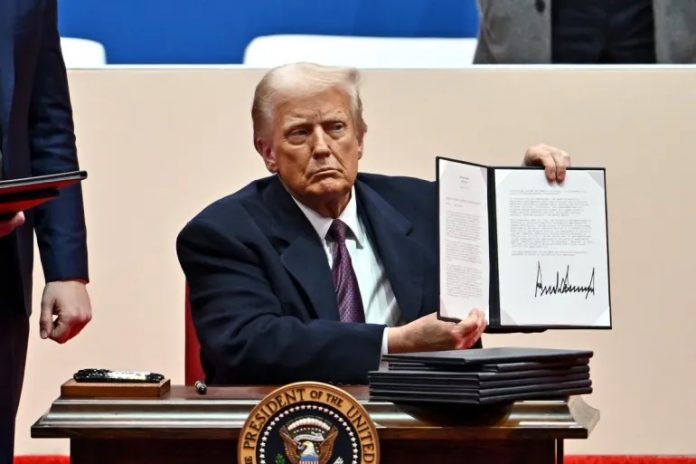
Exploring Trump’s Executive Order to End Debanking Confronting Operation ChokePoint 2.0

0

Corey Petty, Chief Insights Officer of Logos, which operates at the intersection of technology and ideology, views President Trump’s plan to sign an Executive Order targeting the Federal Reserve’s regulatory overreach and debanking practices with a mixture of cautious optimism and critical scrutiny.

The proposed Executive Order aims to roll back policies associated with the Biden administration, particularly those linked to what the crypto industry has dubbed “Operation Chokepoint 2.0.” This alleged initiative involved informal pressure from federal regulators, including the Federal Reserve, on banks to limit or sever ties with cryptocurrency companies, often without transparent justification. Such debanking practices have disproportionately impacted lawful businesses in the crypto sector, stifling innovation and access to essential financial services.

Corey Petty of Logos Posits that This Executive Order is a measured response to Operation Choke Point 2.0 ‘s hindrance to the cryptocurrency industry’s progress toward establishing itself as a credible sector by justly pressuring banks to cut ties with crypto-related businesses. This Executive Order along with the Financial Integrity and Regulation Management Act are policy measures directly combatting debanking to ensure the crypto industry is primed to operate through U.S. banking entities.

Smart policy decisions that remove barriers to progressing the integration of open-sourced blockchain technology in decentralized models will ensure that the U.S. maintains a stake in the digital assets race. Political debanking has historically fueled unrest within traditional banking systems. These actions have not only excluded individuals and businesses from accessing essential financial services but have also undermined public trust in centralized institutions. Decentralized systems combat debanking by fostering financial autonomy, enabling an open and transparent internet while ensuring trustless compliance. The CyberState movement advances these principles by offering alternative governance models that are resilient, transparent, and inclusive. These systems will safeguard against regulatory overreach and allow for innovation to prosper in times of political upheaval.

For Logos, which champions decentralized systems that empower individuals and communities to operate outside traditional financial gatekeepers, addressing this overreach could signal a more favorable environment for blockchain-based projects. By fostering “fair and open” access to banking services, as outlined in Trump’s broader digital asset policy, this move could reduce the friction that decentralized technology providers face when interfacing with the traditional financial system.
However, it’s critical to examine this Executive Order beyond its surface-level appeal.

While it may curb regulatory overreach, the Federal Reserve’s independence from direct White House influence raises questions about the order’s enforceability. The Fed’s policies are not typically dictated by executive action, and its autonomy is enshrined to prevent political interference. This suggests that the order’s impact may be more symbolic than substantive unless it is accompanied by concrete legislative or regulatory changes.

Moreover, the absence of banking regulators, such as the Federal Reserve, from the Presidential Working Group on Digital Asset Markets—established by an earlier Trump Executive Order on January 23, 2025—indicates a potential gap in addressing debanking at its systemic root. For Logos, this omission could mean that the structural barriers to financial inclusion for decentralized projects persist, even if the rhetoric shifts.

From a philosophical standpoint, Logos is fundamentally about reducing reliance on centralized institutions, including banks and regulators, through privacy-preserving and decentralized technologies. While curbing debanking is a step toward fairness, it does not address the underlying issue: the centralized control of financial systems that inherently conflicts with the principles of self-sovereignty. The Executive Order’s focus on protecting access to banking services, while beneficial in the short term, risks reinforcing dependency on traditional financial infrastructure rather than accelerating the adoption of decentralized alternatives.

For network states and self-sovereign communities, the ultimate goal is not merely to gain access to centralized systems but to build parallel systems that render such access unnecessary. Thus, while the order may alleviate immediate pressures, it does not inherently advance the long-term vision of Logos. Furthermore, the broader context of Trump’s digital asset policy—evidenced by his establishment of a Strategic Bitcoin Reserve and a U.S. Digital Asset Stockpile—suggests a strategic embrace of cryptocurrencies as tools of national economic power.

This approach, while potentially beneficial for mainstream crypto adoption, could prioritize state and corporate interests over the decentralized ethos that Logos represents. For instance, the creation of a national digital asset stockpile, potentially funded by seized cryptocurrencies, raises concerns about government centralization of what should be decentralized systems. This could lead to a future where the state exerts undue influence over digital asset markets, undermining the autonomy of network states and self-sovereign communities.

It’s also worth critically examining the political motivations behind this Executive Order. Trump’s pro-crypto stance, bolstered by significant industry support during his 2024 campaign, may be more about consolidating political and economic power than genuinely fostering innovation. The crypto industry’s alignment with influential tech figures and the administration’s broader deregulatory agenda could result in a selective relaxation of rules that benefits large, well-connected players while leaving smaller, truly decentralized projects vulnerable to other forms of regulatory or market pressure.

For Logos, which operates at the intersection of technology and ideology, these dynamic underscores the need to remain vigilant and independent, ensuring that our technology stack serves communities rather than becoming co-opted by state or corporate agendas. Trump’s planned Executive Order targeting the Federal Reserve’s regulatory overreach and debanking practices offers potential short-term relief for the crypto industry, including projects like Logos, by addressing unfair financial exclusion.

For Logos, the focus must remain on building resilient, privacy-preserving infrastructure that empowers network states to thrive outside the traditional financial paradigm, regardless of shifts in political winds. While we welcome measures that reduce immediate barriers, our mission is to render such dependencies obsolete, ensuring true sovereignty for the communities we serve.