DD
MM
YYYY

PAGES

DD
MM
YYYY

spot_img

PAGES

Home Blog Page 1571

A Foray into European Union-India Vs. China’s Trade Dynamics

0

The EU-India free trade agreement (FTA) negotiations face several key hurdles; India protects its agricultural sector with high tariffs and subsidies, fearing EU competition could harm local farmers. The EU, meanwhile, pushes for market access but faces resistance due to India’s domestic sensitivities. India maintains high tariffs on goods like automobiles, wines, and dairy, which the EU wants reduced. India seeks greater access for its textiles and pharmaceuticals in the EU, but faces strict regulatory barriers.

India wants easier visa norms for its professionals in the EU, particularly in IT and services. The EU is cautious, citing immigration concerns and labor market impacts. The EU demands stronger patent protections, especially for pharmaceuticals, while India prioritizes affordable generics, creating tension over IPR standards. The EU’s push for environmental, labor, and human rights clauses, including its Carbon Border Adjustment Mechanism, clashes with India’s concerns about added costs and sovereignty.

The EU seeks access to India’s public procurement markets, but India restricts foreign participation to protect domestic industries. India’s ties with Russia and differing views on global issues complicate trust-building, slowing progress. Negotiations, ongoing since 2007, aim for a deal by late 2025, but these issues require significant compromise. Both sides see strategic value—India as a counterweight to China for the EU, and the EU as a key market for India—but bridging these gaps remains complex.

The EU and China are each other’s largest trading partners for goods, with bilateral trade reaching €739 billion in 2023. However, their relationship is complex, marked by significant imbalances and tensions, unlike the EU-India negotiations, which face different structural challenges. The EU runs a persistent trade deficit with China, reaching €292 billion in 2023, down from €396 billion in 2022. EU exports to China were €223.6 billion, while imports were €515.9 billion. This contrasts with EU-India trade, where deficits are smaller, and negotiations focus more on tariff reductions than such stark imbalances.

China accounts for 21% of EU imports but only 8% of exports, highlighting dependency on Chinese goods like telecommunications equipment and electrical machinery. The EU seeks reciprocity, as China’s market remains closed in key sectors like procurement and services. European firms face regulatory barriers, forced technology transfers, and weak intellectual property enforcement. This mirrors India’s protective stance on agriculture but differs in scale due to China’s global manufacturing dominance.

China’s push for self-sufficiency and import substitution limits EU opportunities, unlike India, where negotiations aim to open markets mutually. The EU imposed tariffs up to 35.3% on Chinese EVs in 2024, citing unfair subsidies. China retaliated with duties on EU dairy and brandy. Recent talks explore minimum pricing instead, showing pragmatic dialogue absent in stalled EU-India agricultural talks.

China dominates supply chains, refining 90% of critical raw materials, creating EU dependency. This contrasts with EU-India discussions, which focus less on tech and more on traditional sectors. The EU views China as a partner, competitor, and systemic rival since 2019, balancing cooperation with caution. Tensions over China’s Russia ties and human rights issues complicate trade, unlike EU-India talks, where geopolitics play a lesser role.

U.S. tariffs under Trump (up to 125% on Chinese goods) push China to seek closer EU ties, potentially flooding Europe with cheap goods. The EU is wary, unlike its proactive FTA push with India to counter China’s influence. Chinese FDI in the EU hit €185 billion in 2024, nearly matching EU investments in China. However, the stalled EU-China Comprehensive Agreement on Investment (CAI) since 2021 reflects distrust, unlike the EU-India focus on building a new FTA framework.

Despite a 1.6% trade rise in 2024 (€762 billion), EU exports to China dropped 4.5%, signaling vulnerabilities. China’s resilience contrasts with India’s slower integration into global trade. The EU’s tools—like foreign subsidy regulations and anti-dumping measures—target China’s distortions, a sharper approach than the negotiated tariff reductions sought with India.

EU-China trade dwarfs EU-India trade, with China as a systemic challenge due to its economic weight. India’s hurdles are more about domestic protections than global dominance. EU-China tensions center on high-tech and imbalances, while EU-India talks grapple with agriculture, labor mobility, and sustainability standards. The EU uses defensive measures (tariffs, probes) against China but seeks cooperative deal-making with India, reflecting different strategic priorities.

EU-China trade remains robust but strained by imbalances, subsidies, and geopolitics. Recent talks on EVs and trade diversion suggest pragmatic steps, driven by external pressures like U.S. tariffs. Unlike EU-India negotiations, which aim for long-term integration, EU-China dynamics hinge on managing rivalry while preserving economic ties. Both relationships underscore the EU’s challenge to balance openness with strategic autonomy in a multipolar world.

Win With People, Not Just Code

0

Knowledge has since emerged as the most powerful factor of production, and a man or a woman with knowledge is a FACTOR.  Industrial age business is about controlling Supply to shape prices. Manufacturers work to provide supply, but dominance actually comes through distribution. Dangote Group’s most important competitive weapon is that it controls more than 40% of all active trucks in Nigeria, in a nation where goods are mainly shipped via roads.

In the 19th century, railroads played a pivotal role in shaping the American economy, with intense competition and financial struggles characterizing the industry. However, this era also saw the rise of monopolies like Standard Oil, which revolutionized the oil industry through efficient production and transportation methods. In response to concerns about monopolistic practices, the Sherman Antitrust Act was introduced in 1890.

For Rockefeller’s Standard Oil, the real antitrust issue was not about crude oil. The problem was asymmetric unfair positioning on DISTRIBUTION via bulk discounts which other oil producers could not get. The government stepped in and broke the oil giant into pieces.

The implication is clear in industrial age business: winning in markets becomes managing and controlling distribution as most businesses are bounded and constrained by geography, creating advantages which are largely localized.

But today, the game has shifted from control of supply to control of DEMAND for online firms. And only companies with capabilities to control demand are going to win big. If you check, most of the greatest internet companies are simply controlling demand, and that means controlling how supplies reach users and consumers.

It comes down to aggregation: if the suppliers of local news are many, the challenge moves from the scarcity of the news to sorting out the supplier that adds value, since no person can technically visit all the individual websites before arriving at the most valuable one. Welcome Google which now becomes a gatekeeper, helping to make sense of the whole thing by guiding users to the right contents once they search. This is an evolution, shifting power from the old suppliers to a new set of entities which control access to demand

What does that tell us? Winning today begins by connecting with People (like social media followers) and nurturing Audience, not by just coding, especially if you have a limited budget as a small business owner. If you have the People and can influence, your chance of success goes up in online business. Watch some videos I made to explain.

Comment on Feed

Comment: Ndubuisi Ekekwe you’re describing with plain words the so-called platform economy. Thank you for bringing these concepts into the simplicity realm.

My Response: Actually, it is not entirely platform-economy. My focus here is how to use CONNECTING with people to build small online companies. If I do not write here on LinkedIn, Tekedia Mini-MBA will not be enrolling hundreds of people every 4 months. Tekedia may not be a platform, but Ndubuisi is connecting with people and influencing demand.  Sure, I pay a price for this since I may never get a LinkedIn checkmark as my posts have outside links, but I am happy for the growing revenue over checkmarks.

Business Model Wins Empires; Demand Wins Over Supply In Digital and why Microsoft is ChatGPT’s Best Feature

Afreximbank Unveils $300m Industrial Drive in Nigeria, Eyes Shift from Oil-Dependency with Broader Non-Oil Export Strategy

0

In what signals a major pivot towards non-oil economic diversification, the African Export-Import Bank (Afreximbank) has announced a sweeping $300 million export manufacturing project targeting four Nigerian states—Cross River, Imo, Enugu, and Kano.

The initiative, which will be implemented through Arise Integrated Industrial Platform, one of the bank’s investee companies, is designed to lay the groundwork for Nigeria’s emergence as a regional hub for export-oriented manufacturing.

The plan was unveiled by Afreximbank President Prof. Benedict Oramah during the commissioning of the Afreximbank African Trade Centre (AATC) in Abuja on Thursday. Framed as part of the bank’s wider continental industrialization and trade facilitation agenda, the initiative marks a bold shift in Nigeria’s development priorities—away from crude exports and towards value-added production.

“This over $300 million project is being developed to promote export manufacturing,” Oramah told the audience, noting that similar special economic zones have already taken root in Ogun State.

By deploying these special zones, Afreximbank intends to transform the selected regions into high-impact industrial corridors that can absorb thousands of jobs, support small and medium-sized enterprises (SMEs), and serve regional and international supply chains. It’s a strategy long overdue for Nigeria, which has struggled for decades with poor manufacturing output and a crippling overreliance on oil receipts.

Oramah revealed that the bank has injected more than $50 billion into Nigeria’s economy over the past decade. These investments span energy, infrastructure, healthcare, manufacturing, transport, and financial services. The sheer volume of the figure underlines Afreximbank’s long-standing footprint in Africa’s most populous nation.

Of that amount, $19 billion has flowed into the financial services sector alone—a move he says has helped deepen credit markets and improve financial sector contributions to GDP.

Yet despite this robust capital injection, Nigeria’s non-oil sector remains sluggish, plagued by inadequate infrastructure, inconsistent policies, and an unfriendly investment climate. Manufacturing still contributes less than 10% to the country’s GDP, raising questions about the effectiveness of past investments and the urgent need for stronger coordination between finance, policy, and industry.

Healthcare Investment

Beyond industry, Afreximbank is also turning its development lens toward healthcare. Oramah confirmed that a $750 million African Medical Centre of Excellence (AMCE) will be commissioned in June. The 500-bed quaternary facility in Abuja will specialize in oncology, cardiology, and hematology—diseases that send thousands of Nigerians abroad annually in search of advanced care.

If successful, the AMCE could reduce Nigeria’s medical tourism costs, which according to the Ministry of Health, drain over $1 billion from the economy every year.

“This is about offering world-class medical treatment right here in Africa,” Oramah said.

Quality Infrastructure to Unlock Exports

In a bid to make Nigerian goods globally competitive, Afreximbank is scaling up quality assurance. Oramah said the African Quality Assurance Centre (AQAC) in Ogun State is already operational, offering export testing and certification for agro-products and manufactured goods. Similar centers are underway in Imo and Kaduna States.

These interventions could plug the quality control gaps that often see Nigerian exports rejected in Europe and North America—a loss of both revenue and reputation.

Nigeria to Host Africa Energy Bank

Among the other significant developments is Nigeria’s selection as the host country for the Africa Energy Bank, a joint initiative by Afreximbank and the African Petroleum Producers’ Organization (APPO). The energy-focused lender is expected to address chronic underfinancing in Africa’s oil, gas, and renewable energy sectors.

Oramah believes the bank will position Nigeria as the continent’s hub for energy finance, a strategic move, especially at a time when international funding for fossil fuel projects is shrinking due to climate change pressures.

“The Energy Bank will position Nigeria as the continental hub for mobilizing energy financing,” he said.

Refining, Fertilizer Boosts, and the Dangote Effect

Oramah credited Afreximbank’s interventions with helping ramp up Nigeria’s refining capacity to 1.2 million barrels per day and raising urea fertilizer production from under four million tons in 2019 to 7.5 million tons annually. He projected that output could rise to 11 million tons by 2027 as the Dangote Petrochemical Company continues to scale operations.

The bank has also helped finance other major industrial assets, including logistics and transportation infrastructure surrounding the Lekki corridor, where Dangote’s refinery is based.

Creative Sector Gets Dedicated Credit Line

Afreximbank is also stepping into Nigeria’s booming cultural economy. In collaboration with the Federal Ministry of Culture and Creative Industry, the bank has launched a $200 million credit facility dedicated to the country’s creatives.

The fund is aimed at unlocking access to finance, promoting global visibility, and building capacity in sectors like film, music, and digital arts—areas where Nigeria already has significant soft power.

“This is a recognition of the power of the creative economy as a serious contributor to GDP,” Oramah said.

Ripple (XRP) and RCOF Target a 1,000% Run in 5 Weeks, Here’s Why

0

Ripple (XRP) is buzzing with renewed momentum, and RCOF is turning heads with its game-changing AI tools. Both are now eyeing explosive gains, and with key developments aligning, a 1,000% surge in the next five weeks is a real possibility.

If you’re looking to catch the next big wave in crypto, here’s why XRP and RCOF are suddenly the tokens everyone’s watching.

Ripple Is Charging Up as Momentum Builds

XRP is finally shaking off the dust, and this time, the optimism feels real. After years of regulatory drag, Ripple’s legal battle with the SEC is closed, clearing the path for serious institutional interest.

Standard Chartered’s bold forecast of $5.50 by year-end and $12.50 by 2028 is backed by strong fundamentals. There is renewed investor confidence, potential ETF listings, and Ripple’s aggressive move into tokenized finance.

Technical charts show XRP rebounding from the $1.74 zone, with RSI and MACD hinting at bullish momentum. Key resistance remains at $1.90–$1.95, but buyers are defending lower levels with conviction. If an XRP ETF drops and institutional capital floods in, the gains could be explosive.

And with macro and market winds finally aligning, 2025 could be the year XRP stops crawling and starts climbing for real. And yet, while XRP gears up for what could be a multi-month rally, early-stage AI altcoin, RCOF, is building steam even faster; setting the stage for a potential 1,000% run in just five weeks.

RCOF’s Robo Advisor Is Redefining How Crypto Gains Are Made

At the center of RCO Finance is the powerful AI-driven Robo Advisor that helps you make smarter trades without breaking a sweat. This AI pulls real-time financial data from sources like Bloomberg, Reuters, and other high-volume liquidity feeds to tell you, precisely, when to enter or exit an asset.

For instance, a microcap token like PEPE suddenly gains institutional traction. While you’re not looking, RCOF’s Robo Advisor catches the unusual volume spike, evaluates momentum, and shoots you an early alert before the masses catch on.

That’s how portfolios go from $500 to six-figures. And yes, it can also pull the plug before your favorite token dips into oblivion; saving your capital and preserving your profits.

Beyond AI trading, The RCOF platform also opens up over 120,000 investment options, including bonds, stocks, ETFs, commodities, and even tokenized real estate; all on a single KYC-free platform. And you can use the RCOF debit card directly for daily spendings with no conversion delays.

Presale Frenzy Is Heating Up as Early Buyers Lock In Gains

The RCOF presale is a full-blown momentum wave, and over 10,000 users are already testing the platform’s Beta version in real time. And the Alpha version is already in testing, packed with performance enhancements and features aimed at giving even more control to users.

Meanwhile, the presale is currently in its 5th stage with the token going for just $0.10. When it hits the 6th stage, the price jumps to $0.13.

So if you invest $1,000 today, you’re getting 10,000 tokens. That $1,000 would be worth $1,300 by the next stage in a few days. And if RCOF does 10,000% post-listing, a conservative projection given its demand and functionality, that’s a $1,000 to $100,000 flip.

The platform was also audited by SolidProof, one of the most reputable names in blockchain security, and came back squeaky clean. No vulnerabilities, no red flags. It’s safe, and it’s still early.

Why XRP and RCOF Could Both Explode but Only One Has the Bigger Upside

XRP is already a beast in the market. It’s been around, it’s battle-tested, and it has a strong institutional angle that’s only getting stronger. But it’s already matured and while another 10 is doable, it’s going to take time.

RCOF, on the other hand, is just starting. And that means something powerful. Early-stage tokens don’t need billion-dollar partnerships to skyrocket. They just need traction. RCOF has the product, the audience, and the hype, and now it’s delivering numbers.

People who joined in earlier stages are already up big. Those joining now at $0.10 still have a massive runway ahead. If you wait until it’s $0.13, your potential ROI drops by 30% not to talk of when it lists. So the next best moment to get in is now.

For more information about the RCO Finance Presale:

Visit RCO Finance Presale

Join The RCO Finance Community

Trump’s New Tariff War With China Begins to Backfire, as Chinese Suppliers Refuse to Lower Prices—Spiking U.S. Inflation Risks

0
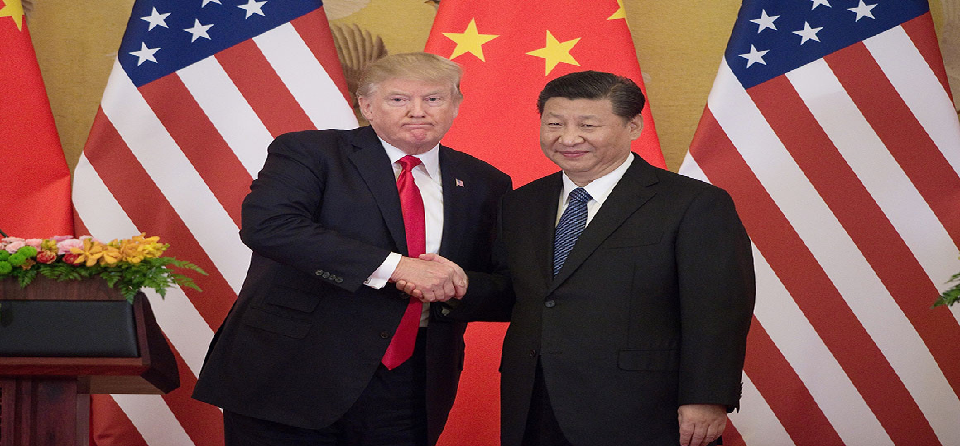
China and US leaders

In the wake of sweeping new tariffs on Chinese imports announced by President Donald Trump, U.S. businesses are racing to avoid steep price hikes for consumers. But their efforts appear to be hitting a brick wall. Many are pressing their Chinese suppliers to slash prices in a bid to offset the added tariff costs.

The response has been largely the same: No.

“If you already reduced your pricing in the past for your U.S. clients, you probably don’t have much space to do it again and again,” said Jonathan Chitayat, CEO of Genimex Group, a firm that manages overseas production for American companies. “You can do it for an order or two, but the next time your customer asks you for a price, you’re going to work on the reality that you have to be a profitable business. You can’t continue losing money.”

Chitayat’s firm helps U.S. companies manufacture products like kitchenware and electronics through factories in Asia, particularly China. He said that navigating Trump’s renewed tariffs has now become a regular part of the supply chain conversation. But margins are so thin, and government support is so lacking, that many factories simply have no room left to negotiate.

“There are no subsidies that we’re aware of that the government in China is giving to manufacturers,” he said. “So they mostly don’t—or have very, very little margins to give.”

The refusal by Chinese businesses to budge, analysts now say, signals a troubling prospect for American consumers: inflation could return faster and more forcefully than expected.

Trump Ratchets Up Tariff Fight, China Hits Back

The tariff escalation comes as Trump, in a flurry of posts and public appearances, declared that tariffs on China now total 145%. He also announced a temporary 90-day suspension of new tariffs for over 75 countries that had not responded with retaliatory measures. That reprieve did not extend to China, which he accused of showing a “lack of respect” for global markets.

Writing on Truth Social, the U.S. president said the tariffs are “effective immediately” and necessary because “China has taken advantage of American goodwill for too long.”

China didn’t take the move lightly. Its Ministry of Finance raised existing tariffs to 125% in retaliation, saying U.S. products had lost “market acceptance” in the Chinese economy. The agency also accused Washington of using trade policy as a blunt tool to fuel domestic politics, calling the U.S. a “joke” on the world stage.

Consumers Will Pay the Price, Experts Warn

The consequences of this back-and-forth are already becoming clear. With no room left in the supply chain to absorb costs, economists say American consumers are next in line.

“There has historically been this pressure to figure out who’s going to eat the tariff, and I don’t think there’s much room to move on that now,” Willy C. Shih, a professor at Harvard Business School told BI. “China is already hyper-competitive. Many of the products hit by tariffs—like TVs, monitors, and tech components—were never made in the U.S. to begin with. There’s no backup.”

Shih explained that while a weakening of the Chinese yuan could help offset some of the tariff burden, it won’t be nearly enough to protect consumers from higher prices.

“You can distribute parts of the tariff among all the parties in the supply chain,” he said, “but these numbers are so large now that they’re going to have to be passed on to consumers.”

Analysts say that warning signs are already flashing across sectors dependent on Chinese manufacturing, including electronics, apparel, automotive parts, and household goods. Prices that had only recently begun to stabilize after pandemic-era disruptions could once again start to rise—this time fueled not by supply bottlenecks but by policy decisions.

China’s Economic Struggles Leave No Wiggle Room

Meanwhile, Chinese manufacturers themselves are in a precarious position. Internal demand in China has been weakening, and the country’s once-booming property sector, long a major driver of its GDP, has collapsed, slashing local government revenues and limiting Beijing’s ability to offer support.

“Chinese manufacturing firms have faced declining margins in part due to falling domestic demand,” Sara Hsu, clinical associate professor of supply chain management at the University of Tennessee told BI. “There is already weakness in this sector from last year, and the new tariffs only add to that pressure.”

Andrew Collier, Senior Fellow at the Harvard Kennedy School’s Mossavar-Rahmani Center, said Beijing’s options are limited.

“Xi [Jinping] faces pressure from unemployed workers, disgruntled property owners, and small businesses. He may want to help exporters, but he has very little fiscal space left to maneuver,” he said.

Inflation Headwinds May Undermine Trump’s Economic Message

For the U.S., the timing couldn’t be worse. Inflation, while declining in recent months, remains a core concern for households, and any policy that raises the cost of living could erode public support quickly.

Lisa Suwen, the trade consultant, warned that price hikes could hit the market before the summer shopping season.

“What makes this dangerous is that these tariffs aren’t coming after a trade war that’s cooled off—they’re coming after a period where consumers are just recovering from years of inflation,” she said. “If inflation returns suddenly because of this, it could lead to a rapid deterioration in purchasing power.”

She added that most large retailers have already begun discussing price adjustments, especially on tech and imported home goods.

“The Chinese aren’t going to lower prices, and the Americans aren’t going to eat the cost. That leaves just one option—price hikes.”

A Familiar Standoff With More at Stake

Trump’s trade policies have always carried political weight, particularly when aimed at China. But analysts say this latest round of tariffs is different—not only in scope but also in its potential to destabilize fragile economic recovery efforts.

Even as Trump positions the tariffs as a defense of American manufacturing, many argue that many of the goods targeted simply have no domestic substitute.

“These are not jobs that are coming back. These are price hikes that are coming in,” said Shih.

Unless either side backs down, a scenario that appears unlikely, American consumers may soon pay the price for a trade war with no clear exit ramp.